Over half (57 percent) said they optimize for mobile when they can but don’t put great focus on it, while 10 percent said mobile is not a significant part of their strategy at all.
The survey does suggest lack of time and resources could take partial responsibility for the lag. Three-quarters of those polled said their jobs became more complex over the past year as a result of media fragmentation and data overload.
Other portions of the findings suggest hurdles in implementing cross-channel marketing may also play a significant role. Attribution modeling across channels was cited as the biggest road block to implementing effective cross-channel marketing. As Ginny Marvin explains, “If marketers can’t successfully measure the impact of their mobile campaigns, they’ll put their attention elsewhere.”
These problems were reflected in the findings that half of those surveyed also cited a lack of transparency into the necessary data.
While properly prioritizing mobile can be difficult, the latest indications show that mobile will only be more important in the next few years and smartphones improve and society gets more comfortable using phones and tablets in their day-to-day life. Marketers and businesses who stall on prioritizing mobile will eventually have a lot of catching up to do.
00Taylor Ballhttps://www.tulsamarketingonline.com/wp-content/uploads/2018/07/TMO-Logo.pngTaylor Ball2014-12-17 12:28:502014-12-17 12:28:50Less Than a Third of Marketers Properly Prioritize Mobile
Over the past few years, search engine optimization (SEO) has endured a drastic shift from focusing on building link profiles filled with as many links of any quality that you could accumulate to emphasizing the value sites offer to users by assessing content quality. Of course, as the shift has occurred many online marketers were left wondering “what exactly is quality content and how do search engines judge my content?”
Google has remained fairly tight-lipped on the subject, only suggesting a few obvious and time-tested strategies for improving content for users. However, Bing’s Senior Program Manager, Michael Basilyan, went into great detail on how Bing evaluates content quality in a recent blog post.
In Bing’s case, the algorithm looks at multiple factors including relevance to specific queries, authority, utility, and even the overall presentation of the content. Basilyan encourages content creators to be ever-aware that every search is made by real people wanting real information to help them, rather than meaningless paragraphs crammed with keywords.
If you want your site to be visible on Bing’s search results and your content to be useful to users, Basilyan recommends focusing on these three areas:
Authority: How trustworthy is the content, the author of the content, and the website it is published on? Signals from social networks, cited sources, and name recognition is considered when determining an author’s authority.
Utility: How useful and detailed is the content? Content that provides appropriate levels of depth, along with supporting information, is considered to be more useful for searchers.
Presentation: Is the content presented in a way that’s easy to read? A well-presented page is one that makes its content easy to find, rather than one that forces the user to sift through unrelated material to find what they really want.
The blog post also highlights that Bing does not discourage the use of advertising, saying “Bing will promote and support websites and webmasters that provide ads relevant to the content of their website.” But, if your content interferes with usability it may also affect your visibility and Bing’s own assessment of your content.
00Taylor Ballhttps://www.tulsamarketingonline.com/wp-content/uploads/2018/07/TMO-Logo.pngTaylor Ball2014-12-10 13:15:402014-12-10 13:15:40Bing Explains What They Mean When They Say “Quality Content”
Google has had a strong grip on the vast majority of web traffic, but a new report suggests they are losing their grasp. In just two weeks since Yahoo replaced Google as the default search engine in Firefox’s latest version, the search engine has experienced a 29.4 percent growth in usage, while Google has experienced a significant drop.
Analytics firm StatCounter said that “Yahoo search was used three times more on Firefox 34 than on Firefox 33.”
It should be noted, the user base of Firefox 24 is relatively low as many users haven’t upgraded yet and Firefox’s US market share overall is only about 15 percent. However, StatCounter still showed that Yahoo has benefited a fair amount from this deal, growing from 9.6 percent to 29.4 percent. In comparison, Google usage in the latest version of Firefox fell from 82.1 percent to 63.5 percent.
In the big picture it is clear that Google still has a massive lead on other search engines, but that lead doesn’t seem near as solid as it once did. This report shows that “default” search engines still hold a lot of influence over how users interact with the web. With Google’s agreement with Safari also coming to an end in the near future, there is a large chance that Yahoo or Bing could continue to make significant gains.
00Taylor Ballhttps://www.tulsamarketingonline.com/wp-content/uploads/2018/07/TMO-Logo.pngTaylor Ball2014-12-04 12:57:222014-12-04 12:57:22Firefox Agreement With Yahoo Gives The Search Engine a Boost
If you are still running SEO the same way you were at the start of the year you are already behind the curve. SEO is constantly changing and proper SEO strategies need to be well-planned enough to stay on target over long periods of time while also flexible enough to adapt to the constant guideline changes, algorithm roll-outs, and new ideas about usability.
In the past year alone, Google has pushed out 13 updates to algorithms that the public knows about. That number is just the big algorithms that people might know by name such as Penguin and Panda, while there has also been a multitude of more incremental changes that have gone undocumented in the public.
You don’t have to rebuild your SEO plans from the ground up every time there are significant changes over at Google, but you need to keep the biggest changing trends in mind as you progress and refine efforts. As we head into 2015, consider the most important shifts in SEO thinking that have happened over the past year.
1. Focus on Mobile Traffic
This may not be the newest shift in SEO, but it is more important than ever and all indications suggest mobile isn’t slowing down any time soon. Google has also shown their commitment to improving the mobile web with the introduction of mobile analytics tools and new warnings for users who are about to click on non-mobile friendly websites.
You can see if your site passes Google’s mobile-friendly test here, but don’t stop with that. Ensure your mobile site lives up the standards set by your desktop page and your company to keep mobile customers coming.
2. Optimizing for Alternative Search Engines
There is plenty of evidence to suggest that 2015 may be the year when Google’s iron grasp on search market share could start to crumble. Google has lost some major clout as Firefox replaced the search giant with Yahoo as the default search engine for the browser. Google’s agreement with Safari is also ending this year, and Apple seems keen to replace their competitor’s search engine with a more neutral option such as Bing, Yahoo, or even DuckDuckGo.
Even if Google maintains a strong majority of the market share (which they likely will) you should still make it your mission to be visible across all platforms, not just the most popular one.
3. Stop Focusing on Rankings and Start Looking at ROI Metrics
Rankings are so last year. Since all the major search engines have put a heavy emphasis on personalized search results that cater to users’ interests and location data, there is no guarantee your site will show as the top result for someone else even if it is the top result for you. Instead, turn your attention to return on investment. It offers a more accurate depiction of how your online marketing efforts are working, and gives a more direct understanding of the value of your SEO.
4. Emphasize Social Media
In the past, emphasizing social media basically meant blasting the same updates across every platform you can find. But, social media has matured and users won’t respond to your efforts if you treat every platform as the same. You should learn the unique demographics and behaviors of any social media platform you are considering sharing on, and ensure your ideas, voice, and medium match the crowd.
More importantly, social media users expect brands to more than just yell at them. Users expect ways to engage your brand and establish a more personal connection. The best solution is to isolate two or three social media platforms that best suit your brand and build on your efforts there. If you can really succeed there, you won’t need to be on the other social sites.
5. Earn Links, Don’t Hoard Them
You have most likely heard the routine proclamations that “links are dead!” more than once since Google began cracking down on weak or suspicious link portfolios. However, this is no truer now than when the internet first gained a foothold in our society. Links are still the most influential signal of trust and authority to search engines and that is going to stay the case for quite some time. However, the game has changed in a couple important ways.
Back in 2011, you could purchase countless low-quality links to masquerade as a reputable site. Now, Google has means of seeing through the mask. Google can analyze link quality and they don’t take kindly to poor quality, irrelevant links meant to boost visibility without effort. In 2015, earning a single high-quality link the right way is worth more than any number of links you could buy or collude to gain. Put your effort into proper SEO and you’ll find success. Rely on shady tactics and Google will be hunting for you.
00Taylor Ballhttps://www.tulsamarketingonline.com/wp-content/uploads/2018/07/TMO-Logo.pngTaylor Ball2014-12-03 13:34:142014-12-03 13:34:14The Biggest Shifts In SEO You Need To Know For 2015
Love her or hate her, chances are if you were searching for a celebrity this year using Bing, you were probably looking Kim Kardashian. Thanks to her highly publicized marriage to Kanye West and her “break the internet” magazine cover, Kardashian was the top searched for celebrity on Bing in 2014, topping a list of mostly female celebrities, according to Bing’s latest list of search trends.
Bing Trends compiles the most popular searches across 15 different categories every year, including everything from top news stories, athletes, and vacation destination searches. There is even a list of the top ALS Ice Bucket Challenge videos shared online this year.
Keeping in line with past lists and similar findings from Google, the list of most searched for celebrities is absolutely dominated by women, with females taking eight of the 10 spots. Notably, the Kardashian family occupies more than one spot on the list as younger sister Kendall Jenner also makes an appearance on the list.
Top 10 Most Searched Celebrities
Kim Kardashian
Beyoncé
Miley Cyrus
Katy Perry
Justin Bieber
Joan River
Jennifer Lopez
Kendall Jenner
Kaley Cuoco
Robin Williams
The lists also covers the biggest events and news stories of the year. Capturing the most attention of the entire year was the World Cup, however numerous more serious world news stories such as the rise of ISIS and the protests in Ferguson also claim spots on the list.
Top 10 Most Searched News Stories
World Cup
Super Bowl
Missing Malaysia Airlines Jet
Winter Olympics
The Rise of ISIS
Ray Rice Controversy
Shooting in Ferguson, Missouri
Ebola Outbreak
Brittany Maynard Death with Dignity Debate
Ukraine Conflict
The top searched Musicians is also notably female-heavy, with Justin Bieber being the only male to hold a spot on the list. Other controversial figures also sit near the top, such as Miley Cyrus and Katy Perry. Of course, at the top of the list sits Beyoncé for another year.
Top 10 Most Searched Musicians
Beyoncé
Miley Cyrus
Katy Perry
Britney Spears
Justin Bieber
Jennifer Lopez
Selena Gomez
Taylor Swift
Nicki Minaj
Carrie Underwood
You can see the other findings for categories including “political movers & shakers” “most-searched athletes” and “celebrity births” on Bing Trends.
00Taylor Ballhttps://www.tulsamarketingonline.com/wp-content/uploads/2018/07/TMO-Logo.pngTaylor Ball2014-12-01 13:07:542014-12-01 13:07:54Kim Kardashian Is The Most Searched For Celebrity of 2014 and Other Bing Search Trends
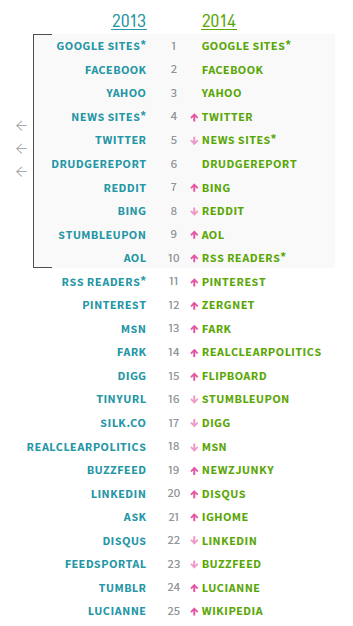
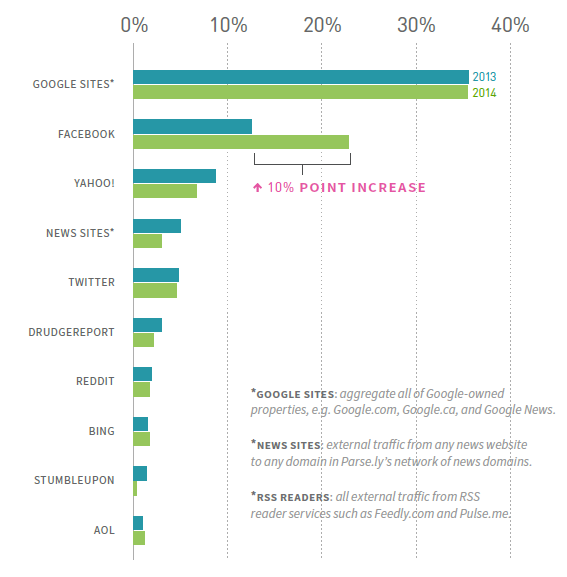
According to Parse.ly’s quarterly Authority Report, Facebook is still the best social platform for publishers looking for exposure. The site saw a 10 percent increase in referral traffic to publisher sites this August, compared to the data from a year earlier.
Parse.ly analyzed data from over 10 billion page views and more than 100,000 posts across its network to track online reading trends in an effort to determine peak reading times and referral traffic patterns. The report found that reading times peaked at 12:18 p.m., at which point desktop page views outperform mobile.
While Google was still the lead referral traffic, Facebook continues to hold the second spot making it the top social network to send traffic to publisher websites.
Surprisingly, the report shows very little change in traffic patterns over the past year, with Facebook being the only site in the top 10 to experience a significant increase in the amount of traffic sent to publisher sites.
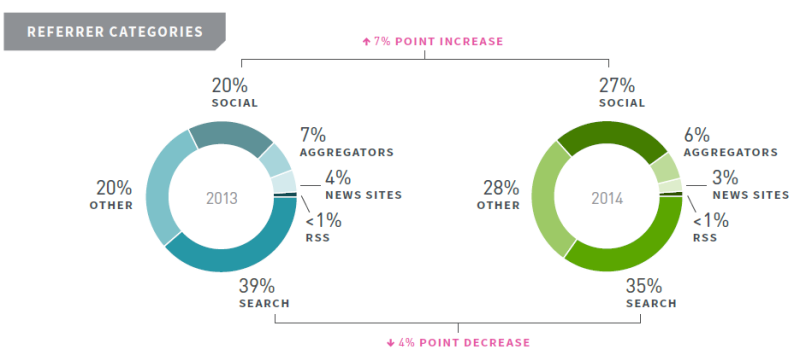
Parse.ly’s report also noted that traffic from social sites had risen seven percent over the past year, while traffic from search sites fell by four percent. You can get more insights from the downloadable report here.
00Taylor Ballhttps://www.tulsamarketingonline.com/wp-content/uploads/2018/07/TMO-Logo.pngTaylor Ball2014-11-06 12:47:082014-11-06 12:47:08Facebook Sent 10% More Traffic To Publishers This Year
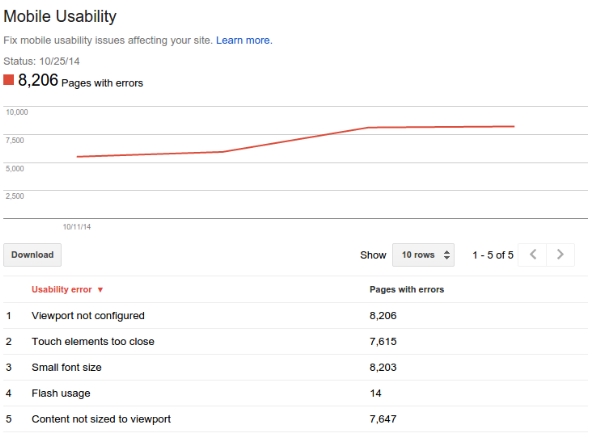
Google has been emphasizing the importance of mobile design and usability over the past year and now the search giant has added mobile usability reports to Webmaster Tools. Many believe this could be a sign that Google may be making mobile usability a ranking factor sooner rather than later.
The tool is intended to show whether your mobile site has any of the common usability issues that degrade a user’s mobile browsing experience.
John Mueller from Google’s Webmaster Trends Analyst team based in Zurich said they “strongly recommend you take a look at these issues in Webmaster Tools.”
Of course, Mueller could simply be encouraging this because it improves user experience, but there is strong evidence to suggest Google will eventually make mobile user experience a ranking signal within search engine algorithms.
00Taylor Ballhttps://www.tulsamarketingonline.com/wp-content/uploads/2018/07/TMO-Logo.pngTaylor Ball2014-10-30 14:58:132014-10-30 14:58:13Google Webmaster Reports Now Warns About Mobile Usability Mistakes
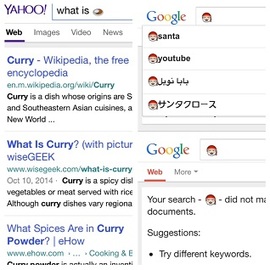
Emoji’s have become an essential part of every day communication for many smartphone owners, and now they appear to be making their way to search engines. On Monday, Bing announced their search engine would now be capable of recognizing emojis and using them as a search term.
“With the explosion of mobile devices and the ubiquity of texting, it has become a shorthand language used by billions of us around the world,” wrote Nick Roberts, senior program manager at Bing Relevance & Intent, in a blog post. “We want you to be able to search the same way you communicate every day.”
Users can search for single emojis, or you can combine them in a mix of text and emoji as they are typically used in text messaging. Notably, Yahoo and Duck Duck Go are also capable of recognizing emojis, but Google is not.
You can see examples of what this looks like below:
00Taylor Ballhttps://www.tulsamarketingonline.com/wp-content/uploads/2018/07/TMO-Logo.pngTaylor Ball2014-10-29 13:18:282014-10-29 13:18:28Bing Now Allows You To Search With Emojis
Those who have been following search trends in the past couple years have likely heard that being the first result on the search engine results pages (SERPs) is not nearly as important these days, mostly because the results we see are now customized based on location and user habits.
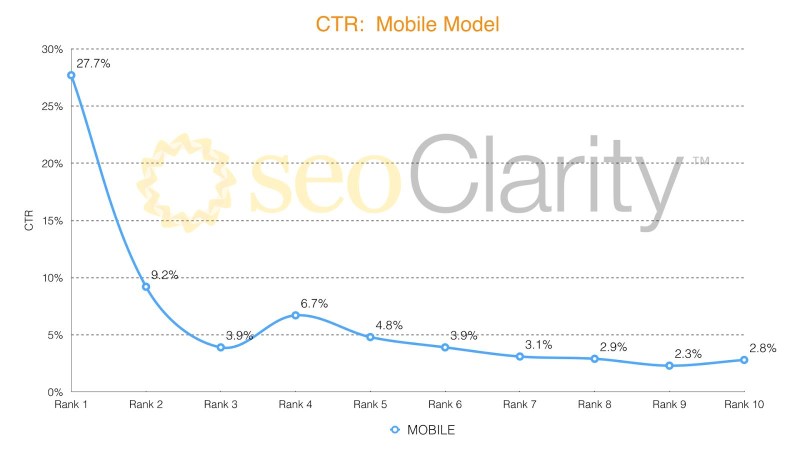
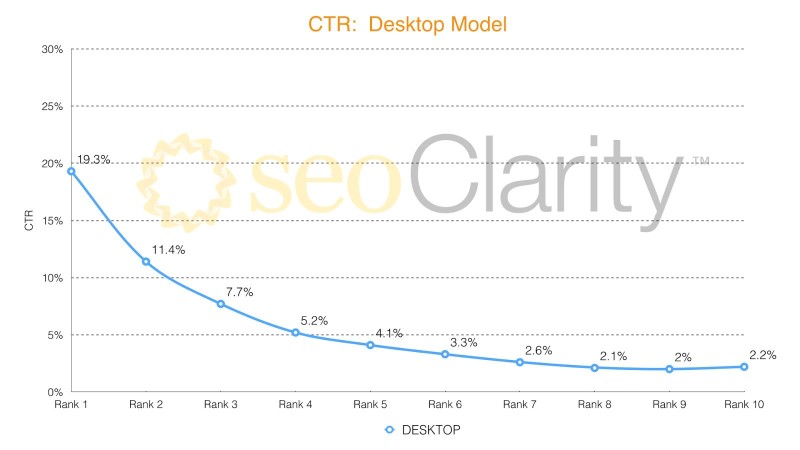
This is absolutely still the case for desktop searching, but a new click-through ranking study conducted by seoClarity suggests the difference between first and second in mobile search results may be the difference between success and failure. Their findings show such a large drop-off between the first and second rankings that there was no notable difference between the second listing and those that followed.
In the graph of mobile click through rates, you can see the first result receives nearly three times the number of clicks compared to the second ranking, while desktop rankings continue to show a more gradual slope following the first result.
To conduct the study, seoClarity examined over 2 billion impressions from Google Webmaster Tools data over a 90 day period between June and August. You can download and view the full report here.
00Taylor Ballhttps://www.tulsamarketingonline.com/wp-content/uploads/2018/07/TMO-Logo.pngTaylor Ball2014-10-23 13:02:242014-10-23 13:02:24Ranking First Matters on Mobile According to seoClarity Study
If you thought Google might be slowing down on updating their most well-known search algorithms, the past month may have been a bit of a shocker for you. First, Google rolled out the latest update to their Panda algorithm in late September, and less than a month later they have released the first update to their Penguin algorithm in over a year.
If Penguin and Panda aren’t familiar terms to you, they are the names of two major algorithms which determine what Google’s search results will look like for a given search. They help evaluate websites and reward those who are following guidelines while punishing those who bend or break the rules.
While the Panda algorithm mostly relates to the content directly on webpages, Penguin aims to take down those who try to cheat Google by creating unnatural backlinks to try to gain higher rankings. Both often these algorithms penalize webmasters and the businesses who run these pages when there was no malicious intent.
Unfortunately, with the complex system that makes up Google’s search algorithms and their ever-changing guidelines and many business owners have been shocked to discover their site is no longer appearing in the search results after an algorithm update.
While site owners can frequently bounce back after these penalties, they can also destroy any momentum you had and lose you potential customers. That’s why it is always important to have someone who is consistently up-to-date on all of Google’s latest policy changes to make sure your site is staying within the rules.
00Taylor Ballhttps://www.tulsamarketingonline.com/wp-content/uploads/2018/07/TMO-Logo.pngTaylor Ball2014-10-20 13:53:312014-10-20 13:53:31Google Rolls Out New Penguin Algorithm Update Shortly After Updating Panda

 Despite numerous studies showing that mobile is beginning to overtake desktop, a new survey by Marin Software shows only a third of the 300+ digital marketers polled in the U.S. and UK make mobile a priority.
 Over the past few years, search engine optimization (SEO) has endured a drastic shift from focusing on building link profiles filled with as many links of any quality that you could accumulate to emphasizing the value sites offer to users by assessing content quality. Of course, as the shift has occurred many online marketers were left wondering “what exactly is quality content and how do search engines judge my content?”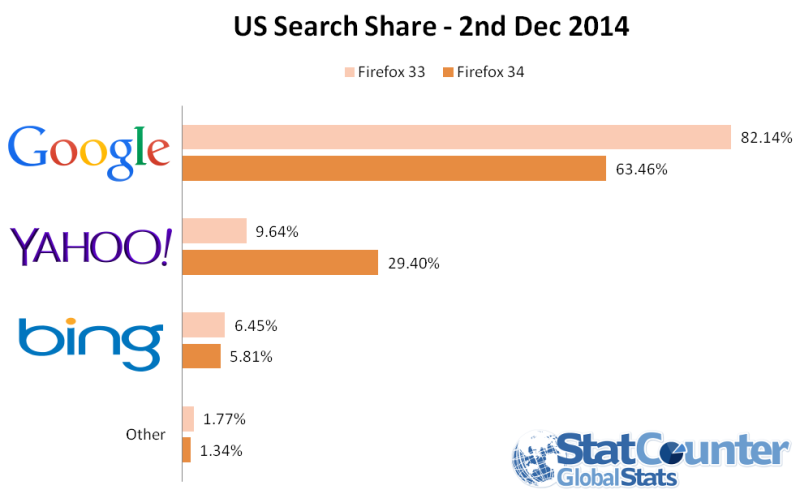
 If you are still running SEO the same way you were at the start of the year you are already behind the curve. SEO is constantly changing and proper SEO strategies need to be well-planned enough to stay on target over long periods of time while also flexible enough to adapt to the constant guideline changes, algorithm roll-outs, and new ideas about usability.