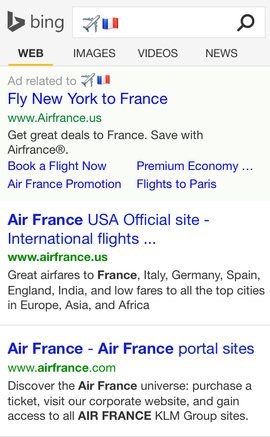
Emoji’s have become an essential part of every day communication for many smartphone owners, and now they appear to be making their way to search engines. On Monday, Bing announced their search engine would now be capable of recognizing emojis and using them as a search term.
“With the explosion of mobile devices and the ubiquity of texting, it has become a shorthand language used by billions of us around the world,” wrote Nick Roberts, senior program manager at Bing Relevance & Intent, in a blog post. “We want you to be able to search the same way you communicate every day.”
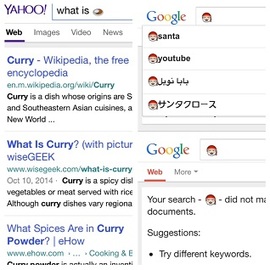
Users can search for single emojis, or you can combine them in a mix of text and emoji as they are typically used in text messaging. Notably, Yahoo and Duck Duck Go are also capable of recognizing emojis, but Google is not.
You can see examples of what this looks like below:
00Taylor Ballhttps://www.tulsamarketingonline.com/wp-content/uploads/2018/07/TMO-Logo.pngTaylor Ball2014-10-29 13:18:282014-10-29 13:18:28Bing Now Allows You To Search With Emojis
Those who have been following search trends in the past couple years have likely heard that being the first result on the search engine results pages (SERPs) is not nearly as important these days, mostly because the results we see are now customized based on location and user habits.
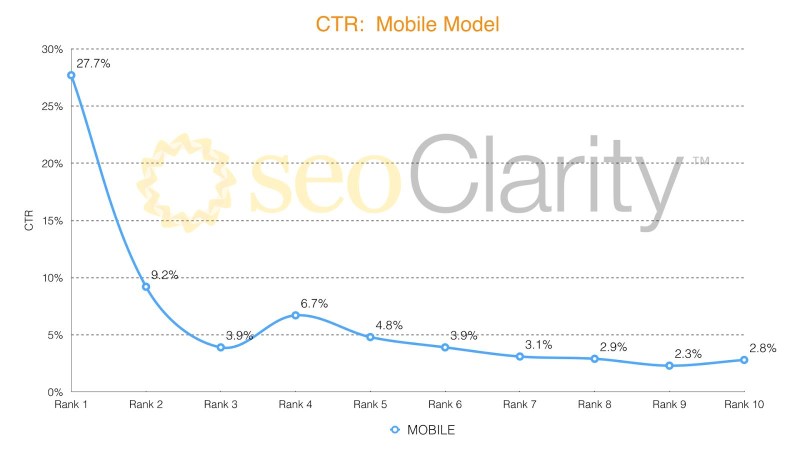
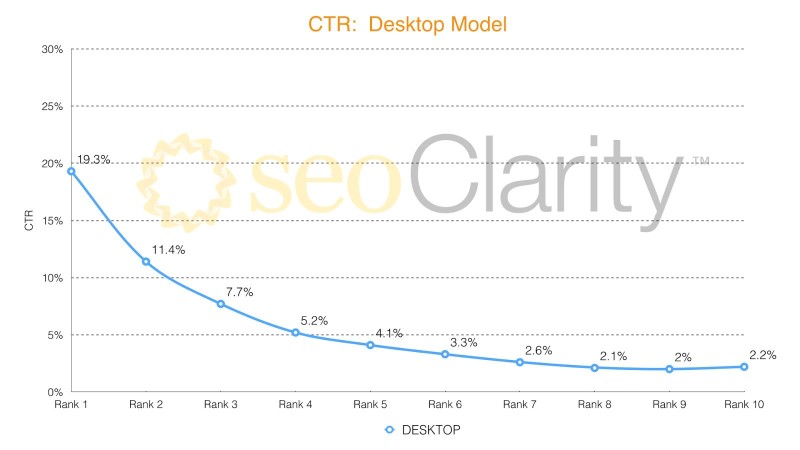
This is absolutely still the case for desktop searching, but a new click-through ranking study conducted by seoClarity suggests the difference between first and second in mobile search results may be the difference between success and failure. Their findings show such a large drop-off between the first and second rankings that there was no notable difference between the second listing and those that followed.
In the graph of mobile click through rates, you can see the first result receives nearly three times the number of clicks compared to the second ranking, while desktop rankings continue to show a more gradual slope following the first result.
To conduct the study, seoClarity examined over 2 billion impressions from Google Webmaster Tools data over a 90 day period between June and August. You can download and view the full report here.
00Taylor Ballhttps://www.tulsamarketingonline.com/wp-content/uploads/2018/07/TMO-Logo.pngTaylor Ball2014-10-23 13:02:242014-10-23 13:02:24Ranking First Matters on Mobile According to seoClarity Study
If you thought Google might be slowing down on updating their most well-known search algorithms, the past month may have been a bit of a shocker for you. First, Google rolled out the latest update to their Panda algorithm in late September, and less than a month later they have released the first update to their Penguin algorithm in over a year.
If Penguin and Panda aren’t familiar terms to you, they are the names of two major algorithms which determine what Google’s search results will look like for a given search. They help evaluate websites and reward those who are following guidelines while punishing those who bend or break the rules.
While the Panda algorithm mostly relates to the content directly on webpages, Penguin aims to take down those who try to cheat Google by creating unnatural backlinks to try to gain higher rankings. Both often these algorithms penalize webmasters and the businesses who run these pages when there was no malicious intent.
Unfortunately, with the complex system that makes up Google’s search algorithms and their ever-changing guidelines and many business owners have been shocked to discover their site is no longer appearing in the search results after an algorithm update.
While site owners can frequently bounce back after these penalties, they can also destroy any momentum you had and lose you potential customers. That’s why it is always important to have someone who is consistently up-to-date on all of Google’s latest policy changes to make sure your site is staying within the rules.
00Taylor Ballhttps://www.tulsamarketingonline.com/wp-content/uploads/2018/07/TMO-Logo.pngTaylor Ball2014-10-20 13:53:312014-10-20 13:53:31Google Rolls Out New Penguin Algorithm Update Shortly After Updating Panda
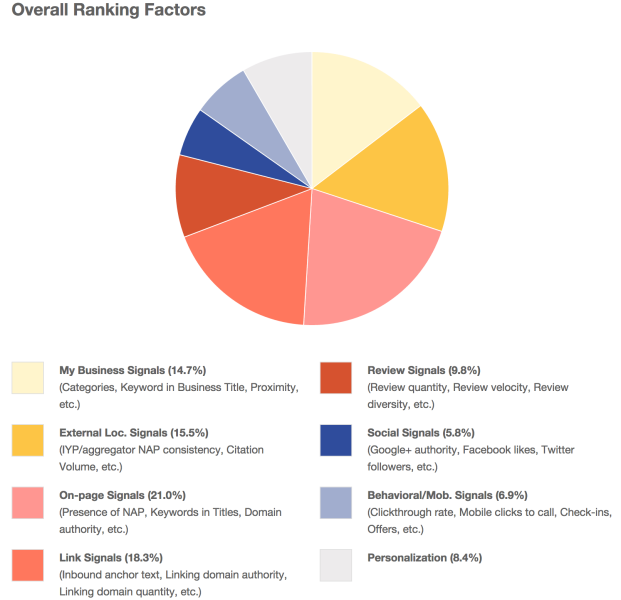
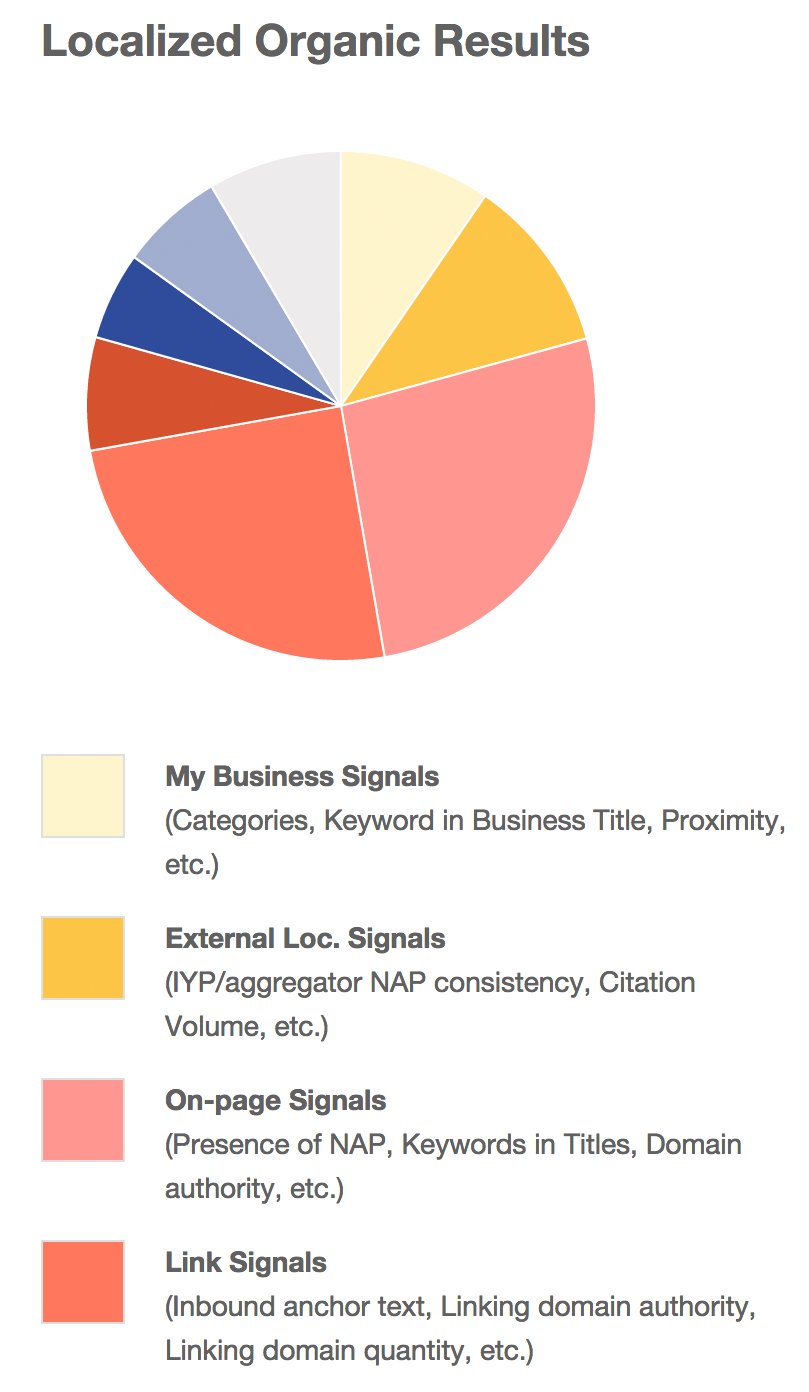
Every year, Moz details the local ranking factors they can identify in Google’s algorithm to help small businesses get a foot up in the listings. Earlier this week they announced the release of this year’s findings and everything seems… surprisingly the same.
Analysts have only found a few notable changes, but the findings are largely the same as last year’s. However, David Mihm did highlight a few important things to notice in the findings, including:
Behavioral signals such as click through rate, are more of a factor this year that others.
With Pigeon‘s release, experts are saying Domain authority is more of a signal today.
Google may have tuned up the proximity to searcher factor as well.
You can see the charts from the study below, or you can get more details from the results over at Moz.
00Taylor Ballhttps://www.tulsamarketingonline.com/wp-content/uploads/2018/07/TMO-Logo.pngTaylor Ball2014-10-15 12:20:532014-10-15 12:20:53Local Ranking Factors In Search Have Largely Stayed The Same This Year
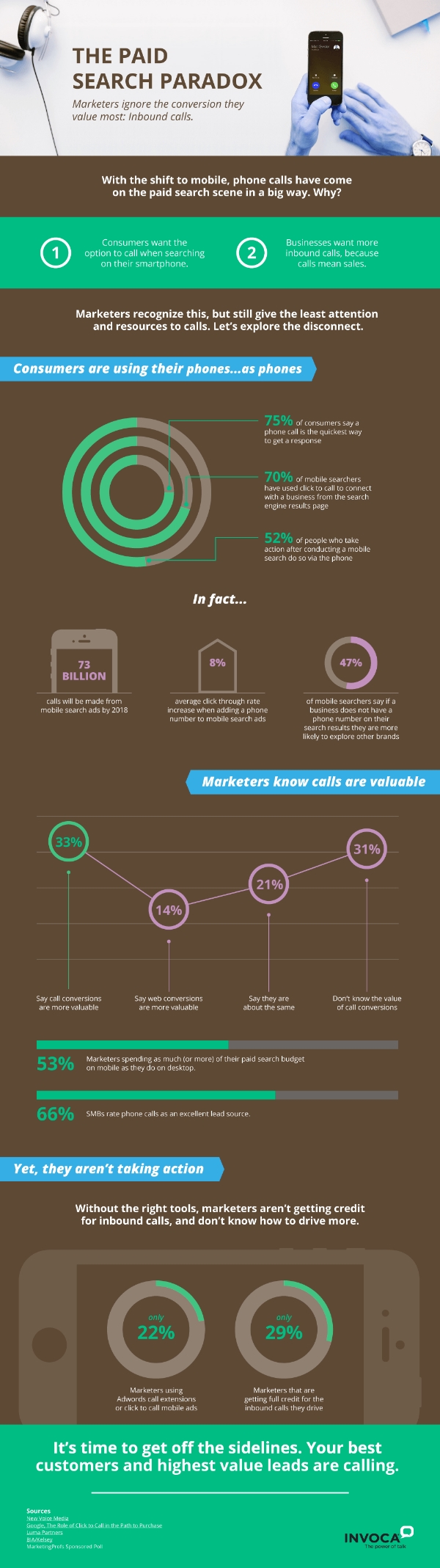
Tulsa Marketing Online has always believed tracking data is one of the most essential steps to running an informed marketing campaign, but apparently many search marketers are opting out of comprehensive tracking when it comes to phone conversions from search campaigns.
A new survey from Invoca has found that just 36 percent of respondents reported using call extensions or click-to-call ads in their search campaigns. Of course, call conversions aren’t a major metric for some campaigns, but the survey shows that isn’t the whole story. The results also show that 63 percent of those surveyed said phone leads are equally or more valuable than web conversions.
It is surprising that such only a relatively small percentage of marketers may not be tracking phone call conversion data, especially in light of the wealth of studies showing the value of phone calls to search marketers. Google’s numbers say that 70 percent of mobile searchers have called a business directly from the search results page and BIA/Kelsey estimates inbound calls from mobile search is going to almost double between now and 2016.
The only real explanation is that a fair portion of marketers simply aren’t considering the value of call conversions and how search marketing may be driving calls.
Without data on call conversions, it is hard to get the full picture of how campaigns and marketing strategies are performing and budgets may be getting misplaced or outright wasted. When you have all that information at your fingertips, it is easier to make truly informed decisions about your future strategies and ensure that marketing budgets are being used to their full potential.
You can read Invoca’s full report here and see their related infographic below.
SEO and social media marketing have been interconnected for several years, but they are also typically treated like separate efforts that influence and benefit from each other rather than being entirely coupled. That is why one of the most neglected features of Pinterest is Guided Search.
It is no secret that Pinterest is quickly becoming an upper tier player in social media and marketing because it touches on our aspirations and desires. To paraphrase Tailwind CEO Daniel Maloney during SMX East this week, Pinterest is about who you want to be.
“When you look at what people are pinning, it’s more about who they want to be in the future,” Maloney said, “which from a marketer’s perspective is a dream come true.”
That made the social media platform ripe for harvest then when they introduced Guided Search early this year, but surprisingly few marketers took advantage of the opportunity to optimize their presence on the site.
Was Guided Search forgotten because it wasn’t high enough on the list of marketing priorities or because it slipped through a crack directly on the line between SEO and social media marketing? It is hard to tell, but Anna Majkowska, a software manager on Pinterest’s search team, has been encouraging brands to optimize for the platform so that they are able to get their content in front of the more than 50 million users who frequent the site.
Majkowska shared tips for optimizing your site on Search Engine Land, but the important thing is to not be intimidated. Pinterest SEO isn’t near as complicated as trying to optimize for Google, so the learning curve is notably less steep.
00Taylor Ballhttps://www.tulsamarketingonline.com/wp-content/uploads/2018/07/TMO-Logo.pngTaylor Ball2014-10-03 13:26:272014-10-03 13:26:27Are You Optimizing For Pinterest?
Much has been made out of the announcement that Google would include switching from HTTP to HTTPS in their ranking algorithm. Despite clearly stating that the factor would be lightweight in the initial announcement, the possibility of a relatively easy rankings boost drove lots of people to make the switch immediately.
In the aftermath studies from analytics groups such as SearchMetrics have suggested that any effect of switching URLs might have is largely unnoticeable. Now, Google’s John Mueller has basically admitted that the signal currently too lightweight to have any noticeable effect but that may change at some point in the future.
At 22 minutes and 21 seconds in a recent video hangout, Mueller explained that HTTPS is a ranking signal but it is only a “very lightweight signal” and there aren’t any plans to change that in the future.
I wouldn’t expect any visible change when you move from http to https, just from that change, just from SEO reasons. That kind of ranking effect is very small and very subtle. It’s not something where you will see a rise in rankings just from going to https
I think that in the long run, it is definitely a good idea, and we might make that factor stronger at some point, maybe years in the future, but at the moment you won’t see any magical SEO advantage from doing that.
That said, anytime you make significant changes in your site, change the site’s URLs, you are definitely going to see some fluctuations in the short term. So you’ll likely see some drop or some changes as we recrawl and reindex everything. In the long run, it will settle down to about the same place, it won’t settle down to some place that’s like a point higher or something like that.
00Taylor Ballhttps://www.tulsamarketingonline.com/wp-content/uploads/2018/07/TMO-Logo.pngTaylor Ball2014-09-30 14:07:012014-09-30 14:07:01Google’s John Mueller Says HTTPS Is Only a “Very Lightweight Signal”
The phrase “content marketing” is thrown around all over the place, but marketers seem to be forget that content can mean more than blog posts. While blogs can play a big role in online marketing and catching the attention of your audience, there are several other tools at our disposal that are often more effective.
Audiences almost always respond better to visual marketing better than text, so long as your visual content reaches the same level of quality. Market Domination Media wanted marketers to know that visual content packs a heavy punch that makes the heightened investment more than worthwhile.
To do so, MDM published an infographic which highlights the reasons why visual content consistently performs so much better.
00Taylor Ballhttps://www.tulsamarketingonline.com/wp-content/uploads/2018/07/TMO-Logo.pngTaylor Ball2014-09-29 13:19:392014-09-29 13:19:39Visual Marketing Is An Important Tool In Every Content Marketers Toolbox [Infographic]
Webmasters using “thin” or poor quality content may have seen a drop in traffic this week, as Google has announced that the release of the latest version of its Panda Update.
According to a post on Google+, the “slow rollout” began early this week and will continue into next week before being complete.
While those trying to do the bare minimum to improve rankings may have reason for concern, the new update could also be a relief to many who say they were improperly affected by previous updates as this update is intended to be more precise. As the announcement says:
Based on user (and webmaster!) feedback, we’ve been able to discover a few more signals to help Panda identify low-quality content more precisely. This results in a greater diversity of high-quality small- and medium-sized sites ranking higher, which is nice.
Those who were affected by previous updates may also welcome the latest release, as it means anyone who has made the right changes since the last update finally have a chance to bounce back.
00Taylor Ballhttps://www.tulsamarketingonline.com/wp-content/uploads/2018/07/TMO-Logo.pngTaylor Ball2014-09-26 12:30:252014-09-26 12:30:25Google Rolls Out The Latest Panda Update
Yesterday morning, Bill Slawski from SEO By The Sea discovered that Google has been granted a patent which suggests they are working on a method to use information about what is showing on television in your area as a ranking signal in search results.
The patents follow Google’s trend of trying to individualize search results based on personal tastes and location, and in some ways it has already been in use within Google Now. However if the method used in the patent is implemented TV schedules could have a much larger impact on your results.
The specific patent is named System and method for enhancing user search results by determining a television program currently being displayed in proximity to an electronic device. It was filed on June 30, 2011.
Here is the abstract for the patent:
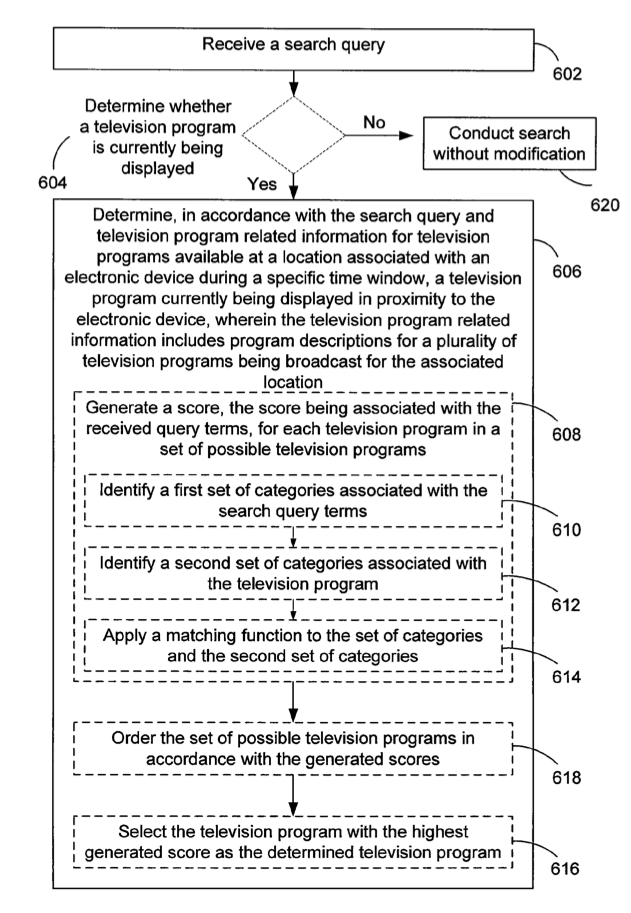
A computer implemented method for using search queries related to television programs. A server receives a user’s search query from an electronic device. The server then determines, in accordance with the search query and television program related information for television programs available at a location associated with the electronic device during a specific time window, a television program currently being displayed in proximity to the electronic device, wherein the television program related information includes program descriptions for a plurality of television programs being broadcast for the associated location.
Basically, the patent would allow Google to make note of what you are watching and instantly include that information within their ranking algorith. Presumably, this would make it easier to search for products shown during commercials or for more information about the show. As explained in the patent:
Someone watching a TV program with a segment about a particular model of Porsche might execute a search query for “Porsche” or “sports cars” instead of the designation of the particular model that was the subject of the segment….
Given that the Porsche model in question is a “911 Turbo,” and that the user executed a search query for “Porsche,” the server can return information about one or more of :
1) the “911 Turbo” model (e.g., a link to information on the Porsche.com website about the “911 Turbo”),
2) information about the TV program that is currently airing with that segment, and
3) suggestions of similar programming that is currently airing or airing in the future and that is available to the user.
In this way, implementations provide enhanced search results to viewers of live TV that are relevant to the content of TV programs that they are watching or are likely to be interested in watching.
The patent also provides a diagram which explains how the patent wold work:
Ultimately, it is up to Google whether you can expect to see this idea included in future search algorithms. As Google has said before, just because they have patented something doesn’t mean they will definitely be using it. But, Search Engine Land also pointed out Google Now is able to do a very similar task.
If you opt in, Google Now is already capable of listening for information about what you’re watching and updates TV cards accordingly.
00Taylor Ballhttps://www.tulsamarketingonline.com/wp-content/uploads/2018/07/TMO-Logo.pngTaylor Ball2014-09-17 13:27:332014-09-17 13:27:33Is Google Going To Listen To Your TV Before Giving Search Results?




 “When you look at what people are pinning, it’s more about who they want to be in the future,” Maloney said, “which from a marketer’s perspective is a dream come true.”