If you run a local business and haven’t logged into Google My Business in a while you may be at risk of having Google unverify your listings, according to a statement from a Google representative today.
In a post on the Google and Your Business Help Forum, Google’s Jade Wang confirmed the news that the company has been contacting some Google My Business users that it considers to be inactive:
In some cases, we may contact Google My Business users via email to confirm that they are still actively managing a business page. If a user is unresponsive to our attempts to contact him or her and has not logged into Google My Business for a significant length of time, then we may unverify pages in the account. We’re doing this in order to continue to provide users with the best experience when they’re looking for local businesses like yours. If you find that a page in your account has been incorrectly unverified, please contact support to get assistance restoring verification.
The news was first brought to light by Brian Barwig of Integrated Digital Marketing, who posted a message today about a phone conversation he had with a Google support rep who told him that this may happen to accounts which are considered inactive for six months.
Mike Blumenthal has also shared the text of the email Google sends out to warn inactive accounts about being potentially unverified.
To help prevent this, Wang included some advice: “It’s a good idea to keep an eye on the inbox associated with your Google My Business (Locations) account. It’s also a good idea to regularly log into Google My Business (Locations) to confirm that your business information is current and accurate.”
00Taylor Ballhttps://www.tulsamarketingonline.com/wp-content/uploads/2018/07/TMO-Logo.pngTaylor Ball2015-06-04 16:27:242015-06-04 16:27:24Google To Unverify Inactive Google My Business Listings
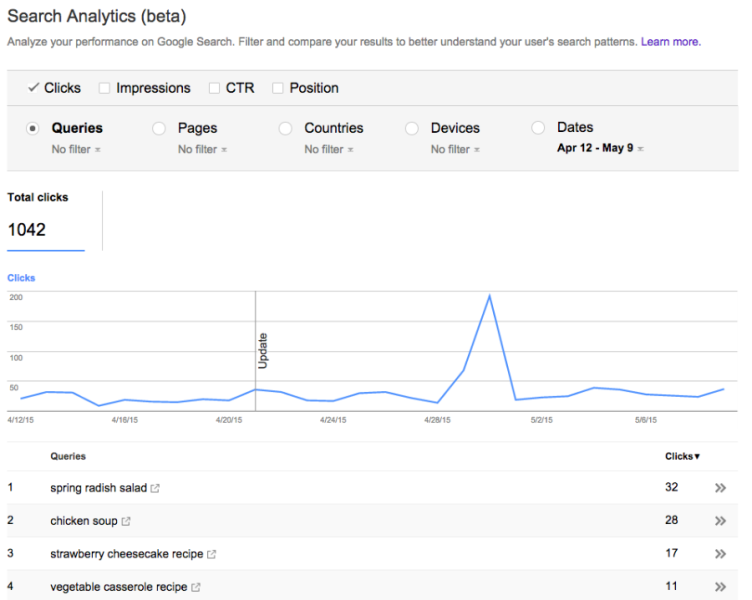
Over the past decade, website operators have relied on Google Webmaster Tools for ensuring their sites were being properly displayed and indexed across the search giant, but big changes are on the way. Google is rebranding one of its most popular services to Search Console and there a few new features coming with the new name.
According to Google, the shakeup is the result of user feedback, as only a small portion of users actually identify as “webmasters.” Google is hoping the new name will help bring the service to a wider user base.
“It turns out that the traditional idea of the “webmaster” reflects only some of you. We have all kinds of Webmaster Tools fans: hobbyists, small business owners, SEO experts, marketers, programmers, designers, app developers, and, of course, webmasters as well… So, to make sure that our product includes everyone who cares about Search, we’ve decided to rebrand Google Webmaster Tools as Google Search Console.
The rebranding is coming in the next few weeks, and Google has announced two new features that are expected to roll out about the same time.
With Search Console, users will have access to all the functionality they have come to expect of Webmaster Tools, as well as the ability to see how searchers are accessing your content via Android apps through Google Search within Search Analytics reports and the ability to see your app content through Google’s eyes with an alpha version of Fetch as Google for Apps.
00Taylor Ballhttps://www.tulsamarketingonline.com/wp-content/uploads/2018/07/TMO-Logo.pngTaylor Ball2015-05-22 13:47:452015-05-22 13:47:45Webmaster Tools Is Dead, Welcome to Google Search Console
Google’s mobile-friendly algorithm is completely rolled out, but webpages may still see some small changes in the coming days as the search engine continues to index more pages according to Gary Illyes.
Illyes, a prominent Web Trends Analyst at Google, confirmed the news on Twitter this morning by saying “the algo is rolled out” when Barry Schwartz, News Editor for Search Engine Land, asked him on Twitter “is the Google Mobile algorithm fully rolled out?”
The algorithm is the most talked about shake-up from Google since the implementation of the Penguin and Panda algorithms, but the lion’s share of panic appears to be unwarranted as the majority of webmasters saw little to no changes in the wake of the latest rollout.
While Gary Illyes did confirm the algorithm is fully rolled out, he added one concession:
Not all pages were reindexed yet so they don’t have the new scores. Yet.
Also, there were a load of sites that became MF recently, so the actual number of sites affected decreased considerably.
Even with that caveat, the likelihood of significant changes coming in the next few days is unlikely.
00Taylor Ballhttps://www.tulsamarketingonline.com/wp-content/uploads/2018/07/TMO-Logo.pngTaylor Ball2015-05-01 12:02:052015-05-01 12:02:05Google’s Mobile Friendly Algorithm Is Completely Rolled Out
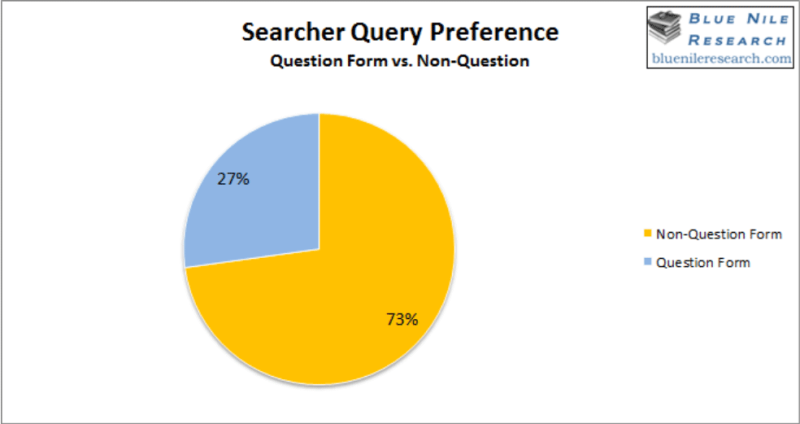
A new study by Blue Nile Research investigated search behavior and found some interesting trends that give insight into exactly how people are searching online and what they are looking for. Most notable among the findings are the discoveries that searches use question formats in 27% of queries, and are perfectly divided on searching in short form (under 4 words) or long form (4 or more words).
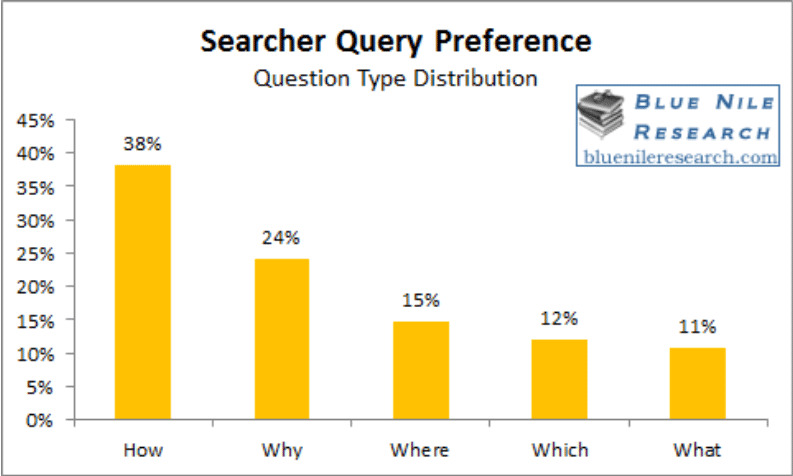
According to the findings of the study, 27% of searches phrased their search in the form of a question, using words such as ‘how’, ‘why’, ‘where’, ‘what’, and ‘which’ rather than a ‘statement query’.
When broken down, most question queries included the word ‘how’ (38%), followed by ‘why’ (24%), ‘where’ (15%), ‘which’ (12%), and ‘what’ (11%).
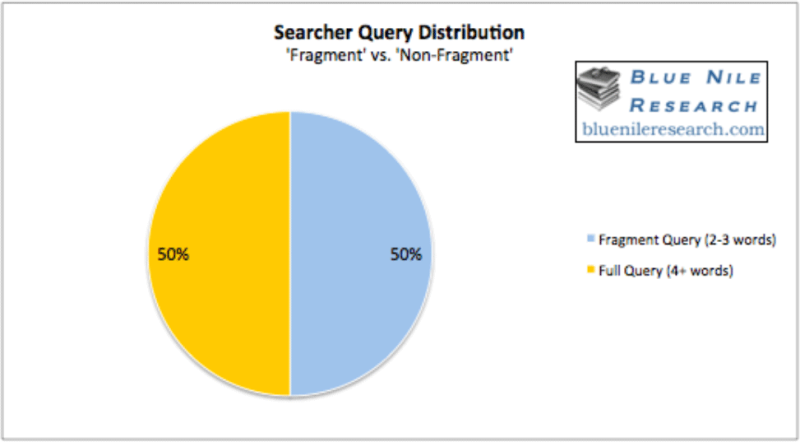
The study also finds that searchers are perfectly split when it comes to search length. The report shows that 50% of searchers break queries into so-called ‘fragment queries’ which contain 2 to 3 words, while the other half use ‘full queries’ which contain 4 words or more.
You can read the full report from Blue Nile Research here.
00Taylor Ballhttps://www.tulsamarketingonline.com/wp-content/uploads/2018/07/TMO-Logo.pngTaylor Ball2015-04-30 12:09:072015-04-30 12:09:0727% of Search Queries Contain a Question According to New Study
In less than 24 hours, we will all be living in a post-“Mobilegeddon” world. That means Google’s mobile friendly update will start rolling out tomorrow after months and months of rumors and hints. Normally Google doesn’t announce upcoming algorithm changes ahead of time – perhaps because it creates a panic – however this time the company gave webmasters plenty of time to make sure they are prepared.
Basically, the mobile friendly algorithm aims to make sure users who are searching with smartphones are only shown sites that are properly optimized for mobile devices.
Given that Google has been heavily implying this day would come for over a year, it is slightly surprising to see the number of panicked webmasters. Google has given brands every opportunity to ensure their sites are up to snuff, but Zineb Ait Bahaiji of Google’s Webmaster Trends team confirmed the algorithm will have the largest impact of any of Google’s recent algorithms.
Google’s Penguin and Panda algorithms are infamous for their impact on search results pages, but Bahaiji told the crowd at SMX Munich that the mobile algorithm would absolutely affect more than either animal-themed algorithms.
Panda affected 12% of search queries when it was released, while Penguin impacted 3.1% of queries.
If you are concerned your site isn’t prepared for the oncoming “Mobilegeddon”, check outourpreviouscoverage to see what you need to do to appease the search engine’s new algorithm. You can also check to see your site’s status by using Google’s mobile friendly testing tool.
Google is constantly making changes – both big and small – and the latest changes will affect how your site appears in the search results.
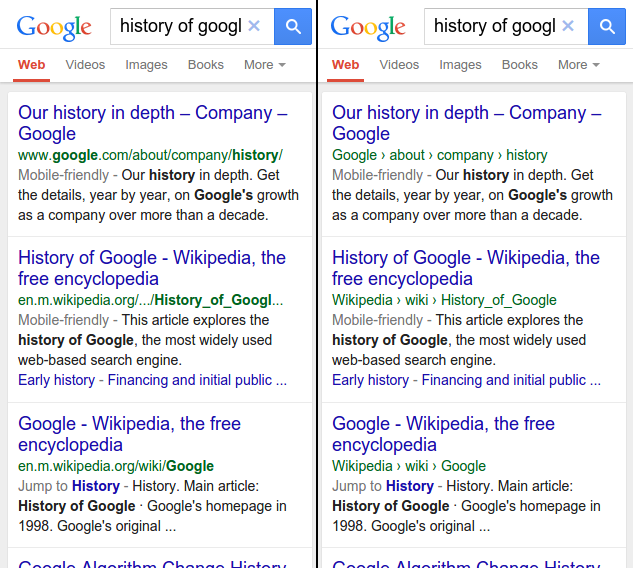
Yesterday Google announced it would be altering how URLs are shown on mobile search results. Well, altering isn’t the right word. More accurately, Google is completely removing URLs in favor of the “real world” name of the site.
Instead of showing the simple URL, the search engine will display the site’s location in a breadcrumbs-like format, as shown below:
As Google explains in their announcement, the change intends to make searching easier for users.
“To help mobile searchers understand your website better when we show it in the mobile search results, today we’re updating the algorithms that display URLs in the search results to better reflect the names of websites…”
The new style will be rolled out gradually and are exclusive to mobile search results. For now, the change will only be affecting the US, but will likely come to other countries in the near future.
If you want to keep control of how your site name is shown, there is a simple structured data markup set you can use.
Just use this structured data markup to tell Google’s algorithms exactly how you want your website name displayed.
00Taylor Ballhttps://www.tulsamarketingonline.com/wp-content/uploads/2018/07/TMO-Logo.pngTaylor Ball2015-04-17 14:13:552015-04-17 14:13:55Google Removes Mobile URLs in Favor of ‘Real World’ Name
Google’s upcoming mobile-friendly algorithm has webmasters panicking as the deadline fast approaches. As always, when there is fear there is also plenty of misinformation.
In particular, there is one myth going around which is stirring up quite a bit of trouble.
Google has attempted to be clear that their new mobile algorithm will demote pages that don’t pass a mobile-friendliness test when they might appear in mobile search results pages. Unfortunately, that is being misconstrued.
As Barry Schwartz shared, emails are going around proclaiming Google will be completely removing sites from search results if they don’t live up to the mobile standard. Not demoted, but completely de-listed and removed from Google.
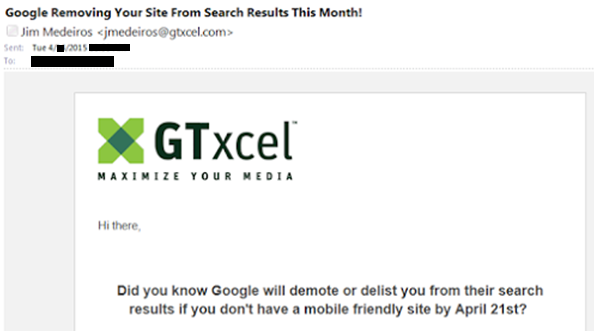
The rumor was noticed when Ashley Berman Hale, an active personality in the Google Webmaster Help Channels, posted an email she recently received with the title “Google Removing Your Site From Search Results This Month!”
The copy of the email then goes on to say, “Did you know Google will demote or delist you from their search results if you don’t have a mobile friendly site by April 21st?”
Now, the mobile algorithm on the horizon is certainly controversial among webmasters, but there is no need to be spreading outright lies. Google’s initial announcement of the algorithm was relatively vague, but they have been working hard to make sure webmasters’ questions were getting answered. It also didn’t take long for many of the experts from Google to chime in and clear the air.
Google’s Gary Illyes posted a response on Twitter:
So I don't mind getting people motivated to go mobile friendly, but I do mind spreading false things. Not nice, guys https://t.co/0X0VxMQlIE
Google’s John Mueller also posted a short statement on Google+ to make matters perfectly clear:
It’s great to get people motivated to make their website mobile-friendly, but we’re not going to be removing sites from search just because they’re not mobile-friendly. You can test your pages & reach our documentation (including some simple tweaks that might work for your CMS too) at http://g.co/mobilefriendly
Hopefully this settles the matter once and for all. Google’s algorithm WILL demote your site on mobile search results, but it WILL NOT affect you on desktop search results or completely remove you from the listings.
00Taylor Ballhttps://www.tulsamarketingonline.com/wp-content/uploads/2018/07/TMO-Logo.pngTaylor Ball2015-04-15 13:56:412015-04-15 13:56:41Google Responds To Claims They Would De-list Non-Mobile Friendly Sites
You would think the sky is falling given how webmasters and online marketing experts are responding to Google’s huge upcoming mobile algorithm. Sites are tossing around all manner of terrifying nicknames such as the mobilepocalypse, mobilegeddon, mobocalypse, or mopocalypse to stir up fear and panic, but the truth is the upcoming update shouldn’t be all that scary for you.
If your site serves mobile users and you care at all about your customers, you should already have made efforts to make your site mobile-friendly. While a big ranking drop seems frightening, the truth is that mobile users are probably already avoiding your site. Don’t think of the upcoming change as being forced to change your site to please search engines. Thank of it as improving your site for mobile users.
Countless sites are talking about the “mobilepocalypse” as if the world is ending, but I’ve already covered the simple set of steps you need to take to check that your site is ready for the mobile update. If you aren’t passing Google’s mobile test, this infographic from Nine Hertz will walk you through what needs to be done before the 21st.
00Taylor Ballhttps://www.tulsamarketingonline.com/wp-content/uploads/2018/07/TMO-Logo.pngTaylor Ball2015-04-06 11:56:302015-04-06 11:56:30Don’t Fear The Google ‘Mobilepocalypse’ With This Infographic
April Fools’ Day is here yet again, and if you’re reading this chances are you have already encountered at least one of Google’s numerous practical jokes. The company has always been big on the prankster’s holiday, but they have taken it to a whole new level this year, unleashing gag services and webpages and nearly ever platform they have. I’m recapping all the goofs and gags so you can be sure you won’t miss out on any of the fun.
Google Thinks Backwards
Have you been to google.com today? What about com.google? That’s right, Google released a mirror-image version of their site that flips everything on the search engine. Unfortunately it only works for search, not any of Google’s other platforms and domains.
Pac-Man Comes to Town
Google Maps has brought the classic arcade game to your doorstep, by allowing you to play the game using your local streets as the maze. From desktop, you can play Pac-Man anywhere on the map you want. Mobile users however, are only able to play in a few select places. To get in on the action, you’ll have to use the clues to find the special locations.
Ingress Plays Pac-Man Too
While the Pac-Man mode in Google Maps has quickly gained attention, fewer have noted that Google’s augmented reality game, Ingress for Android and iOS, has also added some new Pac-Man features.
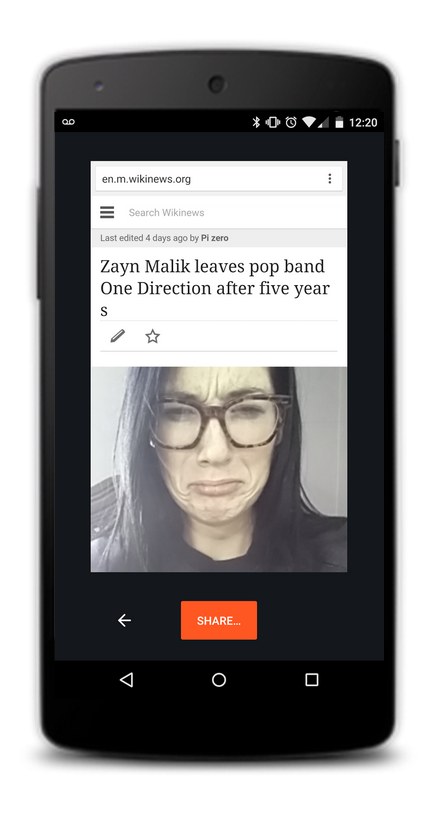
#ChromeSelfie
Everyone is already sharing their reactions to news and events across social media, but Chrome on mobile is making it easier than ever to let people know how you feel about what you are browsing. Whether you are excited, angry, sad, or outright confused by the latest story, you can quickly share it by opening the menu on the browser and choosing “Share a reaction.”
According to Google, Chrome users are losing up to 6 hours of selfie-taking time every day by having to exit the browser to open the camera app. Thankfully, they’ve streamlined the process so we can finally take selfies with optimal efficiency.
Google Panda
This one might sting for webmasters who have had unpleasant run-ins with Google’s not-so cuddly algorithm. Google Japan announced Google Panda 5 and 6, with a press conference parodying Apple’s over-the-top product releases.
Unlike previous Panda releases, this one is less of an algorithm and more Siri in a stuffed-animal panda. The product itself doesn’t seem to be directly related to the algorithm, but Matt Cutts helped out on the video so it’s safe to say it is a part of the joke.
Smartbox by Inbox
Google has revolutionized email with Gmail, and now they are reshaping how we think about our traditional mail too. Smartbox by Inbox may look like a stylish mailbox, but it has smart folders, filters, and even apps that you can bring with you anywhere you go.
Dial-Up Mode
Google Fiber users are apparently complaining their internet speeds are just too fast, leaving them with no time to take breaks, fix drinks, or take care of other small tasks. To solve this, the service provider is launching a dial-up mode.
“Loading bars used to give people an opportunity to pause and take care of the little things—like making a cup of coffee, taking a bathroom break or playing with the dog.”
The company explains it was able to reduce Fiber speeds up to 376 times “by withholding photons from the fiber strands” so that “the light-based fiber optic technology dims to a flicker of its previous capacity.”
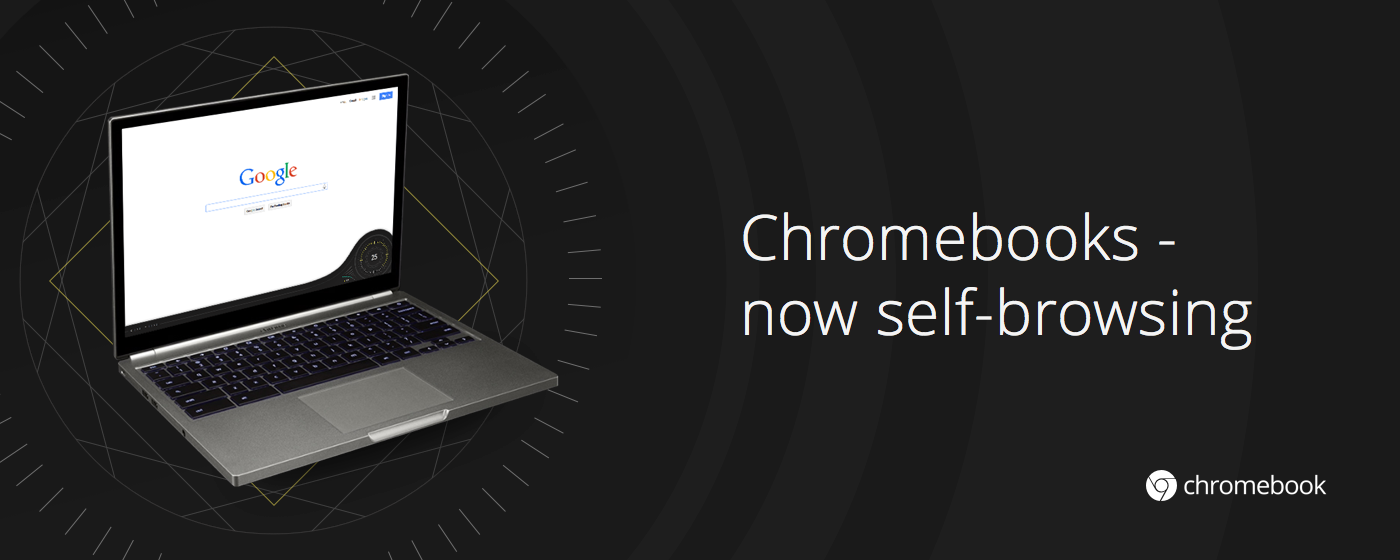
Chromebook Self-browsing
Don’t you wish you could just put your internet browser on auto-pilot and let it take you to your destination?
“Google’s top research scientists have calculated that the average person burns up to five calories per day by clicking on web links,” Google says. “This is absurd—these calories could be put to much better use for breathing, pranking a co-worker, or cleaning your bathtub.”
Quick question: where is “the cloud” you constantly hear Google and Apple talking about? If you said clouds in the sky you would have been wrong, until now.
Google is moving the cloud to the “actual cloud” with a slew of new features including a new compute zone, actual-cloud machine types, Stormboost, CloudDrops, weather dashboards, and bare-metal container support.
YouTube’s Add Music Feature
YouTube now allows users to add music to any video they wish. Specifically, the video player now includes a button allowing you to override the sound on any video with Darude’s Sandstorm. There’s also an Auto-Darude option so you can easily apply the song to every video you watch. The history of Darude’s Sandstorm is long and relatively obscure, so if this one doesn’t make sense you can learn more here.
Matt Cutts’ Auto-SEO Tool
Matt Cutts got in not one, but two jokes at the expense of SEO professionals this year, which shows he is certainly putting his time on leave from Google to good use. The former head of search spam announced a new tool last night named AutoSEO, available at http://seo.ninja.
AutoSEO claims to automate all your SEO efforts with an open source free platform, with a beta invite being sent out today. Of course, the joke is the tool doesn’t actually do anything.
00Taylor Ballhttps://www.tulsamarketingonline.com/wp-content/uploads/2018/07/TMO-Logo.pngTaylor Ball2015-04-01 14:43:272015-04-01 14:43:27April Fools’ Day Runs Amok At Google
Google’s upcoming mobile-friendly algorithm is fast approaching, and many webmasters have questions about exactly what they need to do to prepare their sites ahead of time. This was especially clear in a recent Google+ Webmaster Hangout which allowed some webmasters to directly ask Google employees all their lingering questions on the new mobile update.
There is a lot of good info to be found in the hangout, but I’ve collected some of the most important parts in case you don’t feel like sitting through the hour-long video.
Expect the Rollout to Last a Week
Initially, Google made it seem like the algorithm would be like turning on a switch, but it sounds like the rollout will actually be more similar to past algorithms. Current estimates say it could take up to a week to fully be implemented. Keep this in mind as you start monitoring your traffic starting the 21st.
There is No Grey Area
Your site is either mobile-friendly or it is not. There is no scale or middle ground. If you live up to Google’s criteria you will be considered mobile-friendly, and otherwise your site will be flagged until you make the necessary changes. Thankfully it is easy to know ahead of time if your site is ready for the rollout with a simple testing tool.
Google Yourself to See if You are Ready
Google’s testing tool is the official way to check your site’s status, but you can also see if your site is mobile-friendly with a simple search from your smartphone. According to the experts, if you see a grey “mobile-friendly” label next to your site in the listings, you are all set. On the other hand, if you don’t see that label you should probably get to work.
Common Mistakes
These tips follow a list of common mistakes websites make when going mobile-friendly, which Google recently published. If you aren’t seeing the “mobile-friendly” label, make sure to check out this list to guarantee you aren’t missing a small mistake.
00Taylor Ballhttps://www.tulsamarketingonline.com/wp-content/uploads/2018/07/TMO-Logo.pngTaylor Ball2015-03-31 13:29:572015-03-31 13:29:57Three Tips For Preparing Your Site For Google’s Mobile-Friendly Algorithm