You may have seen headlines proclaiming “Links are dead!” ever since the roll out of Google’s big algorithm changes, Penguin and Panda. However, it has been over two years since these changes started taking place, and there is still a heated debate surrounding just how useful links are in the hunt for high rankings. Google has remained largely mum on the issue, though their statements have largely suggested that links are only slightly less important than they were a few years ago.
Now, Matt Cutts has used one of his Webmaster Chat videos to address the question, suggesting for the first time that links may be going away (eventually).
The statement isn’t much of a shocker to the SEO community, but it is one of the first signs that links are being steadily devalued. Don’t get too excited however, you can expect links to be a significant part of SEO if Cutts is to be believed.
Matt explained that Google’s focus right now is on finding ways to parse out the content that will meet the expectations of expert users. Unfortunately, Google only has limited means of evaluating the content. This is mostly done by estimating the traffic, content style, keyword density, and engagement on a site, but links have always been used as a mark of quality. Thankfully, Google has also gotten better at judging which links are valuable.
However, as Google improves at understanding the natural language we use, it doesn’t have to rely on links as strongly. It can put more weight on the value of content and other factors expert users consider.
Cutts says it will be years before links go anywhere, but Google is slowly distancing themselves from links. It may be time to put up the headlines claiming links are dead and wait for the day when links finally don’t serve a legitimate person. We won’t reach that point for a while.
00Taylor Ballhttps://www.tulsamarketingonline.com/wp-content/uploads/2018/07/TMO-Logo.pngTaylor Ball2014-05-06 12:18:132014-05-06 12:18:13Matt Cutts Says Links are Becoming Less Important
With the constant stream of news coming out of the online marketing industry, it can be hard to keep up with all the latest updates without missing some important information. That’s why we compile all the news you may have missed this week all in one convenient place every Friday. Let’s get started:
Google Updates Guidelines Regarding Redirects
Google has had a policy against redirects intended to deceive or manipulate search engines or users, but this week they updated their Webmaster Guidelines to explicitly include mobile-specific redirects. They also include an example of a deceptive mobile redirect with a scenario where “desktop users might receive a normal page, while hackers might redirect all mobile users to a completely different spam domain.” Google details the revisions in an announcement on their Webmaster Central Blog.
Google Wants To Help You Remember Where You Parked
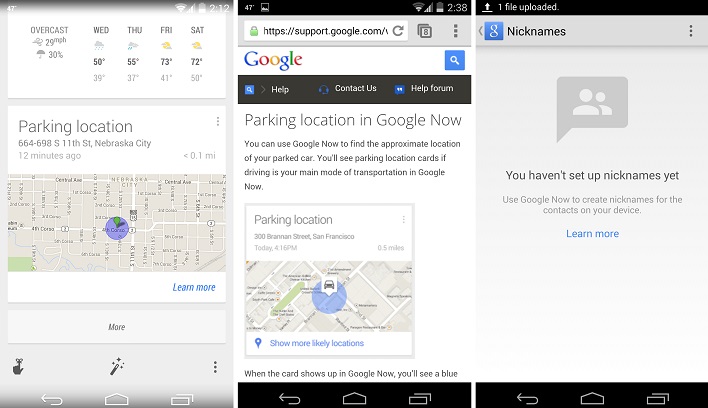
According to Android Authority, Google’s latest update to the Android version of the Google Search App includes a new feature which can help users remember where they parked their car and even give directions on how to get back to that spot. For users parking at large venues, malls, or in heavily-populated areas, this could potentially be a lifesaver. The parking reminder works by asking if you want to save a location as a Google Now card. Then when you are ready to get back to your car, you just tap on the card in the app and directions will appear.
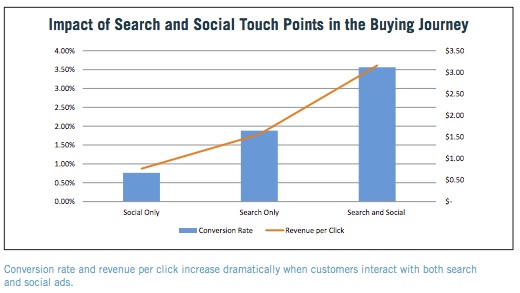
Search Ads Get More Revenue per Conversion When Integrated With Social
Online marketing is quickly reaching the point where you can’t approach it in a vacuum and hope for success. The days of keeping SEO, PPC, and social media marketing apart are fading fast, if they aren’t completely gone already. A new study from Marin Software confirms this y showing that advertising performs vastly better when integrated with a social advertising strategy. Jessica Lee breaks down the details of the study at Search Engine Watch, but you can also get the full white paper here.
YouTube Now Lets Channel Owners Attach Short Intros To Their Videos
This week, YouTube announced that channel owners can now add a three-second intro to their videos, allowing them to build a stronger and more cohesive brand presence across the video platform. Channel owners must upload the intro as an unlisted video, then click “Add a channel branding intro” on the InVideo Programming page. At that point, channel owners can select which videos should include the intro. However, YouTube has said intros can not be used as ads, sponsorship, or product placements, and should not be used by channels whose videos act as advertisements.
Twitter Earns 14 Million Monthly Active Users in Q1 of 2014
Twitter’s earnings report for the first quarter of 2014 shows they continue to grow in just about every area, even outperforming Wall Street estimates in all but one area. The area in which they have continued to struggle is gaining monthly active users, but even there Twitter is showing very positive signs. While not beating Wall Street estimates, Twitter monthly users did grow by 14 million since Q4 2013, culminating in 255 million total users. This is substantially more growth than shown n Q4 2013.
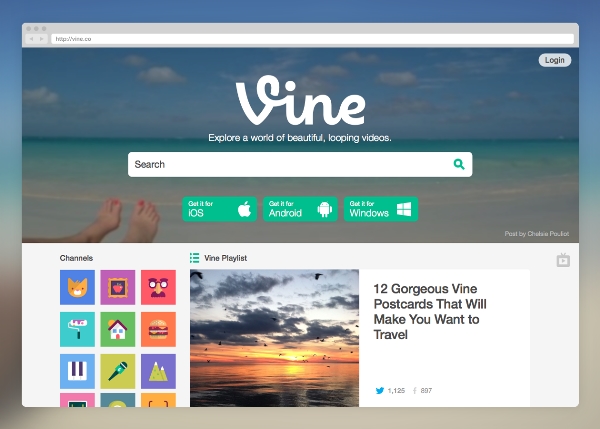
Vine is Coming To Desktop With New Features
Up until now, Vine has been confined to smartphones, but this week the social video platform has made the leap to desktop with a well laid-out website and some new features. The new features include top navigation in the left which includes the home feed and popular now feed, and all feeds can now be linked together in TV mode. The biggest addition however is the new search bar that lets users search by tag, person, or location for the first time. You can get more details in the announcement on Vine’s blog, or you can see the new site for yourself here.
00Taylor Ballhttps://www.tulsamarketingonline.com/wp-content/uploads/2018/07/TMO-Logo.pngTaylor Ball2014-05-02 12:21:372014-05-02 12:21:37Quick News of the Week – May 2, 2014
Last night, an anonymous person claiming to have worked for the Google AdSense department “for several years” posted a statement titled “Google AdSense Leak” on Pastebin which supposedly details a standardized practice of fraud within Google.
The full document is a bit all over the place and unclear in many parts, but the allegations can be broken down to a few key points. According to the anonymous accusations, Google experienced financial issues in 2009 and the AdSense team was told to “tighten the belts” as Google was having to pay too many publishers too much money. To curtail this, the department put a secret initiative into effect that would ban publishers making more than $5,000 per month from AdSense, beginning in March 2009.
The practice becomes especially shady as the supposed Google employee states “We were told to begin banning accounts that were close to their payout period… The purpose was to get that money owed to publishers back to Google AdSense while having already served up the ads to the public.”
The accuser also says they were told the reasons for these practices was that “it was need for the company, and most of these publishers were ripping Google off anyways, and their gravy train needed to end.” Employees who disagreed over the practices were supposedly reprimanded and ridiculed for not being team players, and a small number allegedly resigned right then.
From there, the statement claims that Google wanted to further automate the process, so it set up the “AdSense Quality Control Color Codes” system intended to identify lucrative publishers to ban, while protecting larger corporations or publishers who were likely to create bad press.
The claim says some publishers were even aware of the system and took advantage by “Click-Bombing” their competitors. “Click-Bombing” is supposedly a practice where publishers would repeatedly over-click their competitors’ ads to get them flagged and banned by Google’s fraud detection service.
If true, these accusations could do significant damage to Google and expose a company culture of corruption. However, numerous analysts have found red flags all throughout the text indicating it is a farce. TechCrunch has a pretty thorough take down of the claims. Most importantly, it doesn’t appear the creator of the document ever worked for Google, at least within the “AdSense division”. For one, there is no formal “Google AdSense division” and a Google employee would more likely refer to it by the official internal title “Online Sales and Operations”.
The writer also seems to be unaware of Google’s extensive company culture. He refers to “being a team player”, but several have noted that actual employees call that “being Googley”. There are countless other discrepancies throughout the document, mostly relating to using terms that those inside Google would not, but there are also issues with the writer’s understanding of AdSense policies and internal functionality.
The biggest problem is more than vocabulary inconsistencies and wrong information. As repeatedly pointed out by pretty much everyone who has read the article, the biggest issue is the flawed belief at the core of these supposed policies. While this strategy could potentially save Google significant money in the short term, it would absolutely destroy their long-term platform viability. Google works with more than 2 million publishers and paid out several billion dollars to publishers and advertisers last year. Why risk a lucrative advertising platform’s future for a short term (relatively small) savings?
Of course, Matt Cutts has also issued a statement via Twitter calling the claims B.S. and Google has issued formal statements indicating the claims are false.
@Urgo@kittiesmamayt if they were really an employee, it's not hard to give some proof. And the whole "AQ3C" thing? Complete BS.
00Taylor Ballhttps://www.tulsamarketingonline.com/wp-content/uploads/2018/07/TMO-Logo.pngTaylor Ball2014-05-01 14:02:362014-05-01 14:02:36Are the Recent Claims of Fraud Within Google AdSense a Lie?
One of the most common excuses I hear from small businesses who aren’t taking advantage of online marketing is the fear that a smaller local business can’t compete with the big names you frequently see at the top of the search results. It is such a prevalent concern that Google’s head of search spam, Matt Cutts finally had to address it in one of his frequent Webmaster Help videos.
Specifically, Cutts was asked:
How can smaller sites with superior content ever rank over sites with superior traffic? It’s a vicious circle: A regional or brick-and-mortar brand has higher traffic, leads to a higher rank, which leads to higher traffic, ad infinitum.
Thankfully, the notion that bigger brands automatically can leverage traffic to maintain high visibility is (mostly) false, as Cutts explains. In many ways, search engines are one of the great equalizers, in that they theoretically rank all sites the same way. Big brands are held up to the same standards as smaller or more local businesses.
I would wager Cutts specifically chose this question as it is worded in a way that allows for the most optimistic answer. Cutts is absolutely right when he says that smaller sites with superior content can quite possibly overtake their more recognizable competition. When businesses get to a certain size, they can become lumbering and sluggish, which makes it much easier for a more agile brand invested in their online presence to perform higher.
The larger brand may still get more traffic, but you can steal their spot in the rankings by getting real engagement and interest in your content.
The real trick is finding your niche. While Cutts’ answer prides content quality and performance over all others, he forgets to mention that some brands may be able to outperform you in many markets. The big brands may be large and encumbered, but they also have the resources to put up a good fight for online visibility, which a small brand with less resources may not win across the board.
However, if you can find your niche, you don’t have to worry about outperforming the well-funded giant in every aspect. You just have to beat them in your one special area. If you have your niche covered well, you’ll be able to grow into other niches until you gradually become a giant too.
You can see Matt Cutts’ full Webmaster Help video below:
00Taylor Ballhttps://www.tulsamarketingonline.com/wp-content/uploads/2018/07/TMO-Logo.pngTaylor Ball2014-04-29 11:27:002014-04-29 11:27:00How Can Smaller Businesses Compete With The Big Names Online?
With the constant stream of news coming out of the online marketing industry, it can be hard to keep up with all the latest updates without missing some important information. Below, we will go through all of the news from the week that we missed at the time.
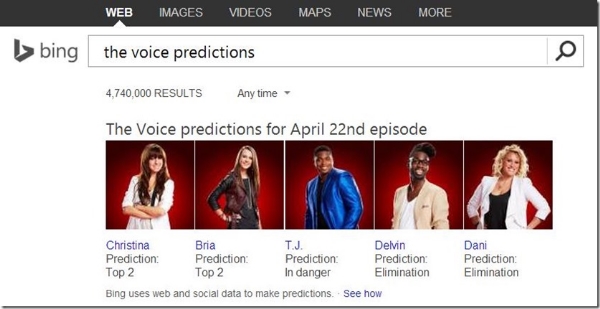
Bing Tries To Predict The Winners of Your Favorite Reality Shows
Bing is using search and social signals in their attempt to predict outcomes of public events, and they are showcasing the results of their test by estimating who will be moving onto further rounds in reality shows like The Voice, American Idol, and Dancing With the Stars. Bing isn’t using magic to see the future, but they are using measures of popularity to predict the results of some of the most popular shows in the country. While this could be a fun feature for fans of reality TV, there is also potential for Bing to expand their predictions to events and elections that have a more direct on the country in the future.
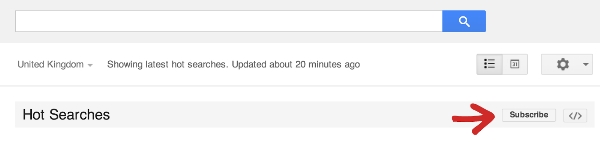
Google Lets You Subscribe to Trending Search Topics
Google Trends has been a useful tool for discovering what people are searching for around the world. But, the service has always been somewhat isolated. You can consult the section to see what new artists, films, or memes are trending, but users have been left to keep up with the topics that interested them on their own. Now, Google Trends has added a new feature that lets you “Subscribe” to any search topic, Hot Searches for any country, or any U.S. monthly Top Chart. Google explains how subscribing functions in their announcement.
New Features are Headed to AdWords
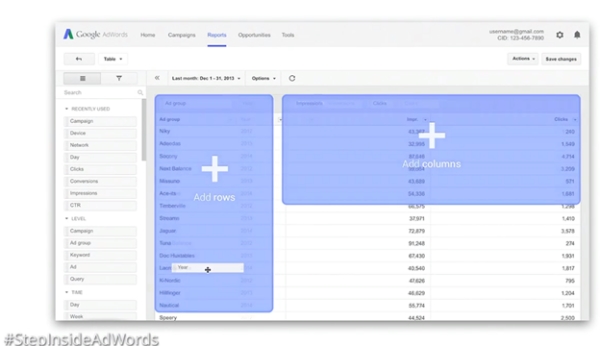
Last week, Search Engine Land teased that huge news was coming for AdWords by vaguely discussing what types of features you might be seeing in the future. All the features were announced on Tuesday and Larry Kim took the time to break down what each new feature does and how it can affect online advertisers. Find out what the new AdWords will be like in Kim’s article for Search Engine Journal.
More Than Half of Responsive Mobile Sites Have “Unacceptable” Load Times
Responsive design has been widely loved for its ability to unify user experience across multiple platforms and devices, and some web designers claim it even speeds up their work process by preventing them from having to design two separate sites. However, a new study suggests responsive design may have a significant weakness. Responsive design may provide a better and more cohesive user experience across platforms, but a new study says the majority of responsive sites load too slowly for mobile users who are likely to leave a page that doesn’t load within 5 seconds. Mobile web developer Trilibis evaluated 155 prominent responsive design websites, and their findings aren’t pretty.
Yahoo Tests A Google Knowledge Graph Doppelganger in Search Results
There are rumors swirling that Yahoo is considering rejuvenating their search engine to re-challenge Bing for the second most-popular search engine available. Their share of the search market suggests Yahoo will have to make some drastic changes to have any chance at their comeback in the search game, but the company has been testing some recent changes to their search engine that lend truth to the rumors. However, one of their tests also drew attention for looking questionably similar to Google’s Knowledge Graph. All Google Testing discovered the test and documented how to see the test for yourself, or you can just watch their video below.
00Taylor Ballhttps://www.tulsamarketingonline.com/wp-content/uploads/2018/07/TMO-Logo.pngTaylor Ball2014-04-25 12:12:362014-04-25 12:12:36Quick News of the Week – April 25, 2014
You would think most guest blog networks would be watching their steps in the wake of the widely talked about penalty levied against MyBlogGuest, but one network named PostJoint has remained steadfast, if not cocky. Unsurprisingly, that means they are the lucky recipient of the second penalty Google is giving to a guest blog network.
Last week, someone tweeted to Matt Cutts that PostJoint had been hit, and it didn’t take Matt long to confirm that action had been taken, stating that “any link or guest blog network that claims to have ‘zero footprints’ is waving a giant red flag.”
@techtada any link or guest blog network that claims to have "zero footprints" is waving a giant red flag.
When Cutts first began to talk about guest blogging being done for, both PostJoint and MyBlogGuest were outspoken in their defense. The operators of MyBlogGuest tried to argue that they didn’t fit the definition of a guest blog network, and PostJoint tried to explain how they were different from MyBlogGuest after their penalty. Neither defense managed to protect either network.
Perhaps the most entertaining part of the penalty is the response PostJoint has given in their blog titled “Matt Cuts Us Out“. The short story is that PostJoint is confused about the warnings they received while openly admitting that at least 16% of their network received the unnatural links notification.
All of that leads them to conclude: “The fact that only 16% of our sites have been hit shows that Google can’t infact trace all of the sites using PostJoint.” Clearly, PostJoint doesn’t understand how Google’s penalty system works.
00Taylor Ballhttps://www.tulsamarketingonline.com/wp-content/uploads/2018/07/TMO-Logo.pngTaylor Ball2014-04-21 16:12:202014-04-21 16:12:20Another Guest Blog Network Gets Slapped With a Penalty
For an industry that relies on as much data as the SEO market does, there is never much certainty that the popular optimization tactic being preached at the moment is a legitimate strategy. We rarely have the definitive answers from the source needed to keep all the confusion down, and new myths seem to spring up overnight.
To counter the constant flow of SEO myths, Google’s distinguished engineer Matt Cutts used one of his recent Webmaster Help videos to debunk many of the misconceptions surrounding the world’s most popular search engine.
This isn’t the first time Cutts has used his regular video message to debunk SEO myths, but this time he focuses on a specific type of myth that has become increasingly widespread as Google seems to keep narrowing their guidelines and offering greater space to ads.
Cutts starts by tackling the myth “if you buy ads you’ll rank higher in Google” and the opposing legend that not buying ads is the key to high rankings. In Matt Cutts’ perspective, these fables are tied to the notion that Google makes all of their decisions in an effort to force webmasters to buy more ads.
The problem with that idea is that it doesn’t actually reflect how Google thinks about their operations. The fact is, webmasters are rarely the main priority for the search engine to begin with. Instead, according to Cutts, Google’s rationale behind all changes is simply that they want to return the best search results possible to keep users happy and keep them coming back.
Of course, no one is denying that Google would like users to see ads and generate revenue, but that is never the prime motivation for changes like algorithm updates.
On a similar note, Matt uses the second half of the video to discuss the offers he sees for software packages that clam to help users make money and magically fix their SEO – for a small fee, of course.
Just as you can’t buy your way to high rankings with ads the chances of a random purchased software package making you money is almost zero. Matt lays out another scenario: “If someone had a foolproof way to make money online, they would probably use that way to make money rather than packaging it up in an ebook and selling it to people.”
In the end, most of the myths are born out of a misunderstanding of Google’s goals. Too many SEO professionals think of their job strictly in terms of increasing visibility and rankings, or upping their ROI. But the search engines are just looking for the best content possible. You can spend your time trying to game and cheat to get to the top, or you can align yourself with the search engine and try to provide users something of value. According to Cutts, that should be enough to fix many of the problems less honest SEOs tend to run into.
00Taylor Ballhttps://www.tulsamarketingonline.com/wp-content/uploads/2018/07/TMO-Logo.pngTaylor Ball2014-04-17 13:52:452014-04-17 13:52:45Tearing Down SEO Myths With Matt Cutts
Matt Cutts has been urging webmasters to use strong encryption measures on their sites for quite a while, and he has hinted that one day Google may start rewarding those sites in their search results. Google has remained mum on the issue entirely, but there are rumors swirling that Cutts is doubling down and pushing for an algorithm update that would favor secure sites within the company.
At the SMX West conference, Cutts explained why the search engine would benefit from favoring encrypted sites by saying that it would save Google a large amount of time when new security panics occur. According to Time magazine, Cutts is quoted saying, “We don’t have the time to maybe hold your hand and walk you through and show you exactly where it happened.”
It is unclear if these types of changes are likely to be made any time soon, as most sources seem very skeptical. But, in the wake of Heartbleed, one of the most widespread security exploits in history, now would be a reasonable time to increase security guidelines and protocols.
00Taylor Ballhttps://www.tulsamarketingonline.com/wp-content/uploads/2018/07/TMO-Logo.pngTaylor Ball2014-04-16 13:37:472014-04-16 13:37:47Is Google Going to Favor Secure Sites in Search Results?
It was difficult to trust most tech news early this week, as April Fools’ Day pranks went live across the web, and all sorts of joke announcements were published. But, now the laughter has died down and the employees at Google and Bing have returned to work. We’ve gathered up their latest changes and (real) announcements, so you can be caught up going into the weekend.
Bing Testing New SERPs Layout
Bing is ending the week by following Google’s most talked about recent change. Barry Schwartz and other prominent members of the SEO community began reporting that Bing is showing a new search results layout earlier today, but it currently appears to just be a test.
The new design changes the color of the logo from gray to the more familiar golden yellow, and the search button has been colored to match. Bing has also removed the gray background from the right side column. The interface is notably cleaned up, but overall the design won’t feel like as drastic of an update when it goes live as Google’s did.
Google Gets Another Privacy Fine From Europe
Not long ago, Google was forced to pay a 145,000 EUR (approximately $189,000) to Germany for privacy violations associated with their Street View program, a Reuters story reports the search engine has now been issued a fine in Italy. The roughly $1.4 million (1 million EUR) fine also related to Street View, though this time it appears to deal with a failure to clearly mark cars used for Italian street photography in 2010.
When announcing the fine, Italian authorities acknowledged that Google has already remedied the problem and is no longer in violation.
Google Adds More Apps To Its Index
Late last year, Google announced that they would begin allowing Android users to click on a Google result and open the page directly within an app, if it is already installed on the users smartphone. The first wave of apps being indexed by Google went live in December, and it would appear the test has been a success so far.
The search engine has now announced that they would be including 24 more apps in their indexing program. You can see which apps have been added in the image below.
00Taylor Ballhttps://www.tulsamarketingonline.com/wp-content/uploads/2018/07/TMO-Logo.pngTaylor Ball2014-04-04 14:47:142014-04-04 14:47:14Quick News of the Week – April 4th 2014
Chances are you are just beginning to get adjusted to Google’s widely-talked about search engine result pages (SERPs), but you may not have noticed the smaller details that have been tweaked to make the page look clean and coherent. For example, several eagle-eyed members of the SEO community have noticed that the redesign appears to have affected the visible title tag length for results.
The title tag, or the blue clickable link in the Google search results, doesn’t really have a defined number of characters allowed. It isn’t like Twitter, where you have a hard character limit. Instead, Google uses an algorithm to determine exactly how many characters are shown.
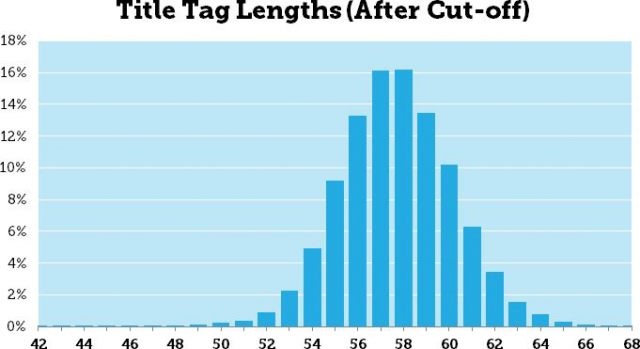
Obviously, Google hasn’t disclosed the details of their algorithm, but Pete Meyers from Moz says the title lengths range from 42 to 68 characters allowed, with most showing 57 to 58 characters.
Most importantly, this change has no direct impact on rankings. Google still reads your entire title and uses everything to helped determine rankings. However, this could make some titles less click friendly or attractive as they used to be.
You won’t be punished directly by Google for using the same strategy you previously have for titles tags, but you might refine your technique slightly to keep future titles as appealing to readers as possible.
00Taylor Ballhttps://www.tulsamarketingonline.com/wp-content/uploads/2018/07/TMO-Logo.pngTaylor Ball2014-03-31 14:30:362014-03-31 14:30:36The Effect of Google’s Redesign of Title Tags

 Last night, an anonymous person claiming to have worked for the Google AdSense department “for several years” posted a statement titled “
 You would think most guest blog networks would be watching their steps in the wake of the widely talked about