None of the big search engines like to talk about it, but negative SEO has been a problem for years. By Google’s admission, negative SEO has been occurring since 2007 – though they claim it is rare.
As “rare” as negative SEO may be, it has managed to cause serious problems for sits as large as Expedia, and it has been enough of an issue for Google to have to reword their own documentation on the subject.
If you’ve yet to run into any cases of negative SEO, it is a practice of using purposefully bad SEO against a competitor. For example, it is possible to point huge numbers of low-quality links towards a competitor’s site and potentially cause the competitor to be punished by Google’s Penguin algorithm. Penguin is designed to take down sites who build backlink profiles filled with low-quality links in order to cheat the search engine for high rankings.
You would think search engines would be actively trying to fight the possibility of SEO companies using their skills against competitors or former clients, but according to Search Engine Roundtable, it is only getting easier.
Barry Schwartz reported on a conversation occurring over at WebmasterWorld, where a site administrator going by Engine said “negative SEO is now much easier to do than it was prior to google’s latest updates.”
It turns out, the majority of webmasters and SEOs seem to agree. The overwhelming response to the question on WebmaserWorld agreed with Engine’s statement, and over 70% of the respondents to a poll on Search Engine Roundtable sided with those who believe negative SEO is getting easier.
Considering the latest algorithm updates from Google are receiving the majority of the blame for this trend, it isn’t particularly surprising they remain relatively mum on the issue. But, business owners have every right to be concerned. Hopefully, Google’s next big algorithm they unveil will be aimed at protecting innocent webmasters from the “black hat SEOs” who use such destructive practices.
00Taylor Ballhttps://www.tulsamarketingonline.com/wp-content/uploads/2018/07/TMO-Logo.pngTaylor Ball2014-06-05 14:24:132014-06-05 14:24:13Negative SEO is Getting Easier
Every month, comScore releases a “U.S. Search Engine Rankings” report illustrating the market shares of the most commonly used search engines. From month to month the results have stayed largely the same for over a year, with Google taking in almost exactly two-thirds of the market and the other search engines like Bing and Yahoo slowly growing and shrinking by minuscule percentages.
ComScore’s report is widely trusted by most of the online marketing community, but recently analysts from Conductor attempted to challenge comScore’s findings with their own report claiming Google actually rakes in a significantly larger percentage of searches. They even went as far as to title their reports “Why You Shouldn’t Trust comScore’s Numbers for Search Engine Market Share.”
For such an obvious attack on another analytics firm, you would assume Conductor was publishing new information or even comparing the same factors. As Danny Sullivan from Search Engine Land shows in his article reviewing Conductor’s findings however, Conductor’s findings shouldn’t be news to anyone paying attention, and they don’t disprove comScore’s findings.
The issue i that, when people hear that Google controls two-thirds of the search market many publishers assume they should see close to the same proportion of traffic coming from the search engine. Instead, most publishers see significantly more traffic from Google than their market score seemingly indicates.But, market share isn’t a measurement of the traffic sites receive.
The monthly report from comScore reflects the number of actual searches conducted from the major search engines. Most importantly, their report isn’t affected by where the user goes after clicking on a search listing. Sullivan refers to this type of measurement as “before-the-click” behavior. Every search gets counted equally, no matter what the destination is.
Conductor’s analysis instead focuses on “post-click” behavior, or the traffic publishers receive from search engines. In their report, the information that matters most is the post-click activity. If someone does a search and clicks on a link that leads them back into the search engine, it isn’t measured in Conductor’s report.
The discrepancy between these two types of reports isn’t anything new. In fact, Sullivan cites 2006 as the last time it received significant attention due to Rich Skrenta writing that Google’s “true market share” being 70% while most measurement services were estimating their market share at 40%. Most entertainingly, Sullivan’s response then still perfectly explains why a gap might form. So much changes in search on a daily basis it is always noteworthy when something manages to be admirably accurate after eight years. As Danny Sullivan wrote at the time:
“But a search for something on Yahoo Sports? That might be counted as a “search” and it is – but it’s not the type of search that would register with site-based metrics. The searcher might stay entirely inside Yahoo.”
Search engines with the largest gaps favor their own services more than others, which would suggest that Bing’s 13% gap indicates they direct searchers to their own services and platforms more than any other search engine. Surprisingly, Google appears to favor themselves the least, with a -18% gap.
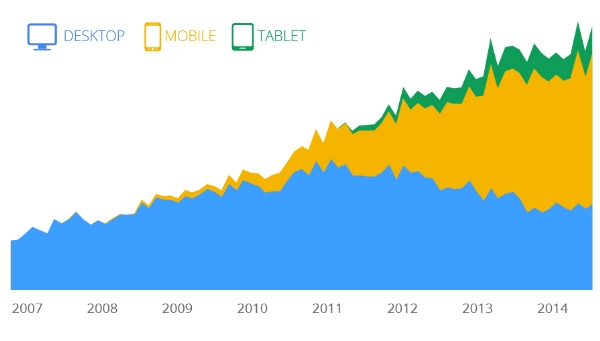
Of course, there is always the possibility that this gap could be created or exacerbated by other factors that may not have been in play at the time. When Sullivan asked comScore for its opinion on the difference between its reports and Conductor’s recent study he was told mobile search could also potentially be an influence. Google has a higher share of mobile search than compared to desktop figures, and comScore’s reports only include data from desktop users.
Both reports serve their own purposes, but both also highlight the same issue. Google has a huge hold on search traffic that should be recognized and planned for. But, those who buy into Conductor’s study may be tempted to ignore the other search engines entirely. To each their own, but my opinion still favors an approach which puts the most weight in Google but doesn’t cut out the other search engines too much.
00Taylor Ballhttps://www.tulsamarketingonline.com/wp-content/uploads/2018/07/TMO-Logo.pngTaylor Ball2014-05-29 13:09:482014-05-29 13:09:48Just How Much of the Market Does Google Actually Control? Making Sense of Conflicting Reports
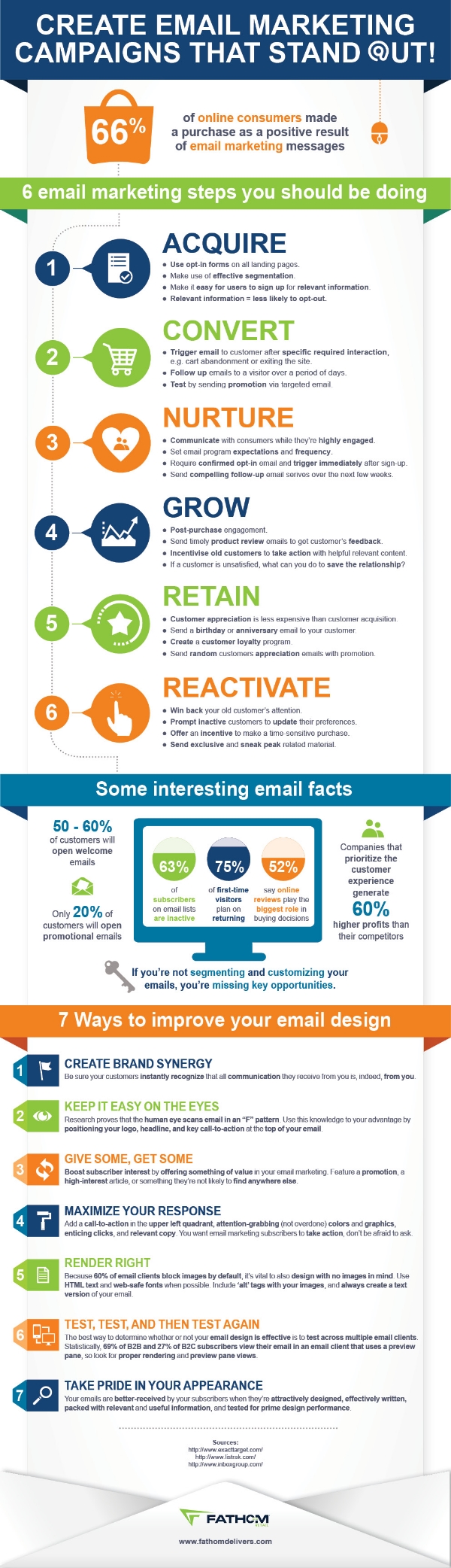
Despite all the advances and changes in online marketing in recent years, email marketing is still one of the most valuable tools any business or marketer has at their disposal. It is so effective that up to 66% of online consumers have reported making a purchase just because of an email marketing message.
To highlight the importance of email marketing, digital marketing agency Fathom created an infographic complete with a 6 step guide to email marketing, 7 ways to improve your emails, and even a few interesting facts.
If you’ve been neglecting your email marketing in favor of social media or content creation, you’re hurting yourself as much as you are helping. The newer platforms for online marketing can be very effective and useful, but sometimes the traditional methods stay popular for a reason. Email marketing is powerful and won’t be going anywhere anytime soon. It’d be best not to cast it out before it loses its effect.
00Taylor Ballhttps://www.tulsamarketingonline.com/wp-content/uploads/2018/07/TMO-Logo.pngTaylor Ball2014-05-27 12:39:312014-05-27 12:39:31Email Marketing is Still One of the Best Strategies for Marketers
With the constant stream of information coming out of the online marketing industry, it can be hard to keep up with all the latest updates without missing some important news. That’s why we compile all the biggest stories you may have missed this week all in one convenient place every Friday. This week was short on big announcements from most of the major platforms (aside from Panda 4.0), but there are still plenty of small updates you might not have heard yet.
Facebook Gives Restaurants Easy Way To Display Menus
Restaurants who are taking advantage of their Facebook profiles may have noticed a new feature yesterday, which will make it easier than ever to make their menus available to the general public. Facebook pages associated with restaurants can now upload PDF versions of their menus and display them directly in their page tabs. The feature is available worldwide within page settings.
Facebook Introduces New Default Privacy Settings and Privacy Checkup Tool
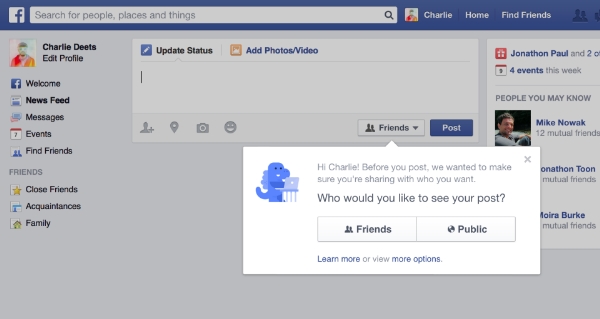
Yesterday, Facebook announced some changes to their privacy systems that are intended to raise the ease of controlling how secretive you are with what you share to their site. The most notable change is that posts are now set to only be shown to friends for new users. Previously, the default setting was Public.
Facebook is also working on rolling out a new and improved privacy checkup tool for users over the next few weeks. The tool will walk users through a series of steps to review their privacy settings ranging from who can see their posts to what apps they’ve given permissions to.
Facebook has been making efforts to improve the privacy and security of users in the past few months, including introducing Anonymous Login and making it easier for smartphone users to see which audience they are sharing with.
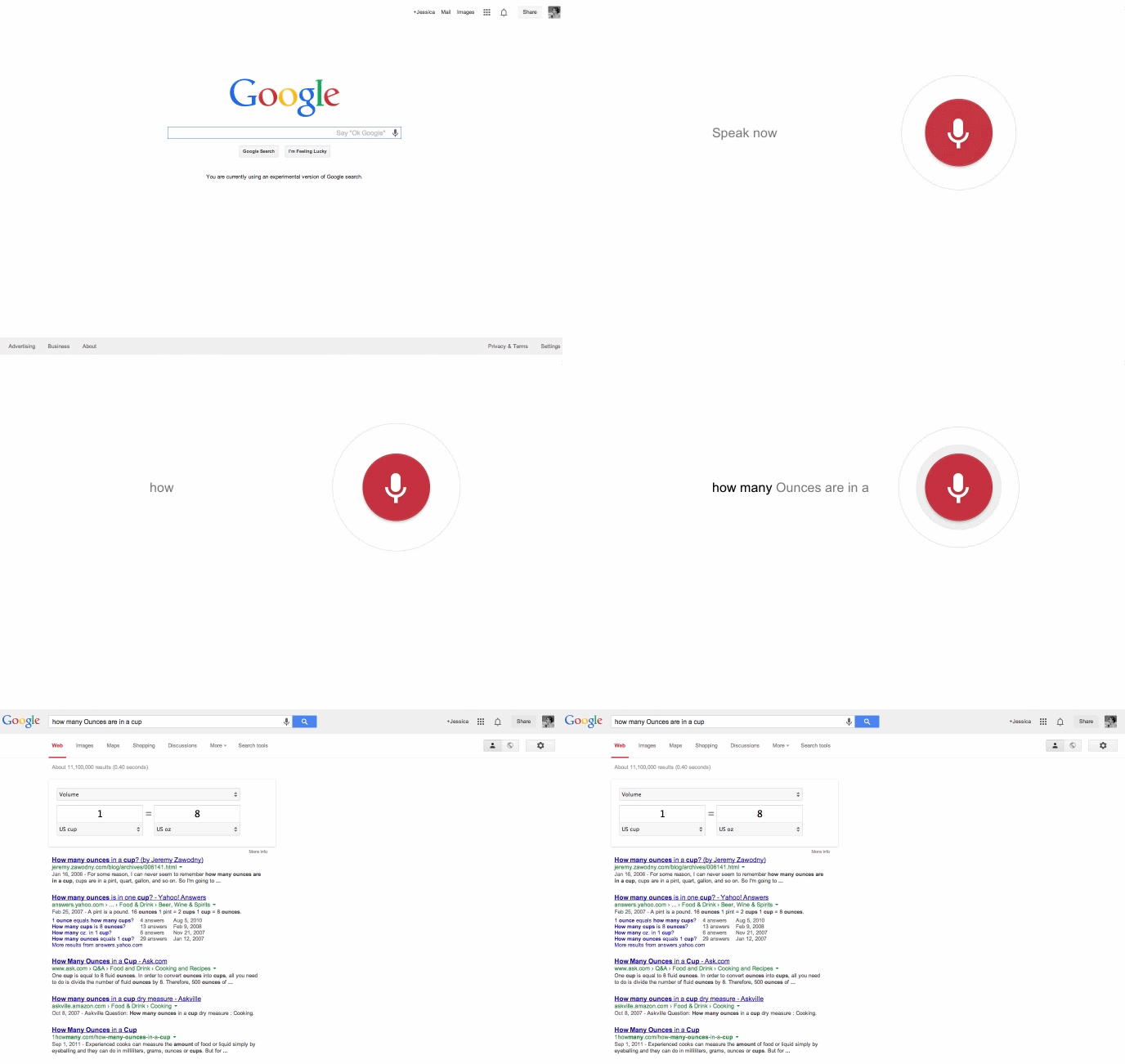
Google Brings Okay Google Voice Detection To Chrome on Desktops
Google announced via Google+ that Chrome, the popular web browser made by Google, that they have added the crowd-pleasing ability to say “Okay Google” to activate voice search by default from the Google search page. To set up the ability, you may have to click n advanced settings and check off “Enable ‘Ok Google’ to start a voice search.”
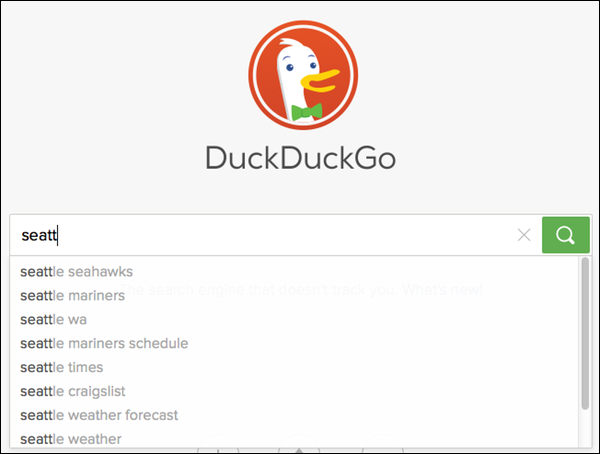
DuckDuckGo Relaunches With a New Look
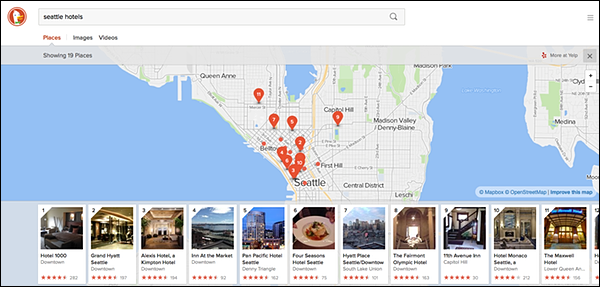
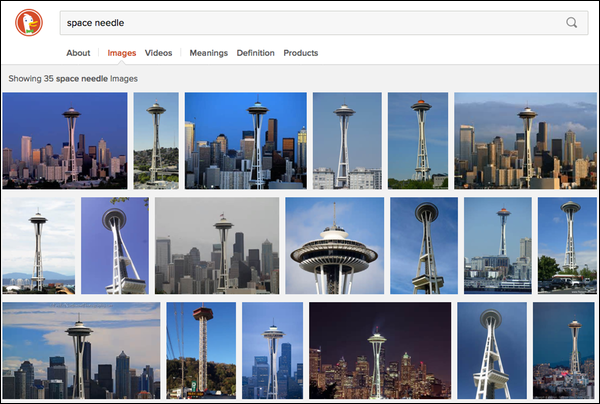
DuckDuckGo made its name as the search engine for those want user privacy in the wake of the NSA scandal that broke open last year, but it always suffered from a rough layout that didn’t favor public usage. All that has changed as the engine relaunched earlier this week with a new look and feel, as well as tons of other new features like maps, local search, and image search.
The new layout resembles a traditional search engine much more, while still championing users privacy, and improving on existing features while they’re at it.
DuckDuckGo is using OpenStreetMap for its map system.
Image search results are shown in a carousel-style presentation by default, but you can also switch to a more familiar full-screen grid with the click of a mouse.
00Taylor Ballhttps://www.tulsamarketingonline.com/wp-content/uploads/2018/07/TMO-Logo.pngTaylor Ball2014-05-23 12:08:082014-05-23 12:08:08Quick SEM News of the Week – May 23, 2014
Over the past 2 days, the SEO community has received confirmation that Google is rolling out not one, but two web spam focused algorithm updates; Panda 4.0 and Payday Loan 2.0. Panda 4.0 was confirmed by Matt Cutts on Twitter, while Search Engine Land initially announced the newest Payday Loan update which was later verified by Cutts.
Google is rolling out our Panda 4.0 update starting today.
As with any major algorithm update, there is much more speculation than there are facts at the moment. However we do know a little bit about the roll outs of the algorithm updates and what they are focused on.
Panda 4.0
Panda 4.0 is being called the ‘softer update’ in relation to its precursor thanks to a discussion back in March. It has been stated that the update affects different language queries to different extents, but Google estimates the effect on English searches is about 7.5% of queries.
Considering the reports of sites seeing significant recoveries, it is safe to assume this update is a little more generous and more welcomed than than the previous updates to Panda.
Payday Loan 2.0
The Payday Loan Algorithm is a bit less well known, as it was first launched last June and only targets ‘very spammy queries’; primarily the type of spammy queries associated with payday loans, insurance, and accident claims.
A Google Spokesperson issues a statement on the update, saying:
“Over the weekend we began rolling out a new algorithmic update. The update was neither Panda nor Penguin – it was the next generation of an algorithm that originally rolled out last summer for very spammy queries.”
So far estimates say only .2% of English queries were affected by this update, though this is also an international rollout affecting different languages to different extents.
With the constant stream of information coming out of the online marketing industry, it can be hard to keep up with all the latest updates without missing some important news. That’s why we compile all the biggest stories you may have missed this week all in one convenient place every Friday. This week, Pinterest dominates headlines. Let’s get started:
Pinterest Finally Starts Paid Test of Promoted Pins
Last fall, Pinterest announced they would be making their first foray into paid ads on the social media platform under the title of “Promoted Pins”. They ran some tests shortly after the announcement to gauge how their users responded to the ads. Now, Pinterest declared they have officially begun a small paid test of the Promoted Pins while working with a small group of brands from the U.S. The test will only be shown in Pinterest’s search and category fields.
Pinterest lists the entire list of brands taking part in the test, including ABC Family, Banana Republic, GAP, and Walt Disney Parks and Resorts. If you do happen to catch one of the Promoted Pins being tested, Pinterest would like users to give feedback via a form found here.
Pinterest Reveals the Most Popular Categories On Each Day of the Week
Just about every social media platform has their own mini-trends that influence what type of content gets shared the most at a certain time. Facebook users follow predictable patterns of usage times and the success of content on Reddit is partially decided by the “prime sharing times” when users are more likely to see new content. Similarly, Pinterest recently shared a post on their blog detailing the most popular categories for each day of the week.
4 Statistics About Pinterest You Need to Know
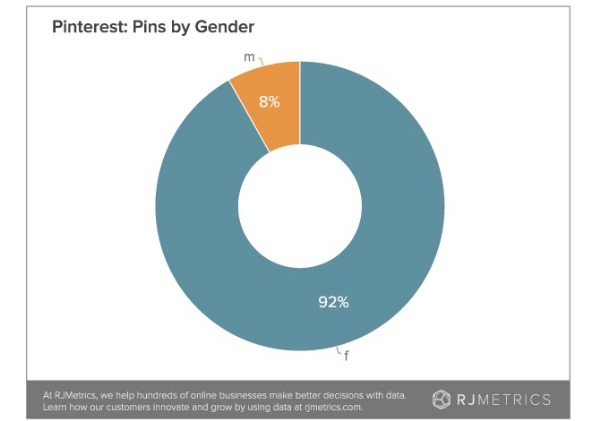
On the topic of Pinterest trends and data, RJMetrics recently ran a study of 50,000 random pinners and their pins to analyze how people are using Pinterest. At first glance, the data may seem like old news, however the details found in the study give strong insight into what pinners are interested in, what they are likely to share, and when they are most likely to Pin. For example, it is no secret that the majority of Pinterest’s users are female, but it may come as a surprise that around 80 percent of pinners are female, and an whopping 92 percent of all pins on the site come from women.
You can get all the details from the study in RJMetrics’ report on their site.
Google Maps Adds Location Based Quick Facts
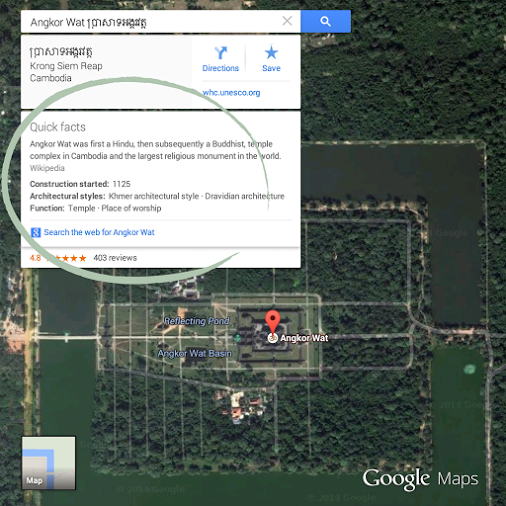
Yesterday, Google announced via Google+ that they have added a new section on map results for location searches named “Quick Facts.” As many have pointed out, the section looks quite similar to the Knowledge Graph that appears on some Google searches, and has the same type of very quick information about the area you are searching for. The Quick Facts are pulled from Wikipedia and other data sources typically used in the Google Knowledge Graph.
You can get an idea how the Quick Facts operate thanks to the example Google released of the results for Angkor Wat in Cambodia below.
Twitter Introduces a Mute Button To Quiet Individual Users
Earlier this week, Twitter revealed they will be adding a new feature for its iPhone and Android apps, as well as Twitter.com, which allows users to mute specific people and forbid their tweets from appearing in your timeline. You can mute users two different ways. You can either mute a user from a Tweet by clicking on ‘more’ followed by ‘mute @username’ or you can mute users from their profile page.
When a user is muted, their Tweets and Retweets will be no longer visible in your home timeline and you won’t receive push notifications if you previously set up that feature for the user. However, the muted user will still be able to see, face, reply to, and retweet anything you share. From the muted users perspective nothing will have changed.
You will be able to unmute users at any time and the new feature is expected to be rolled out in the next few weeks.
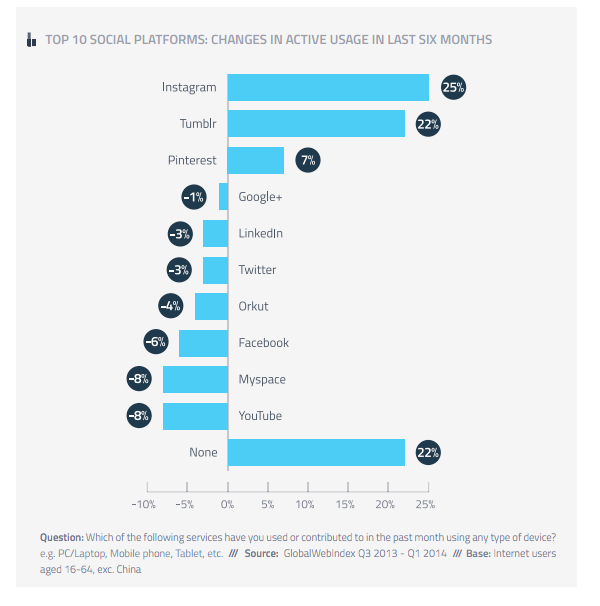
Facebook and Twitter See Slightly Less Global Usage While Instagram and Tumblr See Big Increases
Facebook and Twitter still hold a strong hand on the social media landscape/ However their grasp may not be safe forever as new survey data from GlobalWebIndex shows a slight reduction in usage for both networks over the past six months. They Facebook may not be too nervous yet. The survey of more than 40,000 internet users in 32 global markets, excluding China, found that as much as 82% of users worldwide have Facebook accounts.
However, several reports suggest the small dip in usage may be an indicator of a growing trend within Facebook, opening the door of opportunity for smaller and more focused social platforms such as Instagram and Tumblr.
The survey also found a significant growth in the use of mobile apps. Out of all apps, Snapchat saw the biggest rise in use as it is accepted by more and more teens worldwide. You can download the full report from GlobalWebIndexhere, but Martin Beck also summarizes the findings over on Marketing Land.
00Taylor Ballhttps://www.tulsamarketingonline.com/wp-content/uploads/2018/07/TMO-Logo.pngTaylor Ball2014-05-16 12:08:202014-05-16 12:08:20Quick SEM News of the Week – May 16, 2014
Google Webmaster Tools (GWT) is Google’s direct line to every website owner, which consequently makes it the most important set of tools and webmaster has at their disposal. GWT allows webmasters to identify any problems with their site including alerting you to any penalties placed on you by the search engine and checking for signs of malware that may have infected your site.
Probably the most surprising thing about Google Webmaster Tools is how many webmasters go without ever opening the dashboard of GWT. It isn’t like the cost is keeping them away. Seeing as Google Webmaster Tools is free, the best assumption is that many webmasters stay away from GWT because they are intimidated by the wealth of data and tools all in one place.
Simon Heseltine created an extensive overview of Google Webmaster Tools’ features and capabilities, as well as how you can leverage these tools to optimize your site and ensure everything is working as it should be. If you aren’t using Webmaster Tools, you are missing out and your site is likely suffering because of it.
00Taylor Ballhttps://www.tulsamarketingonline.com/wp-content/uploads/2018/07/TMO-Logo.pngTaylor Ball2014-05-15 12:46:002014-05-15 12:46:00What is Google Webmaster Tools?
Search engines and social media are battling for the top spot as the leading source of referral traffic to publishers on the web. Recent accounts suggested that social media may be taking the lead.
However new data from Parse.ly, a content analytics platform that counts Reuters, Mashable, Slate, and The Next Web among its many clients, shows that search has retaken the lead from social media as the top source of referral traffic in March of this year.
Parse.ly’s publishers saw 32.8 percent of its traffic coming from search in March, compared to 31.2 percent from social media. That is the exact reverse of results from data, when data showed social traffic outdid search 32 to 30 percent.
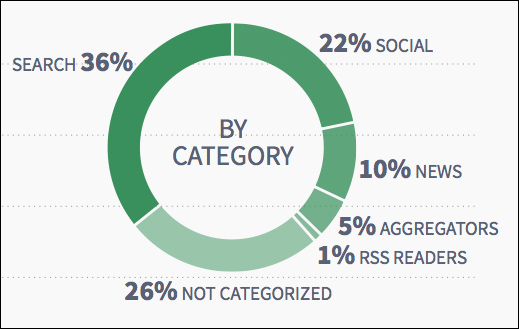
Overall the trends still favor social media, despite the good month for search in March. If you look at reports from further back, it becomes clear that search has been steadily losing ground. In October 2013, Parse.ly reported search was by far the dominant source of traffic at 36 percent, compared to only 22 percent for social.
Google sites were still the No. 1 overall source of traffic for the analytics platform’s clients during the most recent reporting period, with Facebook coming in second. Those two net giants were significantly higher sources than any other individual sites.
00Taylor Ballhttps://www.tulsamarketingonline.com/wp-content/uploads/2018/07/TMO-Logo.pngTaylor Ball2014-05-13 12:26:062014-05-13 12:26:06Report Shows Search Overtakes Social as Referral Source for Major Publishers
The most prominent figures in search engine marketing must get tired of hearing the same old fables and myths that seem to fill the SEM market. Even when well-known employees of search engines like Google’s Matt Cutts and Bing’s Duane Forrester give clear-cut answers to common questions about SEO, PPC, and social media, their answers tend to be met with skepticism and derision.
Of course, as employees of the search engines they represent, it is fair to be critical of public statements that Cutts and Forrester make, but the level of mistrust between SEO’s and major search engine employees tends to breed misinformation and myths which have to be regularly addressed.
This is why Matt Cutts regularly answers common questions in his Webmaster Help videos, but Forrester also frequently clears the air via the Bing Webmaster Blog. Forrester, Bing’s Senior Product Manager, recently took to the blog to give his own perspective on 10 of the most common questions in all of SEO. Let’s break down his responses together:
1. I need to rank #1
The main motivation for most businesses to hire professional SEO services is often to get to the top of rankings. Logic dictates (and studies back up) that sites appearing at the top of the rankings get the vast majority of traffic from search engines for queries. Unfortunately, as Duane points out, things have become vastly more complex. Search engines individualize rankings based on personal information such as location data and shopping habits, so the sites that appear in the top of your rankings may not be as high for someone else’s search.
On top of that, rankings are constantly fluctuating, so your time as king of the rankings won’t be as long lasting as you probably hoped. Duane also encourages site owners to not obsess over being on the first page as much, as click-through rates for top rankings on the second page often outperform click-through rates for lower positions on the first page.
2. My Title tag will save me
Title tags are quite important, but many overestimate the value of title tags in context of their other efforts on their site. A tag can help you perform better, but it can’t hide skipping all the other important steps of SEO. Often, bloggers will claim they must rely on title tags as many popular platforms don’t allow things like meta descriptions in their base code, but that argument is nullified by the number of plugins available that easily and quickly add them, as well as opening doors to many other aspects of SEO for you to play with. Treat your titles with care, but don’t invest all your care on just one spot.
3. Social is all I need
With the rise of social media, many brands have decided to forego their SEO efforts in favor of just engaging their users on a direct platform. This was likely brought about due to old SEO understandings where a concentrated effort on one aspect of your site was enough to boost rankings. However, things have changed quite drastically over the past few years. SEO is a holistic process now, where social, content, link strategies, optimization, and PPC all come into play together.
Forrester compares the process to making a quality seafood chowder. “Success depends on a complex mix of ingredients, freshness, and timing. One ingredient along won’t bring success, and yet without that one ingredient, you don’t have a chowder.”
4. Videos are all I need
People love online videos. Businesses love them because they are easier to produce than ever, while people love them because they can sit back and take in news or entertainment without having to parse long and complex article. But, they are far from a silver bullet. Videos also slow down page load times significantly, and search engines simply can’t understand them as well as written content. If you are going to lean heavily on videos for your marketing, Duane advises adding a transcript of the audio at the very least to benefit the search engines.
5. Buying ads helps my rankings
Matt Cutts devoted a sizable portion of one of his Webmaster Help videos recently to addressing this question once-and-for-all, but it should come as no surprise that some people just won’t listen. Duane is similarly blunt with disregarding the assumption ads can give you an inside lane to success on search engines. Quite simply, “no amount of ad buying will get you organically ranked higher […] The instant [an] engine starts determining ranking based on ads bought is the instant it loses credibility.”
6. I already make awesome content
You may be right, but you aren’t the best judge on the matter. You can have all the technical rules and standards of writing and grammar mastered, but if readers aren’t responding to your content then it needs improving. Grammar does play a big role in deciding how readers perceive you, but style, voice, and message can be even more important. You’ll know when you’re making great content that connects with visitors, because they will tell you.
7. Links are all that matter
I could devote dozens of pages to clarifying the current state of links in online marketing (and several others have), but the simplest description is that good links are still very valuable while bought, spammy, or otherwise improperly acquired links are more dangerous than ever. However, your site can’t succeed on the back of a good link profile alone. As Forrester explains, “links are part of the bigger picture. You want them, but you want them to feel natural. If an engine sees you growing [them] naturally, you’re rewarded with rankings. If they see you growing them unnaturally, you’re rewarded with penalties.”
8. Marking up my content will help it rank
No, there is no direct link to marking up content and better rankings. Marking up content helps search engines understand your content better, so it can be beneficial if you also have good content for the engine to parse. But, simply installing markup code doesn’t inherently boost rankings.
9. Usability is different than SEO
If we are arguing semantics, yes SEO and usability are different disciplines. As more time passes though, it can be hard to tell them apart. Both aim to improve a website for users, and a site with great technical SEO can still be penalized for poor usability such as slow load-times, buggy performance, or clear usability. What is the point of leading someone to your site if they can’t use it properly?
10. SEO is all I need
Doing only one thing doesn’t tend to lead to success. SEO sets the foundation for you to build upon, but it won’t get you where you want to go alone. However, anything you build without that foundation is likely to fall apart.
00Taylor Ballhttps://www.tulsamarketingonline.com/wp-content/uploads/2018/07/TMO-Logo.pngTaylor Ball2014-05-12 14:54:152020-08-08 22:19:16Bing’s Duane Forrester Reviews Some More SEO Myths
With the constant stream of news coming out of the online marketing industry, it can be hard to keep up with all the latest updates without missing some important information. That’s why we compile all the biggest stories you may have missed this week all in one convenient place every Friday. Let’s get started:
Facebook’s Premium Video Ads Could Cost $1 Million a Day
Facebook is attempting to walk the tight rope between monetizing through ads and not overwhelming users with constant advertisements in the news feed. But, as Facebook keeps introducing new ways to advertise on their platform, the ad space is quickly becoming crowded. New reports indicate Facebook may be attempting to manage the shifting balance between ads and user content by pricing “premium” advertising features well out of reach for smaller businesses.
The Wall Street Journal reported this week that the upcoming “Premium Video Ads”, set to launch in the next few months, will likely cost around $1 million per day, and will initially be limited to a small group of advertisers. If you have a subscription, you can read the full story from Wall Street Journal, but Martin Beck also summarizes the rumors at Marketing Land.
Facebook Announces New Upcoming Video Metrics
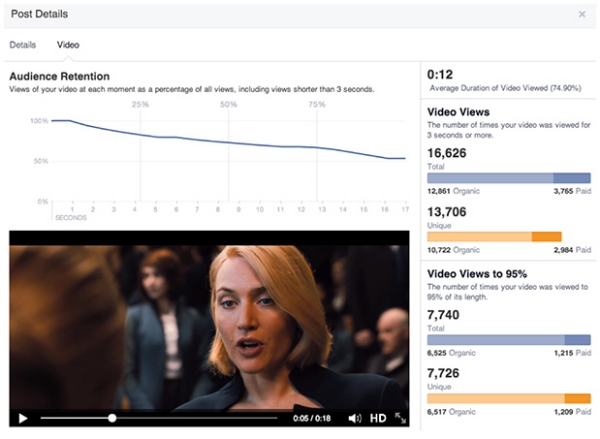
On the topic of Facebook’s method of handling video content on their platform, the social media giant also announced new metrics within Page Insights and Ads Reporting will be coming soon. This way, Page owners will be more able to analyze how users are responding to their videos, and how they may be able to improve their content.
The new metrics include more detailed view counts that will show the total number of video views, as well as the number of individual people who have watched, measurements of audience retention through the length of the video, and a breakdown of the demographics engaging with video content. Facebook’s announcement says the metrics will be available for all paid and organic videos uploaded directly to Facebook Pages, and they will be gradually rolling out in the next few weeks.
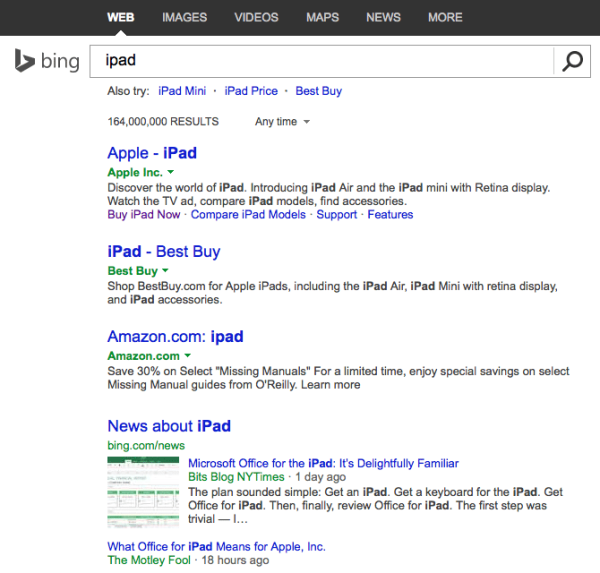
Bing is Testing Search Results Without Underlined Links
Usually Bing tries to distinguish themselves from Google as much as possible, but several people have reported that Microsoft is testing search results without underlining hyperlinks. This comes just weeks after Google officially redesigned their own search results pages around larger links without underlining.
Bing is constantly testing small changes such as this to see what users respond to, but it is hard to not feel like this test is particularly inspired by Google’s recent moves. However, it is important to remember that Bing’s non-underlined links are just a test for the moment, and not a final widespread change. You can see the version of the search results without underlines being tested below.
Google Says New Parents Perform Twice as Many Searches as Non-Parents
A recent survey from Google’s Think Insights says that new and expecting parents perform 2.7 times the number of online searches as non-parents. The survey also says that 56 percent of maternity-related searches come from a mobile device.
According to Google’s analysis of the survey and their own data, they claim parents are trusting the internet more and more for child advice, as baby- and parent-related searches are on an upward trajectory. For a detailed breakdown of what Google says parents are searching for, head over to Think Insights’ report.
Google Maps Now Shows Uber Ride Options, Lane Navigation, and More
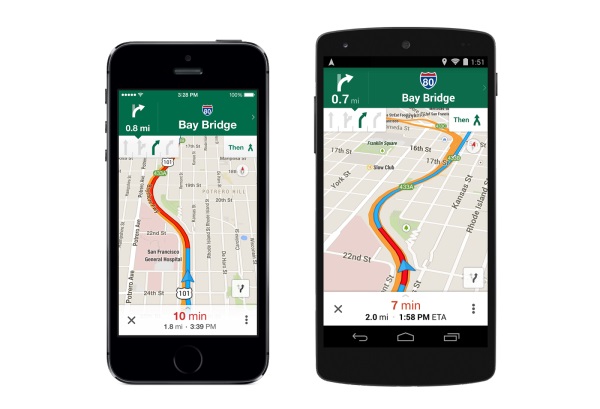
Google Maps is in the process of rolling out several new features for the iPhone and Android app, including more detailed driving directions such as lane navigation which tells you if it is important to switch lanes to stay on the right path. Google Maps also announced integration with Uber, the burgeoning ride service which connects people in need of transportation with available drivers.
According to the announcement, those who already have the Uber app downloaded will be able to compare ride times against walking directions within Google Maps, so you always know what the most efficient transportation option is. Those are just two of several new features Google is unveiling, which are all further explained here.
00Taylor Ballhttps://www.tulsamarketingonline.com/wp-content/uploads/2018/07/TMO-Logo.pngTaylor Ball2014-05-09 12:54:072014-05-09 12:54:07Quick News of the Week – May 9, 2014

 None of the big search engines like to talk about it, but negative SEO has been a problem for years. By Google’s admission, negative SEO has been occurring since 2007 – though they claim it is rare.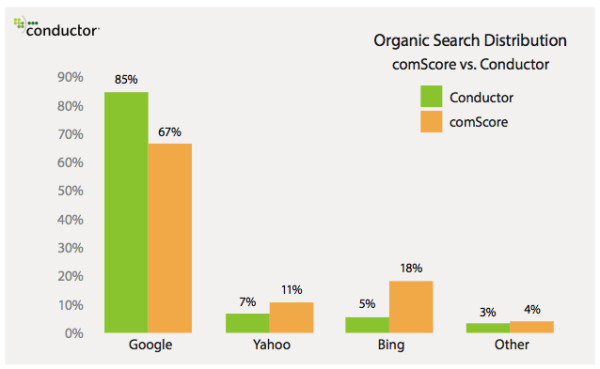



 Google Webmaster Tools (GWT) is Google’s direct line to every website owner, which consequently makes it the most important set of tools and webmaster has at their disposal. GWT allows webmasters to identify any problems with their site including alerting you to any penalties placed on you by the search engine and checking for signs of malware that may have infected your site.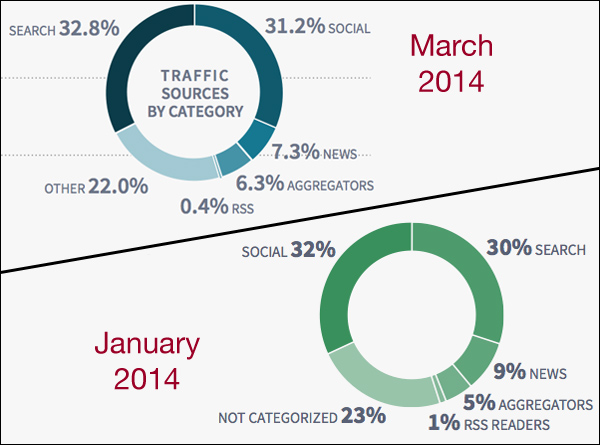
 The most prominent figures in search engine marketing must get tired of hearing the same old fables and myths that seem to fill the SEM market. Even when well-known employees of search engines like Google’s Matt Cutts and Bing’s Duane Forrester give clear-cut answers to common questions about