Tag Archive for: Social Media Marketing

Image Source: Pepsi

Image Source: Pepsi

Earlier this year, Twitter rolled out a new feature known as #Stickers that let users add searchable emoji to their photos posted on the social platform. Since then, Twitter says millions of photos containing #Stickers have been tweeted and shared around the world.

Initially, the emoji available for these “virtual hashtags” were limited to the options Twitter created. However, the site is starting to open the door to allow brands to create their own #Stickers as an ad type called Promoted Stickers.

As Twitter says in their announcement:

“Brands can design four or eight stickers — like accessories and other props — for users to add to their own photos. Photos with a brand’s stickers are shared with all of a user’s followers, allowing brands to be featured by their fans in a truly authentic way. #Stickers act as a visual hashtag, meaning that photos with your brand’s sticker will be connected and discoverable to anyone who taps your brand’s sticker. This allows a brand to see and engage with the people who are using their stickers in creative ways.”

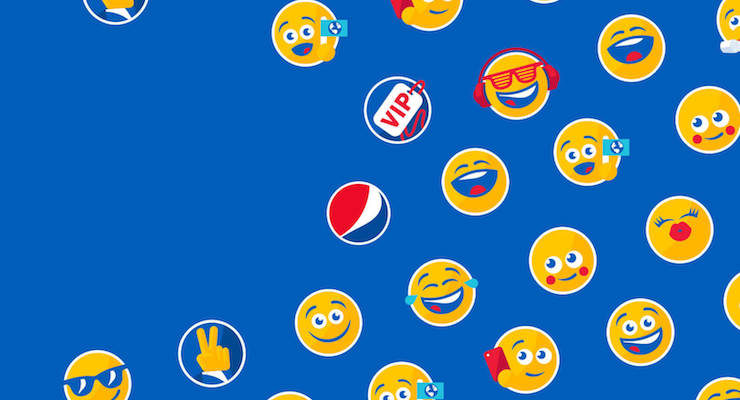
Pepsi is the first brand to use Promoted Stickers, with 50 custom “#PepsiMoji”rolling out to 10 countries, including the USA, Canada, Mexico, Argentina, and Russia. The stickers are part of a larger “Say It With Pepsi” campaign and can be found in the Twitter #Stickers library.

The company has already begun sharing tweets with the stickers, like this one from Pepsi Canada:

Since Twitter is initially keeping the Promoted Stickers limited to a select number of brands and managed accounts, it is unclear how much they cost or what tools may be available to help create new branded stickers. It is also unclear when or if the social platform plans to expand the service to more brands in the near future.
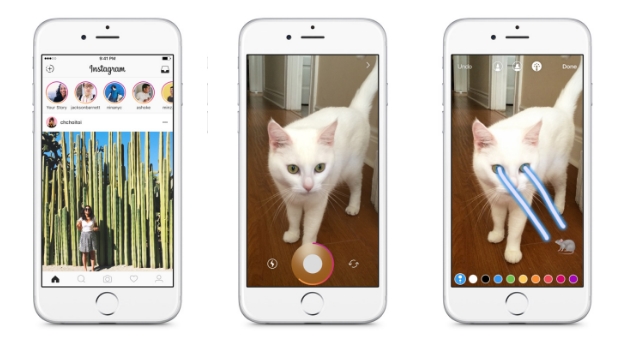
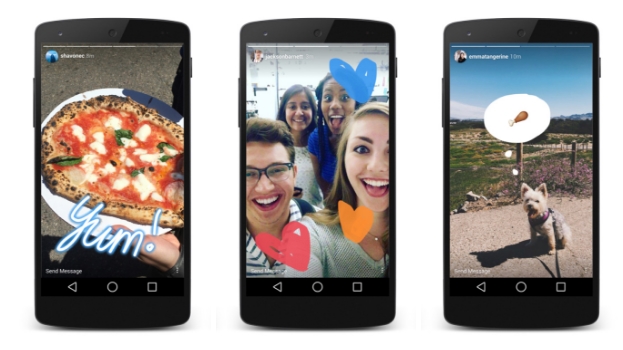
Instagram is launching a new feature, but many are saying the new feature seems inspired by another popular social photo app – Snapchat. The new feature called Instagram Stories lets users and brands share a collection of moments that disappear after 24 hours.

Insa1

If that sounds familiar, it is because the feature is very similar to Snapchat Stories. Not only does it allow users to easily package their best moments of a day into one easy-to-view collection, but Instagram Stories also includes the ability to draw on photos or videos to make them even more exciting.

“With Instagram Stories, you don’t have to worry about over-posting,” an Instagram rep told AdWeek.

Insta2

The new feature is already available on iOS and Android mobile operating systems. It can be found at the top of Instagram feeds, where you can either share your own stories or tap icons to look at what others have shared in the past day.

Unlike most Instagram videos, clips included in stories are limited to 10 seconds. There are also no likes or comments on stories.

For now Instagram isn’t saying whether marketers will be able to take advantage of stories by promoting them like normal posts, however, businesses can still use the feature to engage with the community and build recognition for their brand and products.

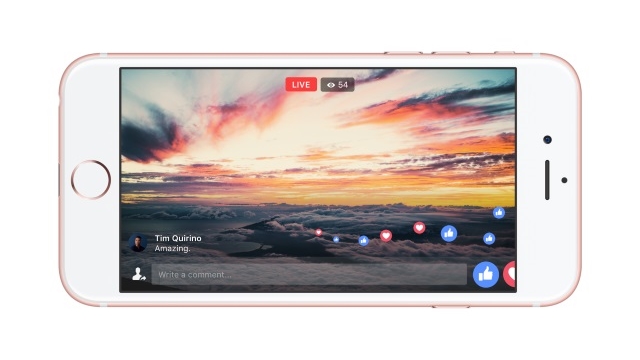
FacebookLiveFullScreenHorizontal

Facebook Live is going to become even bigger in the coming weeks. Facebook has been heavily pushing their live video streaming service and now they have announced several new features that will expand how users can livestream their lives.

Some of the new features are already available and the rest will be rolling out in the next few weeks. Let’s go through what you can expect to see from Facebook Live in the near future:

Longer Streams

Facebook Live users have been limited to 90-minute streams in most circumstances since the launch of the service, but Facebook is extending that limit substantially. Now, broadcasters are able to stream continuously for up to four hours when using the Facebook app or the Live API. If you desire, you can also stream continuously indefinitely, but your followers won’t receive notifications and there is no archive of your stream. You can’t share it with followers later or rewind.

Hide Reactions & Comments

Comments and live reactions can sometimes turn into a mess when you have a large enough audience. It can be hard to weed out spammers and trolls on the fly, but Facebook is making it easier to keep things under control by allowing you to hide reactions and comments by enabling a video-only mode. All broadcasters have to do is swipe right on their screen. You can always swipe left to re-enable them.

Full-Screen

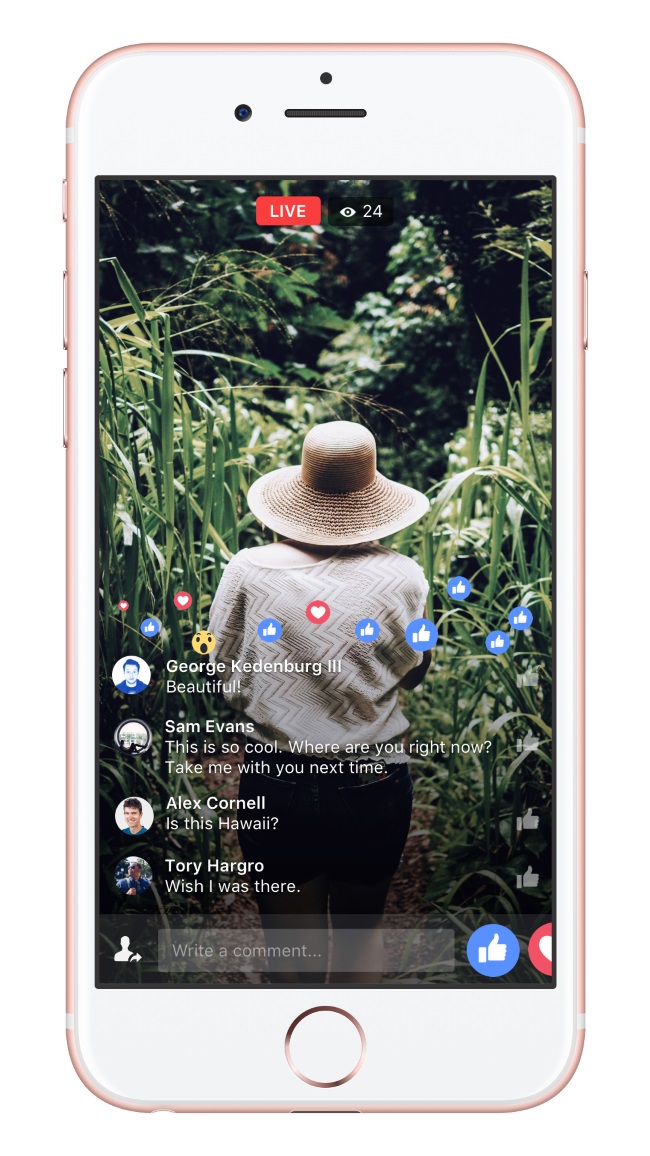
Viewers don’t have to watch your streams from the small box in their feed anymore. Finally, you can watch live broadcasts full-screen from any iOS device. Unfortunately, Android users will have to wait until this summer to be able to view streams full-screen.

FacebookLiveFullScreenVertical

Geogating

Want to make your broadcast an exclusive for a specific demographic? Now, you can limit your audience to specific users based on criteria like location, age, and gender. Facebook calls the feature “geogating”, but it basically allows you to set limits on who can see your streams. Currently, the limits are fairly broad, but they may become more refined in the future.

facebook-video

If you’re a business that publishes content on Facebook, you have good reason to be frustrated. This week, the company announced they’d be de-emphasizing publisher-posted content in users’ news feeds in order to better highlight posts from friends and family, which means it will be even more difficult to break through to a wider audience. But, new data from SocialFlow may show there is still a way to reach tons of users through Facebook.

According to SocialFlow’s report, video content shared across Facebook is outperforming almost any other type of content when it comes to content reach. The social analytics company shares more than half a million stories each month to Facebook and other social networks on behalf of publishers.

SocialFlow recently analyzed 30 days of video content to gauge the total reach, likes, and shares in comparison to other types of content. What they found showed that while other types of content are drastically dropping in reach across the network, video is actually going up.

SocialFlow presented their findings via Facebook Live this week, showing that video made up just 0.9 percent of all posts but accounted for 7.15 percent of reach, 5.2 percent of likes, and 11.1 percent of shares. Of course, the company cautioned that the results don’t represent all publishers, it may mean some are actually seeing even better performance.

“It’s clear that media companies are increasingly turning to video to maximize their reach and audience engagement,” SocialFlow CEO Jim Anderson told Adweek. “We’ve heard plenty of anecdotal reports of strong video performance, and now we have the data to back up the anecdotes.”

The data also excluded Facebook Live video, which is being strongly promoted by the social network – Facebook has even started paying some publishers large amounts of money to encourage use of the format.  Anderson also said he “wouldn’t be surprised” to see video posts grow to account for 5 to 10 percent of total post volume within the next six to 12 months.

The findings show that while many brands and advertisers have been slow to take up Facebook Video, those that have are seeing promising results that suggest it may be the next big thing for publishers stymied by dropping reach through traditional content formats.

Twitter Banner

The magic number for Twitter appears to be 140. The social network built its platform around 140 character tweets, and now it is taking a similar approach with its video service by limiting videos to 140 seconds, according to a recent announcement.

Twitter has allowed users to share videos on its network since last year, but the videos have been limited to 30-seconds maximum until now. The only exception was for a select number of advertisers who could post videos up to 10 minutes long. Now, users are getting a taste of that creative freedom with videos that go slightly beyond 2 minutes long.

The change will also be having an impact on the Twitter-owned Vine, which is known for looping 6-second-long micro-videos. Now, Vines can be used to preview or promote twitter videos which can be viewed by clicking the new “Watch more” button.

According to the company’s announcement, video tweets have gone up by over 50% since the start of this year and these new changes will allow more flexibility for users.

Along with this news, Twitter also announced that iOS and Android users are getting a new viewing mode which shows Vines or Twitter videos in a full-screen mode along with suggested videos.

InstagramBanner

The algorithmic timeline is starting to take over.

For the longest time, the algorithmic timeline was a defining characteristic of Facebook, while sites like Twitter and Instagram used chronologic timelines to keep people up to date as things happened in real time. However, Twitter made the controversial decision to implement an algorithmic timeline earlier this year and Instagram has officially announced they will be making the change next month.

Of course, this isn’t a total surprise. The Facebook-owned platform was bound to implement the algorithmic timeline sooner or later. In March, Instagram started testing an algorithmic which sorts user’s feed based on their interests and activity instead of sorting feeds by the most recent posts.

The announcement of the algorithm tests prompted a collective panic attack among many who bemoaned the loss of one of Instagram’s defining features and worried their posts would be seen by fewer people. However, Instagram says switching to an algorithmic timeline will actually increase exposure for posts, especially from influencers and brands.

According to the photo-and-video social platform, people miss 70% of the posts from people they follow when they use a chronologic timeline. The company says their tests showed the new timeline increases exposure and engagement, which is a win-win for users and brands.

“We found that people are liking photos more, commenting more and generally engaging with the community in a more active way,” Instagram wrote in a company blog post announcing the official rollout.

Social media has undeniably become one of the strongest channels businesses can use to reach out and engage with their audience. But making social media work for you means knowing which platform works best for your business.

You might think that all social media sites are essentially the same, but making that mistake can mean squandering marketing and ad budgets trying to connect with an audience that just plain isn’t interested.

The truth is every social media platform has a unique audience who interact with each other in ways specifically molded by the site they frequent. Trying to talk to Twitter users the same way you talk to Facebook users will make your message fall flat, while Instagram, Pinterest, and Snapchat users all have their own cultures built from the platform.

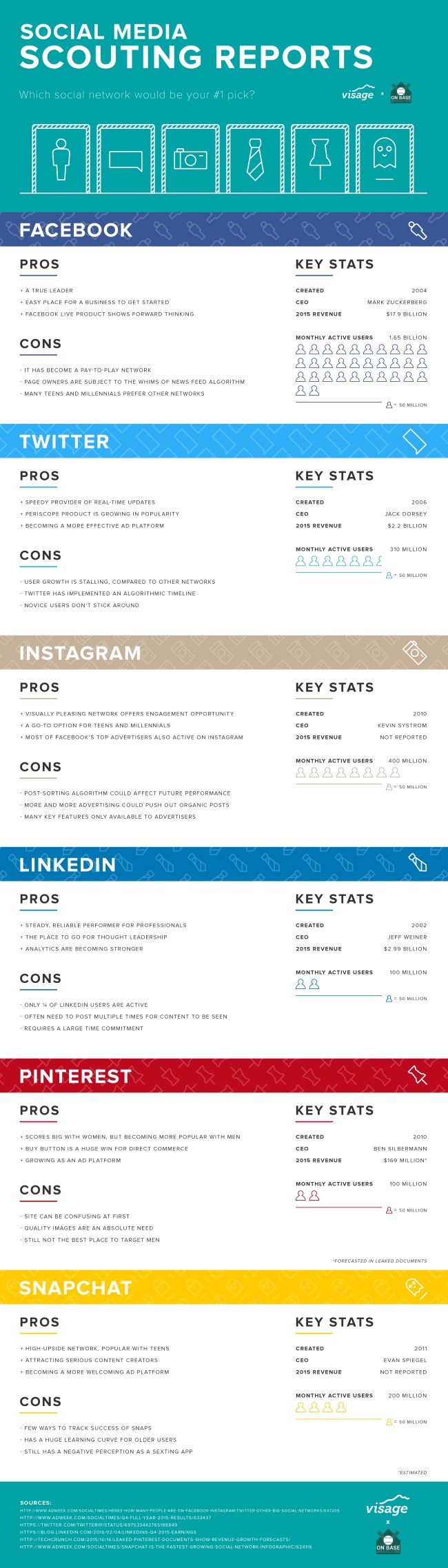
So which is right for you? It all depends on your business, your values, and who your audience is. The infographic below from Visage will walk you through the basic pros and cons of each of the most popular social media sites, along with some key stats about each social network.

Identifying the best social network for you will help you get the most out of your marketing efforts and find the most responsive audience for your brand.

pros-cons-social-networks-infographic

Facebook has made itself an absolute necessity for businesses looking to build a following, increase their visibility, engage with their fans, and even find new qualified leads. To get the most out of the most popular social network, however, you need to take advantage of all the newest tools and features Facebook is always rolling out – such as call-to-action buttons on business pages and letting you share company milestones on your profile.

Taking advantage of all these great little tricks and tools not only shows your audience that you are active on Facebook, it shows you care about making sure your fans can always contact you for questions, problems, or to share how much they like your products or services.

So how can you be sure you’re getting the most out of the largest social platform in the world? The tips in this infographic from Cafe Quill will help you get started by showing all the different ways you can be using Facebook to improve your branding and exposure while keeping your fans engaged and invested in your brand.

FacebookBusinessTips

Instant Articles

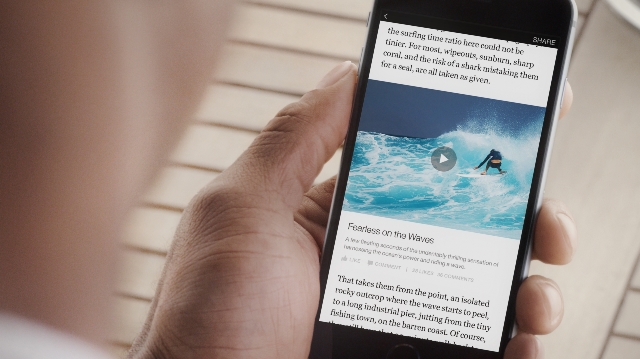
Facebook is bringing its Instant Articles to all developers and content producers. The social media platform has been slowly testing its feature, which allows publishers to share content on Facebook mobile that is fast-loading and easy to read.

During Facebook’s F8 conference, the company announced that publishers of any size or kind can now publish via Instant Articles while also sharing some statistics showing how Instant Articles have been performing so far.

According to Facebook’s data, Instant Articles leads to

  • 20% more clicks on links to content
  • 70% reduced likelihood of abandoning content once clicking on it.
  • 30% more shares compared to the average mobile web articles.

Instant Articles are Facebook’s response to Google’s Accelerated Mobile Pages and other fast-loading content platforms that streamline pages to ensure they load almost instantaneously on mobile devices. Facebook’s Instant Articles are unique though, because they also allow publishers to control ad placements within their content.

Publishers can even publish native ads as Instant Articles, which are distinguished from traditional content through unique styling options and the ability to add your company’s logo.

“Facebook’s goal is to connect people to the stories, posts, videos or photos that matter most to them,” the company says. “Opening up Instant Articles will allow any publisher to tell great stories, that load quickly, to people all over the world. With Instant Articles, they can do this while retaining control over the experience, their ads and their data.”