As Google rolls out more mobile ad formats and targeting measures for marketers, the customers seeing the ads appear to be more readily engaging advertisements from their smartphones and tablets.
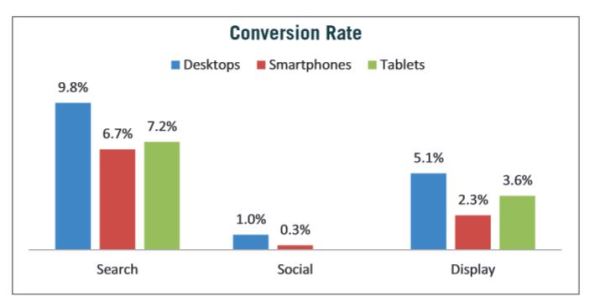
A new study from Marin Software shows that consumers are starting to use mobile ads to complete purchases, but desktop is still the dominant platform for conversions. Other interesting facts from Q3 of 2014 included in Marin’s report are:
Mobile devices comprised 31% of paid search impressions and 38% of search ad clicks on Google.
Mobile accounted for 30% of ad conversions with mobile conversions increasing 2.4% quarter-over-quarter and nearly 11% year-over-year.
Facebook:
1 out of every 3 ad conversions on Facebook took place on a mobile device with mobile ad conversions increasing 16% quarter-over-quarter.
Mobile ads on Facebook accounted for 52% of ad impressions and 63% of clicks.
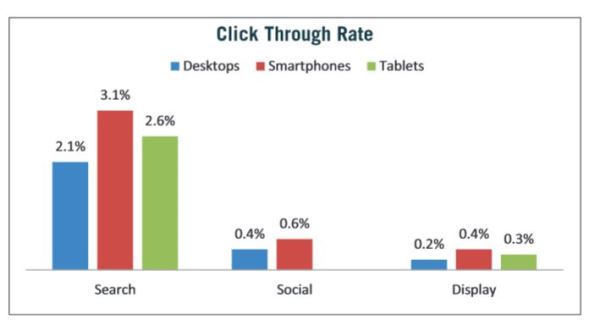
The findings also make it clear that Search ads are performing miles better than Display or Social ads. More-so, while smartphones may not be the most prominent medium for conversions, they consistently gain the highest rate of clicks.
Marin says the large difference between Search CTE and Social or Display CTR can be attributed to intent. Searchers tend to be actively looking for something, meaning ads will be more tightly focused. On the other hand, those on social sites or Display ads which appear while users are already engaged with something else are less attention getting.
00Taylor Ballhttps://www.tulsamarketingonline.com/wp-content/uploads/2018/07/TMO-Logo.pngTaylor Ball2014-10-17 12:15:442014-10-17 12:15:44More Ad Conversions are Happening on Mobile According to New Report
Close to a year after introducing ad extensions and formats to the AdWords Ad Rank formula, Google has announced they will be increasing their visibility as it becomes more and more clear that ad extensions improve ad performance almost universally.
Starting October 15, Google says ad extensions may start being displayed instead of the second line of ad text on ads for mobile platforms, and the second line of text may or may not be removed based on the expected response.
Google offered the example of an ad for a florist. Previously, the ad showed the business’ URL with two lines of general information and a link to place orders. After the update, users will see a Google Maps marker that offers to showthe location of the flower shop instead of the second line of copy.
“By eliminating the second line of ad text, we give businesses another point of engagement with customers in their ads — in this case, it’s the additional location extension,” writes Senthil Hariramasamy, product manager at AdWords, in a blog post. “With just a single click on their smartphones, consumers can now directly engage with Flowers Forever in three ways: they can visit the mobile website, place an order, or get directions to visit the store.”
Google predicts the format update will improve ad performance as it provides easier access to information about businesses in a more pronounced way.
Notably, AdWords will offer a means of opting out of this update via a form available on this Help Center article.
00Taylor Ballhttps://www.tulsamarketingonline.com/wp-content/uploads/2018/07/TMO-Logo.pngTaylor Ball2014-09-11 13:19:282014-09-11 13:19:28Google Is Updating AdWords Formats To Highlight Ad Extensions
With its ever decreasing organic reach, Facebook is putting a lot of attention into their paid ad platform, especially the ads shown on mobile devices. Now, the reporting side of Facebook’s paid ad is getting improved to reflect the huge increases in mobile ads in recent times.
One of these improvements is the launch of cross-device reporting for Facebook ads. Now Facebook advertisers are able to see how users move throughout their sales process, even if they move across devices. The announcement described just how advertisers may benefit:
Imagine seeing an ad for a product on your mobile phone while in line at the bank. Do you immediately make a purchase on your phone? Probably not. But perhaps you go back to your office later that day and buy on your desktop computer. Such cross-device conversions are becoming increasingly common as people move between their phones, tablets and desktop computers to interact with businesses.
Cross-device reporting allows advertisers to be able to see which devices ads were viewed on, and on which devices conversions subsequently occurred. That means you can see how many people clicked an ad on iPhone but then later finished their conversion on desktop, and vice-versa.
In a recent analysis of US Facebook campaigns, it was found that of the people who show interest in a mobile Facebook ad before converting, over 32% converted on desktop within 28 days.
You can view the cross-device conversions for campaigns by going to your Facebook Ad Reports, where you will click Edit Columns, and select Cross-Device on the left-hand menu.
00Taylor Ballhttps://www.tulsamarketingonline.com/wp-content/uploads/2018/07/TMO-Logo.pngTaylor Ball2014-08-14 14:06:322014-08-14 14:06:32Facebook’s New Cross-Device Reporting Makes It Easier To Track Conversions
As online optimization and marketing become more and more essential to the success of smaller businesses, many small businesses are trying to manage as much online marketing on their own as they can manage with limited time and resources.
Most often, this results in the company taking on relatively small SEO responsibilities which can give a slight boost to their online visibility and performance while missing out on the larger benefits of hiring professionals. With limited resources, this may sometimes be the best option, although it doesn’t pack anywhere near the punch.
One of the biggest problems with trying to pickup SEO as a part-time strategy for your business is that SEO is only a part of the equation. These days online marketing is only truly effective when you use a holistic approach that combines social media marketing, SEO, paid search, and even traditional marketing.
Many smaller businesses employ someone savvy enough to even contribute to social media marketing efforts, but typically the do-it-yourself approach results in paid search getting neglected and you missing out on some of the most successful parts of a successful online marketing strategy.
You don’t have to leave all your pay per click (PPC) efforts to the professionals however. If you can’t afford to hire someone to take on your paid search marketing, you can still gain some humble improvements and increase your conversions with some beginner level SEO. Huffington Post shared a list of 8 things anyone can do to improve your PPC efforts, and you might be surprised at what you can accomplish by just sticking your toes into the pool.
If you are pleased with the results, it might even be the push you need to invest serious resources into a strong online presence in all areas.
00Taylor Ballhttps://www.tulsamarketingonline.com/wp-content/uploads/2018/07/TMO-Logo.pngTaylor Ball2014-08-08 14:03:452020-08-08 22:18:488 Things Anyone Can Do To Improve Your Paid Search Marketing Efforts
Yesterday, Facebook announced an update to ad targeting options that will help refine your efforts to reach people on specific devices by letting you target users based on their device.
In order to get high quality installs or engagement within an app, it is very important to reach the right people with the most relevant message. As a result, we are enhancing our mobile targeting for developers.
The update should be rolling out over the next few days. Once it has become fully available, you will be able to deliver ads to people using a specific device and set minimum operating system version. Previously, you could target iOS or Android, minimum OS, and Wi-Fi only users.
With device specific targeting you will have access to App Insights, which you can use to identify which devices are working best for your app and target those devices. This means that if you see a large amount of mobile revenue is coming from the latest iPhone, you can set ads to target only those who have purchased that device. It will also allow you to eliminate users with incompatible devices easily.
With their announcement, Facebook also gave some tips for using mobile device targeting for mobile app ads:
Don’t go too narrow with your audience: Facebook recommends having an estimated audience size of at least 500,000 users for each ad.
Customize your ad to resonate with your audience: Facebook recommends using images of the device you’re targeting in your ad.
Optimize your bid for each campaign: Create different ads with optimized bids for each device or groups of devices as competition may vary by device.
Layer on complimentary targeting features: Use Custom Audiences and lookalikes to reach a large and relevant set of people.
My SEM writing tends to focus on optimization and organic outreach, but with organic reach shrinking across the web, paid search advertising is becoming an increasingly important part to growing your brand and attracting new customers. Paid search has changed just as much as SEO over the past few months of 2014, and Ginny Marvin from Search Engine Land recently compiled the 10 most important developments. Her list is a handy way to catch up on all the Bing Ads and Google AdWords advancements you need to know about.
00Taylor Ballhttps://www.tulsamarketingonline.com/wp-content/uploads/2018/07/TMO-Logo.pngTaylor Ball2014-07-02 14:10:202014-07-02 14:10:202014’s Most Important Paid Search Changes You Should Know About
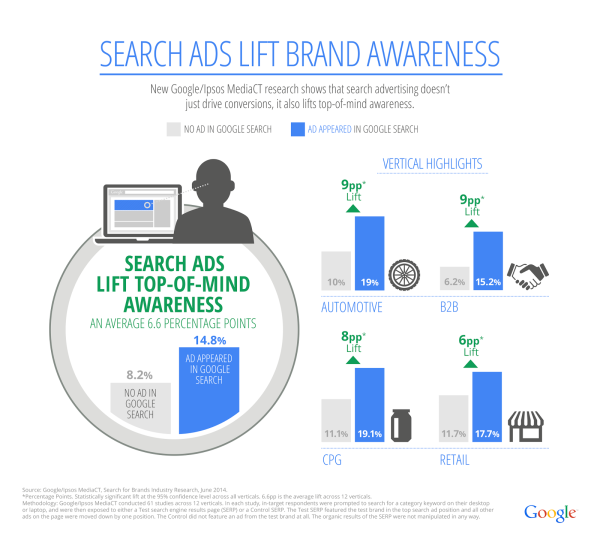
Google announced the results of an interesting study this week that proclaims “Search Ads Lift Brand Awareness“. By the title of the announcement alone, it sounds like a promising reason to invest more in AdWords campaigns for your business, too bad the information is slightly misleading.
Don’t get me wrong, pay-per-click search ads can be absolutely beneficial for a business. But, it is troubling when a group misrepresents their findings to a more positive spin when it clearly benefits their own business.
The Google meta-study reviewed several studies conducted by Google and Ipsos MediaCT across a set of verticles including CPG and automotive. A total of 800 consumers were asked to search for a category specific keyword. Across those searches, the results showed that the test brands saw increases in awareness across all verticles.
When respondents were asked what brand first came to mind when thinking about a specific category keyword, an average of 14.8% in the Test group named the test brand, while just 8.2% of the Control group named the same brand. That’s a 6.6 percentage point increase or an average 80% lift in top-of-mind awareness.
That is all well and good, but the problem is Google only tested the brand impact for brand’s appearing in the top spot. None of the other ad positions were evaluated at all.
The Test SERP featured the test brand in the top search ad position, with all other ads on the page moved down by one position. The Control did not feature an ad from the test brand at all. The organic results of the SERP were not manipulated in any way.
Marvin is much more precise with her deconstruction of the flaw in Google’s study, but simply put: all ad spots are not made equal. In fact, like ranking positions, ad spots are highly inequal. The ads in the second and third positions are likely to experience in awareness, but the nature of the study makes that impossible to verify. Almost certainly, any awareness lift they see is modest compared to that found in the first position.
In the end, Google’s recommendations based on their findings are probably still solid and no online marketer will argue about the value of branded paid advertising. Still, Google should be more careful with their words next time. Intentional or not, misrepresenting findings never looks good.
00Taylor Ballhttps://www.tulsamarketingonline.com/wp-content/uploads/2018/07/TMO-Logo.pngTaylor Ball2014-06-18 13:35:512014-06-18 13:35:51Google’s Latest Study Says “Search Ads Lift Brand Awareness”, But Is The Study Honest?
Have you ever had to deal with a sudden significant drop in the effectiveness of your pay-per-click advertising? Usually, those types of issues are the result of a bad change with how you are bidding or possibly the failure to adapt to changes on advertising platforms. However, it could also be the result of a concentrated fraudulent effort, as the discovery of a large PPC fraud ring in May shows.
This wasn’t just an issue of click fraud, either. The newer tactic being deployed by the ring of con artists is both serious and hard to detect. Lori Weiman reported that a PPC fraud ring used a tactic called PPC ad impersonation to pose as over 300 advertisers, as well as how they were brought down.
PPC ad impersonation, also sometimes called URL Hijacking, is when a scammer impersonates an advertiser by using the advertiser’s URL as the display URL in PPC ads. But, the scammer then links the ad to the real advertiser’s site through an unauthorized link such as an affiliate link, a phising link, or a cookie-stuffing URL.
Weiman’s report shows exactly how the most recent large-scale PPC ad impersonation ring was brought down, but the issue is far from resolved. Just as with every form of fraud, there are plenty of others out there willing to fill the place of the group that was recently detected.
Normally, these types of fraud are relatively limited, only affecting about 5% of the effected advertiser’s ads, but the recent attack was so bold that between 20% to 100% of ads being shown for some large companies were fraudulent. It is a worrisome sign for the future of these types of attacks, but thankfully this one was resolved rather quickly.
00Taylor Ballhttps://www.tulsamarketingonline.com/wp-content/uploads/2018/07/TMO-Logo.pngTaylor Ball2014-06-09 15:03:132020-08-08 21:55:41A PPC Fraud Ring Impersonated Over 300 Advertisers Before Getting Caught
All week we try to keep you up to date with the most important SEM news across the web, but inevitably there are smaller stories that fall through the cracks. That’s why we compile all the most important news we missed this week all in one convenient place every Friday. After a quiet week before, nearly all of the major platforms have made announcements this week. Let’s start with Google and work our way down.
Google Starts Warning Searchers About Mobile URL Redirects
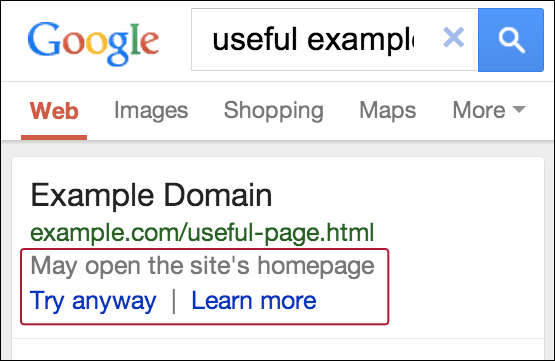
Google has been warning webmasters about faulty mobile redirects for months, including suggesting they may one day start receiving penalties for sending mobile searchers to the front page of a site rather than the content relevant to their search. It appears Google has opted for another solution, which allows mobile searchers to decide if they want to proceed.
Google alerted webmasters this week that smartphone searchers will begin seeing warnings for sites with redirects that don’t take them where they want to go. An example of how these warnings will appear is above. On a Webmaster Central blog post, Google stated:
We’d like to spare users the frustration of landing on irrelevant pages and help webmasters fix the faulty redirects. Starting today in our English search results in the US, whenever we detect that smartphone users are redirected to a homepage instead of the page they asked for, we may note it below the result. If you wish to proceed to the page, you can click ‘Try Anyway.’
Google Adds World Cup Street View Tours and a Loch Ness Easter Egg
Just a week before the World Cup kicks off, Google has added street view images that will allow users to tour all 12 stadiums that will be used for the tournament. Whether you want to stand in the middle of the field and do a little spin, or preview the view from the stands, you’ll be able to give a look from anywhere within the stadiums.
Google has also added significantly more images from Brazil’s painted streets and other sites across the country, but perhaps one of the most popular finds on Google Maps this week is an Easter Egg found far away from Brazil.
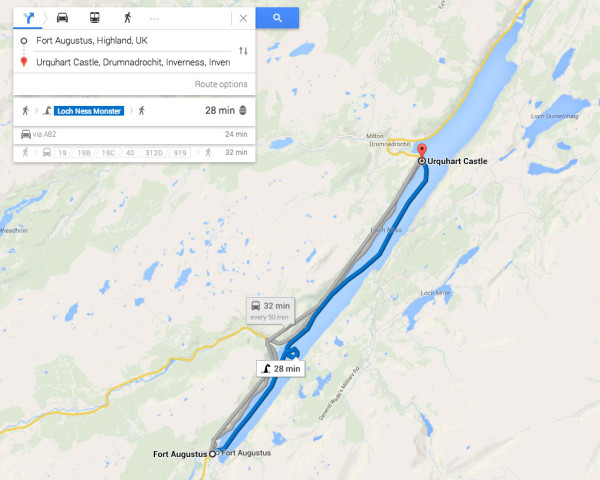
If you’d rather hunt legendary monsters than watch soccer, Google Maps is able to give you directions to Loch Ness. If that isn’t enough for you however, Google says you can always catch a ride on Nessy.
If you get directions from Fort Augustus to Urquhart Castle in Google Maps, you will get the option to travel via Loch Ness Monster. You just have to click on ‘Route Options’ and then choose ‘Fewer Transfers’ or ‘Less Walking.’ Though you have to wonder how no one has managed to get a picture of Nessy while hopping a ride down the Loch.
Bing Celebrates Its 5th Birthday With Some Memories
Bing turned five earlier this week, and to celebrate it has posted a retrospective of the last five years. Bing is also offering Bing Reward credit perks to any user who searches on the site before June 9th.
The retrospective covers all of the ways Bing’s appearance has changed over the past five years, but it also covers how it has worked to achieving its initial goals of leveraging semantic search, introducing new verticals, and generally expanding how search could function in our lives.
Bing Shows Off New Dynamic Carousel For Music Video Searches
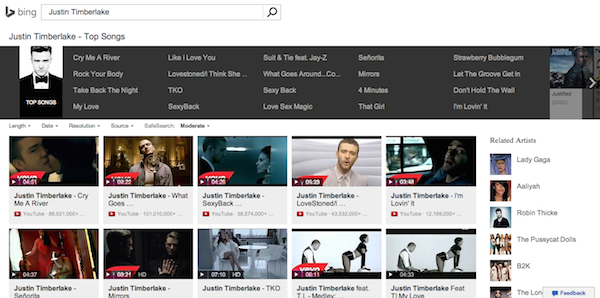
Bing has prided itself on being ahead of the curve in respect to music and music video searching and discovery, and its latest feature continues to expand on the functionality it previously offered for music video searches.
Bing has recognized that people search for music videos very differently than they do other video content. By exploring these changes in user behavior, Bing was able to determine that music video watchers wer significantly more likely to hang around and check out other content instead of moving on once they found the video they were looking for.
To give users easier access to all the music videos they may be interested, Bing has implemented instant access to an artist’s top hits as soon as you search only the artists name. Bing describe this as a dynamic carousel, because it allows you to open up songs and videos from teh carousel and play it within the same window. You will never have to keep going back and forth between choosing the video you want to watch and actually watching it.
The carousel also allows you to view all of an artist’s albums and watch the videos for those songs as well.
Pinterest Continues To Work Towards An Actual Ad Platform
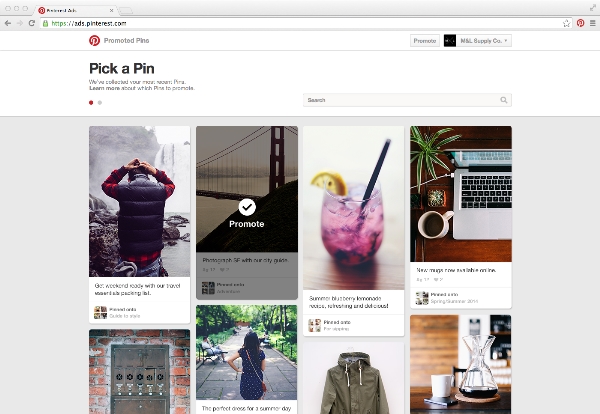
Pinterest has made its intention to establish an ad platform for their social network very clear ever since it unveiled Promoted Pins. However, Pinterest is working slowly to guarantee that the ads shown on their platform won’t stick out or detract from the experience, and as such it has been very hands on and selective about who it allows to run ads.
Now, businesses of all types have been given access to a do-it-yourself Promoted Pins tool that allows them to promote their own pins to more people and increase visibility. Similar to most other social ad platforms, these will work on a cost-per-click basis through ads.pinterest.com.
Pinterest also announced they would be expanding the analytics tools offered to users, giving them more insight into who is clicking and re-Pinning your content. You can get more information from their announcement.
LinkedIn Joins The “Large Cover and Profile Photo” Club
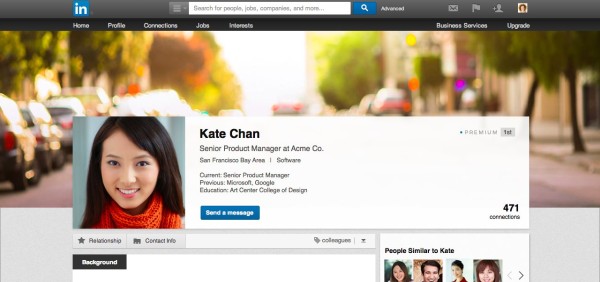
LinkedIn announced earlier this week it would be making a major design update to user profiles, which will feel very familiar to anyone who uses Facebook, Google+, or Twitter. Currently, the layout is only available to premium users, but LinkedIn says it will be available for all users after a short period. It isn’t entirely clear why LinkedIn would stagger the rollout of this layout change, but you can add it to the list of social media sites that are beginning to look very, very similar.
00Taylor Ballhttps://www.tulsamarketingonline.com/wp-content/uploads/2018/07/TMO-Logo.pngTaylor Ball2014-06-06 12:20:272014-06-06 12:20:27Quick SEM News of the Week – June 6, 2014
With the constant stream of news coming out of the online marketing industry, it can be hard to keep up with all the latest updates without missing some important information. That’s why we compile all the news you may have missed this week all in one convenient place every Friday. Let’s get started:
Google Updates Guidelines Regarding Redirects
Google has had a policy against redirects intended to deceive or manipulate search engines or users, but this week they updated their Webmaster Guidelines to explicitly include mobile-specific redirects. They also include an example of a deceptive mobile redirect with a scenario where “desktop users might receive a normal page, while hackers might redirect all mobile users to a completely different spam domain.” Google details the revisions in an announcement on their Webmaster Central Blog.
Google Wants To Help You Remember Where You Parked
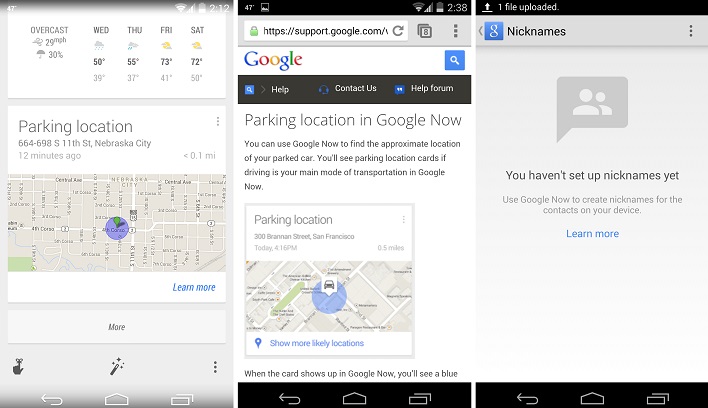
According to Android Authority, Google’s latest update to the Android version of the Google Search App includes a new feature which can help users remember where they parked their car and even give directions on how to get back to that spot. For users parking at large venues, malls, or in heavily-populated areas, this could potentially be a lifesaver. The parking reminder works by asking if you want to save a location as a Google Now card. Then when you are ready to get back to your car, you just tap on the card in the app and directions will appear.
Search Ads Get More Revenue per Conversion When Integrated With Social
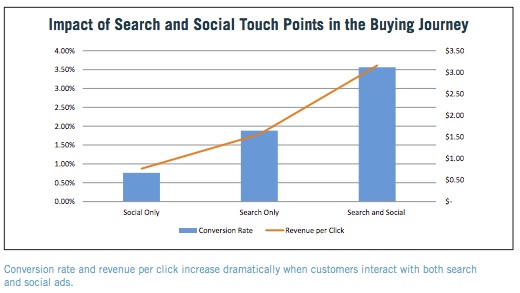
Online marketing is quickly reaching the point where you can’t approach it in a vacuum and hope for success. The days of keeping SEO, PPC, and social media marketing apart are fading fast, if they aren’t completely gone already. A new study from Marin Software confirms this y showing that advertising performs vastly better when integrated with a social advertising strategy. Jessica Lee breaks down the details of the study at Search Engine Watch, but you can also get the full white paper here.
YouTube Now Lets Channel Owners Attach Short Intros To Their Videos
This week, YouTube announced that channel owners can now add a three-second intro to their videos, allowing them to build a stronger and more cohesive brand presence across the video platform. Channel owners must upload the intro as an unlisted video, then click “Add a channel branding intro” on the InVideo Programming page. At that point, channel owners can select which videos should include the intro. However, YouTube has said intros can not be used as ads, sponsorship, or product placements, and should not be used by channels whose videos act as advertisements.
Twitter Earns 14 Million Monthly Active Users in Q1 of 2014
Twitter’s earnings report for the first quarter of 2014 shows they continue to grow in just about every area, even outperforming Wall Street estimates in all but one area. The area in which they have continued to struggle is gaining monthly active users, but even there Twitter is showing very positive signs. While not beating Wall Street estimates, Twitter monthly users did grow by 14 million since Q4 2013, culminating in 255 million total users. This is substantially more growth than shown n Q4 2013.
Vine is Coming To Desktop With New Features
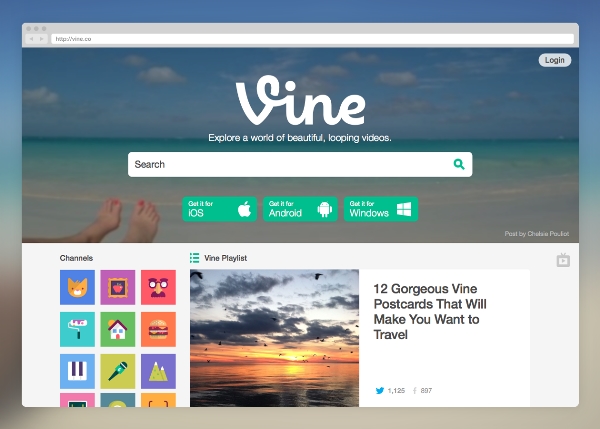
Up until now, Vine has been confined to smartphones, but this week the social video platform has made the leap to desktop with a well laid-out website and some new features. The new features include top navigation in the left which includes the home feed and popular now feed, and all feeds can now be linked together in TV mode. The biggest addition however is the new search bar that lets users search by tag, person, or location for the first time. You can get more details in the announcement on Vine’s blog, or you can see the new site for yourself here.
00Taylor Ballhttps://www.tulsamarketingonline.com/wp-content/uploads/2018/07/TMO-Logo.pngTaylor Ball2014-05-02 12:21:372014-05-02 12:21:37Quick News of the Week – May 2, 2014

 Close to a year after introducing ad extensions and formats to the AdWords Ad Rank formula, Google has announced they will be increasing their visibility as it becomes more and more clear that ad extensions improve ad performance almost universally.
 As online optimization and marketing become more and more essential to the success of smaller businesses, many small businesses are trying to manage as much online marketing on their own as they can manage with limited time and resources.
 Have you ever had to deal with a sudden significant drop in the effectiveness of your pay-per-click advertising? Usually, those types of issues are the result of a bad change with how you are bidding or possibly the failure to adapt to changes on advertising platforms. However, it could also be the result of a concentrated fraudulent effort, as the discovery of a large