Online video has reached a new level of importance in our lives over the past few years. YouTube is still the dominant service for free online video hosting and sharing, but several other platforms have taken YouTube’s lead and expanded on it in numerous ways.
Instagram and Vine have imposed limits on their video lengths to make them as sharable as possible, while Vimeo has focused its efforts on hosting primarily high-quality and visually stunning videos instead of the shaky cell-phone footage so prevalent on YouTube.
The question remains, which services do you invest your energy and resources into? If you are hoping to use the social video site to increase your brand’s visibility, you want to tailor the content you are creating to the platform most suited to your demographic.
You can get a complete breakdown of all of the major services in the infographic below.
The graphic was created by Russel Cooke, and explains what makes each service unique, as well as how each could benefit a business. If you know your market, you should be able to identify which service is most likely to connect you with your audience. From there, it’s just a matter of making content that will excite them.
00Taylor Ballhttps://www.tulsamarketingonline.com/wp-content/uploads/2018/07/TMO-Logo.pngTaylor Ball2014-04-03 15:27:122014-04-03 15:27:12The Comprehensive Social Video Infographic
Twitter has become an undeniable force in modern culture. Even if you aren’t signed up for the social media platform, you can hardly turn on the television without being bombarded by tweets and hashtags.
Every major news network solicits tweets from their viewers in order to get real-time responses to issues, and any new episode of a show is bound to have at least one hashtag hovering in the bottom corner of the screen.
But, those TV hashtags highlight one of the biggest problems with Twitter: few people actually understand hashtags or how to use them efficiently. Sure, we all know how to tag Instagram photos with them, or we slap a silly hashtag on the end of tweets to add a little more information, but the number of people actually using hashtags to organize and sort through the constant tidal wave of new tweets is actually quite low.
It isn’t that Twitter’s users aren’t smart enough to use hashtags more efficiently, but it is difficult to make hashtags a very useful sorting device without going through a middleman. Twitter’s search engine can let you broadly search hashtags, but if you want to actually make sense of the mess you most likely need an extra tool to help you out.
Ann Smarty from Search Engine Journal pulled together five such tools to help Twitter users everywhere turn hashtags into a vital part of their information consumption every day. If you want to be smart with your hashtags, these tools are the best place to start.
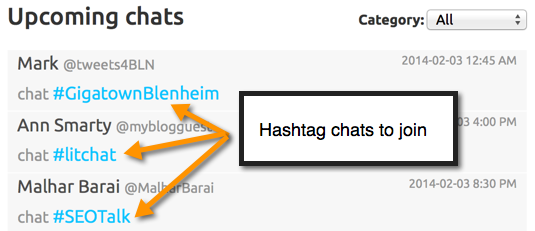
When Twitter began using hashtags, it didn’t take long for users to figure out that the tags can be used to create a conversation between numerous people. Rather than directly messaging an individual, you are able to put a topic or “chat title” in the form of a hashtag so users are able to create a real discussion. But, the conversation was still cluttered and not well laid out for the average reader.
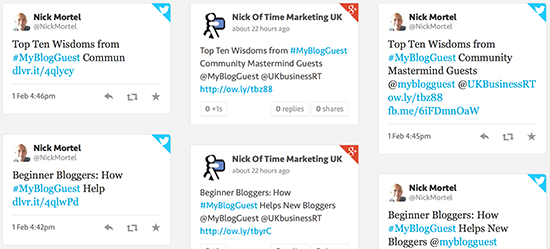
TwChat allows you to take those hashtags and monitor them in real time. It also lays the tweets in a more cohesive way, so that you can more quickly read and understand the conversation. Best of all, it is super simple to use, free, and doesn’t require downloaded software.
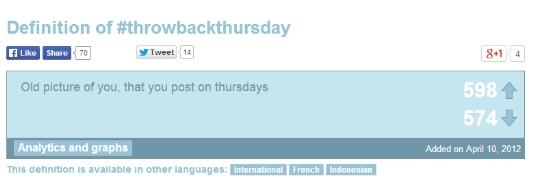
Originally, there was an unspoken rule that hashtags should be easy to understand at a glance. Obviously, this rule has fallen apart over time. Hashtags tend to be a combination of slang, inside jokes, and promotional material that makes no sense without context.
With the help of TagDef, you won’t have to worry about not being caught up with the latest American Idol hashtag or the slang younger people are using to keep up with the meaning behind hashtags popping up in your feed. The tool lets you search a hashtag and get the meaning instantly. You can also edit and add your own meanings. TagDef acts like Urban Dictionary exclusively for hashtags (and potentially a little less focused on profanity).
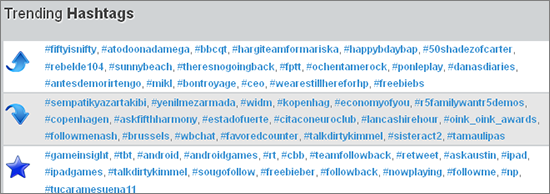
Hashtags gained its reputation as the largest hashtag database on the web, but there is much, much more there. The site includes analytics, how to articles, blog posts, a chatroom, a forum, a hashtag dictionary, events, trending hashtags, popular hashtags (long-term), and even more.
Of course, hashtags aren’t limited strictly to Twitter. The history of hashtags goes all the way back to IRC chats, but they have spread to nearly every major social networking platform out there. Facebook, Instagram, Google+, and Vine have all implemented the organizing tool. Tagboard takes hashtags from across all those different platforms and displaying them all on one page. You can even use it as a social network dashboard, allowing you to like, share, or retweet as you desire without ever having to leave the site.
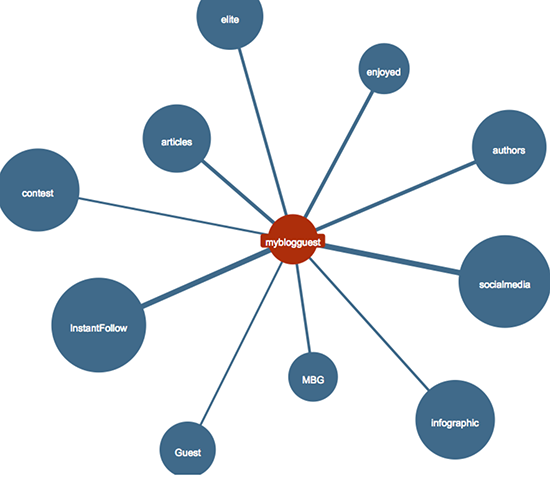
There is no rule you have to use only one hashtag per post. In fact, many add three or more hashtags on a large number of their posts, but it can be hard to see how they are related from Twitter’s site. Hashtagify helps you see how different hashtags are related and their usage patterns, as well as offering in-depth analysis in their pro version. They also have active breakout alerts, so you can always be the first to know about the new cool hashtag.
00Taylor Ballhttps://www.tulsamarketingonline.com/wp-content/uploads/2018/07/TMO-Logo.pngTaylor Ball2014-03-07 14:50:532014-03-07 14:50:53How You Can Get The Most Out Of Hashtags
Do any reading about online marketing, and you will almost certainly be told how important social media is to your brand’s online presence. A great social media presence has repeatedly been shown to increase organic traffic and brand perception, but as the platforms have become more populated and competitive, there has been a large shift towards a pay-to-play business model.
Facebook is most notable for this, as they have been the largest social media platform a significant time and they have made the largest changes towards monetizing their service. Sure a business can put up a page and do the slow grind to gain followers one or two at a time through great content and engagement with their audience, but brands looking for significant visibility on the site only have a few options and they all cost money.
To get any exposure on the largest social media platform, brands have to acquire likes for their pages. There are two ways to do this. Despite being expressly against Facebook’s terms of conditions, there is still a market for people who are willing to outright pay for likes.
As Derek Muller explains, these paid likes come from “click farms” in developing countries, where people are paid to like pages by the thousands. But, they are fairly easily identifiable and can get profile owners in trouble.
Alternatively, Facebook offers advertising for your page specifically aimed at increasingly likes “organically”. The problem is, these likes don’t appear to be much different from the likes you would purchase from a click farm.
Derek Muller used his Veritasium YouTube channel to show that Facebook’s way of acquiring “legitimate” likes is actually almost identical to the click farm methods, and both are equally useless. But, paying Facebook for it might actually cost you more.
You see, Veritasium used a free Facebook advertising offer to see if it might expand their social media audience. Within hours, they had netted nearly three times the number of followers, but over time Muller noticed the engagement on Veritasium’s content hadn’t improved with the new likes. In fact, it seemed to go down.
After some research, Muller discovered the bulk of his new likes came from the same countries notorious for click farms. The “users” liking his page had also liked thousands of other pages with seemingly no logical pattern. But, there was no going back. There is no way to delete these empty likes in bulk.
If that was all the only issue, it would be a moderate annoyance and newsworthy hole in Facebook’s advertising method. But, it manages to get worse. These fake likers don’t just provide an inflated picture of how many people appreciate what you are putting out. They actually hold you back.
When you share something on Facebook, it is only shown to a small sample of your followers. Depending on how those viewers respond, Facebook might then distribute your content to even more people. But, if your content isn’t getting liked, shared, or commented on, it will usually sink out of visibility very quickly.
If you have a ton of empty likers, they make up a significant number of those seeing the initial distribution of your content. Since these profiles don’t actually engage in any meaningful way, they can actually prevent interested followers from seeing any of your content. You might as well be speaking to a comatose audience, while your actual fans wait just outside the door.
There is a solution, but of course that costs you even more. To get your content shown to the parts of your followers that are actually interested you have to pay to have your content targeted to them in ads. Facebook makes money twice off of you, and you gain very little in the long run.
Facebook has yet to comment on the issue, but these raise some big questions about the social media platform’s advertising methods as a whole. While social media can still be a great tool for those looking to grow their brands, you might look towards other sites such as Twitter. Until Facebook addresses these massive issues in their service, advertising on their platform may not be worth your resources.
It is no secret that nearly every big brand is on Twitter these days, and plenty of smaller businesses are learning to take advantage of the platform every day. But, there are plenty of ways you can mess up when trying to connect with your audience on one of the largest social media platforms around. As a new study on how top brands use Twitter shows, the biggest mistake you can make is simply neglecting your account.
The study from social media analytics firm Simply Measured showed that 92 percent of brands are tweeting an average of 12 times a day, and 98 percent of the top brands in today’s market are regularly active on Twitter.
In fact, consumers seem to be downright eager to follow brands on Twitter, as audiences for the top brands have grew by 20 percent in the last quarter of 2013. Over half of the brands have more than 100,000 followers each.
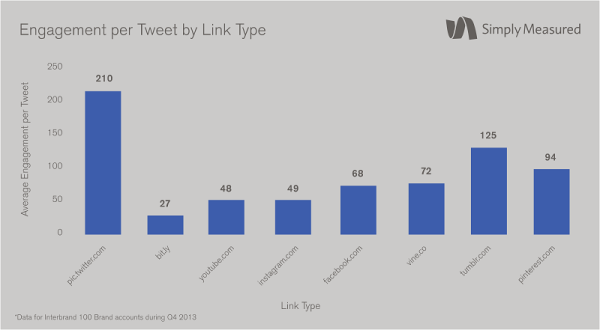
Of course, it doesn’t matter how often you tweet if you aren’t sharing things that excite the community and encourage engagement. As Marketing Land notes, the tweets with photos or links are more likely to receive activity than the traditional 140 character updates. But, it might be a surprise to see just how much better they perform. Simply Measured says tweets with photos or links see 150 percent more engagement than the brand averages.
Images see even more engagement than links by a large amount, with an average of 210 engagements per tweet. That absolutely dwarfs the 27 engagements on average for a bit.ly link.
00Taylor Ballhttps://www.tulsamarketingonline.com/wp-content/uploads/2018/07/TMO-Logo.pngTaylor Ball2014-01-23 14:04:582014-01-23 14:04:58The Top Brands On Twitter Are Tweeting 12 Times a Day
Pinterest is quickly becoming one of the most popular social media networks out there. Over the span of a few short years, Pinterest has become more active than almost any platform available aside from Facebook and Twitter and it shows no signs of slowing.
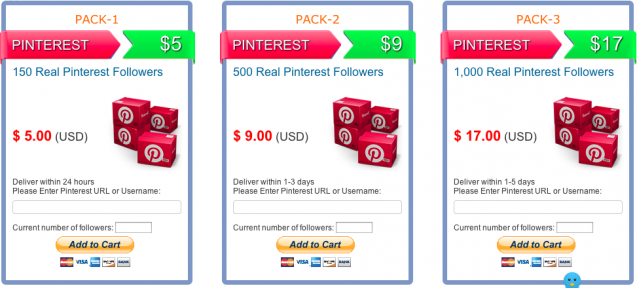
This has attracted the attention of many businesses and marketers hoping to showcase their brands and engage their audience, but many brands don’t want to do the heavy lifting to become a popular Pinterest presence. Rather than build from scratch, a fair number of professional Pinterest accounts have turned to purchasing Pinterest followers and re-pins in an attempt to create their pages appear more active and increase their visibility.
The practice shouldn’t be foreign to anyone familiar with social media. Markets have popped up where people can purchase Facebook likes and Twitter followers, and every newly popular platform will likely have to deal with these types of issues. But, the big question every business owner has is: “Will buying Pinterest followers and re-pins benefit my business?”
The reason these types of artificial follower markets become so popular is that they do exactly what they say in the short term. It is true that unfamiliar visitors will be more likely to follow pages that appear active and popular among the community. But, there are plenty of downsides to trying to manufacture a facade of activity and engagement.
As with most other social networks, Pinterest uses an algorithm to determine the visibility of pins and profiles based on popularity. John Rampton coined the termPinrank for the algorithm in reference to Facebook’s old Edgerank algorithm. When your posts draw lots of activity, Pinterest increases your visibility and shows your pins to more people. Likewise, if your nobody is interacting with your pins, you will become less relevant.
While purchased followers and re-pins can trick the average visitor into believing your content is popular, Pinrank sees right through your shenanigans.
The best case scenario for those purchasing pins is a quick surge in popularity, followed by an immediate decline as real followers come to see that your content isn’t relevant or important. As that happens, your Pinrank will naturally fall despite your seemingly huge number of followers.
The worst case scenario ends in being entirely banned from Pinerest. Only a few accounts have been banned so far for the blatant violation of Pinterest’s Uses policy, but Pinterest is entirely aware of the shady tactics rising in popularity and there will likely be quite a few more bans in the future. Even if you’ve invested months of real work into cultivating your Pinterest page, all of that can be gone in an instant if you are purchasing followers.
In the end, buying Pinterest followers won’t benefit you anymore than buying property on the moon. More than likely, it will hurt your brand and it’s reputation more than any upsides you will ever see from the practice. All it is really is an attempt to cheat the system.
If you’re a small retailer trying to expand your brand online, social media is an absolutely essential part of the plan. But, there are several different popular social media platforms and most smaller retailers don’t have the resources to invest fully in all of the big platforms. How do you choose which one to favor?
Of course, the best choice for your brand depends on what you are offering to consumers and how you are trying to reach out to them. But, you can also take some notes from what the big retailers are doing with their social media, with the help of social technology company 8th Bridge’s third-annual Social Commerce IQ report.
8th Bridge looks at nearly 900 of the top online retail brands, and evaluates their social adoption and subsequent results.
Their results show two things. Firstly, you should implement social website buttons for at least the three major social media platforms for retailers (Pinterest, Twitter, and Facebook). Secondly, and more importantly, Facebook still dominates referral traffic and perceived value. However, the reasons for Facebook’s value to top retailers have changed.
In the past, Facebook has always been favored simply because it was the most popular social media platform by a large margin. However, Facebook has become very competitive, especially for smaller businesses. With so many businesses sharing content on the site, the top retailers have turned to Facebook Exchange to pay for visibility and higher traffic rates.
Facebook is valued by top retailers not because they are the top social platform, but because they have the most viable social advertising platform.
This has the potential for change in the near future however. Facebook has one of the most fully-realized social advertising platforms, and it has been around for significantly longer than the ad options most other platforms offer. For instance, both Pinterest and Instagram are still only in the testing phase for their advertising platforms.
Still, the traffic referral statistics from Twitter may suggest a deeper underlying problem in the social platform’s viability for retailers.
“Traffic from Twitter and Instagram is non-existent for most retailers,” 8th Bridge said in its report. “Only 85 retailers are getting traffic from Twitter and only 55 retailers are getting traffic from Instagram.”
In the end it should come as no surprise that Facebook is still the most reliable social platform for brands of most sizes, but it will only get more competitive. You can still benefit from a non-paid approach to your Facebook presence, but you should expect diminishing returns as time goes on.
You can view the infographic 8th Bridge made from their results below or on their site.
00Taylor Ballhttps://www.tulsamarketingonline.com/wp-content/uploads/2018/07/TMO-Logo.pngTaylor Ball2014-01-15 16:34:272014-01-15 16:34:27How Should Smaller Retailers Approach Social Media In 2014?
Social media sites have a history of not lasting for very long in the grand scheme of things. Few are even familiar with Friendster these days, and Myspace has had to revamp their entire strategy to cater to musicians. Even then, it is entirely questionable whether the site has had much success since they relaunched. So what makes Facebook different? Is it immune from the quickly passing trends of social media?
The answer depends on who you are asking, of course. While those who have avoided Facebook for years will be quick to tell you the social platform is on its way out, the statistics show that Facebook still absolutely dominates the market, and they are gaining even more ground in older demographics. Teens may not be excited about Facebook anymore, but they are still using the site to connect with their grandmothers, aunts, cousins, and friends who are too far away to interact with.
Facebook’s recent audience growth with older users is also indicative of the larger reason Facebook may be sticking around for quite some time. Everyone is on it. As Phil Buckley recently showed when he did some informal surveys on social media, the majority of Facebook users cite its widespread usage as their main reason for coming back every day.
It can be a tenuous thread holding the site together, but it is fairly reliable. I’ve seen many “quit” Facebook, but they often eventually return due to family or friends.
So, when Phil Buckley says 2013 was the year we reached “peak Facebook”, I have to question it. There have been reports throughout the year that Facebook was losing ground in younger demographics, who are choosing newer and more niche social platforms like Tumblr or SnapChat. Still, Facebook has denied the claims, and the numbers show they are still growing.
As with all social media trends, the only way to find out is just sitting back and letting the will of the public decide. Social media is a fickle field, but I’m still of the belief that Facebook will remain safely in its throne through at least the next year.
00Taylor Ballhttps://www.tulsamarketingonline.com/wp-content/uploads/2018/07/TMO-Logo.pngTaylor Ball2014-01-02 14:28:022014-01-02 14:28:02Have We Hit Peak Facebook?
The holidays are widely considered the most stressful time of year. Only the strongest make it throught the season unscathed, while the rest seek refuge from the seasonal mania in bars and anxiety prescriptions. Thanksgiving, Black Friday, and Cyber Monday all in quick succession is enough to crack the most resilient. The news reports from Black Friday make it seem as though you are lucky to get through it without being involved in a fight over the new XBox.
Worst of all, the holidays are still far from over. Christmas is still a week away, and there is always the New Year to celebrate. But, you don’t have to turn to alcohol or pill bottles to relieve the stress of the holiday season. According to a new study, relief is as close-by as your smartphone.
The study released earlier this month by Lab42, a next generation market research firm, claims that 92 percent of Pinterest users claim the site single-handedly makes the holidays less stressful. It is so effective, 27 percent went as far as claiming the site makes the holidays “much less stressful”.
How is a simple pin-board style website such a relief during the season? It seems users are treating it as a one-stop shop for all of their home holiday needs, and keeping everything organized through the season.
The main way Pinners are using the site to ease their stress is by collecting new recipe ideas for their holiday feasts with their family. In fact, 83 percent of users are planning their meals with the help of the site. Many are also taking advantage of the ability to share gift (74%) and holiday decoration ideas (64%).
It actually makes a lot of sense that Pinterest is seen as such a stress easer this time of year. With so much to plan and organize, having a single site which allows you to browse and collect everything in one place makes the whole process much easier.
With the new introduction of Pinterest ads, there is a serious chance next year will result in huge rewards for any advertisers who invest in exposing their brand on such a popular holiday resource.
00Taylor Ballhttps://www.tulsamarketingonline.com/wp-content/uploads/2018/07/TMO-Logo.pngTaylor Ball2013-12-19 15:52:272013-12-19 15:52:27Pinterest Can Ease Your Holiday Stress
One of the most hated forms of internet advertising are videos that auto-play when you open a webpage. You might be surfing the internet, listening to some music, and suddenly the voice from an ad starts clashing with the song or blaring in the middle of a library. Yet these ads are all over the internet and Facebook has decide to make them a part of your News Feed. Are you cringing? Well, don’t worry. They made one important tweak which will make the experience much less annoying.
The social media giant announced today that they will begin testing News Feed video ads that auto-play when you scroll over them. The testing is going to be for a limited number of accounts during the test, but the ads will be very similar to the way user videos are shown in the feed. Search Engine Journal notes that Facebook began recrafting their video experience in September, making changes to make the experience more similar to Instagram. All you have to do is scroll past the video and it begins playing without a single click.
So what keeps these videos from being a huge annoyance? The videos don’t have sound unless you click to unmute it or expand the video you want to see. Facebook is keeping this functionality for their ads, so user experience won’t be disrupted by the tidal wave of ads playing over each other as you scroll down your feed. You can also bet advertisers will be crafting their ads around this functionality.
Facebook explained they don’t intend this format to be used for every video ad, and it is entirely different from promoting a post with a video in it. From their announcement:
This premium feature is specifically designed for awareness campaigns that are meant to reach a large number of people to increase interest in a brand, product or content, in a short period of time. Page post video ads can then come into play to sustain the message of this initial campaign over longer time periods, in more targeted ways.
Currently, the video ad units will only be shown from a limited number of individuals and pages, such as sports organizations or entertainers. Facebook also heavily stressed that the ads are currently only a test and the brand will make long term decisions based on what is learned from the test.
00Taylor Ballhttps://www.tulsamarketingonline.com/wp-content/uploads/2018/07/TMO-Logo.pngTaylor Ball2013-12-17 13:41:482013-12-17 13:41:48Facebook To Start Testing Video Ads In Your News Feed This Week
When the news broke of Facebook’s updates to their News Feed, advertisers everywhere scrambled to analyze the changes. Well, it appears we got it a bit wrong. One of the most reported elements of the updates aimed at “rewarding high-quality content” focused on the supposed removal of memes from user feeds, but it doesn’t appear that is actually the case.
Facebook really is revamping how they judge the quality of the content they deliver to users, but Facebook’s News Feed Manager Lars Backman gave some insight to the changes and denies there is an attack on memes during a recent interview with AllThingsD. Instead, Backman says it is a broader effort “to provide user value” in the News Feed.
The most interesting aspect of the interview actually says Facebook isn’t differentiating different forms of content for the most part. As Backman told Peter Kafka:
Are you paying attention to the source of the content? Or is it solely the type of content?
Right now, it’s mostly oriented around the source. As we refine our approaches, we’ll start distinguishing more and more between different types of content. But, for right now, when we think about how we identify “high quality,” it’s mostly at the source level.
So something that comes from publisher X, you might consider high quality, and if it comes from publisher Y, it’s low quality?
Yes.
However, while this sums up Facebook’s approach overall, Backman did say there is a specific type of content they are trying to do away with, but it isn’t memes. Instead, Facebook is attacking the types of content that blatantly begs for likes or shares, such as Like this if you are having a good day!
So, when the text or photo has a call to action, those posts naturally do much better. And in a traditional feed ranking, where we’re evaluating just on the number of likes, those things all did very well.
In a way, Facebook is simply leveling the playing field, because those types of content offered very little to users aside from surface level interaction, but they were consistently doing very well on likes and shares which were making them more visible. However, if your user base responds well to the average meme, you shouldn’t be afraid to use them as a part of your content.
00Taylor Ballhttps://www.tulsamarketingonline.com/wp-content/uploads/2018/07/TMO-Logo.pngTaylor Ball2013-12-12 17:49:202013-12-12 17:49:20Facebook Says They Aren’t Targeting Memes, Instead They Judge Quality By The Source


 Do any reading about online marketing, and you will almost certainly be told how important social media is to your brand’s online presence. A great social media presence has repeatedly been shown to increase organic traffic and brand perception, but as the platforms have become more populated and competitive, there has been a large shift towards a pay-to-play business model.


 The holidays are widely considered the most stressful time of year. Only the strongest make it throught the season unscathed, while the rest seek refuge from the seasonal mania in bars and anxiety prescriptions. Thanksgiving, Black Friday, and Cyber Monday all in quick succession is enough to crack the most resilient. The news reports from Black Friday make it seem as though you are lucky to get through it without being involved in a fight over the new XBox.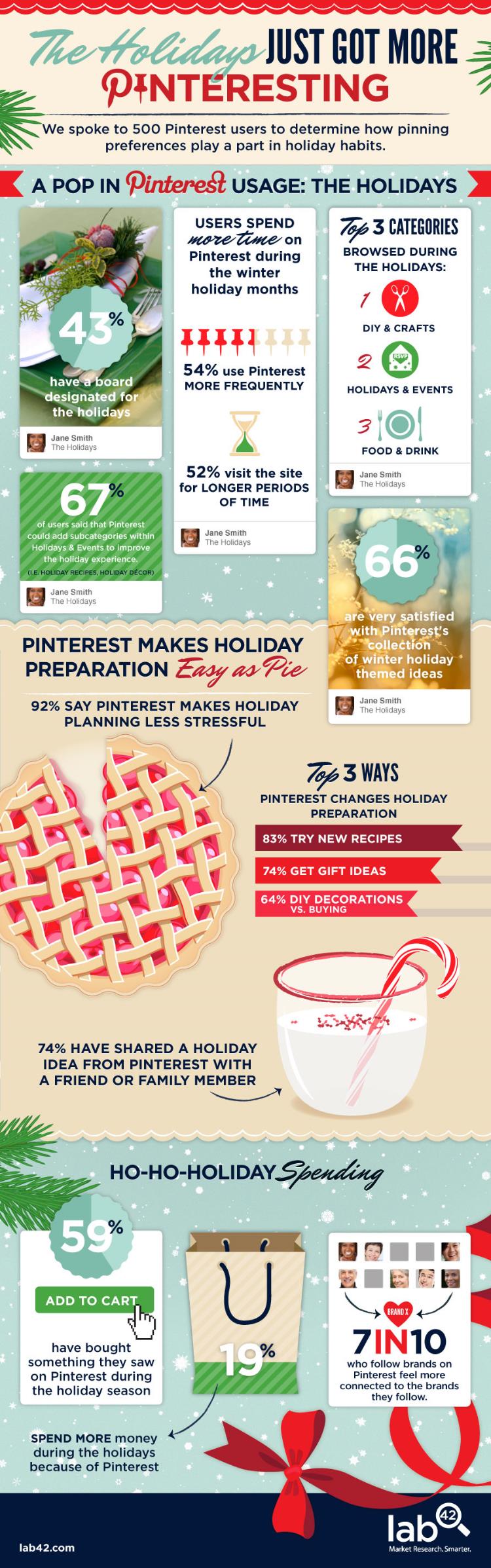
 When the news broke of Facebook’s updates to their News Feed, advertisers everywhere scrambled to analyze the changes. Well, it appears