After nearly a year of testing, Facebook is finally launching search ad placements for all advertisers. That means anyone can now run ads within News Feed and Marketplace search results for any search with commercial intent – such as queries related to e-commerce or retail.

Currently, search ads only appear in results on mobile devices.

In the announcement, Facebook describes how the ads appear and function within search results, saying:

“The ads are designed to fit the experience on the given search results surface (Marketplace search or general search). They look similar to News Feed ads and have the same transparency and controls, including a “Sponsored” label so it’s clearly marked as paid placement.”
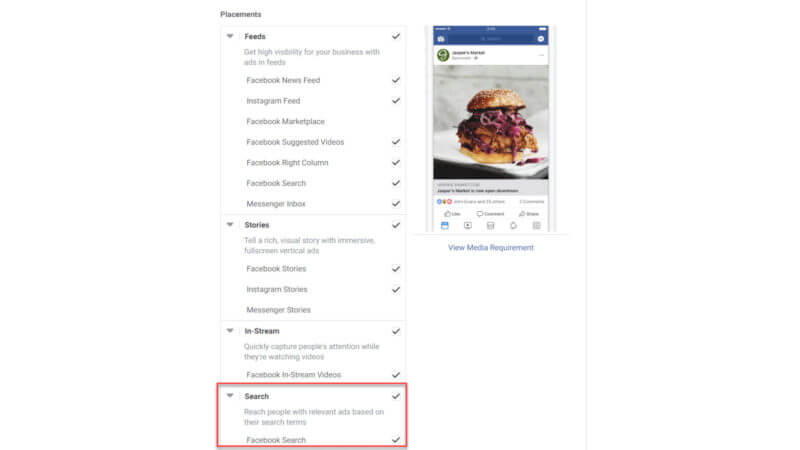
To have your ads appear in search results, advertisers can simply select “Automatic Placement” or the “Facebook Search Results” placement when creating or running News Feed ad campaigns.

Notably, advertisers will have little control over how the ads are targeted, aside from broad people-based targeting options. Instead, Facebook will target the ad based on a number of details including keywords, ad features, ad text, product category, and more.

Currently, the ads support three specific campaign objectives, including Product Sales, Conversions, and Traffic Objectives.

Banner Image courtesy of Launchpresso
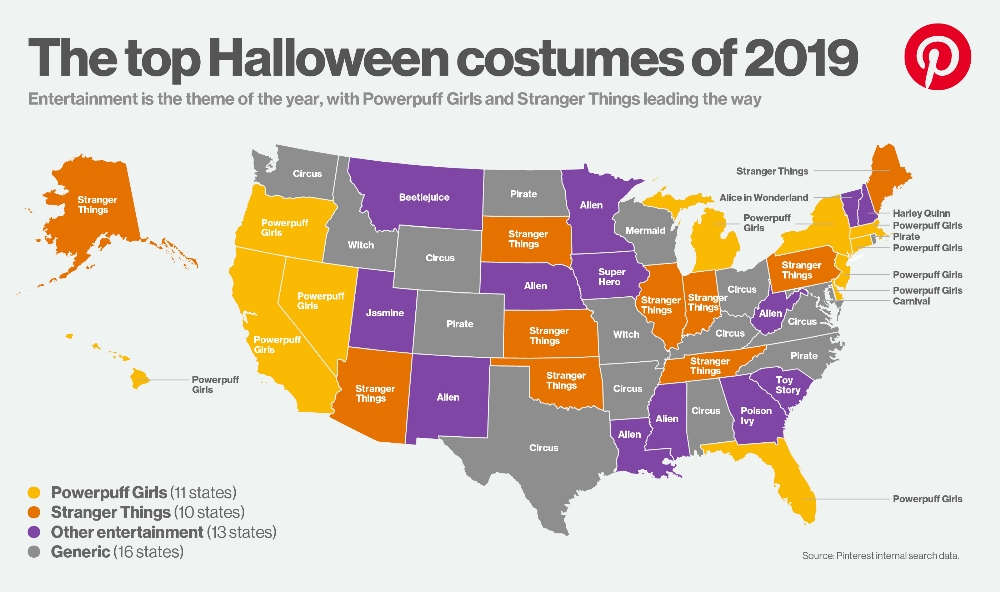
 

Pinterest has released its yearly Halloween report for 2019, detailing what costumes, content, and creepy festivities are getting the most attention leading up to the big day. 

Pinterest is one of the most popular social platforms for Halloween content ahead of the holiday, with tens of millions of Halloween-related boards available. 

For the report, the company analyzed searches across its platform throughout the past year. 

While it covers the obvious inclusions like costume and makeup ideas, the report also reveals a wide range of Halloween-themed ideas, including searches related to tattoos, wedding, games, and more. 

Top Costumes for Those Identifying as Female

  • Powerpuff Girls
  • Pirate
  • Circus
  • Stranger Things
  • Alien
  • Mermaid
  • Harley Quinn
  • 80’s costume
  • Poison Ivy
  • Alice in Wonderland

Top Costumes for Those Identifying as Male

  • Superhero
  • Viking
  • Spider-Man
  • Joker
  • Jedi
  • Animal
  • Circus
  • Pirate
  • Mad Max
  • Robot

Top Trending Singles Costumes

  • Alien (+659%)
  • Gwen Stacy from Spider-Man: Into The Spider-Verse (+446%)
  • Elton John (+442%)
  • Space Cowboy (+359%)
  • Freddie Mercury (+145%)

Top Trending Costumes for Pairs

  • Lilo and Stitch (+1205%)
  • Timon and Pumba (+154%)
  • Woody and Bo Peep (+836%)
  • Velma and Daphne (+274%)
  • Pulp Fiction Couples Costume (+384%)

Top Trending Group Costumes 

  • Stranger Things (+653%)
  • The Powerpuff Girls (+379%)
  • The Lion King (+283%)
  • Alassin family costumes (+176%)
  • Toy Story (+151%)

See more from the report, including the most popular searches for Halloween-themed makeup, party, and snack ideas here.

The holiday season may still feel like it is far in the distance, but most studies show consumers start their holiday shopping in November – if not earlier. That means now is the time to start preparing your holiday marketing efforts.

To help, Facebook is releasing a wave of new tools aimed at assisting businesses with their holiday marketing. 

Customizable Story Templates

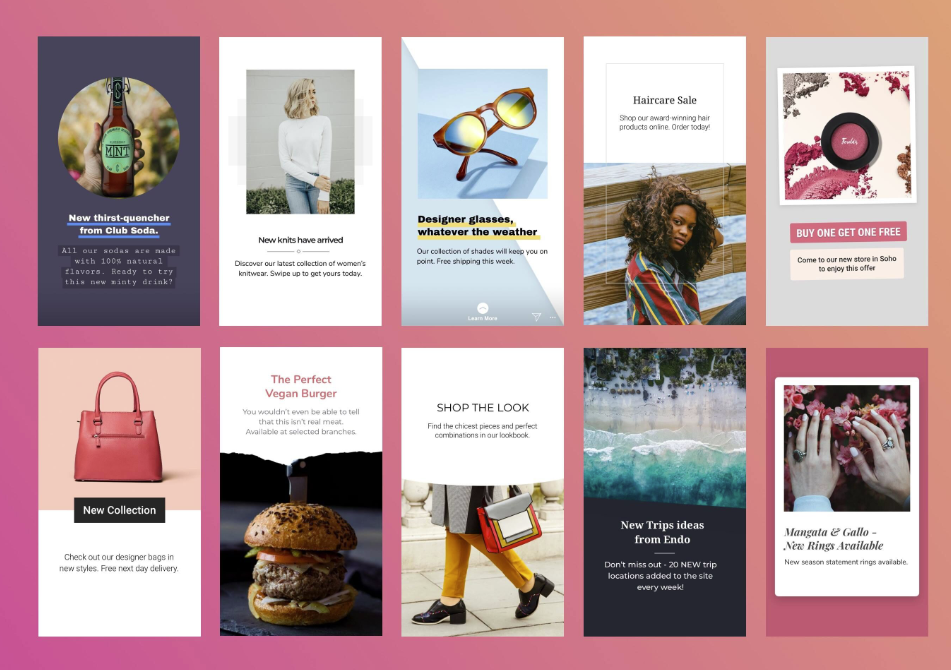
Facebook is releasing a number of customizable templates for ads in Facebook Stories, Instagram, and Messenger. 

The templates are simple, visually pleasing ways to showcase products and brands throughout the shopping season, with customizable backgrounds, music, and CTAs. 

These templates will be available this week.

Improvements to Instagram Direct and Messenger

Closer to the Holiday season, Facebook says it will be bringing a number of new features to Instagram Direct to improve communication between businesses and customers.

As the company says in the announcement:

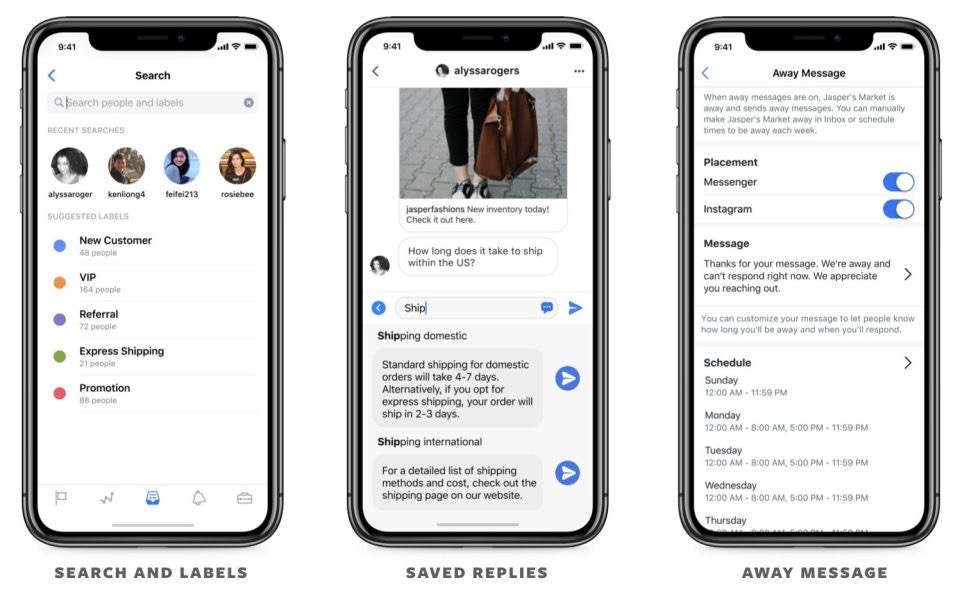
“From fulfilling orders to keeping up with customer requests, we know staying on top of customer communications is important, so we also created new messaging tools like labels, search and folders to help businesses stay organized.”

Within the coming weeks, Facebook will also be launching an ‘instant replies’ which lets businesses create custom automatic responses for when they are not immediately available. 

These “away” messages can be useful for days when your business is closed or when no one will be available to respond to messages for a prolonged period of time. 

Along with these improvements, Facebook is also introducing a new ‘saved replies’ feature which will allow you to respond to common questions with pre-written responses.

Bing has announced that its search engine crawler, Bingbot, will be going evergreen over the next few months by adopting the Chromium-based Edge browser to render webpages.

Essentially, this means it will be able to crawl, render, and properly index more of your content more closely to how to actual users see it. 

As Bing says in its announcement:

By adopting Microsoft Edge, Bingbot will now render all web pages using the same underlying web platform technology already used today by Googlebot, Google Chrome, and other Chromium-based browsers. This will make it easy for developers to ensure their web sites and their Content Management System work across all these solutions without having to spend time investigating each solution in depth.

The additional upside is that this mirrors steps recently taken by Google, which suggests it may become easier to optimize for both search engines without specific steps for each platform.

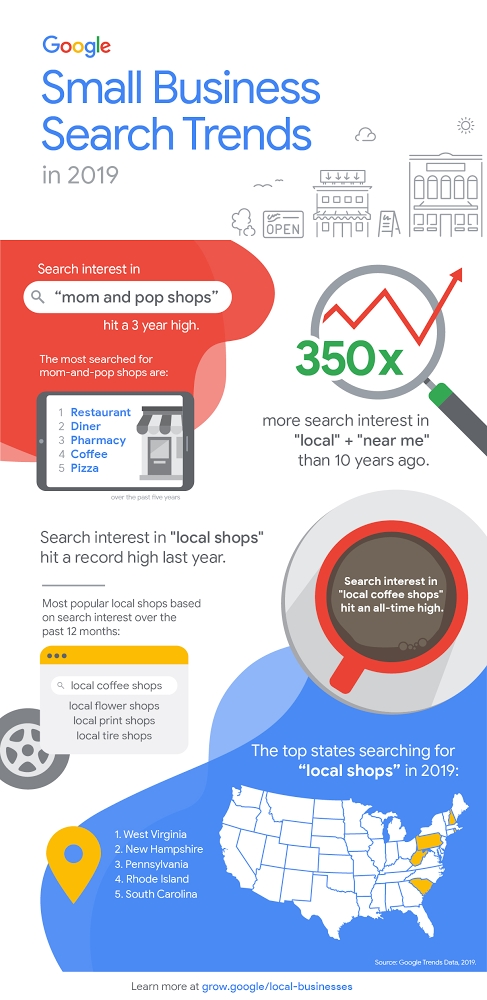
Google has released a new report showing how people are using the search engine to find small businesses around them every day. 

Overall, the report shows that local search continues to grow with “tremendous” speed. Specifically, searches with “local” + “near me” have gotten more than 350 times more search interest compared to a decade ago. 

On a more recent scale, the search engine says that search interest in “mom and pop shops” has climbed to a three year high, with especially high interest in restaurants, coffee shops, diners, pharmacies, and pizza places. 

Google also notes that search interest in “local shops” hit a record high last year. 

To make the findings easy to take in, Google created a nice infographic breaking down all the most important findings. Check it out below, or in Google’s blog post “Small Business Search Trends” here.

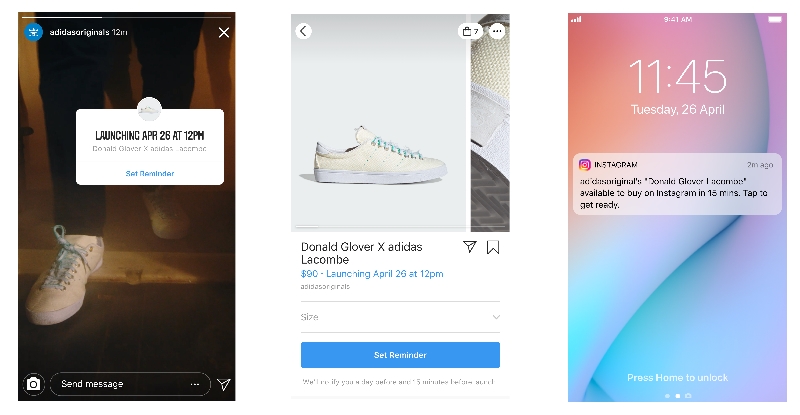
Instagram is testing a new way to notify customers about the release of new products when launch day arrives with stylish stickers and push notifications. 

While the test is currently limited to a small number of brands selected as part of Instagram’s closed checkout beta, it would deliver a promising way to boost the profile of your product launches and improve early sales. 

As the company says in their announcement:

“We wanted to make it easier for people to discover and follow upcoming product launches from brands and creators they love.”

The feature works by letting users opt-in to receive reminders about upcoming products when they see early promotional materials. 

Come launch day, they can then be notified of the product release and even make the purchase without leaving the Instagram app. 

To accompany the new feature, Instagram also launched a new sticker which can be used in Stories to promote your latest products. 

Since the new feature is just in testing, it is hard to predict when or even if it will eventually reach all brands and advertisers. Still, it provides an insight into how Instagram is aiming to help brands keep their products in the front of customers’ minds.

Pinterest is changing things up in a major way for brands, with an all-new design for business profiles and an entirely new ad format.

New Business Profile Design

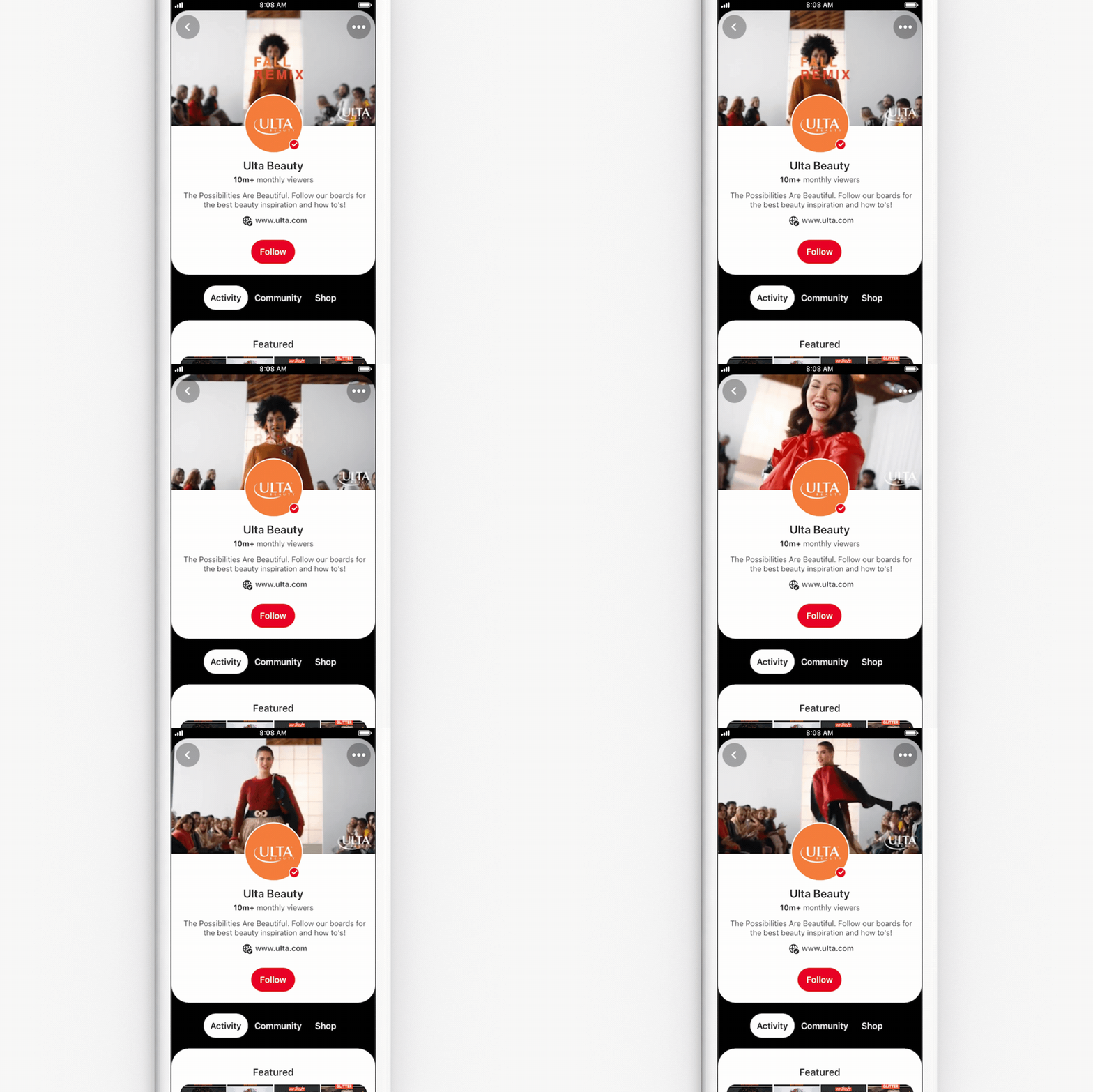
Pinterest’s new design for business profiles puts the focus directly on dynamic content and a central view of product pins. 

Specifically, brand profiles will now include:

A dedicated Shop tab for showing users your products directly within your profile

The ability to customize profile covers with either videos or images

A streamlines navigation system making it easier to access messaging features

‘Shop the Look’ Ads

Since the launch of ‘Shop the Look’ pins, retailers have been flocking to the organic posts to showcase a wide array of their products in a single image. 

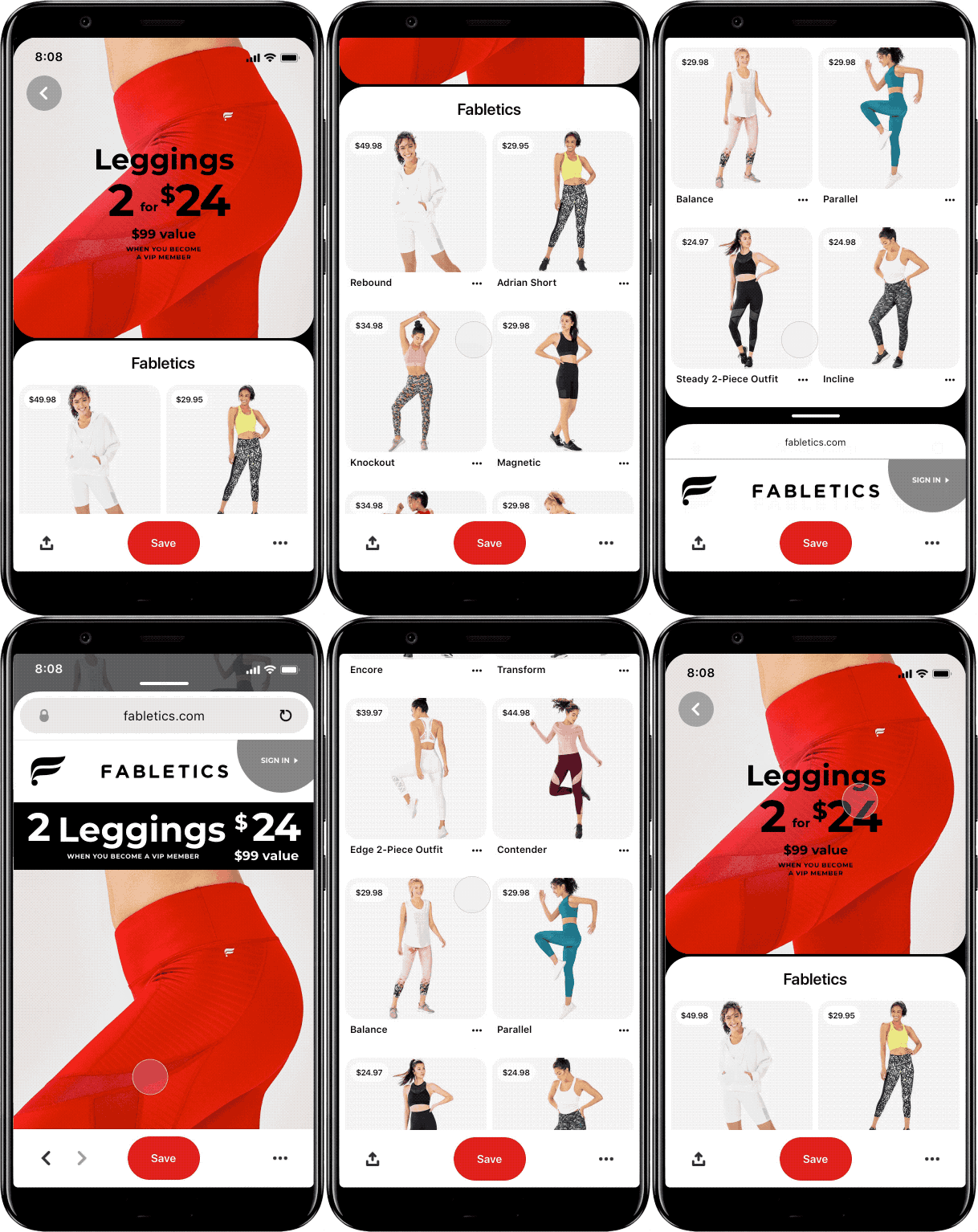
Now, Pinterest is allowing these brands to turn these organic pins into shoppable ads which can promote up to 25 products at a time. 

When these ads first appear, users will see a showcase previewing up to four items, which can be expanded to show the rest. 

‘Shop the Look’ ads are expected to roll out to US advertisers in the next few months.

Google is making it easier to find the most important information in YouTube videos for users by including timestamps in search results. 

The feature has been in testing for the better part of a year but has officially been announced this week.

As the company explains:

“Videos aren’t skimmable like text, meaning it can be easy to overlook video content altogether.

Now, just live we’ve worked to make other types of information more easily accessible, we’re developing new ways to understand and organize video content in Search to make it more useful for you.”

The feature is already rolling out, but video publishers will need to take a couple quick and easy steps to ensure the timestamps will appear when their videos show up in search results.

How To Add Timestamps To Your YouTube Videos In Search Results

The good news is there is absolutely no coding or complex technical knowledge needed to provide Google with the information necessary to include relevant timestamps. 

All you have to do is provide a simple list of timestamps and what they relate to within the description section of your videos. For example:

00:05 – Intro

01:30 – Step 1

02:15 – Step 2

03:40 – Step 3

05:00 – Conclusion

Notably, Google is extending this feature to non-YouTube videos as well. However, the process requires a bit more work to properly mark-up. To start the process of adding timestamps to non-YouTube videos, Google asks you to fill out this form. Afterward, they will provide you with the necessary information for marking-up your videos.

For the first time, Facebook is giving you a way to schedule Instagram posts ahead of time without the use of a third-party tool or app. 

The new functionality, available to all business accounts through Facebook’s Creator Studio, allows you to plan your Instagram pictur updates and IGTV videos up to six months in advance. 

The new feature also opens scheduled posts to the full abilities of Instagram. With most third-party tools, users are frequently limited to just one image per post and few offer support for IGTV videos. 

How To Gain Access To Scheduled Instagram Posts

You still have to meet a few requirements to be able to start scheduling your Instagram updates. Specifically, you need to:

  • Have a Facebook Business account
  • Have an Instagram business or creator account
  • Have linked your Instagram account to your Facebook page

Once all that is in order, you can start scheduling your posts through the Facebook Creator Studio by clicking the Instagram logo at the top of this page. 

It should be fairly obvious, but the new feature does not allow for the scheduling of Instagram Stories ahead of time. This makes sense, as those posts are specifically intended to capture a moment in time. If you begin scheduling those posts days or weeks ahead of time, it would lose the authenticity that makes Stories so engaging.

A new large-scale international study from Google shows that shoppers are increasingly using online videos to help make purchasing decisions. 

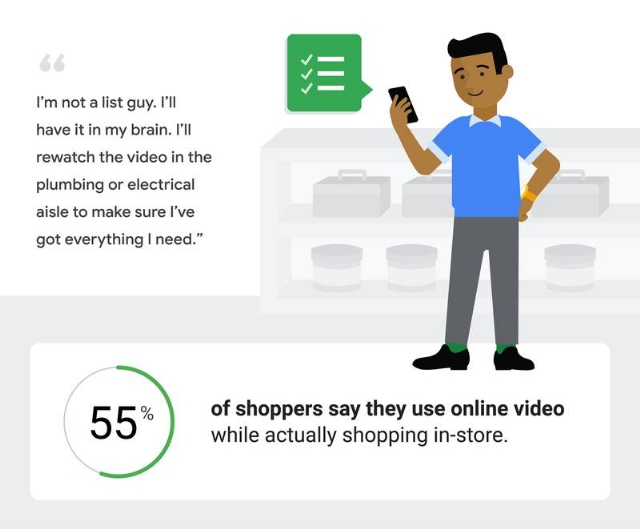
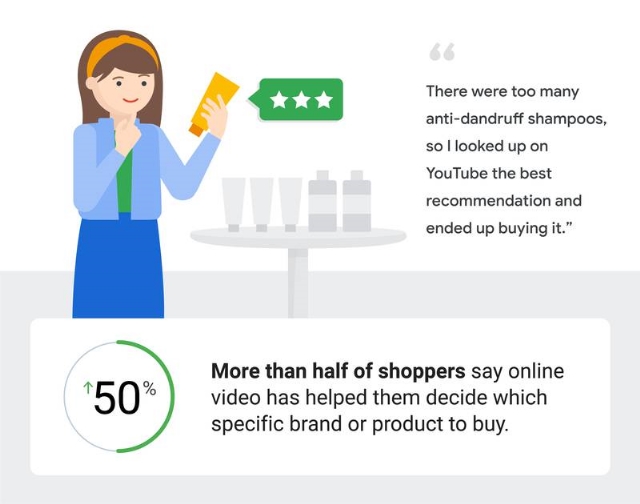
Specifically, the study – which used a mix of surveys and in-person interviews – found that more than half (55%) of consumers regularly use online videos as part of their shopping research. 

As the company says in its article:

“For more and more shoppers, video is becoming indispensable when they’re ready to buy. In fact, more than 55% of shoppers globally say they use online video while actually shopping in-store.”

Google’s Recommended Strategies For Using Video

Within the article about the report, Google also suggests a few ways brands can use videos to influence online shoppers:

Video Shopping List

One of the most surprising findings of the study is that many consumers are replacing traditional shopping lists with a video. 

“If I go to a store and forget what I need, I pull up the video to see the ingredients. I pull to the side, watch the video, and get what I need,” said one person interviewed. 

Getting Informed and Feeling Confident

For more technical fields or issues, such as finances or repairing complicated machines, videos can be an invaluable way to help shoppers feel more confident about their purchases. 

“YouTube has taught me that I’m capable of doing what I didn’t know I could do,” explained one consumer.

Video Reviews Can Be The Tie-Breaker

Video reviews are one of the most trusted forms of online reviews and are a popular reference point when making purchasing decisions. The wide variety of video reviews out there give people the ability to focus on the features they care most about and see which products will perform best for their needs. 

As one shopper told interviewers, “While I was in Home Depot the other day, I was on YouTube looking up drill sets to see which one was better and which one burned out quicker through stress tests.”

What This Means For Brands

It’s no big surprise that online shoppers are increasingly using videos to influence their shopping decisions. What is surprising is when and where they are referencing these videos and how they are actively using the videos within the shopping process. 

The biggest recommendation from the study is that you “think of ways your brand can show up to meet these in-the-moment needs, whether it’s through ads that spark ideas and inspiration or through more in-depth content to answer questions and help people along their path to purchase.”