
YouTube has been teasing its plans to expand its live streaming services for over eight months, and that plan is finally coming to fruition. The video platform says it is bringing mobile live streaming to its biggest content creators, with plans to share the feature with everyone soon.

YouTube is also releasing a new chat tool known as Super Chat to help creators monetize live streams.

Mobile Live Streaming

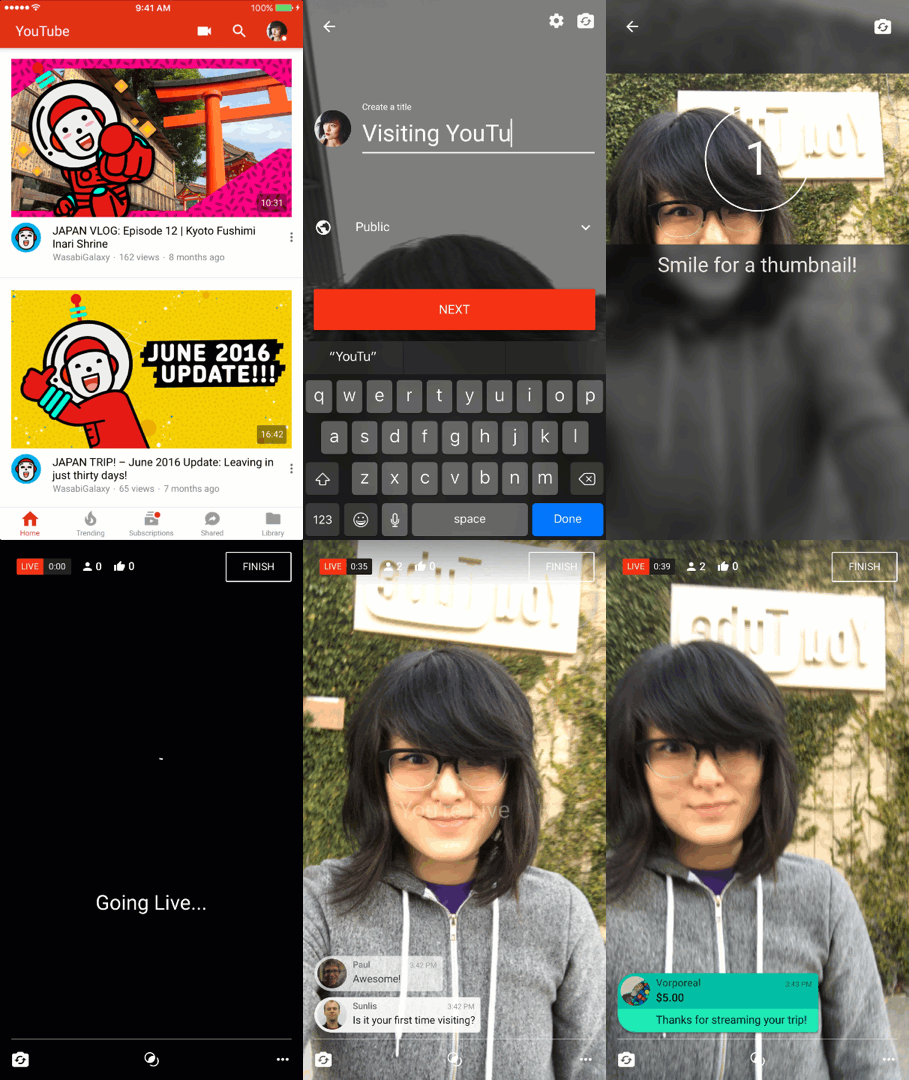
YouTube has built mobile live streaming directly into its mobile app, with a single catch. You must have at least 10,000 subscribers to use it. If you happen to already have a sizable following, launching a mobile live stream is as simple as opening the app and tapping the capture button.

The company plans to bring the tool to everyone in the coming months, but there is currently no firm estimate of when to expect it.

In the announcement, YouTube says streamed videos will have all the features you expect from normal YouTube videos. Streamed videos will be:

  • Searchable.
  • Discoverable via recommendations and playlists.
  • Protected from unauthorized use (using Content ID).

Super Chat

To accompany the release of mobile live streaming YouTube has also launched Super Chat, aimed at monetizing live content.

Super Chat essentially lets any viewer purchase a chat message that will be especially prominent in the chat feed and can be pinned to the top of the chat window for up to five hours. Super Chat messages will also be highlighted with a color and other viewers can see the amount paid.
CameoFlow

Super Chat is now live to creators with 10,000 subscribers across 20 countries and viewers in over 40 countries.
bingmobileads

While Google largely pretends Bing Ads doesn’t exist, Bing has been working hard to make it easier for advertisers to manage campaigns for both services from one place.

This started by offering the ability to import Google AdWords campaigns directly to Bing Ads, but now the company is expanding this with the ability to automatically sync your campaigns across platforms.

With this new feature, advertisers no longer have to make manual updates to their Bing Ads campaigns if they decide to tweak things on AdWords. Instead, when anything like ad copy, campaign budgets, and ad extensions is updated in AdWords, the changes will automatically be applied to a synced Bing Ads campaign.

automated-import-1-final-edit

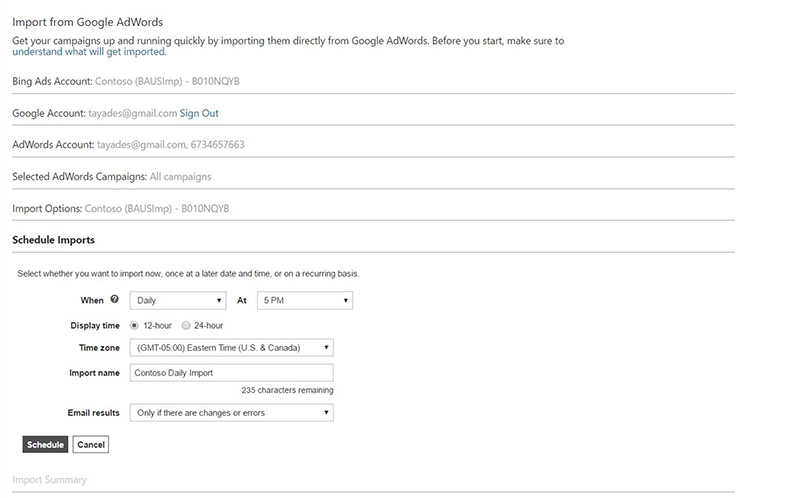
To do this, go through the typical process to import your campaigns into Bing Ads. At the end, you’ll be asked if you would like to import data now, at a later date, or on a recurring basis. Campaigns set to import on a regular basis can be set to update on a daily, weekly, or monthly basis.

Once you’ve done this, you can also view your import schedule and history, to ensure your campaigns are being properly updated. From here you can also pause or edit scheduled imports.

It sounds like Bing is already at work to expand these features even more, as they say to expect enhanced compatibility with multi-language targeting in the not too distant future.

YouTube Ads

YouTube may be one of Google’s largest platforms, but it gets treated a bit like the black sheep when it comes to Google’s ad services. Targeting has been limited compared to typical AdWords options, and ad options have been built around desktop functionality first.

This is all starting to change, as Google says it is rolling out several updates aimed to make advertising on YouTube better on both mobile and desktop. The announcement also mentioned that over 50% of YouTube videos are now happening on mobile, which likely motivated the change in how they think about ads on the platform.

Target Advertising

Google is now allowing YouTube ads to utilize information associated with users’ Google accounts like their search history, demographic information, and whether the viewer has engaged with an advertiser in the past to better target who sees your ad.

More Focus on Mobile

In response to the increasingly mobile viewership of YouTube, Google is shifting away from a desktop-first mindset. To do this, they are moving from using cookies and pixels because they were not designed for targeting users on YouTube’s mobile, TV, and set-top box apps. The hope is to make tracking and ad functionality more accurate across all devices.

Better Control of What Ads You See

Not all of the new changes are limited to advertisers. Google is also introducing the option for users to device what ads they see on both Google and YouTube from one location. For example, if a user mutes a specific advertiser in Search, the advertiser will also be muted for the user when they watch videos on YouTube.

Google+ is dead. Long live Google+.

Google announced it is retiring the “classic” Google+ we all know and replacing it with an all-new updated version with several big updates. The company says it is aiming to please users with several of the most heavily requested updates from the Google+ community.

”With this latest round of updates, we believe the new Google+ is really your Google+— designed around your suggestions, requests and needs. It also means it’s time to say goodbye to classic Google+ on the web, which we’ll be turning down on January 24.”

Here are a few of the things you can expect when the “new” Google+ launches on January 24:

Hide Low-Quality Comments

Google+Comments

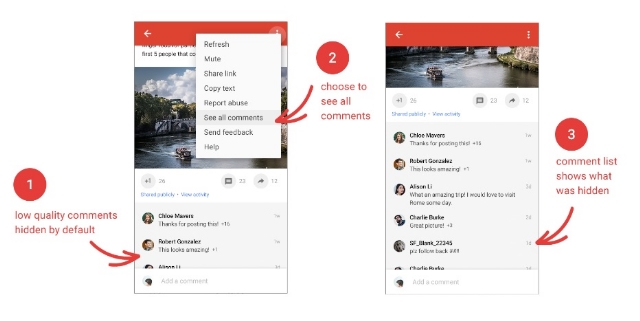
Google+ will begin to automatically bury low-quality comments that its algorithms deem non-conductive to conversation. It’s hard to know how exactly the function will work, but you can opt to leave the “low-quality comments” visible to everyone if you desire.

Putting Content First

Google+Images1

Google+ is aiming to trim the fat with its new update by reducing the amount of wasted space on the screen. Instead, it aims to put the focus on content with more images that you can even zoom in on.

Events Make Their Return

Events disappeared from Google+ some time ago, but the ability to create and join events is coming back. However, the company says it still needs to refine Events based on user experience, so expect it to be a work in progress when it launches.

“And Much More”

While Google is relaunching Google+ on the 24th, they say their work is far from over. “Our aim is to make Google+ the best place to connect around the things you care about,” the company says. Google is encouraging users to give their feedback and help shape the new Google+ as it takes shape in the future.

Google has officially begun rolling out the intrusive mobile interstitial penalty yesterday after months of warnings the penalty would be launched on January 10, 2017.

The roll-out was confirmed by both John Mueller and Gary Illyes yesterday.

The penalty is specifically designed to target intrusive interstitials that pop-up immediately after landing on a page from a Google mobile search result. However, it does not affect pages with delayed interstitials triggered by a click or action on the website.

Google specifies this means “pages where content is not easily accessible to a user on the transition from the mobile search results may not rank as highly.”

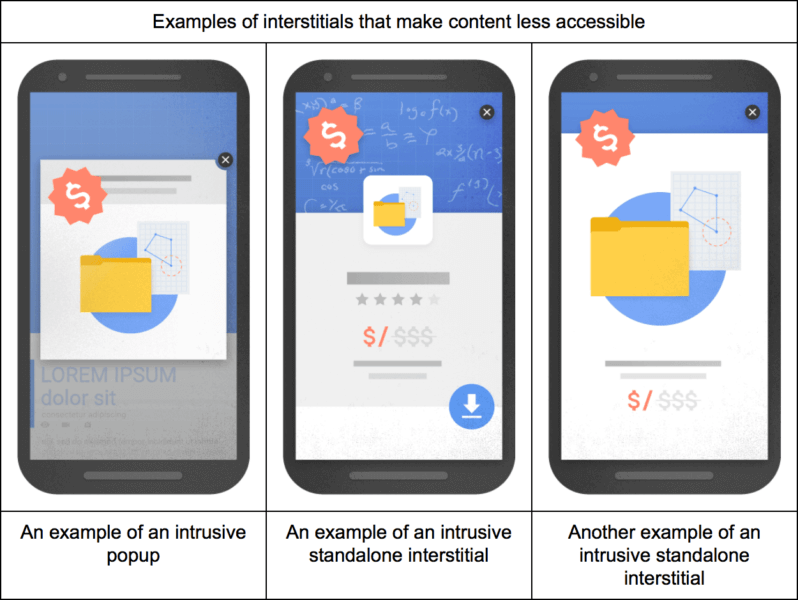
Google also detailed three specific types of interstitials it deems as problematic:

google-mobile-interstitials-penalty-bad-798x600

  • showing a popup that covers the main content, either immediately after the user navigates to a page from the search results or while they are looking through the page.
  • displaying a standalone interstitial that the user has to dismiss before accessing the main content.
  • using a layout where the above-the-fold portion of the page appears similar to a standalone interstitial, but the original content has been inlined underneath the fold.

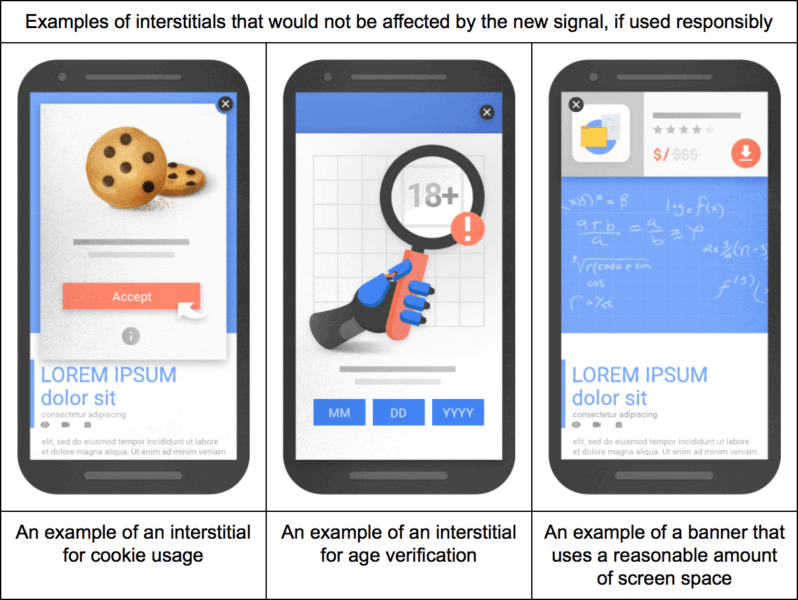
The company also detailed three types of interstitials that would not be affected by the penalty, so long as they are “used responsibly”:

google-mobile-interstitials-penalty-good-798x600

  • Interstitials that appear to be in response to a legal obligation, such as for cookie usage or for age verification.
  • Login dialogs on sites where content is not publicly indexable. For example, this would include private content such as email or unindexable content that is behind a paywall.
  • Banners that use a reasonable amount of screen space and are easily dismissible. The app install banners provided by Safari and Chrome are examples of banners that use a reasonable amount of screen space.

Google HTTPS Warning

Google is making some changes to protect users’ sensitive information online, and it could lead to your site being marked as non-secure by Google’s web browser at the end of this month.

Google released a warning that as of the end of January 2017, Chrome will mark sites without HTTPS as non-secure if they collect private information like passwords or credit cards.

Google #NoHacked HTTPS

“Enabling HTTPS on your whole site is important, but if your site collects passwords, payment info, or any other personal information, it’s critical to use HTTPS.”

The company has encouraged implementing HTTPS in the past by making it a (very minor) search ranking signal. Now, from the sound of the alert, the company says an entire site will need to be HTTPS if any pages collect payment or sensitive information.

Switching over to HTTPS is an easy process, but you should begin preparing to make the switch now if your site fits the criteria. Otherwise, you are likely to be flagged as non-secure in February and lose a large amount of your web traffic.

Negative SEO alert

There’s a new malicious SEO tactic making the rounds and your Google My Business listings could easily be the victim, according to web security company Sucuri. The company says individuals are sneaking inappropriate or damaging photos into GMB listings with the intent of damaging a business’s reputation and image.

What makes this type of exploit unique, however, is that it doesn’t take any hacking skills to do. Unlike other negative SEO tactics, this specific technique does not include hosting images on a client server, malicious code, or even breaking into an account.

Ultimately, the attack is taking advantage of Google’s lax rules for uploading photos to a business’s location in Google Maps. Anyone can upload images to a business’s listing, and any of these images can be used for Knowledge Graph data about the business.

While Sucuri doesn’t have evidence of this, it is possible for a person to spam a business’s listing with lewd images and then send fake hits to them to increase their perceived popularity – all with the end goal of making sure they come up when people see your business online.

How to Protect Your Listings

Unfortunately, the nature of this type of attack makes it difficult to guard against. There is no way to limit who can upload photos to your listings or determine which image gets used in Knowledge Graphs. The best you can really do is to actively keep an eye on your listings and which photos are appearing next to your listings.

You can also watch to make sure no one is uploading inappropriate pictures to your Google My Business photos. While you can’t stop people from uploading lewd images, you can easily remove any associated with your location.

google-my-business-1

When it comes to marketing your business, it’s all about image. How people perceive your business will decide whether they decide to come in the door or walk away. This is especially true online.

One of the first images people will see when they find your business is almost always your photos in your local listings on search engines. Thankfully, Google has given you more control and more data on how your images are performing.

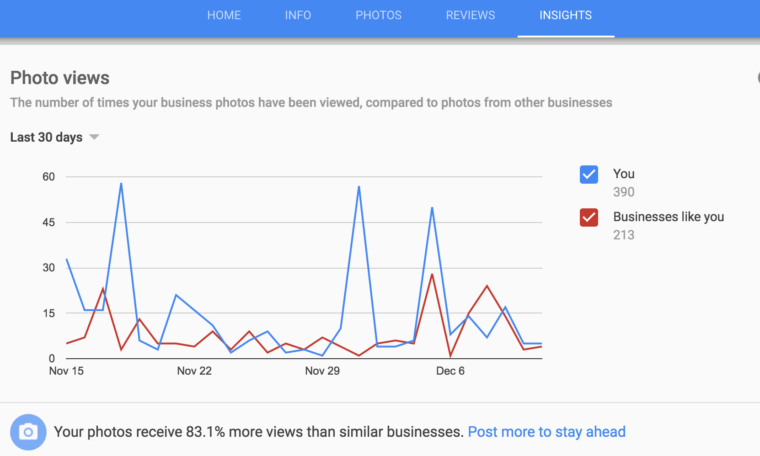
With the new insights for photos on business listings, you can see how people are responding to your listing and images and compare them against your competition.

You can easily see the new insights in your Google My Business listing by clicking the Insights tab on the top navigation bar. At the bottom of the screen, you’ll find a graph comparing your business to “businesses like you”.

screen-shot-2016-12-16-at-11-29-21-am-760x456

You can refine the time-period you want to look at by the past 90 days, past 30 days, and past 7 days.

Unfortunately, you can’t select exactly what businesses you are comparing your site against, nor do you even get to know who the “businesses like you” are. But, the new tool can still be an effective way to make sure you are making a great first impression with your listings on Google.

Year in Search

Google has finally released its annual year in search list, breaking down the biggest stories and searches of the past year. As usual, it is broken down into several categories and countries, making it easy to see what was trending in 2016 in your area or around the world.

Google’s Top 10 Worldwide searches of 2016:

  1. Pokémon Go
  2. iPhone 7
  3. Donald Trump
  4. Prince
  5. Powerball
  6. David Bowie
  7. Deadpool
  8. Olympics
  9. Slither.io
  10. Suicide Squad

The top searches for the US are almost identical, except for a few changes. “Powerball” bounces up to the top slot, because it can only be played in America. Meanwhile, “iPhone” slides entirely off the list.

Google’s Top 10 US Searches of 2016:

  1. Powerball
  2. Prince
  3. Hurricane Matthew
  4. Pokemon Go
  5. Slither.io
  6. Olympics
  7. David Bowie
  8. Trump
  9. Election
  10. Hillary Clinton

While the iPhone 7 didn’t make the top US searches, it does lead the worldwide top tech searches of the past year. Apple also dominates 3 of the top 4 searches for consumer technology. Considering its recent reveal, it is also somewhat surprising to see the Nintendo Switch also makes the list at number 9.

Google’s Top 10 Consumer Tech Searches Worldwide:

  1. iPhone 7
  2. Freedom 251
  3. iPhone SE
  4. iPhone 6S
  5. Google Pixel
  6. Samsung Galaxy S7
  7. iPhone 7 Plus
  8. Note 7
  9. Nintendo Switch
  10. Samsung J7

Of course, there are plenty more interesting categories in Google’s Year in Search 2016 to look through including beers, fashion designers, GIFs and much more. Check out the lists for yourself.

After months of testing a new verification in the San Francisco area exclusively for locksmiths and plumbers, the search engine has officially launched the “Google guaranteed” verification process.

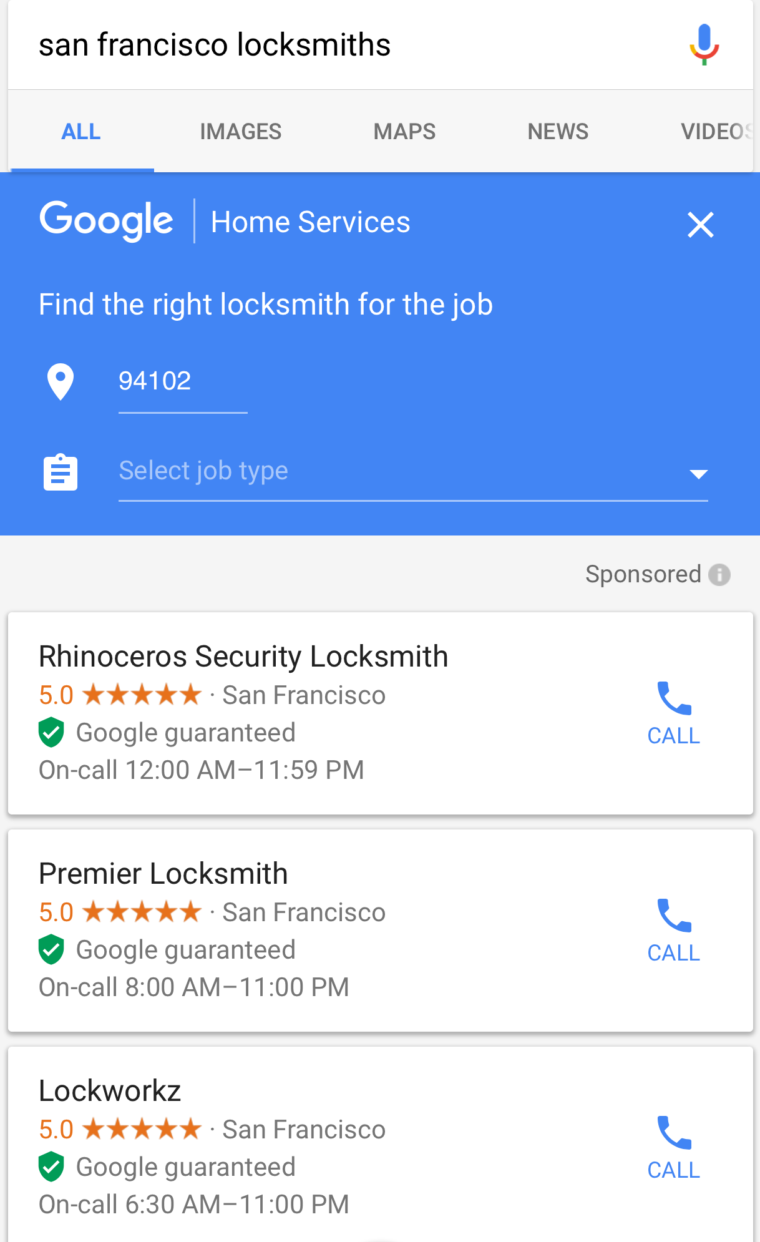
If your business gets “Google guaranteed”, you get a special green badge next to your business in the search results – and customers get a few perks and protections through Google.

img_3099-760x1242

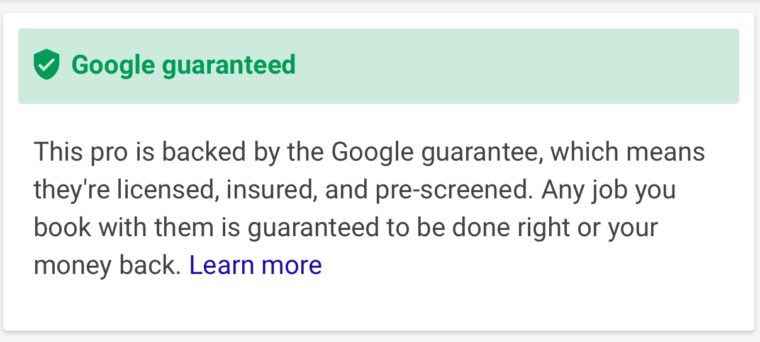
If you tap on any of the results, you are then taken to the home service ad specifically for that business, along with some extra details about what the Google guarantee really means:

img_3100-760x342

Tapping on Learn More goes even more in-depth, with a full page of details about what the Google guarantee covers and how it works:

”When you book an eligible home service pro on Google, you are protected by the Google guarantee. If you’re not satisfied with the work quality, Google may refund up to the amount paid for the job.”

What Businesses Need To Know

Currently, the Google guarantee is limited to just locksmiths and plumbers. This is because both industries have had recent issues with ad fraud and abusive advertising practices which Google is attempting to clean up.

There does not appear to be a public sign-up process for businesses hoping to be verified, and it is unclear what the verification process includes. However, this is likely to become more transparent as the verification process is extended nationwide.

What Customers Need To Know

To activate the Google guarantee, fill out this form before your first appointment. You can also call customer support at (844) 885-0761 to submit a claim or ask questions about your coverage.

Coverage

  • If you’re unhappy with the work performed, you can submit a claim and Google will cover the invoice amount up to a lifetime cap of $2,000.
  • The job must be booked through Google Home Services. Any future work completed by the same provider, unless booked through Home Services, is not covered.
  • Jobs completed before September 14, 2016, are not covered.
  • Currently only locksmith and plumbing jobs are covered.