Tag Archive for: Social Media Marketing

All week we try to keep you up to date with the most important SEM news across the web, but inevitably there are smaller stories that fall through the cracks. That’s why we compile all the most important news we missed this week all in one convenient place every Friday. Despite the distractions of the world cup, there have been some pretty big announcements throughout the week. So, let’s get to it.

Google Preps Online Retailers With Best Practices
Google Shopping

With the clock ticking before Shopping Campaigns becomes the default campaign type for running Product Listing Ads at the end of August, Google is trying to help prepare retailers and marketers by issuing best practice guidelines to help everyone make the transition smoothly.

For the most part, the guidelines listed aren’t far off from the original PLA recommendations. Yes, the paper covers product feed optimization and newer updates, but most of it is a refresher for those who have been working with retailers for a while now, including classic rules like “use relevant titles and high quality images.”

However, marketers and retailers may be interested in the new recommendations about how to structure new shopping campaigns, especially as we enter the transition period.
You can download the whitepaper of the guidelines from Google here.

Sneak a Peak at Google’s New Reconsideration Rejection Forms
google-reconsideration-request-rejection-note-1402921143

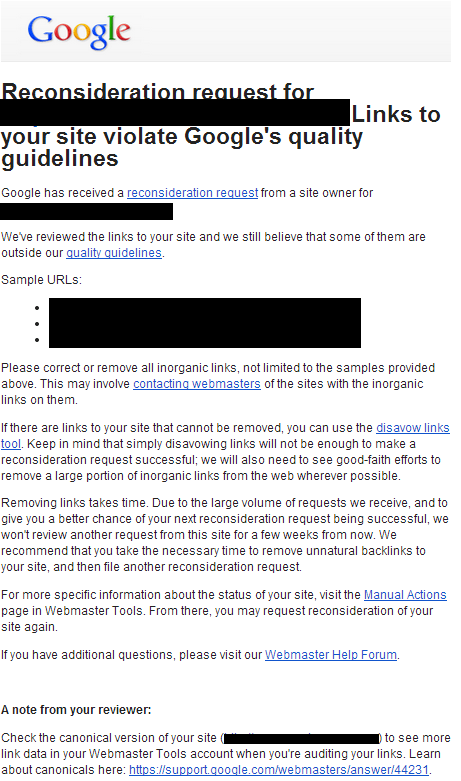
Last week, Matt Cutts made headlines throughout the SEO community by announcing that Google will be revising their reconsideration requests rejection notices with more detailed information in some cases. Of course, there were plenty of skeptics, but an example of the rejection notices has been shared on Twitter by @johnwarddoyle.

Surprisingly, it seems Google made good on their promise.

Don’t get too excited. The individualized response is short and easily missed, but rejection notices at least offer some useful information for repairing a site now. Largely the note is the same as before, but down at the bottom you will see a new section titled “A note from your reviewer.” Here, you will find specific advice relevant to your site that could be potentially highly useful.

Facebook Shows Off Their Snapchat Competitor

Slingshot

After having a $3 billion offer refused by Snapchat – the popular self-destructing photo messenger app – Facebook is trying to fight back. This week Facebook announced Slingshot, an app obviously influenced by Snapchat’s concept, but with a new twist.

Slingshot does allow users to send photos or short video messages that will delete automatically after a short period of time, but there is more to it:

To get started on Slingshot, shoot a photo or video… add some text and color, then sling it to a bunch of friends. Here’s the deal: friends won’t be able to see your shot until they sling something back to you. They can then reply with a reaction – or simply swipe your shot away.

The concept encourages reciprocal communication more and could potentially catch on, but it could just as easily fall apart in the shadow of it’s better-established rival. With the faltering youth activity on Facebook, it is hard to know how much traction this type of app can get.

Major Brand’s Seeing Engagement Plummet on Facebook
Total-Engagement-600x531

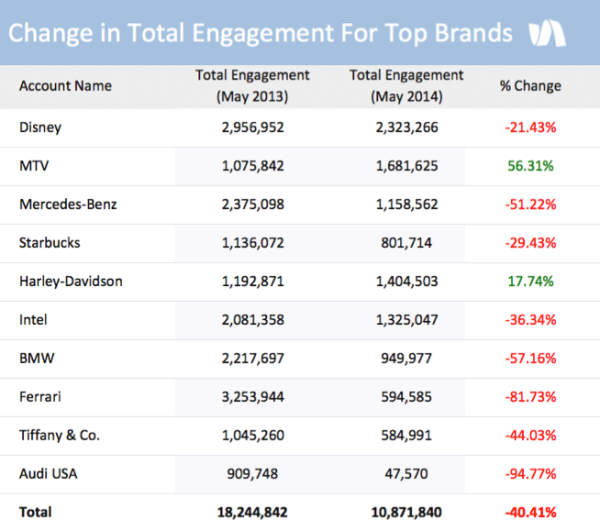
Speaking of Facebook’s problem of bleeding activity and user engagement, recent reports show that it isn’t just the teen demographic evaporating from the site. Facebook analytics provider Simply Measured says consumer engagement with Facebook posts from almost all top Interbrand companies are down significantly from last year.

According to the firm, monthly engagement is down over 40 percent since May 2013.
Only two brands on the list (MTV and Harley Davidson) say increases in engagement, while the others saw huge decreases. Overall engagement was down at least 50 percent.

Most troublesome for Facebook, the report outright cites the decreasing organic reach available on Facebook as a primary blame for the decline in engagement.

Facebook’s Graph Search Makes Its First Appearance on Mobile
graph-search-preview

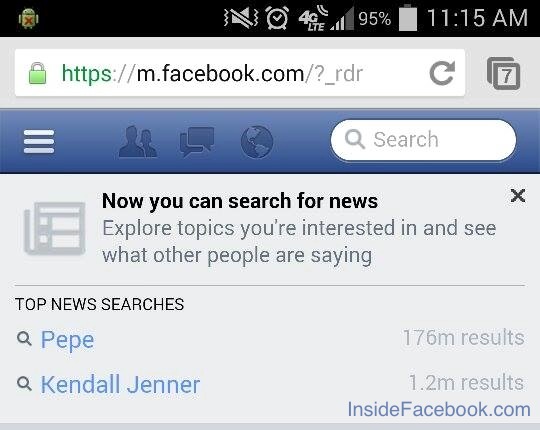
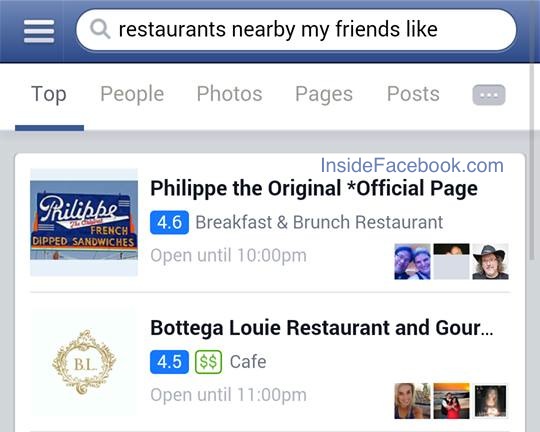
While Facebook’s Graph Search hasn’t been officially released on mobile yet, but it is most likely getting very close to being rolled out. Over the past week, many people reported encountering a test showcasing in-depth integration for the Graph Search for mobile users with all the same features you’ve come to recognize.
graph-search-restaurants

The most anyone has gotten out of Facebook is the response “we’re testing improvements to Facebook mobile search.” But, I would wager the release will be sooner than later. The current testing version for mobile seems to be able to handle all the complex searches capable on desktop and appears to be largely ready for release.

Twitter Finally Adds Animated GIF Support

Twitter’s announcement this week may seem super minor, but it has received nearly as much coverage this week as any other bit of information relevant to online marketing. The reason is simple: internet users love GIFs and this week Twitter announced you can now post and view animated GIFs on Twitter’s website and mobile apps.

tumblr_n45qzpE3Tr1qj6dyco1_500

Of course, the announcement came in the form of a Tweet featuring an animated GIF from Twitter Support.

Previously, users could share links to GIFs via third-party services like Imgur, but starting this week you can now share and view the moving images directly on Twitter.

Importantly, GIF’s won’t start playing automatically in your feed like they do on Tumblr. Instead, when a GIF is shown, a white play button will be overlayed, allowing you to choose when a GIF starts playing.

Social Media FailSocial media is one of the best tools modern marketers and business owners have to connect with their demographic and build their brand. But, social media can also be a bit fickle or harsh. You can spend months or even years creating your brand’s online presence and building up an audience, only to create a massive PR problem with a single post.
As the saying goes, the bigger they are the harder they fall. Whether it’s on Facebook, Twitter, Pinterest, or Google+, having a big audience only means you have more eyes scrutinizing your every Tweet and Pin for a potential scandal or brand breakdown.

You don’t have to get too worried though. Nearly every big social media mistake can be avoided by following some simple rules. Search Engine Journal shared a list of 30 ways you can make a mistake on social media. While the list may seem long, it provides a complete guide to social media – from building an audience to avoiding any meltdowns or missteps in the future.

We are just a day away from the start of World Cup 2014, and this year’s competition will be the most socially connected yet. Social media use is at an all-time high, and Twitter and Facebook are locked in a battle for the place as the dominant platform users turn to for keeping up to date with scores, game times, and fan response.

Though soccer is often treated like a novelty in the US, the sport actually has a strong and passionate audience across the country – not to mention the unbelievably large fan base around the world. FIFA claims that around 3.2 million people watched at least one game of the last World Cup in 2010, and this year seems likely to get even more viewers.

As Twitter and Facebook made clear with announcements yesterday, both platforms are hoping to get a piece of the action by rolling out campaigns aimed at promoting soccer and encouraging fans to turn to their specific platforms.

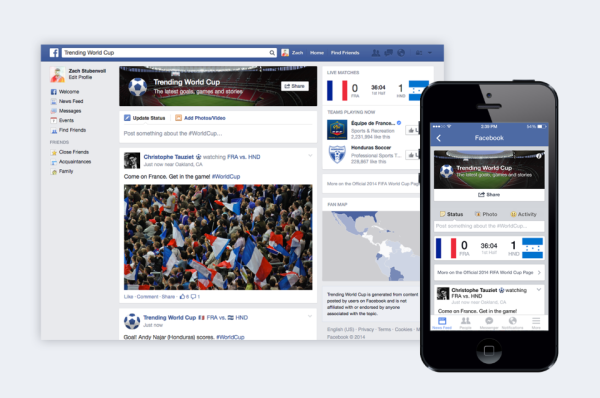
Facebook’s Trending World Cup Page

trending-world-cup-facebook-600x398

Facebook’s News Feed algorithm isn’t exactly well-suited for keeping up with real-time conversation like Twitter is, but it is offering a Trending World Cup page designed to help fans follow the latest scores, match highlights, and conversation. The page will even allow users to click through a global map which displays the Facebook popularity of top World Cup players.

Several people, including Marketing Land, have already used the global map to discover some fairly interesting statistics, such as England’s Wayne Rooney being strangely popular in Namibia.

As with all of Facebook’s trending pages, the World Cup page will also show the latest posts from friends, players, teams, and the media making sure you never miss a spectacular goal or scandalous foul.

Facebook users will be able to filter conversations based on the specific match they are watching as well, once the games have started.

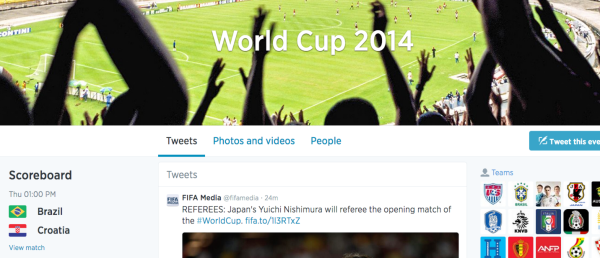
Twitter’s World Cup Landing Page and Hashflags

twitter-worldcup-hub-600x258

Twitter users can already access a dedicated World Cup landing page via the hashtags #WorldCup and #WorldCup2014, which offers a scoreboard and updates with conversation about the event and games. Similar to Facebook, Twitter will also allow users to organize what content they are seeing by selecting “match timelines” that only show tweets about specific games.

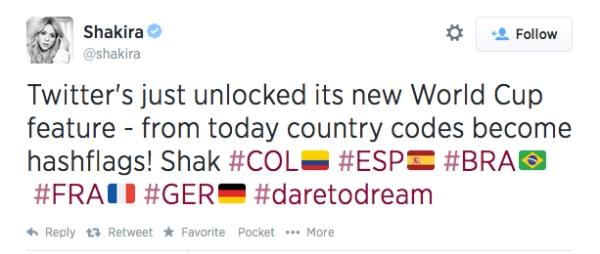
This is fairly standard for users, but Twitter users from the last World Cup may be excited to see that “hashflags” are returning for the latest competition. Introduced for the 2010 World Cup, the feature displays flag icons of people who include appropriate three-letter hashtags in their tweets. Before the games kick off on Thursday, Twitter will also unveil “The World Cup of Tweets” bracket.

Shakira Twitter

The social platform is also acting to retain new users who choose Twitter for their World Cup 2014 social needs by adding soccer suggestions to the sign-up process throughout the games.

“After you sign up and choose your username, you can select the team you’re supporting,” Twitter’s Xiaolei Li wrote in a blog post. “Then you can choose from a number of profile and header photos that represent your country. (Of course, you can upload your own photos too.)”

http://youtu.be/62NnPg2Ds5w

All week we try to keep you up to date with the most important SEM news across the web, but inevitably there are smaller stories that fall through the cracks. That’s why we compile all the most important news we missed this week all in one convenient place every Friday. After a quiet week before, nearly all of the major platforms have made announcements this week. Let’s start with Google and work our way down.

Google Starts Warning Searchers About Mobile URL Redirects

search+result+redirect+annotation

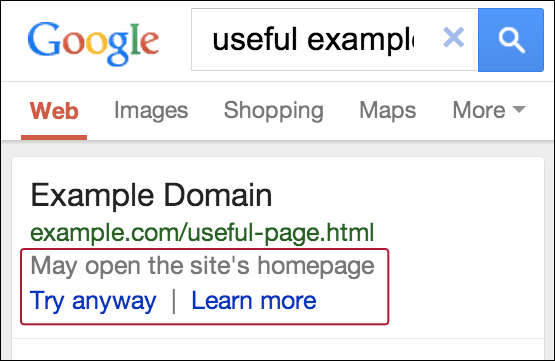
Google has been warning webmasters about faulty mobile redirects for months, including suggesting they may one day start receiving penalties for sending mobile searchers to the front page of a site rather than the content relevant to their search. It appears Google has opted for another solution, which allows mobile searchers to decide if they want to proceed.

Google alerted webmasters this week that smartphone searchers will begin seeing warnings for sites with redirects that don’t take them where they want to go. An example of how these warnings will appear is above. On a Webmaster Central blog post, Google stated:

We’d like to spare users the frustration of landing on irrelevant pages and help webmasters fix the faulty redirects. Starting today in our English search results in the US, whenever we detect that smartphone users are redirected to a homepage instead of the page they asked for, we may note it below the result. If you wish to proceed to the page, you can click ‘Try Anyway.’

Google Adds World Cup Street View Tours and a Loch Ness Easter Egg

street-view-world-cup

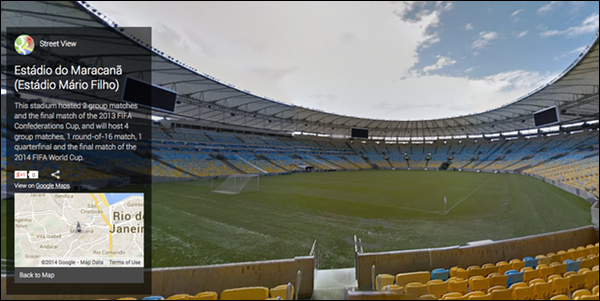
Just a week before the World Cup kicks off, Google has added street view images that will allow users to tour all 12 stadiums that will be used for the tournament. Whether you want to stand in the middle of the field and do a little spin, or preview the view from the stands, you’ll be able to give a look from anywhere within the stadiums.

Google has also added significantly more images from Brazil’s painted streets and other sites across the country, but perhaps one of the most popular finds on Google Maps this week is an Easter Egg found far away from Brazil.

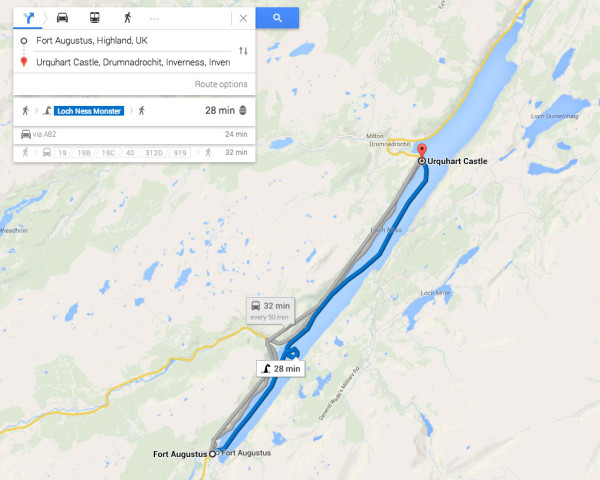
If you’d rather hunt legendary monsters than watch soccer, Google Maps is able to give you directions to Loch Ness. If that isn’t enough for you however, Google says you can always catch a ride on Nessy.

google-maps-loch-ness-monster-600x480

If you get directions from Fort Augustus to Urquhart Castle in Google Maps, you will get the option to travel via Loch Ness Monster. You just have to click on ‘Route Options’ and then choose ‘Fewer Transfers’ or ‘Less Walking.’ Though you have to wonder how no one has managed to get a picture of Nessy while hopping a ride down the Loch.

Bing Celebrates Its 5th Birthday With Some Memories

Bing turned five earlier this week, and to celebrate it has posted a retrospective of the last five years. Bing is also offering Bing Reward credit perks to any user who searches on the site before June 9th.

The retrospective covers all of the ways Bing’s appearance has changed over the past five years, but it also covers how it has worked to achieving its initial goals of leveraging semantic search, introducing new verticals, and generally expanding how search could function in our lives.

Bing Shows Off New Dynamic Carousel For Music Video Searches

bing-music-video-carousel

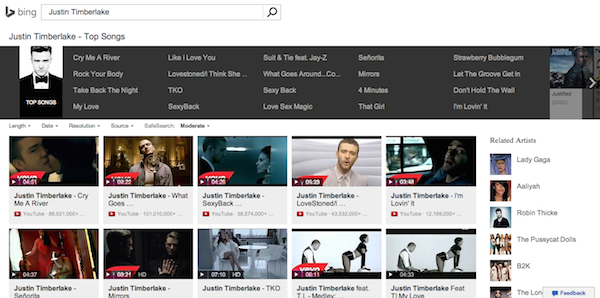
Bing has prided itself on being ahead of the curve in respect to music and music video searching and discovery, and its latest feature continues to expand on the functionality it previously offered for music video searches.

Bing has recognized that people search for music videos very differently than they do other video content. By exploring these changes in user behavior, Bing was able to determine that music video watchers wer significantly more likely to hang around and check out other content instead of moving on once they found the video they were looking for.

To give users easier access to all the music videos they may be interested, Bing has implemented instant access to an artist’s top hits as soon as you search only the artists name. Bing describe this as a dynamic carousel, because it allows you to open up songs and videos from teh carousel and play it within the same window. You will never have to keep going back and forth between choosing the video you want to watch and actually watching it.

The carousel also allows you to view all of an artist’s albums and watch the videos for those songs as well.

Pinterest Continues To Work Towards An Actual Ad Platform

Pinterest Promoted Pins DIY

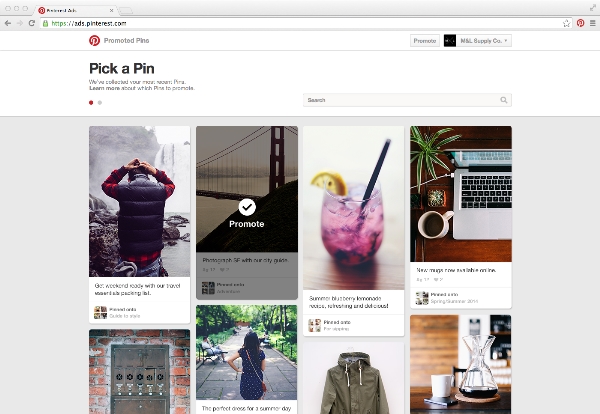
Pinterest has made its intention to establish an ad platform for their social network very clear ever since it unveiled Promoted Pins. However, Pinterest is working slowly to guarantee that the ads shown on their platform won’t stick out or detract from the experience, and as such it has been very hands on and selective about who it allows to run ads.

Now, businesses of all types have been given access to a do-it-yourself Promoted Pins tool that allows them to promote their own pins to more people and increase visibility. Similar to most other social ad platforms, these will work on a cost-per-click basis through ads.pinterest.com.

Pinterest also announced they would be expanding the analytics tools offered to users, giving them more insight into who is clicking and re-Pinning your content. You can get more information from their announcement.

LinkedIn Joins The “Large Cover and Profile Photo” Club

linkedin-600x282

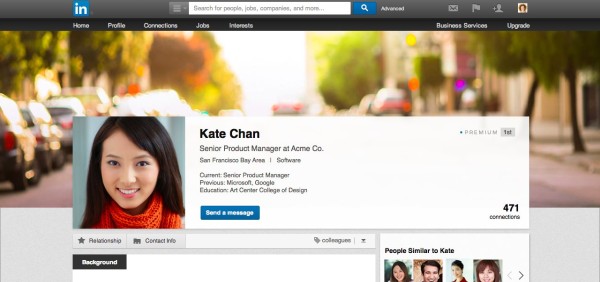
LinkedIn announced earlier this week it would be making a major design update to user profiles, which will feel very familiar to anyone who uses Facebook, Google+, or Twitter. Currently, the layout is only available to premium users, but LinkedIn says it will be available for all users after a short period. It isn’t entirely clear why LinkedIn would stagger the rollout of this layout change, but you can add it to the list of social media sites that are beginning to look very, very similar.

Twiter imageWe are quickly reaching the point where every social media platform has their own advertising platform specific to their brand. Facebook has Facebook Ads, Google+ has +Post ads which display all across Google’s network, and of course Twitter has their own advertising platform, Twitter Ads.
As to be expected, each platform has its own upsides and drawbacks. But, if you can make it adjust your approach to the platform, advertising on the one of the largest social media sites of the moment is certainly an effective way to increase your reach and generate leads.

If you are thinking about expanding your advertising strategy to include Twitter Ads, Melissa Mackey recently explained some of the most important good and bad aspects to the platform you need to know before you get started.

Source: Jason Howie

Source: Jason Howie

Marketers have overwhelmingly confirmed that social media is a highly valuable target for campaigns of all shapes and sizes, but you have to be able to effectively aim your message. If your social marketing strategy is out-dated or unfocused, then it will never gain traction on any of the major social platforms.

Social Media Examiner recently released its annual Social Media Marketing Industry Report, based on surveying more than 2,800 marketers. If you want to make sure you are up to date with the state of social media and guarantee you are sending out the right message to the right people, you’ll want to know these important trends highlighted by this year’s report.

1. Blogging is Back – It should be obvious by the widespread cries of “Content is King!” over the past year, but blogging is all the rage yet again. The report shows this blogging is only going to get more popular looking forward as 68 percent of marketers said they would be increasing their blogging efforts. That is the most attention blogging has received since 2010 according to the report.

2. Facebook is Showing Its Age – Compared to the relatively short lifespans of popular social media platforms like Myspace, Facebook’s reign at the heights of social media has been extremely long. But, the report supports numerous claims over the past year that Facebook is beginning to lose users and marketers alike. Despite still being the most important social network overall, by a significant amount, only 43 percent of marketers feel their efforts are effective and 7 percent intend to decrease their use of Facebook this year.

3. Google+ is Finally Getting Some Attention – Despite still being the source of plenty of derisive jokes, Google+ is finally seeing some light on the horizon. The report explains, “While 54 percent of marketers are using Google+, 65 percent want to learn more about it and 61 percent plan on increasing Google+ activities in 2014.”

4. Is Podcasting the Next Big Thing? – Only 6 percent of marketers are currently involved in podcasting, but expect to see efforts skyrocketing soon. The report says 21 percent of marketers are planning on increasing their podcasting activities this year. Many also showed heightened interest in podcasting, with 28 percent saying they wanted to learn more.

Are you trying to stay on the cutting edge of social media? It is hard to stay ahead of the curve, but with enough effort you can corner all the new emerging platforms while keeping up with the content trends.

Source: Shawn Campbell

Source: Shawn Campbell

Twitter continues to grow and draw in new users, but a new report from eMarketer suggests the boom may be coming to an end. Year after year Twitter’s growth is slowing down, and it looks like the trend will continue for the foreseeable future.

As eMarketer reports in their first-ever forecast of global Twitter users, Twitter’s user base will increase by 24.4% in 2014. If this is proven true at the end of the year, it will continue the pattern that has already been taking place for the past few years. In 2015, it is predicted Twitter’s growth rate could drop to just 9%.

In 2013, Twitter grew by 30%, and 2012 saw a 50% rate of growth. The majority of recent growth has come from overseas.

If eMarketer’s estimates are correct, it would put Twitter at a total of 227.5 million users this year, and 269.9 million in 2015.

Several people have noted that these numbers are quite different from Twitter’s own reported 225 million monthly active users, which the service said it reachedlast month. The difference in the figures can be explained however by eMarketer’s decision notto include business accounts and instances of multiple accounts. As they explained:

Our figures differ from Twitter’s reported figure of 255 million monthly active users in 2013 because we rely heavily on consumer data to weed out business accounts, multiple accounts for individual users, and other sources of potential double-counting.

These numbers paint a grim picture for Twitter, who has already admitted its trouble with retaining users, especially as Wall Street becomes increasingly disappointed in Twitter’s slow user growth.

Source: Shawn Campbell

Source: Shawn Campbell

Any business with a successful marketing system knows the importance of keeping up with the latest trends. If you don’t stay up to date, you can struggle with staying relevant or finding ways to connect with potential customers, which can quickly become a spiral into further irrelevancy.

But, it isn’t always easy to stay tuned in with the constant ebb and flow of new trends and competing interests. This has always been the biggest struggle for marketing teams. In the past it took enormous resources to track consumer trends, while now we have so much information on hand it can often be overwhelming.

In today’s constantly connected world, marketers and business owners have all the most up-to-date data on the rising trends all available with a simple click of the mouse. Instead of conducting public surveys to see what people are talking about, you can gain a significant amount of insight from checking out Twitter’s trending topics.

At the end of the day though, being completely connected with the hottest trending topics of the moment is wasted if you can’t convert that information into an opportunity to connect with your audience. The trends present an opening that you have to take advantage of.

Eric Sornoso’s recent article from Search Engine Journal teaches business owners how to spot their opportunity and strike when the right trends appear. With a little bit of trial and error, you’ll learn Twitter’s constantly changing trends present endless chances to get your name recognized.

With the constant stream of news coming out of the online marketing industry, it can be hard to keep up with all the latest updates without missing some important information. That’s why we compile all the biggest stories you may have missed this week all in one convenient place every Friday. Let’s get started:

Facebook’s Premium Video Ads Could Cost $1 Million a Day

Facebook is attempting to walk the tight rope between monetizing through ads and not overwhelming users with constant advertisements in the news feed. But, as Facebook keeps introducing new ways to advertise on their platform, the ad space is quickly becoming crowded. New reports indicate Facebook may be attempting to manage the shifting balance between ads and user content by pricing “premium” advertising features well out of reach for smaller businesses.

The Wall Street Journal reported this week that the upcoming “Premium Video Ads”, set to launch in the next few months, will likely cost around $1 million per day, and will initially be limited to a small group of advertisers. If you have a subscription, you can read the full story from Wall Street Journal, but Martin Beck also summarizes the rumors at Marketing Land.

Facebook Announces New Upcoming Video Metrics

851537_231645577030993_62092673_n

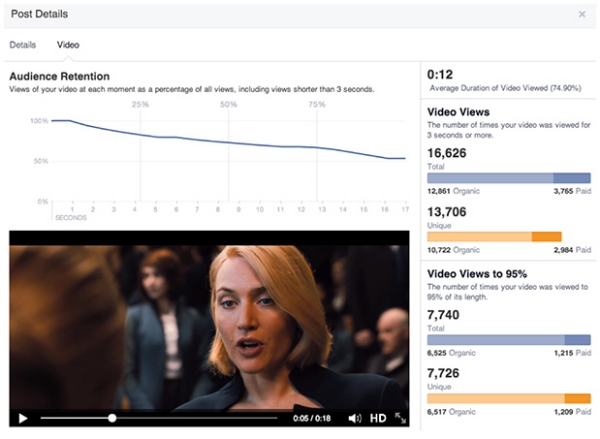
On the topic of Facebook’s method of handling video content on their platform, the social media giant also announced new metrics within Page Insights and Ads Reporting will be coming soon. This way, Page owners will be more able to analyze how users are responding to their videos, and how they may be able to improve their content.

The new metrics include more detailed view counts that will show the total number of video views, as well as the number of individual people who have watched, measurements of audience retention through the length of the video, and a breakdown of the demographics engaging with video content. Facebook’s announcement says the metrics will be available for all paid and organic videos uploaded directly to Facebook Pages, and they will be gradually rolling out in the next few weeks.

Bing is Testing Search Results Without Underlined Links

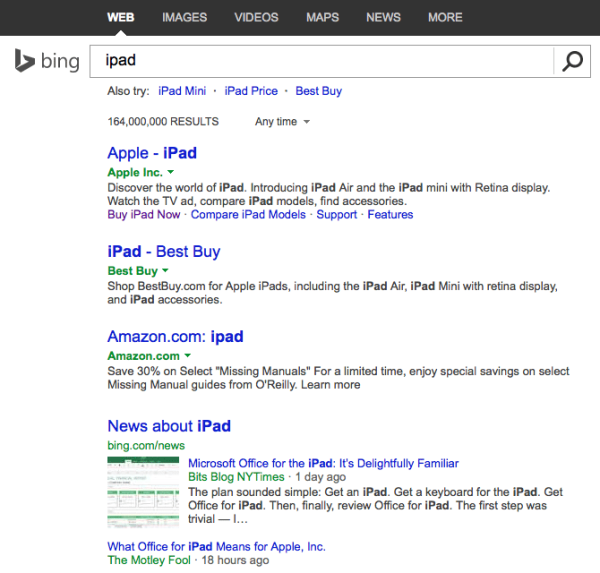
Usually Bing tries to distinguish themselves from Google as much as possible, but several people have reported that Microsoft is testing search results without underlining hyperlinks. This comes just weeks after Google officially redesigned their own search results pages around larger links without underlining.

Bing is constantly testing small changes such as this to see what users respond to, but it is hard to not feel like this test is particularly inspired by Google’s recent moves. However, it is important to remember that Bing’s non-underlined links are just a test for the moment, and not a final widespread change. You can see the version of the search results without underlines being tested below.

bing-no-underlines-600x573

Google Says New Parents Perform Twice as Many Searches as Non-Parents

new-parents_articles_01

A recent survey from Google’s Think Insights says that new and expecting parents perform 2.7 times the number of online searches as non-parents. The survey also says that 56 percent of maternity-related searches come from a mobile device.

According to Google’s analysis of the survey and their own data, they claim parents are trusting the internet more and more for child advice, as baby- and parent-related searches are on an upward trajectory. For a detailed breakdown of what Google says parents are searching for, head over to Think Insights’ report.

Google Maps Now Shows Uber Ride Options, Lane Navigation, and More

Google-Maps-Lane-Navigation-600x409

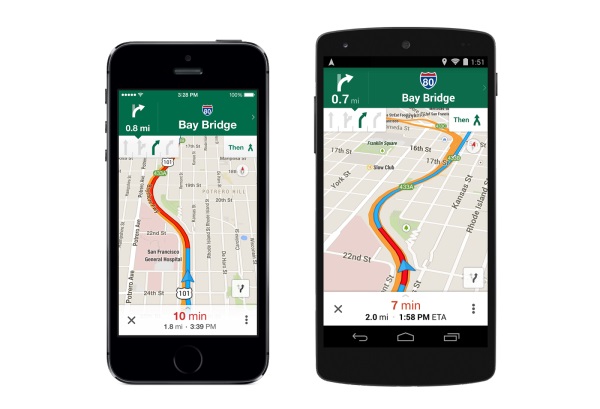
Google Maps is in the process of rolling out several new features for the iPhone and Android app, including more detailed driving directions such as lane navigation which tells you if it is important to switch lanes to stay on the right path. Google Maps also announced integration with Uber, the burgeoning ride service which connects people in need of transportation with available drivers.

According to the announcement, those who already have the Uber app downloaded will be able to compare ride times against walking directions within Google Maps, so you always know what the most efficient transportation option is. Those are just two of several new features Google is unveiling, which are all further explained here.


Source: Wikimedia Commons

Source: Wikimedia Commons

In their ongoing quest to improve the quality of content filling users’ News Feeds, Facebook is implementing some extensive changes to their algorithm to cut out spam and pandering posts that are widely disliked by users.

Facebook was very open about their attempts to target spammy or manipulative users, but this is the largest attack on this type of posting so far. Previously, Facebook has combated pandering and spammy posts by limiting the organic reach of sites found to be too heavy-handed with calls to action.

According to Facebook, they are targeting publishers of Pages “that deliberately try and game News Feed to get more distribution than they normally would.” As such, they are punishing pages that:

  • Like-bait: Begging for users to like, comment, or share a post may seem like an innocent way to encourage activity on your page, but Facebook views it as a shameless attempt to expand post distribution. Facebook users are equally against like-baiting, as studies have shown that posts with similar calls to action receive less engagement and are viewed as being less relevant.
  • Frequently circulate content: Facebook says they have received frequent complaints about Pages that regularly re-run photos and videos that have already been popular on the network.
  • Post spammy links: The most transparently spammy practice on Facebook is to use inaccurate language or formatting to encourage clicks through to ad farms, low-quality content aggregators, or irrelevant content. Facebook is improving at identifying these types of posts, and they believe punishing misleading publishers will improve trust in the content spread over their site.