
Pinterest Sticker IconThe holidays are widely considered the most stressful time of year. Only the strongest make it throught the season unscathed, while the rest seek refuge from the seasonal mania in bars and anxiety prescriptions. Thanksgiving, Black Friday, and Cyber Monday all in quick succession is enough to crack the most resilient. The news reports from Black Friday make it seem as though you are lucky to get through it without being involved in a fight over the new XBox.

Worst of all, the holidays are still far from over. Christmas is still a week away, and there is always the New Year to celebrate. But, you don’t have to turn to alcohol or pill bottles to relieve the stress of the holiday season. According to a new study, relief is as close-by as your smartphone.

The study released earlier this month by Lab42, a next generation market research firm, claims that 92 percent of Pinterest users claim the site single-handedly makes the holidays less stressful. It is so effective, 27 percent went as far as claiming the site makes the holidays “much less stressful”.

How is a simple pin-board style website such a relief during the season? It seems users are treating it as a one-stop shop for all of their home holiday needs, and keeping everything organized through the season.

The main way Pinners are using the site to ease their stress is by collecting new recipe ideas for their holiday feasts with their family. In fact, 83 percent of users are planning their meals with the help of the site. Many are also taking advantage of the ability to share gift (74%) and holiday decoration ideas (64%).

It actually makes a lot of sense that Pinterest is seen as such a stress easer this time of year. With so much to plan and organize, having a single site which allows you to browse and collect everything in one place makes the whole process much easier.

With the new introduction of Pinterest ads, there is a serious chance next year will result in huge rewards for any advertisers who invest in exposing their brand on such a popular holiday resource.
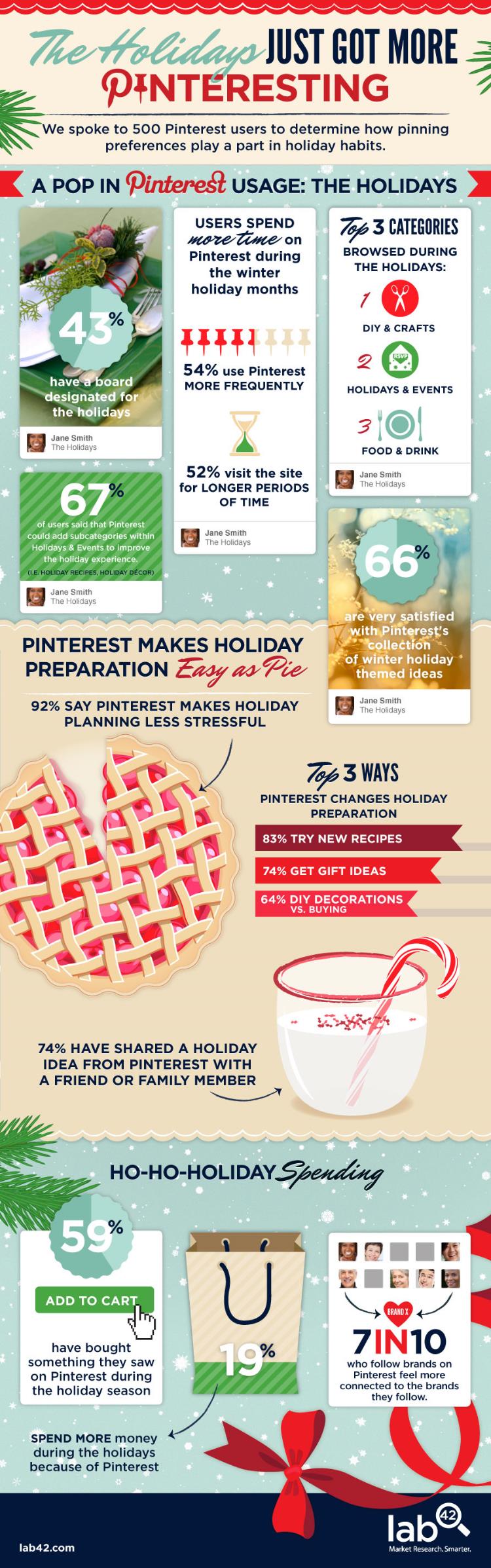
Pinterest Holiday Infographic

Source: Lab42

As part of their year-end wrap up, Bing posted some of their highlights from the past year in the form of an infographic on the Bing Search Blog. The infographic summarizes some interesting facts and statistics from 2013 that mostly puts a spotlight on their recent growth. But, there are some parts of the infographic marketers and business owners might take interest in.

Bing Social GraphicFor one, you have probably heard how important social media is to establishing a brand online and engaging internet users, but you might not know that Bing is often more attentive to social media than Google. While Google’s rankings may factor in social media data for website owners, actual users see very little social media presence outside of YouTube and Google+.
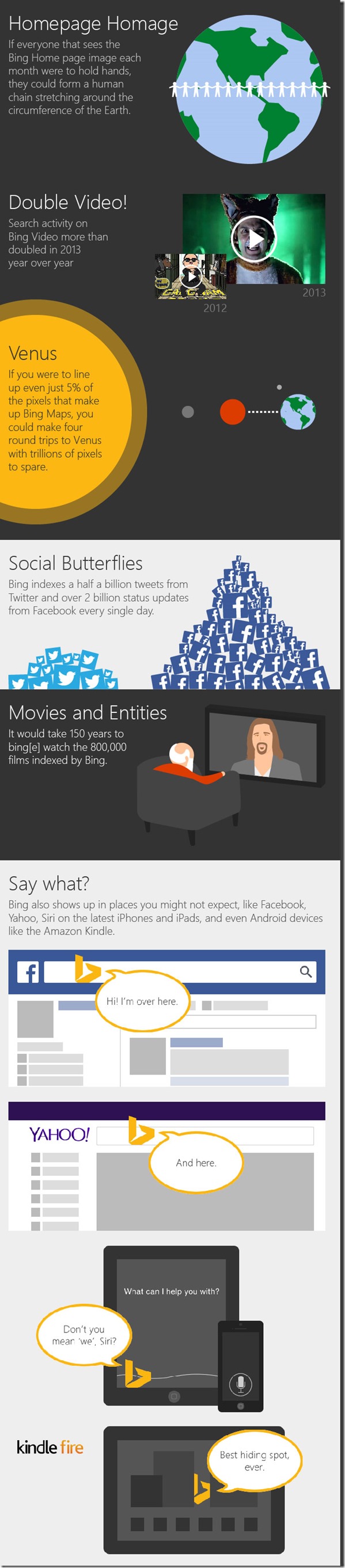
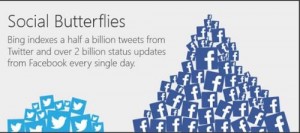
Meanwhile, Bing has been actively attempting to make Twitter and Facebook a significant part of their search engine. According to their end of the year stats, Bing indexes up to half a billion tweets from Twitter every day and over 2 billion Facebook status updates every single day. You might keep that in mind when considering which search engine you want to cater your social media efforts to.

You might also be surprised by where Bing is being used. Google is almost ubiquitous with web search, but you use Bing more often than you might think. The search engine is used on Facebook, Yahoo, Siri, and even some Android devices.

Other facts from the infographic include:

  • If everyone that sees the Bing Home page image each month were to hold hands, they could form a human chain stretching around the circumference of the Earth.
  • Search activity on Bing Video more than doubled in 2013.
  • If you were to line up even just 5% of the pixels that make up Bing Maps, you could make four round trips to Venus with trillions of pixels to spare.
  • It would take 150 years to watch the 800,000 films indexed by Bing.

The infographic is below:

Bing Year End InfographicaQQQQQQQQQQQ

Facebook MemeWhen the news broke of Facebook’s updates to their News Feed, advertisers everywhere scrambled to analyze the changes. Well, it appears we got it a bit wrong. One of the most reported elements of the updates aimed at “rewarding high-quality content” focused on the supposed removal of memes from user feeds, but it doesn’t appear that is actually the case.

Facebook really is revamping how they judge the quality of the content they deliver to users, but Facebook’s News Feed Manager Lars Backman gave some insight to the changes and denies there is an attack on memes during a recent interview with AllThingsD. Instead, Backman says it is a broader effort “to provide user value” in the News Feed.

The most interesting aspect of the interview actually says Facebook isn’t differentiating different forms of content for the most part. As Backman told Peter Kafka:

Are you paying attention to the source of the content? Or is it solely the type of content?

Right now, it’s mostly oriented around the source. As we refine our approaches, we’ll start distinguishing more and more between different types of content. But, for right now, when we think about how we identify “high quality,” it’s mostly at the source level.

So something that comes from publisher X, you might consider high quality, and if it comes from publisher Y, it’s low quality?

Yes.

However, while this sums up Facebook’s approach overall, Backman did say there is a specific type of content they are trying to do away with, but it isn’t memes. Instead, Facebook is attacking the types of content that blatantly begs for likes or shares, such as Like this if you are having a good day!

So, when the text or photo has a call to action, those posts naturally do much better. And in a traditional feed ranking, where we’re evaluating just on the number of likes, those things all did very well.

In a way, Facebook is simply leveling the playing field, because those types of content offered very little to users aside from surface level interaction, but they were consistently doing very well on likes and shares which were making them more visible. However, if your user base responds well to the average meme, you shouldn’t be afraid to use them as a part of your content.

The holiday shopping season is currently at a fever pitch, where it will likely stay until Dec. 26th, and more and more consumers are using the internet to aid their purchases. Online shopping isn’t new, but the prevalence of smartphones has made it easier than ever to turn to the internet to find what you need and shoppers aren’t shy about consulting the web before any purchase.

But, how does this affect shopping patterns and what are these consumers looking for exactly? If your brand is online, chances are you want to capitalize on the huge amount of online shoppers both at home and those using their smartphones while they shop. Unfortunately, a new survey from Search Engine Land and SurveyMonkey suggests this may be harder for smaller brands to do than anticipated.

It shouldn’t come as any surprise that many online shoppers are looking for well known brands, but it might raise your eyebrows to learn it is the most important factor to many shoppers. The survey conducted on November 21-22 of this year shows that 70% of shoppers are focused on finding brands they are already familiar with. The only other factor which received over 50% of the response was free shopping.

The good news is this doesn’t spell the end for local businesses trying to grow their brand during the commerce season. Location and reviews still made a strong showing in the results, as did sales. Many shoppers also focused on retailers who offer images and easily viewable prices for their products.

Smaller brands can also take some solace in knowing the survey was limited to a relatively small sample size of roughly 400 Americans using SurveyMonkey Audience. You can see a chart of the results below.

Online Shopping Survey Graphic

Source: Search Engine Land / SurveyMonkey

Beyonce in Montreal 2013

Source: WikiCommons

It’s that time of year yet again! Time for all the lists reflecting and analyzing the past year! This year Bing is one of the first sites to begin looking back at the past year, as it has released its most popular searches for 2013 lists. If you want to know who the most searched for sports stars, entertainment systems, or public personalities are, Bing has got you covered.

The big stand out this year is Beyoncé who topped two lists, winning the No. 1 position for most searched person of 2013 as well as the most searched musician. As usual, females dominated the list for most searched person, with the top five spots all going to women. The only men to make it onto the list were Justin Bieber (6) and President Barack Obama (10).

The more interesting information for marketers comes from the lists for the most searched for social media sites, most searched streaming sites, and the most searched entertainment electronics.

Facebook still has a strong grasp on the top spot on the most searched social media sites, but Pinterest has raised its profile considerably this year, making its debut on the Bing list in second place. The rest is as you would expect, with Twitter, Linkedin, and Instagram rounding out the top five. For social media marketers, this gives insight to where you should focus your energy, but remember that your marketing approach should always cater to the social platform you are engaging.

It is also notable that while the new iPhone has faced significant public criticism, it still came in second on the list for most searched entertainment electronics, falling behind the Xbox. Android was close behind, coming in third.

There are many more lists from Bing to look through, including the most searched for memes, foods, and travel destinations of the past year. While some of the lists are more anecdotally interesting than useful, you are sure to gain some insight into the public’s concerns and needs.

No More MemesYesterday Facebook announced some pretty major changed to their News Feed. Specifically, clicking an article may not show up to three related articles, and new comments on a story you’ve already seen can “bump” that story back into your feed as it is made relevant again. Lastly, they are going to begin policing the “meme” content to an extent, especially on mobile.

While the first two changes have received significantly more attention by marketers, the new meme policy will likely have the biggest immediate impact for companies still using the image marketing practices widely preached just a year ago.

Image marketing on Facebook refers to the practice of sharing content by posting a picture with a link in the comment, rather than using the more standard link post. This lead to many marketers using lighthearted and sometimes confusing memes while underhandedly also sharing their content. This type of practice has been slowly being dismantled for the past few months, ever since Facebook changed how prominently Link posts were shown in the News Feed. Before that update, image posts were shown with much more prominent display size, so it was a ripe target for abuse.

Now that Facebook is targeting memes it is pretty clear that the old image marketing practices are outdated and it makes more sense to simply follow the more common link marketing practices. Not only is it a more honest approach to serving content to your visitors, but Facebook is going to show you favor.

As Greg Finn from Marketing Land explains, Facebook has gone “all in” regarding turning their social media platform into a more focused news source. A recent study has shown that 1 out of 3 Americans now use Facebook as a news source, and Facebook seems determined to put a heavy emphasis on that mode of usage for their site. Looking forward, the only way to stay ahead of their changes is to focus on delivering your audience the best quality content you can create.

Local SEO Infographic Banner

It constantly surprises me how many local businesses don’t believe in investing in proper online marketing and optimization. Given, I see every day how establishing a quality online presence and optimizing it for higher visibility can benefit a business. Still, many local businesses hold the conception that online marketing is only important for national level businesses, and they couldn’t be more wrong.

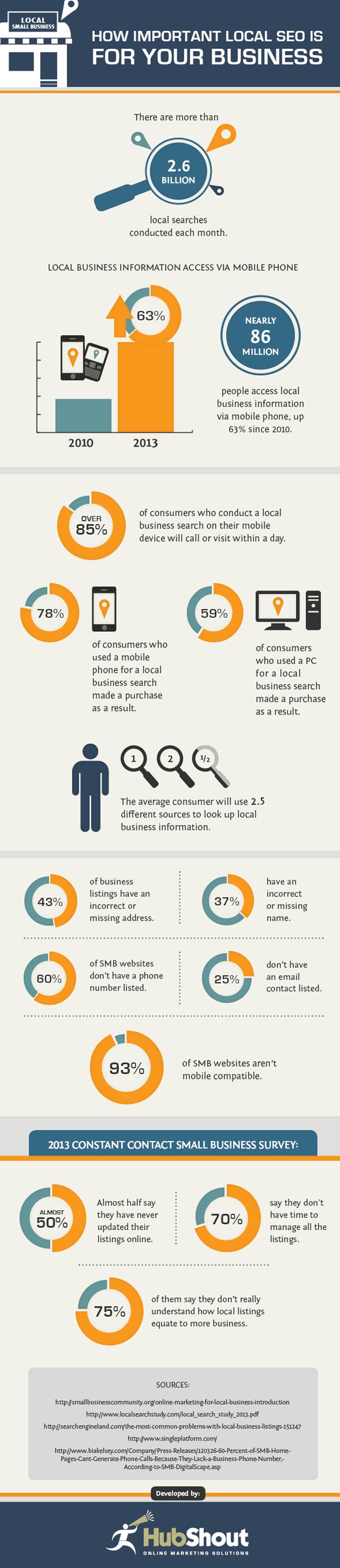
Current estimates say that more than 2.6 billion local searches are conducted every month. More importantly, statistics show that these local searchers are becoming more and more mobilized to quickly go from search to purchase thanks to the use of smartphones to search on the go. Nearly 86 million people are regularly using their mobile phones to look up local business information, and these searchers are highly primed to convert. Simply put, without an online presence and the optimization to make your brand visible you are missing out on a large chunk of potential customers.

Hubshout recently created an infographic to illustrate how important local search engine optimization (SEO) really is for your business. Not only does the infographic show what you are missing out on by neglecting your online presence, it also shows how many many businesses have yet to establish themselves online in a meaningful way. There is still a lot of untapped opportunity online, you just have to make the leap.

Local SEO Infographic

Source: Hubshout


Google AdSenseIt seems something odd is happening over at Google AdSense. While there is always a pretty much constant stream of complaints coming in about drops in CTRs (click through rates), they are usually isolated cases. Most often, an individual is simply experiencing a problem and their issues are easily resolved.

But, over the past week there has been an unusually large number of people complaining at both the Google AdSense Help and WebmasterWorld forums that their CTR have declined significantly in the past weeks. As Barry Schwartz noticed, not only is the number of threads enough to raise an eye, but there are some who are saying this is having a big impact on their earnings. Clearly something is afoot.

Some quotes from commenters include:

My blog traffic still increasing but adsense earnings dropped from three days. I have a message from adsense help as “Your earnings were 76% below our forecast”.

and

At the risk of getting screamed at for asking this question (yet again). My ctr went down the last 3 days (Sunday,Monday, Today) a whopping 75%!

Not everyone is experiencing the drop in CTR (Schwartz himself has seen an increase), but this appears to be a widespread enough issue to cause some alarm. The world isn’t ending, but you should probably check out your own CTR to make sure everything is alright.

You may remember that Google recently started testing large banner ads on branded searches. It raised quite a stir in the online community, mostly because it seemed that Google blatantly broke an older promise to never show banner ads. But, Bing is taking branded search result ads to the next level.

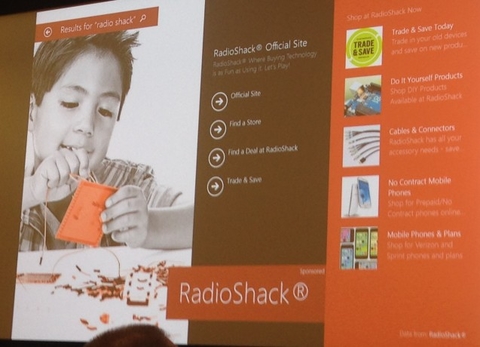
Larry Kim reports that last week, at the Bing Ads Next conference, Bing Ads announced their new ad format for exact match keyword searches, specifically those done within the latest Windows 8 update. Instead of a relatively small banner ad, Bing Ads are rolling out Bing Hero Ads, a full landing-page like layout that aggressively promotes the exact brand.

Just as with Google’s banner ads, Bing Hero Ads are only starting with a small number of prominent brand advertisers, such as Disney, Home Depot, Land Rover, and Volkswagen. It will also be a while before you can expect to see Hero Ads on your average search. For the moment, they are only appearing in a small selection of searches done in Windows 8.1 within the US.

It will be interesting to see how the public reacts to these types of branded semi-landing pages. Google’s banner ads looked fairly customized for each brand, , and only take up a relatively small amount of on-page real estate. A full-page ad experience for exact match branded searches may be welcomed as a quick and efficient way to connect with the brand searchers are looking for. It is also possible that consumers will be turned off by the seemingly uniform ad experience.

The one clear advantage Bing’s Hero Ads have over Google’s banner ads is their ability to deep link directly to a larger amount of pages on a site. They offer links such as “contact us”, “find a store” and “request a quote” which speed up users experiences and allow them to convert more quickly.

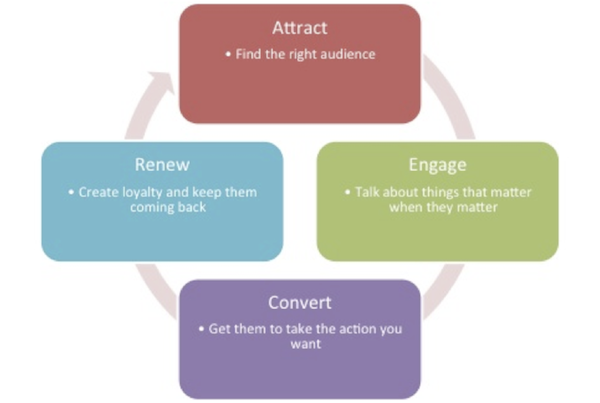
Metrics are an essential part of every online marketer’s life. They are an absolute necessity for knowing exactly how your campaigns are performing and how you can best make improvements. It may be of some surprise however that these metrics can be broken down and separated into four basic lifestyle stages of marketing: attracting, engaging, converting, and renewing. Everyone has their preferences, but Noran El-Shinnawy has some suggestions for the best metrics for each stage in your process.

Stage 1: Attract

  • Impressions

In the first stage, it is best to simply let yourself be guided by a set of three questions, metrics aren’t necessarily as important as ensuring your are communicating the right message to your audience. If you can say yes to the following three questions, you’re on the right track.

  • Is this the right message?
  • Is this the right audience?
  • Is this the right time?

For PPC, getting these three questions right relates to how you are handling techniques like keyword choice, targeting, and bidding.

Stage 2: Engage

  • Clicks
  • CTR

Creating the ads is the fun part of marketing. You get to be creative and finally engaging your creative side of your brain is a welcome relief from data and graphs. The metrics will help you measure how others are relating to your copy, but you can also check out these five tips for writing better ads.

Stage 3: Convert

  • Conversion
  • Cost
  • Cost Per Conversion
  • Conversion Rate
  • Revenue Per Conversion
  • ROI
  • Average Position
  • Average
  • CPC

Most often we find ourselves thinking about ROI purely in terms of dollars and sales. But, not every business benefits from that model. For others, ROI could be better informed by being associated with the value of page views, leads generated, and other such considerations.

Start out by installing a conversion tracking and analytics tools. This will open your eyes to the other possibilities for determining your ROI, while keeping you in-tune with the important numbers like total revenue and advertising cost. If you invest in your metrics, you can make smarter bidding decisions, and keep your focus on the most profitable ads for you.

Stage 4: Renew

  • Returning Visitors
  • Returning Visitors Revenue

The end phase is where you make improvements and complete the cycle. After the third phase, visitors have two options. They can convert, or they can choose to not convert. In both cases, there is valuable information to be gathered.

If they didn’t convert, investigate and find out what kept them from converting. You can go after them with targeted remarketing campaigns, or you can analyze their path to determine why they weren’t convinced to convert. Was there a technical problem on your site?

Did they not find your products or services compelling? Were your prices too high? Finding out these answers tells you what you need to do in the future.