Online reviews can be the deciding factor in the success of small businesses or companies that are just starting out, and yet many businesses ignore the single most powerful free form of marketing. This infographic from Web Republic breaks down the current trends and effects of reviews including:
Amazon is the leading review site in America and 42% of all its customers have left at least one review.
Other top US review sites include Google+, Yahoo, Yelp, and TripAdvisor
Yelp is the review site with the most global traffic
84% of all consumers read online reviews, reading an average of 4-6 reviews before they begin to trust a business
76% of customers are willing to pay more for hotels with better reviews.
How are you encouraging happy customers to leave reviews?
00Taylor Ballhttps://www.tulsamarketingonline.com/wp-content/uploads/2018/07/TMO-Logo.pngTaylor Ball2015-02-09 13:53:332015-02-09 13:53:33What Do Businesses Need To Know About Online Reviews? [Infographic]
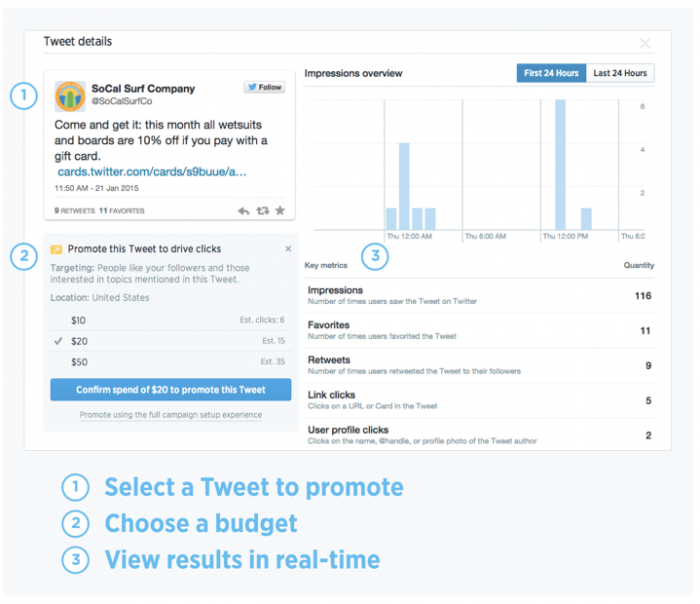
Promoting a tweet on Twitter just got a lot easier. While users have been able to promote tweets in the past, it required going through the company’s self-service platform. Now users can use the “quick promote” tool to quickly and easily promote a tweet.
Twitter designed quick promote expressly with small and medium businesses in mind. All you have to do to increase your tweet’s visibility is go to your tweet activity dashboard at analytics.twitter.com. Then, you simply have to select the tweet you want to promote and click the option to promote the tweet in the left sidebar.
For now, the service is relatively limited compared to Facebook’s extensive ad platform. Currently, Twitter only allows you to target quick promoted tweets to users similar to your followers. Although nothing is confirmed, it seems likely the company will expand the options in the near future.
The more useful features for small businesses hoping to increase their Twitter visibility is the ability to set small budgets and receive an estimate of how many people you are likely to reach.
After you’ve set the budget and promoted your tweet, you can watch its performance in real time using the analytics dashboard.
The service isn’t revolutionary, but it was in dire need for one of the most popular social platforms around. Now, small and medium businesses can benefit from Twitter ads in the same way big brands have been for over a year.
00Taylor Ballhttps://www.tulsamarketingonline.com/wp-content/uploads/2018/07/TMO-Logo.pngTaylor Ball2015-02-05 12:52:322015-02-05 12:52:32Twitter Makes It Faster and Easier For Small Businesses To Promote Tweets
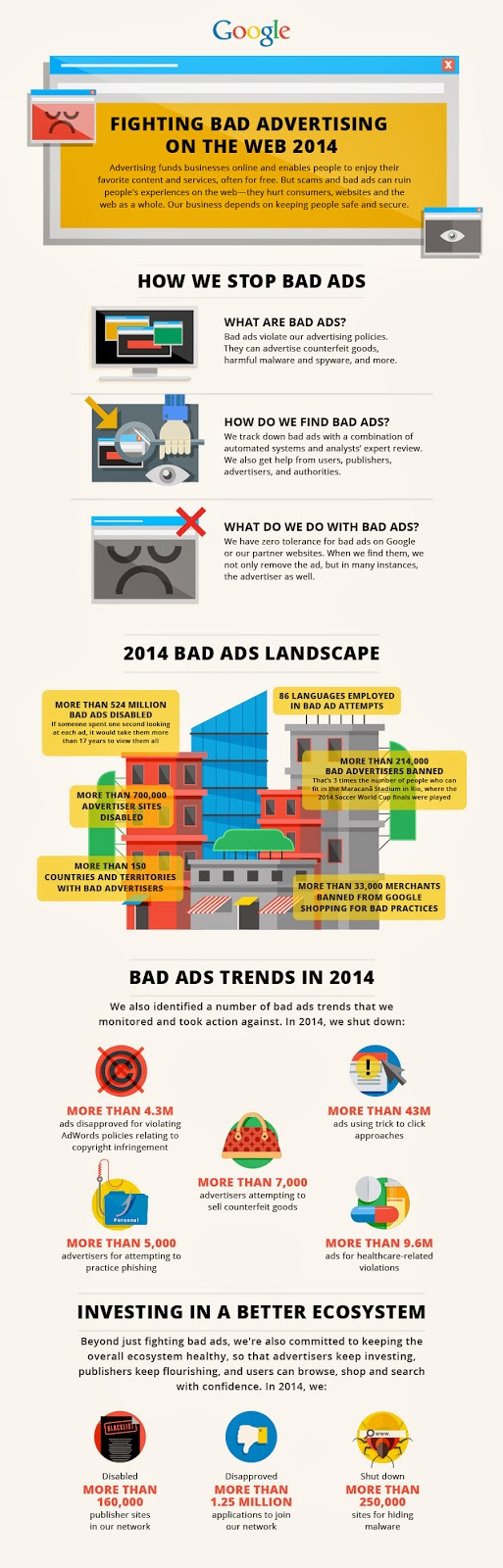
Online ads on Google’s AdWords network are a great way to reach a larger audience interested in your services, but breaking the rules can have harsh consequences. Google removed over 524 million “bad ads” from its ad network last year, and 214,000 of those advertisers are entirely banned from the service due to their bad behavior according to a recent announcement from Google.
“While this represents a tiny fraction of the total ads on our platform — the vast majority of advertisers follow our policies and act responsibly — we continue to remain vigilant to protect users against bad advertising practices,” Vikaram Gupta, director of ads engineering at Google, wrote Tuesday in the post.
The latest data shows several improvements from past years, such as a distinct drop in banned advertises for promoting counterfeit goods, but Google says it is a “constantly evolving fight” and the war against bad ads is far from over.
The announcement highlighted several of the “bad ads” trends that dominated 2014, including more than 43 million ads trying to trick users into clicking, over 4.3 million ads containing copyright infringement issues, and over 9.6 million ads containing healthcare-related violations.
The following infographic breaks down Google’s efforts to weed out bad advertising last year:
00Taylor Ballhttps://www.tulsamarketingonline.com/wp-content/uploads/2018/07/TMO-Logo.pngTaylor Ball2015-02-04 12:10:102015-02-04 12:10:10Google Shows How They Fought ‘Bad Ads’ In 2014
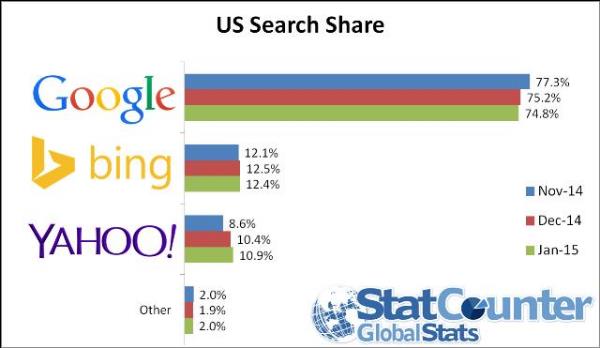
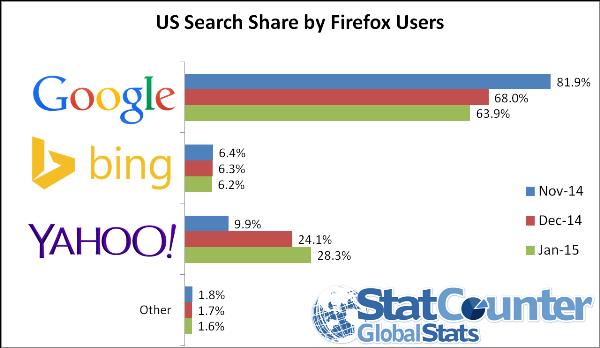
For years, Google has had a strong hold on the search industry, maintaining over a 75% market share for the desktop search market. If recent months are any indication however, that grip appears to be loosening.
According to the latest data from StatCounter, Google’s desktop search market share dipped below 75% for the first time since July 2008, continuing a downward trend that started in November.
In November, Mozilla replaced Google with Yahoo as the default search engine on its Firefox web browser. Initially Google didn’t seem to be concerned, but a three month drop in search share seems to be finally getting their attention.
In mid-January Firefox users who visited the Google homepage were greeted with a banner encouraging them to set the search engine as their default. At the same time, Google also began tweeting instructions for how to replace the search engine.
Since the five-year agreement was made between Yahoo and Mozilla, Yahoo has been consistently gaining ground, already replacing Bing as the second most popular desktop search engine. In total, Yahoo has nearly tripled its share of the desktop search market on Firefox, climbing to over 28% from less than 10% in November.
In the long run, it is still unclear whether Yahoo is going to be able to continue its ascent. While the changes are substantial, Firefox is also the least popular major desktop browser available. The change is search share is also limited to desktop, suggesting users aren’t so much choosing a new search engine but accepting what they are being given.
Despite these challenges, Aodhan Cullen, CEO of StatCounter, says Yahoo is already beating the odds:
“Some analysts expected Yahoo to fall in January as a result of Firefox users switching back to Google. In fact Yahoo has increased US search share by half a percentage point. It will be fascinating to see if these gains continue.”
It will be interesting to see if the trend continues and how Google might try to persuade more users to actively choose their search engine over the default.
00Taylor Ballhttps://www.tulsamarketingonline.com/wp-content/uploads/2018/07/TMO-Logo.pngTaylor Ball2015-02-03 12:42:412015-02-03 12:42:41Google Falls To Lowest Desktop Search Share in 6 Years
Twitter likes to tout itself as the social media site to watch events unfold as they happen, but a recent online survey suggests the majority of people will be sticking with Facebook during the Super Bowl this weekend.
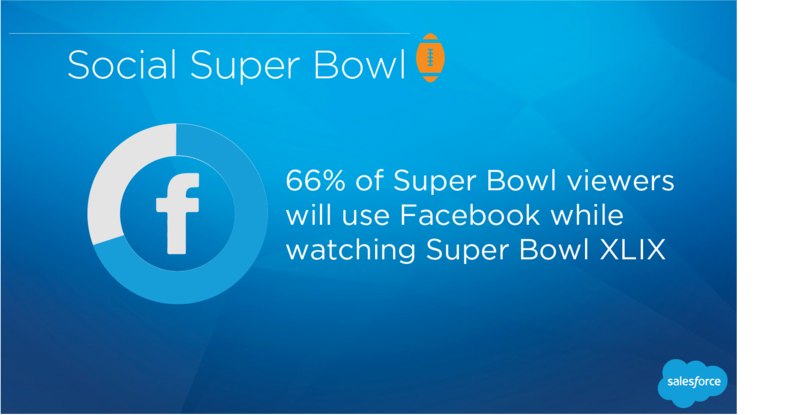
According to the results of a survey by Salesforce Marketing Cloud, 66% of respondents plan to use Facebook while they watch the game, compared to just 56% who said they plan on using Twitter. Instagram came in third with 31% and Snapchat followed with just 11%.
Marketing Cloud’s survey received more than 400 responses over the past week, which means the survey is far from scientific. Nonetheless, the results do provide some insight into viewer behavior on social media during the big game.
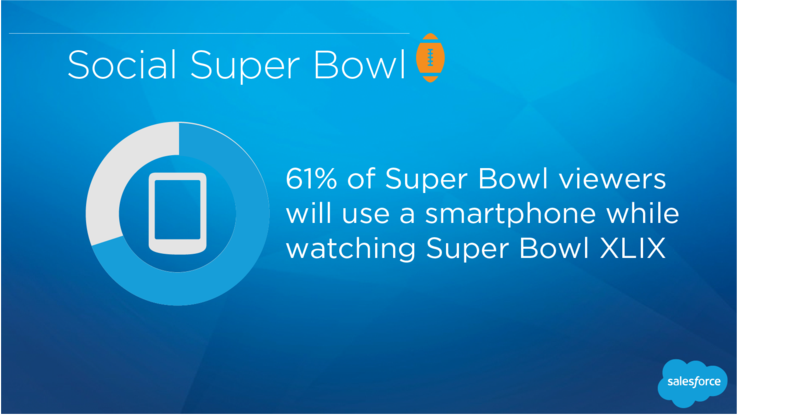
The findings also showed that over 60% of Super Bowl viewers will be watching with a smartphone in hand, 24% will have a tablet, and 20% plan to watch with their laptop.
The results also provide some demographic information. Unsurprisingly, younger users leaned towards newer social media channels such as Snapchat, which will be used by approximately 45% of people between the ages of 12 and 24. However, Facebook and Twitter still led the poll within the demographic. Over 80% of 18-24 year olds will be Tweeting during the game, while 66% plan on posting to Facebook.
It is also not surprising to find Facebook had the biggest pull with older viewers. Over 75% aged 35-44 say they will use Facebook, compared to 54% who will use Twitter. This trend continues in the 45054 demographic, with 71% planning to use Facebook and 54% planning to use Twitter.
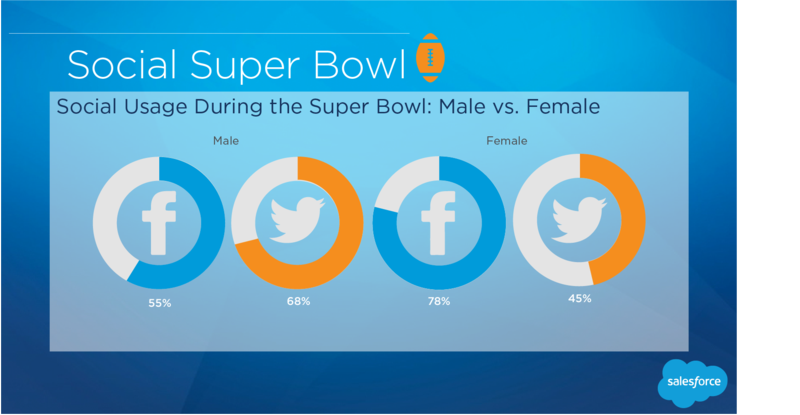
Perhaps the biggest shock in the results is the distribution of gender amongst social media platforms. Facebook overwhelmingly draws in female users, with 78% planning to post during the game. In comparison, only 45% of women plan to use Twitter. The results were distinctly reversed for men, 68% of whom will be Tweeting, compared to 55% for Facebook.
00Taylor Ballhttps://www.tulsamarketingonline.com/wp-content/uploads/2018/07/TMO-Logo.pngTaylor Ball2015-01-30 12:14:202015-01-30 12:14:20Survey Shows Facebook Is The Favorite For Super Bowl Sunday
Facebook has always made it easy to see how your ads are performing in terms of clicks and views, but gauging actual sales from ads hasn’t been so easy. Now, a mew metric called ‘conversion lift measurement’, Facebook claims they can accurately measure the amount of business attributed to ads.
Here’s how conversion lift is measured:
When a Facebook campaign begins, two groups are created. One is a random test group of people that see the ads in the campaign, and the other is a control group of people that don’t see the ads.
Advertisers share conversion data with Facebook throughout the campaign. Facebook determines additional lift generated from the campaign by comparing conversions in the test and control groups.
Any increase in sales in the test group is the result of a ‘conversion lift’ provided by the Facebook ads.
The best part of online advertisement is being able to track nearly every aspect of your advertisement’s performance, but there are still gaps where marketers have had to rely on faith and intuition. Thanks to conversion lift measurement, there’s now one less blind spot.
00Taylor Ballhttps://www.tulsamarketingonline.com/wp-content/uploads/2018/07/TMO-Logo.pngTaylor Ball2015-01-28 12:31:002015-01-28 12:31:00Facebook Makes It Easier To See If Your Ads Are Driving Sales
Do you know the fastest way to lose potential customers on your website? You might think it would be by creating a page with poor usability, illegible text, or you could get creative and put offensive images on your front page. No matter your choice, there is something that can lose visitors before they even get the chance to see any of those options – long loading times.
Consumers simply don’t accept having to wait for what someone else can offer faster, and this is especially true online. The average consumer is willing to wait approximately five seconds before they become annoyed or frustrated with being forced to wait. If your site takes longer than that for the average user, it is practically guaranteed you are hemorrhaging visitors who aren’t willing to wait.
Long loading times also hurt your site and loses you visitors in a few less direct ways, most notably in rankings. While there are many things we don’t understand about Google’s ranking algorithm, we do know loading speed is one of the biggest factors in establishing your site’s perceived value and ranking.
So, how do you actually go about speeding up your website’s loading times and increasing its effectiveness? These five tips will help you get started:
Minimize on-page components. There are plenty of processes going on behind the scenes that can slow a site down. If you can combine style sheets or replace images with CSS, your site will be able to better load everything in a fast manner.
Compress large pages. Google has shown time and time again that sites with long-form content, videos, and shareable media are some of the best ways to rank higher, but all the extra content also means there is more to load. Try to compress your larger pages so they take up less space and consume less bandwidth when they load.
Use browser caching. Browser caching stores important elements from your site on a viewer’s hard drive in order to improve load times on repeat visits. A shocking number of webmasters forget to implement this tool, which can lead to slower load times for even your most loyal visitors.
Optimize visual content. The growing emphasis on visual content might have misled some website owners. If customers enjoy images, video, and graphics, why not fill your site with them? Unfortunately, too many improperly formatted graphics can cause a traffic jam and sluggish load speeds. Take the time to optimize visual content by limiting size, reformatting images into JPEG, and eliminating BMPs, GIFs, and TIFFs, and viewers will love you.
Eliminate unnecessary plugins. Particularly if you’re using WordPress, running multiple plugins contributes substantially to slower page load speeds. Though their convenience and ease of use make plugins an attractive option, using too many will cause your load speed to plummet and result in poor user experience. Remove any plugins you don’t absolutely need.
00Taylor Ballhttps://www.tulsamarketingonline.com/wp-content/uploads/2018/07/TMO-Logo.pngTaylor Ball2015-01-27 13:53:012015-01-27 13:53:01Long Loading Times May Be Costing You
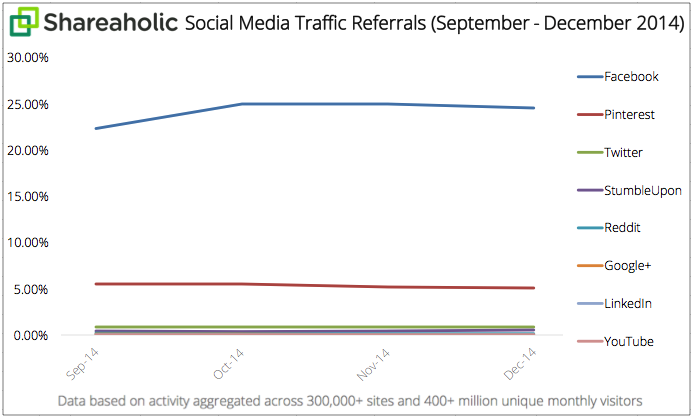
Over the past year, more than a few people have predicted the death of Facebook. They cite the shrinking number of teens signing up for the social site and the increasing difficulty for brands to get organic exposure as proof the end is near. But, a new report from Shareaholic show Facebook is still going strong.
Facebook has consistently been the leader in social referral traffic for years, and their share of traffic referrals is only growing especially during the last quarter of 2014. In fact, Shareaholic’s data suggests Facebook may be responsible for nearly a quarter of all traffic online.
The most popular social media site reached over 25% of the total share of visits to Shareaholic’s network through October and December, however it fell to 24.64% in December. Overall the site gained 2.27 percent since the third quarter.
The report confirms Pinterest’s popularity, as the data showed the site in second place. Still, even Pinterest can’t compete with Facebook’s share of traffic referrals. Pinterest’s share was only 5.06%, nearly five times less than Facebook.
00Taylor Ballhttps://www.tulsamarketingonline.com/wp-content/uploads/2018/07/TMO-Logo.pngTaylor Ball2015-01-26 13:08:562015-01-26 13:08:56Facebook Continues to Lead Social Traffic Referrals
While Pinterest has quickly become one of the most popular social media sites around, it is no secret that the company struggles to attract men. The problem is so widely known, Wall Street Journal profiled the company’s attempts to bring more men onto their site today.
The latest estimates from comScore indicate up to 71% of Pinterest’s 72.5 million visitors in December 2014 were female, and a recent Pew Research survey found that only 13% of American online men use the site. Despite this, Pinterest claims it doubled the number of male users last year, but it still isn’t out of the woods.
Pinterest is currently making strides to increase revenue, which means the company has to convince advertisers it can reach a wide range of demographics – including men. To accomplish that, Pinterest told the Journal that it is working to make the site more “gender neutral” and has adjusted the sign-up process to give new users content-following suggestions based on their gender.
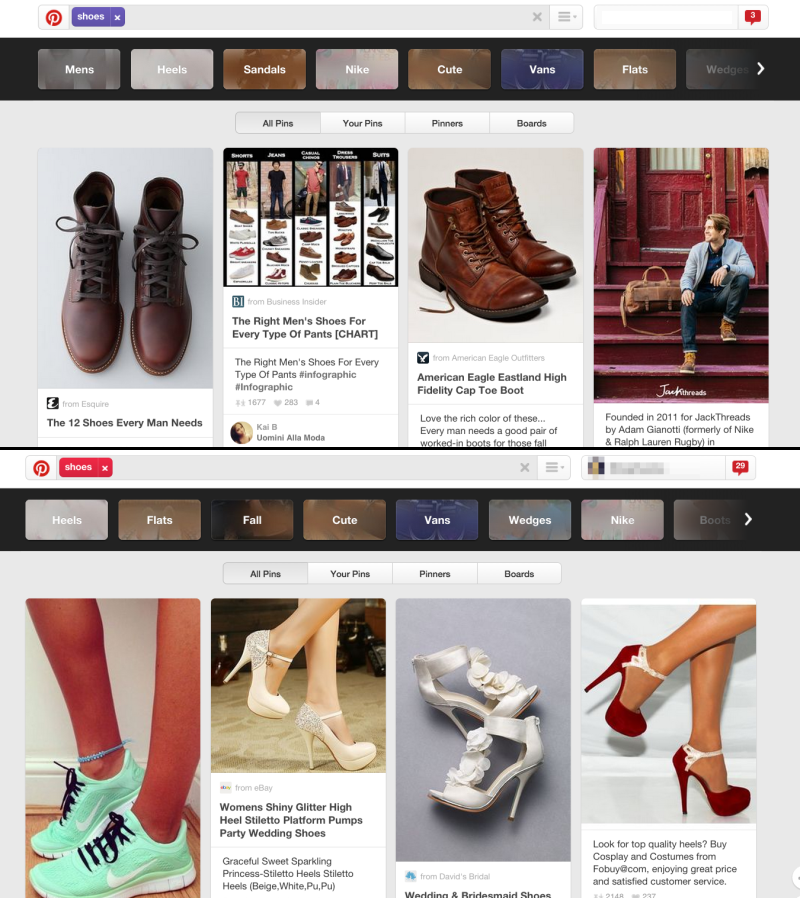
In an attempt to cater the site towards user interests, Pinterest announced a few interesting changes in the article. Perhaps most intriguing is the news Pinterest will begin personalizing search results based upon users’ gender.
For instance, depending on whether a male or female is browsing, a search for “workouts” generates fitness tips that are as different as the pages of “Men’s Fitness” and “Women’s Health.” In the past, the results for male users would have included a mix of men’s and women’s workout regimens. Pinterest says this feature, now available to all of its users, has led to increased engagement on the platform.
Pinterest never mentioned this algorithm in the past, but some tests from Marketing Land show the difference in search results is pretty stark. Here are some examples:
00Taylor Ballhttps://www.tulsamarketingonline.com/wp-content/uploads/2018/07/TMO-Logo.pngTaylor Ball2015-01-23 13:38:522015-01-23 13:38:52Pinterest Is Trying to Woo Male Users With Gender-Based Search Results
The Super Bowl is quite possibly the biggest single day for advertisers. There aren’t many other times you’ll hear anyone proclaim they are watching something “just for the commercials.” But, it has always been difficult for online marketers to get into the mix. That all might be changing as Facebook has announced a new tool to help online advertisers target people interested in the “Big Game.”
The “Big Game” targeting segment allows advertisers to reach people specifically based on real-time online discussions related to the Super Bowl.
According to the announcement, the segment will go much further than simply targeting football fans. The “Big Game” segment will also include those liking, commenting, and sharing content related to party planning, recipes, or even flatscreen TV purchases in the days leading up to XLIX.
The targeting tool is also designed to be updated frequently, so that ads will be directed based on up-to-date information.
The new tool is a change of strategy for Facebook, who used interests and liked pages to target ads last year.
According to the social media platform, combining ads with live sporting events is a highly effective strategy for reaching specific targeted demographics. For example, it cites a cross-platform Nielsen study that analyzed at a Microsoft commercial that was shown during the 2014 Super Bowl and found Microsoft was able to reach 35% of persons 18 to 49 in the United States during a four-day run of the TV spot.
Using Facebook ads during this campaign allowed Microsoft to extend that reach to 57% of the national target of people 18-49. Among the younger 21 to 24-year-old audience, Microsoft more than doubled its reach, extending its TV reach of 24% to a combined TV-plus-Facebook reach of 53%.3.
The new targeting segment is available starting today for all advertisers. It can be found in the Facebook ads interface within the “Behaviors” section, under the “Seasonal and Events” category.
00Taylor Ballhttps://www.tulsamarketingonline.com/wp-content/uploads/2018/07/TMO-Logo.pngTaylor Ball2015-01-22 12:41:542015-01-22 12:41:54New Facebook Tool Helps You Target Your Ads For Super Bowl XLIX


 Facebook is making it a lot easier to measure the amount of new business you get from ads on the social media site,
 While Pinterest has quickly become one of the most popular social media sites around, it is no secret that the company struggles to attract men. The problem is so widely known,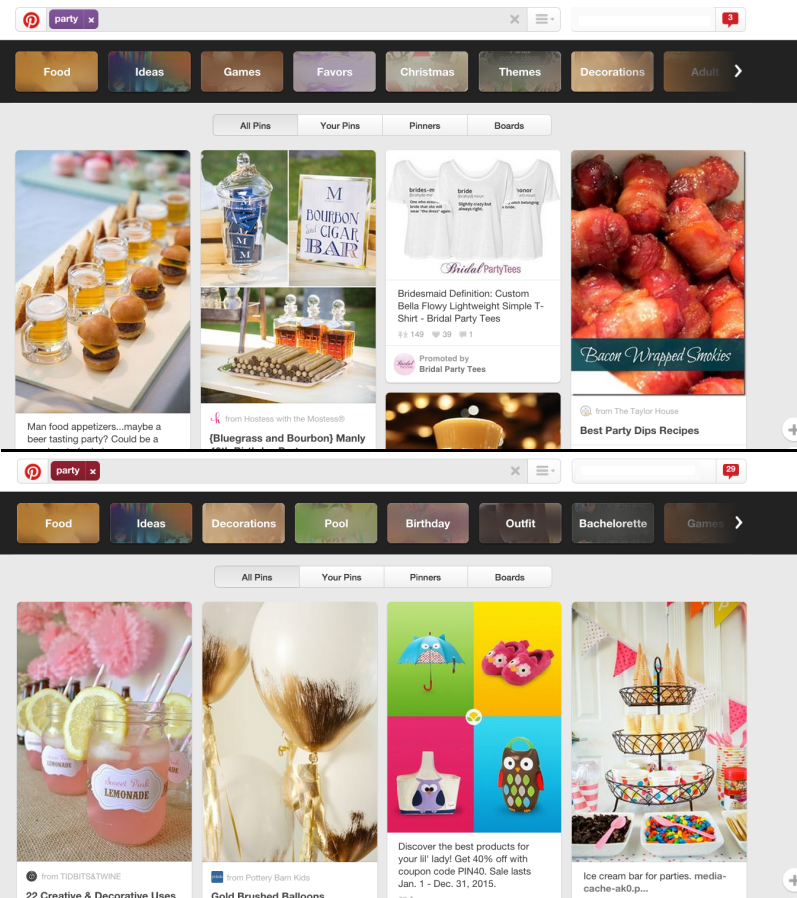
 The Super Bowl is quite possibly the biggest single day for advertisers. There aren’t many other times you’ll hear anyone proclaim they are watching something “just for the commercials.” But, it has always been difficult for online marketers to get into the mix. That all might be changing as Facebook has announced a new tool to help online advertisers target people interested in the “Big Game.”