facebook-video

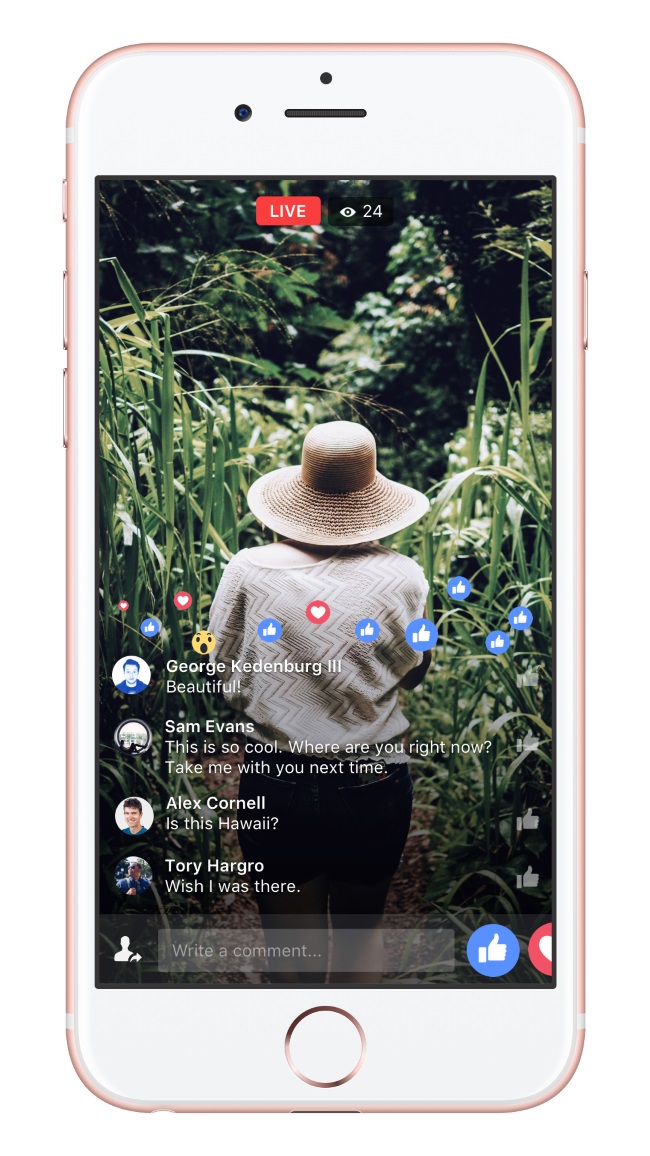
Over the past year or so you have probably noticed a pretty big shift happening on your Facebook News Feed. Video content has taken over, making up a huge portion of what you see on the platform.

To help sort through the influx of videos, Facebook is refining their News Feed algorithm with a new video ranking signal for videos: completion rates. Facebook has used several metrics in the past for ranking videos – including how long a person watched the video.

The problem is these metrics often benefitted shorter videos that don’t necessarily have as much value as longer video content

As the company explains in a recent update:

“One of the signals we look at is ‘percent completion’ — the percent of each video you watch — to help us understand which videos you enjoyed. If you watch most or all of a video, that tells us that you found the video to be compelling — and we know that completing a longer video is a bigger commitment than completing a shorter one. As we continue to understand how our community consumes video, we’ve realized that we should therefore weight percent completion more heavily the longer a video is, to avoid penalizing longer videos.”

For the most part, the new metric shouldn’t affect most pages sharing video content. However, they say “some shorter videos may see a slight dip in News Feed distribution.”

The key takeaway is that if you want your videos to be seen on Facebook, they have to be engaging – no matter their length.

YouTube Ads

YouTube may be one of Google’s largest platforms, but it gets treated a bit like the black sheep when it comes to Google’s ad services. Targeting has been limited compared to typical AdWords options, and ad options have been built around desktop functionality first.

This is all starting to change, as Google says it is rolling out several updates aimed to make advertising on YouTube better on both mobile and desktop. The announcement also mentioned that over 50% of YouTube videos are now happening on mobile, which likely motivated the change in how they think about ads on the platform.

Target Advertising

Google is now allowing YouTube ads to utilize information associated with users’ Google accounts like their search history, demographic information, and whether the viewer has engaged with an advertiser in the past to better target who sees your ad.

More Focus on Mobile

In response to the increasingly mobile viewership of YouTube, Google is shifting away from a desktop-first mindset. To do this, they are moving from using cookies and pixels because they were not designed for targeting users on YouTube’s mobile, TV, and set-top box apps. The hope is to make tracking and ad functionality more accurate across all devices.

Better Control of What Ads You See

Not all of the new changes are limited to advertisers. Google is also introducing the option for users to device what ads they see on both Google and YouTube from one location. For example, if a user mutes a specific advertiser in Search, the advertiser will also be muted for the user when they watch videos on YouTube.

Video finally came into its own as a content marketing format over the past year, with the launch of 360-degree videos, Facebook Live, and all sorts of new features for video marketing on Twitter, Instagram, and Snapchat.

It was only a matter of time, as video has been a huge part of the online ecosystem since the launch of YouTube all those years ago. Currently, estimates suggest up to 78% of all people watch videos online every week and 55% percent make it a daily activity.  That means if you have been ignoring online video as a marketing channel for your business, you’re missing out on a huge and highly engaged audience.

With the start of the new year, many businesses are considering finally making video marketing a part of their larger advertising strategy. If you aren’t, you might want to reconsider. This infographic created by HighQ shows exactly why 2017 is poised to be the year video marketing blows up. You don’t want to be lagging behind when it does.

Video Marketing Infographic

instagramlive

Instagram’s live video feature is officially available to all 70 million US users. After announcing the feature in late November, the social imaging platform has announced the feature is available across America and will be rolling out globally over the next few weeks.

While it may be tempting to compare Instagram’s live video streaming to Facebook’s growing live feature, it is actually more similar to the live options available through Snapchat.

With Instagram’s live video, users can broadcast to followers in real time through Instagram Stories. However, once the stream is over it is completely gone. There is no saving or replaying old broadcasts. They disappear as soon as you end the broadcast.

How To Get Started Broadcasting

To get started streaming, you just have to follow a couple easy steps.

  • Tap the camera icon in the top left of the screen or swipe right from the Feed to open your camera.
  • Tap the new Live icon at the bottom of the screen.
  • Tap Start Live Video.
  • Once you are ready to end your stream, just tap End in the top right.

Broadcasts can last up to one hour and you can choose to notify your followers when you go live. The number in the top right corner of the screen shows just how many followers are watching, and you can pin or share comments to others by tapping and holding it. You can also turn off comments entirely if you desire.

Marketing with Instagram Live Video

The idea of marketing your business through live video that immediately disappears may seem unattractive at first. Why bother with vanishing video when you can spend time crafting marketing campaigns that last, right?

However, live video can actually be a great way to make followers feel like they are in on exclusive events and information. The function is especially great for letting your customers and fans see special engagements like product launches or milestones for your business.

You can also use live video to engage your audience in new ways with impromptu interviews or Q&A sessions that help your followers learn more about who you are and why they should be invested in your brand.

For more info on Instagram’s live video feature, check out the video below:

instagramlive

Considering the success of live video on Facebook and other social media platforms, it doesn’t come as much of a surprise that Instagram is trying its hand with live video. But, they have put their own twist on it.

Today, the social photo and video sharing platform announced it is rolling out live video within their Instagram Stories section. However, these videos don’t remain once you stop streaming. Instead, they immediately disappear.

The feature is already rolling out and is expected to be available to everyone around the world within the next few weeks. Users are able to share live video for up to an hour and control their streams by notifying friends when they go live and deciding whether to allow comments.

“Live video on Instagram Stories helps you connect with your friends and followers right now,” according to a blog post announcing the update. “When you’re done, your live story disappears from the app so you can feel more comfortable sharing anything, anytime.”

All you have to do to start streaming is swipe right from the home feed and tap the “Start Live Video” button. You can also see who else is live streaming in the Explore area of the app, under the “Top Live” category.

Live video isn’t the only thing disappearing on Instagram, either. The platform is also rolling out the option to have automatically self-destructing photo or video messages when sending direct messages to friends and groups.

The feature operates almost exactly like Snapchat’s well known disappearing photos, which allow users to share content in a “spontaneous, pressure-free way.”

“You can choose a group or create one in just a few taps—and you can also send to individual friends at the same time,” Instagram wrote in a blog post. “Send anything you want, from inside jokes to your worst selfies. Unlike other messages in Direct, these photos and videos disappear from your friends’ inboxes after they have seen them. And you’ll see if they replayed it or took a screenshot.”

vinelogo

Not all that long ago, Vine was one of the fastest growing social apps on the market. The app made its name with short looping videos and a large community that took advantage of the medium to create comedy and even frights.

Since being acquired by Twitter, however, the app has gradually lost its place in the social world as other platforms like Instagram and Snapchat have incorporated their own video features. So, perhaps it is unsurprising that Vine has announced it will be ceasing operations and shutting down in the near future.

According to a post shared on Medium, the website and app for vine will remain online so that users will have time to download their Vines and mourn the loss of the app as a community.

The statement didn’t give any firm timeline of when Vine will fully shut its doors, or any explanation as to why Twitter has decided to shutter the app. It is possible Twitter could possibly choose to integrate the app capabilities entirely within its own platform, but so far the company hasn’t made any indication that it plans to do so.

Back in 2012, shortly after it was bought out by Twitter, Vine was sitting as the number 1 app on the iTunes app store and had a consistent 200 million active users. However, the rise of live video and new video features on competing platforms have pushed Vine out of the crowd. According to data from App Annie, Vine is currently sitting at number 284 in the iTunes app store charts for free apps.

Analysis also suggests year-over-year worldwide downloads of the Vine app have been consistently declining across both the Apple App Store and Google Play.

For what it’s worth, Vine co-founder Rus Yusupov only tweet in the wake of the news suggests he regrets letting Twitter take over the company.

Video is finally experiencing the dominance many have claimed it would rise to since the release of YouTube. No matter which platform you look at, it is hard not to see videos littered throughout all your feeds.

This includes Twitter, which has made video a major part of its platform. As such, Twitter has also been keeping close track of how videos on its platform perform, to help advertisers know who is watching what, when, and whether these viewers are taking the time to watch pre-roll ads.

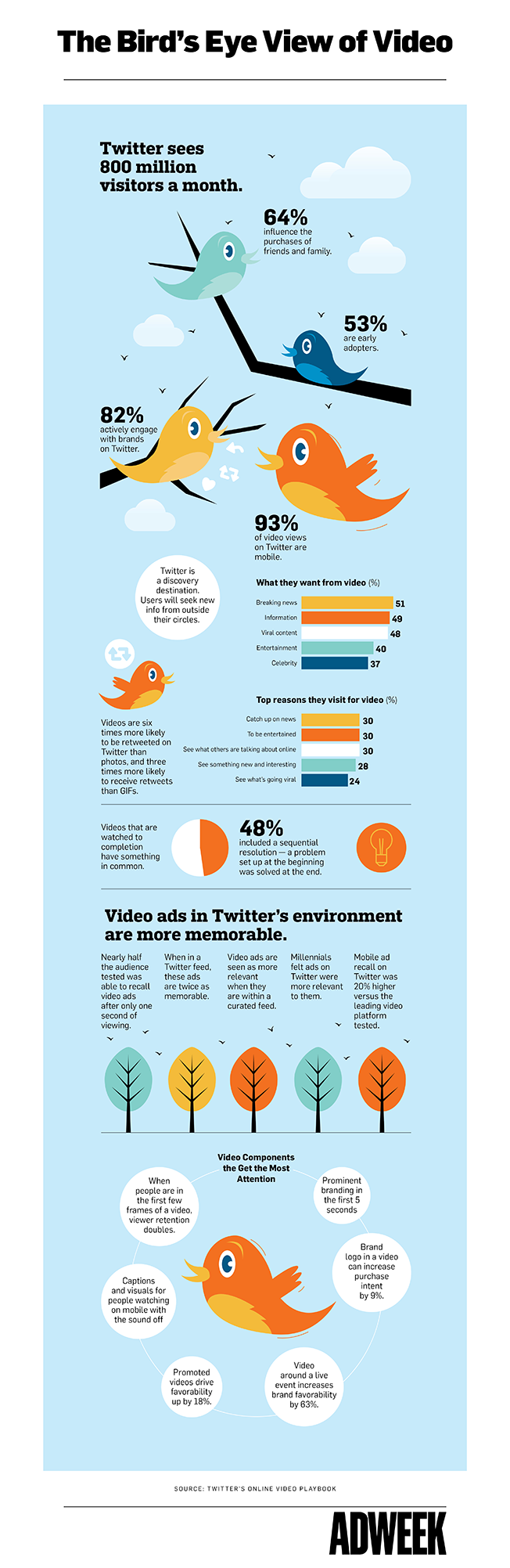
Twitter and AdWeek just released the platform’s annual Online Video Playbook to share what makes Twitter uniquely suited to video content. In particular, the research shows that video ads in Twitter are at least twice as memorable as ads presented on other services.

“As we navigate the dynamic world of video, these insights can help marketers and agencies unlock massive opportunity,” said David Roter, agency development director at Twitter. “We refer back to this playbook as we work strategically with our partners to develop innovative and creative campaigns.”

Check out the infographic below or at AdWeek:

birds-view

Twitter Video

Twitter’s video features have been a hit with users, including Periscope, the Twitter-owned live streaming platform. However, the company has struggled to find ways to monetize visual content.

This week, Twitter announced it was launching several changes to make it easier for advertisers to reach video audiences and creators to monetize their content.

For starters, the company is allowing advertisers to run pre-roll ads that appear before a video begins to play. Similar to YouTube’s pre-roll ads, the video advertisements will allow users to skip the ad if they are not interested.

For creators, adding these new pre-roll ads s as easy as signing up for Twitter’s Amplify program and opting-in to use pre-roll ads. You can choose to use the ads on an individual basis or by making pre-roll ads default on all video content.

In addition to the new ad format, Twitter is also making some changes to its Media Studio and Twitter Engage app to improve the monetization of content and advertising across its platform. These changes include:

  • A unified media library including videos, GIFs, and images.
  • Tweet scheduling features.
  • Team management and multi-account support.
  • Improved upload performance and overall stability.
  • An Earnings section detailing your monetization performance.

The biggest wrinkle for Twitter has been deciding how to monetize videos across Periscope live streams. The nature of live streaming video makes it difficult to incorporate ad breaks. Instead, Twitter is allowing Periscope users to seek and connect sponsors for live broadcasts.

These sponsors can then run pre-roll ads before live broadcasts begin.

Considering Periscope videos appear in Twitter timelines and live videos, the decision to incorporate pre-roll ads helps bring the streaming app more in line with Twitter’s other services while making them more attractive for both content creators and advertisers.

FacebookLiveFullScreenHorizontal

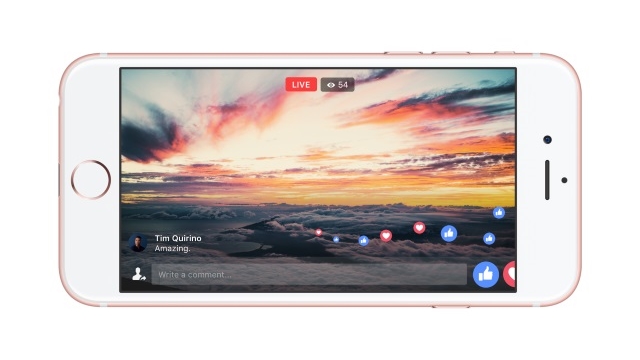
Facebook Live is going to become even bigger in the coming weeks. Facebook has been heavily pushing their live video streaming service and now they have announced several new features that will expand how users can livestream their lives.

Some of the new features are already available and the rest will be rolling out in the next few weeks. Let’s go through what you can expect to see from Facebook Live in the near future:

Longer Streams

Facebook Live users have been limited to 90-minute streams in most circumstances since the launch of the service, but Facebook is extending that limit substantially. Now, broadcasters are able to stream continuously for up to four hours when using the Facebook app or the Live API. If you desire, you can also stream continuously indefinitely, but your followers won’t receive notifications and there is no archive of your stream. You can’t share it with followers later or rewind.

Hide Reactions & Comments

Comments and live reactions can sometimes turn into a mess when you have a large enough audience. It can be hard to weed out spammers and trolls on the fly, but Facebook is making it easier to keep things under control by allowing you to hide reactions and comments by enabling a video-only mode. All broadcasters have to do is swipe right on their screen. You can always swipe left to re-enable them.

Full-Screen

Viewers don’t have to watch your streams from the small box in their feed anymore. Finally, you can watch live broadcasts full-screen from any iOS device. Unfortunately, Android users will have to wait until this summer to be able to view streams full-screen.

FacebookLiveFullScreenVertical

Geogating

Want to make your broadcast an exclusive for a specific demographic? Now, you can limit your audience to specific users based on criteria like location, age, and gender. Facebook calls the feature “geogating”, but it basically allows you to set limits on who can see your streams. Currently, the limits are fairly broad, but they may become more refined in the future.

facebook-video

If you’re a business that publishes content on Facebook, you have good reason to be frustrated. This week, the company announced they’d be de-emphasizing publisher-posted content in users’ news feeds in order to better highlight posts from friends and family, which means it will be even more difficult to break through to a wider audience. But, new data from SocialFlow may show there is still a way to reach tons of users through Facebook.

According to SocialFlow’s report, video content shared across Facebook is outperforming almost any other type of content when it comes to content reach. The social analytics company shares more than half a million stories each month to Facebook and other social networks on behalf of publishers.

SocialFlow recently analyzed 30 days of video content to gauge the total reach, likes, and shares in comparison to other types of content. What they found showed that while other types of content are drastically dropping in reach across the network, video is actually going up.

SocialFlow presented their findings via Facebook Live this week, showing that video made up just 0.9 percent of all posts but accounted for 7.15 percent of reach, 5.2 percent of likes, and 11.1 percent of shares. Of course, the company cautioned that the results don’t represent all publishers, it may mean some are actually seeing even better performance.

“It’s clear that media companies are increasingly turning to video to maximize their reach and audience engagement,” SocialFlow CEO Jim Anderson told Adweek. “We’ve heard plenty of anecdotal reports of strong video performance, and now we have the data to back up the anecdotes.”

The data also excluded Facebook Live video, which is being strongly promoted by the social network – Facebook has even started paying some publishers large amounts of money to encourage use of the format.  Anderson also said he “wouldn’t be surprised” to see video posts grow to account for 5 to 10 percent of total post volume within the next six to 12 months.

The findings show that while many brands and advertisers have been slow to take up Facebook Video, those that have are seeing promising results that suggest it may be the next big thing for publishers stymied by dropping reach through traditional content formats.