Links

Since the introduction of Google’s Penguin algorithm many have suggested that links are no longer important for SEO. I’ve even seen some misguided folks suggesting all links are outright bad. As usual the truth is more complicated than that.

It has become such a common issue that veteran SEO writer used his regular column over at Search Engine Watch to attempt to fully answer whether links are important for SEO these days. The exact question he was asked was “do you feel Google is putting less emphasis on links as part of their algorithm?”

The truth is there are a variety of types of links that have been devalued and count very little or are poisonous to your SEO. BUT, these links were almost entirely the type “that never should have been counting in the first place.”

You see, the types of links being devalued are being brought down because they are spammy. Google has gotten increasingly smarter and better at its job of helping people find what they want on the internet without running into spam or low-quality sites. The devalued links come from junk directories, link networks, paid link brokers, article databases, link wheels, etc. The list could go on and on. But, this hasn’t brought down the quality links that good SEO professionals have built.

In Ward’s opinion, quality links matter even more now. Google can tell a lot of information about links in your profile, and they are swift to penalize low quality or spammy links, but they are even more rewarding to those who have the “right” kind of links.

Any SEO professional or online marketer you hire to help raise your brand’s profile online should be able to tell the difference between good and bad links. They know what Google doesn’t like, and they stay out of trouble. However, the best online marketers know that organic search traffic and link building are only a part of a much larger system.

Google recently integrated their Panda algorithms into their normal indexing process, and this has sprung up a whole new batch of questions from webmasters. The most common question is specifically how site owners will know if their site has been hit by Panda. Really, it was only a matter of time before Matt Cutts, the noted Google engineer and head of Webspam, addressed the issue.

And that is what he did earlier this week, when Cutts used one of his Webmaster Help videos to respond to Nandita B.’s question, “how will a webmaster come to know whether her site is hit by Panda? And, if her site is already hit, how she will know that she has recovered from Panda?”

Now that the Panda algorithm is a part of the normal search indexing process, finding out if you’ve been affected by Panda won’t be near as easy. You can’t just compare your analytics reports with recorded dates for Panda rollouts. But, Cutts does have some suggestions if you think your site has been affected.

Cutts said, “basically, we’re looking for high quality content. So if you think you might be affected by Panda, the overriding goal is to make sure that you’ve got high quality content.”

Of course, high quality content in this context means sites that offer real value to users. It appears integrating Panda was actually one of the last steps in a shift towards a high focus on high quality content. They’ve been suggesting focusing on value for a long time, and now it is officially a large part of the normal search algorithm.

SEO Magnifying Glass

Source: Flickr

Startup companies have a lot to take care of just to get going. You have to deal with staffing your company, outreach, paperwork, testing, financing, and a thousand different things with little time. It is either sink or sail, and success relies on managing a multitude of problems.

It helps that most successful entrepreneurs are experts in their own field, and usually have at least a little bit of online business savvy. But, chances are they aren’t exactly well-versed in search engine optimization. While some of these startups might defer to a professional SEO resource or marketing team, it isn’t always required.

Getting even the most basic SEO considerations taken care of early on may seem superfluous, but SEO can take quite a while to grow. Starting early means you will start seeing the dividends later.

The most basic considerations of SEO simply ensure that searchers can find your business’s name and website fairly easily. Of course, a more comprehensive SEO plan extends that to ensuring you outrank your competitors and improve your larger web visibility, but that can be achieved after you’ve gotten yourself set up with just a little extra work.

Ashley Kemper from Search Engine Land put together a checklist for startups to get the most important SEO considerations taken care of early. Her list is a little more extensive than others you might find, but you’ll see much better rewards down the line by following her suggestions, and you’ll understand what you are actually doing much more.

YouTube Graphic

With the popularity and direct user engagement of social media platforms like Facebook and Twitter, many online marketers forget the potential for YouTube to improve your brand reputation and enforce your SEO efforts in a single move.

YouTube has a surprising amount of opportunity for optimization, especially for efforts focusing on local search. There is a relative lack of videos from small or local businesses aimed at informing the public and promoting themselves, leaving a wonderful widow for many local businesses to make an impact on their audience.

Of course, before you can optimize, you need to make sure you have a quality video that offers something of value to viewers beyond simply promoting yourself. Chris Silver Smith recently wrote about how local businesses can go about creating videos that will be worth their viewers time and make your audience interested in what you do.

There are plenty of options, but chances are you don’t want to just make an ad and throw it up online. A better approach would be a series of short videos exploring your industry, your brand, and what you offer to consumers. How-to videos can reinforce your reputation in regards to your skill, while explanations of your products and services can help viewers understand exactly what sets you apart from your competitors.

Smith also explored the ways you can optimize your videos to make sure they get seen, while also helping your local SEO efforts.

  1. Link to Your Business – At the beginning of your description, always make sure to include a link to your business website. These links are automatically “nofollowed”, so don’t expect it to help your link portfolio, but there is a chance local citation value is being conveyed to Google.
  2. Name, Address, Phone Number – Every video should include thorough contact information in multiple easy-to-find locations. Start by making it visible within the first few frames of your video. Google is able to interpret and “read” text within videos, so not only will your viewers be able to easily find you, Google will retain data contained within the video. Similarly, you may want to actually state your information out loud in the video, as spoken statements are converted into subtitle transcripts by Google’s systems.
  3. Take Advantage of the Descriptions – YouTube has one of the most generous description fields out there. While the initial paragraph users see should clearly state what the video is about, you can also include a statement about your company or a biography so that interested viewers can find it with a simple click.
  4. Tag Your Video – Along with including your business category name and your location names to the tags on videos, you should also include a handful of relevant tags for each video. Tags have a heavy impact on YouTube, so you’ll want to always make sure you include them, or your video will likely disappear into the ether.
  5. Associate the Video with Google Place Listings – Business listing in Google Places allow you to associate videos easily by putting in URLs. Make sure to use the full page URL.
  6. Associate the Video with Google+ Local Page – Adding the video to your local page allows you and any other employees to easily share the video on personal Google+ streams. The number of shares is considered indicative of popularity, so this is a good opportunity to boost your shares.

Stop Sign

Thanks to the big brand-named algorithm updates, Google has definitely been at the forefront of the link building discussion recently, but obviously the other search engines have their own opinions as well.

As Search Engine Land reports, Duane Forrester, Senior Product Manager for Bing, recently wrote a post on the Bing Webmaster Blog detailing the four worst link building techniques and why you shouldn’t do them.

Unsurprisingly, these link building strategies are largely in line with the methods Google has been fighting more publicly. Nonetheless, it is important to highlight the more spammy methods people are still using to try to boost their link profile.

  1. Blind Requests – Links aren’t something that should just be given out. Sending mass template emails to websites is about as spammy as you can get. The only people who will respond are those who won’t give you a quality link. Buying email lists to try to send out mass requests is an even bigger waste of funds that really won’t get you far, but could likely incur some penalties.
  2. Blog/Forum Comments – Some link builders will try to drop links almost randomly into blog comments and forum conversations, but these won’t improve your rankings a single bit. The search engines have been aware of the practice for some time now.
  3. Link Injection – This is a tactic used by spammers where sites are hacked and links are injected into content such as headers or footers. Some will even push links directly into the body content. Bing does encourage keeping your CMS software up to date and secure, but they also try to take precautions on their side against this tactic.
  4. Guest Blogging – This is one of the more controversial link building strategies because it isn’t explicitly bad. The problem is, if your focus with guest blogging is to build links, you probably shouldn’t be doing it. Forrester explains, “if you’re going to guest blog, best to do it with the intention to buildyour brand, drive traffic, and create awareness. Doing it to bolster your SEO efforts is a #FAIL these days.”

Have you ever searched for a term only to find a page that says “we have no articles for [your search term]” and a whole bunch of ads? Most people have come across these sites with auto-generated content, often called “Made for AdSense” or MFA sites. These pages are created for the sole reason of luring people in, and hoping they click an AdSense ad to leave the page instead of hitting the back button.

The majority of these types of websites use a script to automatically generate content that takes snippets from search results or web pages with those keywords. They don’t offer real content in any way and have absolutely no legitimate value. It makes many wonder why they’ve encountered these kinds of pages in the Google search results.

One user directly asked Matt Cutts, Google’s head of webspam, if the search engine is doing anything about the pages, such as penalties or removing these sites from the index. As you would expect, Google already has a policy in place, and Cutts encourages users to report any pages like this they come across. He states:

We are absolutely willing to take action against those sites. We have our rules in our guidelines about auto-generated pages that have very little value and I have put out in the past specific calls for sites where you search for a product – a VCR, a laptop, or whatever – and you think you’re going to get a review, and the first thing you see is ‘0 Reviews found for [blah blah blah].’

As Google sees it, even if these pages are from legitimate search engines, they don’t belong in the rankings. Users don’t really like searching for something and being sent to another page of search results. They want to be directed straight to real content.

There are very few times when search results snippets should be indexed. The only real time it might be considerable is if you have exclusive data that no one else has. But, there is no time when a supposed search results page with 0 results should ever be indexed.

To put it simply, Google is already trying to fight against these sites. They aim to find and penalize all they can, but they also want people to report them with a spam report if possible so that the lowest amount possible slip through the cracks.

Keeping up with the local search ranking algorithm can often be at best confusing and at worst a complete mystery. It seems there are just as many, if not more factors involved, yet less coverage of exactly what search signals Google is using for local businesses. That can make it very difficult to know where to put your focus.

There are so many places you could put your energy too. Should you focus on the completeness of your Google Places profile? Or maybe citations and reviews are more important? Is your business hurt just because it isn’t near the center of the city? All of those are considered, and that is just skimming the surface.

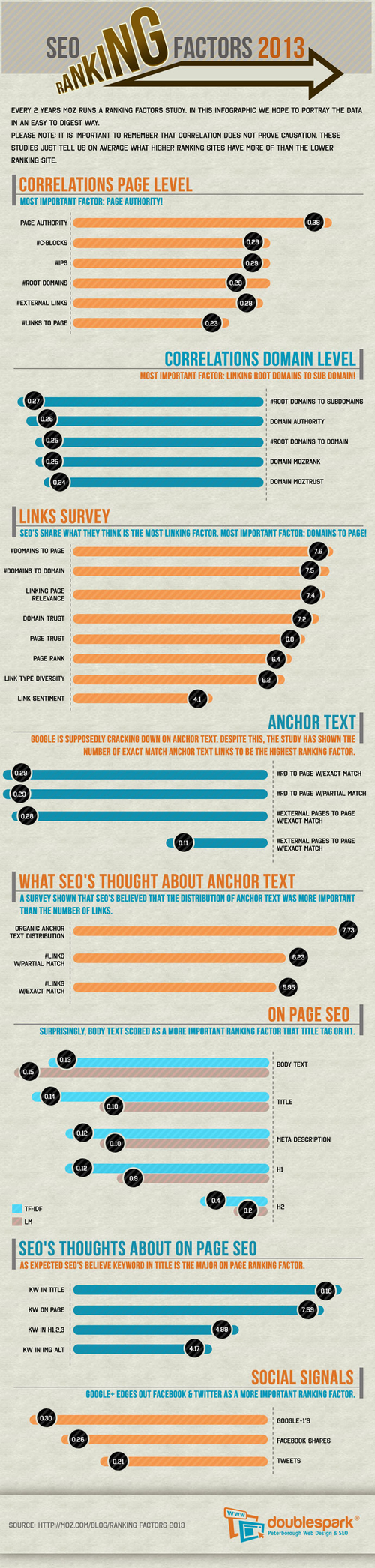
While Google probably isn’t going to be delivering definitive answers about their search algorithms any time soon, David Mihm and Moz are working to find the answers with an annual survey focusing on local search ranking factors. They released their report of their findings for the year already, but Doublespark took their concise results and turned them into an infographic.

Local SEO Ranking Factors

Keyword Planner Screenshot

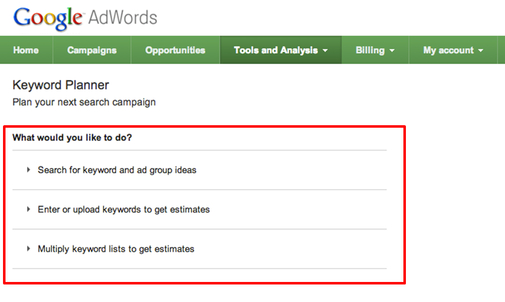
The time has come. As of yesterday, the Google Keyword Tool is officially dead. The sentiments are mixed as the tool has been frequently used by webmasters and SEO professionals across the world, but Google has offered a replacement called the Keyword Planner which has some advantages over the old tool. It also has some drawbacks associated with the switch.

In Google’s opinion, the Keyword Planner can accomplish all the important tasks the Keyword Tool could, as well as that of the Traffic Estimator. There are even some new features included which neither of the older tools offered. Matt Southern from Search Engine Journal broke down the pros and cons of being forced to make the change, which are shared below. Chances are in a few months you won’t even remember using the old Keyword Tool, but the transition could take some getting used to.

Positives

The Keyword Planner allows local SEO professionals and marketers to acquire keyword search volume data down to a city level with better geographic segmentation than the Keyword Tool and Traffic Estimator. It also has the ability to bundle geographic regions together.

SEO professionals and marketers are also able to upload up to 10,000 keywords from their own list to get performance data. The planner displays search volume by ad group, landing page, and any other categorization established by the user.

Negatives

The most common gripe I have heard about the Keyword Planner is that, unlike the Keyword Tool, the planner required users to be logged into AdWords before being able to use the tool. However, there are some functions removed from the Keyword Tool which will have a larger impact on how you view and understand the data.

The Keyword Planner does not feature match type data for search volume, device targeting, and doesn’t include global vs. local monthly searches. The ability to filter by closely related search terms is also missing, though Google has stated it will be back within the coming weeks. They explained the missing match types and device differentiation in a statement, which read:

In general, you’ll notice that the average search volume data is higher in Keyword Planner as compared to the exact match search volume data you got with the Keyword Tool. That’s because we’ll show you the average number of searches for a keyword idea on all devices (desktop and laptop computers, tablets, and mobile phones). With Keyword Tool, we showed the average search volume for desktop and laptop computers by default.

Don’t say Google doesn’t at least try to listen to webmasters. Though many webmasters have some pretty big (and often legitimate) grudges against the biggest search engine, it can’t be said they don’t at least try to reach out for opinions. One example of Google trying to receive feedback from site owners appeared last night, as Matt Cutts, Google’s head of webspam, tweeted out a call for webmasters and SEOs to fill out a survey.

Specifically, Cutts called for owners of small but high-quality websites who believe they should be doing better than they are in the rankings. It won’t end up affecting your rankings immediately, but it may give Google some information that will help them keep the playing field vaguely even for small businesses and big companies alike. The form reads:

Google would like to hear feedback about small but high-quality websites that could do better in our search results. To be clear, we’re just collecting feedback at this point; for example, don’t expect this survey to affect any site’s ranking.

The survey only asks two short questions. First, it calls for the name and URL of the small site you believe should be ranking well. Secondly, Google would obviously like to hear your opinion about why the site should rank higher. It is extremely straightforward, and shouldn’t take all that long for most webmasters to complete.


SEO has more than its fair share of myths, legends, and misconceptions. The search engines are in no hurry to give away the deep details of how they rank websites, as more than a few people would immediately try to take advantage of their methods, and there are countless “experts” weighing in and giving their opinion on every little event.

To combat all of these wild misunderstandings throughout the SEO field, Ranjana Jha fro SEO Best Practices attempted to refute the most common myths you’ll run into.

  1. Brands don’t need SEO – Many believe big brands don’t need optimization because they are going to automatically rank well, but those people misunderstand SEO. Optimization is a process that influences every aspect of a webpage from design, to content, and site construction. Not only that, but SEO plays a role in many off-site factors that increase visibility such as social media and creating a natural high-quality link profile. Even the biggest brands wouldn’t be doing as well online without all of these practices.
  2. Content generation is your ace – Content generation is the new trend in SEO as links are being more downplayed, but far too many people are missing the point. Google has been turning to content and site quality because they want to offer sites with real value to their users. Putting up new content all the time just for the sake of posting something doesn’t benefit anyone. Content can be a great tool, but if you aren’t offering something valuable, you’re wasting everyone’s time and you won’t maintain your rankings.
  3. Links are Golden – This myth is slowly fading out as Google gets more and more strict about their linking policies, but there are still some who believe links are the best way to get high in the rankings. Similar to content, links only matter if they have real value. Google can spot cheap or low-quality links from a mile away. If you aren’t fighting to earn real high quality links, you’re more likely hurting yourself.
  4. Keyword stuffing still works – This is an old practice which Google is well-versed in fighting. Filling any available space with excessive keyword usage or key phrases only makes you look desperate or fake, and Google isn’t going to do you any favors.
  5. Commenting on blogs with key anchor texts – This is another one that is fading out, but there are many who are still trying to exploit this strategy using random anchor texts and linking to unrelated content. However, most webmasters are using the “no follow” tag, so those links aren’t getting any benefits.
  6. Paid anchor links on popular sites will give you a boost – This one didn’t actually use to be a myth. But, Google has caught on and now buying link space for the singular purpose of inflating your page rank doesn’t accomplish anything (aside from wasting money).
  7. SEO means Meta tags, keywords, and content – Trying to break SEO down into just a couple of factors is a fools game. Many will list those aspects as the basic SEO elements, but optimization extends much further beyond those simple steps.