Have you ever searched for a term only to find a page that says “we have no articles for [your search term]” and a whole bunch of ads? Most people have come across these sites with auto-generated content, often called “Made for AdSense” or MFA sites. These pages are created for the sole reason of luring people in, and hoping they click an AdSense ad to leave the page instead of hitting the back button.

The majority of these types of websites use a script to automatically generate content that takes snippets from search results or web pages with those keywords. They don’t offer real content in any way and have absolutely no legitimate value. It makes many wonder why they’ve encountered these kinds of pages in the Google search results.

One user directly asked Matt Cutts, Google’s head of webspam, if the search engine is doing anything about the pages, such as penalties or removing these sites from the index. As you would expect, Google already has a policy in place, and Cutts encourages users to report any pages like this they come across. He states:

We are absolutely willing to take action against those sites. We have our rules in our guidelines about auto-generated pages that have very little value and I have put out in the past specific calls for sites where you search for a product – a VCR, a laptop, or whatever – and you think you’re going to get a review, and the first thing you see is ‘0 Reviews found for [blah blah blah].’

As Google sees it, even if these pages are from legitimate search engines, they don’t belong in the rankings. Users don’t really like searching for something and being sent to another page of search results. They want to be directed straight to real content.

There are very few times when search results snippets should be indexed. The only real time it might be considerable is if you have exclusive data that no one else has. But, there is no time when a supposed search results page with 0 results should ever be indexed.

To put it simply, Google is already trying to fight against these sites. They aim to find and penalize all they can, but they also want people to report them with a spam report if possible so that the lowest amount possible slip through the cracks.
Keeping up with the local search ranking algorithm can often be at best confusing and at worst a complete mystery. It seems there are just as many, if not more factors involved, yet less coverage of exactly what search signals Google is using for local businesses. That can make it very difficult to know where to put your focus.

There are so many places you could put your energy too. Should you focus on the completeness of your Google Places profile? Or maybe citations and reviews are more important? Is your business hurt just because it isn’t near the center of the city? All of those are considered, and that is just skimming the surface.

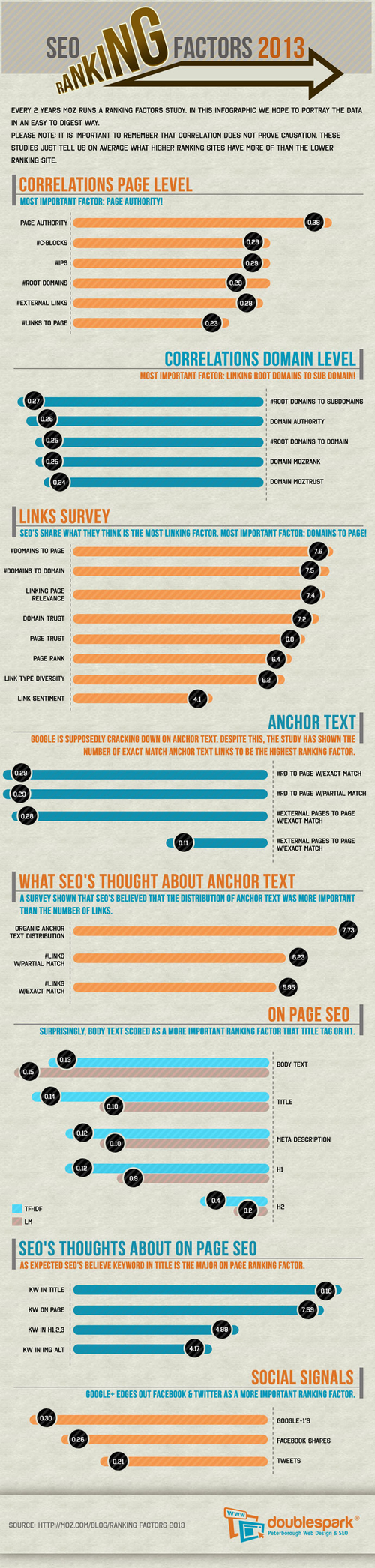
While Google probably isn’t going to be delivering definitive answers about their search algorithms any time soon, David Mihm and Moz are working to find the answers with an annual survey focusing on local search ranking factors. They released their report of their findings for the year already, but Doublespark took their concise results and turned them into an infographic.

Local SEO Ranking Factors

Keyword Planner Screenshot

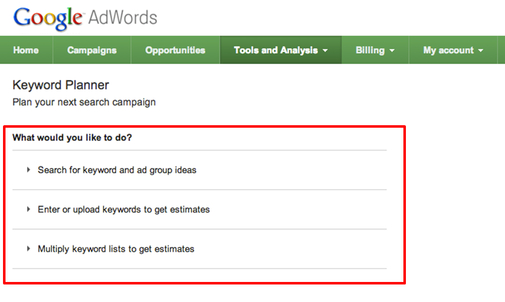
The time has come. As of yesterday, the Google Keyword Tool is officially dead. The sentiments are mixed as the tool has been frequently used by webmasters and SEO professionals across the world, but Google has offered a replacement called the Keyword Planner which has some advantages over the old tool. It also has some drawbacks associated with the switch.

In Google’s opinion, the Keyword Planner can accomplish all the important tasks the Keyword Tool could, as well as that of the Traffic Estimator. There are even some new features included which neither of the older tools offered. Matt Southern from Search Engine Journal broke down the pros and cons of being forced to make the change, which are shared below. Chances are in a few months you won’t even remember using the old Keyword Tool, but the transition could take some getting used to.

Positives

The Keyword Planner allows local SEO professionals and marketers to acquire keyword search volume data down to a city level with better geographic segmentation than the Keyword Tool and Traffic Estimator. It also has the ability to bundle geographic regions together.

SEO professionals and marketers are also able to upload up to 10,000 keywords from their own list to get performance data. The planner displays search volume by ad group, landing page, and any other categorization established by the user.

Negatives

The most common gripe I have heard about the Keyword Planner is that, unlike the Keyword Tool, the planner required users to be logged into AdWords before being able to use the tool. However, there are some functions removed from the Keyword Tool which will have a larger impact on how you view and understand the data.

The Keyword Planner does not feature match type data for search volume, device targeting, and doesn’t include global vs. local monthly searches. The ability to filter by closely related search terms is also missing, though Google has stated it will be back within the coming weeks. They explained the missing match types and device differentiation in a statement, which read:

In general, you’ll notice that the average search volume data is higher in Keyword Planner as compared to the exact match search volume data you got with the Keyword Tool. That’s because we’ll show you the average number of searches for a keyword idea on all devices (desktop and laptop computers, tablets, and mobile phones). With Keyword Tool, we showed the average search volume for desktop and laptop computers by default.

Don’t say Google doesn’t at least try to listen to webmasters. Though many webmasters have some pretty big (and often legitimate) grudges against the biggest search engine, it can’t be said they don’t at least try to reach out for opinions. One example of Google trying to receive feedback from site owners appeared last night, as Matt Cutts, Google’s head of webspam, tweeted out a call for webmasters and SEOs to fill out a survey.

Specifically, Cutts called for owners of small but high-quality websites who believe they should be doing better than they are in the rankings. It won’t end up affecting your rankings immediately, but it may give Google some information that will help them keep the playing field vaguely even for small businesses and big companies alike. The form reads:

Google would like to hear feedback about small but high-quality websites that could do better in our search results. To be clear, we’re just collecting feedback at this point; for example, don’t expect this survey to affect any site’s ranking.

The survey only asks two short questions. First, it calls for the name and URL of the small site you believe should be ranking well. Secondly, Google would obviously like to hear your opinion about why the site should rank higher. It is extremely straightforward, and shouldn’t take all that long for most webmasters to complete.


SEO has more than its fair share of myths, legends, and misconceptions. The search engines are in no hurry to give away the deep details of how they rank websites, as more than a few people would immediately try to take advantage of their methods, and there are countless “experts” weighing in and giving their opinion on every little event.

To combat all of these wild misunderstandings throughout the SEO field, Ranjana Jha fro SEO Best Practices attempted to refute the most common myths you’ll run into.

  1. Brands don’t need SEO – Many believe big brands don’t need optimization because they are going to automatically rank well, but those people misunderstand SEO. Optimization is a process that influences every aspect of a webpage from design, to content, and site construction. Not only that, but SEO plays a role in many off-site factors that increase visibility such as social media and creating a natural high-quality link profile. Even the biggest brands wouldn’t be doing as well online without all of these practices.
  2. Content generation is your ace – Content generation is the new trend in SEO as links are being more downplayed, but far too many people are missing the point. Google has been turning to content and site quality because they want to offer sites with real value to their users. Putting up new content all the time just for the sake of posting something doesn’t benefit anyone. Content can be a great tool, but if you aren’t offering something valuable, you’re wasting everyone’s time and you won’t maintain your rankings.
  3. Links are Golden – This myth is slowly fading out as Google gets more and more strict about their linking policies, but there are still some who believe links are the best way to get high in the rankings. Similar to content, links only matter if they have real value. Google can spot cheap or low-quality links from a mile away. If you aren’t fighting to earn real high quality links, you’re more likely hurting yourself.
  4. Keyword stuffing still works – This is an old practice which Google is well-versed in fighting. Filling any available space with excessive keyword usage or key phrases only makes you look desperate or fake, and Google isn’t going to do you any favors.
  5. Commenting on blogs with key anchor texts – This is another one that is fading out, but there are many who are still trying to exploit this strategy using random anchor texts and linking to unrelated content. However, most webmasters are using the “no follow” tag, so those links aren’t getting any benefits.
  6. Paid anchor links on popular sites will give you a boost – This one didn’t actually use to be a myth. But, Google has caught on and now buying link space for the singular purpose of inflating your page rank doesn’t accomplish anything (aside from wasting money).
  7. SEO means Meta tags, keywords, and content – Trying to break SEO down into just a couple of factors is a fools game. Many will list those aspects as the basic SEO elements, but optimization extends much further beyond those simple steps.

In his attempt to fix some confusing wording Google has been using, Matt Cutts, Google’s head of webspam, used his latest Webmaster Help video to clarify that page load speed is not any more important for rankings on mobile than it is for desktop searches.

This comes after Google has been publicly emphasizing the need for sites to load quickly, noting that mobile users are highly likely to leave a page if it doesn’t load fast enough. While Google isn’t backing off of that stance, Cutts wanted to make it clear that there isn’t a difference in how this speed is ranked from mobile to desktop.

If all things are equal, meaning all other aspects of two sites are ranked evenly, the site that loads faster will almost certainly be given the higher ranking in search results by Google, but that is true on smartphones and desktop computers alike. It is also just a sensible part of the algorithm, as slow pages will likely lose a large number of visitors just during the loading time, making it a lower-value site.

But, as internet speeds across devices and across the globe vary, Cutts said Google doesn’t have plans to give an exact amount of seconds your site should load in, but if it becomes obvious to Google that mobile users are getting more frustrated by slow sites than their desktop counterparts, they may consider weighting loading speed more for mobile searches. It just isn’t the case yet, and there are no plans currently to make it so.

Bing LogoWhile Google may own a huge share of the search market, Bing is no slouch. They have undertaken a serious campaign to raise their profile and earn a larger amount of the searches happening every day. Part of this campaign is very straightforward; Bing wants to educate you about why they are a better search engine than Google.

To do this, Bing has undergone some high profile marketing (the “Bing it On” Challenge), but they’ve also upped their transparency and have been reaching out to interested consumers through the Bing Blog. Last week, Senior Program Manager Meenaz Merchant did just that, attempting to explain why Bing is the superior search engine for image searches.

Entity Understanding – Bing claims to be able to determine whether a search is for a person, place, or thing. By being able to distinguish the object of searches, they are able to deliver more accurate results to the user.

Big Data – According to Bing, Google doesn’t incorporate any image click data from the web or social signals into their search engine. Bing, on the other hand, includes user interaction data based on visual and text features to better match results for your interests.

Computer Vision Technologies – Bing uses deep learning to interpret dimensional data from the world to understand images more accurately than Google. They claim they are able to process images similar to the way the human brain does, allowing for more thorough cataloging and delivery of image results.

Thematic Intent Focus – Supposedly, Google treats image searches almost exactly how they handle text or web searches. Bing however says they are able to differentiate between the intent of users’ searches using specific methods for image searches.

Exact and Near Duplicate Images – Unlike Google, Bing is able to recognize and flag exact duplicates or near duplicate images from their searches, allowing for them to be filtered out of search results.

Aesthetics and Easy Viewing – Bing makes it easier to see multiple images in a single glance by more consistently sizing the results across the page. Google’s results tend to directly reflect their image size, creating a slightly jumbled view, while Bing’s is more cohesive, so that you can see all the images at once.

High Quality Images – Bing favors image quality above all, and they make it easy to see a full-size, high quality image after the first click. On other search engines, you often have to click through a page or two to actually see the full image.

SEO Waving Icon


We’ve all seen the cycle of Google updates. Every time there is a change to the algorithms, the blogs all light up with announcements, a fair sized group panics while the rest ride out the storm, and then the “how to recover” posts start rolling in. Eventually the excitement tapers off, and then it is time for a new update.

Probably the most shocking thing about all the commotion is how many people freak out in the first place. While some of Google’s changes are pretty significant, it isn’t like they don’t warn webmasters ahead of time with what direction they are headed for ranking websites. They won’t give the specifics, but they normally denounce a practice well before they start penalizing for it.

That is all my long-winded way of saying we don’t all have to be afraid of the next Penguin or Panda update. By simply following the best practice guidelines and keeping some solid tips in mind, you’ll find you have no reason to worry. Erin Everhart recently shared some great tactics you can use to keep your website in Google’s good graces.

1) Focus on Branding, Not on Ranking

It is no secret that Google isn’t actually a fan of a lot of what constitutes search engine optimization, mostly because of the way many try to take advantage of every loophole to get rankings. The common idea of SEO focuses solely on improving rankings, while Google wants to rank sites based on value to their consumers.

To start thinking like Google, you need to get your mind off of ranking and focus more on building your brand. If you search for any type of product like a flat screen TV, the results will be almost entirely brand names. Google views brand names as trustworthy and valuable parts of their community, and that goes for small businesses as well as large companies. Simply sponsoring events in the community and interacting with users in positive ways go a long way with search engines.

Of course, it would be naive to say the big brands don’t have advantages, but it isn’t the reason you think. Google evaluates them the same way they evaluate everyone else, but these brands are large enough that they never resort to the keyword stuffing, anchor text over-optimizing stuff that so many SEO professionals try to use.

2) Create a Good User Experience

Along the lines of taking your focus off of rankings, Google has been pleading with the SEO community to take their attention to actually delivering quality experiences for users. The search engine wants to deliver great sites that users will enjoy being on, not low quality pages with the most optimization. To achieve this, the engine made site quality more important than link profiles and has been refining their guidelines to push for faster sites with better content.

For marketers and optimizers, this can be a little confusing. Who exactly defines a “high quality site” and what are the criteria? Well we know the faster your site is, the better off it will fare. But, there are many more amorphous factors to deal with. The only real way to find out exactly what your users will like and how to make the highest quality site for them is testing. Run every type of test you can. Do user testing. Do split testing. Research your market.

3) Preserve Your URLs

It is a little bit of an outdated practice at this point, but it remains true that old URLs still rank the best. The only reason you should resort to changing your URLs is to fix an absolute mess of site architecture or absolutely have no choice. But, if there is any way you can avoid it, do. Canonicals and 301s reduce equity that you’ve built up, and new pages have to start all over again.

Instead, bigger companies like Apple use the same page for every new product launch, unless they release an entirely new product like the rumored upcoming smartwatch. They simply update the existing page to reflect the new product, while the old iPhone gets pushed to a new page. This way, you can take advantage of the equity you already have.

Conclusion

Focusing your SEO efforts on rankings isn’t sustainable any longer. You may shoot up the rankings more quickly than those creating a high quality campaign, but you’ll live in fear of every algorithm update, and eventually you will get hit. Chances are, you probably already have been penalized once, unless you’re walking the straight and narrow.

Negative SEO has been a topic of debate for a while now, especially since links became dramatically more risky with the introduction of Google Penguin. It is entirely possible competitors could simply point hundreds or thousands of low-quality or negative backlinks towards your site with the intention of causing your site to be penalized or possibly even completely removed from Google’s index. Buying links went from being a tool for cheating to algorithms to a weapon for destroying, or at least handicapping, competitors.

Google acknowledged this issue with the introduction of the Disavow Links tool, by giving webmasters a way to protect their site. The problem is, everyone seems to be using it wrong. According to Marcela De Vivo from Search Engine Watch, the Disavow Links tool isn’t best used after a site has been penalized. Instead, it should be used in combination with a link audit before you ever run into trouble.

It makes sense, the entire point of a backlink audit is to check the quality and status of all of the links in your profile. If you’re auditing properly and regularly, you won’t ever have to worry about algorithm updates or manual actions. You could catch every low quality link and disavow before search engines identify them.

Auditing isn’t difficult either. All you have to do is download your backlinks from your Google Webmaster account or any other backlink tool, and look for any links pointing back to your site that you either don’t recognize or look questionable. Usually fishy or spammy links are easy to pick out. Then, you can take action by emailing the owner of those sites and asking for the link to be removed. If that fails, all you have to do is turn to the disavow tool.

Running these types of audits is like exercising for your website. When done regularly, audits keep your site healthy, removes any unhealthy links from the profile, and makes it easier to fight off outside attacks. If you’re regularly auditing your links, you’ll quickly spot any negative or blackhat SEO attempts. Everyone living in fear of Penguin updates is spending too much time being reactive. If you proactively manage your backlink profile, penalties will seem far less menacing.

Blogger Portrait

Source: Marisa Vasquez

Content marketing is all the rage in SEO right now. As links continue to get devalued (though they can still be potent if gained properly), optimizers and marketers are moving their focus to the actual content you see on the page. This is potentially a great shift to providing consumers with real value, but generating content on a regular basis is costly and intensive. If you slack, it can be worthless at best, and damaging to your rankings at worst.

This isn’t to say you shouldn’t do it. But, content marketing has to be done right, with smart choices about how to spend your time and efforts. All it takes is some planning and extra thought that too many forget to do. If you think ahead, you can avoid most of the common content marketing mistakes far too many make. Jayson DeMers pinpointed some of those common mistakes, and if you know how to identify them, you can fix them.

1) Writing for the Wrong Audience

Every article or piece of content you put out there should be of value to someone, but that audience shouldn’t be arbitrary. As a business, you have a specific audience that you should be paying attention to. If you understand your audience, you can better choose topics and write in the appropriate tone for who you are trying to connect with. Home services such as plumbing and roofing have very different consumers and audiences than tech startups.

One of the most common ways to forget to write for consumers. We tend to get excited about the content we are putting out and the work we’ve put in – and that is great – but we also tend to geek out and write for those who are spending hours scouring blogs like us. We forget to communicate with the actual people needing their services. For every article, you need to ask, are we writing for our consumers or our peers?

2) Using the Wrong Metrics

Creating content takes a ton of time. You have to research, try to brainstorm unique topics, follow all the social media feeds. It would be tragic if all those efforts weren’t being properly measured and fine-tuned. However, getting started with the right metrics for your business at first can seem even more troublesome than making all that content.

Getting started, it is common to focus on measuring outputs rather than results. It helps ensure you follow through on your content marketing efforts and are achieving the basic creation aspect. But, once you’re in the flow of creating content you have to evolve your metrics to ensure they are actually achieving the larger desired results. You have to make sure you’re getting an actual return on your investment.

Not only do you want to make sure that you are strengthening your front on using the right keywords, you want to be checking on your conversions. You’re content isn’t successful if it isn’t helping direct people to the next step. Are you including clear calls to action? Are you getting people to make the next step you want? If not, you may want to change your strategy.

3) Failing to Focus on Branding

Content serves the purpose of making your brand trustworthy to consumers. Brand development can help build your brand as a leader in your market, or it can build the reputation of a service or product. Simply put, creating content allows you to build your brand as a leader in your industry to those who haven’t used your product or service yet. Writing as a leader or member of your business should showcase your expertise and make consumers trust you. The trick is doing it in a professional way, without being heavy handed.

Trying to make a hard sell with your content isn’t advised, so you have to achieve these goals much more subtly. The primary goal is educating and informing, but that has to be put in a package that will also strengthen your brand. It is a difficult line to walk, but with focus on your brand and the audience, you will find the proper mix.