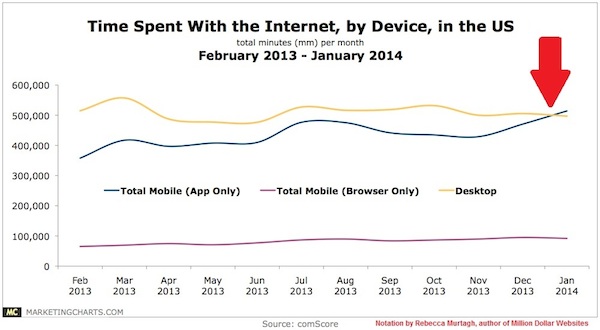
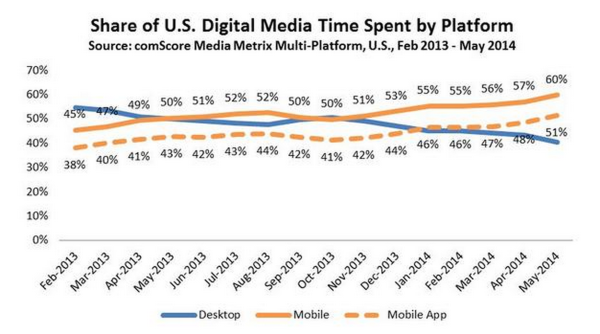
With how much the online marketing industry loves to make sweeping proclamations such as “content is king” and “links are dead”, you would think someone would have been there to declare that mobile now rules the internet, or some similar claim. But, somehow no one has made a big deal out of the fact that mobile devices accessing the internet now exceeds desktop devices as of early this year. Rebecca Murtagh explores what this means and how mobile devices are using the internet over at Search Engine Watch.
Reviews have always been important for reaching and maintaining success as a business, but since the rise of Yelp reviews have become essential. With the increased popularity of rating platforms and our rising reliance on them for online purchases, it is clear we are also beginning to put more trust in online reviews as well.
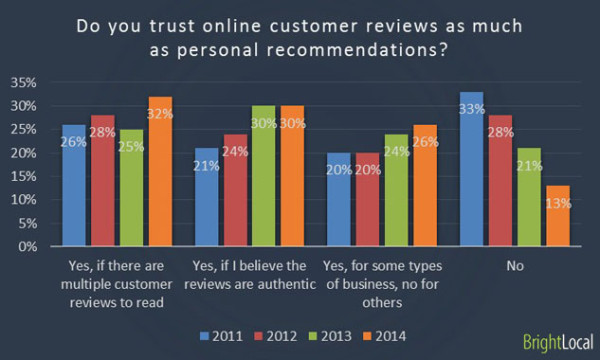
That is the finding of a new study from BrightLocal which highlights how consumers respond to reviews. This report makes the 4th year BrightLocal has conducted a study on consumer usage and attitudes toward online reviews and the findings overwhelmingly show that we trust online reviews now more than ever.
Myles Anderson shared the findings from the study on Search Engine Land, but the biggest highlight is the finding that 88% of consumers trust online reviews as much as personal recommendations. This is great news for businesses with primarily positive reviews, but that means negative reviews have more weight as well.
In the end, the findings just confirm what we’ve all suspected for quite some time. Finding ways to stimulate positive reviews is essential to increasing your online presence and driving new business. Otherwise, you might wind up with poor reviews and dwindling business.
Smaller local businesses are overwhelmingly lagging behind the rest of the market when it comes to getting online and increasing visibility and audience outreach through optimization and search engine marketing. Unfortunately the longer these companies wait to expand their business online, the further they fall behind the curve. Thankfully, Trond Lyngbø created a comprehensive article exploring the most important information anyone running a smaller local business needs to know about SEO and online marketing.
00Taylor Ballhttps://www.tulsamarketingonline.com/wp-content/uploads/2018/07/TMO-Logo.pngTaylor Ball2014-07-03 13:15:562014-07-03 13:15:56Everything Local Businesses Need to Know About SEO and Online Marketing
My SEM writing tends to focus on optimization and organic outreach, but with organic reach shrinking across the web, paid search advertising is becoming an increasingly important part to growing your brand and attracting new customers. Paid search has changed just as much as SEO over the past few months of 2014, and Ginny Marvin from Search Engine Land recently compiled the 10 most important developments. Her list is a handy way to catch up on all the Bing Ads and Google AdWords advancements you need to know about.
00Taylor Ballhttps://www.tulsamarketingonline.com/wp-content/uploads/2018/07/TMO-Logo.pngTaylor Ball2014-07-02 14:10:202014-07-02 14:10:202014’s Most Important Paid Search Changes You Should Know About
It has become a truism that “Facebook is losing organic reach,” almost like it is widely accepted that teens are leaving Facebook in droves. While the matter of teens leaving Facebook is up for some debate, the social media platform has even acknowledged that organic reach across the site is dropping and they explained why.
However there is more to the story. It is widely agreed upon that Facebook’s dropping organic reach is inherently bad, because the majority of businesses and marketers are getting the bad end of the deal. Those succeeding with the new algorithms are probably quite happy though.
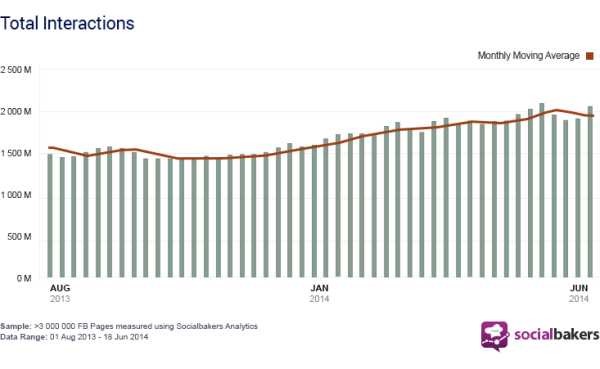
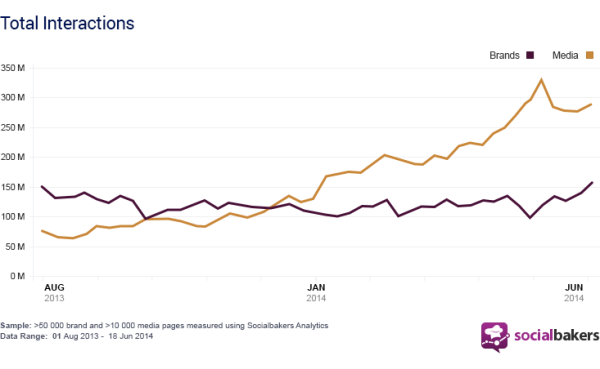
A new study from Socialbakers shows that page engagement for successful Facebook Pages has risen 30% since January. That means that although many of us are losing reach, those who have mastered the are of Facebook marketing are seeing more success than ever.
The conversation that seems to be dominating the Facebook marketing community is all about how algorithmic changes to Facebook’s News Feed are hurting organic reach. Our numbers say the opposite; brands have never had a better opportunity to have their best content placed in front of so many people.
To be clear, Socialbakers’ numbers aren’t refuting the common knowledge that Facebook’s organic reach is losing ground quite fast. This study focused specifically on the 3 million largest Pages, but there are over 30 million active small business pages that weren’t included.
Still the numbers show the other side of Facebook’s marketing results and helps explain why they continue down this path. With such a huge amount of content being shared every day, Facebook wants to focus on quality rather than quantity. Those with great content and quality marketing are still seeing strong results, but it is undeniably getting harder for the small guy to find some ground to expand with.
Social media is typically thought of as where all the cool kids hang out. Fast food, clothing, and entertainment all have it easy when it comes to making friends and getting retweets, but businesses in seemingly boring industries frequently settle for mediocrity out of the belief they can’t keep up with the “cooler” industries. But, Uri Bar-Joseph showed us five companies that shrug off the assumption that “boring” businesses can’t be exciting online.
00Taylor Ballhttps://www.tulsamarketingonline.com/wp-content/uploads/2018/07/TMO-Logo.pngTaylor Ball2014-06-30 13:41:202014-06-30 13:41:20Boring Companies Can Still Be Exciting On Social Media
Every week we try to keep you updated with all the SEM news from around the web, but the Google I/O event this week was packed full of so much information there was bound to be some stuff we didn’t get to cover. Today, we’re going to cover all the latest news from I/O and everywhere else. We’ll start with Google, but there is also some interesting Facebook news to discuss near further down.
Android Reaches 1 Billion Active Users Per Month
To open the annual I/O developers conference, Google rattled off an impressive list of statistics, as large tech companies tend to do. Of these statistics, there is one that was noteworthy and shows just how prominent smartphones have become throughout the world.
At last year’s conference, Sundar Pichai told the audience that Android had around 530 million active users per month. Over the past year, that number has almost doubled, surpassing one billion active users every month.
Other interesting stats include:
Android users send 20 billion texts per day.
They take 93 million selfies per day.
Android users take 1.5 trillion steps each day.
They check their phones 100 billion times per day.
Android tablets represent over 60 percent of all tablets shipped.
If you’re wondering what everyone is doing on their phones, you can be assured that it involves apps. comScore released a report this week showing that over half of all digital media time is now spent using apps, though its unclear whether more time is spent on Angry Birds or The Wall Street Journal’s news app.
Google Will Remove Author Images From Search Results
Google is continuing to push an emphasis on authorship authority, but don’t expect to continue seeing author images in your search results for much longer. In the next few days, Google will be stripping the author images and Google+ circle counts from desktop and mobile search results in an attempt to streamline search result appearances. In the announcement on Google+, John Mueller said:
“We’ve been doing lots of work to clean up the visual design of our search results, in particular creating a better mobile experience and a more consistent design across devices,” he wrote. “As a part of this, we’re simplifying the way authorship is shown in mobile and desktop search results, removing the profile photo and circle count.”
Danny Goodwin from Search Engine Watch shared an example showing what the results looked like before (shown above) and what they will look like in the very near future (below).
Google is Testing Their Domain Registry Service
Google has expanded into seemingly every facet of online activity, but up until now they have left domain registration to other service providers. That won’t stay the case for much longer as Google recently announced they will be inviting a limited number of people to test their new service called … wait for it… Google Domains.
As the shockingly creative name suggests, Google Domains will let users search, find, purchase, and transfer the domain or domains best representing their business. The service is still being built, which is part of why you shouldn’t expect for it to come out of testing in the close future. But, the service could potentially make the act of creating a website and establishing a company presence online much more easily understandable for the 55% of businesses that still don’t have websites.
Google My Business Comes To iOS and Android
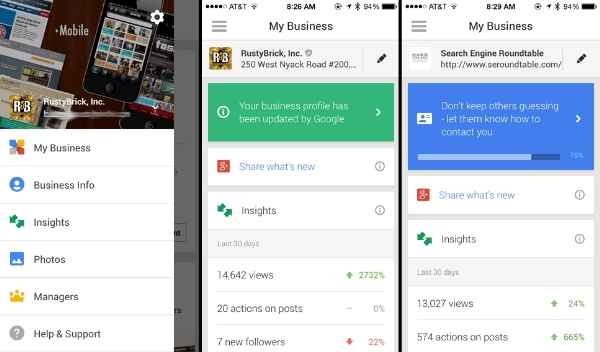
Google announced Google My Business earlier this month, and on Wednesday the official apps for the service came out on both Android and Apple smartphones. The apps offer a unified interface that will make it easier to manage your brand’s online presence on the go. App features include:
Edit the business listing by changing hours, description, etc.
View managers of the page but not manage them
Post to Google+
Add photos and update cover and profile photos
View local insights and analytics
Change business pages and accounts
Watch Now Now Influences Facebook News Feed Video Rankings
Facebook is constantly working on its News Feed algorithm and the latest update is intended to improve the quality of videos being served to users. The new video ranking takes note of how long users watch a video for and uses this information to influence content ranking. This metric will be combined with other long-standing metrics such as likes, comments, and shares.
In the announcement, Facebook said, “In our early tests, this improvement resulted in more people watching more videos that are relevant to them.” The announcement also noted that twice as many people watch videos on Facebook compared to the numbers from six months ago.
Wait, So Facebook is Still Popular With Teens?
You’ve undoubtedly heard the rumors, studies, and proclamations that Facebook is losing traction with teens like a car driving off a cliff. From what everyone wants to believe, all the young kids are moving to the burgeoning messaging apps to escape the prying eyes of their parents and lame extended family. Even President Obama has commented that kids “don’t use Facebook anymore.”
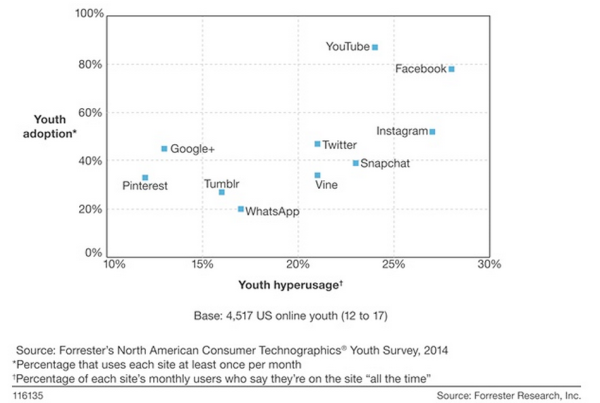
The problem with all this is, the numbers don’t entirely support that conclusion and two reports from the past week confirm that Facebook is still the most popular social site for the demographic by far.
First, Forrester Research released a report showing that more than 75% of US online youth use Facebook at least once a month. Their survey polled 4,517 internet users between the ages of 12 and 17, and that Facebook has twice as many users as Pinterest, Tumblr, Snapchat, and more than Instagram and WhatsApp combined.
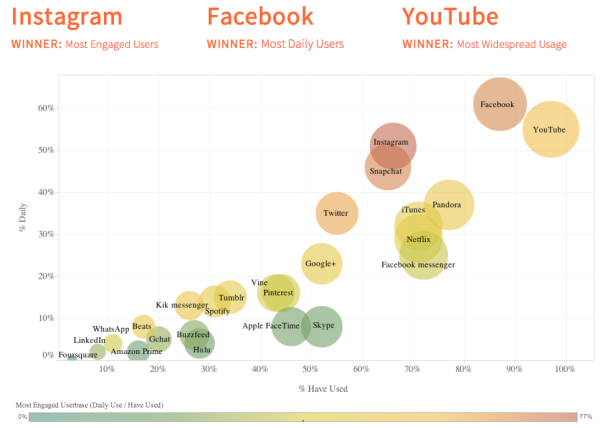
The second study, from college and K-12 education review site, Niche, found similar results from a survey of 7,000 teenage users. Specifically, 87% still use Facebook “occasionally” and 61% use it daily (including the 47% who use it “a few times a day.)
00Taylor Ballhttps://www.tulsamarketingonline.com/wp-content/uploads/2018/07/TMO-Logo.pngTaylor Ball2014-06-27 12:23:202014-06-27 12:23:20Quick SEM News of the Week – June 27, 2014
You can find countless articles offering SEO tips filled with practical advice about how to stay within Google’s guidelines and optimize the code on your website. You’re also likely to find plenty of buzzwords and catchphrases like “content is king.” But, all of these practical tips won’t do you much good if you are approaching SEO with the wrong perspective.
It seems counter-intuitive, but good SEO means you need to stop thinking about yourself. You have to think about what your audience wants and how to reach people in new and interesting ways. It is hard to do this if your entire motivation is to “rank higher” or “get more traffic.”
ResultFirst shared an infographic that can help you reshape the way you think about SEO and use a perspective that favors your audience, because a happy audience always leads to growth and success for your business.
00Taylor Ballhttps://www.tulsamarketingonline.com/wp-content/uploads/2018/07/TMO-Logo.pngTaylor Ball2014-06-26 12:42:252014-06-26 12:42:25SEO Tips That Will Help You Get a Better Perspective [Infographic]
At this point, it is undeniable that any business with a website should have some form of mobile optimization, whether that means a responsive website, separate mobile URLs, or dynamic serving. But, many businesses with limited resources are attempting to solve this issue by essentially tacking on mobile optimization as an afterthought.
According to a new report from BrightEdge, 27 percent of sites have some form of errors from improper mobile implementation. Even more so, the report claims that sites with mobile implementation errors can cost websites up to 68 percent of smartphone traffic, an increasingly important segment of traffic.
BrightEdge’s Mobile Share Report examined the various types of mobile solution available and sought to uncover which configurations are the most likely to have some form of errors, as well as how these errors impact issues like rankings and traffic.
Notably, Google has indicated that responsive design, dynamic serving, and separate mobile URLs are all accepted forms of mobile implementation, although they have also deemed responsive websites as their preferred solution. As such, BrightEdge was especially interested in seeing if sites with responsive design was less likely to result in errors or had a better chance of ranking.
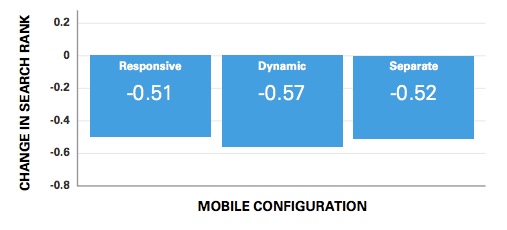
Interestingly, according to BrightEdge there was no significant difference between smartphone rankings based on mobile configuration.
“Data from BrightEdge’s Data Cube shows that for a given keyword, on average, a website’s rank for smartphone users varies only slightly based on the type of mobile configuration a website has implemented,” the report said. “So, for example, if a site is ranked No. 3 on a desktop, it would rank 3.5 (on average) on a smartphone device. This data represents the average across billions of keywords studied.”
Notably, the report indicates any difference in rank is likely due to local search results pushing other more universal results down on the SERP.
So, with sites using all mobile solutions ranking relatively even, why would Google endorse responsive design?
Responsive design showed the least chance for mobile errors, especially over using separate mobile URLs. In fact, 72 percent of sites using separate mobile URLs had errors, while responsive design showed a minuscule number of sites with errors. Dynamic serving rested nicely in the middle with a 30-percent error rate.
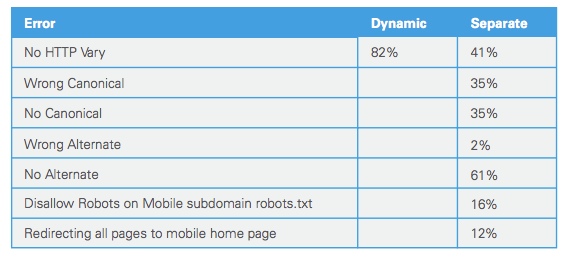
Some of the most common errors can be seen below:
“For separate mobile URLs, there are a handful of common mistakes made in implementation,” the report said. “BrightEdge research showed that no HTTP Vary header was a common mistake amongst two approaches: dynamic serving (82 percent) and separate mobile URLs (41 percent). And among the separate mobile URL approaches, not having an alternate URL tag was the most common error 61 percent of the time.”
These errors are important because they create a poor user experience, which can push traffic away. Even worse, Google has outright said that sites who don’t provide a good mobile experience may not be able to compete in search results overall.
While sites using the various mobile implementation options correctly are ranking fairly evenly, it is obvious that responsive design is still the safest bet. Any option can work, but you are significantly more likely to avoid errors that could cause you problems by simply choosing the least error-prone option: responsive design.
00Taylor Ballhttps://www.tulsamarketingonline.com/wp-content/uploads/2018/07/TMO-Logo.pngTaylor Ball2014-06-25 14:17:512014-06-25 14:17:51If You Don’t Do Mobile Implementation Right, You Are Probably Losing Traffic
For the longest time, online marketing was all about making yourself visible on search engines, with a heavy emphasis on Google. But, social media, smartphones, and the wide array of apps with their own search capabilities are beginning to take a chunk out of search engine traffic and marketers are going to have to expand their focus if they want to continue to be successful.
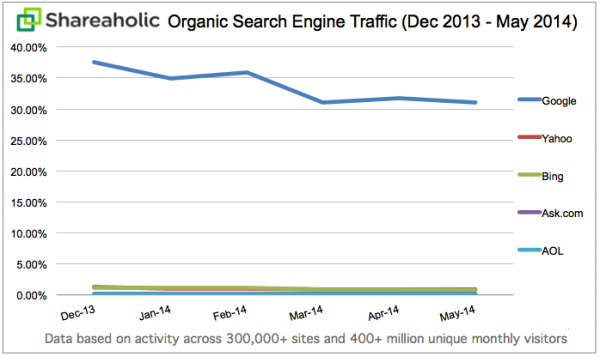
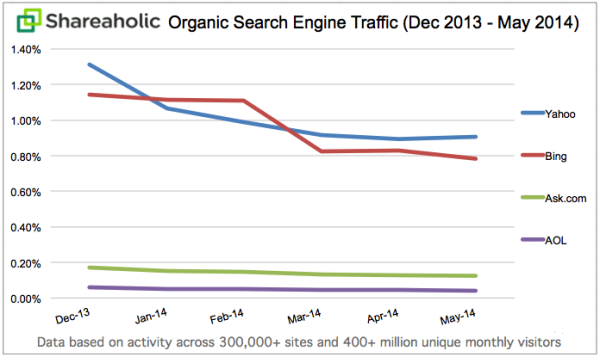
A new report from Shareaholic shows that all of the top five search engines – Google, Bing, Yahoo, Ask.com, and AOL – have all seen a significant decline in search traffic since December of 2013.
The report used data from December 2013 through May 2014 to evaluate aggregate organic search traffic numbers from more than 300,000 publishers reaching an audience of more than 400 million monthly unique visitors. From that data, Shareaholic saw that Google’s search traffic fell 17 percent between last December and May of this year.
Bing, Yahoo, Ask.com, and AOL saw even larger drops in traffic compared to Google, with Bing and Yahoo both experiencing 31 percent declines.
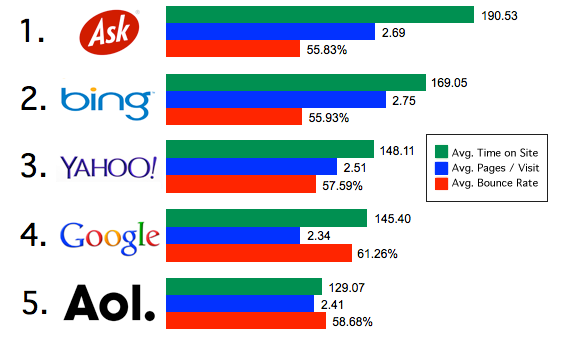
Shareaholic also looked at engagement from each search engine and found that although Google accounts for 17 times more traffic than Bing, Yahoo, Ask.com, and AOL combined, their users are often less engaged. This suggests that while Google may still control the vast majority of search traffic, it’s users may not be as valuable as the other more engaged searchers from across other search engines.
00Taylor Ballhttps://www.tulsamarketingonline.com/wp-content/uploads/2018/07/TMO-Logo.pngTaylor Ball2014-06-24 12:58:482014-06-24 12:58:48All of the Biggest Search Engines Have Seen Significant Drops in Traffic