FBVidVsYouTube

The war between YouTube and Facebook for the most popular online platform for sharing and watching videos is heating up, and Facebook may win a major victory this weekend.

With the Super Bowl upon us, everyone is gearing up for one of the greatest competitions of the year – the fight for the most watched Super Bowl ad. But, more Super Bowl ads and teaser videos are being shared online ahead of the big game, and TV ad analytics company iSpot.tv says may be the new place for watching the biggest ads of the year online.

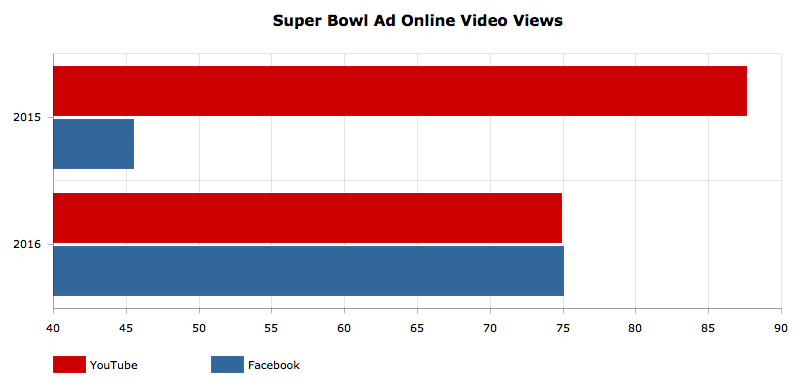
It is a close fight, with Facebook barely pulling ahead of YouTube, but it is a big win for the company either way. YouTube dominated online Super Bowl ads last year, but Facebook has pushed their video platform heavily over the year and seen massive increases in both views and shares.
Source: Marketing Land

Source: Marketing Land

According to iSpot.tv’s data counting video views through Tuesday, February 2, approximately 75 million super bowl ads videos have been viewed on Facebook, compared to 74.9 million on YouTube. As the published report on Marketing Land shows, the numbers are neck-and-neck. But, it is a huge change from last year where YouTube received 87.6 million to Facebook’s 45.5 million.

In most cases, an argument can be made to explain the discrepancy. Facebook counts video views when a user watches for just three seconds, but YouTube doesn’t count until “around” 30 seconds in. However, iSpot.tv says it uses a three-second standard for counting views on both platforms.
VDaySearch.png

Valentine’s Day is almost upon us, and that means searches related to the holiday are already starting to spike. Thankfully, you still have time to get campaigns running before Valentine’s Day searches peak.

Bing recently released data giving insight to key trends for Valentine’s Day-related searches (including gifts, candy, flowers, restaurants and jewelry), as well as ad performance to help inform your marketing efforts this year.

bing-ads-valentines-day-searches

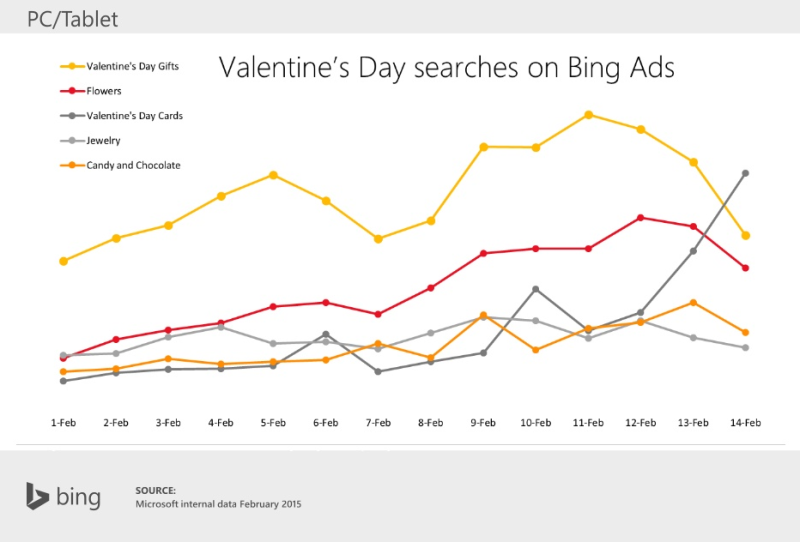
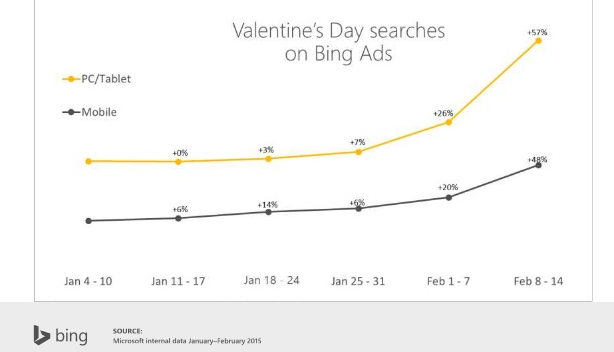
According to the data, this week is likely already seeing an increase in searches compared to last week, but next week will be the height of Valentine’s Day fever. Desktop saw an especially notable spike in the final week before the big day, jumping 77 percent. In comparison, mobile searches rose by 71 percent.

In total, mobile made up 32 percent of Valentine’s Day-related searches and 17 percent of clicks across Bing last year.

The best day for Valentine’s Day-related searches was February 11 last year, but candy and chocolate searches didn’t reach their height until February 13.

bing-ads-valentines-day-searches-category-by-day-800x542

While many get an early start on larger purchases like jewelry, it isn’t a surprise that Valentine’s Day card shopping is often done last-minute. From February 12 through Valentine’s Day, cards sales skyrocketed, showing the need to customize your budget and bidding strategies depending on what products and services you provide.

Click-through rates saw their highest point overall between the February 10 and 14, averaging 4.9 percent. On desktop, CTR reached its peak in the afternoon of February 12, while mobile didn’t top out until late on Valentine’s Day.

For more data about Valentine’s Day search and keyword trends, check out Bing’s full presentation on Slideshare.

Google is always changing. Over just the past few years, the way search works has changed radically – moving to a more user-based model and mobile-first mindset.

This shift in attitudes has changed how the world’s most famous search engine works down to its very foundation, with the intent of moving away from a system that started with information and aimed to connect it with its audience. Instead, Google has made it its philosophy to start with the user and aim to provide the best search results for them.

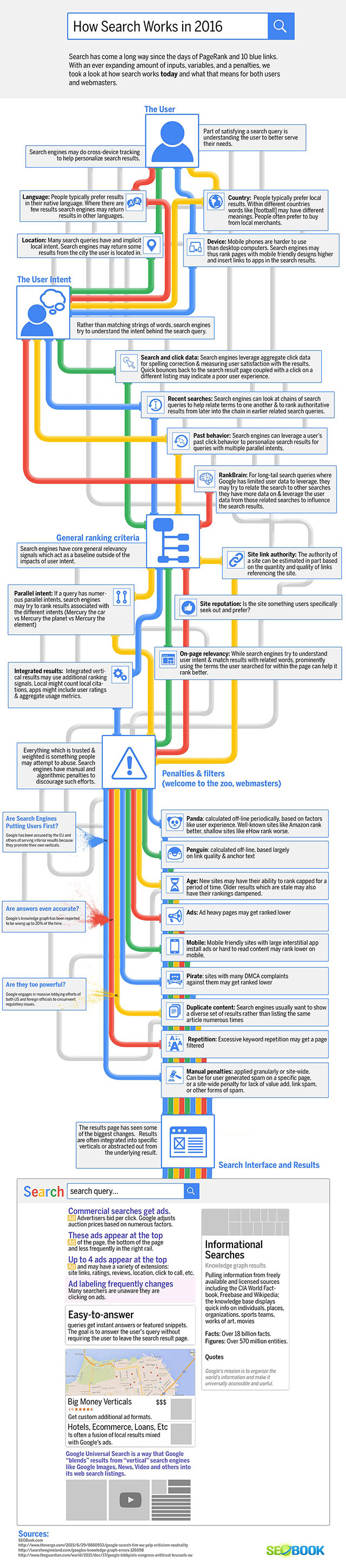
SEOBook recently shared an infographic to visualize how Google’s search engine works in 2016. It shows that in SEO and Google Search, you can’t rely on the same methods from 2013 to keep your business growing online today.

You can see the infographic below. If you can’t see the small text, a larger version is available at SEOBook.

howsearchworks

Apps

Android users will soon be able to install apps to their smartphones directly from Google search results. According to Android Police, Google has begun testing the new feature which will let users bypass the Play Store and directly install an app by performing a Google search.

To try out the feature, open the Google app on any Android phone and search for any app you want to install. Within the Google card, which previously directed users to the Play Store, you will now see an Install button.

If you press the Install button, your phone will ask for the normal permissions that appear with all Play Store app download. If you accept, the app will immediately begin downloading and installing.

The feature hasn’t been rolled out to all Android phones, so there is no guarantee you will be able to directly install the app. Many users are still being directed to the Play Store.

Ryan Whitwam of Android Police speculates the feature is just in testing currently, and will see a wider rollout in the future. He also suggests the feature is likely to be available only in the Google app and not through Chrome.

Twitter Banner

Since the launch of polls on Twitter in October, the feature has been a hit. The company recently announced users have cast over 1.7 billion votes to date, and now Twitter is improving the feature by allowing users to set how long they want their polls to last.

When polls were launched, they came with a default lifespan of 24 hours. While this may work for some, a full day can be a long time to expect people to stay interested in one of your Tweets. Now, users can customize their polls to run for much shorter or longer than previously.

Users can now tweak their polls to run anywhere from just 5 minutes to 7 days, allowing you to get instant results or a more comprehensive response.

The move to bolster polls on Twitter couldn’t come at a better time. The feature has been widely adopted and users seem excited to participate. While the change isn’t likely to completely stop Twitter’s stock price from freefalling, it could help please users who are still disgruntled over a rumored upcoming feature which would allow users to share long-form posts on the platform known for its 140 character limit.

Creating a poll works as it always has. The only difference is users will now see a tiny clock icon near the tweet button, which allows you to quickly establish how long you want a poll to run.

Periscope

Periscope has been gaining popularity as a social live video streaming service, but it has been limited by requiring its own app to join in the fun. Now, the Twitter-owned streaming platform is getting some help by finding a place on one of the largest social platforms available.

Twitter users can now share and promote their Periscope videos directly on their time-line, opening up a huge new audience to the service. Users can embed and view Periscope videos directly in the timeline of Twitter’s iOS app. Just as with the Periscope app, broadcasts can be rewatched for up to 24 hours before automatically vanishing.

Twitter has been struggling to expand their market, as the recent 10,000 character tweet controversy and plummeting stock price shows. The company is most likely hoping this move will help both platforms expand their utility and user base, though only time will tell if that is the case.

The new feature is currently only available through the iOS Twitter app, but Android and web versions are expected in the near future.

bottraffic-incapsula-050115

The bad news is half or more of your website traffic likely comes from bots. The good news is that is actually a huge improvement from in the past.

A new report from Imperva Incapsula shows that approximately 48.5% of all traffic to websites comes from bots, not actual online users. That number comes from a review of over 19 billion visits to 35,000 Incapsula client websites around the world with a minimum daily traffic count of at least 10 human visitors gathered over a 90 day period in 2015.

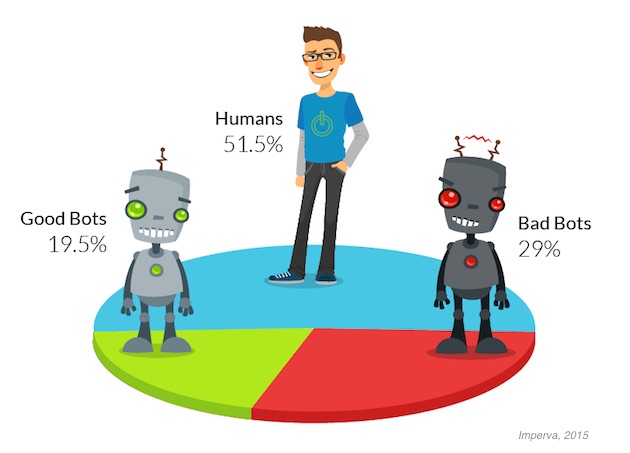
According to the data, 51.5% of all Web traffic comes from human users, while 29% come from “bad bots” which automate spam or other malicious activity, and 19.5% came from “good bots” which are used by search engines and other online services.

share-incapsula-050115

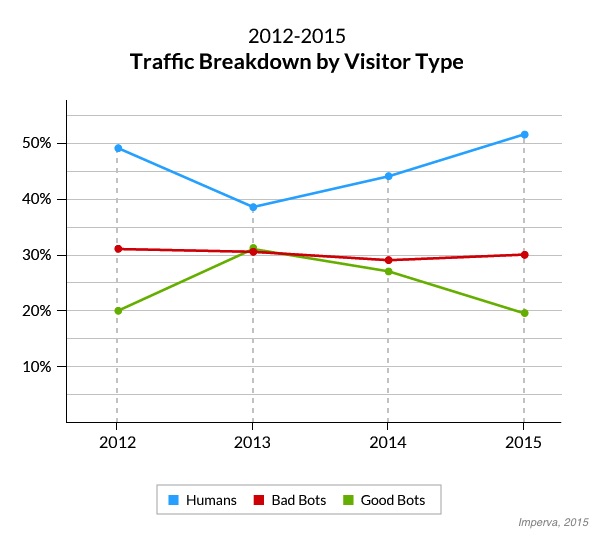
While this sounds bad, the share of human traffic is actually rising compared to past year. The report explains:

In a similar 2013 study conducted by Imperva, humans made up only 31.5% of all visits to sites, compared with 51.5% in 2015. This shift is mainly due to an increase in human traffic as more people use the Web and a decrease in good bot traffic.

size-incapsula-050115

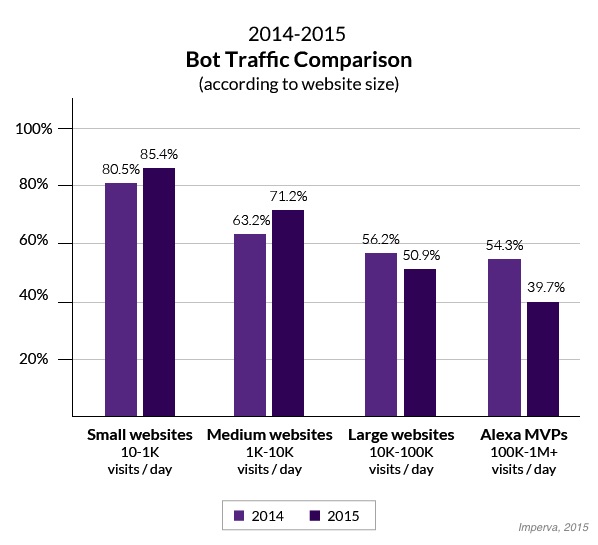
The ratio of bots-to-humans your website receives is likely influenced by how popular your site is, as the most popular sites examined showed the smallest ratio of bot traffic (39.7%). In comparison, the least popular sites included in the traffic had the highest share of bot traffic (85.4%).

No matter what percentage of your traffic comes to bots, the best solution is to continue emphasizing marketing that directly connects with real humans such as social media marketing and PPC.

Source: Shawn Campbell

Source: Shawn Campbell

Rumor has it that Twitter will be extending the character limit of Tweets from 140 characters to upwards of 10,000 characters. The news comes from a report in Recode, which cites multiple sources claiming the longer tweets should be expected by the end of the quarter, but public reaction is mixed at best.

Descriptions of the new feature say the longer tweets wouldn’t clutter up feeds. Instead, up to 140 characters of any tweet will appear in user’s timelines, but a new call to action would allow users to read more.

The sources also say the company is already planning for how users might attempt to spam timelines so they might be able to combat it. For example, there may be limits to the number of other users that can be mentioned in tweets.

Unfortunately for the company, response to the rumor has already been overwhelmingly negative. Many say the 140 character limit has been the defining feature of Twitter and without it there is little to distinguish the platform.

The hashtag #Twitter10k has already taken off as users both mock and lament the rumor. Here is just a sampling of what users are saying:

Given the reaction to the rumor, it is hard to predict whether Twitter will follow through or go back to the drawing board for the next big feature. The best indication will be if we start seeing tests for different character lengths in tweets in the coming month.

BingLogo

As of January 1st, Bing is officially powering AOL’s search results as the result of a long-term deal made by the two companies in June of last year. Rick van der Kooi, Corporate VP of Microsoft Search Advertising announced the change, saying:

“Today, I am excited to share that as of Jan. 1, Bing powers AOL’s web, mobile, and tablet search, providing paid search ads and algorithmic organic search results to AOL’s properties worldwide.”

Van der Kooi also shared some interesting bits of information to help illustrate the scale of the partnership, including:

  • 1 in 5 searches happen on Bing.com
  • Bing also powers search results for the third largest search provider in the US (Yahoo)
  • With Bing now powering AOL searches, the engine now powers close to one-third of all US PC web searches.

The company looks to gain even more ground by acquiring the built-in audience from AOL, which is responsible for generating billions of search queries a year.

Unlike Bing’s deal with Yahoo, Bing’s will be powering 100% of AOL’s search results across all devices. In the Yahoo agreement, only 51% of Yahoo’s desktop search results are powered by Bing, with no support for mobile.

With 2016 looming, it can be tempting to kick back and celebrate the New Year and successful holiday season. But, as any seasoned marketer can tell you, there is never any time for rest in the world of SEO.

The past year has seen huge changes in the world of SEO, with a newly emboldened emphasis on mobile optimization and responsive design, the change to 3-pack results in local search, and the expected new algorithms running over at Google.

With that in mind, it’s time to start looking forward and preparing for a booming 2016 by predicting the biggest trends likely to define the coming year. CJG Digital Marketing is doing just that with a new infographic detailing the hottest SEO trends in 2016.

See the infographic below, or at CJG’s website.

Hottest-SEO-Trends-in-2016