
The recently announced Google Panda algorithm update raised eyebrows for several reasons. Of course, any Google algorithm news is worthy of attention, but this specific update was unique in several ways that had SEOs and webmasters wondering what the deal was. Finally, Google has given some insight into why Panda 4.2 is so different from past algorithm updates.

There’s still not much information about why there was such a long lull between algorithm updates – over 10 months – but, Google’s John Mueller did recently provide some answers as to why the algorithm update is rolling out significantly slower than normal.

In a Google Hangout session between Mueller and webmasters, John explained the rollout is taking several months instead of the usual few days or weeks due to “technical reasons.” He also explicitly said the long rollout isn’t specifically intend to “confuse people” as some have suggested.

Both the SEM Post and Search Engine Roundtable transcribed Mueller’s comments on Panda:

This [Panda rollout] is actually pretty much a similar update to before. For technical reasons we are rolling it out a bit slower. It is not that we are trying to confuse people with this. It is really just for technical reasons.

So, it is not that we are crawling slowly. We are crawling and indexing normal, and we are using that content as well to recognize higher quality and lower quality sites. But we are rolling out this information in a little bit more slower way. Mostly for technical reasons.

It is not like we are making this process slower by design, it is really an internal issue on our side.

Webmasters have expressed frustration with the long rollout because it is taking much longer than normal to see results from the algorithm, and Mueller’s comments only provide a small window into how the algorithm is functioning.

Here is the video, from the start of the conversation:

Mobile search has gotten a lot of attention this year as it has overtaken desktop search in many metrics, but a new report from mobile loyalty company SessionM shows how ubiquitous the use of mobile devices to aid in the shopping experience has become.

SessionM surveyed 12,000 randomly selected US smartphone users on their mobile shopping behaviors and the findings highlight just how large a role mobile devices play in the shopping process.

The company said 85 percent of respondents reported their m-commerce buying was steady or had increased compared to a year ago while approximately 15 percent told the company mobile buying had increased “significantly.

Personal data security and/or poor user experiences (e.g., too small images or text) were cited as barriers preventing mobile e-commerce from more growth.

According to the findings, more than 90 percent of respondents had made a retail purchase within the past 90 days before the study. The majority (73 percent) of those purchases were made in traditional, brick-and-mortar stores, and approximately 53 percent said they found the in-store experience superior to online/mobile shopping.

However, the study also found mobile search plays a vital role in the in-store shopping process. The overwhelming majority of respondents (90 percent) said they use their smartphones in stores while shopping. The top activities on smartphones while in-stores breaks down as follows:

  1. Price comparisons — 54 percent
  2. Looking up product information — 48 percent
  3. Checking reviews online — 42 percent

SessionM also had recommendations for valuable marketing opportunities for retailers from the data:

  • Opportunity surrounding in-store push notifications about deals/offers (57 percent were more likely to shop at a store if available)
  • Loyalty programs (76 percent would be more likely to shop at a store if available)

The data confirms what several other studies have found in the past. Shoppers are using their smartphones in stores to help them make informed purchases, but many retailers are failing to take advantage of any of the opportunities this presents.

 GoogleSearchConsole

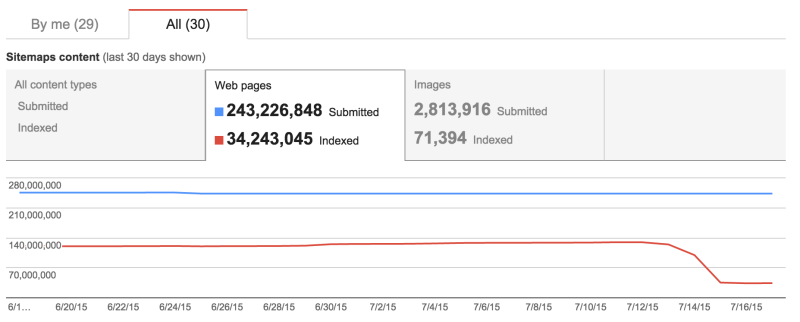
A Google Sitemaps bug is causing many webmasters to see significant indexed page count falls within Google Search Console, but a fix should be on the way according to Google.

Google Search Console, known as Webmaster Tools until recently, is experiencing an issue causing confusion and concern among webmasters and marketers as huge declines are appearing in the indexed pages shown in the Google Sitemaps report.

Barry Schwartz is one expert who has seen hundreds of thousands of pages being suddenly displayed as no longer indexed by Google, and shared an example of how the problem can look on a report:

index_error-800x322

Google is already aware of the issue and is hard at work to resolve it. Google’s Gary Illyes responded to Schwartz on Twitter saying “it’s confirmed and we’re working on it.”

If you’ve encountered similar drops in indexed page counts on your reports from July 14, there’s no cause for alarm. The glitch will be fixed soon and won’t affect your traffic or rankings through the search engine in the meantime.

 newsfeed_preferences_home

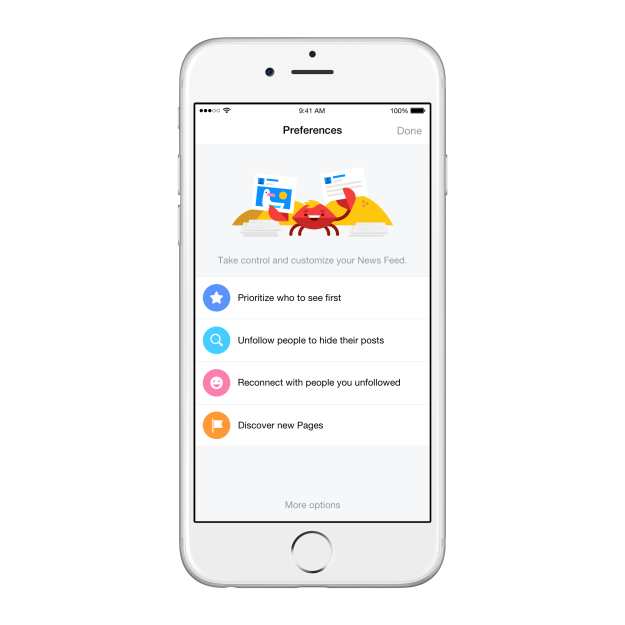
Facebook is giving users the ability to choose what they see in their News Feeds, after years of relying almost entirely on its special algorithm to choose what to show its 1.44 billion users.

Of course, Facebook won’t be doing away with its algorithm anytime soon, but it is giving more power to the users to customize what they see in their feed. Essentially the update is a redesign and expansion of the News Feed Preferences feature available since last November, but it also includes some big changes for how you use the biggest social platform on the planet.

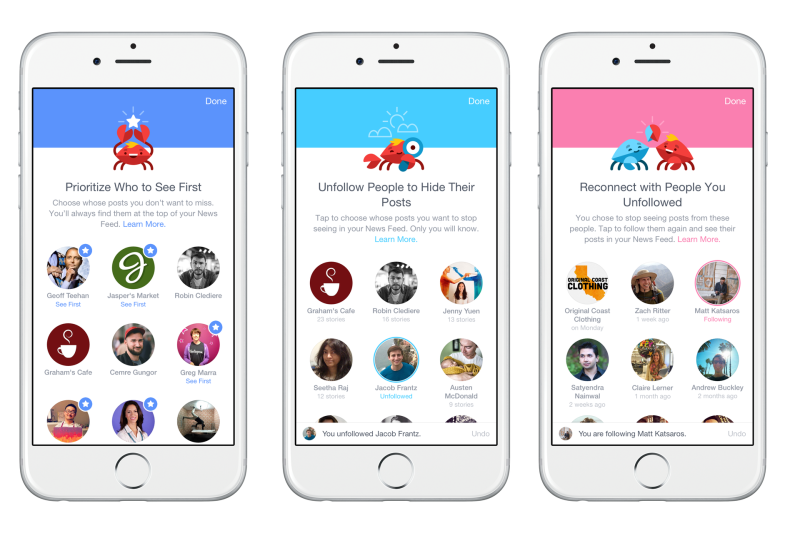
You can now prioritize the friends and Pages you want to see first, and posts from these profiles will appear at the top of your feed with a star to signify its importance in the upper-right corner.

The new feature also includes a feature which shows the Pages and friends which have been popping up most often in people’s News Feeds over the past week, so you can easily unfollow overposters or other people you’d rather not see. This also has a page which shows recently unfollowed users if you decide to reverse your decision.

facebook-seefirst-800x533

Similar to SnapChat, the update has a new discover section which displays Pages Facebook thinks you might be interested based on your other likes.

The new features are already available on iOS, and will be available on Android and desktop in the next few weeks.

fifa-womens-world-cup-2015-winner-us-800x320

Today Google is celebrating the United States’ Women’s World Cup win with a Doodle on the homepage of the search engine. The logo appeared last night after the United States team defeated Japan in the final game 5-to-2.

Google received some criticism during the tournament for not devoting space for a special box on search results pages related to the tournament like they have done for all major sports championships. Unlike in the past, only searchers using Android devices saw a special box with scores and game times during the championship.

After last night’s win, however, Google immediately put the team front and center on the search engine with a special Doodle.

Midfielder Carli Lloyd was the breakout star of the championship game, scoring three of the team’s five goals. Her third goal was a stunning kick from just past midfield over the Japanese goalie, giving Lloyd the second hat trick of her career and the earliest hat trick in a Women’s World Cup game in history. Her performance won Lloyd FIFA’s Golden Ball for the most outstanding player in the tournament.

The logo celebrating America’s win is currently showing across the United States, but Google’s Japan homepage also features a slightly modified version of the logo with the prominent U.S. flag removed.

fifa-women-world-cup-winner-Japan-800x320

The U.S. is the first team to win three World Cup titles, with previous wins in 1991 and 1999.

facebook-video

In the wake of Facebook’s successful video service, the social media giant is making two big changes for advertisers and users. Facebook announced it will be adjusting its new feed algorithm to reflect interactions with videos, as well as changing how it charges advertisers for video views.

The update will be rolling out over the next coming weeks.

While Facebook has already included likes, comments, and shares on videos, the new algorithm will also consider factors such as whether a video was unmuted or viewed in full screen.

Facebook said it believes the new factors are strong indicators that users specifically chose to see a video, and it will use the factors in ranking videos within users’ news feeds in the future. This also means that those who watch a large number of videos on Facebook will likely start seeing even more in the close future and those who do not tend to engage with videos should see fewer in their feed.

While the first change relates to videos shared organically on Facebook, the social media platform is also making changes that will affect promoted videos.

Starting today, Facebook says it will charge advertisers only if a video is watched for 10 seconds or longer. In the past, Facebook charged advertisers based on video impressions, which meant advertisers were charged the second the video started played.

Advertisers who prefer to be charged based on impressions can do so if they wish, but the new system provides a better guarantee users purposefully watched the ad you were charged for. The new option is like the result of many advertisers’ complaints that they were being charged for video views only because they started autoplaying as users scrolled past them.

 Google-My-Business-Logo

As schools close and the temperatures soar across the country, it isn’t unusual for businesses to change their hours for the summer. It is especially common in tourist areas where shops often stay open longer to accommodate the longer days and increased store traffic.

If your business has special summer hours, now is the time to guarantee your business listing on Google shows your adjusted seasonal hours.

Today, Google launched a new initiative at gybo.com/summer to help businesses quickly check how their Google My Business listing is displaying, including whether they are currently open or closed.

Google says a recent survey of small businesses found 25% change their operating hours during summer, but only 1 percent of the businesses also adjusted their hours on Google My Business.

Considering recent studies have shown over half of all consumers use search to look for business hours, and even higher numbers use search to plan local purchases, having the wrong hours listed can be quite a big problem.

If you have special summer hours but haven’t updated your listing yet, be sure to update the listing in Google My Business. Be sure to set a reminder while you are at is so you remember to change the hours back again when fall arrives.

If you’re a business owner who has decided to get serious about your company’s online presence and marketing, you’ve almost certainly heard about search engine optimization. Unfortunately to the uninitiated, SEO can seem impenetrable with its endless technical jargon and conflicting opinions from experts about exactly how to get the best online visibility. It can feel a lot like jumping in the deep end without learning how to swim first.

Search Engine Optimization doesn’t have to seem so intimidating however. There may be a lot to learn before you are an expert, but with just a few basic ideas you can drastically improve your business’s online profile.

This infographic from SEOHalt will help guide you through the basics of SEO and give you the vocabulary you need to really get an understanding of what search engine optimization is and how it affects online marketing efforts. Once you’ve got these ideas under your wing, you’ll be ready to dive into the deeper waters of SEO without having to worry you’ll drown.

 SEOBasics

 Emojis

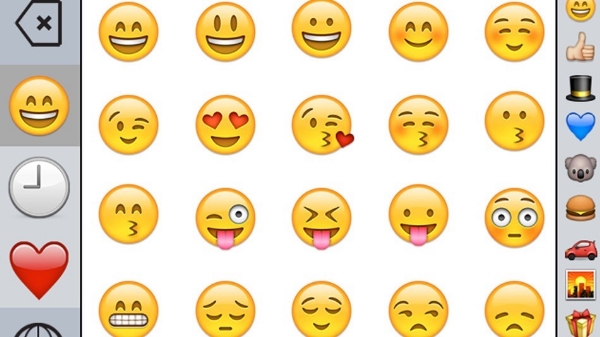
It was fun while it lasted, but Google has followed through on their promise to remove emojis from titles in search results.

In April, Expedia became the first major brand to start experimenting using emojis in search results titles. For example, a search listing for beach rentals may have included a wave emoji on Expedia listings.

It wasn’t long until many other major brands followed suit, but Google ultimately decided the trend was not something they wanted to promote. During a Google Hangout in early May, John Mueller, a webmaster trends analyst for Google, announced the search giant would be removing the emojis.

True to Mueller’s word, emojis disappeared from search results early this morning, as first noticed by Jennifer Slegg at The SEM Post.

Notably, Google has only seemed to remove the emojis from titles. Norwegian Airlines, known for creating the very first emoji URL, appears to be unaffected.

While the hearts, waves, and smiley faces are gone from Google, emojis are still currently appearing in Bing searches. Microsoft’s search engine started showing emojis in title tags shortly after they began appearing in Google, but there’s no word if they intend to follow Google in phasing them out now.

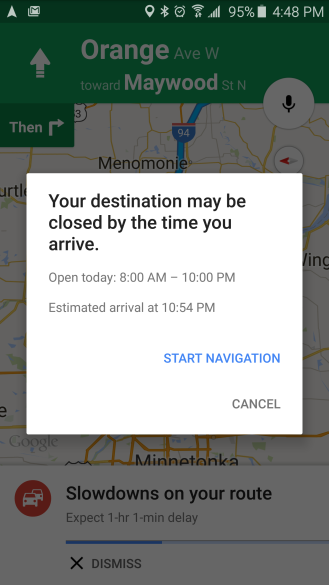
Local business owners have more incentive than ever to make sure their Google listings are correct. As first reported by Android Police, Google Maps has recently added a feature that tells users to turn around and go home if they are using Google Maps to navigate to a specific place if that location will be closed by the time they are expected to arrive.

The warning reads simply, “your destination may be closed by the time you arrive.”

If you keep up with making sure your local listings are always up-to-date and accurate, this shouldn’t be much of a worry to you, however if your business has incorrect hours listed the new feature could wreak havoc on your store traffic.

With the new feature, having the wrong time listed is almost like forgetting to turn the sign from closed to open at the start of the day.

Here is an example of the new warning:

google-maps-closed-place-warning-1434543952