Tag Archive for: Twitter marketing

Twitter is following Facebook and Instagram’s lead by prioritizing live streams in users’ feeds. The social network announced it would begin bumping live streams to the top of users’ timelines while the streams are active.

This means anytime someone you are following begins streaming, you will be able to see it automatically at the top of your feed.

As Twitter said in the announcement:

“We’re making it easier to find and watch live broadcasts. Now, when accounts you follow go live, the stream will appear right at the top of your timeline.

Catch breaking news, your favorite personalities, and can’t-miss sports moments. Rolling out now on iOS and Android.”

The decision to prioritize live streams in people’s feeds isn’t exactly shocking. While streams can be rewatched after the original event is over, being able to interact with streamers during the video is a big driver of engagement for streams. Once the initial stream is over, engagement with the post typically dwindles significantly.

This is why Facebook and Instagram have similarly prioritized live streams on their platforms by sending notifications to users and highlighting active streams in the primary feed.

Although Twitter has yet to clarify, it seems likely the boost applies to both video live streams and the new audio-only streams rolled out for users last week.
Twitter has shut down numerous accounts accused of artificially increasing the popularity of their posts using a method called “tweetdecking.”

Tweetdecking gets its name from the app TweetDeck, which can schedule posts ahead of time. Conspiring accounts were working together to retweet content in order to force it to go viral.

In this case, most of the accounts removed were using the technique to steal content (including memes and jokes) to make accounts more prominent. These accounts would then use their artificial popularity to promote other accounts or products for financial profit.

This practice blatantly violates Twitter’s spam policy. It is also just the latest instance of users and brands gaming the system to increase their online presence.

Since the earliest days of Google, brands and “black hat” users worked together to rig the search engine to ensure high visibility. Usually, this took the form of buying links to artificially appear authoritative to Google’s algorithm. The search engine has since worked to eradicate the practice, but similar tricks like buying “likes” or “retweets” have since sprung up on almost every other popular social platform.

Twitter’s latest bans are the most recent crackdown in a long-running game of whack-a-mole. Still, it provides a harsh reminder that brands who try to manipulate social networks or search engines in bad faith are nearly guaranteed to be eventually penalized or banned entirely.

It is official. After over a year experimenting with various types of longer tweets, Twitter is finally letting everyone tweet with 280-characters at a time.

The double-sized tweets are rolling out as the default length limit for users around the world, except Japan and Korea. The iconic 140-character limit will be phased out, although Twitter suggests the change won’t affect most tweets.

According to the blog post announcing the change, most tweets stayed below the old limit even when they had the opportunity to say more. However, “we saw when people needed to use more than 140 characters, they tweeted more easily and more often.”

Twitter also noted that “historically, 9% of tweets in English hit the character limit.” With the new extended length, that number has dropped to only 1% of tweets.

Of course, some on the platform seem to be outraged by the break in tradition. Most, including celebrities, are celebrating the longer tweets with jokes and pointlessly long tweets for fun.

Since its creation, Twitter has been defined by one simple thing. No, not memes, politics, or the platform’s ability to spread information faster than even the biggest news networks. The hallmark trait of the social media service has always been its 140-character limit.

This week, Twitter announced that could change very soon as the company has begun testing tweets that are twice as long. A small group of randomly chosen users from around the globe have been given the ability to create tweets with up to 280-characters.

As co-founder Jack Dorsey said in a tweet announcing the test:

“This is a small change, but a big move for us. 140 was an arbitrary choice based on the 160 character SMS limit. Proud of how thoughtful the team has been in solving a real problem people have when trying to tweet. And at the same time maintaining our brevity, speed, and essence!”

Of course, this isn’t the first time Twitter has experimented with super-sized tweets. The company made major waves early last year when news broke that Twitter was considering expanding tweets well beyond 140 or even 280-characters. At the time, it was rumored Twitter was considering lengthening tweets up to 10,000 characters, though the idea was eventually discarded.

The big question is whether users will actually come to like the longer tweets and if it encourages more conversation. The early reaction is somewhat hostile from users who say that removing the need for brevity doesn’t actually equate to saying more.

https://twitter.com/brianrbarone/status/912788388150960130

Given that Twitter users are largely protective of the restraints they’ve come to love, the strong reaction isn’t necessarily a surprise and may not be indicative of the long-term response. While many users complain about longer tweets, a number of determined users have found workarounds so that they can get in on the 280-character party even if they weren’t selected for the limited beta test group.

The decision to expand tweets could also remove the need for old Twitter customs where users would share screenshots of longer texts as pictures or share several related tweets as a “tweet chain” or “tweetstorm”.

Ultimately, we will all just have to sit back and wait to see whether the 280-character limit catches on or if it is just another Twitter experiment that will fade into the ether.

Twitter has always been built on the idea that brevity is the soul of wit. But, it can still be hard to fit everything you need to say in just 140 characters, especially if you’re responding to someone with a long username.

Until now, user names were included in YouTube’s character limit. That is no longer the case as of this week. Twitter announced that usernames won’t subtract from your tweet’s 140 character count from now on.

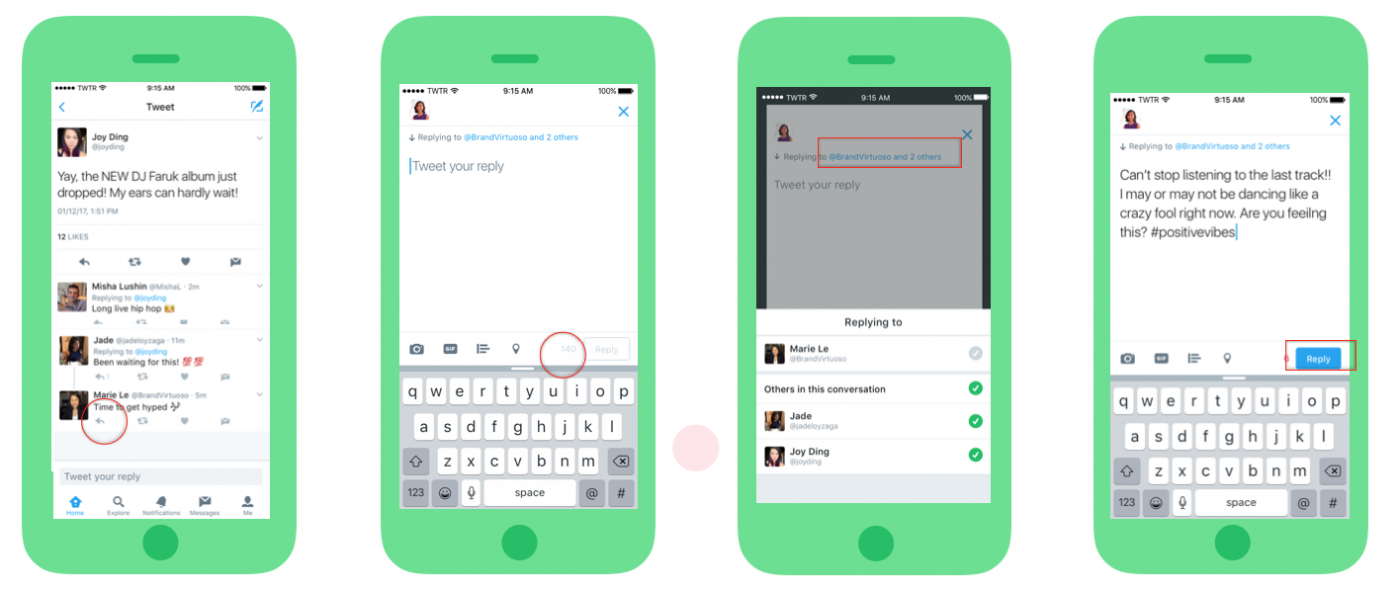
Additionally, the company is changing up how replies appear to make conversations easier to follow with three new features:

  • Who you are replying to will appear above the Tweet text rather than within the Tweet text itself, so you have more characters to have conversations.
  • You can tap on “Replying to…” to easily see and control who’s part of your conversation.
  • When reading a conversation, you’ll actually see what people are saying, rather than seeing lots of @usernames at the start of a Tweet.

“It’s now easier to follow a conversation, so you can focus on what a discussion is about, and who is having it,” Twitter explained in a blog post. “Also, with all 140 characters for your replies, you have more room to participate in group conversations.

repliesupdate

The new changes should be available to all users across PC, iOS, and Android already. According to the company’s testing, Twitter says the new features lead to higher engagement for conversations.

verifiedtwitter

Do you want the most coveted Twitter feature limited to only the biggest names online? You can have it with just a few simple steps.

I’m not talking about a new way to share your tweets, but this one small feature will immediately establish you as an authority across all of Twitter. That’s right, I’m talking about the famous blue checkmark showing that your account is “verified”.

Until recently, Twitter has limited verification checkmarks to specifically selected accounts of well-known actors, athletes, business personalities, artists, and authors. But, as of July, anyone can now apply to receive the lusted after sign of influence by going through Twitter’s verification application process.

It might seem like a small thing, but the checkmark is more than just a blue badge next to your name. It immediately shows that you are an established figure likely tied to a reputable organization. It grants weight to your opinions and encourages other users to follow you as an authority in your field.

If you want to get a fancy blue checkmark of your own and get your site verified, just follow the process detailed in the infographic below from SurePayroll and Ghergich & Co:

verified-twitter-03

BHexIPht

Twitter has introduced a new way for users to get in touch with your brand directly from your website with the Message button, as the company announced in a tweet today.

The button can be embedded on any website and allows anyone with a Twitter account to direct message you with just a single tap.

The button is stylistically what you would expect from Twitter’s other buttons and is very easy to set up. However, you should double-check your settings to make sure you can receive direct messages from everyone, not just your followers.

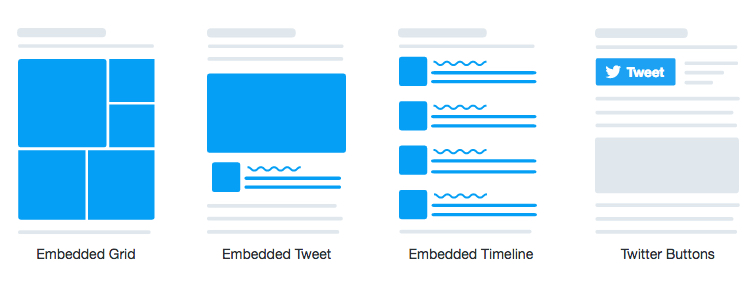
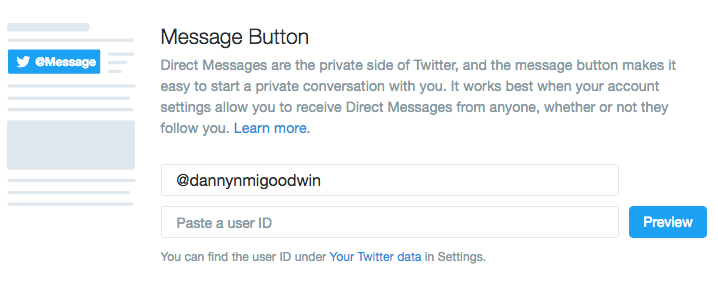
To add the new Message button to your site, just head over to the Twitter Publish page. Scroll down and select the Twitter Buttons option.

Image Source: Danny Goodwin/Search Engine Journal

Image Source: Danny Goodwin/Search Engine Journal

From here, select the Message button option.

Image Source: Danny Goodwin/Search Engine Journal

Image Source: Danny Goodwin/Search Engine Journal

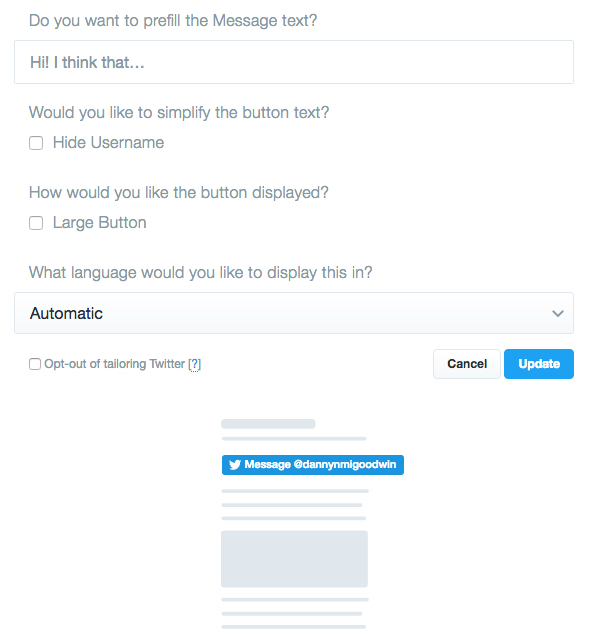
Input your Twitter user name and user ID (found in the “Your Twitter Data” section), and finally click Preview. This generates a code you can paste anywhere you want on your website. You can even customize the button to autofill messages, hide usernames, or select a default language.

twitter-message-button-customize

Image Source: Danny Goodwin/Search Engine Journal

The new button is just one of several ways you can use Twitter to provide customer service, answer questions, and keep people excited about your brand. Add it to your site now to find out what your customers have to say.

Image Source: Pepsi

Image Source: Pepsi

Earlier this year, Twitter rolled out a new feature known as #Stickers that let users add searchable emoji to their photos posted on the social platform. Since then, Twitter says millions of photos containing #Stickers have been tweeted and shared around the world.

Initially, the emoji available for these “virtual hashtags” were limited to the options Twitter created. However, the site is starting to open the door to allow brands to create their own #Stickers as an ad type called Promoted Stickers.

As Twitter says in their announcement:

“Brands can design four or eight stickers — like accessories and other props — for users to add to their own photos. Photos with a brand’s stickers are shared with all of a user’s followers, allowing brands to be featured by their fans in a truly authentic way. #Stickers act as a visual hashtag, meaning that photos with your brand’s sticker will be connected and discoverable to anyone who taps your brand’s sticker. This allows a brand to see and engage with the people who are using their stickers in creative ways.”

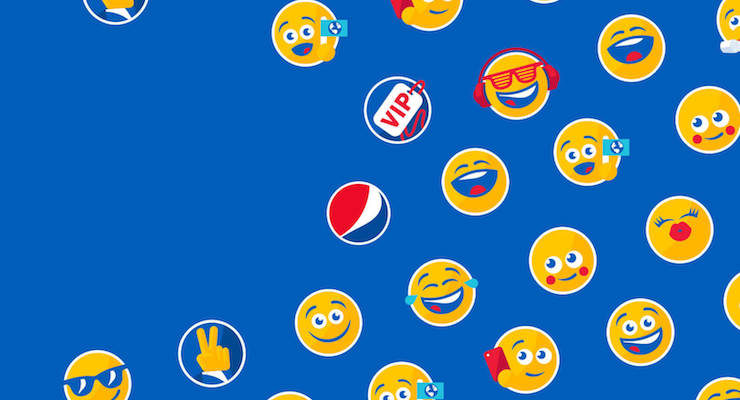
Pepsi is the first brand to use Promoted Stickers, with 50 custom “#PepsiMoji”rolling out to 10 countries, including the USA, Canada, Mexico, Argentina, and Russia. The stickers are part of a larger “Say It With Pepsi” campaign and can be found in the Twitter #Stickers library.

The company has already begun sharing tweets with the stickers, like this one from Pepsi Canada:

Since Twitter is initially keeping the Promoted Stickers limited to a select number of brands and managed accounts, it is unclear how much they cost or what tools may be available to help create new branded stickers. It is also unclear when or if the social platform plans to expand the service to more brands in the near future.

Twitter Banner

Social media is one of the quickest and easiest ways for a customer to reach a business, which is why sites likes Twitter and Facebook are fast becoming de facto customer service platforms. Users expect to be able to reach a business and have their problems solved through social media and it is important for businesses to be available.

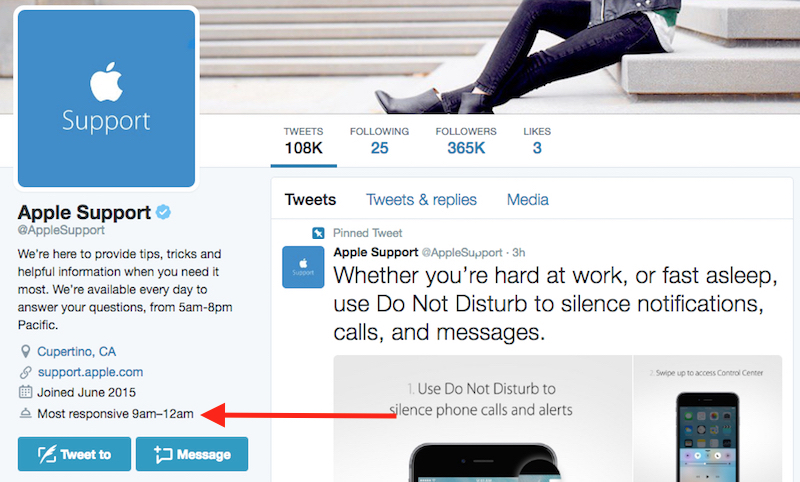
Twitter has recognized its power as a customer service platform and has been testing features to help customer’s take advantage of this. One such feature was released this week which shows users when brands and businesses are most likely to respond on Twitter.

apple-most-responsive-twitter

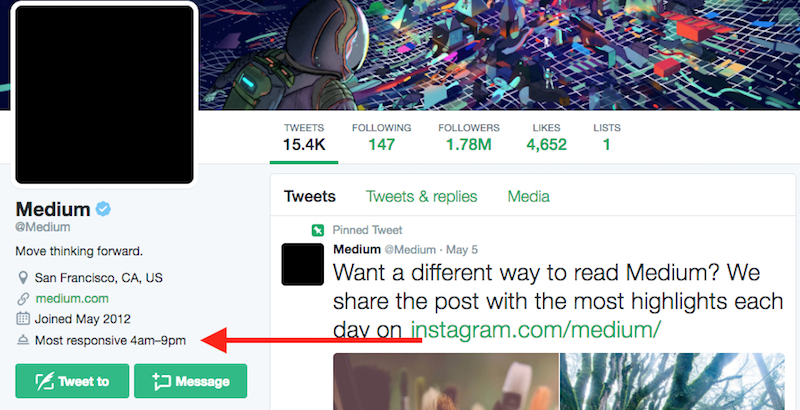
The new “most responsive feature” is starting to pop up on profile pages for pages like Apple Support, but also on brand pages like Medium’s profile on both desktop and mobile.

medium-most-responsive-twitter

Little is known about the feature since it was first spotted this morning. Twitter hasn’t said whether the feature is just a small test or if you can expect to see it spread in the coming weeks and there is no indication of whether businesses have any control over the listing.

Ultimately, the new feature is just a test to keep an eye on. Not only does it provide a potential way to improve customer interactions with brands, but it signals Twitter’s intentions to highlight the customer service potential of their platform. You can likely expect to see similar features and information for brands that offer customer service through Twitter in the future.

Source: Shawn Campbell

Source: Shawn Campbell

When Twitter’s algorithmic timelines started appearing as a test on the social media site, you would have thought they had announced users had to commit a sacrifice before posting. Angry memes were shared, many users threatened to leave the site, and the “end of Twitter” seemed to be on the horizon.

It turns out first impressions don’t always mean anything.

Despite the initial uproar, Twitter’s algorithmic timeline is actually going over well and will soon become the default for all users.

Slate reports Twitter has been gradually rolling out a default algorithmic timeline for users for weeks now, and the reception has been largely positive. According to a Twitter spokesperson quoted in the report, the percentage of users to opt-out of the new timeline has been in the “low single digits.”

This isn’t a case of users being slow to opt-out either. Data shows users are engaging with it more frequently in almost every way compared to the traditional chronologic timeline.  Users with the new timeline are tweeting, replying, retweeting, and favoriting more than ever.

Part of the warm reception may be related to how Twitter is handling the rollout. Instead of pushing out the change to everyone all at once, Twitter is gradually rolling it out and notifying every user individually as their timeline changes.

Users who dislike the new timeline can always opt-out and return to the traditional time-based timeline. All you have to do is go to the settings area and uncheck “Show me the best tweets first.”

While Twitter is changing some things up, another controversial move by the site appears to be on the backburner for now. During an appearance on the Today Show, Twitter CEO Jack Dorsey stressed the site would be retaining its 140 character limit for Tweets.

During press appearances for the 10th anniversary of the platform, Dorsey clarified they would not be doing away with the character limit. He said, “It’s staying… It’s a good constraint for us, and it allows for of-the-moment brevity.”