
It isn’t a reality quite yet, but image reading and object recognition are likely to change the search game in a big way before long. Razvan Gavrilas has spent the past few months researching the advancements Google is making in the fields of “reading” and indexing images and not only does it appear these types of systems and algorithms are closer than previously believed. There are steps you can take to be prepared right now. Find out more in Gavrilas’ article for Search Engine Journal here.
Tag Archive for: Google

Webmasters using “thin” or poor quality content may have seen a drop in traffic this week, as Google has announced that the release of the latest version of its Panda Update.
According to a post on Google+, the “slow rollout” began early this week and will continue into next week before being complete.
While those trying to do the bare minimum to improve rankings may have reason for concern, the new update could also be a relief to many who say they were improperly affected by previous updates as this update is intended to be more precise. As the announcement says:
Based on user (and webmaster!) feedback, we’ve been able to discover a few more signals to help Panda identify low-quality content more precisely. This results in a greater diversity of high-quality small- and medium-sized sites ranking higher, which is nice.
Those who were affected by previous updates may also welcome the latest release, as it means anyone who has made the right changes since the last update finally have a chance to bounce back.
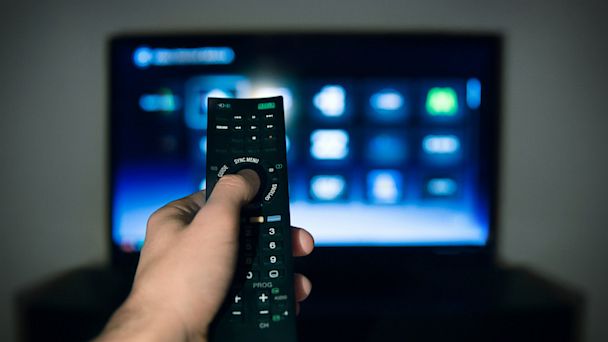
Yesterday morning, Bill Slawski from SEO By The Sea discovered that Google has been granted a patent which suggests they are working on a method to use information about what is showing on television in your area as a ranking signal in search results.
The patents follow Google’s trend of trying to individualize search results based on personal tastes and location, and in some ways it has already been in use within Google Now. However if the method used in the patent is implemented TV schedules could have a much larger impact on your results.
The specific patent is named System and method for enhancing user search results by determining a television program currently being displayed in proximity to an electronic device. It was filed on June 30, 2011.
Here is the abstract for the patent:
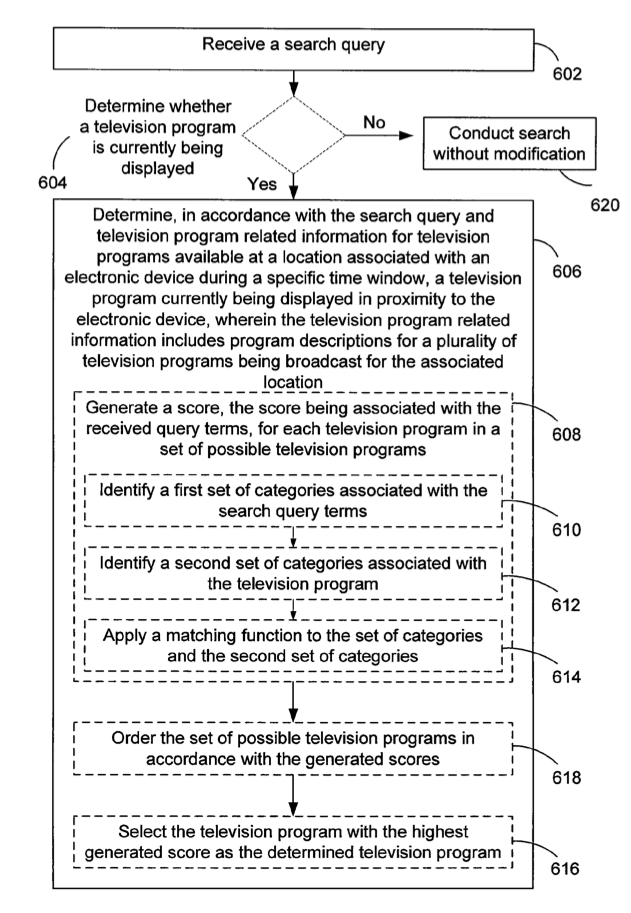
A computer implemented method for using search queries related to television programs. A server receives a user’s search query from an electronic device. The server then determines, in accordance with the search query and television program related information for television programs available at a location associated with the electronic device during a specific time window, a television program currently being displayed in proximity to the electronic device, wherein the television program related information includes program descriptions for a plurality of television programs being broadcast for the associated location.
Basically, the patent would allow Google to make note of what you are watching and instantly include that information within their ranking algorith. Presumably, this would make it easier to search for products shown during commercials or for more information about the show. As explained in the patent:
Someone watching a TV program with a segment about a particular model of Porsche might execute a search query for “Porsche” or “sports cars” instead of the designation of the particular model that was the subject of the segment….
Given that the Porsche model in question is a “911 Turbo,” and that the user executed a search query for “Porsche,” the server can return information about one or more of :
1) the “911 Turbo” model (e.g., a link to information on the Porsche.com website about the “911 Turbo”),
2) information about the TV program that is currently airing with that segment, and
3) suggestions of similar programming that is currently airing or airing in the future and that is available to the user.
In this way, implementations provide enhanced search results to viewers of live TV that are relevant to the content of TV programs that they are watching or are likely to be interested in watching.
The patent also provides a diagram which explains how the patent wold work:
Ultimately, it is up to Google whether you can expect to see this idea included in future search algorithms. As Google has said before, just because they have patented something doesn’t mean they will definitely be using it. But, Search Engine Land also pointed out Google Now is able to do a very similar task.
If you opt in, Google Now is already capable of listening for information about what you’re watching and updates TV cards accordingly.
 Close to a year after introducing ad extensions and formats to the AdWords Ad Rank formula, Google has announced they will be increasing their visibility as it becomes more and more clear that ad extensions improve ad performance almost universally.
Starting October 15, Google says ad extensions may start being displayed instead of the second line of ad text on ads for mobile platforms, and the second line of text may or may not be removed based on the expected response.
Google offered the example of an ad for a florist. Previously, the ad showed the business’ URL with two lines of general information and a link to place orders. After the update, users will see a Google Maps marker that offers to showthe location of the flower shop instead of the second line of copy.
“By eliminating the second line of ad text, we give businesses another point of engagement with customers in their ads — in this case, it’s the additional location extension,” writes Senthil Hariramasamy, product manager at AdWords, in a blog post. “With just a single click on their smartphones, consumers can now directly engage with Flowers Forever in three ways: they can visit the mobile website, place an order, or get directions to visit the store.”
Google predicts the format update will improve ad performance as it provides easier access to information about businesses in a more pronounced way.
Notably, AdWords will offer a means of opting out of this update via a form available on this Help Center article.
 Last week, Google confirmed they would be pulling all authorship information from their search results pages but confusion between Google Authorship and Author Rank has been causing some chaos in the SEO world.
Before you start burning bridges that feed into Author Rank and can legitimately help your site, take the time to check out the explanation on the situation from Danny Sullivan. The explanation helps clear up how authorship can die and Author Rank is still alive and as important to search as ever.

There was a time not too long ago when every SEO professional felt confident proclaiming that Authorship was the future of search, but it appears the predictions couldn’t have been much more incorrect.
When Google was pushing Authorship as a part of their search system, it frequently repeated that authorship information would help users identify more trustworthy sources and improve the quality of results. In the end, it was ultimately little more than a picture and name next to content and was often ignored by users.
This problem was reflected in the confirmation by Google’s John Mueller that authorship information will be entirely stripped out of search results. In the statement, Mueller explains:
“Unfortunately, we’ve also observed that this information isn’t as useful to our users as we’d hoped, and can even distract from those results. With this in mind, we’ve made the difficult decision to stop showing Authorship in search results.”
If we are being honest, the vast majority of Google users probably won’t even notice a difference and site owners shouldn’t be too concerned since Authorship didn’t help increase traffic to pages. But it has received considerable attention from the online marketing community because it seemed like a common sense and simple way to improve listings. In the long run however, it just didn’t work.
Mueller did clarify that Google will continue focusing on Schema.org structured markup, saying: “This markup helps all search engines better understand the content and context of pages on the web, and they’ll continue to use it to show rich snippets in search results.”

Image Courtesy of Quinn Dombrowski
Google has worked for years to ensure speakers of all languages can use and benefit from their search engine. But with the increasing use of conversational and voice search, another issue has risen.
Millions of people around the world are at least partially multilingual, including up to 20 percent of the U.S. population. Starting today, Google can now understand those languages at the same time.
As announced in a blog post from today, multilingual people can change their settings one time and then speak in any of up to five of Google’s 50 understood languages and be understood. Before, users could only use a single language at a time, but now they can switch between languages as they are most comfortable.
Now, you can just make a small, one-time change to your settings, and then you can switch back and forth easily. Google will automatically detect which language you’re using. (For now, you need to stick to one language per sentence though.) You can select up to five languages total—enough to satisfy all but the most advanced polyglots. Whether you get a spoken response from Google depends on the language you use and your query (and you’ll see more languages and features added over time).
While this is beneficial for many Americans, this could be seen as downright revolutionary for many areas of the world where children and immigrants speak the native language and an adoped dominant language interchangeably.
 Last week, many webmasters and SEO’s received a scare in the form of extortion emails from a supposed SEO threatening to plague a site with negative SEO if they do not pay a ransom of$1,500.
It seems the emails concerned even the most prominent members of the SEO community such as Dan Petrovic and Steve Webb. Even more interesting, despite assurances from Google that they would investigate the threats, a fair portion of the community appears to be at least moderately troubled by the threats. This gives an indication of just how easy people perceive negative SEO to be.
The email cuts straight to the point opening with, “This is an extortion email.” It then goes on to explain exactly how the individual(s) will enact specific tactics which can hurt a site’s performance in Google and potentially cause a site to be deindexed by the search engine.
The full text of the emails is as follows:
Hello,
Read this email very carefully.
This is an extortion email.
We will do NEGATIVE SEO to your website by giving it 20,000 XRumer forum profile backlinks (permanent & mostly dofollow) pointing directly to your website and hence your website will get penalised & knocked off the Google’s Search Engine Result Pages (SERP) forever, if you do not pay us $1,500.00 (payable by Western Union).
This is no false claim or a hoax, download the following Notepad file containing 20,000 XRumer forum profile backlinks pointing to http://www.negativeseo.cn.pn/ (this is our website and go and see on this website, you will find our email address [email protected] from which this email right now is being sent to you) :
http://www.mediafire.com/download/eizjwnpq2rsrncu/20000-XRumer-Forum-Profile-Backlinks-Dofollow.txt
Just reply to this email to let us know if you will pay just $1,500.00 or not for us to refrain or not from ruining your precious website & business permanently. Also if you ignore this email and do not reply to this email within the next 24-48 hours, then we will go ahead and build 20,000 XRumer forum profile backlinks pointing directly to your website.
We are awaiting your wise decision.
RS
Thankfully, it appears the entire situation has been nothing more than empty threats. Despite several credible SEO figures reporting the extortion emails, no one has reported paying the extortion amount and there are no signs that negative SEO is being put into action against these sites.
 In the past, several Google employees have suggested they would like to see site security included as a ranking factor within their search engine. Now, Google has followed through and announced that going HTTPS, or adding a SSL 2048-bit key certificate on your site, can potentially give you a small ranking boost.
Don’t expect to propel yourself to the top of the search results by adding HTTPS, as Google refers to it as “a very lightweight signal” within the larger scheme of things and only affects “fewer than 1% of global queries.” However, it was also implied that the new ranking signal may get beefed up in the future in an attempt to encourage all site owners to increase the security on their sites.
The change should come as little surprise to anyone who heard Matt Cutts, Google’s head of search spam, publicly endorse the idea of making SSL a ranking factor just a few months ago.
Unlike many ranking changes that Google makes, the risk of drawbacks is small. Google has been saying that switching to HTTPS should not have an effect on SEO for years, so long as you take a few steps to guarantee your traffic stays steady. Mostly, such steps relate to communicating to Google so it understands how to read your site.
Google has also said they will be releasing for information and resources for webmasters deciding to adopt HTTPS, but for now all they offer are these tips:
- Decide the kind of certificate you need: single, multi-domain, or wildcard certificate
- Use 2048-bit key certificates
- Use relative URLs for resources that reside on the same secure domain
- Use protocol relative URLs for all other domains
- Check out our site move article for more guidelines on how to change your website’s address
- Don’t block your HTTPS site from crawling using robots.txt
- Allow indexing of your pages by search engines where possible. Avoid the noindex robots meta tag.
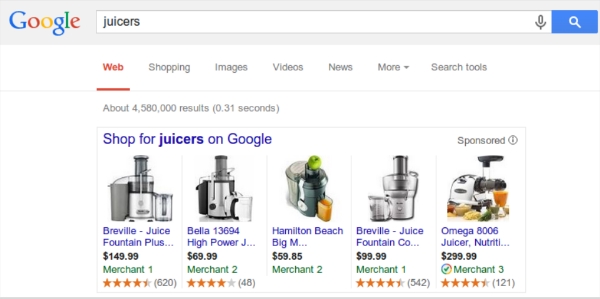
Google has been working hard to expand their reviews and ratings systems, and yesterday they made a big step by announcing that they will be introducing product ratings for Product Listing Ads (PLAs).
The announcement, which appeared on the Inside Adwords Blog, stated:
Product reviews provide critical information to shoppers making purchase decisions. To help shoppers easily find this information when searching for products, we’re introducing product ratings on Product Listing Ads.
Shoppers browsing on Google will see the typical product listings they have become accustomed to, but beneath the listings product ratings will also be shown in the shape of stars and review counts. For now it appears the changes will only be seen on search results within the United States.
The data used for these review listings will be gathered from multiple sources, such as merchants, third party aggregators, and editorial sites.
If reviews for businesses are any indication of what this change will bring, it seems very likely that businesses offering products with largely positive reviews will be able to leverage the updated listings to not only increase their click-through rates, but to also increase conversions overall.
From Our Blog
 Gen Z May Be Pulling Away From Using TikTok Over Google SearchFebruary 27, 2026 - 4:43 am
- Google Experts Share The Two Most Common Crawling IssuesFebruary 10, 2026 - 10:37 pm