If there is one way to concisely explain the changes Google’s search algorithms have gone through in the past couple years, it would boil down to “bigger is not always better.” Gone are the days that you can jam as many keywords as you could fit into a paragraph of text, or buy up countless thousands of links and hope to rank highly.

However, the more you do to offer quality content and information to your users while staying in line with Google’s practices, the more success you’ll see.

Those two ideas are fairly common knowledge now, but they have created their own fair share of questions. Where should the balance between quantity and quality lie? How is this content evaluated? Does quantity of content outweigh quality of content?

Google has given some insight into how content is evaluated in the past, and it is clear that you won’t get far with an excessive amount of paper-thin content. Still, the number of indexed pages your site has does indeed have an effect on your ranking. So how exactly does this work and what is the balance?

Matt Cutts, Google’s head of Webspam, addressed this type of issue head-on in his most recent Webmaster Chat video. He was asked, “Does a website get a better overall ranking if it has a large amount of indexed pages?”

Cutts explained that having more indexed pages isn’t a magic ticket to higher rankings. He said, “I wouldn’t assume that just because you have a large number of indexed pages that you automatically get a high-ranking. That’s not the case.”

However, having more indexed pages does have some clear benefits. The more pages you have, the more opportunities you have to rank for different keywords. But, this is only because you should be covering a larger variety of keywords and topics across that larger group of pages.

A larger number of indexed pages is also likely to improve your overall links and PageRank, which can affect your ranking. But, the link isn’t direct. Simply having more pages won’t improve much for you. Instead, you have to use those extra pages to deliver valuable content and information to your users. If you’re just filling your site with a meaningless wealth of pages to be indexed, you won’t be seeing any improvement anytime soon.

Just as with search, when we talk about PPC advertising, we almost naturally shift the majority of our attention to Google and their AdWords advertising platform. It makes sense on the surface, Google receives a significantly higher volume of search than other engines and even higher CTRs. But, some marketing analysts are beginning to believe it may be more effective to put an emphasis on Bing ads, especially if you are advertising for a small business.

Pricing Engine, a small business marketing platform, has found that Bing ads are “more efficient” than AdWords, as they become a lower cost source of leads for small businesses.

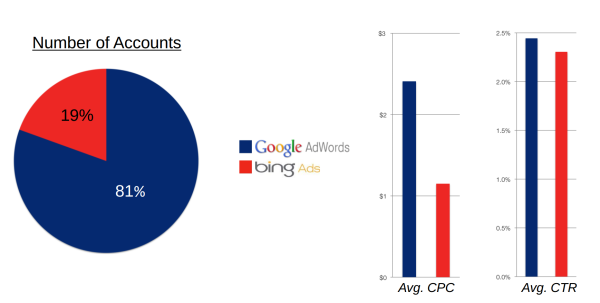
As Search Engine Land reported, Pricing Engine examined their own data from hundreds of accounts, and they found that CTRs were indeed marginally higher on Google, but CPCs were significantly higher. As such, it seems that you actually get more for your dollar with Bing ads.

Big brands will still favor the higher volume of searches on Google, but smaller businesses don’t require the same kind of scale. Investing in marketing with a better return per cost may pay off in the long run.

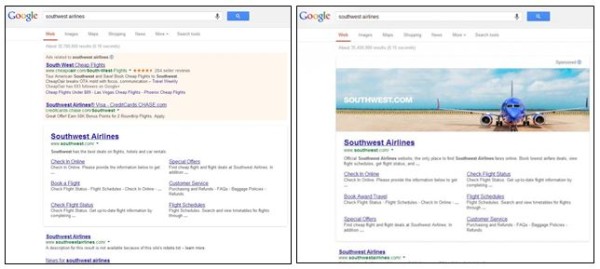
Last week some people began noticing that large banner ads were appearing on Google for a select few branded search results. This test of huge banner ads has caused quite a bit of a stir across the internet, especially because it seems to break a promise Google made all the way back in 2005.

When Google partnered with AOL eight years ago, Marissa Mayer, then Google VP of search products and user experience, issued a promise that users would never see banner ads on their results. She said:

“There will be no banner ads on the Google homepage or web search result pages. There will not be crazy, flashy, graphical doodads flying and popping all over the Google site. Ever.”

One could argue that some of the Google Doodle homepage logos commemorating special events would qualify as “crazy, flashy, graphical doodads”, those have never caused any worry because they are simply a flourish added to the homepage logo. However, it is indisputable that the new ad tests Google is running breaks their “no banner ads” promise outright. But, is it a bad thing?

The most notable aspect of the banner ads is that they only appear for branded searches. That means, if you search for Crate & Barrel, you might be shown the banner for Crate & Barrel. You won’t, however, be seeing any ads for random companies unrelated to your search, as you would normally associate with the term ‘banner ad’.

These ads are also linked to the brand’s website, providing users with an obvious, visually pleasing way to immediately find the business they are looking for. With careful moderation of banners, they could potentially allow businesses to essentially own their branded searches.

One of the biggest concerns for consumers regarding these ads is how they are used. Few users will be upset for the easily identifiable link with an aesthetically pleasing image showing when they search for a specific brand. However, if this test expands and advertisers are ever allowed to use these banners to advertise sales or other more advertising-styled banners, there may be a backlash.

Currently, it is estimated that 30 advertisers are currently being involved in the test, including Southwest Airlines, Virgin America, and Crate & Barrel. The test banner ads are also only being shown for 5 percent or less of search queries, so it is entirely possible you won’t run into one for quite a while.

Search Engine Land has created a FAQ for advertisers curious how this might affect the future of Google marketing, and Google released a statement on Friday, which read:

“We’re currently running a very limited, US-only test, in which advertisers can include an image as part of the search ads that show in response to certain branded queries. Advertisers have long been able to add informative visual elements to their search ads, with features like Media Ads, Product Listing Ads and Image Extensions.”

You might not have noticed, but AdWords is working a little different since an algorithm update was quietly introduced on Tuesday. For the most part, not much is different, but there is a notable change in the ad extensions are now working as a factor in determining as positioning.

The update was announced in a blog which details all of the parts of the update. But, the big takeaway is that AdWords was updated mainly to take into account the new features that have rolled out over the past year.

Ad extensions now have an affect of how ads are positioned in Google’s search results. To show how this is working, Google gave the example of two identical ads with the same bid and quality score. With the update, the ad with extensions is more likely to appear in the higher ad position.

You may also see that a higher quality score, bid, or a combination of both also increases the likelihood of extensions appearing. Ad Rank also plays a similar role in deciding whether extensions appear.

As for what this means to marketers, Chris Roat, Staff Software Engineer for Google, says that Google expects ads with extensions to perform better and possibly see a lower cost per click with a higher click-through rate:

“You may see lower or higher average CPCs in your account. You may see lower CPCs if your extensions and formats are highly relevant, and we expect a large positive performance impact relative to other competitors in the auction. In other cases, you may see higher CPCs because of an improvement in ad position or increased competition from other ads with a high expected impact from formats.”

There has been quite a bit of speculation ever since Matt Cutts publicly stated that Google wouldn’t be updating the PageRank meter in the Google Toolbar before the end of the year. PageRank has been assumed dead for a while, yet Google refuses to issue the death certificate by assuring us they currently have no plans to outright scrape the tool.

Search Engine Land reports that yesterday, Cutts finally explained what is going on and why there have been no updates while speaking at Pubcon. Google’s ability to update the toolbar is actually broken, and repairing the “pipeline” isn’t a major priority by any means. The search engine already feels that too many marketers are obsessing too much over PageRank, while Google doesn’t see it as very important.

But, Cutts did give some insight as to why Google has been hesitant to completely kill off PageRank or the toolbar. They have consistently maintained they intend to keep the meter around because consumers actually use the tool almost as much as marketers. However, at this point that data is nearly a year out of date, so suggesting consumers are the main motive for keeping PageRank around is disingenuous.

No, it turns out Google actually uses PageRank internally for ranking pages, and the meter has been consistently updated within the company during the entire period the public has been waiting for an update. It is also entirely possible Google likes keeping the toolbar around because Google wants the data users are constantly sending back to the search engine.

While the toolbar may be useful for the company internally, PageRank has reached the point where it needs to be updated or removed. Data from a year ago isn’t reliable enough to offer anyone much value, and most browsers have done away with installable toolbars anyways. If a repair isn’t a high enough priority for Google to get around to it at all this year, it probably isn’t worth leaving the toolbar lingering around forever.

Google is always making changes and updates, but it seems like the past couple weeks have been especially crazy for the biggest search engine out there. There have been tons of changes both big and small, but best of all, they seem to all be part of one comprehensive plan with a long term strategy.

Eric Enge sums up all the changes when he says Google is pushing people away from a tactical SEO mindset to a more strategic and valuable approach. To try to understand exactly what that means going forward, it is best too review the biggest changes. By seeing what has been revamped, it is easier to make sense of what the future looks like for Google.

1. ‘(Not Provided)’

One of the hugest changes for both searchers and marketers is Google’s move to make all organic searches secure starting in late September. For users, this means more privacy when browsing, but for marketers and website owners it means we are no longer able to see keyword data from most users coming to sites from Google searches.

This means marketers and site-owners are having to deal with a lot less information, or they’re having to work much harder to get it. There are ways to find keyword data, but it’s no longer easily accessible from any Google tool.

This was one of the bigger hits for technical SEO, though there are many work arounds for those looking for them.

2. No PageRank Updates

PageRank has long been a popular tool for many optimizers, but it has also been commonly used by actual searchers to get a general idea of the quality of the sites they visit. However, Google’s Matt Cutts has openly said not to expect another update to the tool this year, and it seems it won’t be available much longer on any platform. The toolbar has never been available on Chrome, and with Internet Explorer revamping how toolbars work on the browser, it seems PageRank is going to be left without a home.

This is almost good news in many ways. PageRank has always been considered a crude measurement tool, so if the tool goes away, many will have to turn to more accurate measurements.

3. Hummingbird

Google’s Hummingbird algorithm seemed minor to most people using the search engine, but it was actually a major overhaul under the hood. Google vastly improved their abilities at understanding conversational search that entirely changes how people can search.

The most notable difference with Hummingbird is Google’s ability to contextualize searches. If you search for a popular sporting arena, Google will find you all the information you previously would have expected, but if you then search “who plays there”, you will get results that are contextualized based on your last search. Most won’t find themselves typing these kinds of searches, but for those using their phones and voice capabilities, the search engine just got a lot better.

For marketers, the consequences are a bit heavier. Hummingbird greatly changes the keyword game and has huge implications for the future. With the rise of conversational search, we will see that exact keyword matches become less relevant over time. We probably won’t feel the biggest effects for at least a year, but this is definitely the seed of something huge.

4. Authorship

Authorship isn’t exactly new, but it has become much more important over the past year. As Google is able to recognize the creators of content, they are able to begin measuring which authors are consistently getting strong responses such as likes, comments, and shares. This means Google will be more and more able to filter those who are creating the most valuable content and rank them highest, while those consistently pushing out worthless content will see their clout dropping the longer they fail to actually contribute.

5. In-Depth Articles

Most users are looking for quick answers to their questions and needs with their searches, but Google estimates that “up to 10% of users’ daily information needs involve learning about a broad topic.” To reflect that, they announced a change to search in early August, which would implement results for more comprehensive sources for searches which might require more in-depth information.

What do these all have in common?

These changes may all seem separate and unique, but there is an undeniably huge level of interplay between how all these updates function. Apart, they are all moderate to minor updates. Together, they are a huge change to search as we know it.

We’ve already seen how link building and over-attention to keywords can be negative to your optimization when improperly managed, but Google seems keen on devaluing these search factors even more moving forward. Instead, they are opting for signals which offer the most value to searchers. Their search has become more contextual so users can find their answers more easily, no matter how they search. But, the rankings are less about keywords the more conversational search becomes.

In the future, expect Google to place more and more emphasis on authorship and the value that these publishers are offering to real people. Optimizers will always focus on pleasing Google first and foremost, but Google is trying to synergize these efforts so that your optimization efforts are improving the experience of users as well.

A couple weeks ago, Google released an update directly aimed at the “industry” of websites which host mugshots, which many aptly called The Mugshot Algorithm. It was one of the more specific updates to search in recent history, but was basically meant to target sides aiming to extort money out of those who had committed a crime. Google purposefully targeted those sites who were ranking well for names and displayed arrest photos, names, and details.
Seeing how a week went by without response, you wouldn’t be judged for thinking that was the end of the issue, but finally one of the biggest sites affected, Mugshots.com, publicly responded to Google’s update. Barry Schwartz reported Mugshot.com published a blog post, in which they claim Google is endangering the safety of Americans.

Mugshots was among three sites who suffered the most from the algorithm, the others including BustedMugshots and JustMugshots.

In their statement, they say, “Google’s decision puts every person potentially at risk who performs a Google search on someone.”

If Mugshots.com could tone down the theatrics, they might have been able to make a reasonable argument. However, they also ignore there are many other means for employers and even common citizens to find out arrest records and details in less humiliating and more contextualized means.

Google’s Carousel may seem new to most searchers, but it has actually been rolling out since June. That means enough time has past for marketing and search analysts to really start digging in to see what makes the carousel tick.
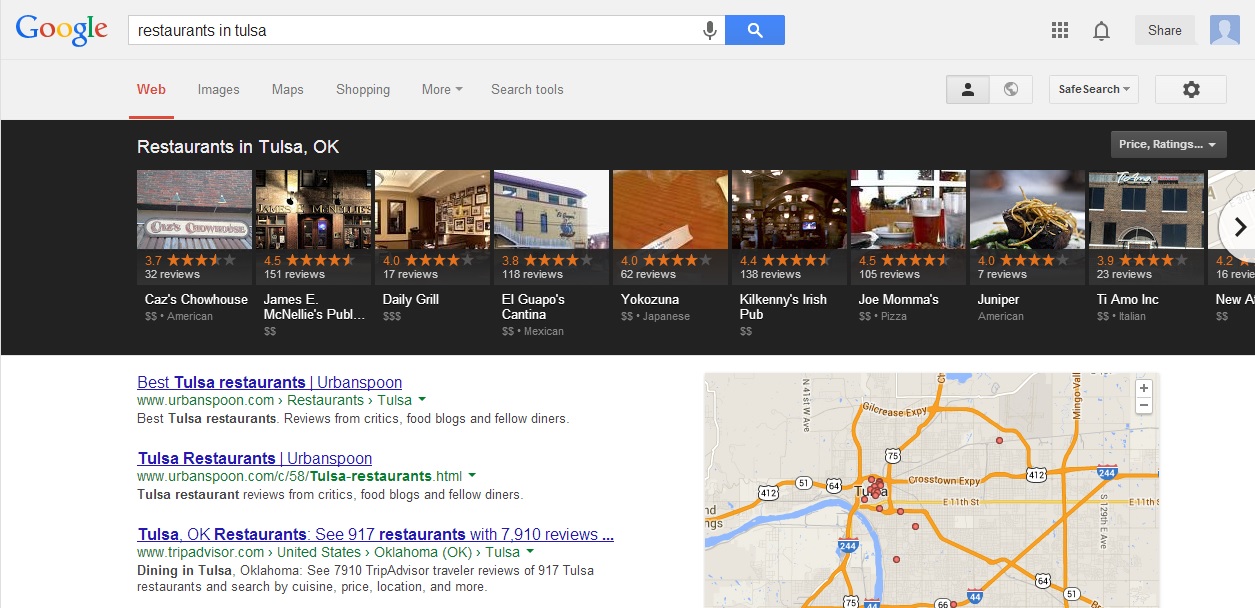
If you’ve yet to encounter it, the carousel is a black bar filled with listings that runs along the top of the screen for specific searches, especially those that are location based or for local businesses such as hotels and restaurants. The carousel includes images, the businesses’ addresses, and aggregated review ratings all readily available at the top, in an order that seems less hierarchical than the “10 pack” listings previously used for local searches.

Up until now, we’ve only had been able to guess how these listings were decided based on surface level observations. But, this week Digital Marketing Works (DMW) published a study which finally gives us a peak under the hood and shows how businesses may be able to take some control of their place in the carousel. Amanda DiSilvestro explains the process used for the study:

  • They examined more than 4,500 search results in the category of hotels in 47 US cities and made sure that each SERP featured a carousel result.
  • For each of the top 10 hotels found on each search, they collected the name, rating, quantity of reviews, travel time from the hotel to the searched city, and the rank displayed in the carousel.
  • They used (equally) hotel search terms—hotels in [city]; best hotels in [city]; downtown [city] hotels; cheap hotels in [city].
  • This earned them nearly 42,000 data points on approximately 19,000 unique hotels.
  • They looked at the correlation between a hotel’s rank in a search result based on all of the factors discussed in step 1 to determine which were the most influential.

Their report goes into detail on many of the smaller factors that play a role, but DMW’s biggest findings were on the four big factors which determine which businesses are shown in the carousel and where they are placed.

1. Google Reviews – The factor which correlated the most with the best placement in the carousel were by far Google review ratings. Both quantity and quality of reviews clearly play a big role in Google’s placement of local businesses and marketers should be sure to pay attention to reviews moving forward. However, it is unclear how Google is handling paid or fake reviews, so many might be inspired to try to rig their reviews. For long-term success, I would suggest otherwise.

2. Location, Location, Location – Seeing as how the Google Carousel seems built around local businesses, it shouldn’t be a surprise that location does matter quite a bit. Of the 1,900 hotels in the study, 50 percent were within 2 miles of the search destination, while 75 percent were within 13 minutes of travel. Businesses would benefit from urging customers to search for specific landmarks or areas of cities, as you never know exactly where Google will establish the city “center”.

3. Search Relevancy and Wording – According to the findings, Google seems to change the weight of different ranking factors depending upon the actual search. For example, searching “downtown [city] hotels” will result in listings with an emphasis on location, while “best hotels in [city]” gives results most dependent on review rankings.

4. Primary Markets and Secondary Markets – It seems both small and larger businesses are on a relatively flat playing field when it comes to the carousel. Many small hotels are able to make it into the listings, right next to huge chains. The bigger businesses may have more capabilities to solicit reviews, but no hotel is too small to be considered for the carousel.

Google made waves last week when they announced the expansion of how “Shared Endorsements” are used in ads, as well as the change to their terms of service to reflect this. The funny thing is, most people don’t understand what is actually changing.

The majority were simply confused when they heard that Google was implementing the use of social information into ads, because that has been going on for about two years now. But, as Danny Sullivan explains, the devil is in the details.

Throughout 2011, Google made changes which allowed advertisers to begin integrating images of people who liked their pages on Google+ into text and display ads. All that really showed was a small profile picture, and the phrase “+1’d this page.”

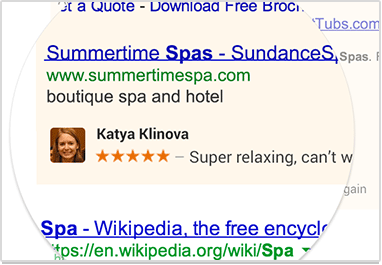
Starting on November 11, that won’t quite be the case. More than simply the people who +1 a page is going to be shown in ads. For example, if you comment, leave a review, or even follow a particular brand, those types of actions can be shown in ads on Google. A mockup of how it will appear is below.

These changes won’t take place until November, but don’t expect a prompt roll-out. It is possible you may start seeing the changes starting the 11th, but more likely it will gradually appear over the span of a few days or even a couple of weeks.
Not much else is known about how advertisers will be able to create these types of ads yet. Most likely, Google would not have announced the update this early, except they had to get the terms of service updated before they could even begin to implement this feature.

If you don’t want to appear in any of these types of ads, you can go to this page and click the tickbox at the bottom to opt out for all ads in the future.

It seems like everything looks different over at Google these days. Not only has their logo subtly flattened out, but the way we see a significant number of searches has been greatly altered with the introduction of the Google Carousel. Now, AdWords seems to be following suit as reports have started to come in of a new logo and web UI design.
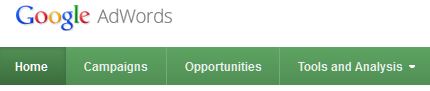
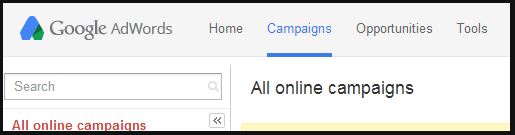
As Search Engine Land reported, Rick Galan tweeted out a screenshot of the new appearance. The logo is now integrated directly into the navigation bar and the green coloring of the bar has been replaced by Google’s widely used desaturated blue-grey.

The new AdWords logo might by signaling a redesign of all Google product logos towards a more flat design, such as what they have done with their flagship logo. Their old logo is below for comparison.

It could also simply just be a test as Google has not released any public statement or announcement for the logo, so much is unclear, especially how long a roll out might take. No one knows when we will see the change, but don’t be surprised if your AdWords experience looks different in the near future.