After years of criticism around Facebook ad targeting, Meta says it will be restricting the ability to target individuals based on sensitive information, such as their health conditions, religion, or political beliefs.
Specifically, Facebook will be removing targeting options for four distinct categories of audience data:
Health causes (targeting interests such as “Chemotherapy” or “World Diabetes Day”)
Sexual Orientation (including targeting interests such as “same-sex marriage”)
Religious practices or groups
Political beliefs, social issues, causes, organizations, and popular political individuals
Starting January 19, 2022, advertisers will no longer be able to target new ads using this highly specific audience information. However, existing campaigns will continue delivering to their targeting audiences using this data through March.
For existing campaigns, you will be able to edit campaign-level information (such as your budget or campaign name) without affecting targeting details until March 17.
If a campaign is paused, though, it will be updated using the new targeting restrictions when resumed.
The vast majority of advertisers should be unaffected by the new ad targeting policies. If you provide medical services or are using ads to promote political efforts, however, you will likely need to review your existing audience targeting and begin planning for a new approach to reach your target audience.
https://www.tulsamarketingonline.com/wp-content/uploads/2018/12/facebook-76536_640.png359640Taylor Ballhttps://www.tulsamarketingonline.com/wp-content/uploads/2018/07/TMO-Logo.pngTaylor Ball2022-01-03 18:21:222022-01-03 18:21:24Facebook To Limit Ads Targeting Medical, Religious, and Political Data
Google has released an unofficial new tool to help save advertisers from being suspended for violating its new Three Strikes policy for policy violations.
The tool, which comes in the form of a short python script, helps identify and remove ads that violate the terms and conditions for advertising.
How The Three Strikes Policy Works
As announced in July 2021, Google is now using a “Three Strikes” policy to suspend or ban repeat violators.
After the first violation of any type, the advertiser is given a warning. After that, they are allowed three strikes for each kind of violation.
If an advertiser account receives all three strikes, they are then suspended unless they win an appeal through the company.
As the announcement described the system:
“To help ensure a safe and positive experience for users, Google requires advertisers to comply with Google Ads policies.
“As a part of the Google Ads enforcement system, Google will begin issuing strikes to advertisers, which will be accompanied by email notifications and in-account notifications to encourage compliance and deter repeat violations of our policies.”
Google’s Bowling Tool To Remove Disapproved Ads
This week, the company’s developer blog announced a new tool called “bowling” that is designed to assist advertisers in spotting and removing any problematic ads.
The announcement described the tool’s purpose by saying:
“…Bowling is a mitigation tool allowing clients to act and remove disapproved ads before risking account suspension.
“The tool audits (and offers the option to delete) disapproved ads that may lead eventually to account suspension in perpetuity.”
Despite being announced on the developer blog, however, the python script includes a disclaimer explicitly stating it is not an official product.
As the disclaimer says:
“This is not an officially supported Google product. Copyright 2021 Google LLC. This solution, including any related sample code or data, is made available on an “as is,” “as available,” and “with all faults” basis, solely for illustrative purposes, and without warranty or representation of any kind. This solution is experimental, unsupported and provided solely for your convenience.”
Yelp may be known for being the place to go for restaurant reviews, but what is often forgotten is that the site covers a huge variety of services businesses – including salons, movers, plumbers, hotels, and much more.
Now, the company is releasing a slew of new features for all of these businesses, like custom search filters, new ways to drive reviews, Project Cost Guides, and ads themed around what makes your brand great.
Project Cost Guides
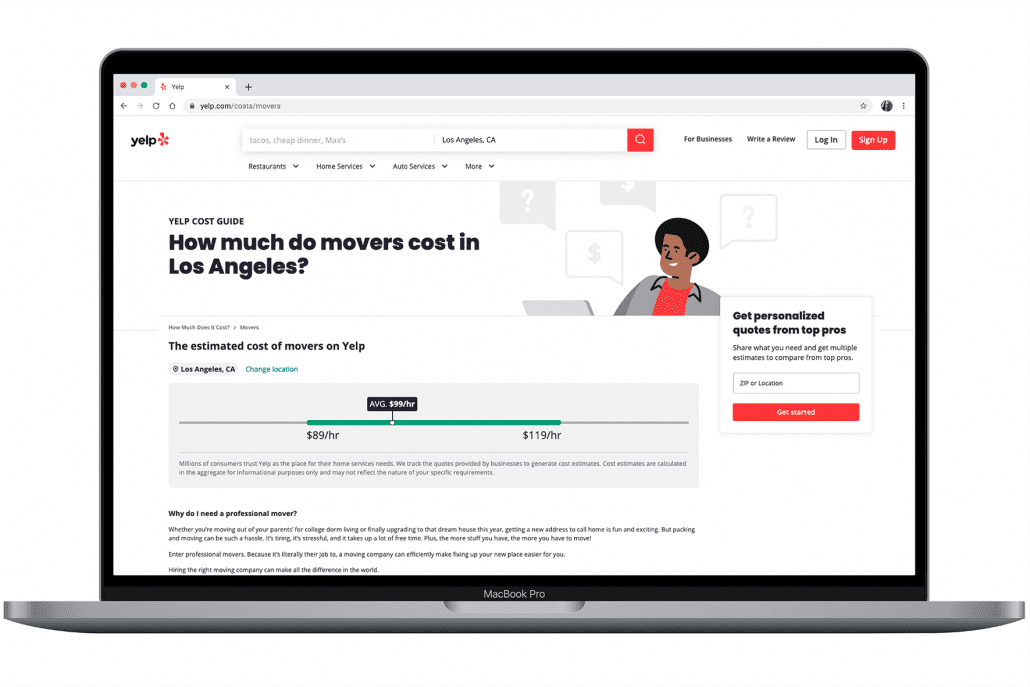
To help consumers make informed decisions before they hire a professional, Yelp is introducing new Cost Guides which show the average cost of specific services in your area. These prices are based on data pulled from Yelp’s Request-A-Quote service, which has facilitated “tens of millions” of projects.
Along with these pricing averages, these pages provide tips and cost-saving methods for consumers.
Currently, unique Cost Guides are available for around 20 categories, more than 90 service types, and 150+ cities.
Custom Search Filters
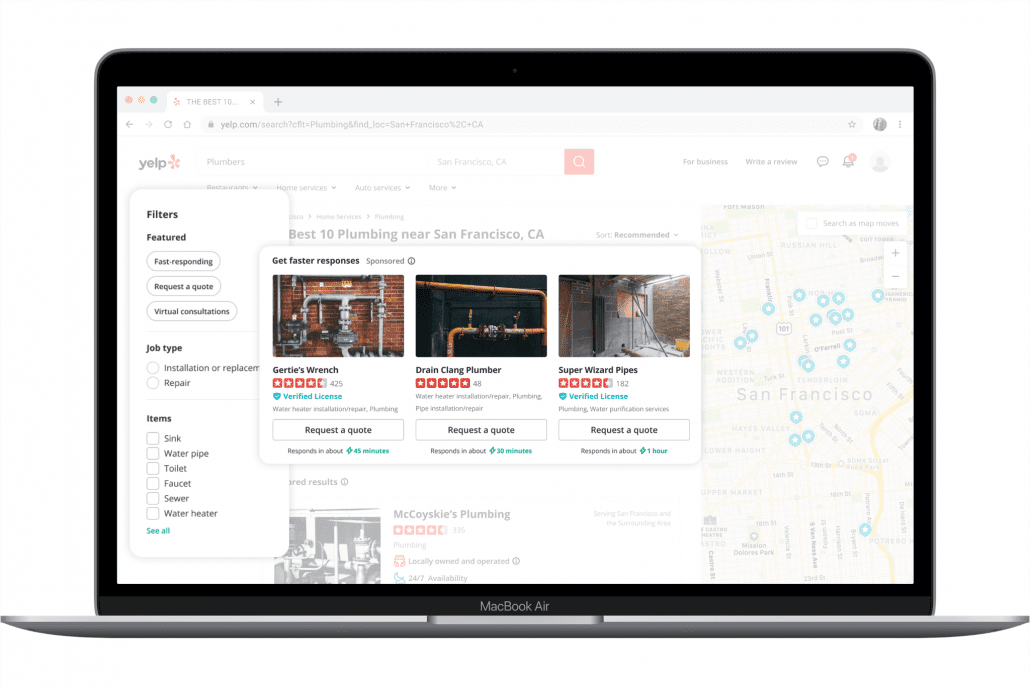
Users can filter businesses based on their specialties or unique abilities, such as filters for:
Fast-responding businesses
Businesses who offer virtual consultations
Specific types of jobs or repairs
And more available for services including movers, plumbers, HVAC, auto repair, roofing, real estate agents, home cleaners, painters, electricians, landscaping, pest control, and flooring
Themed Ads
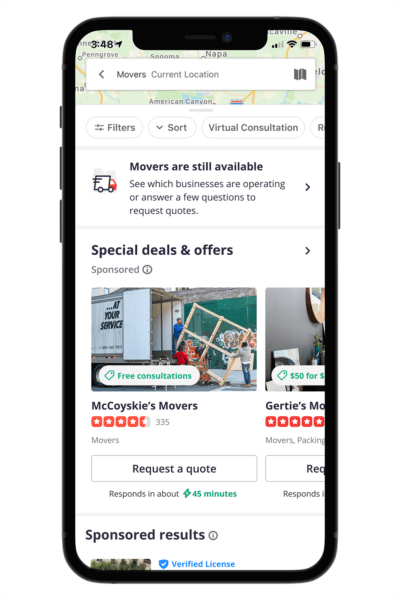
Services businesses that are running search ads can now take advantage of themed ads to highlight what makes you stand out from your competition.
The currently available themes include brands that reply to Request-A-Projects within two hours, businesses that have special offers, or those that provide free consultations.
Running themed ads costs nothing extra and Yelp says it plans to introduce more themes in the future.
Automatic Review Prompts
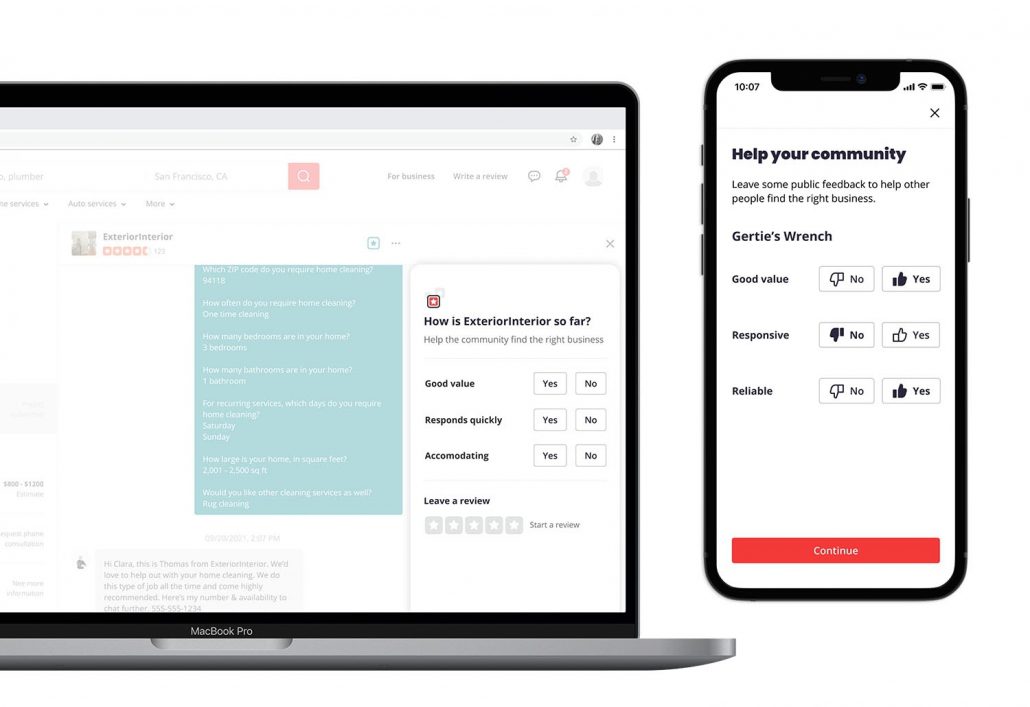
After users submit a project with Yelp’s Request-A-Quote tool, the platform will now use this information to generate a prompt for users to write reviews.
For example, prompts may ask a series of questions about their experience to kickstart the review process and drive more thoughtful informative reviews.
You can find out more about these new features for services brands in the official announcement from Yelp here.
https://www.tulsamarketingonline.com/wp-content/uploads/2021/10/Yelp-Services-Businesses-800-x-280-px.png280800Taylor Ballhttps://www.tulsamarketingonline.com/wp-content/uploads/2018/07/TMO-Logo.pngTaylor Ball2021-10-14 19:10:222021-10-14 19:10:24Yelp Releases New Features Just For Services Businesses
This week, Facebook teased a number of new features it is working on to help brands better connect with their customers and drive more leads across its platforms.
The upcoming and newly released features highlighted by the company include everything from expanding its existing ad formats to creating entirely new ways to do business online.
Let’s explore everything showcased in the company’s recent blog post below:
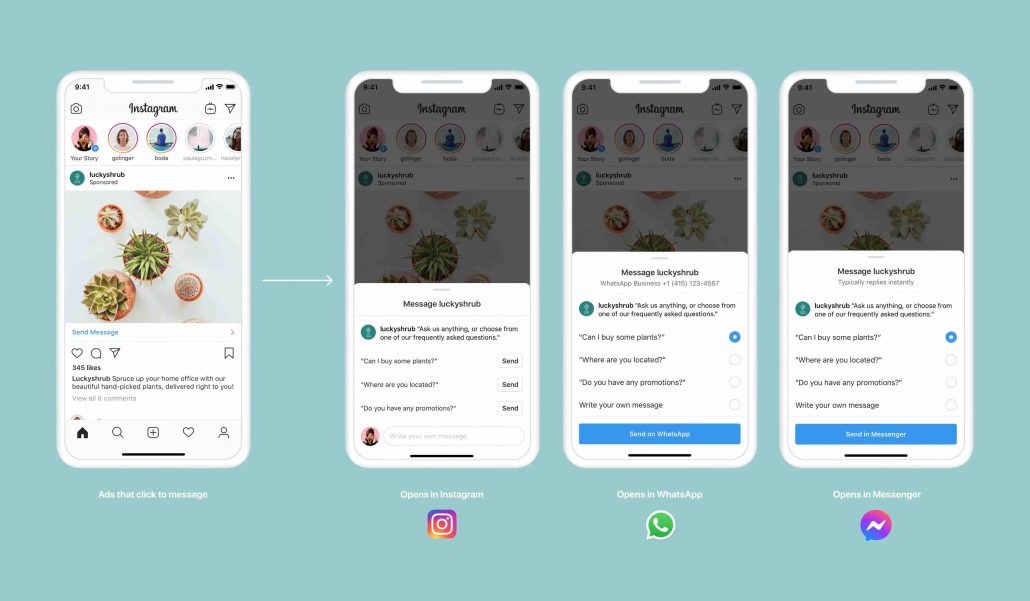
Click-to-Message Ads Come To More Chat Apps
For some time now, Facebook has offered an ad format designed to encourage viewers to take action through its many chat services, like Messenger or WhatsApp.
Now, the company is updating this ad format to make it possible to reach brands on a wider range of messaging platforms, including those not owned by Facebook.
While Facebook hasn’t provided an actual list of the messaging apps which will be included in the updated click-to-message ads, the blog post suggests it will include all major messaging apps used by consumers today.
Start WhatsApp Chats on Instagram
Aside from dropping into someone’s DMs, Instagram has been obviously lacking the robust messaging options included on most Facebook social networks. Now, with integration through WhatsApp, that is changing.
Now, brands on Instagram can add a click-to-chat button on their profile which will instantly launch a WhatsApp chat conversation when clicked.
Even better, the company says it is working on ads that will also allow users to immediately start a WhatsApp chat from an advertisement on Instagram.
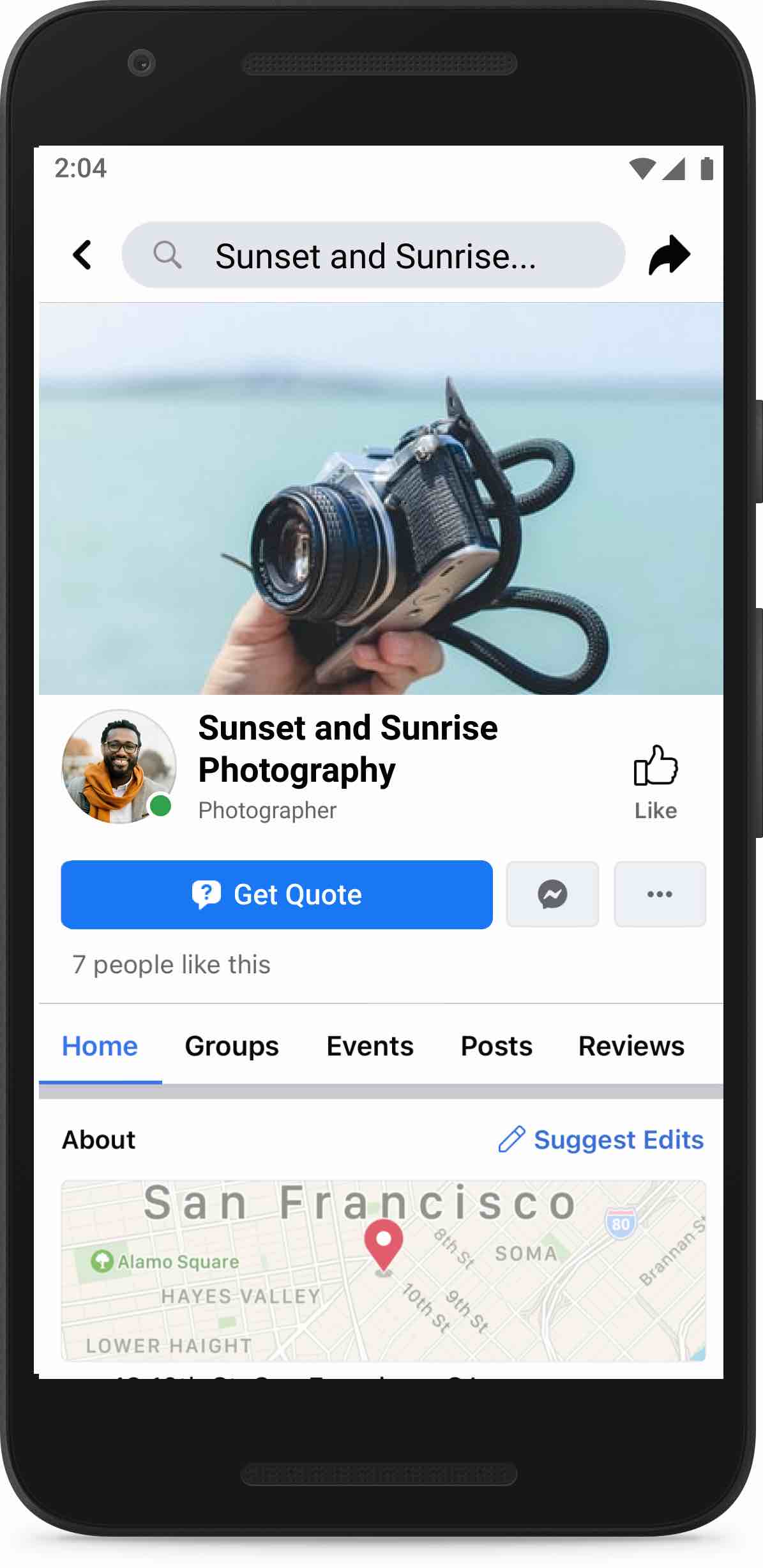
Request Quotes on Messenger
Select advertisers are testing an upcoming feature that will allow brands to invite customers to request a quote within Messenger.
With the feature, brands can create a customized request form using 4-5 specific questions to ask potential customers before sending a message.
Once completed, consumers can request a quote by completing a short questionnaire on Messenger.
Instagram Lead Generation
Though the company is keeping largely mum on the details, it also teased plans to launch free and paid tools for helping small businesses drive qualified leads on Instagram.
“Advertisers use lead generation ads to connect with customers and connect leads in a more personal way, while reducing costs — like Seoul Spa, a Vietnamese beauty clinic, did with their Messenger campaign, lowering their cost per lead by 72%.”
https://www.tulsamarketingonline.com/wp-content/uploads/2018/12/facebook-76536_640.png359640Taylor Ballhttps://www.tulsamarketingonline.com/wp-content/uploads/2018/07/TMO-Logo.pngTaylor Ball2021-09-23 18:34:112021-09-23 18:37:51Preview New Facebook Tools and Features For Marketing Your Business
If there is anyone who knows what works on Facebook Ads, it’s probably Facebook. Thankfully, the company is eager to share its data to help advertisers make the best ads possible.
Facebook Ads did just that this week with a new list of 11 ways to improve your video ads based on their latest data and research.
Why Video Ads?
Many brands and advertisers are still reluctant to indulge in video ads, fearing they may be more costly, less effective, or more difficult to manage.
According to the report, however, none of these are true. In fact, the company has seen that for every dollar invested into video ads on the platform, there is a 39% higher chance to drive sales compared to static social ads.
Even more, the budget, placement, or targeting have less impact on the success of video ads than you may think. According to Facebook Ads, 70% of the potential ROI from video ads comes from how you use the format to get attention and inspire action, while just 30% comes from details like where the ad is shown.
To ensure your video ads are inspiring potential customers to take action, Facebook put together these tips for improving your future video ad campaigns.
11 Ways To Improve Your Video Ads
Facebook breaks this collection of tips into two groups: ‘Best Practice’ and ‘Highly Recommended’.
Best Practice
Frame For Mobile: Based on user activity, most users will be seeing your video on mobile. Keep this in mind when framing your video with the recommended vertical 4:5 format on Facebook or 1:1 square format on Instagram.
Create For Sound-Off Viewing: By default, your video will be played without audio. If your video ad is going to be successful, it needs to be understandable and engaging without sound.
Focus on the Product: Facebook recommends focusing your creative for video ads directly on a product or feature, rather than your entire business.
Have a Single Message: As with all advertising, it is important to present a single, clear message in any promotion. Trying to do too much in a single ad will just overwhelm or push away potential customers.
Highlight Branding Early: The report recommends placing your branding and message at the start of a video to grab attention and retain potential customers.
Be Straight To The Point: On that note, putting a clear message up front makes it easier for consumers to understand what you’re hoping to accomplish and what you have to offer them.
Use Movement & Faster Editing Early: Having movement or quick edits near the start of your video ads helps grab attention and may motivate viewers to keep watching.
Highly Recommended
Brevity Is Key: People viewing on mobile devices have limited time, short attention-spans, and are quick to scroll away if you start to lose them. It is important to keep your videos short for most impact.
Don’t Follow Old Rules: Traditional ads on TV and radio are structured with the assumption that users will remain tuned in no matter what. This allows time to build up a story to grab interest. Online video doesn’t offer this comfort. Instead, start your videos with a bang to capture attention quickly.
Don’t Be Afraid of Twists or Surprises: Including more gasp-inducing moments in your video ads can be a good way to hold viewers’ attention throughout your entire video.
Think Visually: Since sound is typically off, it is important to use visually grabbing features like bright colors or product close-ups to keep viewers engaged.
To learn more about what Facebook has learned from its video ads research, read the full report here.
https://www.tulsamarketingonline.com/wp-content/uploads/2019/05/FacebookVideo.jpg360640Taylor Ballhttps://www.tulsamarketingonline.com/wp-content/uploads/2018/07/TMO-Logo.pngTaylor Ball2021-08-17 16:39:552021-08-17 16:39:57Facebook Gives 11 Tips For Creating More Effective Video Ads
“Starting August 23, many targeting options, including detailed targeting and Custom Audiences, will no longer be available to target people under 18 globally, 20 in Thailand or 21 in Indonesia. For new ads that include young people, you’ll only be able to target by location, age, and gender.”
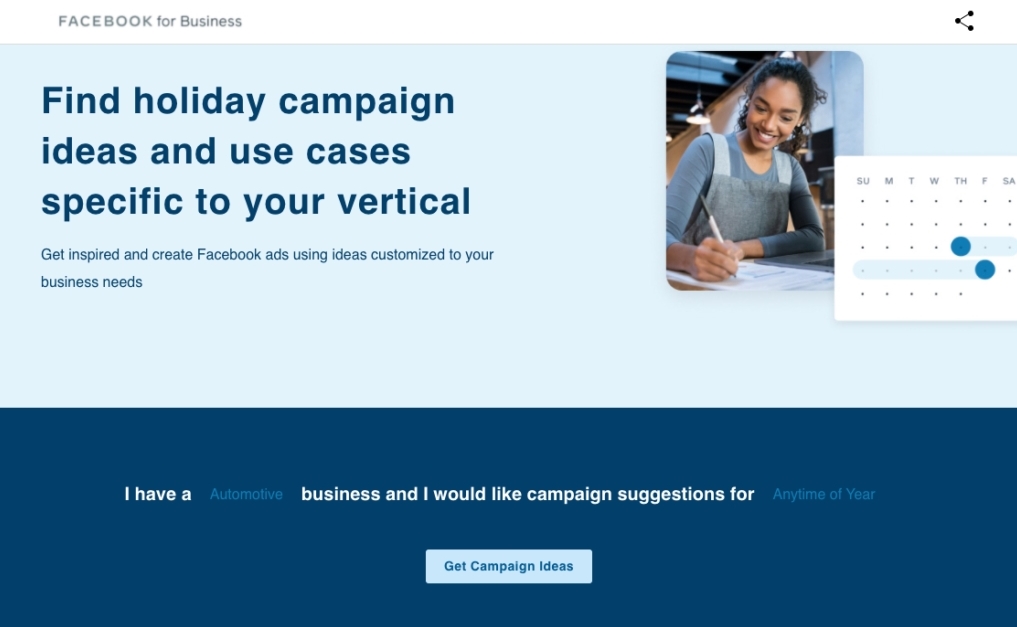
New Campaign Ideas Generator
Having trouble coming up with ideas for an upcoming marketing campaign? Facebook has a new tool just for you. The idea generator allows brands to input their vertical and specify if they are running an evergreen or seasonal campaign.
With this information, Facebook will then give you campaign ideas with data, insights, and resources for putting the campaigns into action.
Along with these ideas, Facebook’s campaign idea generator also creates draft organic posts to use and offers free assets like images for you to use.
New Ad Placements in Instagram Shops Being Tested
Lastly, an article from AdWeek disclosed that Instagram has been testing placing ads within the Instagram Shop Tab.
The ads appear on the homepage of the tab and can be expanded with a tap to show more pictures, product information, and related products – as you would with organic listings in the Instagram Shop Tab.
https://www.tulsamarketingonline.com/wp-content/uploads/2018/12/facebook-76536_640.png359640Taylor Ballhttps://www.tulsamarketingonline.com/wp-content/uploads/2018/07/TMO-Logo.pngTaylor Ball2021-08-12 17:23:042021-08-12 17:23:06Facebook Limits Ad Targeting For Minors and More
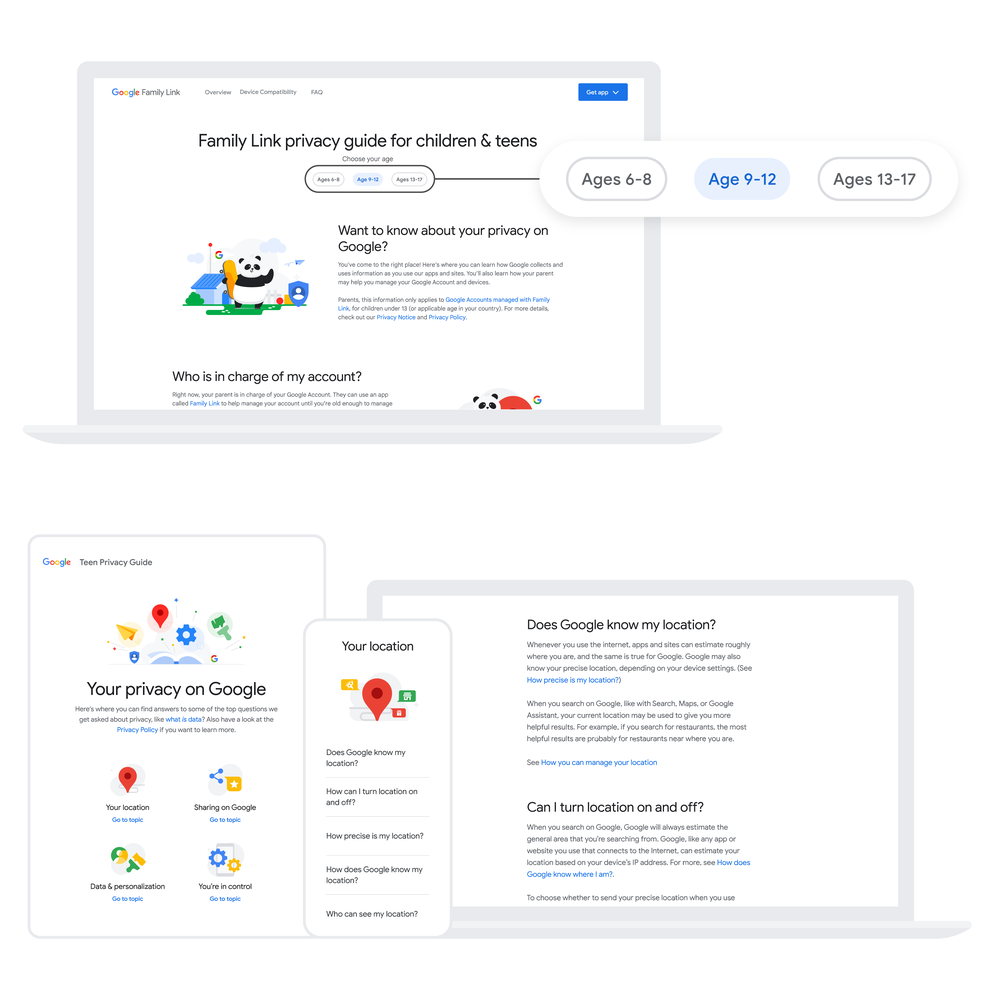
Between virtual schooling, social media, and video streaming platforms, kids are more online than ever. Though children are growing up using the internet from their earliest ages, however, most evidence suggests they are more at risk for being targeted through advertising and other forms of online marketing. Now, Google is taking action to protect them.
In one recent study from SafeAtLast, upwards of 75% of children are willing to share personal information in exchange for goods or services. This obviously raises concerns about the long-term implications of gathering data from and targeting ads towards children.
As a result, Google is changing its policies regarding minors online, including removing ad targeting for those under 18 and allowing underage individuals to request for any images of them to be removed from search results.
These are all the latest changes:
Allowing Minors To Remove Images From Google Search
“Children are at particular risk when it comes to controlling their imagery on the internet. In the coming weeks, we’ll introduce a new policy that enables anyone under the age of 18, or their parent or guardian, to request the removal of their images from Google Image results,” explains Mindy Brooks, product and UX director for kids and families at Google.
The search engine is unable to go further in removing the images from the internet entirely, but it can certainly make it more difficult to find those images.
Changing Default Settings For Minors
Google is making underage users’ information more private by default across its multiple platforms. That includes changing the default upload mode on YouTube to private for users under 18 and automatically enabling SafeSearch for minors on Google Search.
Location History Is Disabled
By default, Google had already turned off location history for users between 13 and 17. Now, it has gone further by making it entirely disabled. On one hand, this may lead to less relevant search results, but also prevents excessive tracking of children through Google.
Removing Ad Targeting For Minors
In the upcoming months, Google Ads says it will be “expanding safeguards to prevent age-sensitive ad categories from being shown to teens, and we will block ad targeting based on the age, gender, or interests of people under 18.”
New Tools For Parents
Lastly, the company is introducing a number of new tools and features for parents across its entire product line. For example, the company is introducing Digital Wellbeing tools within the Google Home app, allowing parents to manage their children’s use of smart assistants. On YouTube, the company is also turning on ‘take a break’ and bedtime reminders by default, while turning off autoplay.
For more on Google’s latest efforts to protect the private data of children across its services and platforms, check out the full blog post here.
Starting earlier this week, Google Ads has implemented new rules for advertisers promoting cryptocurrency or cryptocurrency-related services across its platform.
Under the new rules, only those registered with the Financial Crimes Enforcement Network (FinCEN) as a money services business and with at least one state or federal entity, or with a state or federally chartered bank can run ads. Additionally, crypto advertisers must have completed the most recent verification process on Google.
With the massive explosion in interest around Bitcoin, Dogecoin, and other cryptocurrencies, Google Ads has also seen an increase in fraudulent ads or outright scams using its advertising service.
Requirements for Cryptocurrency-Related Ads
If a cryptocurrency exchange or wallet service wishes to advertise on Google Ads, they must be registered with FinCEN as a Money Services Business and with at least one state as a money transmitter. The only exception to this is those registered with a federal or state-chartered bank.
Advertisers must also go through the latest Cryptocurrency Exchanges and Wallets verification process on Google.
Lastly, cryptocurrency advertisers must comply with all legal requirements and are expected to follow Google Ads guidelines and policies.
Other Restrictions
Along with these new restrictions, cryptocurrency advertisers should be aware of the already established rules for crypto-related ads. For example, advertisers cannot promote pages or sites which aggregate or compare issues of cryptocurrencies. Advertisers are also forbidden from advertising initial coin offerings.
https://www.tulsamarketingonline.com/wp-content/uploads/2019/02/GoogleAdsGoogleAdwordsManagementPageFeaturePicture2.jpg4001000Taylor Ballhttps://www.tulsamarketingonline.com/wp-content/uploads/2018/07/TMO-Logo.pngTaylor Ball2021-08-05 18:11:412021-08-05 18:11:43Google Ads Has New Rules For Advertising Cryptocurrencies
As concerns about the COVID virus and its variants start to rise again, parents once again find themselves preparing for both in-person classes and potential virtual schooling while doing their back-to-school shopping this year.
To help brands reach these parents and ensure they have everything their kids need to face the school year, Google has put together a short guide of tips and suggestions for running local ads right now.
Put Your Products Online
The first step to reaching parents shopping online is to actually have your products online. According to Google’s own polling, more than half of all back-to-school shoppers are using the internet to check in-store inventories and find new products. Slightly less than half (48%) are specifically looking for stores that are providing safe shopping options like curbside pickup or contactless shopping.
Thankfully, putting your inventory on Google has gotten easier and easier over time. Even better, one of the fastest and easiest ways is currently free for many retailers in the U.S.
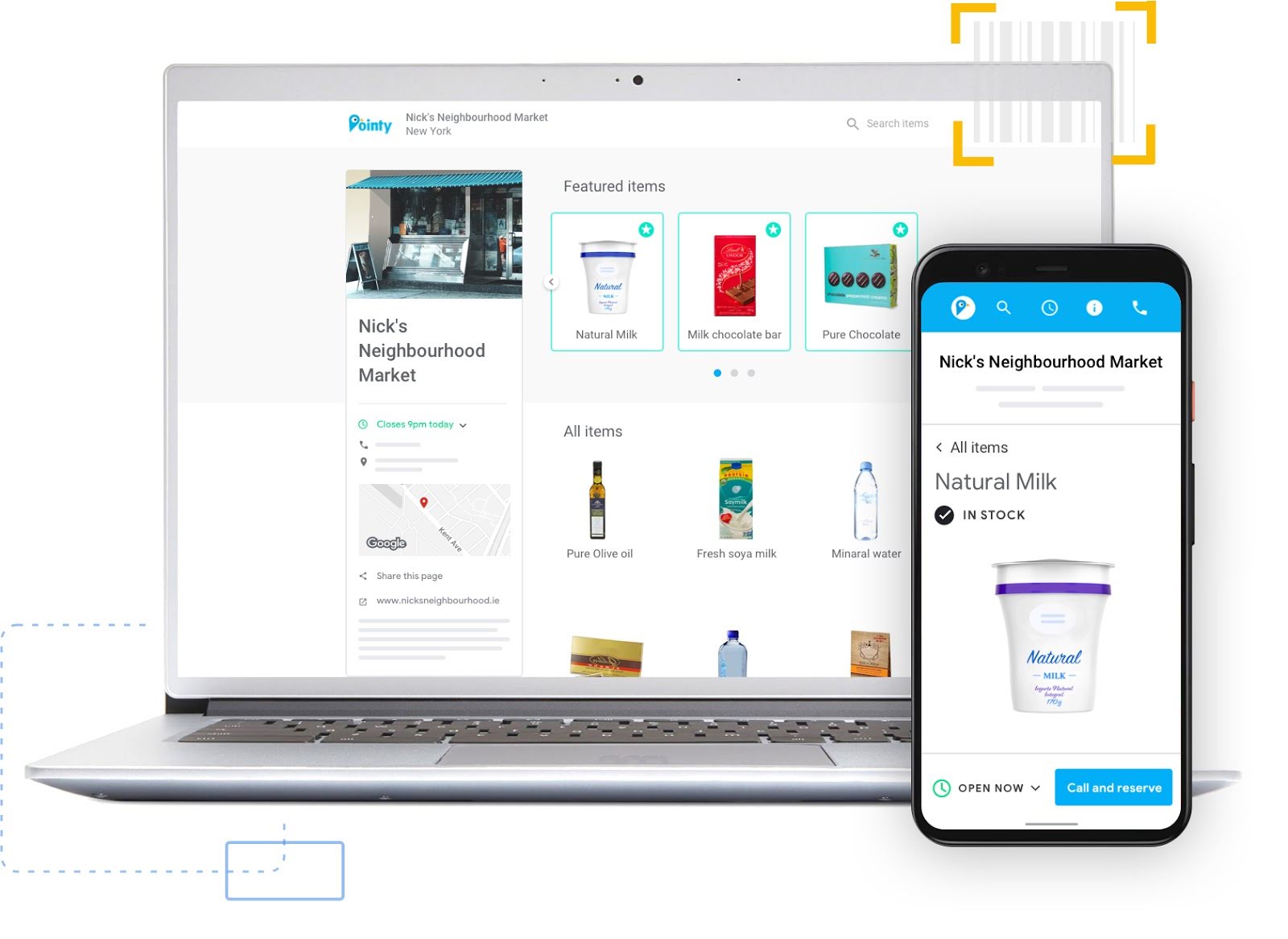
Until September 30th, Google is offering free trials of Pointy, a tool that attaches to POS barcode scanners to quickly add products to your online shop.
Local Inventory Ads
Many retailers think that online product ads are strictly for online shoppers who want products delivered to their door. This isn’t entirely the case, though.
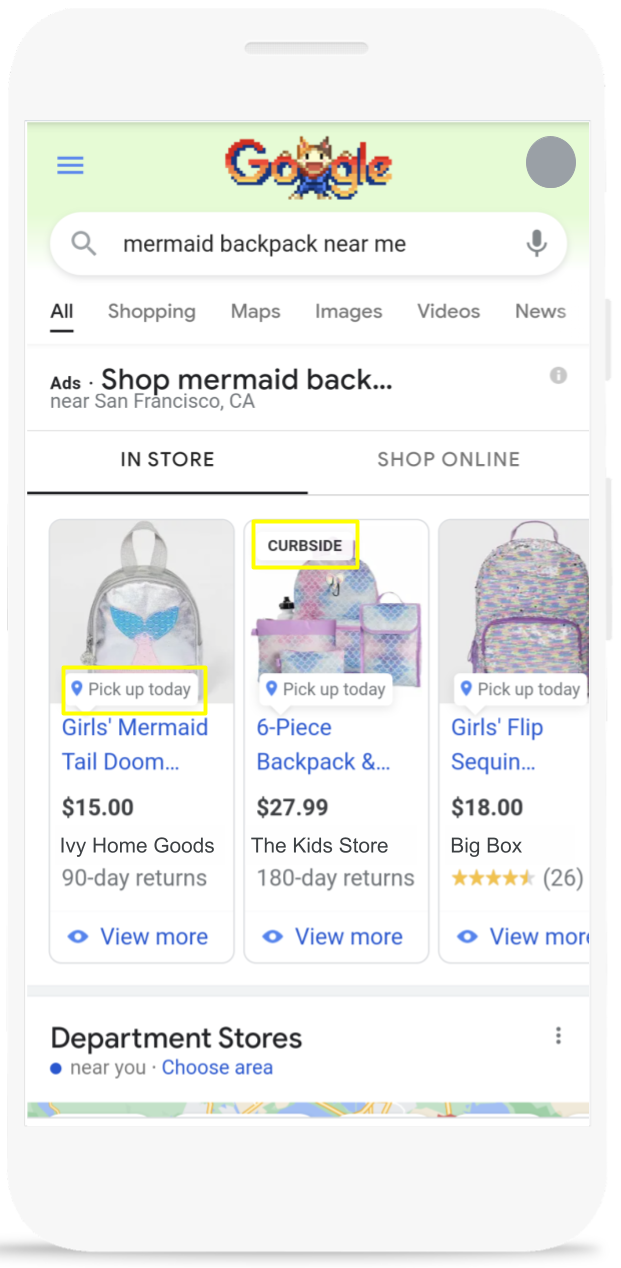
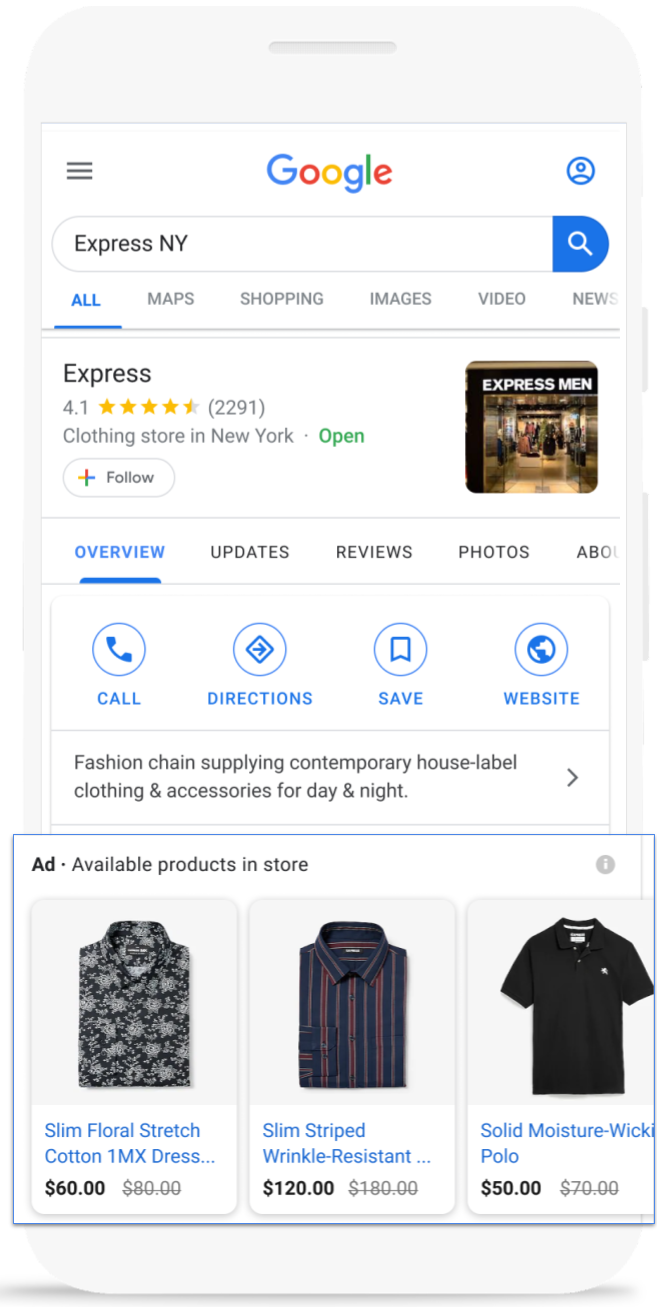
Brick-and-mortar stores can also advertise the products available in your stores with local inventory ads.
These make it possible to showcase products you have available for store pickup, curbside pickup, and more – meeting the diverse needs of shoppers today.
Highlight Your Local Store
With up to 60% of back-to-school shoppers planning to do at least some of their shopping at local businesses this year, it is more important than ever to be sure people can find information about your store online.
Google recommends using Local Campaigns to not only reach local shoppers, but specifically drive store visits, calls, and other actions with high local-shopping intent.
As their guide says:
“Local campaigns are a simple yet powerful solution for retailers of all sizes to promote their locations across Google Maps, Search, YouTube, Gmail and the Google Display Network. You can drive foot traffic for store reopenings, special in-store promotions, updated business hours and specific products that are available in nearby stores.”
The distinction between online and in-store shopping is getting more blurry with every year, as people use Google to find local stores, local products, pickup options, and more. As a local business, it is essential to be prepared for these mixed shopping methods and be able to reach your customers no matter where they are looking for your products.
Pinterest is introducing new ways for brands and users to make money on the site through easy-to-setup affiliate links.
By turning “idea pins” into shoppable pins, users can earn a commission when other users buy products included in the pin.
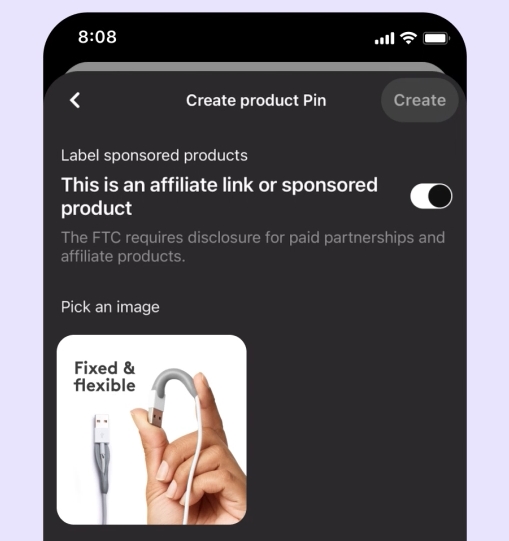
The process is as easy as toggling a button at the top of the pin creation page and tagging the products in your pin.
The social network and brands have had large success with shoppable pins since their launch – especially when other users have shared shoppable content.
According to Pinterest’s data, users are 89% more likely to show shopping intent on idea posts with products tagged compared to standard product pins. Engagement is also nine times higher on idea pins compared to traditional pins.
What Are Idea Pins
Idea Pins were introduced earlier this year and allow brands to share multi-page video posts similar to “Stories” found on other platforms except they do not disappear after a period of time.
Idea Pins allow for:
Video recording and editing for up to 20 pages of content
Voice over recording
Music selection by Epidemic Sound
Ghost mode transition tools (perfect for those before-and-afters!)
Detail pages for instructions or ingredients
Interactive elements like people tagging and stickers
Multi-draft save so Creators can publish more ideas
Export options to share content beyond Pinterest
Topic tagging, a publishing feature that helps connect content to relevant interests
Once posted, users who follow you can see your idea pins in a carousel at the top of their home feed, as well as within search results, the Today tab, and at the top of a user’s profile.
New Brand Partnership Tools
Along with these expansions to idea pins, Pinterest announced it is working on new ways for influencers to easily disclose paid partnerships.
The new tool, which is being beta tested with a limited number of creators, allows users to note that they have partnered directly with a brand for content in their idea pin. Once this has been tagged, the brand can approve the idea pin before it goes live.
Posts created this way will also receive a “Paid Partnership” label, which is legally required in the U.S. and generates a better sense of transparency from influencers.
https://www.tulsamarketingonline.com/wp-content/uploads/2021/07/Pinterest-Affiliate-Idea-Pins.jpg480720Taylor Ballhttps://www.tulsamarketingonline.com/wp-content/uploads/2018/07/TMO-Logo.pngTaylor Ball2021-07-29 16:50:402021-07-29 16:50:42Users Can Now Earn Money Sharing Your Products On Pinterest