Instant Articles

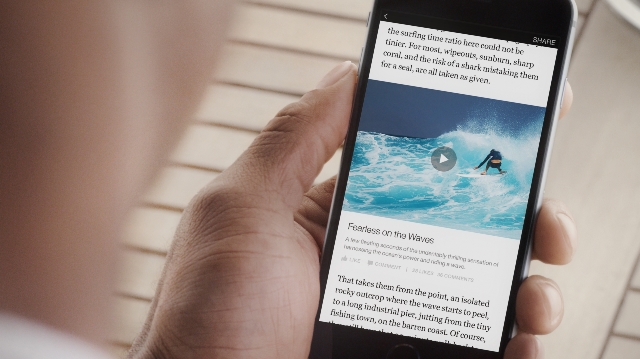
Facebook is bringing its Instant Articles to all developers and content producers. The social media platform has been slowly testing its feature, which allows publishers to share content on Facebook mobile that is fast-loading and easy to read.

During Facebook’s F8 conference, the company announced that publishers of any size or kind can now publish via Instant Articles while also sharing some statistics showing how Instant Articles have been performing so far.

According to Facebook’s data, Instant Articles leads to

  • 20% more clicks on links to content
  • 70% reduced likelihood of abandoning content once clicking on it.
  • 30% more shares compared to the average mobile web articles.

Instant Articles are Facebook’s response to Google’s Accelerated Mobile Pages and other fast-loading content platforms that streamline pages to ensure they load almost instantaneously on mobile devices. Facebook’s Instant Articles are unique though, because they also allow publishers to control ad placements within their content.

Publishers can even publish native ads as Instant Articles, which are distinguished from traditional content through unique styling options and the ability to add your company’s logo.

“Facebook’s goal is to connect people to the stories, posts, videos or photos that matter most to them,” the company says. “Opening up Instant Articles will allow any publisher to tell great stories, that load quickly, to people all over the world. With Instant Articles, they can do this while retaining control over the experience, their ads and their data.”

FacebookClick

Facebook is changing its mind on branded content, though it isn’t ready to completely dive in. The social media giant is revising its policy on branded content, which is anything that specifically “mentions or features a third party product, brand, or sponsor.”

With the latest change, Facebook is allowing any verified page to share branded content, however, the content must be labeled as such. This is a significant turn from the company’s previous stance against branded content and ads.

To help brands with verified pages label their branded content, Facebook is also offering a new tool to assist in tagging brands mentioned in the content. The company says the tool must be used every time branded content is published.

By changing their policy, Facebook is allowing companies with existing partnerships or sponsorships to bring their relationship into the world’s largest social network.

Notably, branded content can also be pushed via sponsored posts or leveraged in paid ads. The company says the new tool will hopefully lead to greater transparency while continuing to help users find valuable information.

When a brand is tagged in a piece of branded content, they will also receive access to post insights and can share the boosted post themselves.

While this is a notable change, Facebook still has some restrictions. Here is what Facebook will still not allow:

“…our branded content guidelines prohibit overly promotional features, such as persistent watermarks and pre-roll advertisements. Additionally, cover photos and profile pictures must not feature third party products, brands, or sponsors. Branded content integrations that are allowed to be posted on Facebook include content like product placement, endcards, and marketer’s logos.”

When it comes to social media, less is often more. That is especially the case for word counts of your social media posts and blog articles, according to an infographic recently shared by Express Writers.

Twitter has a cap of 140 characters per tweet, but that doesn’t mean you need to use every character available. The infographic explains that “tweets that are 100 characters or shorter enjoy 17% more engagement than longer tweets.”

“So-called ‘medium-length’ tweets (between 71-100 characters) are re-tweeted more often than large (101 characters or longer) or small (41-71 character) tweets.”

Meanwhile, you may think of Facebook as the place to go for long-form posts and blog-style content, but you would be wrong. In fact, brevity is the soul of Facebook, with the ideal length for a post being just 40 characters or fewer.

“Facebook posts with 40 characters earn 86% more engagement than longer posts,” according to the infographic, and “the second-best length of a Facebook post is 80 characters or fewer. These posts receive 66% more engagement than longer posts.”

Want to make sure your content is hitting the right notes and not exhausting the short-attention spans so prevalent on social media? Find out exactly how long your content should be in the infographic below:

ContentLengthInfographic

 InstagramBanner

Instagram is breaking away from the model it helped pioneer by extending videos from the standard 15-second length to a full 60 seconds. The company made its name by taking advantage of the trend for micro-length videos similar to Vine’s 7-second length, but it is now stretching its legs with longer videos.

Instagram says it is making the change in order to “bring you fun, flexible and creative ways to create and watch video on Instagram.”

Of course, the new video length limits won’t be turning Instagram into YouTube all of a sudden. The extended limit simply allows people to latch onto longer and more diverse stories.

The longer clips will hopefully spur increased engagement for the company who is currently seeing record low levels of user engagement. Despite this drop in engagement, Instagram says the amount of time spent watching videos on the platform has increased over 40% over the past 6 months.

Along with the change to video lengths, Instagram also announced that iOS users are once again able to create videos out of multiple clips from the camera roll. Both new features have already begun rolling out for users and will be available for everyone in the coming months.

Of course, along with longer videos comes longer ads on Instagram, which should make marketers and businesses who use the platform happy. Longer ads translate into more opportunities to tell engaging stories and catch the attention of your audience.

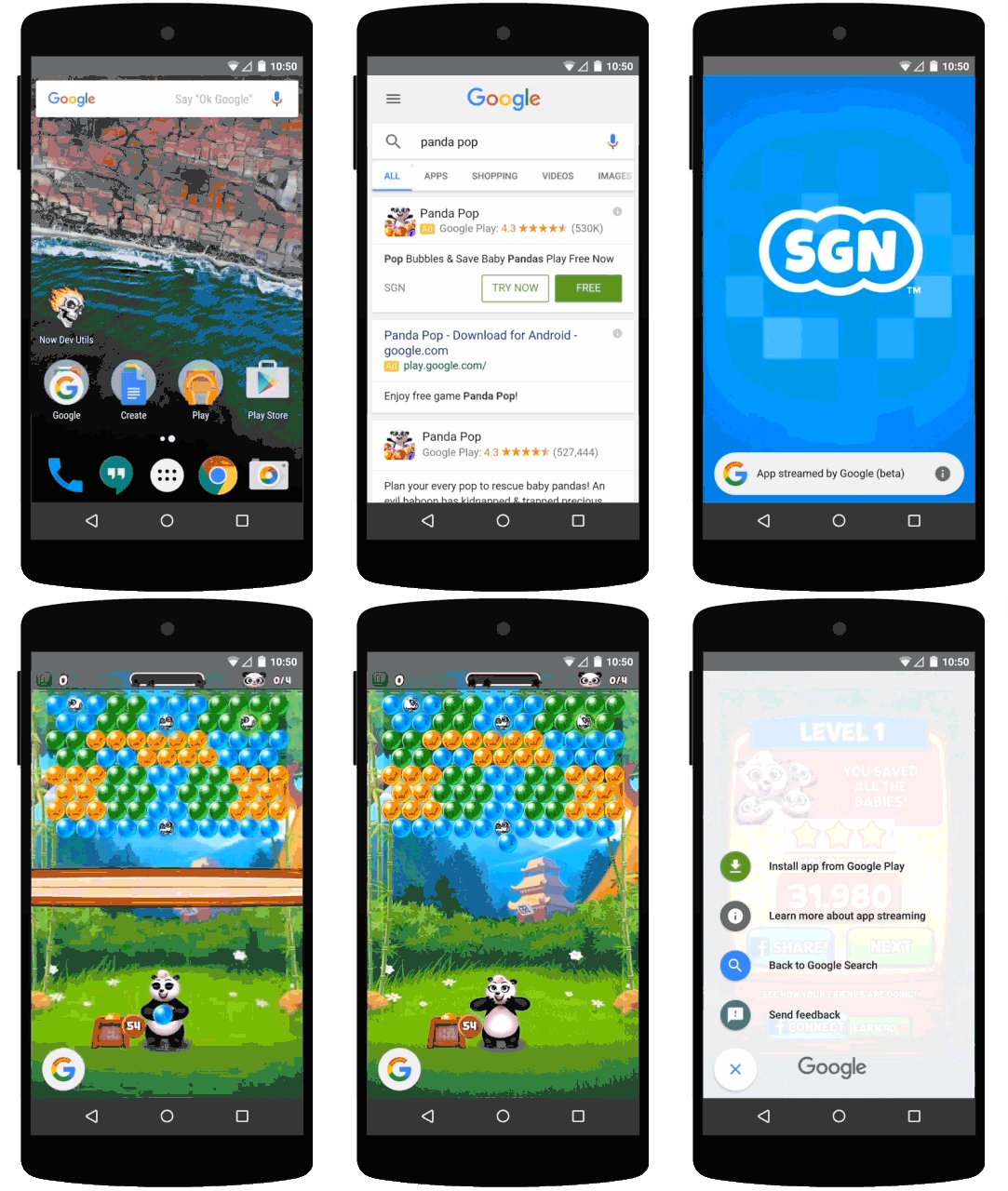
As promised, Google is launching ads in Android search results which will allow users to test out games before deciding whether to download them. Google announced the feature was coming in the next few weeks during its Developer Day at Game Developer Conference in San Francisco on Monday.

With the launch of AdWords Search Trial Run Ads, app advertisers can now create ads with a “Try now” button as well as a download button. If Android users choose to try out the app, they will be able to preview the app for 10 minutes before deciding if they want to download it from the Google Play Store.

160314_pandapop1

Google has been testing out the feature since December, however, those app previews were limited to just 60 seconds. The longer trial period should allow test-drivers to get a better feel for the app and make a more informed decision.

The new feature is aimed at helping users choose to download only apps that will actually be used. According to Google, just one in four apps are ever used after being downloaded. Hopefully, the test-drive feature will increase the chances a user will stay engaged with the app beyond the time of install.

During the conference, Google also announced that Portrait Video Ads in mobile apps will be coming shortly. The company says 80 percent of video ad views in mobile apps on the Google Display Network are viewed vertically, however, the majority of ads are created to be viewed in landscape orientation. Early tests suggest the new ad orientation significantly improves both click-through and conversion rates. This leads to lower cost per install and more installs overall from Portrait Video Ads.

Pinterest-logo

Pinterest’s promoted pins and ads have made a huge splash in the 18 months of beta testing its small platform with select brands, and now it is set to become even bigger. The site is rolling out its ad tool, Promoted Pins Ad Manager, to all small and midsize brands in the United States.

The company also announced it would be increasing the number of interest-level targeting options from 30 to 420. In the past, advertisers could only choose from 30 broad interest groups such as food, beauty, and fashion. The new options are more specific, so marketers can target their audience much more accurately with categories like “healthy food,” “sustainable architecture,” and “street-style fashion.”

“Pinterest knows more about the interest of its users than any other platforms,” said Nipoon Malhotra, Pinterest’s ad products lead. “This is very different from a graph that represents something you browsed a month ago.”

Pinterest also noted that marketers who spend at least $1 per day advertising on Pinterest see a 20 percent increase in clicks on their posts.

Pinterest Pins function just like normal Pins on the site, however, they are shown to more people than a typical Pin. By using the Pinterest Ads Manager, you can target exactly who you want to see your Pins based on interest targeting, keywords, or customer database targeting using your customer list.

While most users still think of Facebook as mostly a way to interact with their friends, post selfies, and share information, many businesses and marketers are starting to realize just how powerful Facebook’s advertising platform is.

While Facebook ads can be an incredibly powerful way to boost your content and your brand’s recognition, it can be hard to stand out among the over 3 million advertisers on the platform.

Creating the perfect ad to rise above the noise and grab the attention of your audience means balancing several different factors, including the optimal amount of text, creating images and videos with the perfect dimensions, and knowing where to best reach users on the page.

For a brand just getting started with Facebook ads, it can all be a little overwhelming. Thankfully, WebpageFX recently shared the infographic below, which details everything you need to know to make the perfect Facebook ad.

facebook-ad-anatomy-infographic

Want to make the perfect Facebook ad for your business and guarantee you reach your audience? TMO can help. Contact us and we can review your advertising efforts and tell you how to optimize them to get the most out of your advertising.

AdWords In Store Visits

When Google recently removed all text ads from the right rail of search engine results pages (SERPs), it caused quite a stir among both advertisers and webmasters who rely on organic traffic for their business. The change in design and the number of ads on SERPs pushes even more organic results below the fold and makes the competition even fiercer for both top ad spots and top organic listings.

Google has been overall fairly tight-lipped about the changes, only confirming that it has occurred and implying the change was largely aimed at bringing the desktop search experience more in line with the mobile search experience.

While it’s not an official statement, Google employee Matt Lawson recently went into depth on why Google decided to cut text ads from the right side of search results and how it could affect your pages and advertising account.

It largely confirms what was already suspected: Right side ads performed poorly and they wanted to bring mobile and desktop search closer together. However, Lawson provides data to show exactly how they expect the change to affect advertisers and steps you can take right not to mitigate any changes in your CPCs and ad performance.

Read what Lawson had to say about the change in his column for Search Engine Land.

YourBusinessStory

Facebook announced a new video offering for small businesses called Your Business Story, which would allow Pages to easily create and share montage-videos incorporating still images and music. At the same time, the company let slip that it now has over three million advertisers.

Your Business Story is a simple tool similar to the previously announced SlideShow offering. The company didn’t say anything about ads being included in the platform, but the note about their recent advertising milestone suggests the new offering will eventually work its way into Facebook Ads.

In the announcement, Facebook said:

To celebrate the businesses that use Facebook to grow, we created Your Business Story — a tool that makes it easy to create a video that shows what your business brings to the world. Because we believe the best way to tell the story of three million businesses is to empower each one to share their own.

Three million advertisers is a significant milestone for the social media platform. In September, the company announced it had reached 2.5 million. Before that, it claimed two million advertisers in February 2015. That means Facebook has been bringing in about half a million advertisers every six months for about the past year.

The announcement also said the majority of the businesses that use Facebook’s ad services are small businesses, also saying “50 million small businesses now use Pages on Facebok.”

Google Logo

Google has officially confirmed the end of ads in the right hand column of its search pages, except for two notable exceptions.

As of February 19th, Google is phasing out ads on the right side of its desktop search results. Instead, all ads will appear at the top or bottom of the results, though Google may include an additional ad above results for “high commercial queries.”

The change will effect users worldwide, in all languages. Google is also saying the change is motivated by a push to bring desktop results closer to the mobile experience, however rumors suggest the low click-through rate (CTR) of right side ads may also be a factor.

There are also two specific exceptions to the change. No ads will appear on the right side of desktop search results except in two cases:

  • Product Listing Ad (PLA) boxes will still show either above or to the right of search results
  • Ads can still appear in the Knowledge Panel

Overall, most users probably won’t notice the difference in search results. However, businesses competing for the already limited organic space on the front page of search results may find the change makes the competition even fiercer.

The decreasing front page real estate means an even higher focus on SEO for businesses seeking high ranking organic listings.

The rollout for the change should be complete today.