Source: Jhaymesisviphotography / Flickr

Source: Jhaymesisviphotography / Flickr

Online advertising is something many people hate. While some brands make it their effort to provide valuable ads in an un-intrusive format, it seems like the majority of websites and advertisers would rather bombard you with full-page interstitials, auto-playing video ads, and pop-ups no matter where you look.

That is likely going to change soon.

The biggest names in online advertising, including Facebook and Google, have joined together to improve digital ads in response to the rise of ad-blocking and widespread public dissatisfaction with ads.

The Coalition for Better Ads was unveiled this week at the Dmexco conference in Cologne, Germany. The group’s founding members include not just Facebook and Google, but several huge advertisers like Procter & Gamble, Unilever, and The Washington Post. According to a report from AdWeek, the coalition also includes the 4As, the Association of National Advertisers, the World Federation of Advertisers, GroupM, and the Interactive Advertising Bureau.

While the new coalition could mean big changes are coming to online advertising, don’t expect anything in the immediate future. For now, the coalition says they plan to monitor and evaluate the quality of online ads with technology being developed at the IAB’s Tech Lab, which will score ads on several factors including creative and load time.

From there, the group will develop new standards using this data and other feedback from consumers and marketers.

“It is essential that industry create standards to assure that consumers get safe, fast, secure delivery of the sites and services they love,” said IAB CEO Randall Rothenberg.

The announcement comes just days after AdBlock Plus, the biggest ad blocker on the market, unveiled a new “Acceptable Ads” program, which will function as an ad exchange that sells ads to brands looking to work around the software distributed by the company. The announcement of the Acceptable Ads service claimed it would be working with Google and AppNexus to distribute ads, however, both companies have since disavowed their relationship with AdBlock Plus and its new business strategy.

GoogleAdWords

This past July, Google began rolling out expanded text ads to advertisers everywhere. The intention is to eventually replace the standard text ads offered by Google with the new, longer versions. But, it looks like some advertisers are taking longer than expected to get adjusted to the new ad format.

When expanded text ads were released, Google said standard text ads would cease to be available starting October 26, but it is pushing back the deadline to early next year to allow advertisers to become more accustomed to expanded text ads. Now, Google says advertisers have until January 31, 2017, to make the switch.

After this date, brands advertising on Google’s network will no longer be able to create or edit standard text ads. Instead, they will be forced to use expanded text ads. While standard text ads won’t be available to advertisers, Google says it will continue to serve ads standard text ads that have already been made and published after the deadline.

Google has said the release of expanded text ads is intended to help advertisers improve their ad quality scores and improve clickthrough rates, but it is important to note that just making your ad longer doesn’t necessarily mean it will receive a better quality score. It does, however, allow advertisers more flexibility to put forth the best ads possible.

In order to raise your quality score on all ads – not just expanded text ads – Google offers a few suggestions:

  • Test multiple versions of your expanded text ads.
  • Focus your testing on headlines.
  • Replicate what works in standard text ads in your expanded text ads.
  • Consider shorter headlines on brand terms.
  • Leave your standard text ads running until the new versions are consistently outperforming them.
  • Review your pre-existing ads for previous success with longer headlines.
  • Don’t implement the same expanded text ad across many different ad groups.
  • Don’t blindly insert a new second headline without changing the rest of the ad.
  • Don’t write expanded text ads that lose their relevance to a user’s query.
  • Don’t leave out specific benefits or attributes of your product that had proven to be enticing in the past.

They say word-of-mouth is the best advertising a business can have. The same could also be said for the online version of this: user reviews. There are few better ways your company can earn the trust of potential customers than showing how much other customers have enjoyed your services or products.

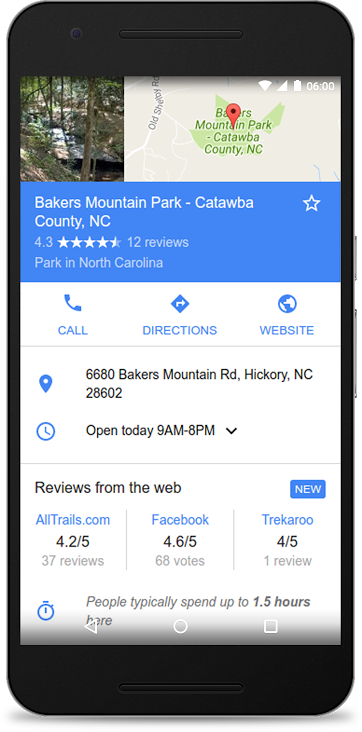
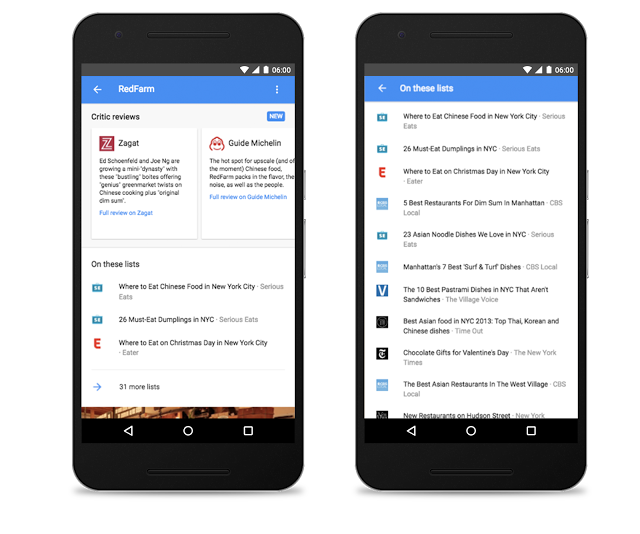
Now, Google is giving an even bigger platform to user-generated business reviews by adding “Reviews from the web” to its Knowledge Panels that appear in search results. This comes a month after Google started including best-of lists and critic reviews in results for local search.

local-reviews-google

Source: Google

Consumer reviews will appear in the Knowledge Panel exactly as critic reviews do, but they will be more visible on mobile where they appear before both critic reviews and best-of-lists. You can see how they will appear in the screenshots above and below:

localsearch-1

Source: Google

If you want to feature user-generated reviews from your site or another prominent review site, you need to mark up your content with Google’s review Schema. You must also abide by Google’s guidelines for inclusion.

Including the new “Reviews from the web” section, Google’s Knowledge Boxes are now prominently displaying three review sources. It will still be collecting and highlighting its own reviews, making it more important than ever for businesses to have a strategy to collect reviews from customers across a wide range of platforms.

Thanks to the increased profile of user reviews, it has never been easier for your customers to spread the word about your business to thousands of potential customers every day.

Twitter Video

Twitter’s video features have been a hit with users, including Periscope, the Twitter-owned live streaming platform. However, the company has struggled to find ways to monetize visual content.

This week, Twitter announced it was launching several changes to make it easier for advertisers to reach video audiences and creators to monetize their content.

For starters, the company is allowing advertisers to run pre-roll ads that appear before a video begins to play. Similar to YouTube’s pre-roll ads, the video advertisements will allow users to skip the ad if they are not interested.

For creators, adding these new pre-roll ads s as easy as signing up for Twitter’s Amplify program and opting-in to use pre-roll ads. You can choose to use the ads on an individual basis or by making pre-roll ads default on all video content.

In addition to the new ad format, Twitter is also making some changes to its Media Studio and Twitter Engage app to improve the monetization of content and advertising across its platform. These changes include:

  • A unified media library including videos, GIFs, and images.
  • Tweet scheduling features.
  • Team management and multi-account support.
  • Improved upload performance and overall stability.
  • An Earnings section detailing your monetization performance.

The biggest wrinkle for Twitter has been deciding how to monetize videos across Periscope live streams. The nature of live streaming video makes it difficult to incorporate ad breaks. Instead, Twitter is allowing Periscope users to seek and connect sponsors for live broadcasts.

These sponsors can then run pre-roll ads before live broadcasts begin.

Considering Periscope videos appear in Twitter timelines and live videos, the decision to incorporate pre-roll ads helps bring the streaming app more in line with Twitter’s other services while making them more attractive for both content creators and advertisers.

FacebookVideo

Your site’s speed on mobile devices will soon be a factor deciding how many people see your Facebook ads, according to an announcement from the social network this week.

In Facebook’s words:

“Over the coming months, we’re working to improve ad experiences for people by considering website performance and a person’s network connection in our ad auction and delivery system.”

While it isn’t clear exactly how site speed and page performance will be implemented into Facebook’s algorithm for displaying ads, the social network is already introducing features to help brands deliver content more quickly across Facebook.

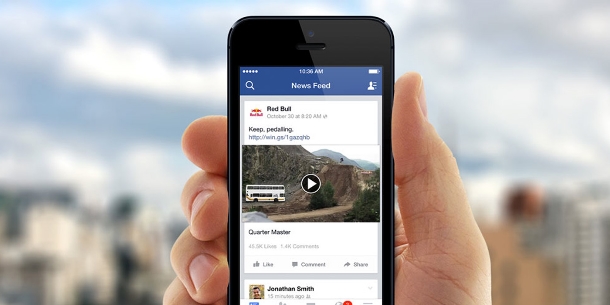
In addition to the use of Accelerated Mobile Pages, Facebook is introducing prefetching to help users see the content they are interested in as quickly as possible. This week’s announcement explains that prefetching starts loading mobile content in the Facebook in-app browser before a user ever clicks a link.

According to their estimates, this speeds up mobile site load time by as much as 29 percent and decreases the rate of site abandonment during the loading process.

The new Facebook help page dedicated to prefetching goes a bit more in-depth about how the system actually works:

“For each News Feed mobile ad, Facebook attempts to predict how likely a person is to click on an ad. If the prediction score meets the requirements, we prefetch the initial HTML page when the story first appears on a person’s screen. This content is cached locally on the person’s device for a short amount of time. If the person clicks on the ad, Facebook loads the initial page from the cache. The initial page then makes regular web requests to the publisher’s server to load the remainder of the page. We currently only cache the initial HTML page. Keep in mind that the CSS, Javascript or images on the website are not cached.”

Ultimately, Facebook’s changes are aimed at improving their overall ad performance and increasing engagement with ads. Advertisers with slow-performing sites tend to also underperform in many ad metrics.

While Facebook’s new feature will improve content delivery speed across the board, the company also offered five tips for tuning up your site:

  • Minimizing landing page redirects, plugins and link shorteners
  • Compressing files to decrease mobile rendering time
  • Improving server response time by utilizing multi-region hosting
  • Using a high-quality Content Delivery Network to reach audiences quickly
  • Removing render-blocking javascript

FacebookClick

Facebook Offers have been around since 2012, allowing brands to distribute coupons to users for special promotions. However, they never really took off like many of Facebook’s advertising features.

The social network is trying to turn that around by improving Offers to make it easier for people to find, save, and redeem coupons, especially from mobile phones. The changes also make it easier for brands to control who sees and uses their coupons.

Offers have always functioned by distributing online and in-store coupons as ads or organic Page posts that link to a brand’s site. When a person clicks the ad or post, they were then emailed a copy of the coupon.

Facebook_OffersAd-1920

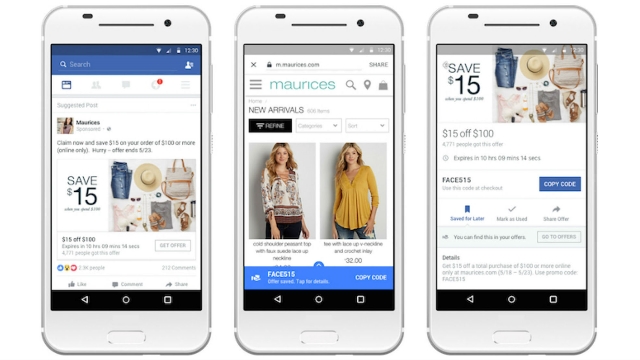
Facebook has streamlined and integrated the feature more thoroughly into their platform. While users can still click on Offers to visit the advertiser’s site and redeem their coupon via email. However, now offers will also be saved to a new Offers bookmark tab linked to their account.

This way, customers can quickly and easily access their coupons through Facebook’s mobile app and cashiers can easily scan the promotional barcode on their phone. Also, Offer codes will be shown at the bottom of the screen when users travel to an advertiser’s site to immediately redeem the code. That means they don’t have to exit the app to open their email, making the process less convoluted for users.

Not only is Facebook trying to make Offers easier to use and more attractive to users, the company is working to make sure those who show interest but don’t immediately redeem coupons don’t forget about you. When a saved offer gets close to expiring, Facebook will alert users to let them know time is running out to get savings.

On top of all of this, Facebook is making it easier for users to find Offers shared by brands with a new Offers tab on brand Pages.

Offers shared organically by brands are still available to anyone who sees it in their feed, however, Facebook is improving targeting for offer-carrying ads with more ad-targeting options. These including selecting people in your customer database to offer loyalty promotions or targeting similar individuals based on their characteristics.

According to media reported Tim Peterson, Facebook is working on expanding their Offer targeting options for brands even further, but it is unclear when those improvements can be expected. For now, Offers are getting a big shot in the arm that will make them more attractive to users and more effective for brands who use them.

Google Logo

Has your brand or business been using large pop-ups to gather email addresses or asking people to like you on Facebook? You might be in trouble with Google if you don’t change your site soon.

Google has announced it will begin to penalize sites with intrusive pop-ups or interstitials starting January 10, 2017.

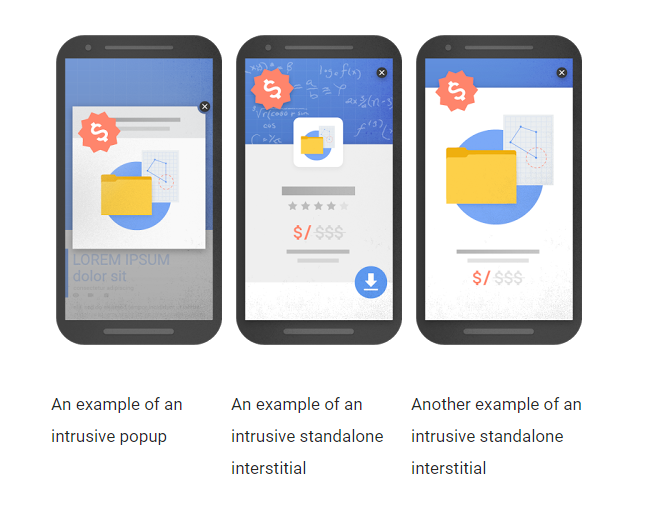
As Google defines them, intrusive interstitials are pop-ups that block the main content on a screen until an action is taken. While this can be an effective way to ask visitors to take action, most people find these annoying because it serves as a roadblock before they are able to see what they came to see.

“Pages that show intrusive interstitials provide a poorer experience to users than other pages where content is immediately accessible. This can be problematic on mobile devices where screens are often smaller.”

For the moment, Google is just singling out interstitials on mobile devices and devaluing search rankings for mobile results. It is unclear if they intend to extend this to desktop in the future.

IntrusiveInterstitials

The change to Google’s algorithms specifically targets pages with interstitials that either pop-up immediately when a person lands on a page or is triggered by scrolling down the page. It was also devalue sites which use oversized above-the-fold content to look like an interstitial.

There are some exemptions to Google’s interstitial rules. Pages with “reasonable” banners that don’t take up excessive amounts of screen space will be considered acceptable. Also, sites that are required to use interstitials for legal reasons – such as cookie usage or age verification – will be exempt from ranking devaluation.

The latest change shouldn’t come as a complete surprise. Google has already cracked down on one form of interstitials in the past by devaluing pages with interstitials that prompt users to install a mobile app. According to the company’s announcement, their work into that algorithm change showed the company they also needed to tackle interstitials as a whole.

As with all algorithm changes, the new guidelines for interstitials don’t automatically mean death for your online traffic if you are using interstitials. If your site is still highly relevant for a search, it may still appear in the top results. However, it is usually better to err on the side of caution with Google, rather than face the risk of a penalty.

Image Source: Pepsi

Image Source: Pepsi

Earlier this year, Twitter rolled out a new feature known as #Stickers that let users add searchable emoji to their photos posted on the social platform. Since then, Twitter says millions of photos containing #Stickers have been tweeted and shared around the world.

Initially, the emoji available for these “virtual hashtags” were limited to the options Twitter created. However, the site is starting to open the door to allow brands to create their own #Stickers as an ad type called Promoted Stickers.

As Twitter says in their announcement:

“Brands can design four or eight stickers — like accessories and other props — for users to add to their own photos. Photos with a brand’s stickers are shared with all of a user’s followers, allowing brands to be featured by their fans in a truly authentic way. #Stickers act as a visual hashtag, meaning that photos with your brand’s sticker will be connected and discoverable to anyone who taps your brand’s sticker. This allows a brand to see and engage with the people who are using their stickers in creative ways.”

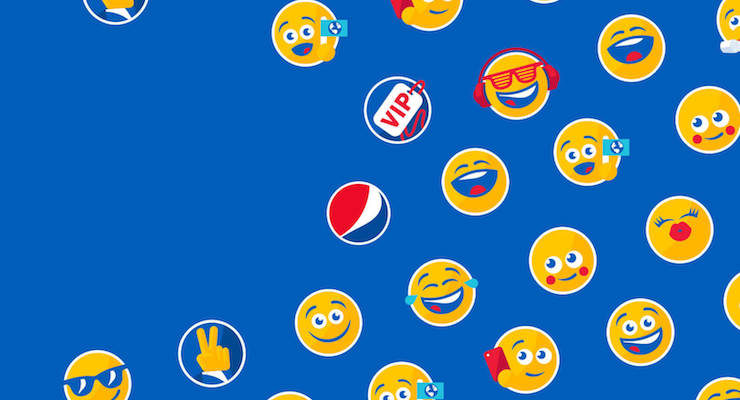
Pepsi is the first brand to use Promoted Stickers, with 50 custom “#PepsiMoji”rolling out to 10 countries, including the USA, Canada, Mexico, Argentina, and Russia. The stickers are part of a larger “Say It With Pepsi” campaign and can be found in the Twitter #Stickers library.

The company has already begun sharing tweets with the stickers, like this one from Pepsi Canada:

Since Twitter is initially keeping the Promoted Stickers limited to a select number of brands and managed accounts, it is unclear how much they cost or what tools may be available to help create new branded stickers. It is also unclear when or if the social platform plans to expand the service to more brands in the near future.

Pinterest-logo

Pinterest is continuing to bulk up its ad platform by allowing advertisers to now buy ads based on how much they want to pay for impressions, the company announced today. In the past, advertisers were only allowed to choose how much they wanted to pay for engagement.

Along with the new way to purchase ads, Pinterest has also added frequency capping to their ad services.

“Now you can bid on a CPM [cost-per-thousand impressions] basis and we’ll optimize how we deliver your ads to reach more people,” according to a Pinterest blog post. “You can also specify the maximum number of times someone sees your campaign. By using this new solution, you’ll get more impressions for your campaigns at more efficient rates and drive higher results.”

This latest move continues Pinterest’s trend of expanding their advertising offerings to bring in more businesses. Earlier this year, the company increased the number of targeting options for ads. They have also made Buyable Pins available to users on all devices, including desktop.

While advertisers have been able to bid for how much they are willing to pay for engagement, Pinterest’s CPM-based ads were only available at fixed prices until now. These prices typically ranged between $30 and $40. Those prices should go down as the new bidding process will increase competition.

The feature is just rolling out, but already JCPenney, The Home Depot, and General Mills are running tests with the new CPM-based ads. The new ads are already available for all business in the U.S, UK, and Canada. More countries are expected to come in the future.

facebook-ads-hed-2016

Facebook operates one of the largest ad services on the internet and they claim they have finally figured out how to beat ad blockers with two new changes to their ad platform.

To start, the company has announced they have created a way to get past ad blocking extensions on desktop to show ads to everyone who visits their site – even if they don’t want to see them. The company was unwilling to say how they have accomplished this, but most likely they have created a way to ‘cloak’ their ads so they are not able to be targeted and blocked by popular ad blockers.

While Facebook is blocking ad blockers on desktop devices only, they are most likely working to do the same on mobile in the near future.

To compensate for this, Facebook is trying to make sure the ads users see are more relevant and useful to their lives by giving new control over what ads are shown in their news feeds.

The new ad control tool was released today and lets users add or remove interests from an “ad preferences” list to show what topics they are most interested in.

facebook-desktop-01-2016

“When they’re relevant and well-made, ads can be useful, by helping us find new products and services and introducing us to new experiences—like an ad that shows you your favorite band is coming to town or an amazing airline deal to a tropical vacation,” Andrew Bosworth, VP of ads and business platform for Facebook, wrote in a blog post. “But because ads don’t always work this way, many people have started avoiding certain websites or apps, or using ad blocking software, to stop seeing bad ads. These have been the best options to date.

To help refine their ad service, Facebook commissioned research firm Ipsos MORI to survey users from around the world to determine why users are ad blockers have become so popular. The majority of those surveyed said the main reason they started using ad blockers was because advertising often disrupted their browsing experience.

“While people want a personalized online experience, they dislike ads that are disruptive, however personalized,” wrote Adam Isaacson, research director of Ipsos Connect. “Those that block the content on the page, that pop up with sound and that slow the content on the page were all seen to be disruptive by our qualitative sample.”

The hope of the new changes to Facebook’s advertising service is that giving people more control will make users more interested in the ads their shown and provide a more seamless browsing experience. While many will complain about the move to thwart ad blocking software, the ability to choose what you’re shown will hopefully make the change easier to swallow.