
Tag Archive for: Social Media Marketing

Twitter has shut down numerous accounts accused of artificially increasing the popularity of their posts using a method called “tweetdecking.”

Tweetdecking gets its name from the app TweetDeck, which can schedule posts ahead of time. Conspiring accounts were working together to retweet content in order to force it to go viral.

In this case, most of the accounts removed were using the technique to steal content (including memes and jokes) to make accounts more prominent. These accounts would then use their artificial popularity to promote other accounts or products for financial profit.

This practice blatantly violates Twitter’s spam policy. It is also just the latest instance of users and brands gaming the system to increase their online presence.

Since the earliest days of Google, brands and “black hat” users worked together to rig the search engine to ensure high visibility. Usually, this took the form of buying links to artificially appear authoritative to Google’s algorithm. The search engine has since worked to eradicate the practice, but similar tricks like buying “likes” or “retweets” have since sprung up on almost every other popular social platform.

Twitter’s latest bans are the most recent crackdown in a long-running game of whack-a-mole. Still, it provides a harsh reminder that brands who try to manipulate social networks or search engines in bad faith are nearly guaranteed to be eventually penalized or banned entirely.

A recent survey from the United States Chamber of Commerce confirms what many already knew: small businesses across the country are discovering that social media can help find new customers and grow your business. In particular, they see Facebook as a major platform for marketing their business directly to their audience.

The findings of the survey show that more than half (60%) of all small businesses are using Facebook to grow their business, boost sales, find new customer sources, and reach customers they typically would not be able to reach.

Why Facebook?

For many small businesses, establishing a robust online presence seems difficult and costly. Over 50% of survey respondents said the cost of internet services keeps them from developing an online presence. Additionally, 57% of small businesses said digital tools were confusing or challenging.

However, small businesses agreed that Facebook provides an affordable alternative that is easy-to-use and understand.

How are small businesses using Facebook to grow?

According to the survey, 60% of small businesses are using Facebook to achieve a variety of business goals, such as:

  • 32% reported building their business on Facebook.
  •  42% reported hiring more employees since using Facebook
  •  56% said using Facebook as a business tool increased their sales
  •  52% reported that Facebook allowed them to grow their business by allowing them to reach customers outside of their local area, in other cities, states, and countries
  •  70% of small businesses report that using Facebook helps attract new customers
  •  39% of small businesses prefer to send potential customers to their Facebook page than to their own web page.
  •  Over 50% of small businesses reported that Facebook allowed them to take advantage of growing digital sales.

The report also explains:

“In addition to facilitating firms’ successes, over half of small businesses on Facebook reported that the platform as helped them overcome challenges in increasing revenue.”

People have been proclaiming that organic reach on Facebook is dead for years, thanks to moves that increasingly prioritize paid ads over regular Page posts. However, now might really be the time to start grieving. Facebook has announced sweeping changes to its News Feed that will make organic Page content even less likely to be seen.

According to Facebook, the change is ostensibly to prioritize the “social” part of their platform by putting posts from friends and family at the top of the News Feed. As this happens, “public content” (or content shared by Pages, rather than individual accounts) will be removed or pushed deeper down the feed.

However, there is a caveat that Page content that “spark conversations” will also be prioritized.

It is unclear exactly how this will be measured or enacted, but it implies that brands or publishers will have a harder time reaching users unless their content regularly receives a large number of comments.

Facebook explains the changes in a blog post, saying:

“Because space in News Feed is limited, showing more posts from friends and family and updates that spark conversation means we’ll show less public content, including videos and other posts from publishers or businesses…Page posts that generate conversation between people will show higher in News Feed. For example, live videos often lead to discussion among viewers on Facebook – in fact, live videos on average get six times as many interactions as regular videos.”

Facebook is largely trying to downplay the impact on businesses or publishers, but Zuckerberg’s own blog post acknowledges that he expects “some measures of engagement will go down” for publishers and small businesses.

Unsurprisingly, this creates more incentive for brands to buy into Facebook’s ad platform to ensure their content actually reaches their audience.

Facebook’s Adam Mosseri recommended several steps small business or brands can take that rely heavily on video content – particularly Facebook Live.

“Page posts that generate conversation between people will show higher in News Feed. For example, live videos often lead to discussion among viewers on Facebook — in fact, live videos on average get six times as many interactions as regular videos. Many creators who post videos on Facebook prompt discussion among their followers, as do posts from celebrities. In Groups, people often interact around public content. Local businesses connect with their communities by posting relevant updates and creating events. And news can help start conversations on important issues.”

These changes and the continually decreasing organic reach across Facebook may make it tempting to try to manipulate or goad users into engaging, but Mosserri says this will get you in even worse trouble.

He says “using engagement-bait to goad people into commenting on posts is not a meaningful interaction, and we will continue to demote these posts in News Feed.”

Instagram hasn’t become as synonymous with advertising or online marketing as it’s older sibling, Facebook, has. However, new stats announced by the company show business is booming on the popular social media platform.

Since July, more than 10 million businesses have launched business profiles – Instagram’s version of Facebook’s Pages – totaling over 25 million business profiles.

Instagram’s business profiles rolled out in May of last year and saw an initially slow response. The profiles give brands a more professional appearance on the app, including a “contact us” button and access to analytics features.

The inclusion of these business-oriented features has helped woo more advertisers to the platform, as well. Since the launch of business profiles, Instagram has increased its advertiser base from around 200,000 in February 2016 to more than 2 million in September of this year.

According to Instagram’s statistics, approximately 80 percent of Instagram’s 800 million monthly active users follow a business. Additionally, around 40 percent of the 500 million active daily users view at least one business’s profile each day.

Interestingly, two-thirds of the more than 200 million people that view a business profile each day did not previously follow the brand. That suggests the pages are effectively helping connect businesses with new potential customers and fans.

It is official. After over a year experimenting with various types of longer tweets, Twitter is finally letting everyone tweet with 280-characters at a time.

The double-sized tweets are rolling out as the default length limit for users around the world, except Japan and Korea. The iconic 140-character limit will be phased out, although Twitter suggests the change won’t affect most tweets.

According to the blog post announcing the change, most tweets stayed below the old limit even when they had the opportunity to say more. However, “we saw when people needed to use more than 140 characters, they tweeted more easily and more often.”

Twitter also noted that “historically, 9% of tweets in English hit the character limit.” With the new extended length, that number has dropped to only 1% of tweets.

Of course, some on the platform seem to be outraged by the break in tradition. Most, including celebrities, are celebrating the longer tweets with jokes and pointlessly long tweets for fun.

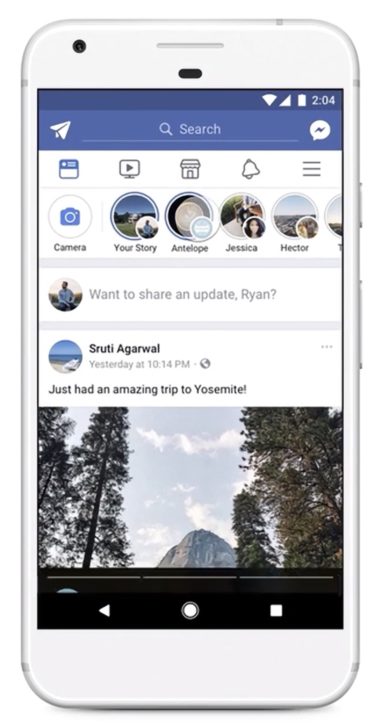
In an attempt to breathe some life into their version of ‘Stories’, Facebook is expanding the feature to all pages – rather than just individual users.

This means brands can now start sharing Stories too all their friends and followers, though it’s unclear whether businesses will take Facebook up on the offer.

Since launching the Snapchat-like feature on Facebook earlier this year, Stories have largely been ignored by most users. Compared to Instagram or Snapchat, Facebook has struggled to find the right place or utility for their own version of the feature and many have forgotten the feature exists at all.

Rather than admitting their failure, the massive social platform is doubling down in hopes that they can encourage more users to share their own stories by letting brands take the lead. Presumably, the hope is that users will follow more influential pages’ leads and boost the number of Stories being shared.

According to Facebook, the expansion has actually been in high-demand recently. Product manager Amy Sun says users have been clamoring for more ways to share and engage in the feature.

”We’ve been listening to our community and working to make it fast, fun and easy for people and Pages to create Stories on Facebook. Over the coming month, Pages will be able to create Stories to share with the people who follow them.”

It is entirely possible that this move will allow Facebook Stories to finally find their audience and take off as a legitimate way to engage with your friends and followers. However, it feels likely that Stories are just not a natural fit for Facebook and may never see similar levels of popularity as on Snapchat, where the idea originated.

It may not come as a surprise that Facebook favors native videos, but a new report shows just how much of a boost videos can get by being uploaded straight to the social media platform.

According to Quintly, native videos on Facebook get up to 530% more comments than videos shared from other sources like YouTube.

The report comes from a study originally published back in March, but which has been recently updated with data collected between January and July of this year.

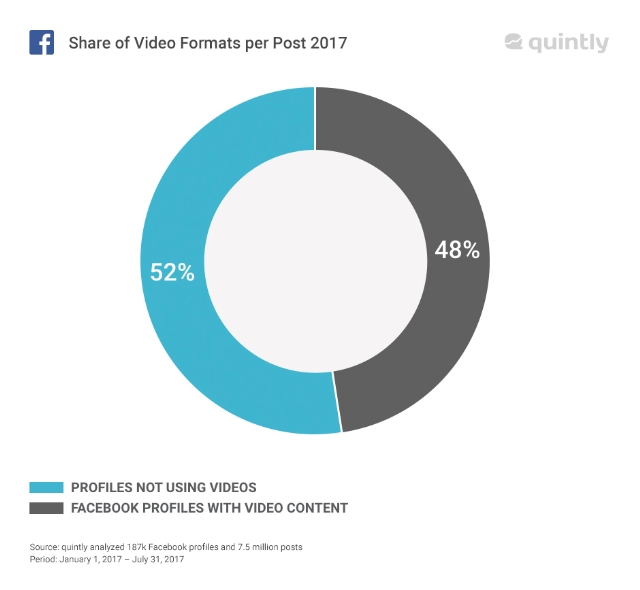
Including the new data, the study analyzed 187,000 Facebook pages and 7.5 million posts. From all this data, Quintly says it deduced that approximately 92% of all videos on Facebook are uploaded natively.

The study also shows how video has grown on Facebook recently. From January to July, almost half (48%) of all pages analyzed uploaded a video to their timeline. Of those, 92% posted at least one Facebook native video or Facebook Live video.

In comparison, only 26% of pages analyzed posted YouTube videos and 7% shared videos from Vimeo or other sources.

Facebook video’s biggest competition still comes from YouTube, but Facebook’s own clips still trounce all others in every metric.

Native Facebook videos received 168% more interactions – reactions, comments, or shares – compared to YouTube videos. They also received eight times more comments and 477% more shares.

It is highly likely that part of Facebook’s domination here is that it owns the platform, and thus, makes the rules. Facebook is almost certainly showing their own videos more prominently, which would lead to more engagement.

However, that is not the whole explanation. Native videos on Facebook’s platform also enjoy several arguably natural benefits that make them more likely to be viewed and engaged with. They can be played seamlessly from your timeline and users can react or comment as they’re watching.

In comparison, videos from other platforms have to be viewed off-site or in a separate pop-up player, and then navigate back to their timeline to like, share, or comment. At that point, they might decide to move on and keep scrolling through their feed.

Whatever the reason for native video’s domination on Facebook may be, it is clear that posting your clips directly to Facebook is the most effective way to get seen and build your brand on social media.

Everyone seems to be ripping off Snapchat’s style these days, whether it’s the spread of vanishing video or “Stories”. Still, it doesn’t seem to be impacting the platform’s popularity with their biggest demographic.

Teens still prefer Snapchat over any other platform – and it’s not even close.

The investment firm Piper Jaffray’s latest annual “Taking Stock With Teens” report surveyed over 6,100 people across 44 states. It specifically asked teens about their social media usage over the past month.

According to their results published on AdWeek, almost half (47%) of all teens said Snapchat is their favorite app. That’s an increase from 35% last year. The closest runner-up was Instagram, which was preferred by 24% of teens. Despite being the biggest social network, Facebook trailed with 9% of the vote. Lastly, Twitter and Pinterest picked up 7% and 1% respectively.

The report also includes a number of other interesting findings about teens’ media and shopping habits, including:

  • 82% of teens say their next phone would be an iPhone
  • 23% of teens prefer to shop at specialty retailers, with 17% saying they like pure-play e-commerce retailers
  • 49% of teens say their favorite website is Amazon, while 6% choose Nike.com and 5% prefer American Eagle’s website.

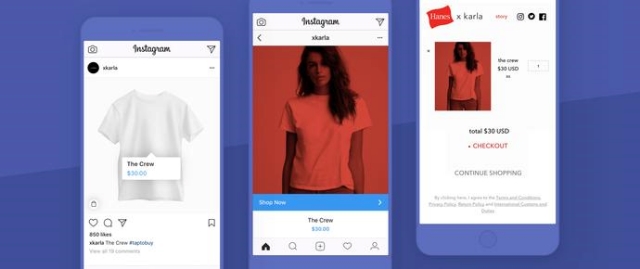
Instagram is quickly growing from just a platform for users to share pictures and videos towards a fully-fledged combination of social media and shopping. With the help of Shopify, Instagram is rolling out a new feature allowing “thousands” of merchants to seamlessly sell their products through Instagram just in time for the holiday shopping season.

The feature allows selected merchants to tag items in their Instagram posts to mark that they are available for purchase. When viewers see the post, they can easily click the tags to directly purchase the items without ever having to leave Instagram.

The feature has been in limited testing for almost a year, but it has been restricted to just a small number of high-profile brands like Warby Parker and Kate Spade. Since then, they’ve been gradually opening the feature to a few other merchants through Shopify.

The early response to this testing has been enthusiastic, so Shopify has now decided to expand the feature to a larger testing group including “many thousands” of merchants. They say they expect to roll it out even more widely in the near future, but they want to test and refine the system before a complete launch.

Pinterest just hit a major milestone and they are celebrating by teasing several new features coming soon.

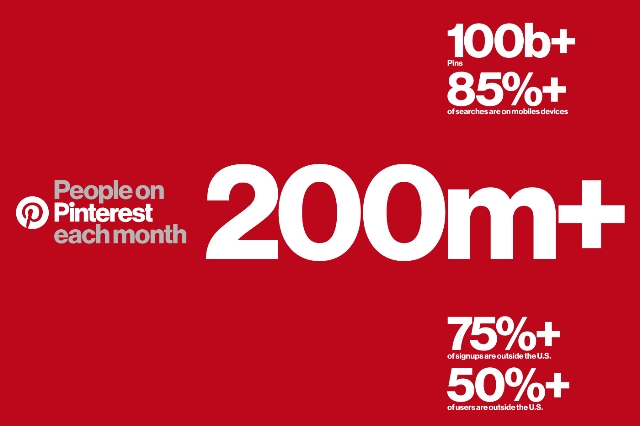
According to a blog post last week, Pinterest officially surpassed 200 million monthly active users, representing more than 40% growth since last year. Notably, more than half of these users live outside the USA which shows how Pinterest is progressing as a global platform.

At the time of the milestone, Pinterest says that over 100 billion pins had been created. It also notes that 85% of all searches on the platform come from mobile devices.

Of course, the company isn’t using the milestone as an opportunity to relax or slow down. The announcement hints at several features planned for the near future.

“You’ve told us what you want to see next, so we’re building them—it’s that simple,” Pinterest says.

For example, pinch-to-zoom functionality has been widely requested and is slated to be released soon. But, that’s just the beginning. Pinterest is also starting to test “boards-within-boards”, allowing users to create subcategories for their Pinterest boards.

Over the next few weeks, Pinterest will be sending invitations to select users to begin testing the feature – as well testing other new ideas.

The platform is keeping mum about any other projects or features they have coming down the pipeline, but the milestone announcement says you can expect to hear more in the near future.