AdWords Editor is one of the best tools available for editing and building out campaigns and ad groups, but it has its limits. For example, it would be convenient to be able to break up an ad group, clone a campaign, or copy keywords right into the Web UI. Thankfully, now you can, as Ginny Marvin reports. This week, Google added copy and paste functionality for the Web UI, making AdWords Editor even better than before.
Users are now able to copy keywords, ads, ad groups, or entire campaigns directly into the Web UI with the simple keyword shortcuts you are already used to. Simply press Ctrl-C/Cmnd-C and Ctrl-V/Cmnd-V. Though if you want, you can also use the Edit drop down menu.
Martin suggests the final version of the update might not be exactly as Google’s screenshot shows. Apparently you may see “Copy to” instead of “Copy” in the drop down, and you might not see the option to “copy keywords as paused”. Other than that, the tool is expected to roll out as planned.
You will be prompted when copying keywords to select both the campaign and ad group where you would like them to be copied.
Google AdWords announced yesterday a major reporting update to conversion tracking called Estimated Total Conversions will be rolling out over the next few weeks. The new feature provides estimates of conversions which take place over multiple devices and adds this to the conversion reporting we are already accustomed to.
Once enhanced campaigns launched earlier this year, search advertisers have had more control to combine mobile and desktops with the ability to further modify bids by mobile as well as other targeting considerations. There was a missing piece limiting the effectiveness of campaigns. We had limited data on how consumers actually navigate and convert across multiple device options.
What is a Cross-Device Conversion?
The widespread use of mobile and tablet devices to browse and shop online has greatly influenced how we actually interact with businesses. From our couch, we can have three options for achieving our online goals within reach, and it has been shown that we choose different devices for different tasks.
A study from Google last month found that more than 90 percent of multi-device consumers move sequentially through several screen like mobile to desktop, or mobile to tablet in order to complete transactions. There are even those who move from desktop screen to desktop screen, likely going from work to home computers. Anytime a person begins the actions that initiate a conversion on one screen, only to complete the conversion later on another screen, that is a cross-device conversion.
How Estimated Total Conversion is Calculated
Google calculates these types of conversions for advertisers based on how their customers convert when they are logged in. Then, they use this data to extrapolate out data to estimate what the total conversions from cross devices may be. The data is only used in aggregate and is not personally identifiable according to Search Engine Watch.
00TMOhttps://www.tulsamarketingonline.com/wp-content/uploads/2018/07/TMO-Logo.pngTMO2013-10-02 13:20:352013-10-02 13:20:35New AdWords Update Includes Estimated Total Conversions
Last week SEO and online marketing professionals all had a collective freakout as keyword data stopped showing up in Webmaster Tools. They even made memes! Well there is good news, Google has said the issue was an unintended bug, and should be fixed soon.
Google made a very public switch to secure search last week, in an effort to encrypt all search information and provide “extra protection” to searchers. Webmasters immediately noticed nearly all of their keyword referral data disappeared and was replaced with “(not provided)”. The best way to deal with the issue was to access similar keyword data under Search Queries within the Search Traffic section of Google Webmaster Tools.
But there was a problem, when secure search was implemented that keyword data stopped being reported or provided within Webmaster Tools. Many questioned whether this was a mistake or a change in policy, while the regular anti-Google group proclaimed Google had lied and was intentionally hiding the data; Matt Cutts had previously estimated only one to two percent of keyword data would be affected by secure search.
Now, John Mueller, a member of the Google Webmaster Tools team in Europe, as well as a separate Google spokesperson have both clarified the missing data was the result of the bug, and they are working hard to solve the problem.
Mueller posted to the Google Webmaster Central forum, “The team is aware of the problem and working on speeding that data back up again. Thanks for your patience in the meantime.” The spokesperson told Search Engine Watch, “We’ve recently fixed a small bug related to data reporting in Webmaster Tools. We expect reporting to return to normal in the coming days.”
00TMOhttps://www.tulsamarketingonline.com/wp-content/uploads/2018/07/TMO-Logo.pngTMO2013-10-02 12:38:292013-10-02 12:38:29Missing Keyword Data to Return to Webmaster Tools
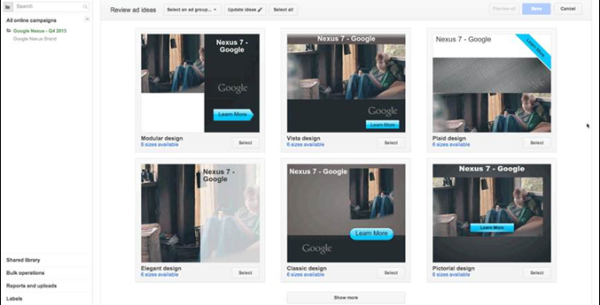
Google made some changes to how you can design display ads to help ease the challenges advertisers and SEM agencies have been complaining about for what seems like forever. Today they rolled-out Ready Image Ads within AdWords, which aims to make it easier to create ads for multiple sizes that look good across all devices. The tool is currently Google’s best attempt to solve this issue and they hope to get more AdWords advertisers to run display campaigns, according to Ginny Marvin.
The tool works by simply entering a URL from your website. From there, the Ready Image Ads tool automatically pulls images from your site to create various ads in various IAB standard sizes. These ads are also HTML5, making them compatible for viewing on mobile and desktop devices alike.
Ready Ads can also be used to create dynamic ads, engagement ads (including hover-to-play and lightbox ads), video ads, and general purpose ads from a variety of templates. View Google’s introduction video for Ready Ads below:
As it comes time to prepare for business strategies going into the next year, many are wondering exactly how much they should be planning for in their SEO budget. Well, there is good news and there is bad news. The good news is SEO continues to yield great returns on your investment. The bad news is SEO is getting more and more expensive to do well. Jayson DeMers put together five reasons you should be asking for more for your SEO in 2014.
1)You Can’t Cheat With Cheap Backlinks
Not too long ago, you could just buy packages of a huge number of cheap backlinks and skate into high rankings on Google. That might be a bit of an exaggeration, but not much. However, Google has made it very clear they won’t let you play that game anymore. They’ve started penalizing those who try to use cheap shortcuts to a lot of backlinks, and they’ve gotten great at spotting when you do try to game the system.
Article spinning, excessive social bookmarks, paid links, duplicate content, and keyword stuffing have all been ruled illegal in Google’s book. You’ve got no choice but to go legit now.
2) Recovering from Google Penguin Can Be Costly (And You Need an Audit Anyway)
While many have already managed to recover from a drop in the rankings thanks to Penguin 2.0, there are plenty who haven’t been able to make a full recovery yet, and even more who are likely to be penalized in the coming year. But, recovering from Penguin takes a lot of time and effort, and time means money.
Usually, site owners need to undergo complete SEO link profile audits to identify all of the problems costing their site and begin recovery. Even if you haven’t been hit with an unnatural link warning within Google Webmaster Tools, it is still wise to perform an audit to spot any potential trouble links before Google does.
3) Good Content Marketing Isn’t Cheap
Google has begun to favor quality content pretty heavily, but this also means the bar has been raised. You used to be able to write just a few short blurbs every work and get reasonable traffic and authority in Google, but now every brand has a blog. You have to put in more work to stick out.
DeMers goes as far to suggest the standard minimum word amounts to rank well are going to go up, even as high as 2,000 words per article. He uses Google’s new in-depth article section as an indicator of this move, though Google’s own words paint a slightly different picture. “Users often turn to Google to answer a quick question, but research suggests up to 10% of users daily information needs involve learning about a broad topic.”
I don’t think article word count will necessarily go up as more blogging continues, but exploring your topic more thoroughly is usually a good idea. Google will still allow succinct content into the rankings for those who are looking for quick and ready answers, but that content can’t be weak. Even the shorter content you put out needs to offer a real and identifiable value to visitors.
4) You Need a Content Marketing Strategy
Content marketing doesn’t simply consist of publishing content. There is much more that has to be done to get that content out in front of your audience’s eyes. That’s why many have called content marketing the new SEO, even though many SEO professionals are expected to handle content creation as well.
There is some truth to the idea however. Publishing useful and interesting content builds your brand and generates brand signals that do get your content ranking in search engines. However, this just shows how important it is to have a plan put in place ahead of time for your content marketing. If you don’t plan ahead, you’ll likely fall into the low quality content pattern with less flashes of quality unique work.
If you are expected to handle SEO and content marketing at the same time, you’re going to need more resources to ensure everything is done right.
5) Outsourcing Social Media to Scale Up
Social media appears to be ingraining itself into search engine rankings at an alarmingly fast rate, and as such it requires a lot of attention. It is gaining steam both as an outreach and audience engagement strategy as well as driving traffic and boosting rankings.
The problem is, depending on the size of your SEO team, you likely don’t have the time and means to properly handle your social media on your own. Business owners don’t have the spare time to be investing heavily into social media, and an SEO professional’s time is already spoken for by a multitude of tasks. If you’re brand can afford it, outsourcing social media means your social efforts will be focused and well planned, while your other responsibilities won’t falter.
00TMOhttps://www.tulsamarketingonline.com/wp-content/uploads/2018/07/TMO-Logo.pngTMO2013-09-27 11:32:222013-09-27 11:32:22You’re Going To Need a Bigger Budget to Do SEO Right in 2014
Google Webmaster Tools is one of the best tools at your disposal for making sure people are able to find your site, but a surprising amount of people run websites and never open it. Matt Cutts, head of Google’s Webspam team calls not using the free Google webmaster resources one of the five most common mistakes a site owner can make, so it makes sense to share some information about the tool.
For those that don’t know, Google Webmaster Tools is free software that helps you manage the more technical aspects of your website. It is especially loved by SEO professionals because it offers various diagnostic reports on numerous areas of your page from the best possible source. You can find out why you aren’t ranking or review your link profile, but Webmaster Tools also provides a direct hotline between Google and website owners. If you have been hit with a penalty, you are notified in Webmaster Tools.
Google Webmaster Tools is often confused with Google Analytics, which is a sort of companion software to Webmaster Tools. However, Analytics is aimed at marketers and provides data more relevant for that area. Both provide extensive resources and options for optimization, but for SEO you will be much more interested in Webmaster Tools.
You will have to be logged into your Google account which you use for Gmail or Google+, which you should undoubtedly have if you are running a website. Once you’ve logged into Google, you can go to http://www.google.com/webmasters/tools and begin the process of setting up your account. Bruce Clay offers an extensive tutorial with four different options for verifying you are a site owner and setting up your account.
Once you’ve verified, you are set to explore the options and resources available. It may take some playing around to get the hang of, but you’ll be amazed at what you can accomplish within the software. There are also numerous guides available to help you understand what can be done with Webmaster Tools.
https://www.tulsamarketingonline.com/wp-content/uploads/2018/07/TMO-Logo.png00TMOhttps://www.tulsamarketingonline.com/wp-content/uploads/2018/07/TMO-Logo.pngTMO2013-09-23 13:34:202013-09-23 13:34:20Getting to Know Google Webmaster Tools
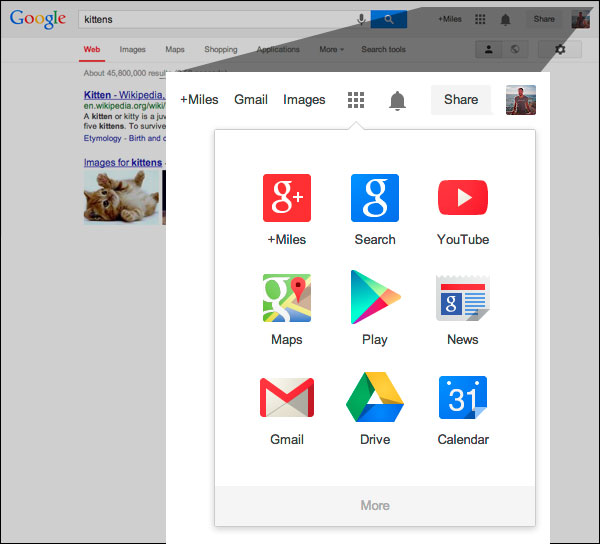
Yesterday you may have noticed a couple changes when you opened up Google. The first is the most obvious – it was accompanied by a little help box explaining the change – but Google has officially implemented their new app launcher in the main Google navigation bar for quick and easy access to other Google products.
You’ll be familiar with this app launcher if you use Android devices or Chromebook computers. Search Engine Land also reports that the grid-style launcher has been in testing since February or earlier.
The other change is a lot more subtle, but still of note for the design community. Google has flattened their logo, keeping up with the hot trend. Flat design is especially popular at the moment as Apple’s new flat iOS also rolled out earlier this week. The colors in the Google logo are also slightly different, but you won’t be too thrown off by the tweaks.
Many will have already seen the updates, but if you’re Google page still looks the same as it always has, be patient. Google says it should be completely rolled out over the next couple months on most Google products.
00TMOhttps://www.tulsamarketingonline.com/wp-content/uploads/2018/07/TMO-Logo.pngTMO2013-09-20 10:33:162013-09-20 10:33:16Google Officially Rolls Out Their New Logo and App Launcher
If you ask some marketing professionals, they may acts as if it is common knowledge that Google +1’s help raise your rankings on the search engine results. However, that “knowledge” is more an assumption based on a few correlation studies such as those done by Searchmetrics and Moz. These studies found extremely high correlation between Google +1’s and high rankings, but as you should know, correlation does not equal causation.
In fact, Google’s most prominent mouthpiece and Distinguished Engineer Matt Cutts has openly debunked the theory that more +1’s lead to higher rankings. But, that only sparked more debate. Whether or not there is a causative link between these two is much more fuzzy than many might tell you.
In an attempt to get to the bottom of this question, Stone Temple Consulting decided to conduct a real study of the effect Google +1’s have on search rankings. The difference is this study would be a real examination of causation, not correlation. The result: “Google Plus Shares did not drive any material ranking changes that we could detect.”
Eric Enge, leader of the study, did admit there were some possible limitations to the study. One of the biggest issues is the potential amount of links not showing up in the monitoring tools used in the study. In Enge’s estimate, the cumulative links found by Open Site Explorer, Majestic SEO, and Ahrefs is at best 50 percent of the total links to a site. It could even be as low as 30 percent of the links.
There was also a fair chance that general ranking movement and algorithm adjustments that are always occurring might not have been noticed in the study. In general, all studies of this sort are also very vulnerable to Google’s general complexity. There are so many factors involved which are not fully disclosed that any number of things could not have been taken into account.
Enge admits to these issues early, but he still stands by his study and the findings. He published a full review and report of the study and its methodology on Stone Temple Consulting’s website earlier this week. You can find all of the dirty details there, but the simplest conclusion is that Google shares are not driving up rankings. There will of course be many who still don’t believe this, and the debate will go on, but this tilts the scales away from what was considered conventional wisdom by many.
00TMOhttps://www.tulsamarketingonline.com/wp-content/uploads/2018/07/TMO-Logo.pngTMO2013-09-19 12:02:212013-09-19 12:02:21Recent Study Says +1’s Aren’t Driving Up Rankings
Since the introduction of Google’s Penguin algorithm many have suggested that links are no longer important for SEO. I’ve even seen some misguided folks suggesting all links are outright bad. As usual the truth is more complicated than that.
It has become such a common issue that veteran SEO writer used his regular column over at Search Engine Watch to attempt to fully answer whether links are important for SEO these days. The exact question he was asked was “do you feel Google is putting less emphasis on links as part of their algorithm?”
The truth is there are a variety of types of links that have been devalued and count very little or are poisonous to your SEO. BUT, these links were almost entirely the type “that never should have been counting in the first place.”
You see, the types of links being devalued are being brought down because they are spammy. Google has gotten increasingly smarter and better at its job of helping people find what they want on the internet without running into spam or low-quality sites. The devalued links come from junk directories, link networks, paid link brokers, article databases, link wheels, etc. The list could go on and on. But, this hasn’t brought down the quality links that good SEO professionals have built.
In Ward’s opinion, quality links matter even more now. Google can tell a lot of information about links in your profile, and they are swift to penalize low quality or spammy links, but they are even more rewarding to those who have the “right” kind of links.
Any SEO professional or online marketer you hire to help raise your brand’s profile online should be able to tell the difference between good and bad links. They know what Google doesn’t like, and they stay out of trouble. However, the best online marketers know that organic search traffic and link building are only a part of a much larger system.
00TMOhttps://www.tulsamarketingonline.com/wp-content/uploads/2018/07/TMO-Logo.pngTMO2013-09-17 11:32:452013-09-17 11:32:45Are Links Still Important in SEO?
Google recently integrated their Panda algorithms into their normal indexing process, and this has sprung up a whole new batch of questions from webmasters. The most common question is specifically how site owners will know if their site has been hit by Panda. Really, it was only a matter of time before Matt Cutts, the noted Google engineer and head of Webspam, addressed the issue.
And that is what he did earlier this week, when Cutts used one of his Webmaster Help videos to respond to Nandita B.’s question, “how will a webmaster come to know whether her site is hit by Panda? And, if her site is already hit, how she will know that she has recovered from Panda?”
Now that the Panda algorithm is a part of the normal search indexing process, finding out if you’ve been affected by Panda won’t be near as easy. You can’t just compare your analytics reports with recorded dates for Panda rollouts. But, Cutts does have some suggestions if you think your site has been affected.
Cutts said, “basically, we’re looking for high quality content. So if you think you might be affected by Panda, the overriding goal is to make sure that you’ve got high quality content.”
Of course, high quality content in this context means sites that offer real value to users. It appears integrating Panda was actually one of the last steps in a shift towards a high focus on high quality content. They’ve been suggesting focusing on value for a long time, and now it is officially a large part of the normal search algorithm.
https://www.tulsamarketingonline.com/wp-content/uploads/2018/07/TMO-Logo.png00TMOhttps://www.tulsamarketingonline.com/wp-content/uploads/2018/07/TMO-Logo.pngTMO2013-09-12 12:34:122013-09-12 12:34:12What Are You Supposed To Do If You Think You’ve Been Hit By Panda?

 Google AdWords announced yesterday a major reporting update to conversion tracking called Estimated Total Conversions will be rolling out over the next few weeks. The new feature provides estimates of conversions which take place over multiple devices and adds this to the conversion reporting we are already accustomed to.
 Last week SEO and online marketing professionals