
Faceboo LikesIn the next few weeks, you are likely to lose at least a couple likes on your Facebook Page. It isn’t a sign people are losing interest in your brand however. Facebook has just announced they will stop including likes from memorialized and voluntarily deactivated accounts in the totals for likes on Pages.

The company issued the warning in a blog post yesterday, saying the move will help give businesses more accurate information about the people following their Page and improve ad targeting efficiency.

As the post explains:

Over the coming weeks, Page admins should expect to see a small dip in their number of Page likes as a result of this update. It’s important to remember, though, that these removed likes represent people who were already inactive on Facebook.

According to Facebook, Page owners should not expect big drops. The average Pages should only lose a few followers, but any Pages who have paid for Likes or used other artificial means of inflating their total may see substantially larger losses.

Facebook is also warning Page administrators with an alert within Insights:
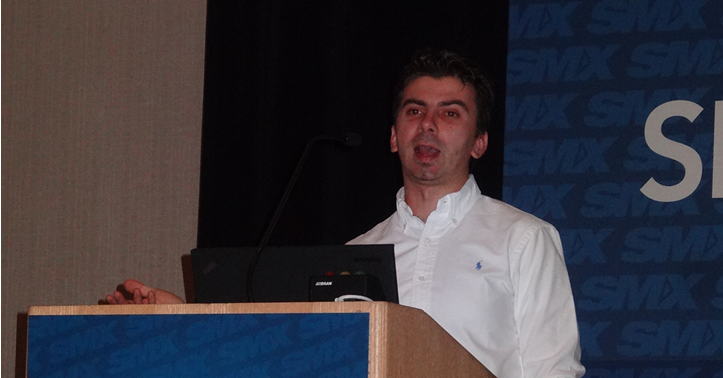
Gary Illyes at SMX West Photo Credit: Steve Boymel

Gary Illyes at SMX West
Photo Credit: Steve Boymel

After months of hints, Google officially announced they would be including mobile-friendliness as a ranking factor in their search engine results last week. Now we are getting more information about how the mobile-friendliness signal will be implemented when it goes into effect next month.

Google’s Gary Illyes answered several questions about the new ranking signal at SMX West, where he explained the ranking factor would operate in real time and works on a page-by-page basis.

The conversation started when Gary was asked if there was a deadline for when webmasters need to have their sites updates to avoid being negatively affected by the launch of the signal. According to his response, the algorithm will operate in real time, so you could theoretically update any time you want and expect to start benefiting from the signal immediately.

Most likely, the signal won’t actually operate in real time for webmasters, but will reflect the version indexed by Google. That means sites that don’t get indexed very often may want to ensure their sites are updated soon, while sites that are crawled and indexed daily can address the issue when they see fit.

Google has not clarified, but all sites will still get the most benefit from having their webpages ready before the April 21st launch.

Gary also stated the algorithm will operate on a page-by-page basis, so you will need to ensure every important individual page is updated.

This is important for many webmasters who have sub-sections or unique areas of their page that would be difficult to make mobile-friendly. If you have pages that aren’t intended for mobile users, you don’t have to worry about them impacting your other pages.

If you have many pages that aren’t easily usable for mobile visitors, you might want to reconsider your strategy overall as more traffic is coming from smartphones and tablets every day. The new ranking algorithm is a big statement from Google about the importance of mobile in the current state of the internet, and you can expect to continue to struggle if you resist the changing tides.

Social media is all about crafting an image and that starts at the profile and cover photos. These pictures are the first things visitors see when they come to your profile, and it is essential to maintain a consistent image across social media. Unfortunately, trying to prepare your photos in the ideal sizes and specifications for the wide array of social media platforms can be a headache.

Every single social media site has their own specific sizes for images and many of the specs can seem almost random. Facebook requires 851px by 315px, while Google calls for 1080px by 608px and images on LinkedIn are supposed to be 646px by 220px. You can spend your time trying to come up with a mnemonic device to try to keep all the different image specs straight, but chances are your time is better spent elsewhere.

Thankfully, the team at Spredfast created a handy infographic which lays out the most recent photo specs for pretty much any social network you are likely to be on. The graphic details all the ideal photo sizes for profile pics and cover photos, as well as detailing the optimal sizes for posting photos to make sure cropping won’t ruin the image.

 Social Image Size Infographic

While Facebook may be the most popular social media platform, some brands are discovering Twitter can be just as effective for growing your business and turning followers into leads and sales. However, it isn’t always easy to start building a real fruitful presence on the site.

According to Search Engine Journal, only 34% of marketers on Twitter are successful at finding leads on Twitter. Does that mean the hugely popular service isn’t fertile land for marketing? Not necessarily. You just have to understand Twitter before you can expect to start finding good leads.

Too many companies just Tweet whatever they can think of without any sort of strategy. But if you take the time to learn the ropes and see what works and what doesn’t, you can start Tweeting with a purpose and drawing in loads of quality leads.

Over the weekend, HubSpot and Market Domination Media released this infographic filled with useful tips and statistics that can help you craft a game plan so you can turn Twitter into a lead generating machine with a little time and testing to find what works best for you.

 Twitter Conversions Infographic

Google Mobile

Google has been giving webmasters some pretty heavy hints that mobile-friendliness was important to the search engine, and today the company made it official. Mobile-friendliness and indexed apps are officially ranking factors in search results.

The motive behind the addition to the search engine algorithms is fairly obvious. People are using mobile devices more and more to search the web, and mobile-focused ranking factors such as these are the best way to ensure quality results no matter what device you come from.

The mobile algorithm update won’t take effect until April 21, so you have time to make any necessary changes you may have been procrastinating on until now.  Google also says the update will affect all mobile searches in any language around the world.

If you are concerned your site may not be up to Google’s mobile standards, they offer a mobile-friendly test. Google also suggests examining mobile usability issues by reviewing the Mobile Usability Report in Google Webmaster Tools.

In the meantime, Google will begin considering information from indexed apps as a ranking factor for signed-in users with the app installed on their phone. This way, content from indexed apps on your phone have the potential to rank higher in the search results you see. As a side-effect however, app developers will have to establish a relationship between their sites and app deep links.

This week, Facebook introduced a new mobile ‘Ads Manager’ app which claims to make it easier for the over 800,000 monthly advertisers on the site to manage ads on the go.

Facebook Ads Manager

The new Ads Manager app allows advertisers to create new ads, as well as tweak and monitor existing ads on the fly. It also includes budgeting and scheduling features.

This means increasing budgets for well-performing ads or drafting up new ads is as easy as pulling out your phone, no matter where you are.

The Ads Manager app is available now for American iOS users, and the company says Android users can expect the app later this year.

The timing of the new app is especially relevant as the company simultaneously announced reaching a milestone of two million unique businesses advertising on Facebook.

The release of Google My Business was intended to make it easier for businesses to maintain a consistent appearance across all of Google’s services, but one feature was seriously lacking. While Google My Business allowed businesses to upload an image to their profile, the companies still had difficulty controlling which images would be used in various listings.

That is a serious problem when you are trying to establish a consistent brand presence online.

Screen-Shot-2015-02-23-at-2.24.26-PM-515x600

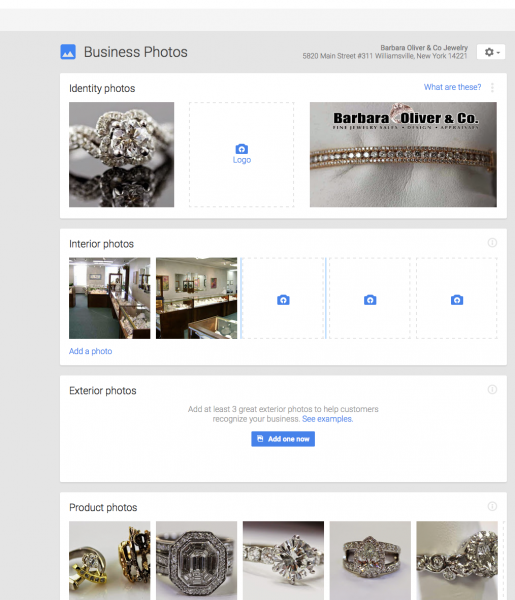
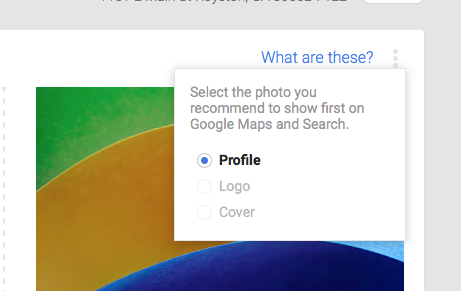
Today, Google announced a major update to Google my Business that finally gives companies some agency in their appearance across Google’s platform. As the announcement explains:

Starting today, you can tell us which image you’d like to appear when customers search for your business on Google. Just log in to Google My Business on the web or in the Android or iOS apps, and visit the Photos section. While you’re there, you can also give your business a fresh look online by updating your profile, logo and cover photos.

Google My Business Photos

The upgrade unifies Google’s three interfaces for images into one simple interface. There is no longer any guesswork in making sure your brand is always presented how you want it on the search engine.

Google Help Files explains the best practices for uploading photos for your business:

Your photos will look best on Google if they meet the following standards:

  • Format: JPG, PNG, TIFF, BMP
  • Size: Between 10KB and 5MB
  • Minimum resolution: 250px on the longest side for profile & logo photos; 720px on the longest side for other business photos
  • Aspect ratio: The longer dimension of the photo should be no more than four times the shorter dimension. Landscape photos look better than portrait photos on Google products. Panoramic photos may use different aspect ratios.
  • Quality: The photo should be in focus, well-lit, have no photoshop alterations, and no excessive use of filters. The image should represent reality.

facebookadvertising

Facebook is usually rather tight lipped about how it measures the impact and views for ads on their site, but today the social media giant offered some rare insight by saying the company doesn’t believe advertisers should be charged unless ads are seen by real people.

This might seem like common sense, but it is actually common for online advertising services to measure impressions based on how many ads are ‘served’, not how many are ‘viewed’.

Ads are counted as being ‘served’ so long as the ad renders anywhere on pages that are opened, even if the ad ends up never actually appearing on the screen. On the other hand, ‘viewed’ impressions only counts if they are displayed on the screen.

The metric isn’t perfect. There is no fool-proof way to ensure someone scrolling down a page will actually glance at an ad, as most Facebook users can tell you. Still, Facebook’s method of measuring impressions seems to be a more accurate and fair way of counting ad views than is typically used.

Facebook explains why it counts viewed vs served ad impressions in their blog post on the subject:

“At Facebook, we agree that viewed impressions are a better way to measure ad delivery. The reason is simple: if an ad is viewed it has a greater chance to drive value for an advertiser. That’s why we use viewed impressions to measure ad delivery across desktop and mobile.”

The company hopes to expand this measuring method to organic posts on the site in the next few months.

Google-Webmaster-Tools-LogoGoogle Webmaster Tools is usually the best friend for any webmaster trying to keep informed, but users have noticed the normally up-to-date service has not been updated in over a week.

The problem was noted by Search Engine Land last week and has been the main topic of conversation on the Webmaster Tools forums all weekend, but so far Google has no response.

The closest thing we have to a response comes from forum user ‘Kai Z’, who wrote “Known issue. […] Give it a few days to update/ return”. Normally forum posts like this wouldn’t carry much weight but it seems notable that Google webmaster trends analyst John Mueller marked this response as ‘best answer’. Naturally this has caused quite a bit of speculation but could potentially be meaningless.

The outage seems to line up with a similar issue in Google Analytics. Many users reported data in analytics was missing for Monday February 9, but Google that problem received a prompt response from Google on its product forums: “We’re sorry for our unusually bad case of the Mondays. We’ve fixed the issue and no data was lost. Analytics users should start seeing any missed [data] soon.”

Most likely the problem will be resolved fairly quickly, but the lack of transparency from Google on what is causing the lack of updating has caused some concern within the SEO community.

Valentine’s Day is huge for online retailers, but some e-commerce sites are already wondering why they haven’t felt the love this year. If your e-commerce business isn’t seeing the traffic or conversions you think you deserve during this time of year, consider some of following tips and statistics about the big day tomorrow.

valentines-day-and-ecommerce-large-picture