Google Logo

Has your brand or business been using large pop-ups to gather email addresses or asking people to like you on Facebook? You might be in trouble with Google if you don’t change your site soon.

Google has announced it will begin to penalize sites with intrusive pop-ups or interstitials starting January 10, 2017.

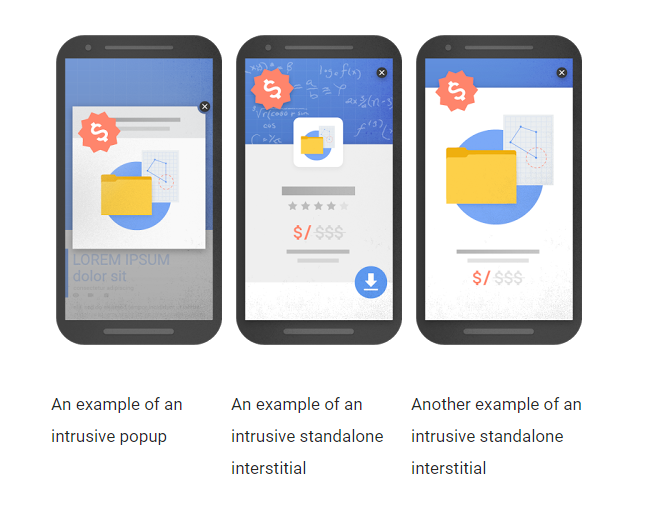
As Google defines them, intrusive interstitials are pop-ups that block the main content on a screen until an action is taken. While this can be an effective way to ask visitors to take action, most people find these annoying because it serves as a roadblock before they are able to see what they came to see.

“Pages that show intrusive interstitials provide a poorer experience to users than other pages where content is immediately accessible. This can be problematic on mobile devices where screens are often smaller.”

For the moment, Google is just singling out interstitials on mobile devices and devaluing search rankings for mobile results. It is unclear if they intend to extend this to desktop in the future.
IntrusiveInterstitials

The change to Google’s algorithms specifically targets pages with interstitials that either pop-up immediately when a person lands on a page or is triggered by scrolling down the page. It was also devalue sites which use oversized above-the-fold content to look like an interstitial.

There are some exemptions to Google’s interstitial rules. Pages with “reasonable” banners that don’t take up excessive amounts of screen space will be considered acceptable. Also, sites that are required to use interstitials for legal reasons – such as cookie usage or age verification – will be exempt from ranking devaluation.

The latest change shouldn’t come as a complete surprise. Google has already cracked down on one form of interstitials in the past by devaluing pages with interstitials that prompt users to install a mobile app. According to the company’s announcement, their work into that algorithm change showed the company they also needed to tackle interstitials as a whole.

As with all algorithm changes, the new guidelines for interstitials don’t automatically mean death for your online traffic if you are using interstitials. If your site is still highly relevant for a search, it may still appear in the top results. However, it is usually better to err on the side of caution with Google, rather than face the risk of a penalty.
Source: Robert Scoble / Flickr

Image Source: Robert Scoble / Flickr

Early this year, Google took advantage of the US Presidential election to test a new feature allowing candidates to publish messages straight to the front page of search results. Then, in March, the company expanded this test to include a tiny number of small businesses.

Now, Google is widening their tests yet again – increasing from “tens” of small business to “thousands”. Even more, the company is taking the feature international with tests in Brazil and India, as Google confirmed to Mike Blumenthal this week.

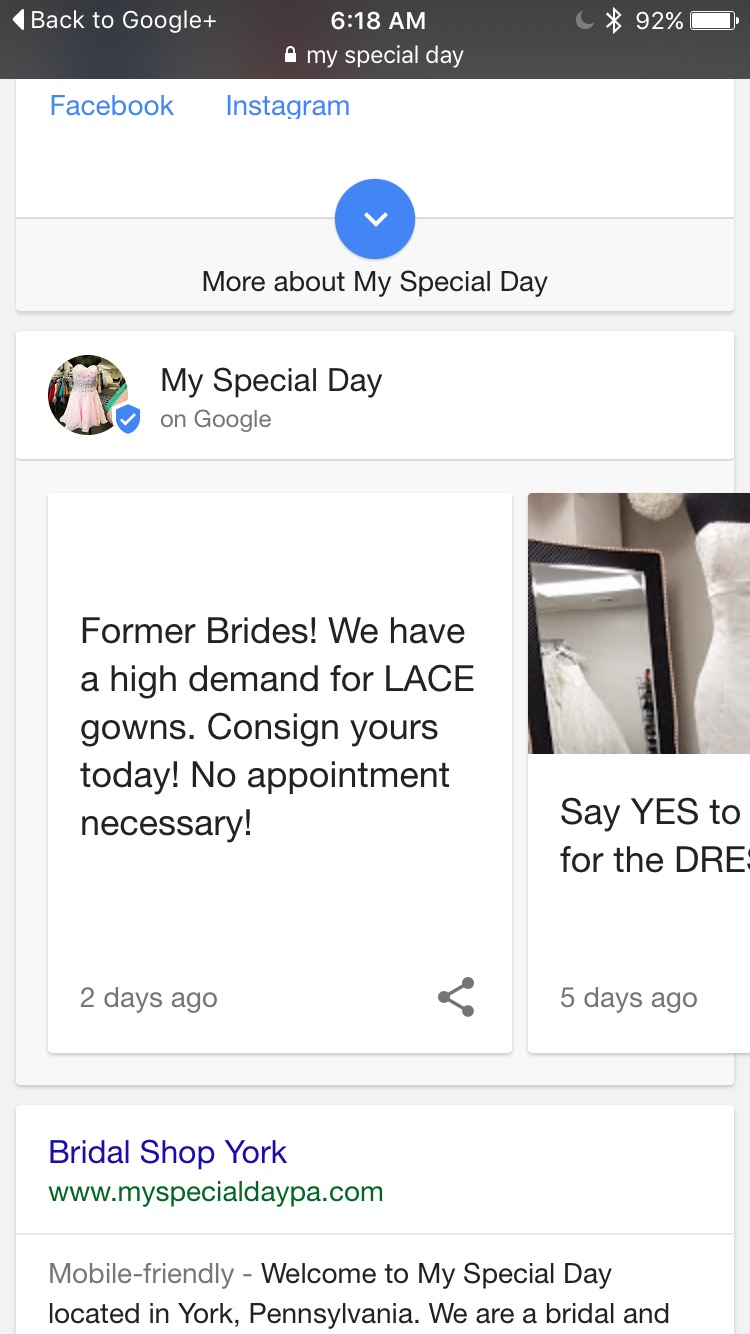
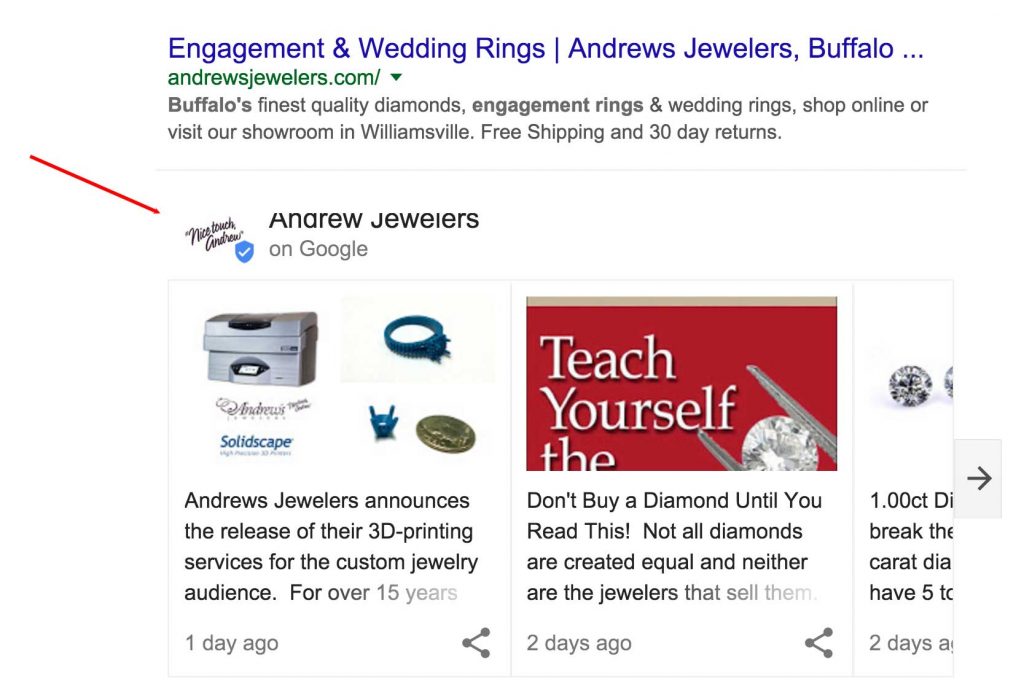
Google hasn’t announced the name of the new feature, but Blumenthal has already captured a few screenshots of these messages in search results – as you can see below:

Image Source: Mike Blumenthal

Image Source: Mike Blumenthal

The feature allows small businesses to create cards with short messages that appear on the front page of search results pages similarly to AMP articles or social media cards.

It appears that the cards show up specifically on searches for an exact business’s name. The cards can also include text, links, pictures, and even videos. Reports indicate businesses given access to the test can use a dedicated app to post content, but the public will have to wait to see.

img_1806

Image Source: Joy Hawkins

According to Blumenthal, you can expect to see more of these cards showing up in search results over the next 30 days as Google finishes rolling out the test to businesses.

Instagram is still typically thought of as a niche social platform. But, with over 300 million daily active users and counting, the Facebook-owned app is far from a scrappy upstart.  It’s a hugely popular platform that is still being overlooked by advertisers and brands.

Brands that incorporate Instagram into their social media strategy have been shown to receive high levels of engagement and brand awareness. Even more, the platform has been shown to be a powerful lead generation tool.

These aren’t the only reasons your brand could benefit from being on Instagram. In fact, Buzzoid compiled 22 reasons you should consider the platform into a stylish infographic. Check it out below, or at Buzzoid’s site.

instagram-stats-infographic

Image Source: Pepsi

Image Source: Pepsi

Earlier this year, Twitter rolled out a new feature known as #Stickers that let users add searchable emoji to their photos posted on the social platform. Since then, Twitter says millions of photos containing #Stickers have been tweeted and shared around the world.

Initially, the emoji available for these “virtual hashtags” were limited to the options Twitter created. However, the site is starting to open the door to allow brands to create their own #Stickers as an ad type called Promoted Stickers.

As Twitter says in their announcement:

“Brands can design four or eight stickers — like accessories and other props — for users to add to their own photos. Photos with a brand’s stickers are shared with all of a user’s followers, allowing brands to be featured by their fans in a truly authentic way. #Stickers act as a visual hashtag, meaning that photos with your brand’s sticker will be connected and discoverable to anyone who taps your brand’s sticker. This allows a brand to see and engage with the people who are using their stickers in creative ways.”

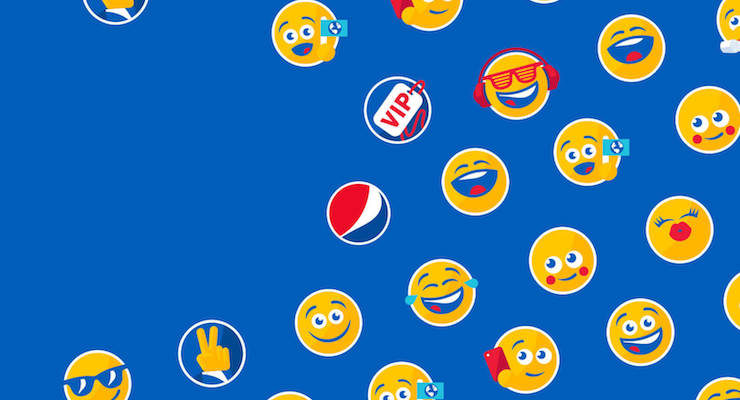
Pepsi is the first brand to use Promoted Stickers, with 50 custom “#PepsiMoji”rolling out to 10 countries, including the USA, Canada, Mexico, Argentina, and Russia. The stickers are part of a larger “Say It With Pepsi” campaign and can be found in the Twitter #Stickers library.

The company has already begun sharing tweets with the stickers, like this one from Pepsi Canada:

Since Twitter is initially keeping the Promoted Stickers limited to a select number of brands and managed accounts, it is unclear how much they cost or what tools may be available to help create new branded stickers. It is also unclear when or if the social platform plans to expand the service to more brands in the near future.

Pinterest-logo

Pinterest is continuing to bulk up its ad platform by allowing advertisers to now buy ads based on how much they want to pay for impressions, the company announced today. In the past, advertisers were only allowed to choose how much they wanted to pay for engagement.

Along with the new way to purchase ads, Pinterest has also added frequency capping to their ad services.

“Now you can bid on a CPM [cost-per-thousand impressions] basis and we’ll optimize how we deliver your ads to reach more people,” according to a Pinterest blog post. “You can also specify the maximum number of times someone sees your campaign. By using this new solution, you’ll get more impressions for your campaigns at more efficient rates and drive higher results.”

This latest move continues Pinterest’s trend of expanding their advertising offerings to bring in more businesses. Earlier this year, the company increased the number of targeting options for ads. They have also made Buyable Pins available to users on all devices, including desktop.

While advertisers have been able to bid for how much they are willing to pay for engagement, Pinterest’s CPM-based ads were only available at fixed prices until now. These prices typically ranged between $30 and $40. Those prices should go down as the new bidding process will increase competition.

The feature is just rolling out, but already JCPenney, The Home Depot, and General Mills are running tests with the new CPM-based ads. The new ads are already available for all business in the U.S, UK, and Canada. More countries are expected to come in the future.

Google-My-Business-Logo

Your Google My Business Page is the epicenter of all your local online marketing for your brand or business. Now, Google is making it easier to see how users find your GMB page with enhanced insights that show where your visitors are coming from.

The biggest question the new insights help answer is where your GMB page visitors are coming from. Specifically, are they coming from Google Maps or Google Search? With enhanced insights, you can now see a simple breakdown of how many visitors are coming from each source straight from your GMB dashboard.

The new insights also help you understand how people are finding your page. Some may be searching directly for your brand or business name, but others are likely to find you by searching for a related keyword.

You can now view a comparison of who found your page by searching for your name and who searched for a related keyword. Don’t expect to be able to see which keywords they were searching for, however. Those are currently ‘not provided’.

While these new insights are being added, Google is also removing the Google+ statistics from the GBD dashboard.

facebook-ads-hed-2016

Facebook operates one of the largest ad services on the internet and they claim they have finally figured out how to beat ad blockers with two new changes to their ad platform.

To start, the company has announced they have created a way to get past ad blocking extensions on desktop to show ads to everyone who visits their site – even if they don’t want to see them. The company was unwilling to say how they have accomplished this, but most likely they have created a way to ‘cloak’ their ads so they are not able to be targeted and blocked by popular ad blockers.

While Facebook is blocking ad blockers on desktop devices only, they are most likely working to do the same on mobile in the near future.

To compensate for this, Facebook is trying to make sure the ads users see are more relevant and useful to their lives by giving new control over what ads are shown in their news feeds.

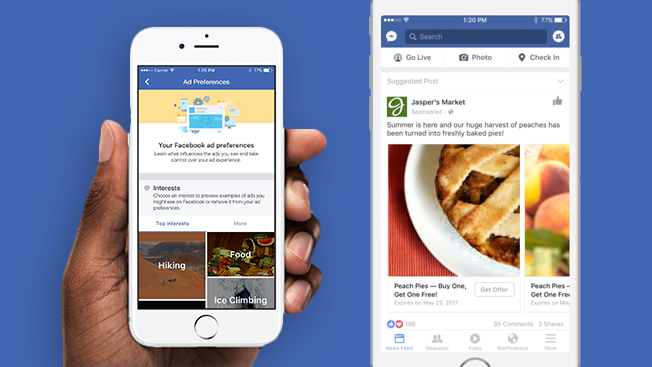
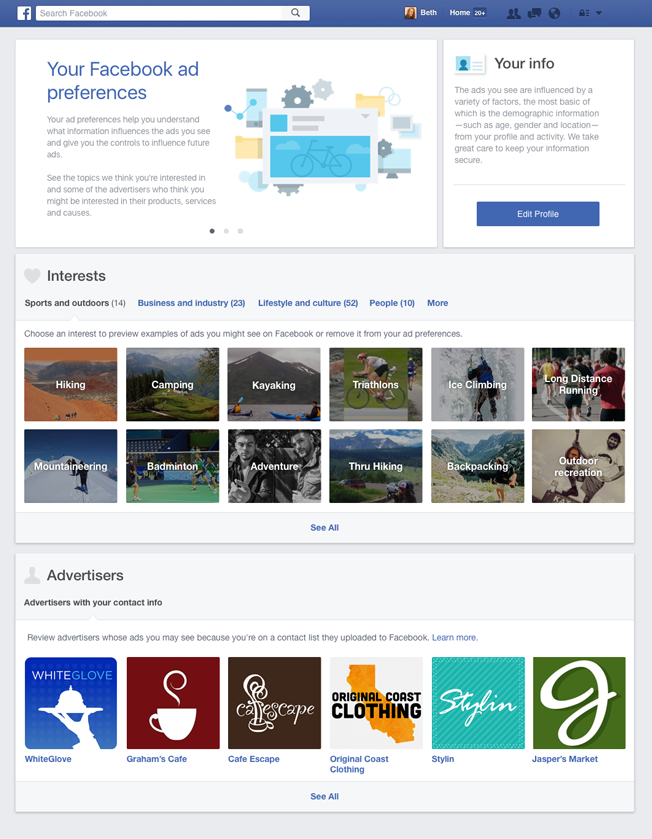
The new ad control tool was released today and lets users add or remove interests from an “ad preferences” list to show what topics they are most interested in.

facebook-desktop-01-2016

“When they’re relevant and well-made, ads can be useful, by helping us find new products and services and introducing us to new experiences—like an ad that shows you your favorite band is coming to town or an amazing airline deal to a tropical vacation,” Andrew Bosworth, VP of ads and business platform for Facebook, wrote in a blog post. “But because ads don’t always work this way, many people have started avoiding certain websites or apps, or using ad blocking software, to stop seeing bad ads. These have been the best options to date.

To help refine their ad service, Facebook commissioned research firm Ipsos MORI to survey users from around the world to determine why users are ad blockers have become so popular. The majority of those surveyed said the main reason they started using ad blockers was because advertising often disrupted their browsing experience.

“While people want a personalized online experience, they dislike ads that are disruptive, however personalized,” wrote Adam Isaacson, research director of Ipsos Connect. “Those that block the content on the page, that pop up with sound and that slow the content on the page were all seen to be disruptive by our qualitative sample.”

The hope of the new changes to Facebook’s advertising service is that giving people more control will make users more interested in the ads their shown and provide a more seamless browsing experience. While many will complain about the move to thwart ad blocking software, the ability to choose what you’re shown will hopefully make the change easier to swallow.

FacebookClick

We can all pretty much agree clickbait is the worst. There’s nothing as annoying as clicking a misleading headline only to be taken to a poorly made website, usually covered in ads, and filled with bad copy. Thankfully, Facebook is trying to put an end to clickbait with new changes to their ranking algorithm.

After reviewing tens of thousands of articles and headlines, a team at Facebook built a system they believe will block huge amounts of clickbait by targeting common phrases. According to Facebook, the system works similarly to an email spam filter but for the News Feed.

The social network specifically defines clickbait as headlines that withhold information or exaggerate to create misleading expectations. That means headlines like “You’ll Never Believe Who Tripped and Fell on the Red Carpet or “Apples are Actually Bad For You?!” won’t be able to cheaply rack up clicks.

As Facebook explains:

We’ve heard from people that they specifically want to see fewer stories with clickbait headlines or link titles. These are headlines that intentionally leave out crucial information, or mislead people, forcing people to click to find out the answer. For example: “When She Looked Under Her Couch Cushions And Saw THIS… I Was SHOCKED!”; “He Put Garlic In His Shoes Before Going To Bed And What Happens Next Is Hard To Believe”; or “The Dog Barked At The Deliveryman And His Reaction Was Priceless.”

For most Facebook brands and publishers, this is good news. You won’t have to compete with sites that use cheap methods to rack up clicks and shares without creating compelling content. However, if you’ve been using clickbaity headlines, you may be in for trouble.

In the coming weeks, brands that are guilty of using clickbait will see their news feed visibility decrease substantially. If you want to avoid this, Facebook says to put more effort into your headlines and share content people want to read.

This isn’t the first time Facebook has taken efforts against clickbait. Back in 2014, the company released a similar update designed to cut out clickbait by measuring how long people stayed on a site before returning to Facebook. It also compared click-through rate and engagement rate to determine if content was actually high-quality.

Google Mobile

Since the launch of Accelerated Mobile Pages, Google has indexed over 150 million AMP pages from over 650 thousand unique domains. You probably wouldn’t know that from looking at the search results, though. Instead, searchers have only been shown the small number of AMP pages featured in the “Top Stories” carousel on some search results.

AmpBlueLinksDemo_v3_garciarobert-1

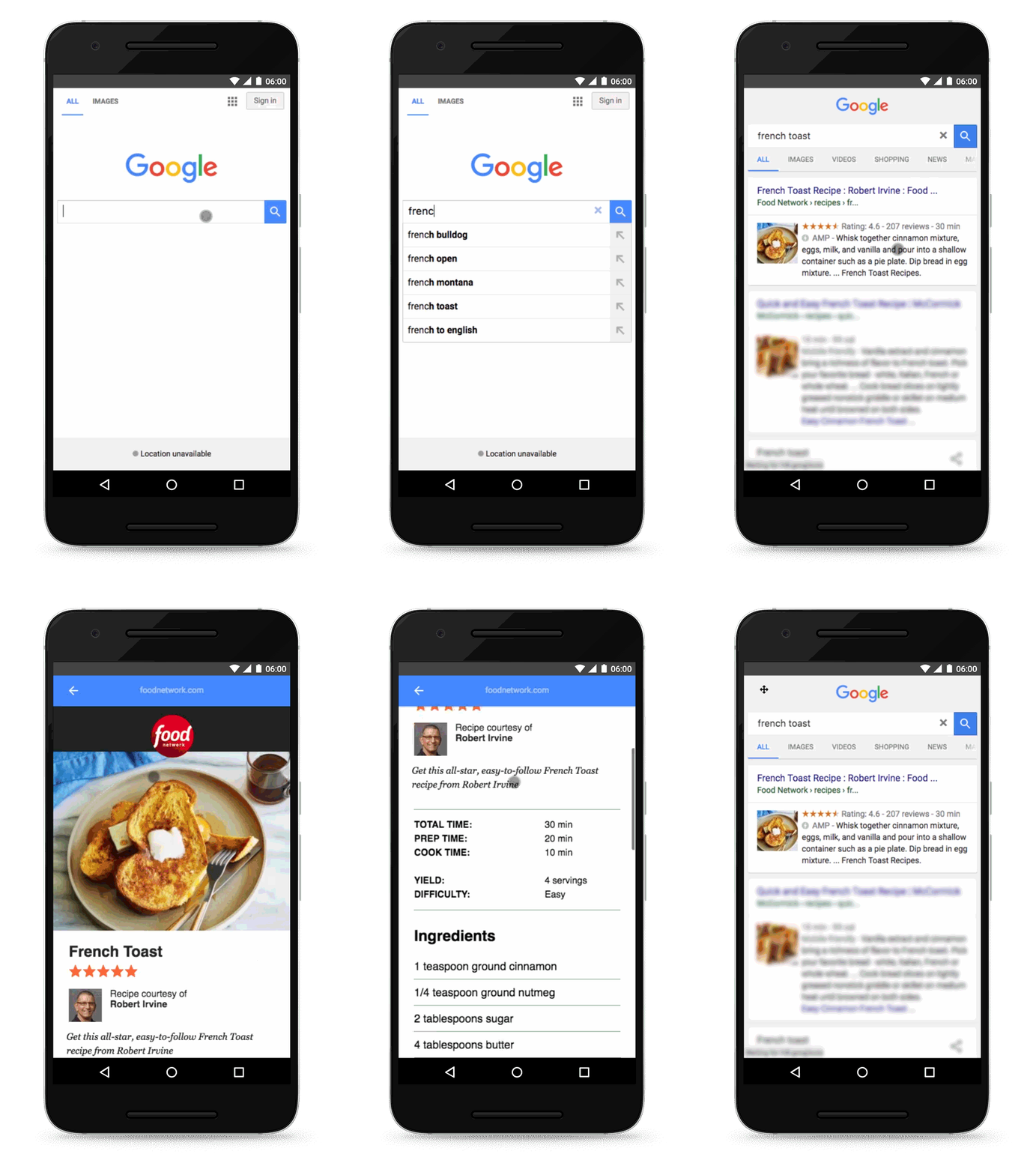
That is starting to change. Google is giving a preview of search results with considerably more Accelerated Mobile Pages in the organic search results. The pages are still marked with their usual blue lightning bolt, but now they aren’t restricted to carousels.

You can see for yourself what the expanded AMP support looks like in Google’s demo showing what their search pages will look like as AMP pages become more common in search results in the near future.

Google makes it clear the inclusion of AMP pages in organic search results doesn’t mean they are implementing an algorithmic change to how they rank sites. Ranking will work as it has been, but with these faster pages included in the possible results.

The change makes AMP pages considerably more attractive to a number of new markets, including e-commerce. For example, Disney, Genius, and Reddit have all used AMP pages, but they were unlikely to ever be found through search because they were not likely to be included in the “Top Stories” carousel.

Instagram is launching a new feature, but many are saying the new feature seems inspired by another popular social photo app – Snapchat. The new feature called Instagram Stories lets users and brands share a collection of moments that disappear after 24 hours.

Insa1

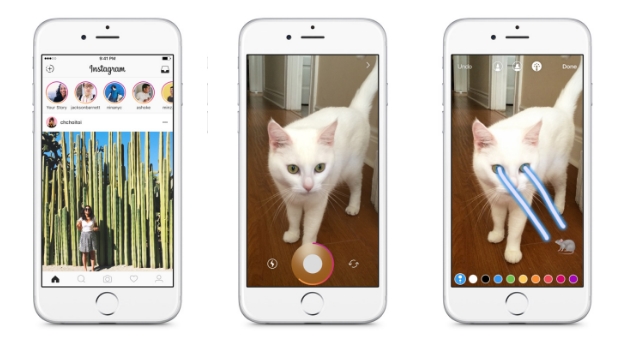
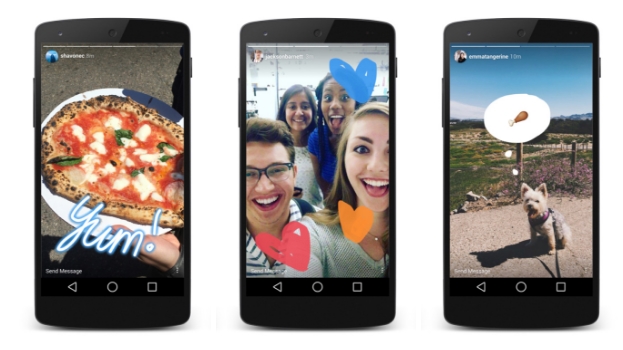
If that sounds familiar, it is because the feature is very similar to Snapchat Stories. Not only does it allow users to easily package their best moments of a day into one easy-to-view collection, but Instagram Stories also includes the ability to draw on photos or videos to make them even more exciting.

“With Instagram Stories, you don’t have to worry about over-posting,” an Instagram rep told AdWeek.

Insta2

The new feature is already available on iOS and Android mobile operating systems. It can be found at the top of Instagram feeds, where you can either share your own stories or tap icons to look at what others have shared in the past day.

Unlike most Instagram videos, clips included in stories are limited to 10 seconds. There are also no likes or comments on stories.

For now Instagram isn’t saying whether marketers will be able to take advantage of stories by promoting them like normal posts, however, businesses can still use the feature to engage with the community and build recognition for their brand and products.