voice-search

Is voice search the next big thing? While more and more people are becoming accustomed to talking into their smartphones, tablets, and smart watches to take notes, get answers, and send messages, most people consider voice search a novelty. However, Bing’s “Search Evangelist” says voice search could become ubiquitous with online searching sooner than you may think, as AdWeek reports.

Speaking at Advertising Week on Thursday, Christi Olson said she expects voice search to go mainstream within the next five years.

This might seem like a big claim, considering voice search capabilities have become common on all smartphones and computers in recent years and yet voice search queries only make up between 5 and 10 percent of all searches made on Bing every month. But, Olson says companies should start planning for it to soon explode in popularity instead of playing catch-up when voice search goes from a trend to the primary way we interact with the internet.

“When you look at paid search and organic search, businesses tend to lag behind with these new technologies,” Olson said. “And so when you look at when the search engines come up with something new, we can give guidelines and guidance to think about how to adjust your content.”

Older users tend to be more skeptical of voice search, but Olson and others suggest that might change as teens and younger people adapt.

“I never was comfortable speaking into my phone,” Geoffrey Colon, product marketing manager for Bing Ads, said. “But my girls? That’s all they know how to do, because they don’t know how to type yet—they’re 4 and 6—but they can talk. So I think many of these things the adoption will actually take off because of the next generation.”

Colon then added to this by citing Snapchat as an example of a new technology initially aimed at kids that has become widespread in use. Quoting writer Alvin Toffler, Colon went on to say “The illiterate of the 21st century will not be those who cannot read and write, but those who cannot learn, unlearn, and relearn.”

When it all boils down, it is hard to deny that voice search is only going to rise in the coming years. Data shows the movement is already gaining ground, and more people are steadily investing in home devices like Amazon Echos that utilize voice search to control home functions and order products.
Source: Robert Scoble / Flickr

Source: Robert Scoble / Flickr

Were you punished by Google’s Penguin algorithm? If you have, there is a good chance you’ve been waiting a year or longer to recover after taking all the necessary steps to have your site reconsidered.

Thankfully, as part of the latest update to Penguin, you won’t have to wait much longer to see if you’ve bounced back. Google’s Gary Illyes confirmed, via Twitter, that Penguin recoveries have already begun rolling out and will be finished within the coming days.

This means that sites that were penalized should start to show improvements within the next week. What it doesn’t mean, however, is that you can expect to return to your same former glory in the search engines.

Removing the penalty still leaves you without the bad links likely driving much of your high ranking, so you can’t expect them to help boost you back up to high spots in the search results. On the other hand, if you’ve taken the time while you’ve been penalized to build new, better links and further optimize your site, you may come out ahead once all the recoveries are finished rolling out.

Video is finally experiencing the dominance many have claimed it would rise to since the release of YouTube. No matter which platform you look at, it is hard not to see videos littered throughout all your feeds.

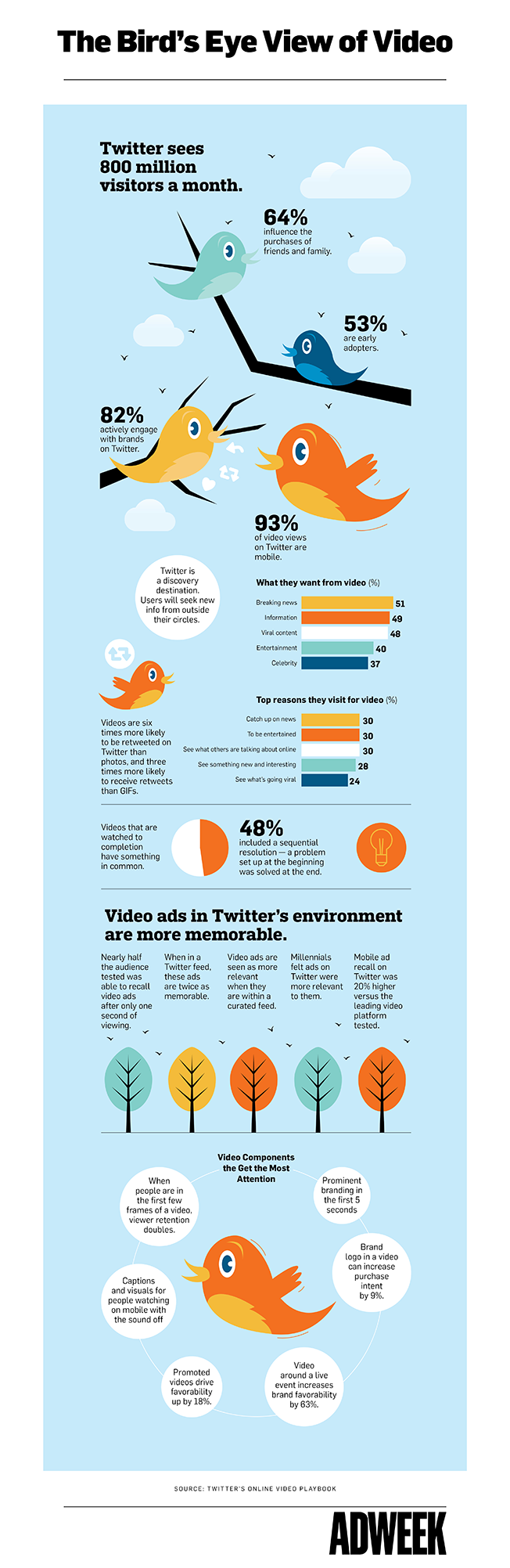
This includes Twitter, which has made video a major part of its platform. As such, Twitter has also been keeping close track of how videos on its platform perform, to help advertisers know who is watching what, when, and whether these viewers are taking the time to watch pre-roll ads.

Twitter and AdWeek just released the platform’s annual Online Video Playbook to share what makes Twitter uniquely suited to video content. In particular, the research shows that video ads in Twitter are at least twice as memorable as ads presented on other services.

“As we navigate the dynamic world of video, these insights can help marketers and agencies unlock massive opportunity,” said David Roter, agency development director at Twitter. “We refer back to this playbook as we work strategically with our partners to develop innovative and creative campaigns.”

Check out the infographic below or at AdWeek:

birds-view

google-amp

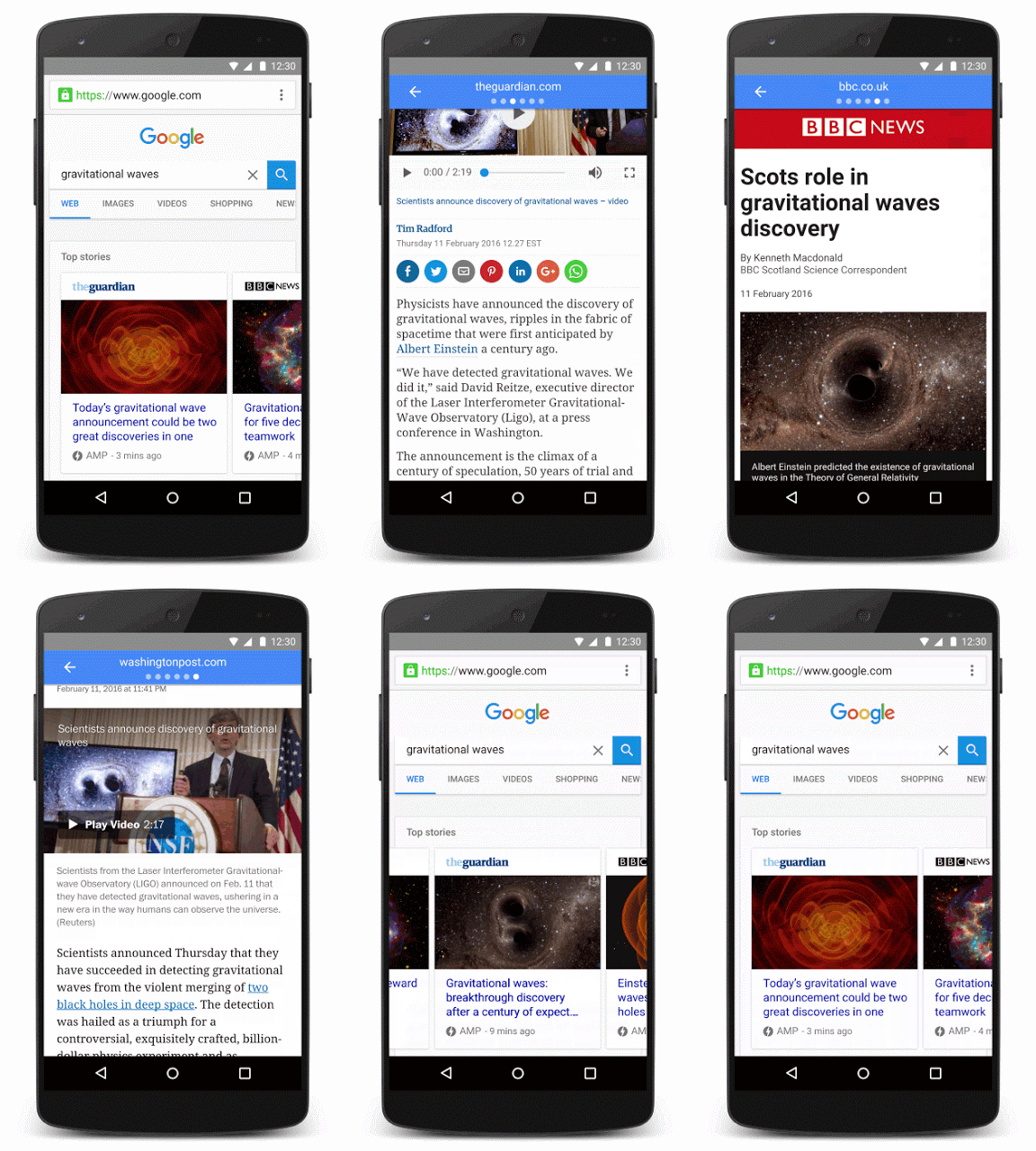
Google’s Accelerated Mobile Pages (AMP) are starting to appear in organic search results, after months of only appearing in the ‘top stories’ carousel.

What is Google AMP?

As the internet becomes increasingly mobile, Google has made site speed a top priority within its search results. Part of their effort to speed up the web has included the launch of its Accelerated Mobile Pages technology, which allows publishers to create pages using a stripped down version of HTML and JavaScript that emphasizes site speed.

amp_v6_phone_cropped-mov

Other platforms including Twitter and Facebook have launched their own versions of Accelerated Mobile Pages with their own unique features and structure.

The coding framework allows Google to pre-load numerous assets with the goal of allowing publishers to deliver content extraordinarily quickly without sacrificing style or ad revenue.

What Does This Mean For You?

In the past, Google only showed a small fraction of the 600 million AMP documents published online within the limited ‘top stories’ carousel at the top of search results. Now, all AMP pages have a chance to appear in search engine results pages (SERPs) as organic search results.

By default, Google will display AMP versions of pages in mobile search results when available.

While AMP pages do not automatically rank better than other results, they are likely to provide strong competition in SERPs. AMP pages are not a direct search ranking signal, but page speed is. Considering AMP pages take less than one second to load on average, it is likely that high-quality AMP pages could dominate mobile results in the near future.

How to Get Started Using Google AMP

If you want to start using Accelerated Mobile Pages to deliver your content to mobile visitors, you have a few options. You can manually publish two separate versions of your content – one with your standard website code, and one using Google’s streamlined version of HTML.

Or, you can use a number of plug-ins to automatically create and publish AMP versions of your content when you publish your normal version. With the WordPress AMP plugin from Automattic, you can immediately publish AMP pages with a single click. You don’t have to spend any time stressing or maintaining duplicate versions of your pages or digging into code to start publishing lightning-fast content to mobile searchers.

Source: Jhaymesisviphotography / Flickr

Source: Jhaymesisviphotography / Flickr

Online advertising is something many people hate. While some brands make it their effort to provide valuable ads in an un-intrusive format, it seems like the majority of websites and advertisers would rather bombard you with full-page interstitials, auto-playing video ads, and pop-ups no matter where you look.

That is likely going to change soon.

The biggest names in online advertising, including Facebook and Google, have joined together to improve digital ads in response to the rise of ad-blocking and widespread public dissatisfaction with ads.

The Coalition for Better Ads was unveiled this week at the Dmexco conference in Cologne, Germany. The group’s founding members include not just Facebook and Google, but several huge advertisers like Procter & Gamble, Unilever, and The Washington Post. According to a report from AdWeek, the coalition also includes the 4As, the Association of National Advertisers, the World Federation of Advertisers, GroupM, and the Interactive Advertising Bureau.

While the new coalition could mean big changes are coming to online advertising, don’t expect anything in the immediate future. For now, the coalition says they plan to monitor and evaluate the quality of online ads with technology being developed at the IAB’s Tech Lab, which will score ads on several factors including creative and load time.

From there, the group will develop new standards using this data and other feedback from consumers and marketers.

“It is essential that industry create standards to assure that consumers get safe, fast, secure delivery of the sites and services they love,” said IAB CEO Randall Rothenberg.

The announcement comes just days after AdBlock Plus, the biggest ad blocker on the market, unveiled a new “Acceptable Ads” program, which will function as an ad exchange that sells ads to brands looking to work around the software distributed by the company. The announcement of the Acceptable Ads service claimed it would be working with Google and AppNexus to distribute ads, however, both companies have since disavowed their relationship with AdBlock Plus and its new business strategy.

Instagram Banner

How many times have you spent several minutes, maybe even hours, planning and scheduling the perfect post to social media, only to receive a torrent of hate in response? I don’t mean disgruntled customers voicing a complaint. I mean the abusive, hateful, and often vulgar comments that flood social media posts from brands, celebrities, and anyone else who chooses to post on sites like Facebook, Twitter, and Instagram.

These awful comments have become so commonplace many just view them as an unfortunate fact of life, but some social platforms are starting to take steps to erase the hate from their sites.

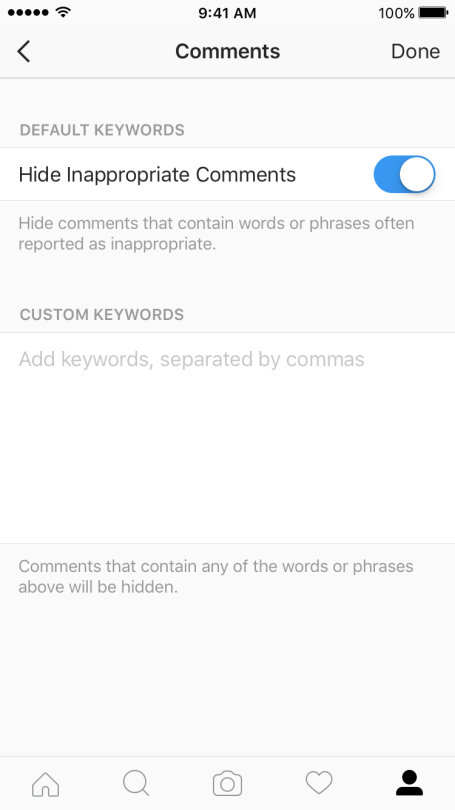
This week, Instagram unveiled a new filter that users can enable to hide inappropriate or abusive comments and messages aimed at making the image-sharing platform a safer place for brands and users alike.

tumblr_inline_odcy7uzhmv1qm4rc3_540

According to the announcement from Instagram co-founder Kevin Systrom, Instagram hopes the new feature will help foster a community where “everyone feels safe to be themselves without criticism or harassment.”

The new feature allows users to hide comments containing words or phrases that are frequently reported as inappropriate, but posters can also list custom keywords or phrases they wish to have hidden in comments under their posts.

While the feature gives posters more control over the comments they receive, it isn’t without its limits. The filter only blocks negative or inappropriate comments and can’t be used to block other abusive types of media uploaded to the site like image memes or videos.

Brands who receive rampant hate from trolls or abusive users also still have the ability to delete comments, report users, or block specific accounts.

Enabling the filter is easy. Just click the gear icon in your Instagram profile and click on the new “comments” feature. From there, you can toggle the filter on and off or add your own list of words or phrases you wish to have blocked from your page.

While the tool may be an effective way to filter out the random abuse many receive on social media, I would caution brands from using it as a way of hiding messages from users with legitimate complaints or issues, as that only tends to make matters worse.

Twitter Video

Twitter’s video features have been a hit with users, including Periscope, the Twitter-owned live streaming platform. However, the company has struggled to find ways to monetize visual content.

This week, Twitter announced it was launching several changes to make it easier for advertisers to reach video audiences and creators to monetize their content.

For starters, the company is allowing advertisers to run pre-roll ads that appear before a video begins to play. Similar to YouTube’s pre-roll ads, the video advertisements will allow users to skip the ad if they are not interested.

For creators, adding these new pre-roll ads s as easy as signing up for Twitter’s Amplify program and opting-in to use pre-roll ads. You can choose to use the ads on an individual basis or by making pre-roll ads default on all video content.

In addition to the new ad format, Twitter is also making some changes to its Media Studio and Twitter Engage app to improve the monetization of content and advertising across its platform. These changes include:

  • A unified media library including videos, GIFs, and images.
  • Tweet scheduling features.
  • Team management and multi-account support.
  • Improved upload performance and overall stability.
  • An Earnings section detailing your monetization performance.

The biggest wrinkle for Twitter has been deciding how to monetize videos across Periscope live streams. The nature of live streaming video makes it difficult to incorporate ad breaks. Instead, Twitter is allowing Periscope users to seek and connect sponsors for live broadcasts.

These sponsors can then run pre-roll ads before live broadcasts begin.

Considering Periscope videos appear in Twitter timelines and live videos, the decision to incorporate pre-roll ads helps bring the streaming app more in line with Twitter’s other services while making them more attractive for both content creators and advertisers.

FacebookClick

Facebook Offers have been around since 2012, allowing brands to distribute coupons to users for special promotions. However, they never really took off like many of Facebook’s advertising features.

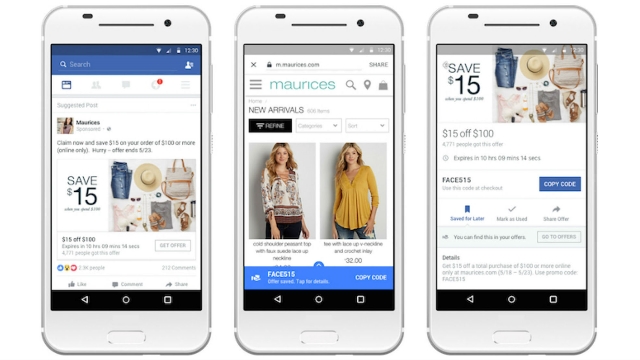
The social network is trying to turn that around by improving Offers to make it easier for people to find, save, and redeem coupons, especially from mobile phones. The changes also make it easier for brands to control who sees and uses their coupons.

Offers have always functioned by distributing online and in-store coupons as ads or organic Page posts that link to a brand’s site. When a person clicks the ad or post, they were then emailed a copy of the coupon.

Facebook_OffersAd-1920

Facebook has streamlined and integrated the feature more thoroughly into their platform. While users can still click on Offers to visit the advertiser’s site and redeem their coupon via email. However, now offers will also be saved to a new Offers bookmark tab linked to their account.

This way, customers can quickly and easily access their coupons through Facebook’s mobile app and cashiers can easily scan the promotional barcode on their phone. Also, Offer codes will be shown at the bottom of the screen when users travel to an advertiser’s site to immediately redeem the code. That means they don’t have to exit the app to open their email, making the process less convoluted for users.

Not only is Facebook trying to make Offers easier to use and more attractive to users, the company is working to make sure those who show interest but don’t immediately redeem coupons don’t forget about you. When a saved offer gets close to expiring, Facebook will alert users to let them know time is running out to get savings.

On top of all of this, Facebook is making it easier for users to find Offers shared by brands with a new Offers tab on brand Pages.

Offers shared organically by brands are still available to anyone who sees it in their feed, however, Facebook is improving targeting for offer-carrying ads with more ad-targeting options. These including selecting people in your customer database to offer loyalty promotions or targeting similar individuals based on their characteristics.

According to media reported Tim Peterson, Facebook is working on expanding their Offer targeting options for brands even further, but it is unclear when those improvements can be expected. For now, Offers are getting a big shot in the arm that will make them more attractive to users and more effective for brands who use them.

BHexIPht

Twitter has introduced a new way for users to get in touch with your brand directly from your website with the Message button, as the company announced in a tweet today.

The button can be embedded on any website and allows anyone with a Twitter account to direct message you with just a single tap.

The button is stylistically what you would expect from Twitter’s other buttons and is very easy to set up. However, you should double-check your settings to make sure you can receive direct messages from everyone, not just your followers.

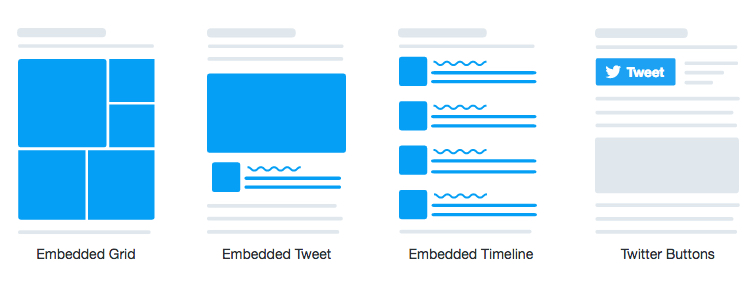
To add the new Message button to your site, just head over to the Twitter Publish page. Scroll down and select the Twitter Buttons option.

Image Source: Danny Goodwin/Search Engine Journal

Image Source: Danny Goodwin/Search Engine Journal

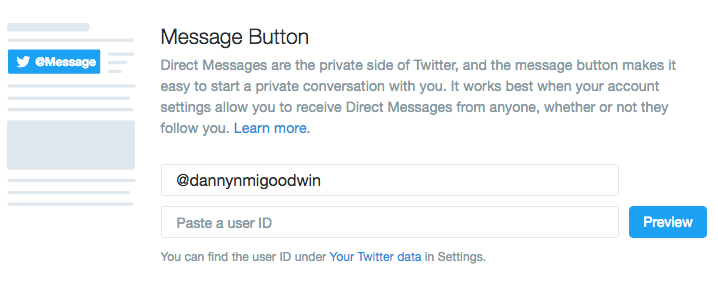
From here, select the Message button option.

Image Source: Danny Goodwin/Search Engine Journal

Image Source: Danny Goodwin/Search Engine Journal

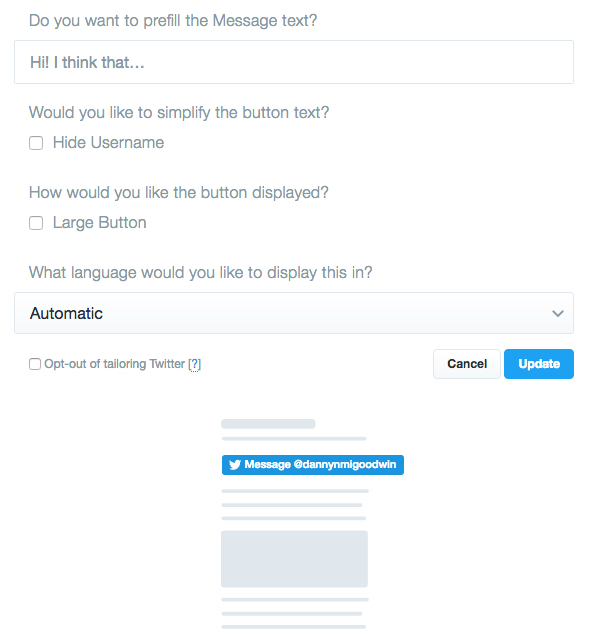
Input your Twitter user name and user ID (found in the “Your Twitter Data” section), and finally click Preview. This generates a code you can paste anywhere you want on your website. You can even customize the button to autofill messages, hide usernames, or select a default language.

twitter-message-button-customize

Image Source: Danny Goodwin/Search Engine Journal

The new button is just one of several ways you can use Twitter to provide customer service, answer questions, and keep people excited about your brand. Add it to your site now to find out what your customers have to say.