LinkedIn isn’t like most social media platforms out there. You can’t just transfer the same strategies and types of content you post on Facebook, Instagram, or Twitter over to LinkedIn and expect people to be interested.

This is because people don’t use the platform the same way they use other social networks. Obviously, they approach the platform with a more professional, reserved presence that speaks more to their career goals and market knowledge than personal photos from vacations or the latest memes.

Still, LinkedIn can be an incredible tool for growing your business, whether you are in a B2B industry or primarily provide services or products to consumers. The key is knowing how to change up your typical social media strategies for the new platform.

Thankfully, Leisure Jobs has created a detailed cheat sheet which breaks down everything you could need to know about how to do LinkedIn right. It includes every area you could imagine, including personal profile construction, business listing strategies, some quick secrets to standing out from others on the platform, and much, much more.

You can see the infographic below, or check it out here for the high-resolution version.

Major changes are coming to Facebook as the company tries to balance a more privacy-focused approach with several new features aimed at encouraging people to interact with their Facebook accounts more.

At the company’s F8 developer conference this week, Facebook announced a wide range of features, changes, and redesigns which will roll out over the next year.

At the same time, representatives from Facebook hammered home the importance of privacy and protecting data with more advanced encryption and a huge redesign to shift how people use the platform.

The Redesign

Leading the pack of changes is Facebook’s most significant visual overhaul since its launch. While the most noticeable difference is the removal of blue on the page to create a more vibrant space for you to explore, it also holds many deeper revisions which intend to change how we use the platform.

For example, the interface will now highlight more Groups and private messages to make the platform feel more cohesive.

The redesign is already rolling out on Android and iOS mobile devices, though the company says it will take a few months for the full update to go live. Meanwhile, Facebook says it will begin testing the desktop redesign in the “next few months” before bringing it to the public.

Facebook Dating?

Facebook Dating

Image Source: Facebook

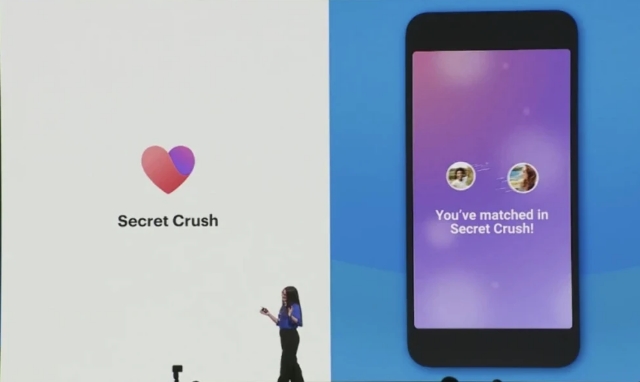
One of the most bizarre introductions during this year’s conference was the launch of a new feature called “Secret Crush” which allows users to pick nine of their friends which they have a crush on. Then, if any of those nine friends also select that user as a crush, they will be notified. If the attraction is not returned, however, the other person will never know.

Meet New Friends

In a similar (but less creepy) vein is Facebook’s coming “Meet New Friends” feature. As you might expect from the name, the opt-in feature aims to help connect people who share schools or jobs, or those who live in the same city.

Messenger Comes To Desktop

Image Source: Facebook

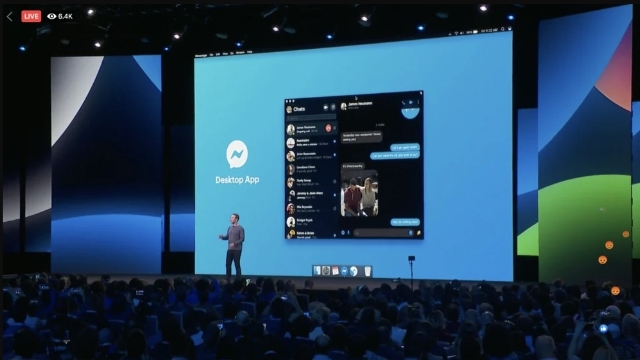
As part of an effort to make Facebook’s Messenger a more widely accessible platform, the company is launching a standalone version of the service for desktop computers. While Messenger has always been available on the desktop version of Facebook, it has been limited in several ways. For example, features like Group calling have been exclusive to the mobile app. With the launch of the desktop app, users will now be able to take advantage of all of Messenger’s features from any type of device.

Instagram Create Mode

Instagram Create Mode

Image Source: Facebook

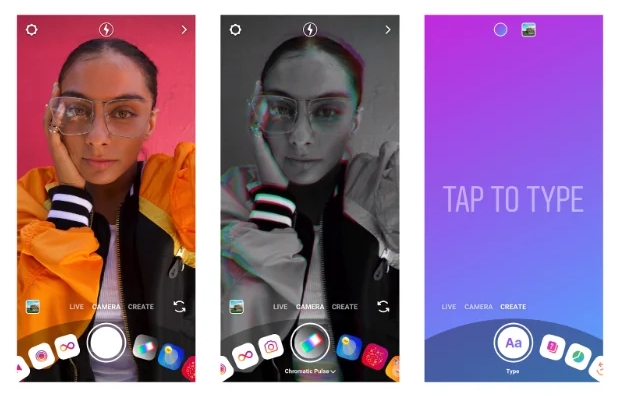
Facebook isn’t the only platform getting an overhaul. Instagram also has several changes on the way, including a considerable reworking of the camera in Instagram Stories. With the new Create Mode, users can now create images for Stories that don’t come directly from their phone without extensive workarounds. Now, you can easily edit your Stories to create the images you want to share without leaving the app.

Instagram Likes Go Secret

Instagram Likes Disappear From View

Image Source: Facebook

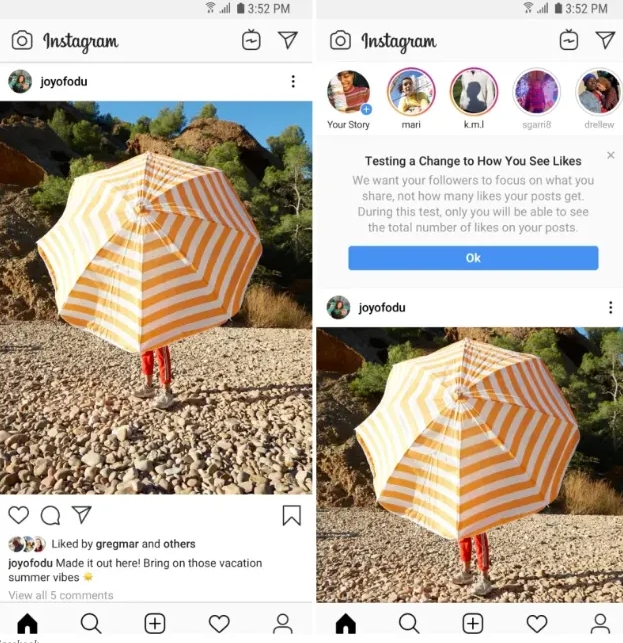
One of the more surprising tests Facebook announced is that it will begin hiding the like count on photos and videos on Instagram in an effort to encourage people to pay more attention to the content and focus less on popularity contests.

In the test, followers will not be able to see a photo’s total likes or a video’s view count while viewing the content in their feed or visiting another user’s profile. However, the person sharing the content will still be able to look at their post’s metrics by tapping through a post. The test is expected to begin this week for users in Canada, though it is unclear when this might appear in the US.

Google My Business is updating Google Posts to allow brands to highlight glowing reviews from customers.

With the new update, you can feature 4 to 5 star reviews that have been left on your listing.

As Google said in the announcement on Twitter:

“In some countries, Google My Business now provides suggested posts to help you showcase positive reviews. These posts are automatically suggested based on 4 or 5-star reviews recently left for your business”

“You may get suggestions for new testimonials to post when you sign in to Google My Business, or via email notifications. These posts are automatically suggested based on 4 or 5-star reviews recently left for your business. You’ll be able to review and edit the post before publishing it.”

You can see a few examples of what the new post format looks like from Twitter user Andy Simpson below:

While it is unclear exactly which countries aside from the US have access to the feature, the update brings yet another way to make your local search listing more visible and engaging for users.

As always, Google Posts showcasing your reviews remain visible for one week unless you manually remove or edit the post.

One of the biggest issues keeping many brands from promoting themselves more heavily on Twitter is the platform’s rampant trolling and abuse problems. Over the last few years, Twitter has become infamous for the rude, inappropriate, or even vulgar behavior of its users despite several attempts to address the issue.

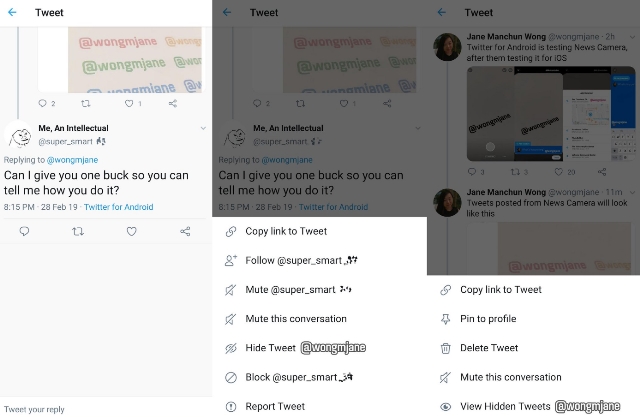
Now, Twitter is giving users another tool to reduce the impact of trolls and other troublemakers by allowing users to hide replies to their tweets from the public.

While the feature has been rumored for months, representatives from the company have confirmed it will be rolling out the feature as a test starting in June.

As the company says in a blog post from this week:

“Starting in June, we’ll be experimenting with ways to give people more control over their conversations by giving them an option to hide replies to their Tweets.”

The tool allows you to actively moderate responses to your Tweets by individually hiding offensive or problematic responses. Users can then choose to reveal the Tweet if by selecting to show hidden replies.

Jane Manchun Wong previewed the feature, including screenshots of how it will work:

The feature doesn’t allow you to fully delete inappropriate comments like Facebook or Instagram, nor does it allow you to entirely turn off responses to your Tweets. Still, it gives brands and users more control over the toxicity in their feeds and provides healthier discussions for everyone involved.

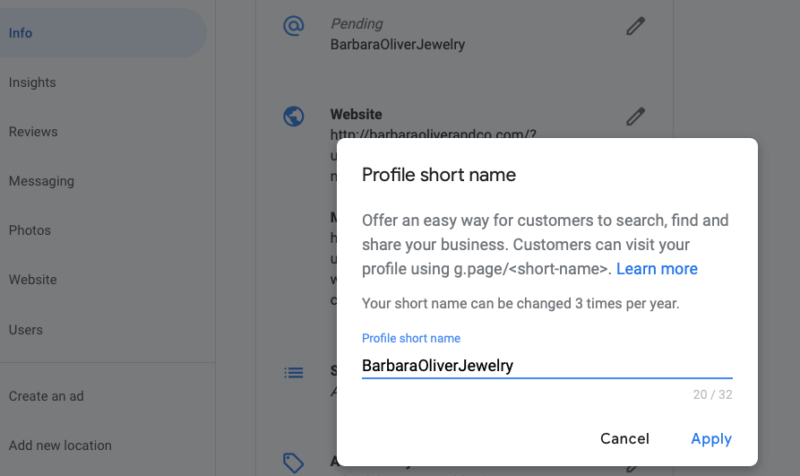
Google is making it easier for brands to share their Google My Business listings by allowing businesses to create short names and unique URLs for their listings.

The new feature was revealed by marketing guru and Local Guide for Google, Mike Blumenthal. While Google has not publicly announced the short names and URLs, they have released a new help page dedicated to the feature.

By creating unique short names and URLs for GMB listings, it makes it possible for businesses to share their listings across other social platforms and in the real world through business cards, brochures, or similar marketing materials.

Considering Google My Business is the main platform for sharing reviews and providing details like directions, hours, or even scheduling, it makes sense that Google would want to make the listings more directly accessible.

The feature is still rolling out, so not everybody has access to it currently. To find out if you can claim a short name and URL, just sign into your GMB account and select the location you want to create a short name for. Click the “Info” tab and look for “Add profile short name”.

From there, you will be able to create a short name for your business with no less than five characters and no more than 32 characters.

Once approved, the new short name will also represent your new URL, which is formatted as g.page/[yourshortbusinessname].

One nice detail is that the new short names can help businesses with multiple storefronts differentiate their listings on Google while keeping consistent branding across their listings.

Facebook has announced sweeping changes to its news feed and the way it handles groups or pages that violate the company’s content policies.

The new changes, including a new algorithm signal, are aimed at reducing the reach of sites spreading content with misinformation by judging the authority of the sites the content comes from.

If Facebook believes the site producing content shared on the platform is not reputable, it will decrease its news feed reach and reduce the number of people seeing the content.

How Facebook is Changing its Algorithm

In the past, Facebook has teamed up with highly respected organizations like the Associated Press to validate sites spreading content across the platform.

Now, the company says it is introducing a “click-gap” metric designed to automatically evaluate the inbound and outbound linking patterns of a site to judge if it is authoritative.

Essentially, the click-gap signal measures the inbound and outbound linking patterns to determine if the number of links on Facebook is higher than the link’s popularity across the internet. This will allow the company to distinguish the forced spread of content rather than organic virality.

As Facebook explains in the announcement:

“This new signal, Click-Gap, relies on the web graph, a conceptual “map” of the internet in which domains with a lot of inbound and outbound links are at the center of the graph and domains with fewer inbound and outbound links are at the edges.

Click-Gap looks for domains with a disproportionate number of outbound Facebook clicks compared to their place in the web graph. This can be a sign that the domain is succeeding on News Feed in a way that doesn’t reflect the authority they’ve built outside it and is producing low-quality content.”

Changes to Groups

Notably, this new algorithmic signal isn’t just being applied to news feeds. The company explained it will also be using these algorithms to automatically remove low-quality content posted in groups, including private groups.

The company defended the decision by saying they can now identify and remove harmful groups, whether they are public, closed, or secret.”

“We can now proactively detect many types of violating content posted in groups before anyone reports them and sometimes before few people, if any, even see them.”

Admins are Required to Police Content

Along with these changes, Facebook clarified that its algorithms will consider what posts a group’s admins approve as a way of determining if they are a harmful group or eligible for removal.

The company says it will close down groups if an admin regularly approves content that is false, misleading, or against Facebook’s content guidelines.

This is how Facebook explained the new policy:

“Starting in the coming weeks, when reviewing a group to decide whether or not to take it down, we will look at admin and moderator content violations in that group, including member posts they have approved, as a stronger signal that the group violates our standards.”

What This Means for You

As long as the pages you participate in or run are sharing content from reliable sources, the new policies should have little effect on your day-to-day operations. However, the changes could have considerable impacts on brands or influencers who go against mainstream science or other non-approved sources. These types of industries have flourished on the platform for years, but may soon be facing a reckoning if Facebook’s new content guidelines are as strict as they sound.


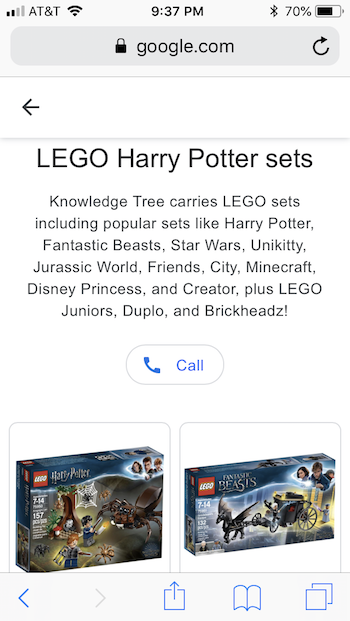
The latest update to Google My Business’s listings makes product catalogs even more powerful by displaying them in both desktop and mobile search results.

Since October 2018, when they were first introduced, product catalogs on Google My Business would only appear in mobile search results.

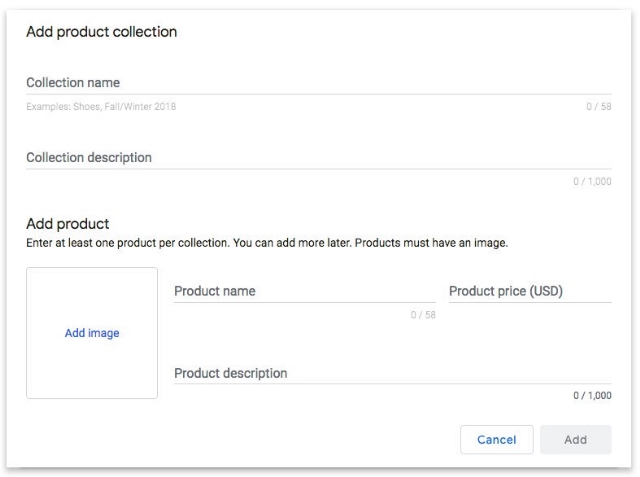
To add your products to your own listing, all you have to do is upload a form in the ‘Products’ tab called to the product editor. Once added, all items in your catalog will be eligible to show in results for relevant searches that bring up your Google My Business page.

The catalog appears within the ‘Products’ tab of your GMB listing shortly after uploading it.

As always, the new GMB feature is free to use with your Google My Business account. The only requirement is that you have claimed your business listing.

While the new feature does bring product catalogs to desktop search results, they are still not viewable directly within Google Maps. To view the listing from there, you will have to click to specifically view a business’s local listing.

LinkedIn is expanding its ad targeting options to allow advertisers the ability to better target their ideal audience.

The professional social platform has launched lookalike audience targeting which allows you to create an ad audience similar to your dream customer.

As the company says in their announcement:

“LinkedIn’s lookalike audiences combine the traits of your ideal customer with our rich member and company data to help you market to new professional audiences similar to your existing customers, website visitors and target accounts.”

Specifically, the company highlights a few ways lookalike audience targeting can help businesses improve their advertising:

  • Reach high-converting audiences: Discover audiences similar to those who are already interested in your business.
  • Get results at scale: Extend the reach of your campaigns to more qualified prospects.
  • Engage new target accounts: Target your ads to additional companies you may not have previously considered. These companies match a similar company profile to your ideal customer.

In testing, LinkedIn says lookalike audience targeting led to a 5-10x increase in campaign reach without sacrificing ad performance.

At the same time it announced the launch of these new targeting options, LinkedIn also revealed a few other improvements to their ad platform:

Interest Targeting

While interest targeting has been available on LinkedIn since January, the company says it is now increasing the targeting capabilities of the feature.

Through a partnership with Microsoft, LinkedIn will now allow advertisers to target users based on not only their LinkedIn profile information but through the professional topics and content they engage with on Bing.

Audience Templates

LinkedIn has also created some new features specifically aimed at new advertisers. Audience templates provide advertisers with a selection of more than 20 premade B2B audiences. This way, you can start targeting your ideal audience without having extensive knowledge of ad targeting.

The templates cover a range of characteristics, from users skills, job titles, groups, and more.

In the announcement, LinkedIn says the new features will all be rolling out over the next two weeks.

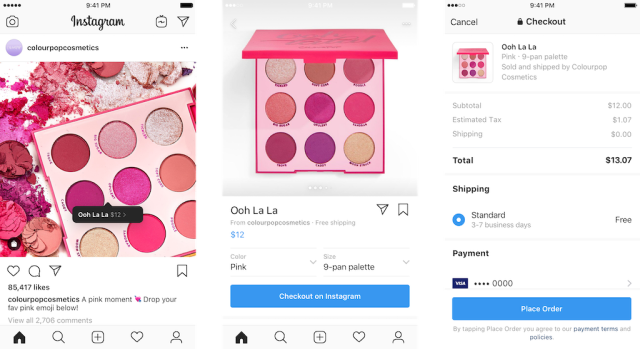
Instagram is launching a new in-app checkout feature for a limited number of brands which will let users make purchases without ever having to leave the app.

For now, the new feature is limited to just 23 big-name brands like Adidas, Burberry, and MAC Cosmetics, but the company says it will be expanding the feature to more brands in the coming months.

The in-app checkout is Instagram’s latest effort to make its service more retailer-friendly without hurting their own platform. While they have included several shopping-related features over the past few years, shoppers would ultimately have to leave the app to make a purchase.

With the new feature, users will now see a “Checkout on Instagram” button on product pages from brands’ shopping posts.

When tapped, shoppers will be allowed to choose from a variety of options like size and color, then taken to a payment page within Instagram.

Users who make purchases within the app will also receive shipment and delivery notifications within Instagram to keep them informed.

“The new technology gives Adidas’ audience the power to go from inspiration to purchase in an instant. Our consumer-obsessed approach to e-commerce focuses on simplified immersive connections with the brand and Instagram Shopping allows us to deliver a content-rich experience on a platform where our creators are exploring and curating their lives,” said Adidas SVP of digital Scott Zalaznik.

Pinterest is making it easier for brands and consumers to connect with a number of new tools aimed at getting more products in front of interested viewers.

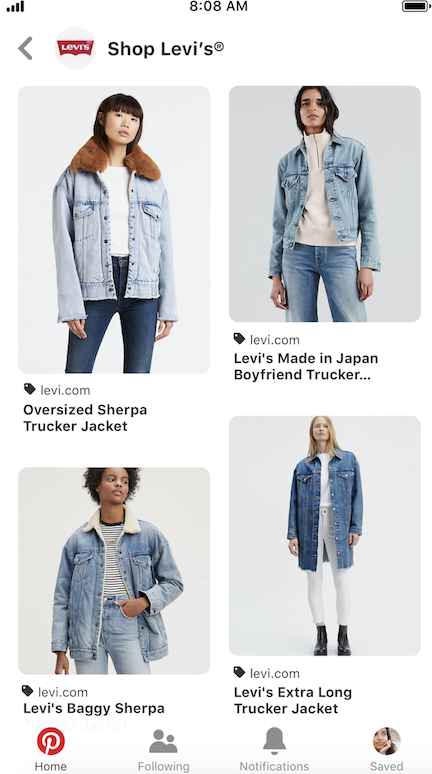
“Shop a Brand”

The company announced a slew of new updates designed to improve personalized results for users and make browsing products and brands better than ever.

“These updates help retailers get in front of customers who are looking for related products, and Pinners to see items that match their unique style and taste,” the company said in its announcement. 

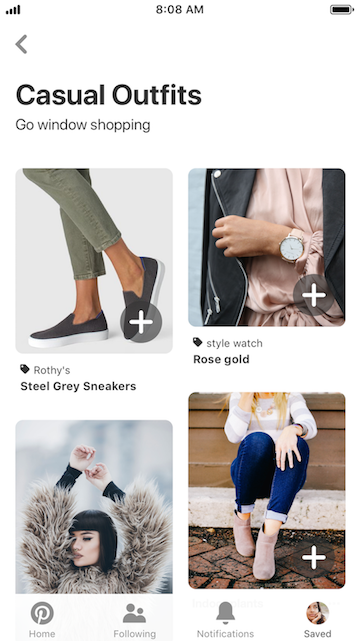
Personalized Recommendations

Here’s the quick breakdown of all the new features:

  • Shop a brand: “A new dedicated section from retailers is starting to roll out beneath Product Pins. You’ll soon be able to dive into a brand’s catalog by clicking ‘more from [brand]’.”
  • Personalized shopping recommendations: “Alongside style, home, beauty and DIY boards, you’ll see in-stock ideas related to what you’ve been saving, to match your style. Just click ‘more ideas’ then the shopping tag to start shopping ideas picked for you. Tap + to quickly add the Pin to your board, or click the Pin to go straight to checkout on the retailer’s site. “
  • Catalogs: “Brands can now upload their full catalog to Pinterest and easily turn their products into dynamic Product Pins, which means more shoppable Pins across Pinterest. A new dashboard allows businesses to organize their feed so their products can be discovered and purchased by Pinners.”
  • Shopping Ads: “We’re making Shopping Ads available to all businesses through our self-serve tool Ads Manager. Once products are on Pinterest, brands can easily promote items from their existing product feed with Shopping Ads.”
  • Shopping search: “With more in-stock Product Pins, there are more products to search. Just search for a product like ‘midi skirt’, ‘men’s watches’ or ‘outdoor furniture’ and shopping results appear on the top of home feed. To start shopping, click ‘see more’.”