For years, backlinks have been considered one of the most important ranking factors for ranking on Google’s search engine. In 2016, the company even confirmed as much when a search quality senior strategist said that the top ranking factors were links, content, and RankBrain.

According to new comments from Google’s Gary Illyes, an analysis for Google Search, things have changed since then. 

What Was Said

During a panel at Pubcon Pro, Illyes was asked directly whether links are still one of the top three ranking factors. In response, here is what he said:

“I think they are important, but I think people overestimate the importance of links. I don’t agree it’s in the top three. It hasn’t been for some time.”

Illyes even went as far as to say there are cases where sites have absolutely 0 links (internal or external), but consistently ranked in the top spot because they provided excellent content. 

The Lead Up

Gary Illyes isn’t the first person from Google to suggest that links have lost the SEO weight they used to carry. Last year, Dan Nguyen from the search quality team stated that links had lost their impact during a Google SEO Office Hours session:

“First, backlinks as a signal has a lot less significant impact compared to when Google Search first started out many years ago. We have robust ranking signals, hundreds of them, to make sure that we are able to rank the most relevant and useful results for all queries.’

Other major figures at Google, including Matt Cutts and John Mueller, have predicted this would happen for years. As far back as 2014, Cutts (a leading figure at Google at the time) said:

“I think backlinks still have many, many years left in them. But inevitably, what we’re trying to do is figure out how an expert user would say, this particular page matched their information needs. And sometimes backlinks matter for that. It’s helpful to find out what the reputation of the site or a page is. But, for the most part, people care about the quality of the content on that particular page. So I think over time, backlinks will become a little less important.”

Ultimately, this shift was bound to happen because search has become so much more complex. With each search, Google considers the intent behind the search, the actual query, and personal information to help tailor the search results for each user. With so much in flux, we have reached a point where the most important ranking signals may even differ based on the specific site that is trying to rank.
Google Business Profiles are an incredibly powerful tool for helping customers discover your business. Unfortunately, they also make it possible for those with more malicious intentions to find you, as the rising number of Google Business Profile robocall scams shows.

Hiya, a company that tracks phone fraud and scams, recently published data showing that scams targeting those with Google Business Profile listings (and other Google-related phone scams) have been on the rise over the past year. 

Through July, Hiya documented more than 17,000 reports of Google Business Profile scams. That breaks down to more than 2,000 scams being reported each month. 

How To Spot The Scam

The easiest way to know if you’ve been targeted by a scam like this is simply having received a robocall claiming to be from Google or a Google partner. Google does not use robocalls to verify or otherwise contact businesses.

While the company found more than 100 variations of the scam, it shared two of the most common voice recordings people have been receiving from scammers claiming to be “Google partners”:

“Business owners, your Google Business Profile has not been registered with Google. Please press 1 to be transferred to a business listing specialist to assist you in registering your Google Business Profile, or press 2 to be placed on the do not call list.”

“Hello. We’re calling from Online Listing Group because your Google Business listing needs attention. If your listing is not showing up properly, customers will not be able to contact you or find your location. If you are the business owner, press 1 now to verify or update your business. Press 9 to opt out.”

To avoid the risk of being taken advantage of by scammers, Google and Tulsa Marketing Online both recommend only working with marketing agencies that have a long-established track record of using approved strategies to boost your presence on the search engine.

Google is finally allowing brands to naturally add social media links within their Google Business Profiles. 

The move comes following years of frustration from website owners, as other search engines like Bing have allowed similar links and more advanced social media integration for years. 

Now, any business with a Google Business Profile (formerly Google My Business profiles) can highlight their social channels easily within Google Search and Maps. 

This is especially important for businesses that use social channels to handle customer support, as well as making it easier for brands to connect with new potential customers on the platforms they are most active on. 

How It Works

Google quietly revealed the new feature in a support page that details exactly how to add links to your Google Business Profile and what limitations there are. 

To add social media links to your Google Business Profile, first log in and access your profile. From there, look for the option to ‘edit profile’ and select ‘business information’ followed by ‘contact’.

Here you will find a new section labeled ‘Social profiles’ where you can easily add one link per profile, including those on Facebook, Instagram, LinkedIn, Pinterest, TikTok, X (formerly Twitter) or YouTube. 

In some cases, Google may automatically add links to social profiles on Google Business Profiles. If these are inaccurate or you would prefer to use different links, you can edit or remove links in the same area. 

While the feature is already available to many, Google says it is rolling out gradually to select regions.

For more, visit the support page for this new feature here.

Google is giving advertisers more control over where their ads appear in Search with two new features that have only been available to a small number of advertisers previously.

The company announced it will be bringing brand exclusions for Performance Max campaigns and broad match brand restrictions for all advertisers on Search. 

In the announcement, the company said that both pilot tests were “successful” and that bringing these tools to more advertisers would improve campaign performance. They also promise that using brand exclusions and restrictions will help improve reach by guaranteeing your ads are not appearing along controversial, irrelevant, or problematic search content.

Notably, these are one of the many new features on the platform which are being assisted with AI.

Google gave Search Engine Land two statements, one for each new ad feature:

“[Advertisers can] expand the reach of your brand campaigns with new brand restrictions for broad match. Broad match gives you the most relevant reach and conversions within your performance goals.”

“In the past, it may have been difficult to use broad match in campaigns with specific brand needs. That’s why we’re rolling out brand restrictions. This new feature will help you get the additional reach of broad match, while ensuring it is only matching to relevant brand traffic that you’ve specified.”

Just last week, Google Search Liaison, Danny Sullivan, once again took to Twitter to dispel a longstanding myth about word counts and search engine optimization (SEO). 

The message reads:

“Reminder. The best word count needed to succeed in Google Search is … not a thing! It doesn’t exist. Write as long or short as needed for people who read your content.”

Sullivan also linked to long-existing help pages and included a screencap of a statement from these pages which says:

“Are you writing to a particular word count because you’ve heard or read that Google has a preferred word count? (No, we don’t.)”

Of course, this is not a new message from Google. Still, many of the most popular SEO tools and experts still claim that anywhere between 300 to 1,500 words is ideal for ranking in Google search results. 

Incidentally, a day later Google’s John Mueller also responded to an SEO professional who argued there was “correlation between word count and outranking competition?” In a short but simple reply, Mueller said “Are you saying the top ranking pages should have the most words? That’s definitely not the case.”

Most likely, this myth of an ideal SEO word count will continue to persist so long as search engine optimization exists in its current form. Still, it is always good to get a clear reminder from major figures at Google that content should be as long as necessary to share valuable information to your audience – whether you can do that in a couple sentences or exhaustive multi-thousand-word content. 

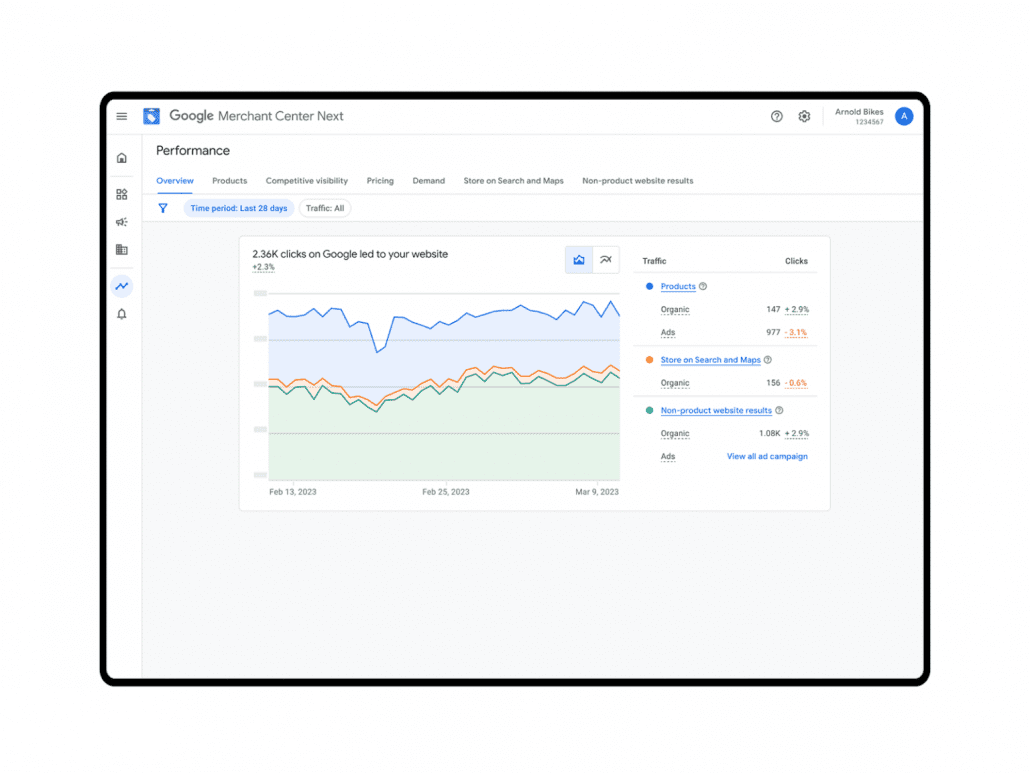
Google is transitioning its popular e-commerce service Merchant Center to a new, easier-to-use tool called Merchant Center Next.

As announced during the recent Google Marketing Live 2023 event, Merchant Center Next is not only getting a fresh coat of paint, it is being upgraded to automate tedious processes like updating product data and delivering better insights.

What’s Changing

While the original Merchant Center made retailers manually set up a product feed and add details like pricing, imagery, and descriptions, Merchant Center Next will do all this automatically.

Once the tool pulls product data, retailers can edit or update information as they need.

If they desire, brands can also opt out of using the automated features.

Along with this, Merchant Center Next will contain a streamlined version of the current Performance tab, which will include a range of new details like:

  • Overview
  • Competitive visibility
  • Pricing
  • Demand
  • Non-product website results

Merchant Center Next will also allow retailers with multiple physical locations to manage their products at all locations in one view.

Coming in 2024, or Earlier

Some businesses have already been given access to Merchant Center Next, but it may be some time before everyone can use it. Currently, the service is expected to be completely rolled out in 2024.

Once Merchant Center Next is available, retailers already using Merchant Center will be notified.

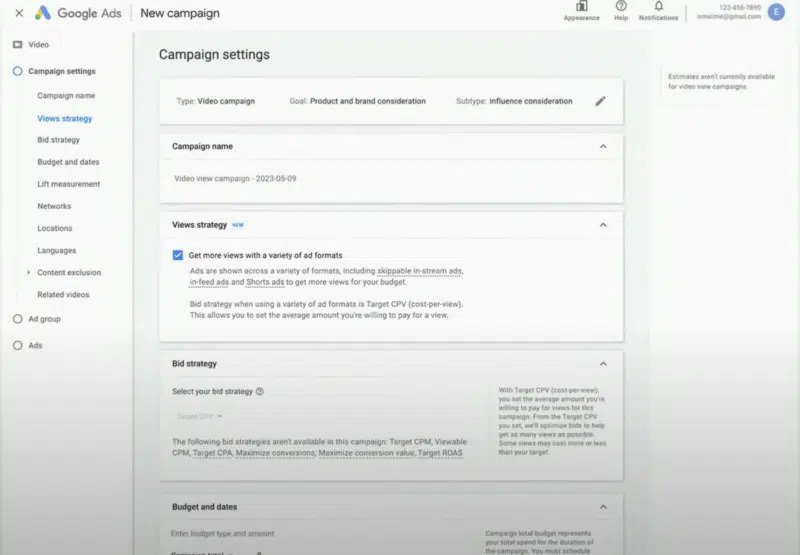
Google is adding two new campaign types for video ads aimed at driving video views or generating demand. 

The company announced the video-first campaign types during the Google Marketing Live event and said the ads would have placements on all Google-owned and operated properties. 

Below, we will talk a little about what each campaign type offers and when you can expect to try them for yourself.

Video View Campaigns

These campaigns are geared towards a singular purpose (driving views) and early testing shows these ads are successful. According to Google, one study using Video view campaigns saw 40% more views on average compared to in-stream skippable cost-per-view campaigns. 

The video view campaign type is also surprisingly versatile, allowing for a variety of formats including in-stream ads, in-feed ads, YouTube Shorts, and more. 

The beta is expected to launch next month.

Demand Generation Campaigns

Demand gen campaigns are one of Google’s latest creations using AI to better engage users and drive action. 

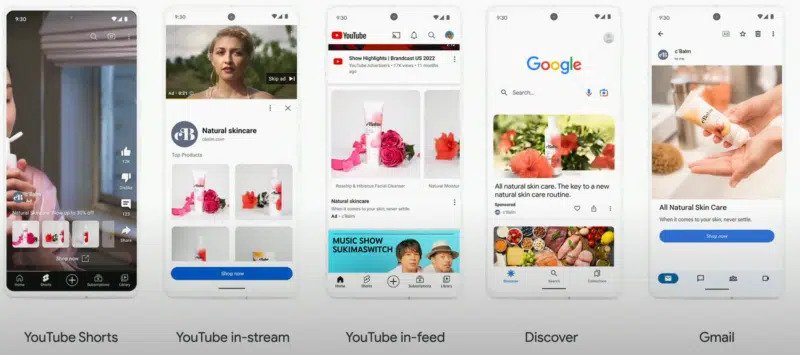
Like Video view campaigns, these campaigns will be available for YouTube Shorts, in-stream and in-feed ads, Google Discover, and Gmail ad placements. 

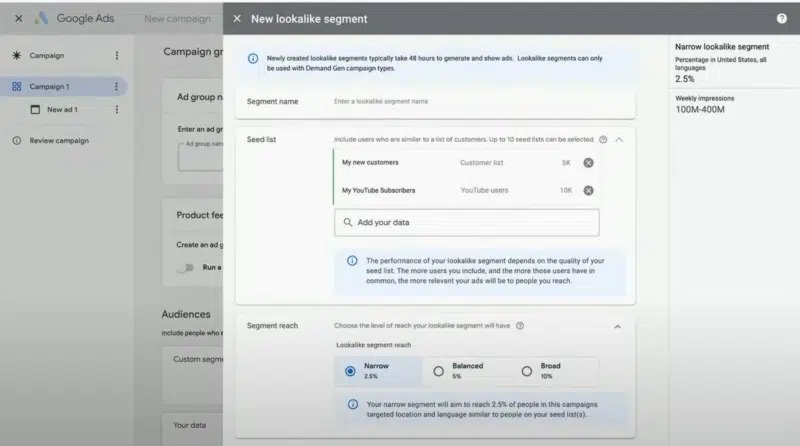
The main draw of Demand gen campaigns for advertisers will be the ability to create Lookalike audience segments based on “seed lists” using data from Google and YouTube users. 

Advertisers can then set their segments to be narrow (2.5% reach), balanced (5% reach), or broad matches (10% reach). 

Conclusion

These two campaign types offer focused approaches for video-first campaigns to accomplish specific goals. While they may not seem revolutionary, these will likely become important campaign options for advertisers looking to expand their reach and find receptive audiences. 

After months of rumors and speculation, Google’s AI-powered generative search experience is here – sort of. 

The new conversational search tool is available to users as a Google Labs experiment only accessible by signing up for a waitlist. That means it is not replacing the current version of Google Search (at least, not yet), but it is the first public look at what is likely to be the biggest overhaul to Google Search in decades. 

Though we at TMO have been unable to get our hands on the new search experience directly, we have gathered all the most important details from those who have to show you what to expect when the generative search experience becomes more widely available. 

What The AI-Powered Google Generative Search Experience Looks Like

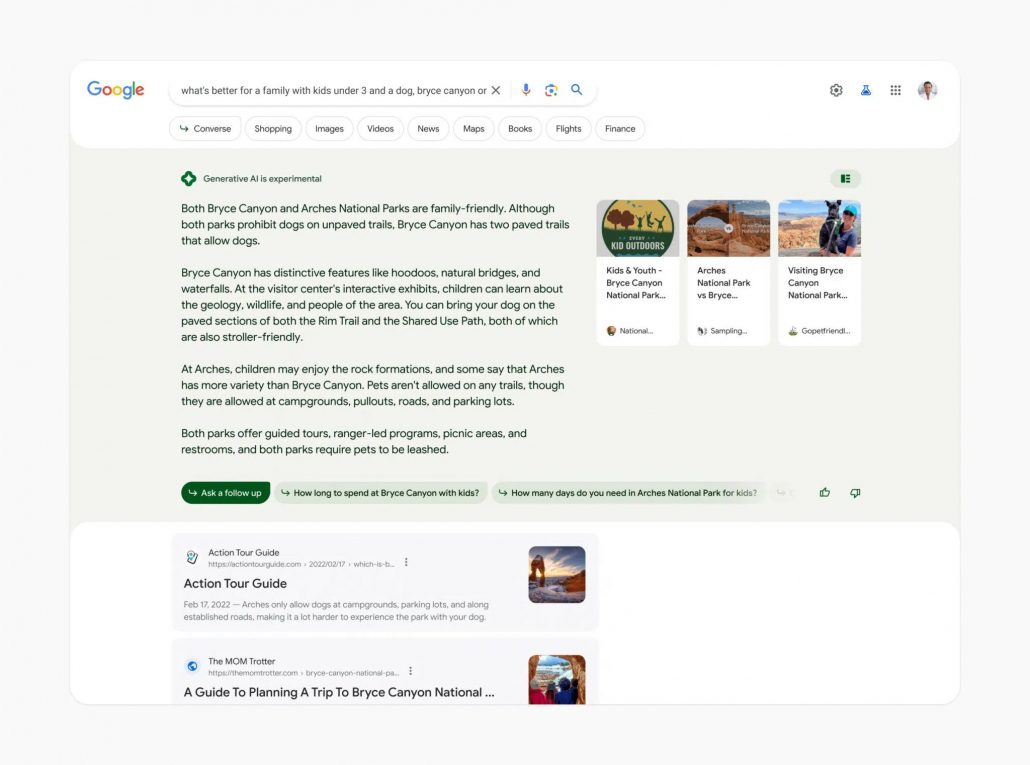
The new Google search experience is present at the very top of Google search results, giving context, answering basic questions, and providing a conversational way to refine your search for better results. 

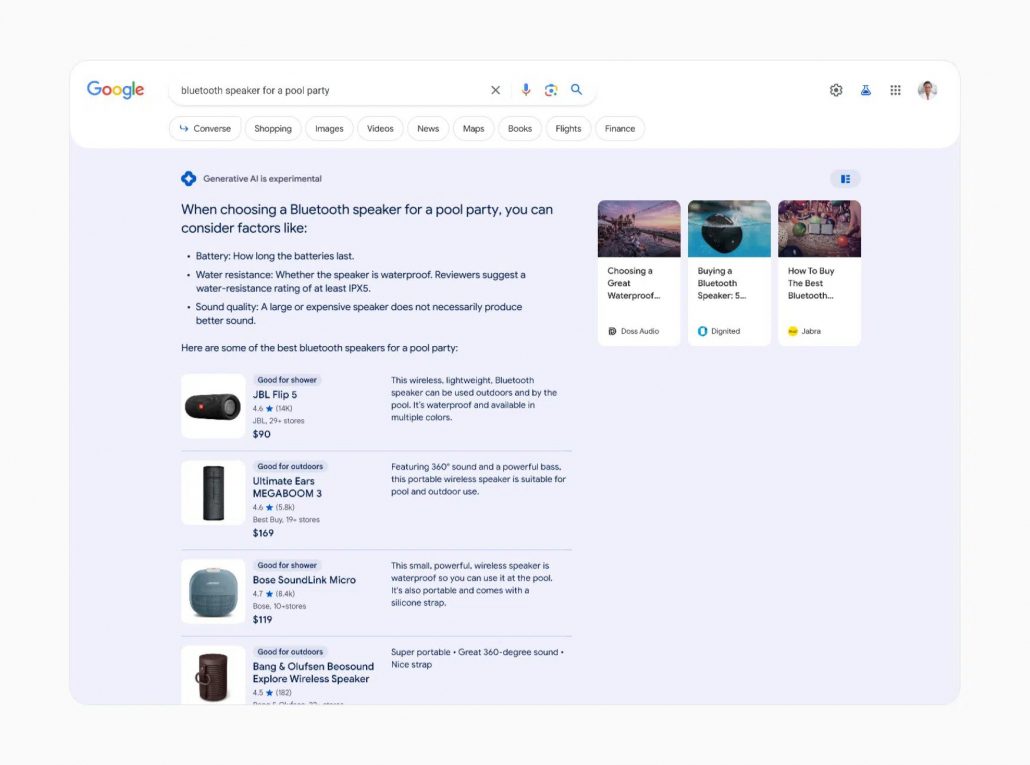
Notably, any AI-generated search information is currently tagged with a label that reads Generative AI is experimental.

Google will also subtly shade AI content based on specific searches to “reflect specific journey types and the query intent itself.” For example, the AI-created search results in the shopping-related search below are placed on a light blue background. 

Where Does The Information Come From?

Unlike most current AI-powered tools, Google’s new search experience cites its sources. 

Sources are mentioned and linked to, making it easier for users to keep digging. 

Additionally, the AI tools can pull from Google’s existing search tools and data, such as Google Shopping product listings and more. 

Conversational Search

The biggest change that comes with the new AI-powered search is the ability to follow up queries with follow-ups using context from your previous search. As the announcement explains:

“Context will be carried over from question to question, to help you more naturally continue your exploration. You’ll also find helpful jumping-off points to web content and a range of perspectives that you can dig into.”

What AI Won’t Answer

The AI-powered tool will not provide information for a range of topics that might be sensitive or where accuracy is particularly important For example, Google’s AI tools won’t give answers about giving medicine to a child because of the potential risks involved. Similarly, reports suggest the tool won’t answer questions about financial issues.

Additionally, Google’s AI-powered search will not discuss or provide information on topics that may be “potentially harmful, hateful, or explicit”.

To try out the new Google AI-powered generative search experience for yourself sign up for the waitlist here.

Google Discover will not show content or images that would normally be blocked by the search engine’s SafeSearch tools. 

Though not surprising, this is the closest we have come to seeing this confirmed by someone at Google. Google Search Liaison Danny Sullivan responded to a question on Twitter by SEO Professional Lily Ray. In a recent tweet, Ray posed the question:

“Is the below article on SafeSearch filtering the best place to look for guidance on Google Discover? Seems that sites with *some* adult content may be excluded from Discover entirely; does this guidance apply?”

In his initial response, Sullivan wasn’t completely certain but stated: “It’s pretty likely SafeSearch applies to Discover, so yes. Will update later if that’s not the case.”

While Sullivan never came back to state this was not the case, he later explained that “our systems, including on Discover, generally don’t show content that might be borderline explicit or shocking etc. in situations where people wouldn’t expect it.”

Previously, other prominent figures at Google including Gary Illyes and John Mueller had indicated this may be the case, also suggesting adult language may limit the visibility of content in Discover. 

For most brands, this won’t be an issue but more adult-oriented brands may struggle to appear in the Discovery feed, even with significant optimization.

One of Google’s most visible spokespeople, John Mueller, made a rare appearance on Reddit to answer a series of “dumb” SEO questions covering everything from geotagging images to how often you should blog.

In a thread on the r/BigSEO subreddit called “incoming dumb question barrage”, a user asked a series of five questions:

  1. Should we be geotagging images. Does Google even care?
  2. Blogging. If we do it, is it everyday or once a week with some seriously solid stuff?
  3. Google Business Profile posting: Everyday, once a week, or why bother?
  4. Since stuff like Senuke died 10 years ago, is it all about networking with webmasters of similar and same niche sites for links?
  5. Piggybacking off #4, what about PBNs? Are they back? If so, does it have to be a group of completely legit looking websites vs some cobbled together WP blogs?

Mueller provided a series of candid answers which we will get into below:

Geotagging Images

Here Mueller kept it short and sweet: “No need to geotag images for SEO.”

How Often Should You Blog?

As always, Google won’t provide a specific post frequency that is “best” for SEO blog content. Rather, Mueller says to post “as often as you have something unique & compelling to say.”

However, the Google Search Advocate admits that more frequent posting can more traffic if you are able to maintain the quality of your content. 

“The problem with trying to keep a frequency up is that it’s easy to end up with mediocre, fluffy content, which search engine quality algorithms might pick up on.”

Additionally, he indicates that those who are using AI to create a lot of content quickly are unlikely to be rewarded.

Google Business Profile Posting Frequency

Unfortunately, this is not Mueller’s area of knowledge. His answer was a simple “no idea.”

Outdated Linkbuilding Strategies

The last two questions are devoted to asking if older methods for link building were still relevant at all. Clearly, this tickled Mueller as he largely dismissed either approach. 

“SENuke, hah, that’s a name I haven’t heard in ages, lol. Sorry. Giggle. I have thoughts on links, but people love to take things out of context to promote their link efforts / tools, so perhaps someone else will say something reasonable, or not.

“OMG, PBNs too. What is this thread even. Now I won’t say anything without a lawyer present.”

No Shortcuts To Online Riches

Of course, there is an underlying current connecting all of these questions. Mueller takes note of this as well, saying:

“Reading between the lines, it seems you want to find a short-cut to making money online.”

The truth is, there are no real shortcuts to online success these days. However, there are a lot of questionable people willing to take your money to provide tools and courses that often get you nowhere. 

“Unfortunately, there’s a long line of people trying to do the same, and some have a lot of practice. Some will even sell you tools and courses on how to make money online (and *they* will be the ones making the money, fwiw, since people pay them for the tools and courses). The good tools cost good money, and they’re not marketed towards people who just want to make money online — they’re targeted at companies who need to manage their online presence and report on progress to their leadership chain.”

At the same time, Mueller encourages individuals such as the person who started to thread to keep learning and practicing SEO:

“… learn HTML, learn a bit of programming, and go for it. 90% of the random tricks you run across won’t work, 9% of the remaining ones will burn your sites to the ground, but if you’re lucky & persistent (is that the same?), you’ll run across some things that work for you.

“If you want to go this route, accept that most – or all – of the things you build will eventually blow up, but perhaps you’ll run into some along the way that make it worthwhile.”If you want to go this route, accept that most – or all – of the things you build will eventually blow up, but perhaps you’ll run into some along the way that make it worthwhile.

“And … after some time, you might notice that actually building something of lasting value can also be intriguiing [sic], and you’ll start working on a side-project that does things in the right way, where you can put your experience to good use and avoid doing all of the slash & burn site/spam-building.”