As promised, Google is launching ads in Android search results which will allow users to test out games before deciding whether to download them. Google announced the feature was coming in the next few weeks during its Developer Day at Game Developer Conference in San Francisco on Monday.

With the launch of AdWords Search Trial Run Ads, app advertisers can now create ads with a “Try now” button as well as a download button. If Android users choose to try out the app, they will be able to preview the app for 10 minutes before deciding if they want to download it from the Google Play Store.
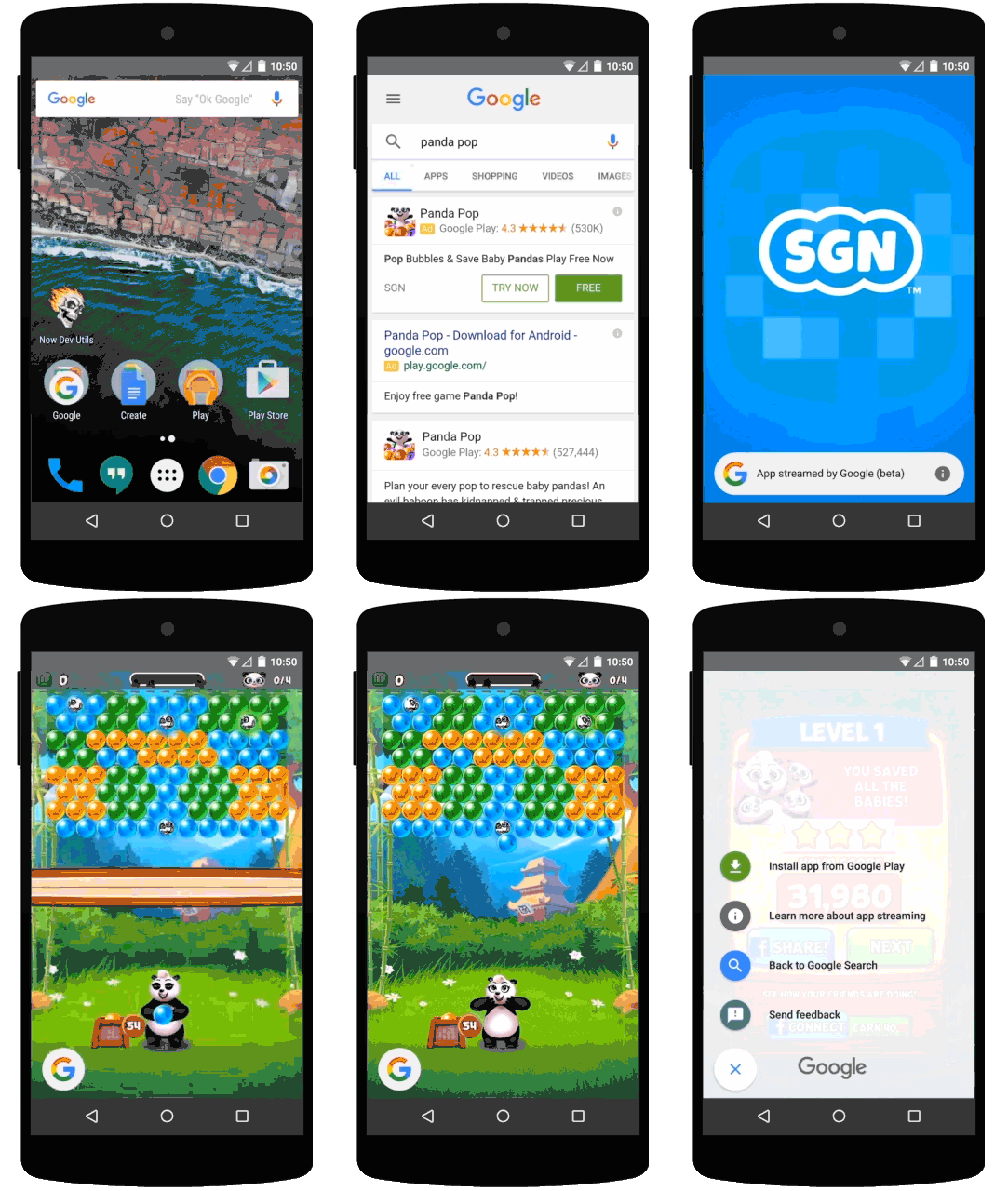
160314_pandapop1

Google has been testing out the feature since December, however, those app previews were limited to just 60 seconds. The longer trial period should allow test-drivers to get a better feel for the app and make a more informed decision.

The new feature is aimed at helping users choose to download only apps that will actually be used. According to Google, just one in four apps are ever used after being downloaded. Hopefully, the test-drive feature will increase the chances a user will stay engaged with the app beyond the time of install.

During the conference, Google also announced that Portrait Video Ads in mobile apps will be coming shortly. The company says 80 percent of video ad views in mobile apps on the Google Display Network are viewed vertically, however, the majority of ads are created to be viewed in landscape orientation. Early tests suggest the new ad orientation significantly improves both click-through and conversion rates. This leads to lower cost per install and more installs overall from Portrait Video Ads.
Source: Robert Scoble / Flickr

Source: Robert Scoble / Flickr

Despite once being the gold standard for assessing a site’s authority and optimization, Google announced this week it will be shutting down PageRank and all toolbars featuring the tool will no longer show a PageRank score.

The algorithm-based tool would assess web pages and rank them on a scale of one to ten based on numerous signals that Google uses to evaluate pages. It was an easy-to-understand way to quickly “score” a website and know if optimization, link building, or other marketing efforts were having a positive effect. However, the tool has not been updated in years.

Many webmasters have been holding onto hope that PageRank would get an algorithm update, but the company has been slowly moving away from it for some time. PageRank scores were never displayed inside Google Chrome, and the scored were dropped from Google Search Console in 2009. The Google Open Directory website, which showed PageRank metrics, was also shut down in 2010.

The last bastion of the PageRank score was the IE Google toolbar, which continued to show scores up until now.

Google has confirmed it will not be updating the tool for the public, but it will continue to be used by Google internally.

The move signals a big shift away from Google’s old way of doing things, but in practical terms it will change very little. Since PageRank hadn’t been updated since 2013, SEOs and webmasters have learned to rely on other tools and methods of assessing their marketing efforts.

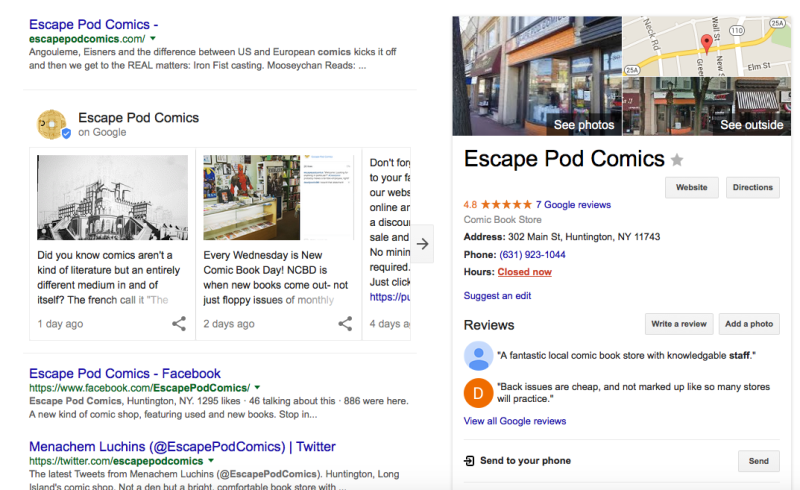
Google is experimenting with a new change that could up the profile of local businesses in the search results. The search giant is conducting a limited test featuring a new card carousel of results and content from local businesses near the top of search results pages.

Mike Blumenthal first noticed the test, but it has since been confirmed by Google. The “Local Business Cards” use the same functionality as Candidate Cards, which were recently launched. The main difference with this new test is how limited it is.

Currently, Google is only including a “few dozen” hand-chosen local businesses in the experiment. Instead of pulling the content being used to fill the cards from search engine content or Google My Business listings, Google is also using custom content for the cards.

This test is also notable for being the first time Google has allowed animation or GIFs on the search results pages.

On desktop, you can see the Local Business Cards directly adjacent to the Knowledge Panel featuring that business. On mobile, it is shown below the Knowledge Graph. You can see an example below:

The idea behind the new test is to allow businesses to stand out more in search results and highlight content or information about the business’s products or services in ways not quite possible through the Knowledge Graph. With this in mind, Google has also made content directly sharable from within the carousel.

Screen-Shot-2016-03-04-at-2.33.00-PM-800x490

Most likely this is an early test since Google chose such a small number of businesses and is using custom content to fill the cards. There’s no telling when or if Google will roll out the feature to a wider audience. Hopefully, the cards come soon, as they could be a huge benefit for local businesses that depend on organic search traffic.

AdWords In Store Visits

When Google recently removed all text ads from the right rail of search engine results pages (SERPs), it caused quite a stir among both advertisers and webmasters who rely on organic traffic for their business. The change in design and the number of ads on SERPs pushes even more organic results below the fold and makes the competition even fiercer for both top ad spots and top organic listings.

Google has been overall fairly tight-lipped about the changes, only confirming that it has occurred and implying the change was largely aimed at bringing the desktop search experience more in line with the mobile search experience.

While it’s not an official statement, Google employee Matt Lawson recently went into depth on why Google decided to cut text ads from the right side of search results and how it could affect your pages and advertising account.

It largely confirms what was already suspected: Right side ads performed poorly and they wanted to bring mobile and desktop search closer together. However, Lawson provides data to show exactly how they expect the change to affect advertisers and steps you can take right not to mitigate any changes in your CPCs and ad performance.

Read what Lawson had to say about the change in his column for Search Engine Land.

Google Mobile

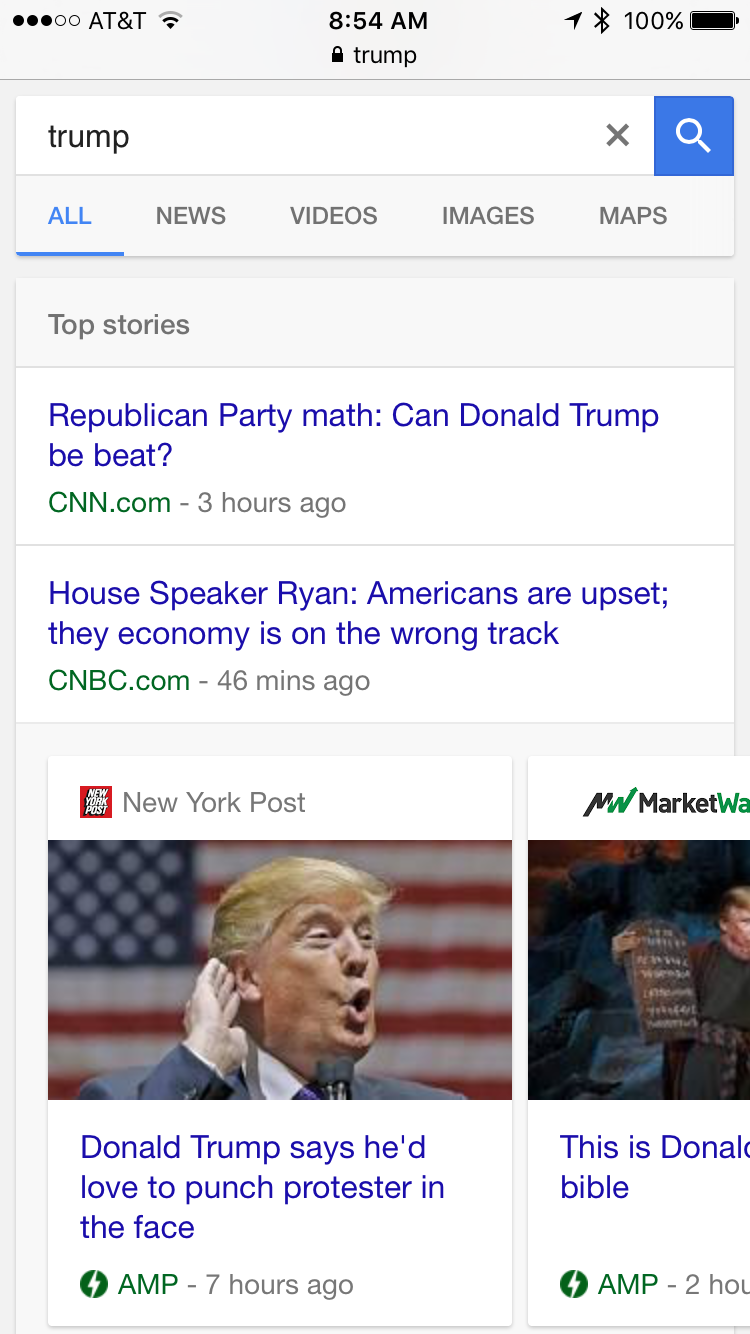
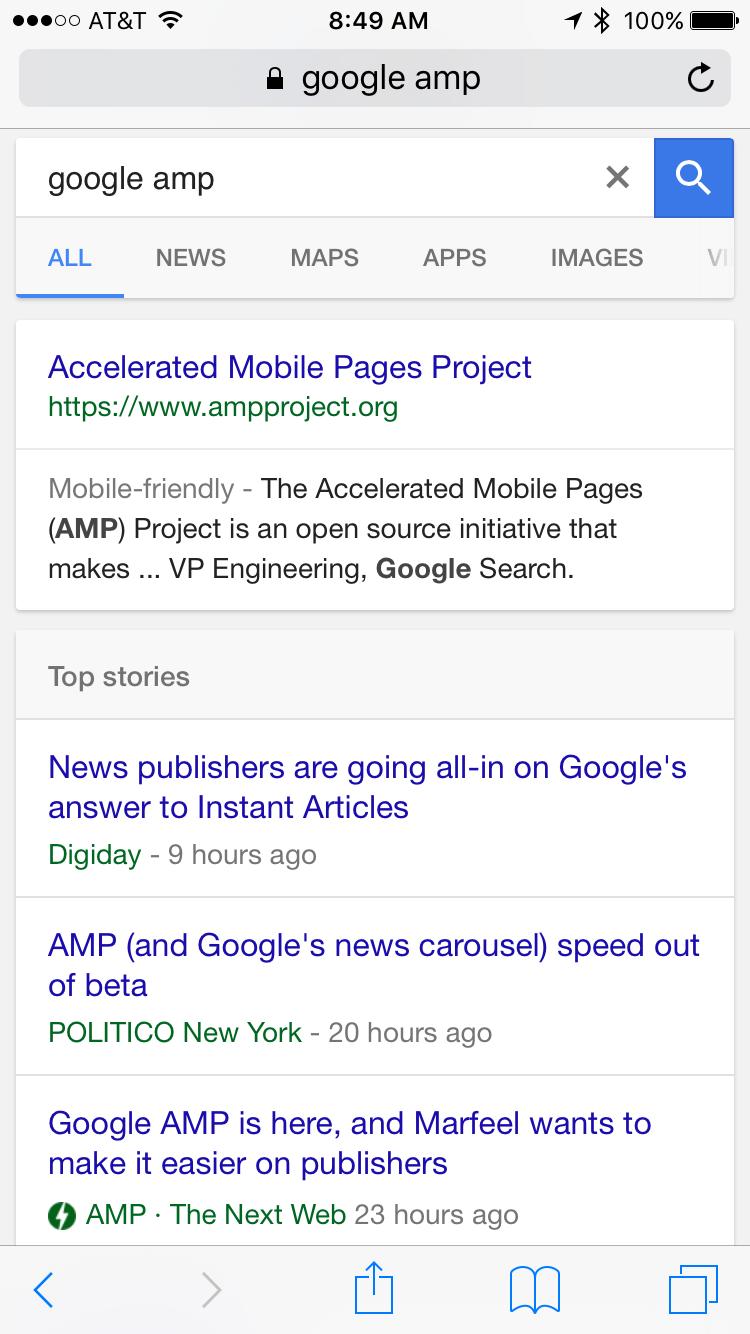
Google’s Accelerated Mobile Pages (AMP) have been rumored to rollout in late February for some time, and it appears they are finally starting to appear. The AMP listings are being spotted in mobile search results, but it seems they are not available for all searchers.

Accelerated Mobile Pages are pages designed to be super lightweight and allow for incredibly fast load times. It does this by using a unique, streamlined version of HTML that is able to be heavily caches to provide the fastest loading experience possible.

To see if you have access to the new AMP search results, just perform a search on Google.com for any query that would typically trigger a news box. If you can’t think of anything, you can try ‘Trump’, ‘Google’, or ‘Obama’.

Barry Schwartz shared a few screencaps of what you can expect to see as the listings become more widely available. You can see them below:

google-amp-live

This screencap shows AMP listings appearing in the news listings, rather than the carousel:

google-amp-non-carousel

mobile-closeup-campaign

Google has been vocal lately about encouraging webmasters to improve the loading speed of their websites, especially on mobile devices. It has made loading speed one of its many ranking signals and is rolling out Accelerated Mobile Pages (AMP) to improve mobile website speed.

With all this effort to make mobile loading speed an important issue for webmaster, you might think Google would be ahead of the curve when it comes to making sure their pages load quickly on mobile devices. Not so, according to a recent test shared on Hacker News.

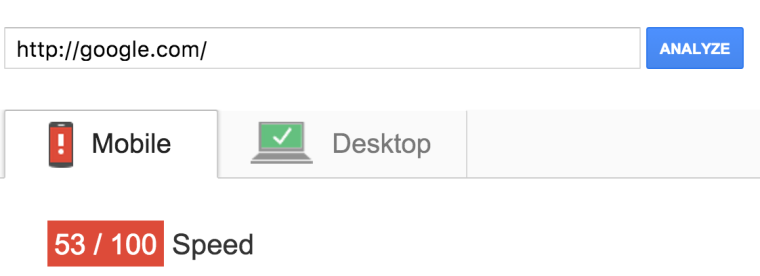
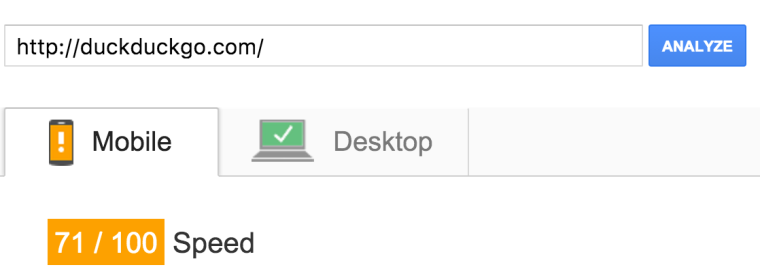
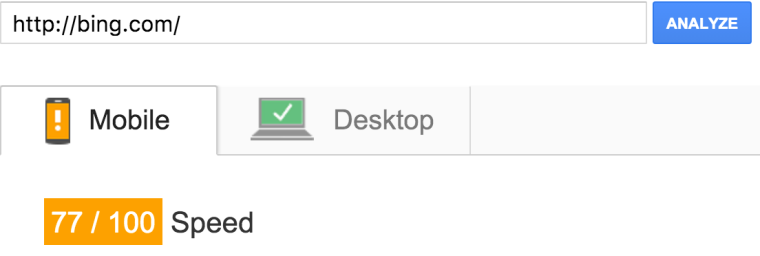
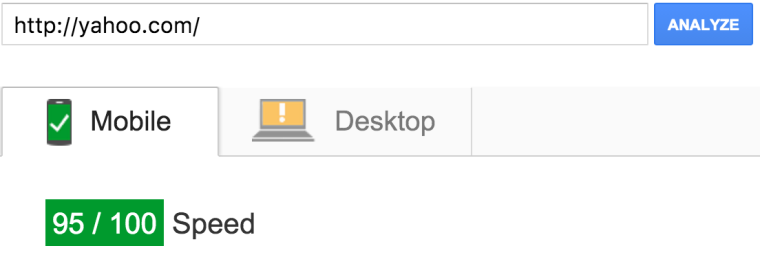
The test was conducted using Google’s own PageSpeed Insights tool and several others have replicated the results on their own. The findings seem clear; Google is the slowest loading home page on mobile in its market.

You can see the results of some of the speed tests below:

Screen-Shot-2016-02-20-at-3.21.33-PM-760x276

Google’s loading speed

DuckDuckGo's loading speed

DuckDuckGo’s loading speed

Screen-Shot-2016-02-20-at-3.22.53-PM-760x256

Bing’s loading speed

Screen-Shot-2016-02-20-at-3.23.41-PM-760x257

Yahoo’s loading speed

Somewhat surprising, Yahoo came out ahead of the pack with a loading speed significantly faster than anyone else in the market. That may be part of the reason Yahoo has seen faster growth on mobile than Bing or other alternatives to Google. However, Yahoo’s market share of mobile search still sits at just over 3.5% compared to Google’s 94%.

Several elements are slowing down Google’s mobile home page, including render-blocking JavaScript and CSS in above-the-fold content. Once AMP is rolled out, this could change. If Accelerated Mobile Pages are as effective as Google claims, it should have one of the fasted loading home pages on mobile once the new system is released. But, it is interesting that Google is currently lagging behind the field.

Google Logo

Google has officially confirmed the end of ads in the right hand column of its search pages, except for two notable exceptions.

As of February 19th, Google is phasing out ads on the right side of its desktop search results. Instead, all ads will appear at the top or bottom of the results, though Google may include an additional ad above results for “high commercial queries.”

The change will effect users worldwide, in all languages. Google is also saying the change is motivated by a push to bring desktop results closer to the mobile experience, however rumors suggest the low click-through rate (CTR) of right side ads may also be a factor.

There are also two specific exceptions to the change. No ads will appear on the right side of desktop search results except in two cases:

  • Product Listing Ad (PLA) boxes will still show either above or to the right of search results
  • Ads can still appear in the Knowledge Panel

Overall, most users probably won’t notice the difference in search results. However, businesses competing for the already limited organic space on the front page of search results may find the change makes the competition even fiercer.

The decreasing front page real estate means an even higher focus on SEO for businesses seeking high ranking organic listings.

The rollout for the change should be complete today.

adobe-flash-player-logo-2011-540x334

Adobe Flash is all but dead and Google is putting the final nails in the coffin by dropping support for Flash-based ads in favor of ads coded in HTML5. This isn’t happening immediately, but Google announced its intention to move to HTML5 by January 2017 in order to give advertisers time to transition.

As part of this transition away from these ads, Google will no longer allow Flash formatted ads to be uploaded to the Google Display Network starting June 30th of this year. Up until then, you can still upload any Flash-based display ads you’ve been working on and they will continue to run until January.

Google notes that you should update your display ads before either of these dates for best performance, and that video ads built in Flash will not be impacted by the change.

The death of Flash is likely to be dragged out for quite some time, but this is a big loss for Adobe’s format. Adobe’s player only accounts for 5% of mobile and web video seen last year, but it has still been a major part of major online ad networks. If these ad networks no longer accept Flash, then Flash loses its one last thing keeping it relevant.

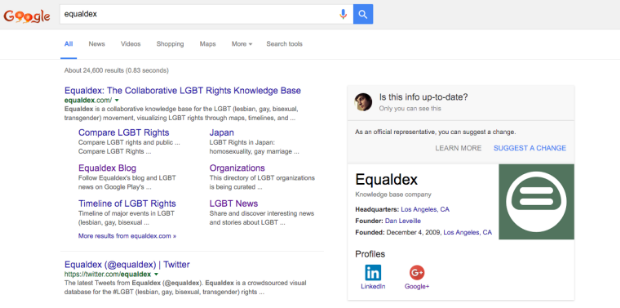
Have your checked your business’s Knowledge Graph information lately? If you haven’t, you may be hearing from Google the next time you perform a search.

Recently, Dan Leveille discovered that Google is proactively reaching out to searchers and urging them to keep their business listing up-to-date. If you haven’t checked on your listings recently, you may see a similar alert to the one below next time you sign in with a Google account associated with a Google My Business page.

FeuT1VX-760x377

Leveille notes:

“Other than asking developers to include social profile data, this seems like the first time Google is proactively asking business owners to directly suggest edits to their Knowledge Graph info.”

Leveille also uncovered a newly updated help document from Google detailing the criteria for being considered an “official representative of an entity in the Knowledge Graph.”

This is a significant move by Google to try to clean up out-of-date Knowledge Graph information and provide accurate listings. Both local businesses and major corporations can take advantage of the Knowledge Graph, so it is always a good idea to regularly check your listings and make sure they are current.

SuperBowl50

Online searchers are increasingly turning to mobile devices during the biggest trending moments, and this year’s super bowl makes that clearer than ever. According to Google, 82 percent of all TV ad-driven searches during the Super Bowl came from smartphones, a 12-point increase from last year.

Desktop continues to trail mobile searches with just 11 percent of Super Bowl searches during the game, while tablets accounted for only 7 percent.

In total, Google says the big ads during this year’s Super Bowl drove over 7.5 million incremental searches. That is a 40 percent increase compared to last year’s game.

google-super-bowl-ad-searches-by-quarter-800x342

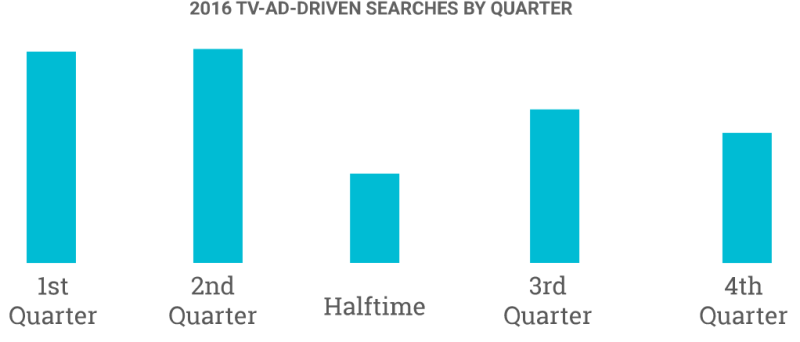
Perhaps due to the close game, the majority of searches driven by Super Bowl TV ads came during the first two quarters of this year’s match. Ad’s related searches dipped significantly at half-time and continued to stay relatively low through the end of the 4th quarter. This is similar to what happened during last year’s close match-up.

This pattern is quite a bit different from 2014, when the Broncos were dominated by the Seahawks. As the score widened in the second half searches increased, suggesting viewers were getting bored with the actual game and paying more attention to ads.

Google’s infographic from the big game shares many other details, like what big brands came out on top and which team won the most searches. The biggest takeaway is that brands who want to capitalize on emerging events and trending moments should prioritize mobile like their audience is.