Tag Archive for: Social Media Marketing

Facebook CTA

Facebook has been rolling out tons of new features aimed at improving business pages lately, but the most recent feature could be the most important of them all. Yesterday, the social media site announced it would be launching call-to-action buttons visible on business pages.

As the announcement explains:

“Pages are an important destination for people on Facebook, and we’re building new ways for people to interact with businesses through them. Today, we’re announcing a new call-to-action feature that will help Pages drive business objectives.”

This new feature allows users to more quickly make the action they are most likely to be looking for, and you can more efficiently direct visitors on your page to your most valuable destination. Whether you want users to sign up for your mailing list, browse your e-commerce store, or book a reservation, there’s a button to fit your needs.

Matt Southern broke down the 7 call-to-action button options announced so far, along with briefly explaining what each is likely to be used for. Facebook’s announcement did not go into details beyond the names of the buttons, but you can get an idea what to expect below:

  • Book Now: To direct visitors to book a table at your restaurant or, a room in a hotel, or a similar kind of reservation.
  • Contact Us: You can likely use this to direct visitors to a contact form, or if you’re brave perhaps it could be a button to email you directly.
  • Use App: If your company has its own app this could be a button to open the app on your mobile device.
  • Play Game: If you’re a mobile app development company this could be a link to play your latest game.
  • Shop Now: Direct visitors to your e-commerce store.
  • Sign Up: Direct visitors to your mailing list sign up page, or a webinar sign up page, or something like that.
  • Watch Video: Pretty self-explanatory, direct visitors to watch a video of your choice.

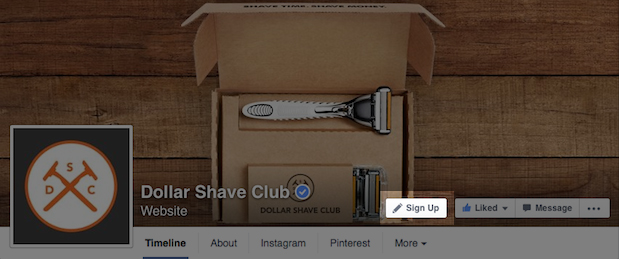
For an example of how these buttons will work, you can see the business page for Dollar Shave Club, who has had access to these call-to-action buttons already. Apparently it is working well for them:

“Over the course of a three-week test, the Sign Up call-to-action button delivered a 2.5x higher conversion rate versus other comparable social placements aimed to drive new user acquisition.”

These buttons will roll out in the US over the next few weeks and worldwide next year.

Instagram LogoInstagram is quickly becoming one of the most popular social media platforms around. With new estimates saying Instagram pulls in 300 million monthly users, the photo- and video-sharing app has bypassed Twitter’s official user count of 284 million. The new numbers mark a 100 million user increase since March.
The company announced the milestone yesterday, along with the announcing that Instagram would begin verifying accounts similar to Twitter’s method of certify celebrity or high-profile accounts.

The verified badges for public figures and brands will be coming within the week according to Instagram, who says the badges “will make it easier for people to identify and follow the authentic brands they care about.” The blue badges will appear next to names on their profile pages, as well as in search.

The increase in users leaves only a few social media sites ahead of Instagram, including Google+, LinkedIn, and Instagram’s companion company Facebook. The site is extraordinarily popular among youth and brands, and predictions see it continuing its fast growth.

In the announcement, Instagram also said it would be purging fake accounts from the site, so brands can expect to see a relatively small follow count decline.

Google Authorship

It can seem like the entire world hates Google+ sometimes, but in reality the social media platform has carved out a niche audience that has stayed loyal over several years, and recent changes have given the platform a strong presence in local search results.

As Google has upped the presence of “local packs” or groups of local results on searches that appear to be geographically linked and this has given businesses with Google+ profiles a big step up in visibility.

Google+ gets beat on for not having near the number of daily active users as sights such as Facebook, Twitter, or Pinterest, but it is not going anywhere soon simply because of how useful the site can be. Now Google+ has made it even easier to keep the most useful information in a prominent location on your page by pinning the most important posts at the top of your feed.

You can use this to keep business information such as contact numbers or location info in a highly viewable place, but this can also be extremely useful for bringing attention to sales, special promotions, or any other big events coming up for your business that you want the public to know about.

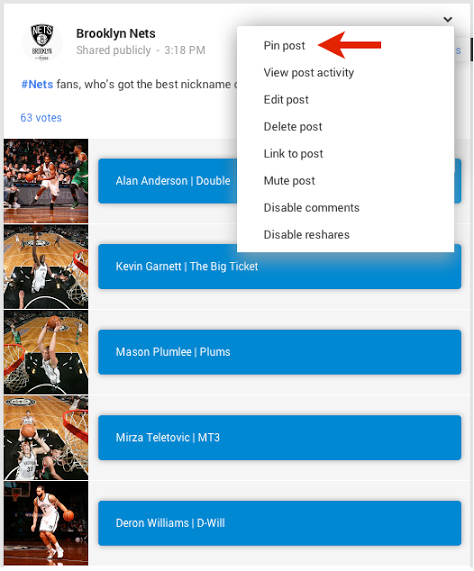
To pin posts, just click the drop down arrow at the top-right corner of your published updates and select ‘Pin post’ as in the example below.

pinning

The feature has already rolled out on desktop and Android but, in typical Google fashion, iPhone users will have to wait until they decide to share the feature with iOS.

search-engine-optimization-411106_640If you are still running SEO the same way you were at the start of the year you are already behind the curve. SEO is constantly changing and proper SEO strategies need to be well-planned enough to stay on target over long periods of time while also flexible enough to adapt to the constant guideline changes, algorithm roll-outs, and new ideas about usability.

In the past year alone, Google has pushed out 13 updates to algorithms that the public knows about. That number is just the big algorithms that people might know by name such as Penguin and Panda, while there has also been a multitude of more incremental changes that have gone undocumented in the public.

You don’t have to rebuild your SEO plans from the ground up every time there are significant changes over at Google, but you need to keep the biggest changing trends in mind as you progress and refine efforts. As we head into 2015, consider the most important shifts in SEO thinking that have happened over the past year.

1. Focus on Mobile Traffic

This may not be the newest shift in SEO, but it is more important than ever and all indications suggest mobile isn’t slowing down any time soon. Google has also shown their commitment to improving the mobile web with the introduction of mobile analytics tools and new warnings for users who are about to click on non-mobile friendly websites.

You can see if your site passes Google’s mobile-friendly test here, but don’t stop with that. Ensure your mobile site lives up the standards set by your desktop page and your company to keep mobile customers coming.

2. Optimizing for Alternative Search Engines

There is plenty of evidence to suggest that 2015 may be the year when Google’s iron grasp on search market share could start to crumble. Google has lost some major clout as Firefox replaced the search giant with Yahoo as the default search engine for the browser. Google’s agreement with Safari is also ending this year, and Apple seems keen to replace their competitor’s search engine with a more neutral option such as Bing, Yahoo, or even DuckDuckGo.

Even if Google maintains a strong majority of the market share (which they likely will) you should still make it your mission to be visible across all platforms, not just the most popular one.

3. Stop Focusing on Rankings and Start Looking at ROI Metrics

Rankings are so last year. Since all the major search engines have put a heavy emphasis on personalized search results that cater to users’ interests and location data, there is no guarantee your site will show as the top result for someone else even if it is the top result for you. Instead, turn your attention to return on investment. It offers a more accurate depiction of how your online marketing efforts are working, and gives a more direct understanding of the value of your SEO.

4. Emphasize Social Media

In the past, emphasizing social media basically meant blasting the same updates across every platform you can find. But, social media has matured and users won’t respond to your efforts if you treat every platform as the same. You should learn the unique demographics and behaviors of any social media platform you are considering sharing on, and ensure your ideas, voice, and medium match the crowd.

More importantly, social media users expect brands to more than just yell at them. Users expect ways to engage your brand and establish a more personal connection. The best solution is to isolate two or three social media platforms that best suit your brand and build on your efforts there. If you can really succeed there, you won’t need to be on the other social sites.

5. Earn Links, Don’t Hoard Them

You have most likely heard the routine proclamations that “links are dead!” more than once since Google began cracking down on weak or suspicious link portfolios. However, this is no truer now than when the internet first gained a foothold in our society. Links are still the most influential signal of trust and authority to search engines and that is going to stay the case for quite some time. However, the game has changed in a couple important ways.

Back in 2011, you could purchase countless low-quality links to masquerade as a reputable site. Now, Google has means of seeing through the mask. Google can analyze link quality and they don’t take kindly to poor quality, irrelevant links meant to boost visibility without effort. In 2015, earning a single high-quality link the right way is worth more than any number of links you could buy or collude to gain. Put your effort into proper SEO and you’ll find success. Rely on shady tactics and Google will be hunting for you.

like-gateTomorrow marks a rather significant change in Facebook policy as they close the so-called “like gate.” As announced in August, Facebook has decided that pages will no longer be able to require likes to enter contests or view content.
Facebook said the change was intended to guarantee people are only using likes on pages they really want to engage with, not due to “artificial incentives.” Interestingly, this is also one of the few changes Facebook has made recently to receive widespread praise.

Most social media and marketing professionals agree like gates were far from the best means of achieving the desired result, often drawing in many who have no real interest in a business. Emeric Ernoult, CEO of AgoraPulse, gave the example of pages which used giveaways of iPads or other popular consumer goods to inflate likes.

“It was too easy to make mistakes,” Ernoult told Marketing Land. “There have been too many people doing things that were actually hurting them but they didn’t realize it.”

Most importantly, the rule change doesn’t ban pages from simply asking for likes, which Ernoult agrees is an overall better policy. “You are asking now, you are proposing. You’re not forcing and that’s a big difference,” he said. “And I think it will force page owners and marketers to think about how sexy they could be and how appealing they could be. Instead of, ‘Of well, they’ll have to become fans anyway so we don’t have to explain.'”

Facebook has long been the favorite social media platform for sharing content, but if a report from the New York Times is any indication content creators may soon be looking for a new platform to share their content while still attracting users to their own websites.

According to the report, Facebook may be considering hosting linked content directly on its own site, and serving ads on that content, rather than linking directly to content creators’ sites. Not only does this mean a drop in traffic from Facebook users, the change could outright cause the site owners to lose revenue from declining traffic and ads on their own site.

The change is supposedly going to be limited to mobile devices, but it has already stirred up quite a controversy with content creators and marketers.

Facebook seems to believe the change could be more convenient to users, but those who create content see it more closely in line with content syndication or even content theft. No matter the convenience to users, many content creators depend on revenue from page views and ads which would be significantly impacted if Facebook does end up hosting content.

In the wake of the controversy, Facebook has even opened a discussion on the possibility of sharing revenue to websites that own the content being hosted. In the New York Times article, Facebook explained its profit sharing proposal:

Facebook hopes it has a fix for all that. The company has been on something of a listening tour with publishers, discussing better ways to collaborate. The social network has been eager to help publishers do a better job of servicing readers in the News Feed, including improving their approach to mobile in a variety of ways. One possibility it mentioned was for publishers to simply send pages to Facebook that would live inside the social network’s mobile app and be hosted by its servers; that way, they would load quickly with ads that Facebook sells. The revenue would be shared.

That kind of wholesale transfer of content sends a cold, dark chill down the collective spine of publishers, both traditional and digital insurgents alike. If Facebook’s mobile app hosted publishers’ pages, the relationship with customers, most of the data about what they did and the reading experience would all belong to the platform. Media companies would essentially be serfs in a kingdom that Facebook owns.

The real question appears to be if there will be an opt-out option available. There has been no mention of an opt-out or the potential for the hosting of content to be optional. Even if it is up to the publisher, the change could still negatively impact content creators who choose to host their own content on their page, as content which is hosted on the social platform is likely to look more attractive and convenient.

Snapchat, the popular social image sharing app, recently ran the first ad on their platform since its inception. If Universal Pictures, the movie studio who bought the ad, is to be believed, the results are already showing the advertising exercise was a great success.

It is hard to tell how the format will work for smaller brands, but Universal vice president of digital marketing Doug Neil said “millions” of viewers have seen the 20-second trailer for the horror movie “Ouija”.

However there has been some fallout from the ad tests, especially on Twitter. Some users were surprised by the ads or confused by their disappearance after playing. For big marketing ventures like “Ouija” this isn’t much of a problem, especially as the platform perfectly attracts their demographic, but it could be an issue with more niche or localized brands if Snapchat ever expands the ad platform.

Snapchat’s ad medium does offer one unique benefit from the plethora of other monetizing social media platforms. While Facebook’s videos autoplay for anyone who happens to scroll by, Snapchat’s ads have an incredibly wide reach while only playing for those who actively engage the ads. While a huge range of people were shown the ad’s presence, only those who wanted to view it actually watched.

“It was a lean-in experience,” Neil said. “The people who watched the ad were ones that pressed to play so they were focused on actually viewing the content. As it turns out there were a number of people who screen captured it and it’s actually moved beyond the Snapchat window. But our goal was to get exposure in Snapchat and that was accomplished.”

SnapchatLogoSnapchat has quickly become one of most popular apps and certainly the most popular temporary photo and video sharing network, but thus far they have yet to find a way to monetize their service. CEO Evan Spiegel says that will change very soon, as untargeted, disappearing ads may begin showing up in the near future.

The ads will appear directly within the Snapchat Stories section, between photos and videos from users, but most importantly for marketers they will not be targeted individually. “They’re [the ads] not fancy. You just look at it if you want to look at it, and you don’t if you don’t,” Spiegel told the Wall Street Journal. He also said there is not a set release time yet, but they would be here “soon.”

The decision to make the ads untargeted is fairly surprising as most would agree the ability to refine demographic and behavioral traits to target audiences is one of the most unique and powerful aspects of social advertising.

You can find out more in the piece from the Wall Street Journal.

SEO and social media marketing have been interconnected for several years, but they are also typically treated like separate efforts that influence and benefit from each other rather than being entirely coupled. That is why one of the most neglected features of Pinterest is Guided Search.

It is no secret that Pinterest is quickly becoming an upper tier player in social media and marketing because it touches on our aspirations and desires. To paraphrase Tailwind CEO Daniel Maloney during SMX East this week, Pinterest is about who you want to be.

Pinterest_Sticker_Icon1“When you look at what people are pinning, it’s more about who they want to be in the future,” Maloney said, “which from a marketer’s perspective is a dream come true.”
That made the social media platform ripe for harvest then when they introduced Guided Search early this year, but surprisingly few marketers took advantage of the opportunity to optimize their presence on the site.

Was Guided Search forgotten because it wasn’t high enough on the list of marketing priorities or because it slipped through a crack directly on the line between SEO and social media marketing? It is hard to tell, but Anna Majkowska, a software manager on Pinterest’s search team, has been encouraging brands to optimize for the platform so that they are able to get their content in front of the more than 50 million users who frequent the site.

Majkowska shared tips for optimizing your site on Search Engine Land, but the important thing is to not be intimidated. Pinterest SEO isn’t near as complicated as trying to optimize for Google, so the learning curve is notably less steep.

Facebook-for-Small-BusinessIf you believe everything you read online, you might believe Facebook is only a viable marketing platform if you’re already a big brand. But, a new report suggests small businesses across the country recognize the potential in advertising themselves across the site.


The study from advertising research firm BIA/Kelsey says small businesses are marketing on social media more than any other form of advertising. Specifically, their data suggests nearly three-fourths of all small and medium-size businesses are investing in some form of social media marketing, whether it be paid advertising or organic outreach.

For small businesses, Facebook was easily the most popular choice for social media marketing. More than 55 percent of the businesses surveyed reported having a dedicated business Facebook page, and another 20 percent have run a Facebook ad or promoted post.

Many businesses showed that social media marketing doesn’t have to be restricted to just one platform, as several businesses also cited using other sites including LinkedIn, Pinterest, Instagram, and Twitter. Notably, the researchers did say LinkedIn is likely not being used for promotion but for recruiting and general HR purposes.

“We were impressed with the strength of the whole social media category, not just Facebook,” Steve Marshall, director of research for BIA/Kelsey, said in a statement.

The study, originally published on Business News Daily, was based on surveys of 546 small businesses with less than 100 employees.