Pinterest Ads

For the first time since its release in 2016, Pinterest is making major changes to its self-serve Ads Manager, including dynamic pricing and stock information.

All the changes coming to Ads Manager

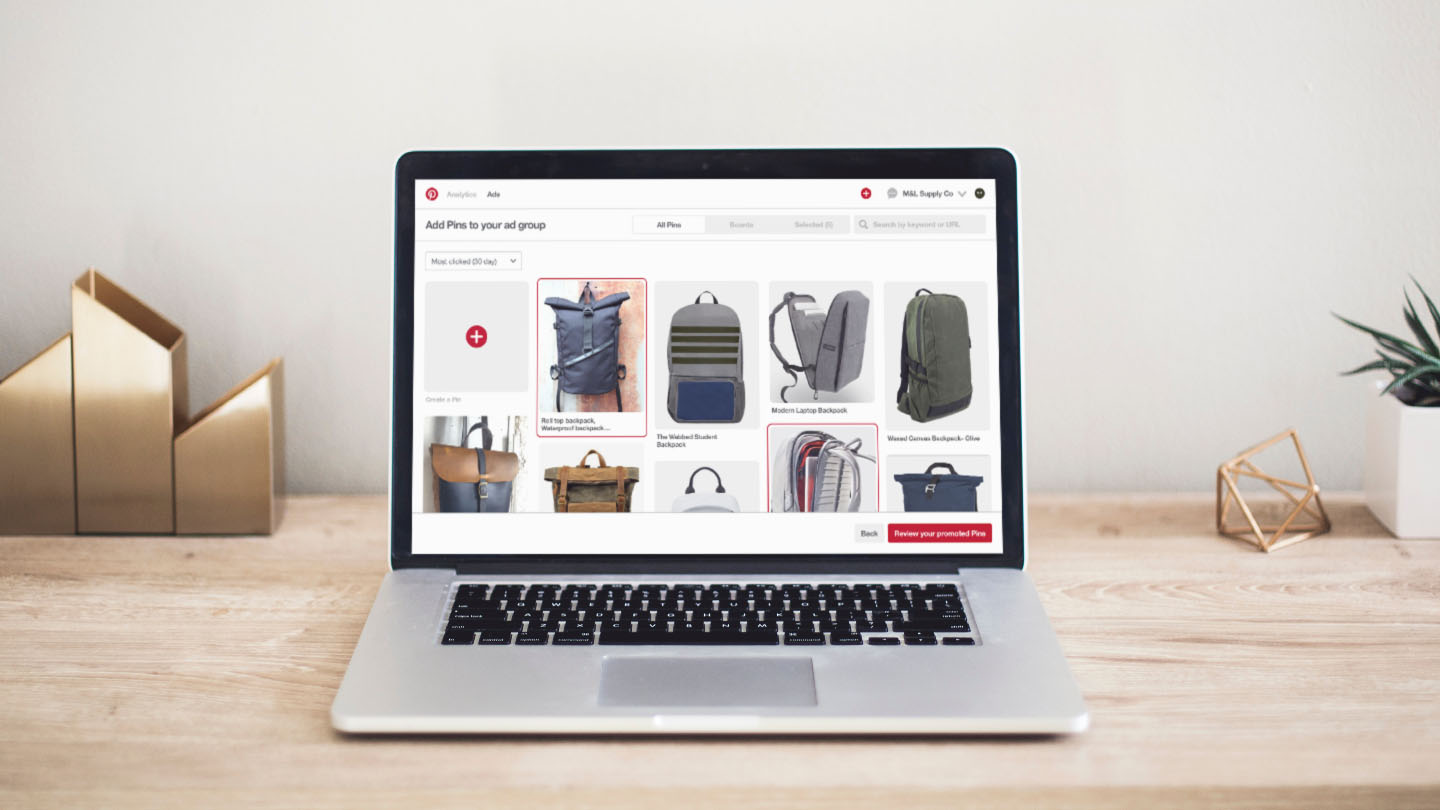
Perhaps this biggest change is a new step-by-step campaign set-up tool that will walk advertisers through picking a business goal, customizing their audience, and selecting or creating Pins to promote.

Pinterest is also introducing ad placement options to select whether you want your ads to appear in feeds or search results at the ad group level.

Advertisers will also be given more control over when their ads are scheduled to run, as well as a “pause campaign” tool for reviewing Promoted Pins before they start running.

To help you better target your ads with a detailed audience, Pinterest is integrating the Audience Insights tool directly into the ad manager. This will keep you from having to switch back and forth between windows to create data-driven audiences for your ads.

At the same time, Pinterest is making some changes to its reporting dashboard to let advertisers make changes to multiple rows or campaigns at the same time.

Updates to Product Pins

As part of the revamp, Pinterest is greatly expanding the options available for Product Pins, including the addition of dynamic pricing and up-to-date stock information.

The company is also increasing the number of Product Pins that will include the shopping bag icon to directly link to a checkout page, making it easier to purchase items with just a few clicks.

The new Product Pins are replacing the Buyable Pin format and are already rolling out for both mobile and app versions of Pinterest.

New fashion and home discovery categories

Lastly, Pinterest is creating two new shopping recommendation categories for home décor and fashion retailers within the Style and Home sections. This will give these retailers more opportunities to reach new audiences and help ensure their ads are shown to the right audiences.

With the holiday season coming up, now is a good time to make yourself familiar with all the new advertising options on Pinterest. The social shopping platform is one of the biggest tools used by online shoppers to not only plan their holiday gift purchases but actively purchase new products as they browse.
Facebook is launching a new feature for all Pages that allows you to publish pre-recorded “live” videos.

That may sound contradiction, but the new “Premieres” feature brings the best of Facebook’s live video and pre-recorded video features into one convenient package.

The biggest benefit of the premiering pre-recorded videos is that you can get the same boost to visibility received by “going live”, being placed in the top of feeds. Facebook will also deliver notifications alerting users to your video debut to those who have enabled them.

Additionally, “Premieres” will be included within the Facebook Watch tab, making it easier for them to be found by more users.

While these videos get all the benefits of live streaming, they are also eligible for a number of Facebook’s tools for pre-recorded videos such as monetization, interacting with your audience through chat, and branding.

How to use Facebook Premieres

Posted by Facebook Media on Friday, September 28, 2018

When created, a premiere will be turned into a post notifying users about your upcoming launch. Then, at the scheduled time, the video will be played “live” until it is completed. Finally, after the Premiere has ended, the post will turn into a typical on-demand video post.

Currently, Facebook Premieres are only able to be uploaded and schedule on desktop computers and must be scheduled at least 10 minutes in advance. The furthest ahead of time they can be scheduled is one week in advance.

It should be noted that Facebook does have some limits on what videos are eligible for the Premieres feature.

The company says content must be entirely original and not available anywhere on Facebook or elsewhere online before the Premiere, though it is not entirely clear how they will ensure this.

Videos must also be at least 30 seconds long and no larger than 10 GB in size.

Google is some small changes to Google My Business Posts that could affect visibility.

Google Posts Go to the Bottom

A number of people have observed that Google Posts have been moved within knowledge panels, getting shifted down reviews and other business information.

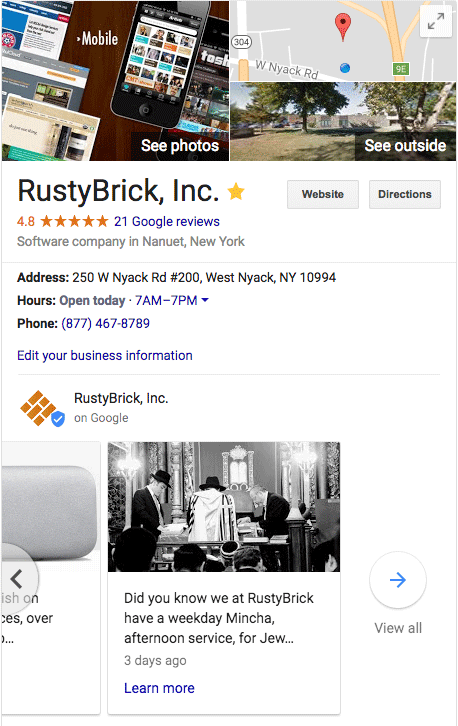
Barry Schwartz gave an example of just how significantly the change demotes Posts within the knowledge panel on Search Engine Roundtable. The first picture shows his Google My Business listing in 2017, with a Google Post directly below the address information:

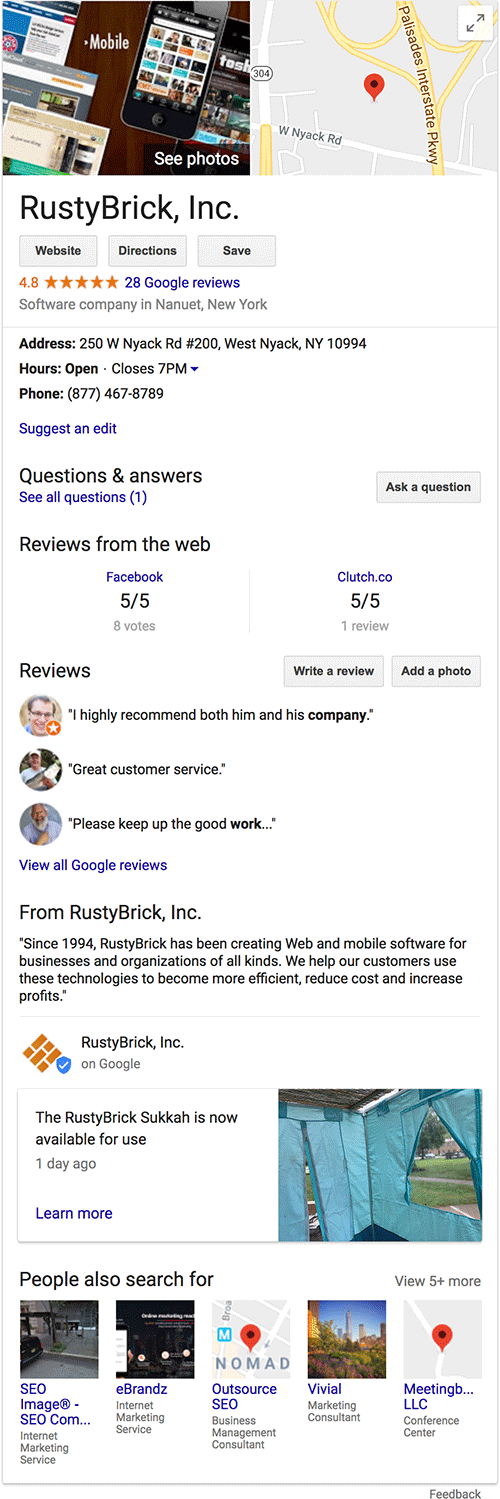
In the second screenshot, the latest Post is all the way at the bottom, only placed ahead of other search suggestions:

New Post Length Limits

Additionally, it appears Google My Business is changing how it limits the length of Google Posts.

In the past, Google required a minimum of 100 words per post with a maximum of 300 words per post.

Now, the company is changing to limit posts to 1,500 characters, rather than limiting the length based on words. There appears to be no minimum length for Posts.

If anything, the change will make Posts shorter for most businesses, since 1,500 words roughly equate to 250 words. Given, this depends on the length of the specific words a person uses.

Pinterest is expanding its Shop the Look Pins to all business accounts.


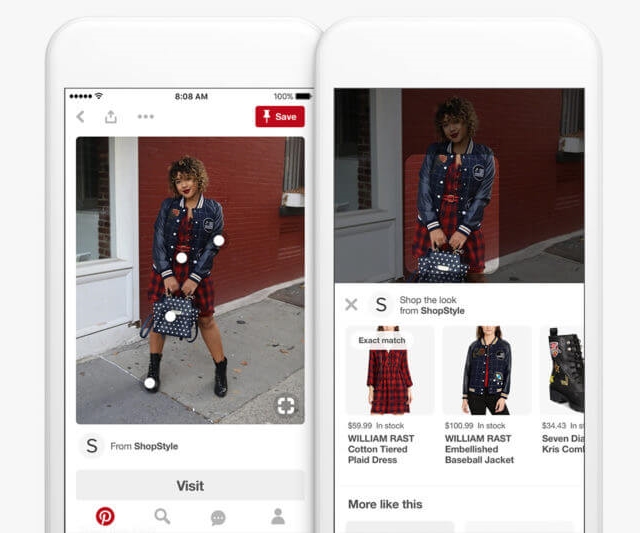
Shop the Look Pins aren’t exactly a new type of Pin but instead is a tool that allows businesses to tag products in photos to provide a seamless shopping experience.

The tool was previously exclusive to big brands who purchased advertising through third-party services like Pinterest Marketing Partners Olapic and Curalate. Now, however, all brands can add Shop the Look Pins through a self-serve tool.

Shop the Look Pins appear as simple white dots which can be moved to ensure they are always helping add information without blocking the product itself. When a user clicks one of the dots, it will expand to provide extra information such as pricing, availability, and a link to immediately purchase the product.

While the company didn’t release specific data about the effectiveness of Shop the Look Pins so far, it believes the new tool will help drive engagement and encourage conversions for businesses.

To help reinforce that point, the company said that of its 250 million monthly users, approximately two-thirds have engaged with new products from businesses. More than 90% say they use Pinterest to plan their future purchases, making them a prime audience for brands.

The company also noted that Pins have a significantly longer lifespan than most social media content which loses inertia after several days, if not hours. Pinterest claims that Pins can drive significant engagement for up to 120 days.

Twitter is trying to bring back the good old days when you could explore your feed chronologically.

The social platform announced it has changed how the option to “Show the best Tweets first” function, removing the “In case you missed it” and recommended Tweets from people users aren’t following.

By stripping all this away, it leaves users with a pure, reverse-chronological feed from people they are following.

“We’ve learned that when showing the best Tweets first, people find Twitter more relevant and useful. However, we’ve heard feedback from people who at times prefer to see the most recent Tweets,” reads the company’s statement. “Our goal with the timeline is to balance showing you the most recent Tweets with the best Tweets you’re likely to care about, but we don’t always get this balance right.”

Since the release of the default algorithmic feed in early 2016, many users have been relying on workarounds to access their feed in a chronological way. Unfortunately for those users, Twitter has recently been limiting the amount of access available to third-party developers, restricting the possibility for plug-ins or automated tools for accessing a chronological timeline.

That led to the past few days when things reached something of a boiling point. A trick to get the algorithmic feed from user Emma Kinema went viral with more than 15,000 retweets and almost 40,000 likes.

While Twitter says it has been working on this update for some time, the tweet helped underscore the demand for a simple way to access a chronological feed without all the “curated” content that Twitter had been including.

The change to how the “Show best Tweets first” option works is a temporary solution according to the company, which maintains that many users still prefer the algorithmic feed. In the meantime, it is working on a more accessible way to easily switch back and forth between “Tweets that are most relevant for you and a timeline of the latest Tweets.”

The company says it will launch within a few weeks.

Twitter is following Facebook and Instagram’s lead by prioritizing live streams in users’ feeds. The social network announced it would begin bumping live streams to the top of users’ timelines while the streams are active.

This means anytime someone you are following begins streaming, you will be able to see it automatically at the top of your feed.

As Twitter said in the announcement:

“We’re making it easier to find and watch live broadcasts. Now, when accounts you follow go live, the stream will appear right at the top of your timeline.

Catch breaking news, your favorite personalities, and can’t-miss sports moments. Rolling out now on iOS and Android.”

The decision to prioritize live streams in people’s feeds isn’t exactly shocking. While streams can be rewatched after the original event is over, being able to interact with streamers during the video is a big driver of engagement for streams. Once the initial stream is over, engagement with the post typically dwindles significantly.

This is why Facebook and Instagram have similarly prioritized live streams on their platforms by sending notifications to users and highlighting active streams in the primary feed.

Although Twitter has yet to clarify, it seems likely the boost applies to both video live streams and the new audio-only streams rolled out for users last week.

Not long ago, it seemed like every business website had a “Testimonials” page filled with reviews and references from either past-customers or fellow members of their industry. If you have a keen eye, though, you might have noticed these pages are slowly falling out of use in favor of posting your Google, Yelp, and other online reviews on your site.

The practice has led to some confusion, as many experts claimed putting your own online reviews from across the web on your site could be potentially dangerous for search engine optimization. There have even been suggestions it could lead to Google penalties.

Now, you can breathe easy and share your online reviews with pride, as Google webmaster trends analyst John Mueller has confirmed that it is totally fine to highlight your reviews on your company website – with one exception.

While posting your reviews on your website is acceptable, Mueller warns that you can not use review structured data on these reviews.

As Mueller explained on Twitter:

“From a Google SEO point of view, I don’t see a problem with that. I imagine the original is more likely to rank for that text, but if you use that to provide context, that’s fine (it shouldn’t be marked up with structured data though).”

Mueller then went on to explain that review structured data is intended for reviews “directly produced by your site” and using them on third-party reviews on your own site would go against Google’s guidelines.

in a year full of scandals and congressional inquiries, people appear to be changing how they use Facebook.

A new study from Pew Research Center shows that a huge portion of users has taken steps to reduce their usage and increase their privacy within the past year.

Interestingly, the findings show that users are specifically ditching the Facebook mobile app, with more than a quarter of US adults deleting the app on their phone. Even more have gone on a trial separation by taking a break from the platform entirely.

Among the findings of the study are several notable discoveries, including:

  • 54% of users have adjusted their privacy settings
  • 42% have taken a break from checking Facebook for several weeks or longer
  • 26% have deleted the Facebook app from their phone
  • 74% have done at least one of the above

These numbers on their own are very concerning for Facebook, but they become even more illuminating when broken down by age group. The survey shows that young Facebook users are widely stepping away from the platform or restricting their privacy.

Among users aged 18-29, 44% have deleted the app, compared to just 12% of users over the age of 64. Similar shifts were found among those who have changed their privacy settings.

Notably, there was no significant difference between the ages of those who have taken a break from Facebook.

The survey was conducted between May 29th and June 11th this year, after news broke about Facebook’s involvement in the collection and selling data on millions of users by Cambridge Analytica.

While these trends are certainly eye-raising, it remains unclear exactly how Facebook’s scandals have actually affected the company. The company’s latest quarterly report indicates the average daily users in North America has remained steady throughout the year.

Facebook is running an extremely limited test letting just five publishers create and test responsive headlines, images, videos, and copy to see which versions of their posts perform better in real time.

The new tool allows the select few publishers to test up to four unique versions of any organic post, according to Digiday. It also allows these publishers to see data such as interactions and click-through rate, as well as predictions of these metrics as the ads roll out. This way, publishers can actively gauge which version of their content fares best.

While Facebook wasn’t willing to release specific data on the test yet, Facebook product manager Mollie Vandor said that more than half of the time, publishers wound up choosing a different version of the story than they had originally created.

The intention is to help boost organic performance for publishers in a time where organic reach and engagement continues to fall across the platform. According to BuzzFeed News, one of the publishers given access to the test, the tool does improve performance. However, it isn’t enough to mitigate Facebook’s ongoing demotion of organic reach.

“This comes as everyone’s traffic on Facebook has gone down a lot, so it’s good to be able to get the most out of our posts, but we’re still getting a lot less,” said BuzzFeed news deputy director, Fran Berkman.

As a Facebook rep told Marketing Land in a written statement:

Our goal with this test is to provide more visibility into how their organic content is performing on Facebook on a post by post basis. Also to enable publishers in the test to derive learnings and identify their own best practices over time. With this level of insight, publishers are better equipped to drive meaningful engagement around their content and have a stronger sense of control over how their content performs on Facebook.

Vandor echoed this sentiment, saying the tool “is a way to maximize how they pitch their content to people on Facebook.”

“Instead of us saying, ‘Here’s a list of universal best practices,’ we’re trying to give publishers the tools they can use to develop their own best practices.”

When asked if the tool would be available to other publishers and advertisers in the future, Vandor wouldn’t say anything decisively. She did, though, say the company is “actively exploring” expanding the tool to others once it is made easier and less resource-intensive to use.

Google's New Ad Strength Indicator

Google is giving advertisers a new tool to predict how their ads will perform before they start running.

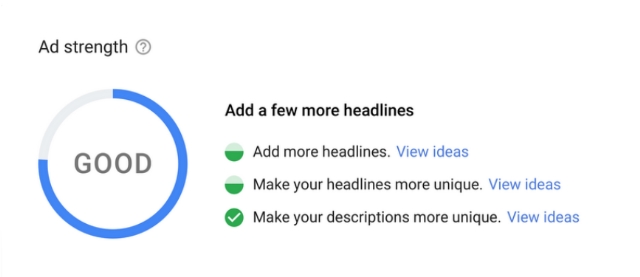
The new ad strength indicator evaluates responsive and display ads, then rates them on a scale from “Poor” to “Excellent”.

The tool also gives specific tips on how you can improve your ads to improve their rating and improve performance.

When evaluating ads, the tool assesses a number of factors including relevance, quantity, and diversity of ad copy.

To help prepare for the rollout of the tool, Google provided a few bits of guidance:

  • For responsive search ads: Provide as many headlines and descriptions as makes sense for your business. At least five headlines are recommended.
  • For responsive display ads: Provide up to 15 images and five logos, headlines, and descriptions per ad.

The tool will roll out in stages and will likely take until early next year to be fully available.

First, the ad strength indicator will begin appearing when constructing responsive search ads within the next few weeks. Then, in early September the tool will be given its own column in the Google Ads interface. Finally, the ad strength indicator will be brought to responsive display ads in “several months.”

Along with the announcement of the ad strength indicator, Google also rolled out a number of several updates to responsive search ads.

The biggest change is that advertisers can now preview ad combinations as you are building them, letting you see several possible combinations while you work. This can help shape your ads to ensure ads will always be relevant and readable.

Google is also providing more information about responsive search ads in search reports, including data for headlines, descriptions, and top combinations.

These changes to responsive search ads are already rolled out and available to all advertisers.