Instagram has begun showing postings for users you don’t follow when you’re all caught up on posts from those you do follow. The decision is not without controversy, however. 

Starting this week, users are seeing a new “Suggested Posts” section filled with content similar to those they already follow. The section doesn’t appear until you’ve scrolled past everything shared from people you follow and you have seen the “You’re All Caught Up” screen. 

Though brands, marketers, and publishers may be excited about Instagram introducing organic related content into users’ feeds for the first time ever, the user base has largely been critical of the decision. 

What Are Instagram Suggested Posts
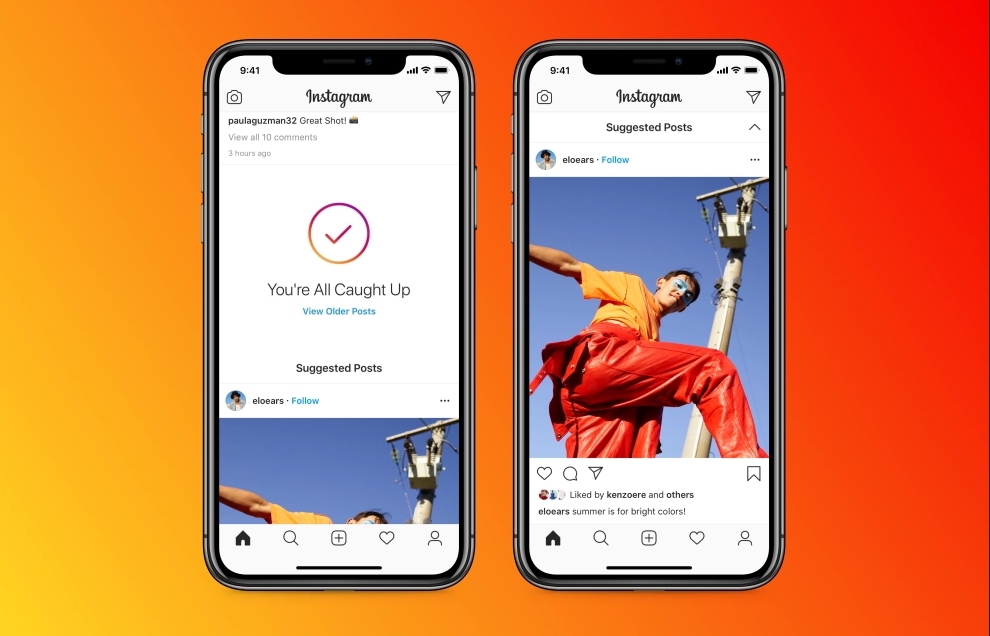
Once users have scrolled to the “You’re Caught Up Screen” they are now seeing an option to “View Older Posts”. If selected or the user continues to scroll, they will be shown an infinite feed of suggested posts. 

Aside from the banner showing that you are viewing older posts, there is no indication that the content is being automatically selected based on your past browsing behavior. 

One complaint many have had is that Instagram already has a dedicated “Explore” section for finding posts and accounts you might be interested in. However, the actual content in these sections differs. 

The Difference Between Instagram Suggested Posts and Explore

Though they share some similarities, Suggested Posts are distinct from the Explore section in some key ways. 

Primarily, Instagram intends for Suggested Posts to be a curated collection of content based on your interests and activity. On the other hand, the Explore section is intended to be an extension of the search function on the platform, allowing you to explore broad topics and interests. 

As Instagram explains in a help center article, the content highlighted in the Suggested Posts section is largely defined by your own behavior:

“These suggestions are based on posts from accounts like the ones you follow and posts similar to the ones you like or save.”

You can also flag posts if they are particularly not of interest to help better refine the content shown to you in the future. To do this, just tap the three-dot icon at the top of the post and select the “Not interested” option.

Another distinction is that Suggested Posts will exclusively feature photos and videos, with no IGTV or Reels content allowed. 

Perhaps unsurprisingly, the explore section will also include promoted posts and other types of ads. 

Why The Decision is Controversial

Complaints about the decision have largely been focused on three issues:

  1. Users are not accustomed to seeing content they didn’t sign up for in their primary feed.
  2. Creating an infinite scrolling feed could encourage users to spend excessive amounts of time on the platform.
  3. The infinite feed makes Instagram too similar to TikTok.

The first complaint is to be expected. Any time a social network has introduced organic content from outside your friends list or follows, users have revolted – whether we are looking at Facebook’s feed or going all the way back to MySpace. 

To get an idea how users feel about the decision, just look at some tweets from users over the past few days:

Still, it is possible the feature may gain acceptance as users get accustomed to it. Only time will tell. 

As for the second complaint, director of product for Instagram, Robby Stein, attempted to address the issue upfront:

“Our goal is to make it clear when you’re all caught up so you can decide how you want to best use your time.

We see people continuing to seek out more posts they’re interested in after catching up with their feeds, so we wanted to learn from that and make it easier to go a little deeper for those who choose to do so.”

Lastly, concerns about Instagram looking a little too much like TikTok may prove to be shrewd positioning on the part of the platform. TikTok is currently facing a ban from operating in the United States unless the owning company ByteDance sells operations in the country. 

As the 45-day deadline grows closer, little progress seems to be happening which raises the distinct possibility that users may soon be looking for an alternative. 

With this and a few other recent moves, it is clear Instagram is hoping to be that replacement. 
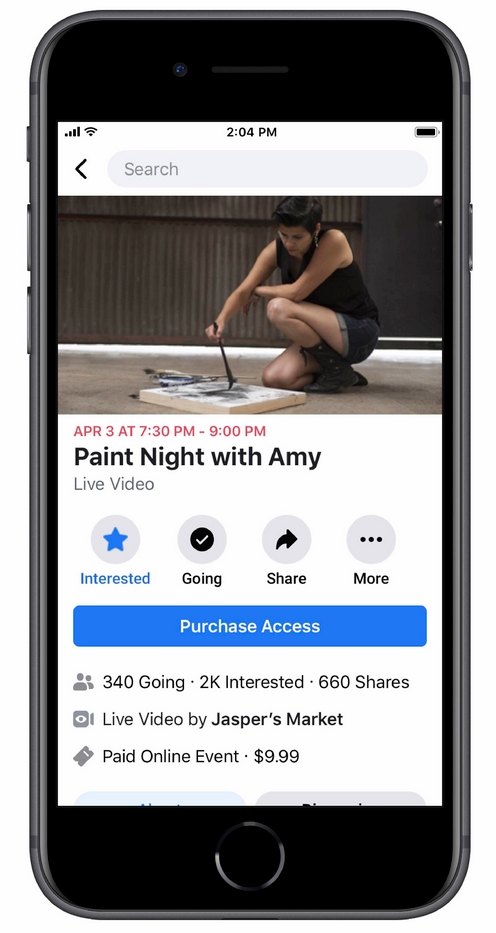
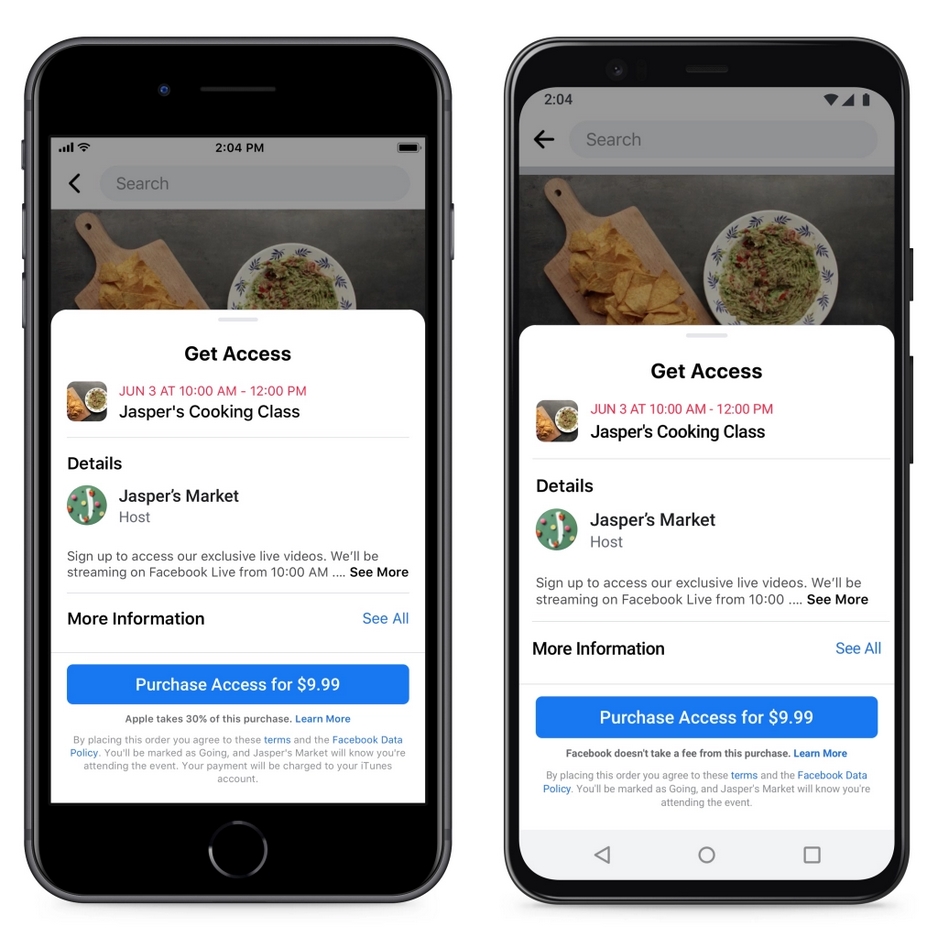
As COVID-19 continues to be a major concern for people across the country, Facebook is introducing a new way for businesses and creators to monetize online events on the platform. 

Critically, the company says it will not collect any fees for paid events held on the platform to help businesses and individuals struggling during the pandemic. 

“Pages can host events on Facebook Live to reach broad audiences, and we’re testing paid events with Messenger Rooms for more personal and interactive gatherings.

In testing, we’ve seen businesses use Facebook to host expert talks, trivia events, podcast recordings, boxing matches, cooking classes, intimate meet-and-greets, fitness classes, and more.”

While Facebook is far from the first to offer a way to deliver paid events that are entirely streamed to attendees, their service is unique is the all-in-one nature. Facebook can handle not just the streaming, but payment, advertising, and organic word-of-mouth. 

To put it another way, a person can see the ad for your performance in their feed, make a payment, and view your event without ever leaving Facebook. The company is also one of the only services which does not take a cut of ticket sales. However, purchases made on Apple devices or through the iOS Store are still subject to Apple’s 30% fee. 

Prohibited Content

As with all content shared on Facebook, live events must stay within the Community Standards, Partner Monetization Policies, and Content Monetization Policies.

While these guidelines include the obvious things you might expect, such as banning hate speech, inciting violence, or “sexualized content”, the social network’s content policies prohibit some areas you may not expect. 

For example, promoting health products including medical masks and hand sanitizer is currently banned on Facebook. 

Other restricted categories include:

  • Debated social issues
  • Conflict or tragedy
  • Objectionable activity
  • Sexual or suggestive activity
  • Strong language
  • Explicit content
  • Misinformation
  • Misleading medical information
  • Politics and government

In addition to restricting these types of content, monetized events cannot include these some specific media:

  • Static videos
  • Static image polls
  • Slideshows of images
  • Looping videos
  • Text montages
  • Embedded ads

In the announcement, Facebook says the paid events will be available to brands and individuals for at least one year. After that, they may introduce new fees or even remove the service.

Google is experimenting with a new way to help people find you in search results. Limited to India for now, the search engine is rolling out new ‘people cards’ which let individuals highlight details about themselves including your website, social profiles, and other relevant sites in one spot. 

Anyone who has ever tried to make a name for themselves knows search engines struggle when it comes to finding individual people – especially if they aren’t a household name like Taylor Swift. 

Now, Google is trying to tackle this problem with a virtual business card:

“Today, we are solving these challenges with a new feature called people cards. It’s like a virtual visiting card, where you can highlight your existing website or social profiles you want people to visit, plus other information about yourself that you want others to know.”

The cards were created with entrepreneurs, performers, influencers, and freelancers in mind and allow for a small amount of customization including a short blurb and contact links. 

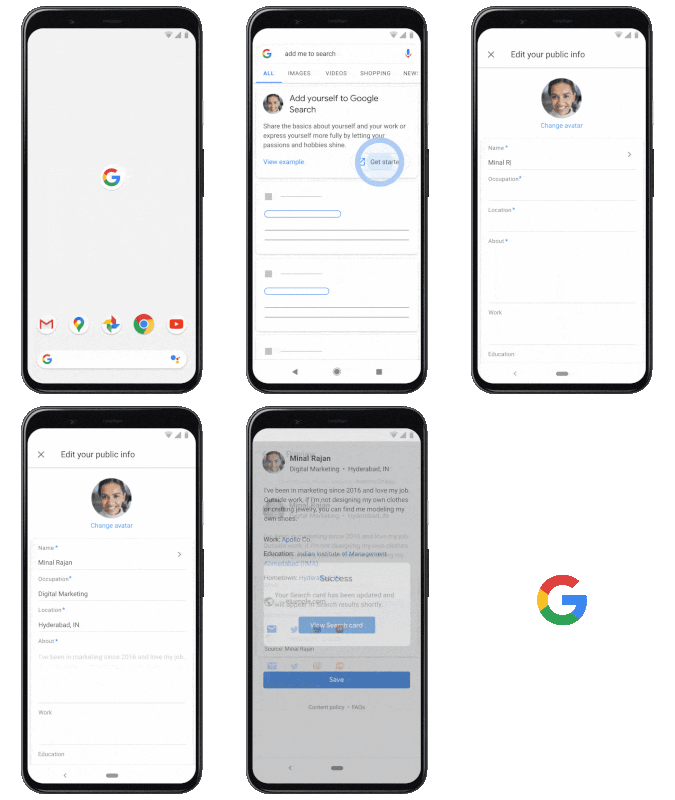
Google People Card Gif

When viewed, the cards initially display a person’s name, profession, and location. When tapped or clicked, it expands into a full card complete with links. 

When multiple people with the same name appear in a search result, the individuals will appear alongside each other, allowing you to select the person you are looking for.  

How Creating a People Card Works

While they are not available in the U.S. or U.K. yet, some have found workarounds using VPN services to create a People Card for themself. If you decide to do this, you should know the cards will still only appear to searchers within India until the cards are expanded internationally. 

If you still wish to create a card and can make the VPN process work (results have been mixed according to Twitter users), the process is relatively simple. 

  1. Make sure you’re signed into the Google account you want linked to your People Card. 
  2. Search for your name or query “add me to Search.”
  3. After clicking “add me to Search” on the prompt, you’ll be taken to a page where you can provide a range of details including:
    • The image from your Google account
    • A personal description
    • A website link
    • Links to social profiles
    • Your phone number
    • Your email address

While you can pick and choose which details you want to provide, Google says “the more information you provide, the easier it is for people to find you.”

The only exception is your phone number, which is required for authenticating your card. Users can choose to keep this information hidden from their card, however. 

How Google Will Vet The Cards

Accompanying the rollout of these cards (and potentially explaining the limited size of the test), Google says it is launching a number of strict quality control measures to ensure the cards are reliable:

“Our goal with Search is to always make sure people can find helpful and reliable information, so we have a variety of protections and controls in place to maintain the quality of information on people cards.”

For now, there is no mention of when People Cards could be arriving in America. Based on the excitement from many, though, it feels safe to say you can expect to see something similar stateside sooner rather than later.

It was only a matter of time. Following TikTok’s meteoric rise to popularity, Instagram is taking the social network on head-on with its own short videos called Instagram Reels. 

While the Facebook-owned platform has supported video content for years, Reels shares several key features that made TikTok a hit, including the ability to include licensed or original music.

Specifically Instagram Reels features:

  • Users can create and share 15-second videos.
  • Can include audio including songs from a catalog of licensed music.
  • Users can upload their own audio or grab audio from other videos to use in their own videos. 
  • Instagram will also be creating a dedicated section in the Explore tab of the app, where users can find “Featured Reels”.

How To Create Reels

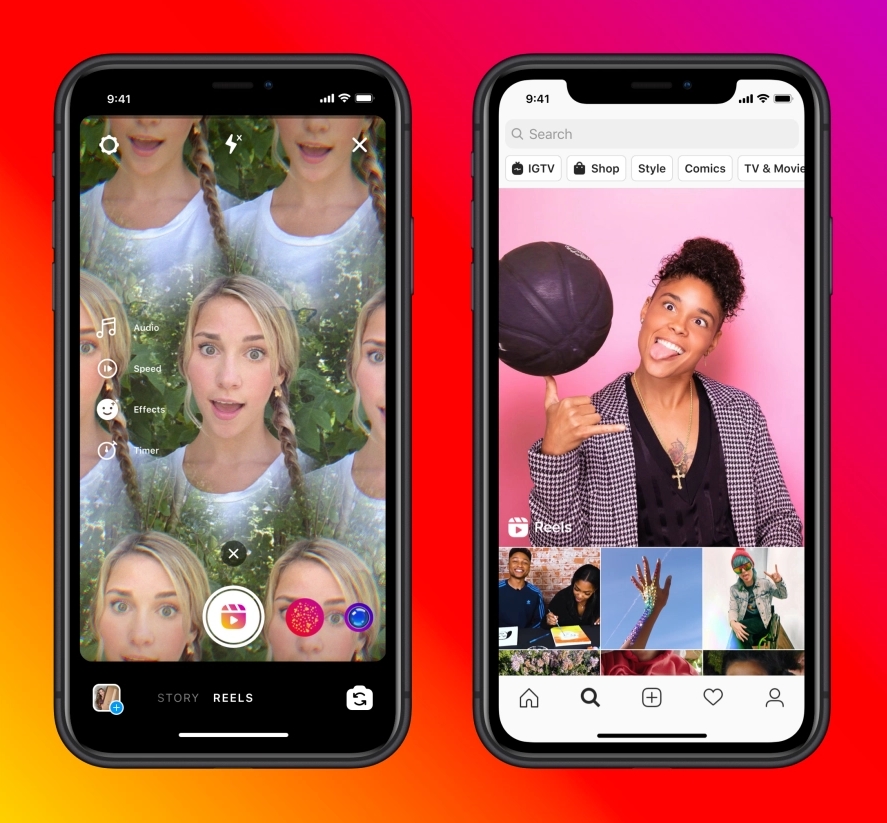
Creating a Reel is similar to taking a photo or creating any video on Instagram. Just open the in-app camera and slide the menu at the bottom to “Reels”.

Once selected, you’ll find a number of tools including a few specific to Reels:

  • Audio: Find a song in the Instagram music library or record your own audio.
  • AR Effects: Include visual effects from Instagram’s gallery.
  • Align: Line up objects from your previous clip before starting your latest video.
  • Speed: Speed up the audio or video you’ve selected.

Once you’ve gotten your song selected and set up any effects you want to use, just press and hold the capture button. 

You can also combine a series of short clips into a single Reel.

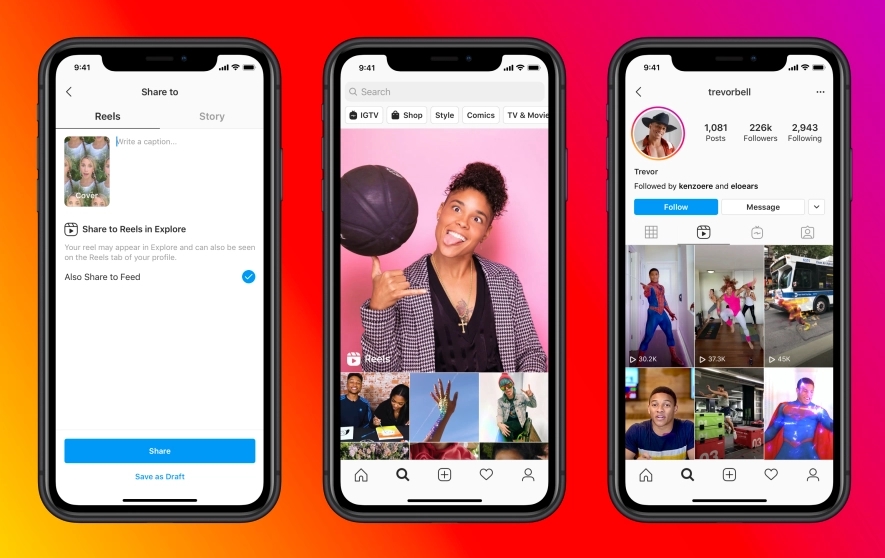
Once you’ve finished recording and editing, you’ll be taken to a sharing screen. By default, Reels will be added to a dedicated tab on your profile. You can also choose to share the clip to your Feed ensuring all your friends will see it. 

Why This Matters

Over the past couple years, TikTok has gone from an up-and-coming platform for kids to be goofy on to a bonafide part of online culture. 

Still, many are hesitant to add another social network to their life by signing up for TikTok. With Instagram Reels, they can get in on some of the fun without creating a new account for another platform.

There is also the issue of TikTok’s recent place in world news. The Chinese-owned social network has been accused of gathering immense amounts of user data and sharing it with the Chinese government. 

Over the weekend, these accusations escalated when President Trump threatened to ban the platform from the U.S. unless parent company ByteDance sells TikTok’s US operation to Microsoft. In an unprecedented move, the President also demanded the U.S. government receive a cut for approving any such sale.

It is unclear how banning the platform would work and the Chinese government has strongly condemned the threats from President Trump. 

With all this in mind, though, there is plenty of reason to keep an eye on Instagram Reels as a potential successor.

Twitter is testing the waters of launching a premium subscription service which would give exclusive features to paying members. 

The concept of a premium Twitter service has been rumored for weeks, until CEO Jack Dorsey told investors the gossip was true. Reportedly, the idea has become popular within the company following a recent decrease in ad revenue. 

In a letter to shareholders, the company stated:

“We are also in the early stages of exploring additional potential revenue product opportunities to compliment our advertising business. These may include subscriptions and other approaches, and although our exploration is very early and we do not expect any revenue attributable to these opportunities in 2020, you may see tests or hear us talk more about them as our work progresses.”

A report from CNN says the premium service could come as soon as later this year.

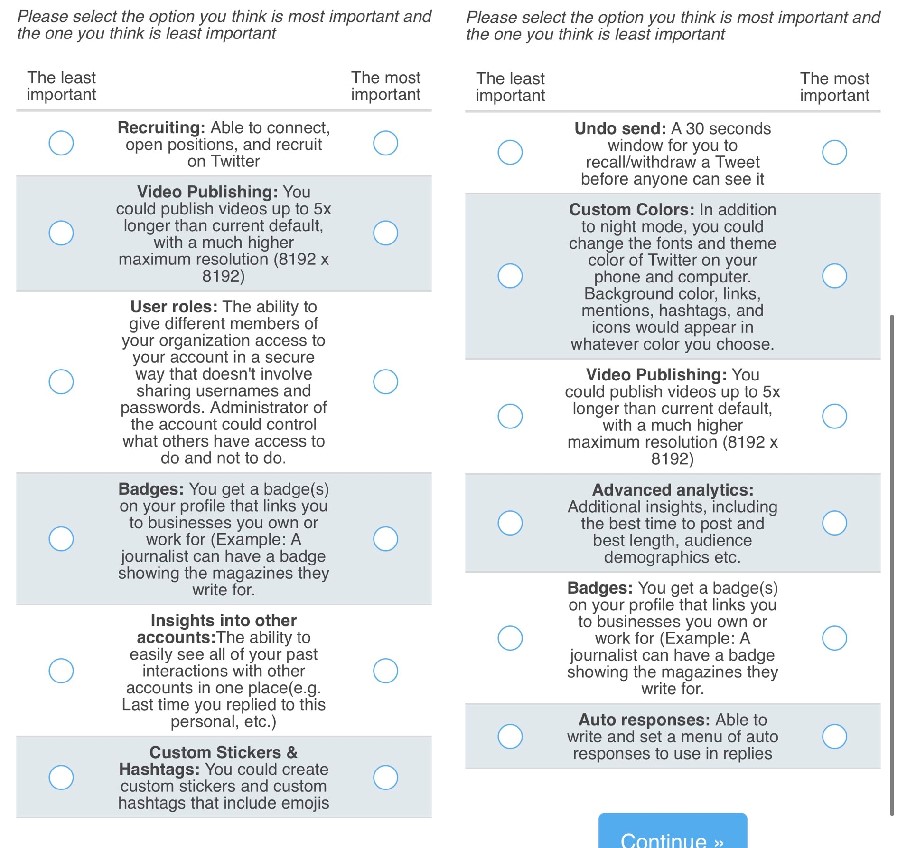
As for what the premium version of Twitter might look like, the company gave a sneak peek with a survey being sent out to some Twitter users. 

The survey specifically asks users “Which of the following features would you most/least desire?”

The premium features suggested in the email include:

  • Undo Send: A 30 seconds window for you to recall/withdraw a Tweet before anyone can see it.
  • Custom Colors: In addition to “Night Mode,” you could change the fonts and theme color of Twitter on your phone and computer. Background color, links, mentions, hashtags, and icons would appear in whatever color you choose.
  • Video Publishing: You could publish videos up to 5x longer than current default, which a much higher maximum resolution (8192×8192).
  • Badges: You get a badge(s) on your profile that links to businesses you own or work for (Example: A journalist can have a badge showing the magazines they write for.)
  • Auto responses: Able to write and set a menu of auto responses to use in replies.
  • Social listening: You can see conversation around your account on Twitter, including total volume, the people and businesses who are talking most often, and what they are saying.
  • Brand Surveys: You could be able to survey people about the ads you run to better understand if your ad was memorable and if people are likely to buy the products or services featured.

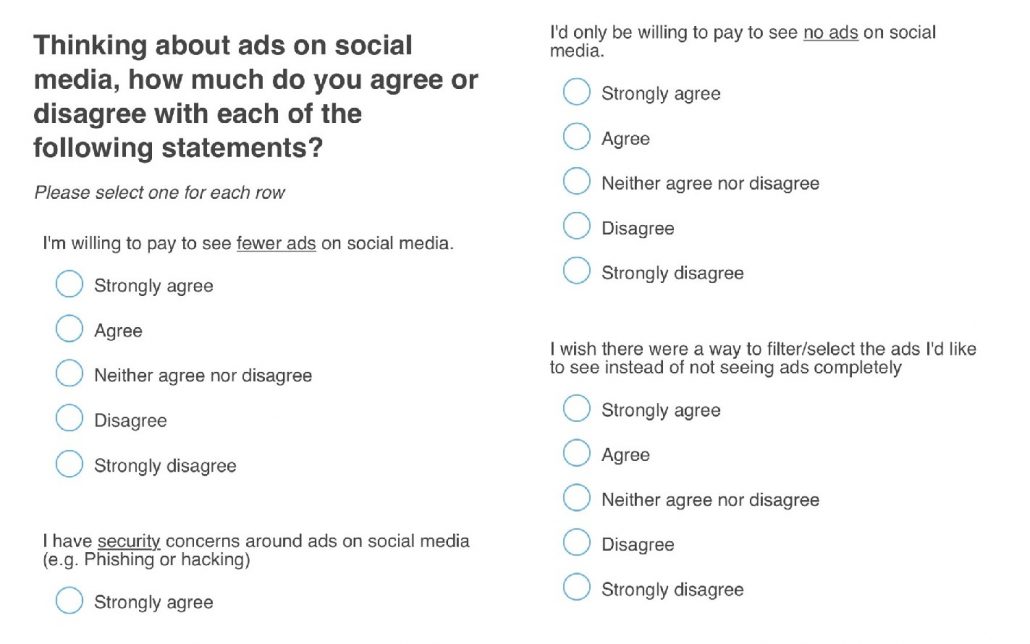
Another survey sent out explored the idea of removing some ads for a fee.

Of course, the features proposed in these surveys may never come to fruition and any paid version of Twitter could look radically different than what has been suggested. As the surveys note: 

“This is not necessarily reflective of what features Twitter will have in the future.”

Bing has officially completed the launch of its new Bing Webmaster Tools, which streamlines the old tool suite while offering a number of new features. 

According to the announcement, the process managed to condense the old version’s 47 unique links to just 17 different links without losing any of the functionality previously available. This was done by bundling redundant or related functions into more powerful tools.

At the same time, Bing announced it had introduced a new URL inspection tool, a Robots.txt testing feature, a site scan tool, and revamped webmaster guidelines. 

Choose Your Bing Webmaster Tools

For now, webmasters can choose to use the new or old version of Bing Webmaster Tools. The old suite is available at https://www.bing.com/webmaster/. The new version can be found at https://www.bing.com/webmasters/

However, the old version won’t be sticking around for too long. The announcement says it will be disabled sometime next month. 

Enhanced Tools

While streamlining the platform, Bing expanded the functionality of several tools. These updates include:

  • Backlinks lists backlinks for any site, including similar websites.
  • Keyword Research lets you filter data by countries, languages, and devices. 
  • URL Submission is better streamlined for easier navigation. This includes simplifying URL submission via the Bing WordPress plugin for faster indexing. 
  • SEO Reports provides improved classification of errors or issues. 

New Tools

Along with the consolidated and enhanced tools from the old version of Bing Webmaster Tools, the company revealed several new tools. These include:

  • URL Inspection: A beta feature that allows Bing to inspect crawled versions of your site for potential indexing issues.
  • Site Scan: A site audit tool that crawls and checks your site for common SEO issues which may affect your search ranking. 
  • Robots.txt Tester: Check your robots.txt file using the same inspection tools Bing uses to verify your URLs.

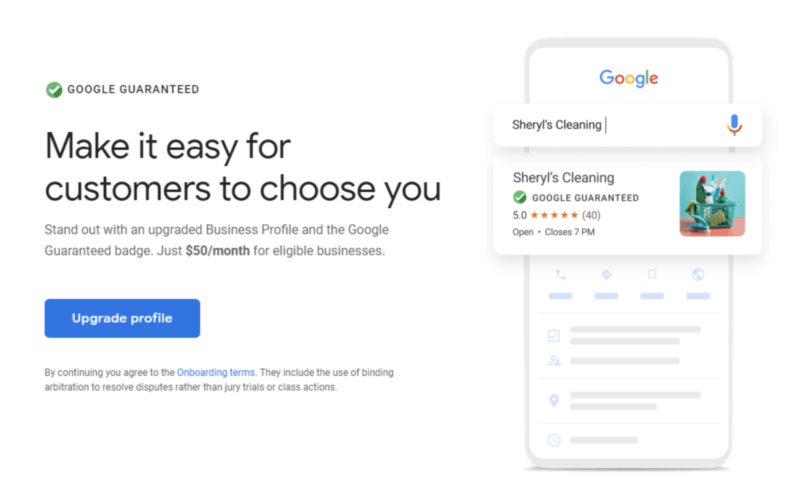
Google appears to be testing the idea of “upgrading” Google My Business profiles with a special “Google Guaranteed” badge for a $50 monthly fee.

Twitter user Tom Waddington shared a screenshot for a promotional page within the GMB dashboard offering the profile upgrade.

What Is Google Guaranteed?

The search engine has been playing with the “Google Guaranteed” badge since last year, though it has typically been used in Local Service Ads for home services businesses. 

To be eligible for the badge, businesses must meet a number of criteria including certification, licensing, and background checks. 

The idea appears to be to inspire more confidence in brands listed in Google’s local results by highlighting those who have been vetted. 

Why Would Anyone Pay For This?

On its face, the idea of paying $50 a month for what amounts to a stamp of approval sounds a little silly. However, the badge comes with some backing which may help customers feel more at ease.

Along with the Google Guarantee badge, businesses which pass the screening process are also backed with a customer satisfaction guarantee. If a customer finds your business through the search engine and is not satisfied with the results, Google will refund the amount paid up to $2,000.

Along with this aspect, there is always the issue of getting ahead of your competition. Any little advantage can be the key to standing apart from your competitors.

Just an “Experiment” … For Now

When asked about the program via email, a Google spokesperson told Search Engine Journal:

“We’re always testing new ways to improve our experience for our advertisers, merchants, and users. This experiment will show the Google Guaranteed badge on the business profile. We don’t have anything additional to announce right now.”

A lot has changed at Google over the past few years, but one thing remains the same – the majority of people will click the top link on any search result page. 

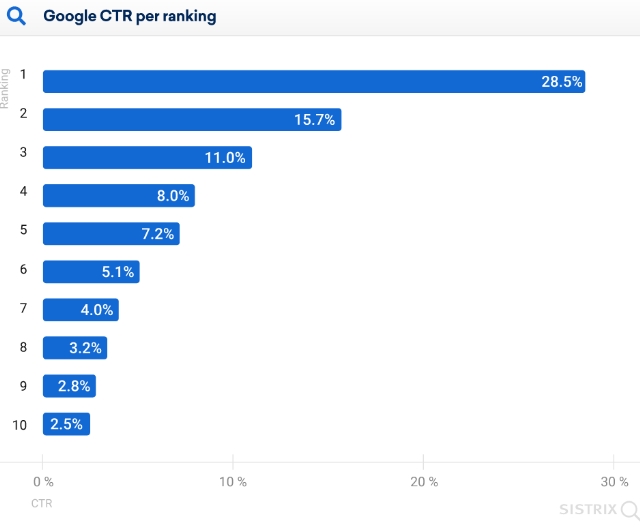
A new study of over 80 million keywords and billions of search results found that an average of 28.5% of users will click the top organic result for a given search. 

From there, the average CTR for results sharply declines. Listings in the second place receive an average of 15% of clicks, while third place falls to 11%. 

By the time you get to the last listing of a results page, links receive only a 2.5% click-through rate. 

You can imagine what the CTRs for anything after the first page would be like. 

Other Factors Influencing Search CTRs

Unsurprisingly, there is quite a bit of variance in the actual click-through rates for some results pages. In the study, Sistrix found click-through rates for listings in the first position swung from 13.7% to almost 50%. 

While the relevance of the top listing has some effect on its CTR, the study suggests another major factor is the SERP layout. 

For example, search results including sitelinks extensions significantly outperformed those without. 

On the other hand, the study found that search results including featured snippets had a significant negative impact, dropping click-through rates by at least 5% on average. 

Similarly knowledge panels reduced the average CTR from 28% to 16%.

In these situations, the researchers believe users don’t feel the need to investigate further when provided with quick answers directly within the search results pages:

“The CTR in the first two organic positions drops significantly compared to the average. Many users appear to find the information they are looking for in the Knowledge Panel – especially on their smartphones, where each time a page is loaded it takes a lot of time.“

For more information, you can explore the full study report here.

Pinterest is making some big changes to its ranking algorithm to ensure users see a variety of content in their home feed. 

Pinterest uses a ranking model which highlights content based on a click-through prediction model. What this means, is that the platform surfaces content it believes a user is most likely to click on, based on their past activity.

Although this model works to ensure users are only seeing content that is relevant and interesting to them, it can create a negative feedback loop which can limit the types of content shown. 

For example, if a user goes a while without clicking on videos, the algorithm will stop showing videos. However, that doesn’t necessarily mean that person doesn’t like videos. There are a number of reasons they may have avoided videos for a period, including irrelevant content and not being in a place where it is convenient to watch videos. 

To account for this issue, Pinterest created what a new system which it is calling “controllable distribution.”

What is Controllable Distribution?

In the announcement, Pinterest clarifies that controllable distribution isn’t an entire overhaul of its ranking algorithm. Technically, it isn’t part of the core ranking system at all. 

Instead, controllable distribution is a ranking system applied after the core home feed algorithm to diversify feed content. 

This will ensure that specific content ratios are present in users’ feeds which may have become monotonous.

The system does this by comparing the types of content in your unadjusted feed with a specified ratio and adding new types of content for users which may otherwise be lacking. 

Most importantly, the company says this system can be implemented smoothly while still respecting users’ preferences. 

A growing number of brands are hitting pause on their Facebook ads for the month of July as part of the Stop Hate for Profit boycott. 

The advertisers, including some of the biggest brands on earth like Coca-Cola, Pfizer, and Unilever, are part of a movement which argues that Facebook has been allowing hate speech, racism, and violence run rampant while the company has also “turned a blind eye toward voter suppression on the platform.”

Who Is Involved

Currently, more than 500 companies are taking part in the boycott. For the exhaustive list of brands, check out this spreadsheet which is being updated as more brands join in.

Here are many of the most recognizable brands involved in the boycott:

  • Acura
  • Adidas
  • Artlogic
  • Ben & Jerry’s
  • Best Buy
  • Birchbox
  • Boston University
  • Campbell Soup Co.
  • Chobani
  • CityAdvisor
  • CLIF BAR
  • Clorox
  • Coca-Cola
  • CVS
  • Dashlane
  • Denny’s
  • Dockers
  • Dunkin’ Donuts
  • Eddie Bauer
  • Ford Motor Company
  • Fossil
  • Habitat for Humanity
  • Henkel
  • Herschel Supply Co.
  • Honda Motor Company
  • HP
  • J.M. Smucker Co.
  • Kay Jewelers
  • LEGO
  • Levi Strauss
  • Lululemon
  • Magnolia Pictures
  • Mars, Inc.
  • Merck
  • Merrell
  • Microsoft
  • Mike’s Hard Lemonade
  • Mozilla
  • OBEY
  • Patagonia
  • Patreon
  • Pepsi
  • Pfizer
  • Pop Sockets
  • PUMA
  • Reebok
  • Siemans
  • Six Flags
  • Starbucks
  • Target
  • The North Face
  • UnileverUSA
  • Vans
  • Verizon
  • Volkswagon
  • White Castle
  • Wingstop
  • Zoe’s Kitchen

Facebook’s Response

In response to the boycott and increasing pubic pressure, Facebook CEO Mark Zuckerberg released a statement promising to make significant changes to how content is handled on the platform, such as:

  • Providing voting information and helping register people to vote
  • Preventing “new forms of potential voter suppression.”
  • Banning “any content that misleads people on when or how they can vote,” including removing “false claims about polling conditions in the 72 hours leading into election day.”
  • Preventing voter intimidation on the platform
  • Rejecting ads which include “claims that people from a specific race, ethnicity, national origin, religious affiliation, caste, sexual orientation, gender identity, or immigration status are a threat to the physical safety, health, or survival of others.”
  • Labeling content from public figures which would typically violate content policies. 
  • Removing content, regardless of the source, “if we determine that content may lead to violence or deprive people of their right to vote.”

In the statement, Zuckerberg emphasized that the company was attempting to balance “public health and racial justice while maintaining or democratic traditions around free expression and voting.”

So far, the public seems to feel this response is too little and vaguely worded. Since the release of the statement, at least two hundred companies have joined the boycott.