While building links is a common strategy for gaining exposure, focusing less on link building can actually earn you more links. Content marketing produces links, but it also improves your brand image and can make key connections that will net you more exposure than before.

These four content marketing advantages all naturally make links, which means less time focusing on link acquisition.

  1. Creating Large Amounts of Targeted Traffic: Producing great content that gets posted to popular websites gets you a large amount of traffic and exposure, but what good is exposure when it’s aimed at the wrong people? Since Google Penguin, the links of real value are those that make you visible to your market demographic. You can do this by understanding what trustable websites look like, considering audiences when evaluating a Web site, working with publishers before creating content and working with the most influential contributors to a site.
  2. Engaging Social Media: Sharing your content on social media sites helps you gain wide exposure as well as allowing you to fit your product to the needs of niche audiences. If you can get your content repeatedly shared, you can help establish your brand and its value. This can be achieved by optimizing your content for social media.  Allow visitors to link to social media sites with appropriate but non-distracting buttons on your content. Consider how the content will look when shared, and use eye-catching images. You may even consider buying ads on social media sites where your target audiences gather.
  3. Create Immediate Conversion Opportunities: By distributing content with positive brand information, you can create easy opportunities for conversions. Remember, all content you create draws people closer to your brand. Be sure to make it easy to subscribe to your RSS feed or email list and collect email addresses by making users give them to receive more content.
  4. Encourage Brand Advocacy: All content creates an opportunity to connect with your audience. The larger the audience you get, the more people you need to share your content. By getting people to repeatedly share your content, they are improving your brand’s reputation. This leads to more potential customers, which in turn leads to more potential advocates. Create advocates by always responding to feedback – positive or negative. Make it easy for people to get involved. Allow the community to help create content. If they believe in the content on your site, they will share it.

Content marketing is a sustainable strategy with long-term rewards. You always want to stand out. Unique, valuable and exciting content helps distinguish a brand in a way linking campaigns can’t.

To read more about content marketing, look at Loren Baker’s article at Search Engine Watch


Many startup companies make the same mistakes when conducting their sales campaign. We’re here to help you avoid them. Here are the seven most common mistakes for startups. While some of these may sound like common sense, knowing these ahead of time and knowing how to fix them can save your company a lot of trouble.

  1. Not Understanding Your Customer: Treating all clients as the same is a huge mistake many startups make. It is easy to make assumptions about what your customers will want but they will all have unique concerns and problems that have to be dealt with in a personalized way. Not every customer responds to the same sales pitch. Asking questions early on will allow you to answer their questions and sell them on your service.
  2. Not Selling: Rather than focusing on the extras and luxuries of your product, pinpoint the ways it will solve that specific client’s problems. This means asking the questions that will tell you what the customer needs. Showing a few ways your product will directly benefit a potential client goes a lot further than telling them about what you plan to put into the product later.
  3. Being Absent: Failing to meet potential customers in real life to close the sale means missing two of the most essential experiences for a startup. Not meeting in person hinders the ability to directly connect with clients and build long term relationships. It also means not hearing the specific concerns of the customer, which is easily the best way to improve what you are selling.
  4. Failing to Follow Up: After you give your pitch, follow up. While it seems that giving your pitch and traveling onto the next potential client increases prospective customers, moving on actually makes the clients forget about you. Don’t harass your leads, but keeping your product fresh in their memory until they make up their mind never hurts.
  5. No Process: Tracking basic information such as phone calls and emails, connections to decision makers, closed deals and deal values is an essential activity for startups, but many forget to do it. Having a process in place means knowing where you stand with all potential customers.
  6. Charging the Wrong Amount: While skewing prices cheaper seems like it would make your product more attractive, it can sometimes make customers question its value. Don’t undercharge. Set your price at one that will allow for a sustainable business and reflects the value of your product. Attract customers with what your product does, not how cheap it is.
  7. Not Asking For a Sale: If you have been in contact with a potential client for a relatively long period of time, don’t be afraid to ask for the sale. If you’ve put effort into establishing a relationship with the potential client, they should be happy to close the deal.

While startup founders come from all walks of life, knowing how to be an effective sales person is required to make a product succeed. Even if you’ve already made one of these mistakes, they are easily fixable. With these problems solved, you’ll be well on your way to making your service a reality.


You can read more in Steli Efti’s article at TechCrunch

Most people skim articles until they find something that catches them. You could use a gimmick to grab people’s attention, but the best way to get your readers to read your entire post is to create high quality content with proof to back it up. Case studies are one easy method to get into a topic while providing your readers with quality information. They are also one of the most favorable forms of content on the internet and wonderful “social link bait” or quality links.

Creating a case study should be easy if you can write high quality content. By adding reasearch and data, you can make a superb case study.

All case studies are unique. Your experience on a given topic and the amount of time you allocate for creating content make every study different. You will have to experiment, but the more time you put in will probably decide how good your content will be. You’ll need to do a lot of reasearch so that you can disect whatever the topic is well enough for your readers to understand. True quality content takes a lot of effort and time to make something the majority of a demographic will be interested in.

Case studies have a lot of benefits, including increased website traffic, brand recognition, social link bait, networking and overall site improvement.

Out of the many benefits of creating high level content, especially case studies, one of the best is the creation of social link bait. Social link bate is “any content of feature within a website designed specifically to gain attention or encourage others to link to the website.”

Social media has become ingrained in the lives of millions.  This has lead many away from Google and SEO over the past ten years. This is why link building is essential. “People will start caring less about links in future years because social popularity will become the new link popularity.” (Point Blank)  Google and Bing have even started including social media information in their searches. It also seems logical that Google will put in place a “social rank” system to compliment the “page rank” system many are unhappy with. With these changes, more professionals have seen the divide between research and data-driven results.

Social link bait is similar to regular link bait except it is shared by more websites. Social media is the most common platform for our demographics to share link bait.

To create social link bait, remember that it must be “socially sharable.” You can use sites like ThingLink for image optimization. It even includes a way to include links in your images.

Articles are simple and classic, but content can be made other ways. Why not try out a case study and try to make some social link bait? Money isn’t needed to make viral content and trying these methods might be a great start.

Gregory Smith writes for Search Engine Journal.


No designer wants to spend hours and hours doing unnecessary revisions and redesigns. You especially don’t want your client to throw out an idea at first glance. We know making the “best” design for your client’s specific needs on the first try is almost impossible but that doesn’t mean your first designs can’t have the potential to become the best design. With these few simple steps, you can make sure your designs have potential from the beginning and, hopefully, provide better designs for your client.

  1. Know Your Brand: Designers often ignore this step. It’s easy to think, when starting out as a designer, that the brand you’re working for doesn’t matter on the first try. They will just give you tons of revisions either way, right? Wrong. Knowing the business and the brand you’re creating for gives you a better understanding of what they need. Once you know what they need, you can give them what they want. Knowing a brand means knowing who they want to attract. By doing the research, you can help solve the client’s problems.
  2. Know the Industry: There are a few reasons you want to know what is happening in a client’s industry. To begin with, design is incredibly trendy and what is “in” right now varies by industry. You want to make sure your client sticks out in a positive and logical way. Don’t try to blend in but don’t let your design be the equivalent of a Hawaiian shirt at a formal event. Secondly, while knowing what is popular with your client’s industry is important, it is also essential to know what is attractive to their customers. Your design should focus as much on their needs as it does the client’s.  Researching the industry lets you know what people in that industry want and reveals what needs to be improved.
  3. Be Creative: When faced with creating something new, we all look for inspiration. Designers usually go online and look at other designs anywhere from blogs to showcases. After finding something that inspires us, many accidentally end up copying the original source. Using inspiration does not mean changing small features of another design to make an almost identical but subtly different design. It means being creative with what inspired you. You can borrow some things but you want your inspiration to push you to try something new. Good creativity and good design lead to innovation.
  4. Details, Details, Details: Rushing to get a design finished can lead to silly mistakes that are absolutely avoidable. While focusing on the layout is important, the details are just as essential. You don’t want to have a beautiful design with a misspelled banner or a typo in a sidebar. Some clients will brush off little mistakes like these, as they are easy to fix, but many will be less forgiving. If these mistakes are easy to fix after you’ve shown the design, they should have been fixed before you showed it.
  5. Explain Your Design: We, as designers, love to understand what we create and why we did it. The problem is, we’re often bad at communicating this to others. Sending an explanation of your design when you submit it allows you to answer most of the client’s questions before they can ask them. It shows intent and purpose behind the design. While a confusing design with no explanation will almost certainly be refused before you can defend it, allowing the client to understand it from the outset will help them see potential in the design, and offer their own opinions,

Every design will need revisions but there is no reason to fear them. However, if you make the best design you can for your client’s needs on the first submission, you will likely find they are more willing to work with what you created. Communicating with clients and trying to give them what they want, rather than what you like, will make your clients happy and could open up more room for creative freedom later.


For more ideas on how to improve your designs, go to Kendra Gains’ article at webdesignerdepot.com


A lot of businesses do not think they need social media or in some cases, even any online marketing. They see it as a way to talk to friends and nothing more. The thing that must be realized is that in order to properly take advantage of social media, a business will realistically need six months or more. Usually the basic level of interaction is set at 7 times of contact before business can be done, but some say as many as 21 interactions before a close can happen.

There are five good approaches to take to make sure this can happen if you want to get started in social:

  1. Put some money in to get a solid web site.
  2. Do proper keyword research.
  3. Start congregating with target customers online, learn their language, their questions.
  4. Use a blog, share your expertise there.
  5. Share all types of content, become a valuable resource for your customer base.

If you do these things, it’ll be a solid start to using social media for business in a productive way.

Read the full article here:
When Social Media Marketing Doesn’t Work for You

Thanks to Rob Pell for the following guest post:

Much has been made of psychology in retail. The methods in which store managers and planners arrange their stock into “hot zones” and “cold zones”, the different sorts of music they pipe onto the shop floor, the colours they use to alert you to offers and on point of sale displays; all of these things are carefully calculated to make you, the consumer, buy something.

It follows, then, that similarly sophisticated psychological processes are used online. If you think about it, of course they are; how else would one business get the edge on another business if not by employing such strategies.

Enhancing the Value

One of these psychological tactics is to enhance the value of the product or service advertised online. The psychology behind this relates to the inherent human sense of self-interest: we as a species like to feel that we are getting a good deal and not being ripped off, this also appeals to our sense of self-confidence and pride.

To appeal to these natural human traits, you might want to consider bundling your product or service up with an additional extra or a ‘free gift’. Anything that you can add that can increase the apparent value of your product without eating into your overheads will have a marked impact on your profits.

You could even introduce a voucher or e-code system which rewards consumer loyalty. As long as you are giving the consumer the impression that they are getting a truly unmissable bargain, the psychology is working.

Focus on Solutions

This tactic is born out of a very simple piece of psychology; humans are likely to become despondent when presented with a problem, but become empowered when presented with a solution.

When marketing your product or service online – whether by Facebook, Twitter, and RSS feed or other medium – be sure to present it in the form of a solution to a problem, as opposed to simply a problem.

For example, you might be selling an eBook relating to SEO techniques and your advertising spiel might go something like this: “improve your rank on Google with this eBook.”

Of course, this sentence is crass and sales-y but I use it to illustrate a point; presenting your potential customers with a solution to problem will promote a positive response within them, making them more likely to part with their cash. Used in conjunction with targeted marketing – where you aim your marketing campaign directly at a demographic with relevant interests – this becomes even more effective.

Be Realistic

After many years of online gossip, rumours and speculation in the fields of sport, science and celebrity culture, the internet browsing public have become hardened. They no longer believe everything they read and instead approach what they see online with an air of cynicism.

To counteract that cynicism your claims must be believable. Too many fledgling internet marketers have gone down the route of offering goods and services that sound too good to be true. The newly savvy public know that most of time they are.

Instead, speak to your audience plainly and confidently and use as many examples as you can to gain the trust of your potential customers. Only when this trust is gained can you subtly subvert their cynicism and convert a potential customer into a customer.

Rob Pell is a marketing enthusiast, all round geek and happy employee of Simplifydigital, the UK broadband, digital TV and home phone experts. Simplifydigital are accredited by Ofcom and provide independent consumer advice on digital services.

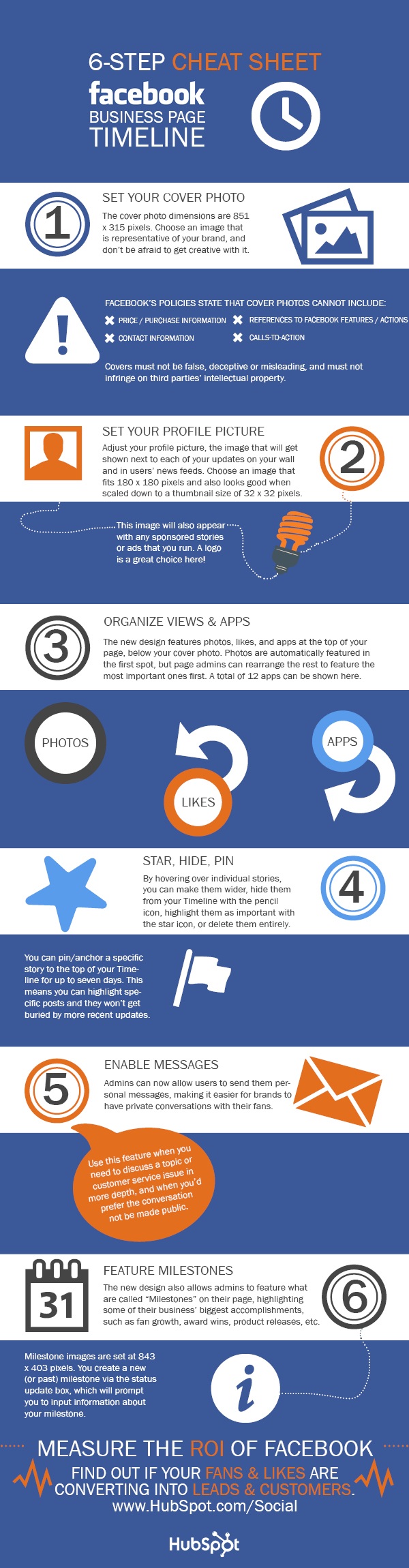
Hubspot puts together a great Facebook business page instruction list. This is a basic “How To” guide for anybody looking to quickly understand and learn Facebook Timeline for businesses. It sums up each key feature nicely all while adding directions for some of the more difficult processes. Overall this infographic is knowledgeable and straight to the point all while helping you better understand the features.

Facebook Business Page Timeline Cheat Sheet

If you haven’t heard yet, some major, major sites are taking action to protest two major acts that are being run through congress. SOPA (Stop Online Piracy Act) in the House and PIPA (Protect IP Act) in the Senate are both set up to change the internet in a huge way if they pass. Essentially – the freedom we enjoy to express ourselves and communicate freely online may be in jeopardy.

Read more

So Paul Christoforo and Ocean Marketing have gone viral.  But even though they say bad marketing is good marketing, I think this particular instance is an example of bad marketing being bad marketing.

Read more

In the effort to get links and spread word of your business online, many people can get a bit overzealous.  Ryan Sammy put together an excellent list detailing the 7 deadly sins of content promotion.  I’ve summarized them here, with my own input on it.

Read more