Microsoft Bing is updating its shopping features to include details about active coupons or promotions directly in the search engine.
With these new annotations, Bing hopes to make it easier for consumers to feel confident that they are getting the best price on a product without installing third-party extensions or other tools.
“Ever wondered if you were overlooking coupons or special promotions when you shop online? Or perhaps you didn’t even consider that a discount might be available, and you missed out! Bing now provides you with this information within shopping searches – annotations neatly nested within your search results, without the need to install a browser extension or plugin (third-party cookies must be enabled.)”
As the screenshot below shows, the coupon annotation is a small icon listing how many promotions are available which can be expanded to learn about the specific offers. If you click on Copy & go, the coupon will automatically apply during checkout.
“Let’s say you are shopping for a new outfit for a girls’ night on the town. Or maybe you are just window shopping for some back-to-the-office fashions. A search for the Eileen Fisher website on Bing reveals that some coupons are available, even before you click to enter the site. No need to do a separate search for a code.”
The company announced this update as part of a series of changes to annotations including bringing the “ethical choice” annotations for eco-friendly or fair trade products to more regions:
“Powered by the ethical fashion app Good On You®, the Ethical choice ratings are based on a brand’s impact on three areas: people, planet, and animals. For more information click on any Ethical choice annotation found within your search results”
https://www.tulsamarketingonline.com/wp-content/uploads/2019/10/bing-new-logo-1200x675.png6751200Taylor Ballhttps://www.tulsamarketingonline.com/wp-content/uploads/2018/07/TMO-Logo.pngTaylor Ball2022-08-11 19:51:582022-08-11 19:52:00Bing Adds Coupons and Active Promotions To Search Results
Twitter is introducing a new feature called the Location Spotlight that will make it easier for your online fans to become your real-life customers.
With the Location Spotlight feature, businesses with physical locations can add store details like your address, phone number, store hours, and even a map showing your location. You can also add links to your website or make it possible to quickly call or message your company.
New Name For Wide Release
This feature is not entirely new to the platform. However, this is the first time many brands will have access to the profile module.
Twitter tested much of this feature with a small number of well-known professional accounts, calling it the ‘About Module’ at the time. Now, Twitter is bringing this tool (and its new name) to all businesses with professional Twitter accounts.
How To Get Access
Once you are eligible, update your Location Spotlight by following these steps
Select ‘Edit Profile’
Find and click the ‘Edit professional profile’ button near the bottom of the page
Select ‘Profile Spotlight’
Enter your business details (including your address, hours, website, and contact info)
Select ‘Publish’ to save and display these details on your profile.
https://www.tulsamarketingonline.com/wp-content/uploads/2022/08/Twitter-Location-Spotlight.png4781000Taylor Ballhttps://www.tulsamarketingonline.com/wp-content/uploads/2018/07/TMO-Logo.pngTaylor Ball2022-08-09 17:59:032022-08-09 17:59:18Twitter Adds ‘Location Spotlight’ To Help Users Find Your Store
A new comprehensive report from TopRank Marketing indicates that B2B influencer marketing is more effective than many would have expected.
The 60-page report includes survey data, case studies, and information collected through extensive analytics analysis.
Among all this information is the finding that 86% of B2B businesses report being successful in using influencer marketing to reach their goals. Specifically, the survey found that:
86% of businesses say influencer marketing is moderately or very successful
72% say it helped improve their brand reputation
70% say it improved brand awareness
56% say it drove new leads
33% say it generated revenue for their company
B2B Influencers Aren’t Your Usual Influencers
These findings might surprise many business owners who are imagining a TikTok star promoting manufacturing equipment or professional services.
As the survey makes clear, though, the most effective B2B influencers are often not the figures with the biggest follower or subscriber counts.
“Audience size matters less than audience relevance. The sheer number of followers isn’t as important to marketers as relevance, credibility and expertise. Those with a large audience can help with the reach of a campaign, but it’s vital to include more influential people with smaller audiences.”
Instead, the most effective partnerships with influencers are those who are seen as industry experts or professionals with personal experience in your industry. According to the survey results, B2B companies partner with influencers who are:
Industry experts and analysts (77%)
Internal executives (56%)
Niche experts (48%)
Customers (46%)
Professional influencers (45%)
Employees (42%)
Prospects (12%)
The importance of only partnering with influencers who are relevant to your field or audience is also reflected in the answers to what qualities are most important for B2B influencer marketing:
Relevance of audience (98%)
Audience sees them as trustworthy (87%)
Subject matter expertise (78%)
Values align with the brand (69%)
Influencer publishes on at least one platform (65%)
Ability to create content (54%)
Size of audience (49%)
Professional credentials (42%)
Advocate for our brand (33%)
What Types of Influencer Marketing Are Most Effective
As for what types of content brands are making with influencers, the results clearly favored webinars, though other content like social media or blog posts were also popular with brands:
https://www.tulsamarketingonline.com/wp-content/uploads/2022/08/Influencer-Marketing1.png6751600Taylor Ballhttps://www.tulsamarketingonline.com/wp-content/uploads/2018/07/TMO-Logo.pngTaylor Ball2022-08-04 18:39:222022-08-04 18:39:2486% of Businesses Say B2B Influencer Marketing Is Successful For Their Brand
A new video from Google focuses on helping e-commerce brands stand out on the search engine, including specific strategies for ensuring your listing is eligible for search features that make your listing more prominent and visible.
For starters, the video lists three general guidelines for making your products stand out:
Images help visitors understand your products
Product reviews and star ratings increase trust in your brand
Pricing and availability information allows shoppers to choose the best seller for their needs
With that in mind, Google’s Alan Kent then breaks down six ways to make your site more visible on the search engine.
1) Title Tags
As one of the first things any searcher will see, title tags are crucial for helping searchers understand your web pages. This is why site owners should take extra care when preparing the titles for their pages – especially product pages.
“A good title link can greatly help users understand your offering, bringing quality traffic to your site. … Low-quality title links can harm a users’ impression of your site.”
While Google will rewrite title tags if it believes the existing titles do not adequately describe the related page, it is better to deliver informative titles on your own.
Kent also advises against adding time-sensitive product details like pricing or availability in titles because they may be outdated by the time this information is updated in search results.
2) High-Quality Images
Improving the quality of your product images can make shoppers feel more confident about your products and their potential decision to purchase.
As Kent says, “we’ve observed that users generally respond well to high-quality images and recommend that key images be at least 1200 pixels wide.”
Once these images are in place, Kent suggests checking the Max Image Preview metadata as that provides Google with guidance on how to handle images within search results.
Additionally, best practices indicate you should use product structured data to allow Google to pick the best images to display in search results.
Lastly, he provided some broad guidance for product photos, encouraging e-commerce brands to focus on creating product photos that best help shoppers understand their products. For example, you might highlight different angles or provide size comparisons within product photos.
3) Share Rich Product Data
Google uses structured data to more easily understand web pages and enable them to be shown as rich results or “special presentation treatments”.
Specifically, Kent emphasizes that these details should always be included in structured product data:
Product Title
Description
Images
Ratings
Price
Availability
Kent also encourages brands to regularly use the Search Console URL Indexing tool and Rich Results Test tool to ensure you don’t have any issues with structured data on your site.
4) Share Price Drop Data
Google uses special price drop presentations to highlight special deals in search results. Still, e-commerce brands must share pricing information with the search engine and include the Offer property in the product structured data to be eligible.
However, there is no guarantee your listing will be shown in a special price drop presentation once you’ve provided these details.
5) Identify Products You Sell
Use accurate product identifiers – such as GTIN identifiers – along with Google Merchant Center data and structured product data to make your site eligible for product carousels.
6) Create a Business Profile Listing
Kent advises brands to create a Google Business Profile via the Google Business Profile Manager if their shop also has a brick-and-mortar location.
This enables your site to be included in local search results which makes your physical locations more visible in search.
https://www.tulsamarketingonline.com/wp-content/uploads/2022/08/Google-Ecommerce-SEO.jpg6311203Taylor Ballhttps://www.tulsamarketingonline.com/wp-content/uploads/2018/07/TMO-Logo.pngTaylor Ball2022-08-02 19:32:332022-08-02 19:32:35Google Gives E-Commerce Brands 6 New Tips For Standing Out
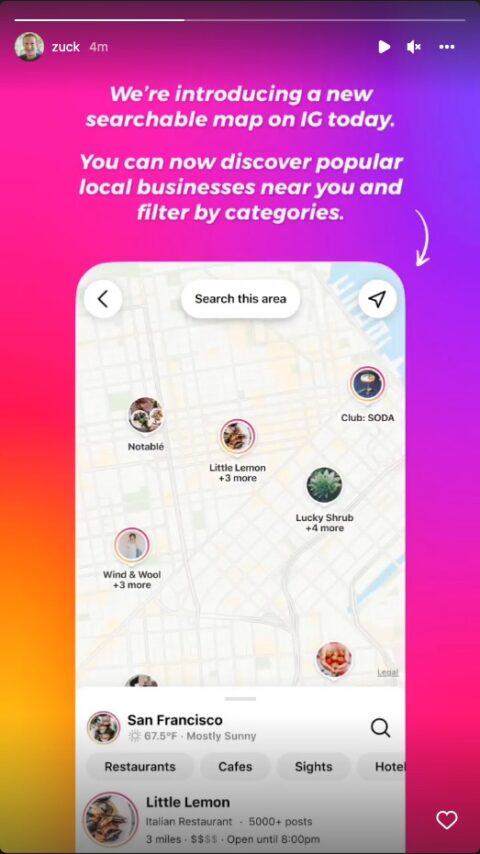
Instagram is making it easier to find nearby businesses and places using its interactive maps.
The feature was revealed by Meta CEO Mark Zuckerberg in a post showcasing the new maps features:
In the past. Instagram’s maps were limited to strictly showing popular posts from users nearby. With this new update though, users can search or filter the maps to find local businesses similar to how Google Maps lets users search for local businesses.
What sets Instagram’s map features apart is how they function.
Firstly, only businesses with a professional Instagram account are eligible to be included in Instagram’s maps, unlike the automatically populated maps found on Google.
Secondly, the feature is still focused on the social experience. Rather than giving users a wealth of contact information like Google Maps or Google Business Profiles, when users tap on a business they are given the option to visit the associated page. save the company’s page for later or immediately start following the brand’s Instagram account.
Why Is Instagram Getting Into Local Search?
It might seem odd for a social network to be essentially establishing a local search engine, but trends indicate many are already using social media for this purpose. In fact, just recently Google Senior Vice President Prabhakar Raghavan addressed this exact trend at a conference, saying:
“In our studies, something like almost 40% of young people, when they’re looking for a place for lunch, they don’t go to Google Maps or Search. They go to TikTok or Instagram.”
With this in mind, it is clear Instagram is simply making it easier for users to do this with the introduction of its new map features.
https://www.tulsamarketingonline.com/wp-content/uploads/2021/08/Instagram-Search-Banner.png450800Taylor Ballhttps://www.tulsamarketingonline.com/wp-content/uploads/2018/07/TMO-Logo.pngTaylor Ball2022-07-21 17:19:202022-07-21 17:19:22Instagram Is Getting Into Local Search With New Map Features
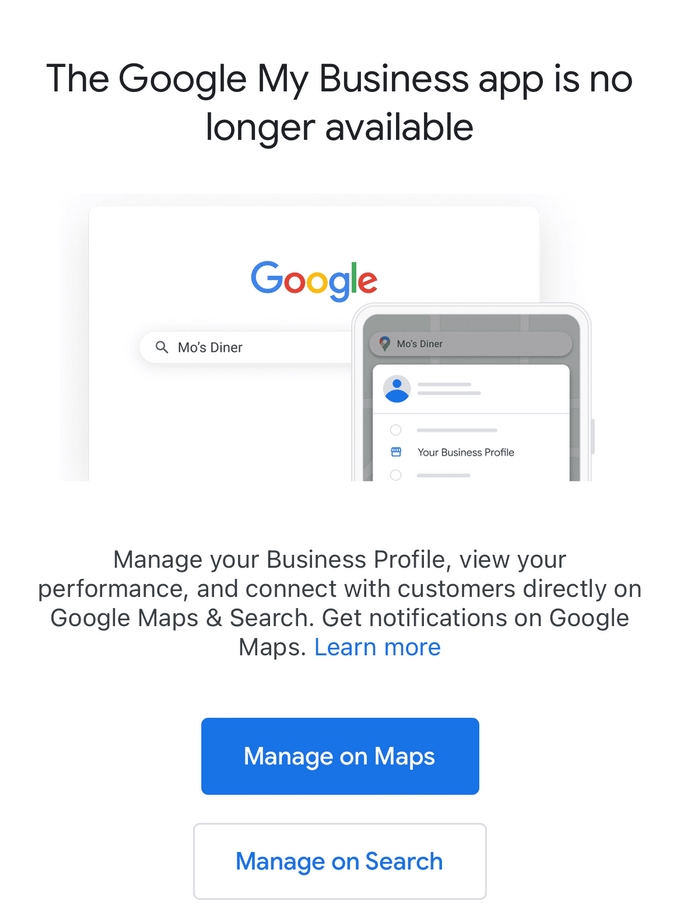
Now, instead of being able to edit your local listing, see your insights, or respond to customers, business operators will only see a short message reading “the Google My Business app is no longer available” if you open the app.
Of course, the shutdown of the GMB app is not sudden. The company announced it would be discontinuing the app when it revealed it was rebranding local business listings to Google Business Profiles.
Thankfully, you do have other options if you have still been using the GMB app to manage your listing.
Along with being able to update your listing through Google Search, you can also manage your listing through the Google Maps app.
With this, Google has finally eliminated the final remaining artifact from Google My Business in favor of allowing businesses to manage their listings directly within Google Search and the existing Google Maps app for a more seamless experience. Though not explicitly stated, the goal seems to be simplifying managing your local SEO without the need for an entirely separate platform like GMB.
https://www.tulsamarketingonline.com/wp-content/uploads/2019/06/GMB.png360640Taylor Ballhttps://www.tulsamarketingonline.com/wp-content/uploads/2018/07/TMO-Logo.pngTaylor Ball2022-07-14 19:39:052022-07-14 19:39:07Google Finally Shuts Down The Google My Business App
Pinterest is angling to make itself the leading social network for e-commerce activity with a slew of new features and advancements for shopping.
As the announcement for the updates explains, Pinterest has seen a surge in the number of merchants listing their products on the platform (up 87% in Q1 of 2022 alone).
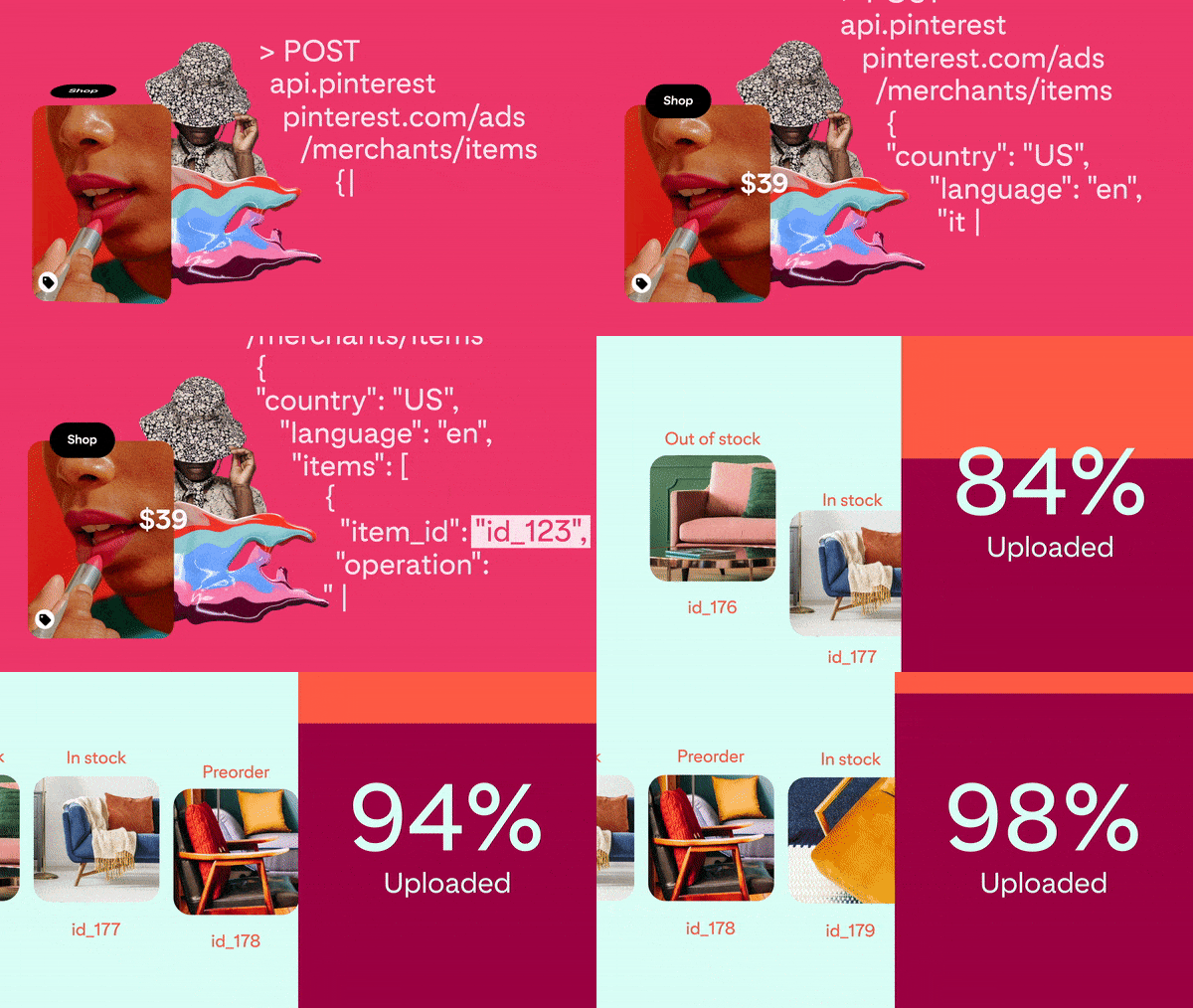
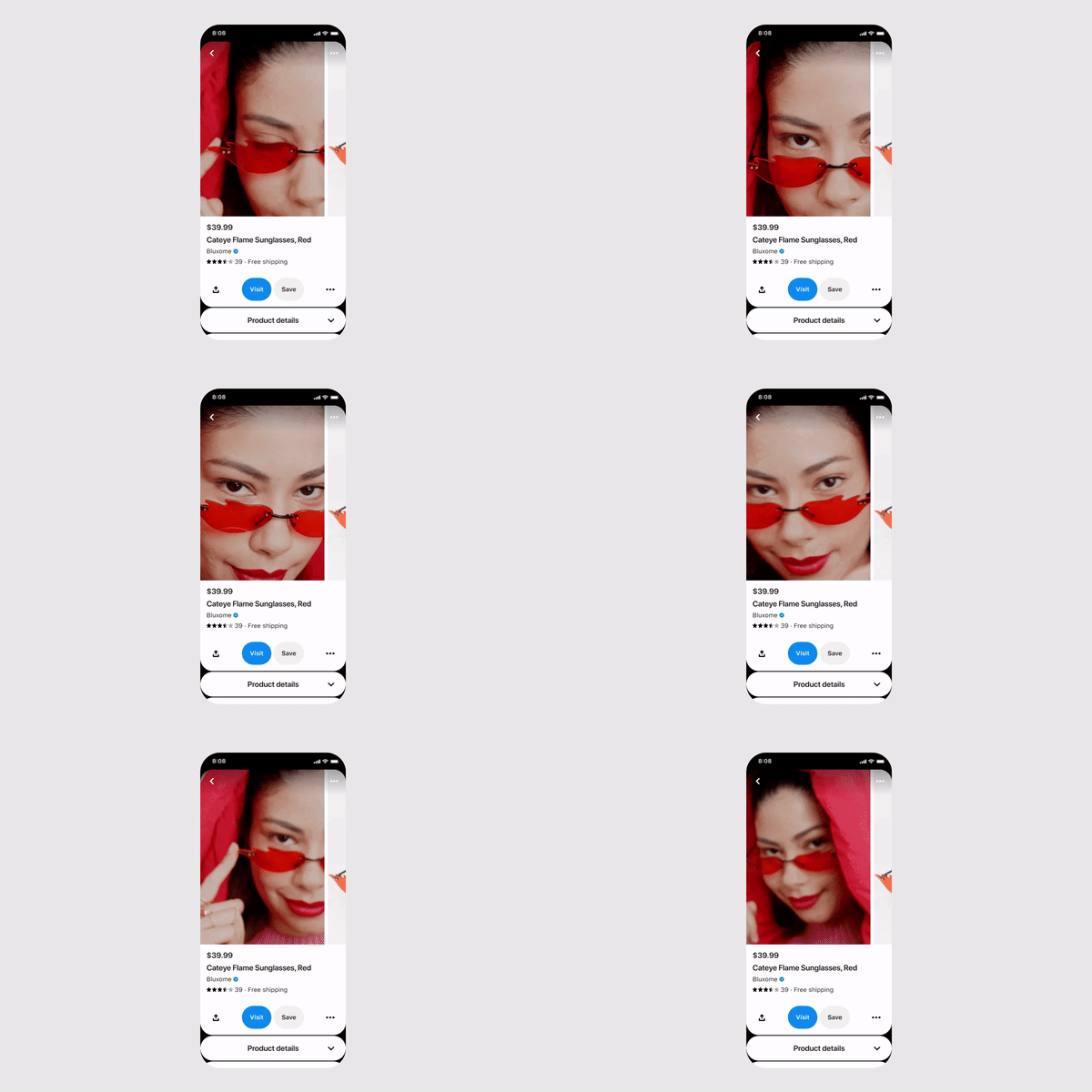
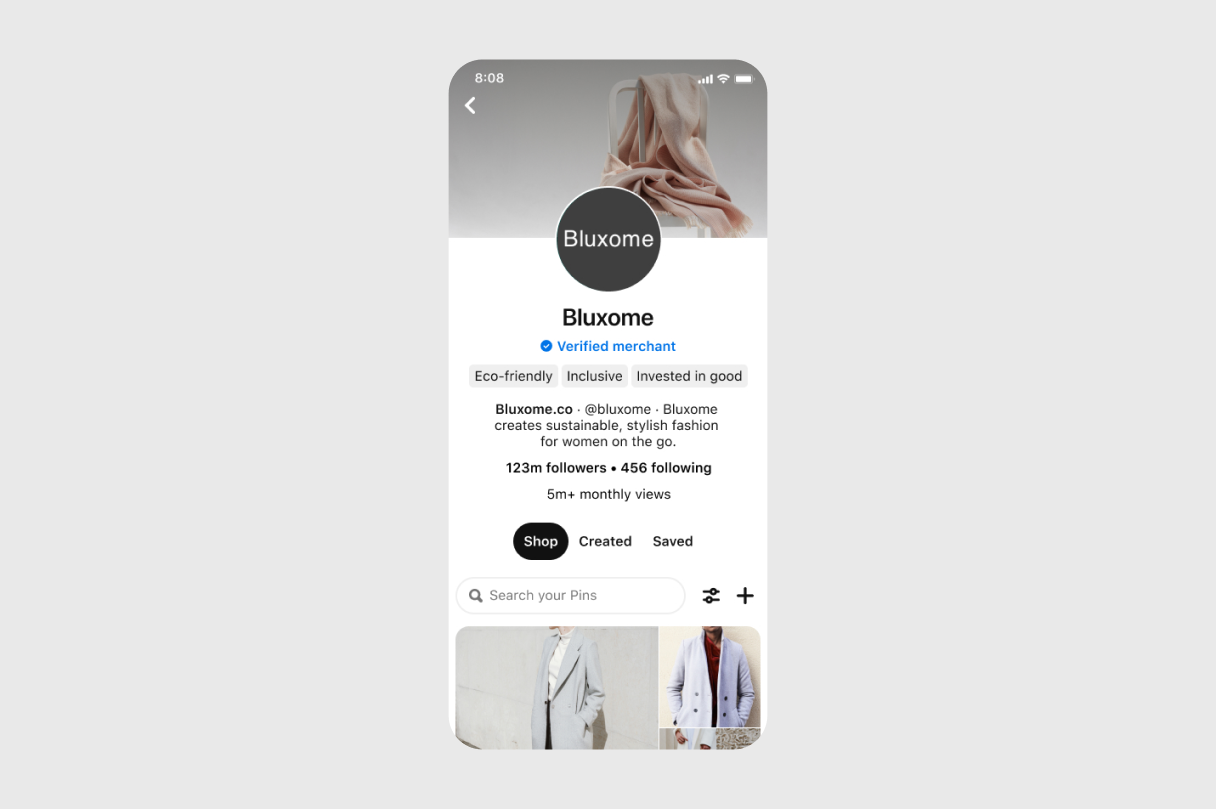
Now, the company is hoping to double down on this with a new Pinterest API for Shopping, Product Tagging for Pins, Videos in Shopping Catalogs, and the introduction of a Shop Tab on Business Profiles:
“At Pinterest, our goal is to turn inspiration into action, and our vision for shopping is to make it possible to buy anything Pinners are inspired by on the platform. In 2021, the number of Pinners engaging with shopping surfaces on Pinterest grew over 215%, and 89% of weekly Pinners use Pinterest for inspiration in their path to purchase. The new shopping features such as the API for Shopping allows brands and retailers to reach high-intent Pinners during the earliest stage of their shopping journey with the most updated catalog data.”
Pinterest API for Shopping
Pinterest wants to make it easy to manage your products no matter how large your inventory is. With the new API for Shopping, you can more accurately manage metadata for your products with early tests showing the tool was 97% accurate.
Product Tagging for Pins
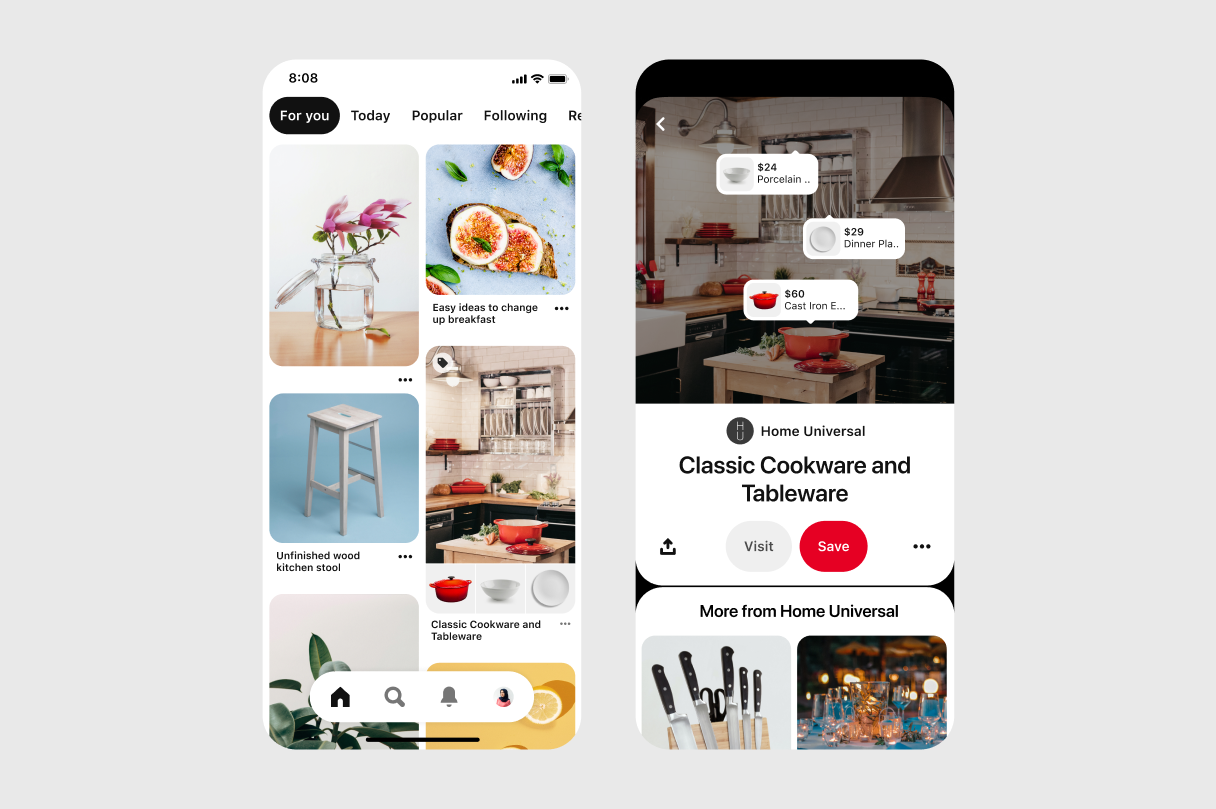
Though the social network is leaning more heavily into the world of shopping, the main focus is still on Pins that users and brands share. With Product Tagging, you can make your pins a seamless part of your sales process. Once you have tagged your products in pins, shoppers can easily click on the tags to be immediately taken to a sales page.
Video in Catalog
The typically image-based social network is gradually integrating video. The latest move in this direction is the ability to use video assets in product catalogs to showcase your products in motion.
Shop Tab on Business Profiles
Make your online store a more prominent part of your business profile with a new tab dedicated to your shop. According to early tests, approximately 30% of Shopify merchants said they got their first attributed checkout directly from this high-intent shopping feature.
https://www.tulsamarketingonline.com/wp-content/uploads/2020/04/PinterestLogoFull.jpg6751200Taylor Ballhttps://www.tulsamarketingonline.com/wp-content/uploads/2018/07/TMO-Logo.pngTaylor Ball2022-07-11 20:38:572022-07-11 20:38:59Pinterest Launches 4 New Features To Promote Products and Online Stores
Ecommerce websites have become a major part of the internet as online shopping has taken off in recent years. However, the unique nature and structure of these sites can make them uniquely tricky to optimize.
Product variant pages, annual sales, and the need for lots of high-quality images may make it difficult to optimize these pages using some traditional SEO strategies, while other techniques remain essential for high rankings.
Thankfully, Google’s own Alan Kent has produced a short video full of SEO tips specifically for ecommerce sites. I’ll embed the full video at the bottom of the page, but we’ll also be sharing the highlights below:
8 Tips for Ecommerce SEO
Cover the Basics: Basic technical SEO like allowing Google to crawl your site or using proper page titles is crucial for helping Google find and understand your website. For starters, make sure page titles feature your brand name and product details (such as color) and use structured data to make your product pages easy for Google to sort through your online store pages.
Create Content for Every Stage of the Shopping Journey: Google knows that searchers are often looking for information rather than wanting to buy right now. This is why the search engine prioritizes sites with a wide array of content for every stage of the buyer’s journey. To help you get started brainstorming, Kent suggests providing gift ideas, highlighting reviews, and including detailed information about your products.
Markup Product Variant Pages: To keep product variants well organized, ensure every variant has a unique URL and establish a canonical page.
Reuse Regular Sale URLs: Preserve URLs from sales so they can be reused later. For example, you’ll want to use the same URLs every year for holiday sales.
Performance: When shoppers are ready to buy, they want to do so as quickly as possible. When your page is competing against a similar product page for a spot in the search results, speed is often the tiebreaker that will help you come out ahead.
Be Patient: SEO takes time to gain momentum. In many cases, it can take months for changes to impact your rankings. Don’t try to rush things or change strategies because you’re getting restless. Just keep working on improving your overall SEO.
Don’t Be Afraid To Ask For Help: Every site is unique and may not benefit equally from Google’s broad advice. Don’t hesitate to ask SEO experts how to best optimize your site or how to adopt these strategies to your needs.
Focus on Users: At the end of the day, Google wants to provide the best possible site for users. Be that site.
Have you ever wondered what the most searched keywords and phrases on Google are?
While the search engine regularly details trending search topics and trends, the company does not share details on the top overall search terms. Thankfully, Ahrefs used data from over 19.8 billion keywords to list the top searches in the U.S. and worldwide on their own.
To generate the list, Ahrefs looked at the number of times search terms were used each month and averaged these monthly totals over the course of a year.
Below, we will share the top 50 Google Searches in the U.S. and worldwide. For complete lists of the top 100 searches and lists of the most frequently searched questions, check out the full report here.
https://www.tulsamarketingonline.com/wp-content/uploads/2020/01/GoogleRankings.png360640Taylor Ballhttps://www.tulsamarketingonline.com/wp-content/uploads/2018/07/TMO-Logo.pngTaylor Ball2022-06-28 19:14:362022-06-28 19:14:38The Top Google Searches From The U.S. and Worldwide
After expanding its character limit for tweets a few years ago, Twitter is testing a new feature called Notes that lets users ditch character limits altogether.
The company confirmed testing the new feature in a tweet, along with a longer Note explaining everything Notes can do:
“Notes will give people the ability to go over 280 characters on Twitter in a single piece of content, with the inclusion of photos, videos, GIFs, and Tweets. Notes can be written, published, and shared on Twitter, and read all across the Internet.”
Unfortunately for most of us, the feature is initially being tested among a select number of writers in the US, UK, Canada, and Ghana.
“We’re excited for the moment when everyone can use Notes, but for now, our focus is on building it right. A large part of that is engaging with writers and building community.”
Notably, the feature does not appear to be replacing Twitter threads, at least for now:
“There are situations, however, where threads aren’t enough. From the rise of the screenshot announcement Tweet to the newsletter boom, a new reality became clear: people were writing long elsewhere, and then coming to Twitter to share their work and for the conversation surrounding all those words.”
In the announcement, Twitter also detailed a few unique features which will make Notes attractive to those looking to publish longer content:
Formatting: Formatting tools included bold, italic, and strikethrough text, as well as the ability to add links and create lists.
Include Media: Notes can include one GIF, one video, or up to four static images.
Embedded Tweets: Include traditional tweets in Notes by pasting a URL or from your bookmarked tweets.
https://www.tulsamarketingonline.com/wp-content/uploads/2022/06/FV3oUZ-VUAI1zeW.jpg194679Taylor Ballhttps://www.tulsamarketingonline.com/wp-content/uploads/2018/07/TMO-Logo.pngTaylor Ball2022-06-23 20:42:352022-06-23 20:42:37Twitter Test Long-Form Content With ‘Notes’