Tag Archive for: Google

While most of the online marketing world is still abuzz over the recent announcement of the upcoming ‘helpful content update’, Google has quietly revealed it is preparing a product review algorithm update that will go live this month.

This algorithm update seeks to improve the quality and value of reviews Google highlights in search results. 

Since the new update is coming so soon after the release of the helpful content update, many are speculating it may be tied to the helpful content update in some way – such as using the helpful content update to better identify high-quality reviews which show firsthand knowledge of a product or business.

Here’s what Google actually had to say about its product review update:

“We know product reviews can play an important role in helping you make a decision on something to buy. Last year, we kicked off a series of updates to show more helpful, in-depth reviews based on first-hand expertise in search results.

We’ve continued to refine these systems, and in the coming weeks, we’ll roll out another update to make it even easier to find high-quality, original reviews. We’ll continue this work to make sure you find the most useful information when you’re researching a purchase on the web.”

While Google hasn’t released specific guidance for this algorithm update, it has previously given a list of questions to assess your product reviews. 

Do your reviews:

  • Express expert knowledge about products where appropriate?
  • Show what the product is like physically, or how it is used, with unique content beyond what’s provided by the manufacturer?
  • Provide quantitative measurements about how a product measures up in various categories of performance?
  • Explain what sets a product apart from its competitors?
  • Cover comparable products to consider, or explain which products might be best for certain uses or circumstances?
  • Discuss the benefits and drawbacks of a particular product, based on research into it?
  • Describe how a product has evolved from previous models or releases to provide improvements, address issues, or otherwise help users in making a purchase decision?
  • Identify key decision-making factors for the product’s category and how the product performs in those areas? For example, a car review might determine that fuel economy, safety, and handling are key decision-making factors and rate performance in those areas.
  • Describe key choices in how a product has been designed and their effect on the users beyond what the manufacturer says?
Today, Google revealed it is preparing a massive update called the Helpful Content Update that may be the biggest change to the search engine’s algorithm in years.

The update is aiming to filter out sites that have large amounts of content that are written solely for the search engine, without providing value to actual users.

Or, as Google simply put it in its announcement:

“The helpful content update aims to better reward content where visitors feel they’ve had a satisfying experience, while content that doesn’t meet a visitor’s expectations won’t perform as well.”

Here’s what we know about the update so far:

What Is The Google Helpful Content Update?

Philosophically, there is little about the helpful content update which is all that different from what Google has been working towards in the past. 

The algorithm update aims to help users find the most high-quality content which will be the most helpful. What sets it apart is how it aims to achieve this.

In this instance, Google plans to improve search results by targeting and removing what could be called “search engine-first content” or content written expressly for the purpose of boosting rankings without actually delivering quality content to readers.

While the algorithm will be applied to all Google search results when it rolls out, the company said four specific types of sites are most likely to be affected:

  • Online educational materials
  • Arts & entertainment
  • Shopping
  • Tech

Content in these niches seem to be most prone to being written specifically for search engines rather than humans and Google hopes to improve the quality of results in these areas.

As a representative from Google told Search Engine Land’s Barry Schwartz:

“If you search for information about a new movie, you might have previously encountered articles that aggregated reviews from other sites without adding perspectives beyond what’s available elsewhere on the web. This isn’t very helpful if you’re expecting to read something new. With this update, you’ll see more results with unique information, so you’re more likely to read something you haven’t seen before.”

Is your site safe?

Rather than provide a simple checklist of things companies can do to prepare their website, Google offered a series of questions that can be used to determine if you’re creating content for humans or search engines:

  • Do you have an existing or intended audience for your business or site that would find the content useful if they came directly to you? 
  • Does your content clearly demonstrate first-hand expertise and a depth of knowledge (for example, expertise that comes from having actually used a product or service, or visiting a place)?
  • Does your site have a primary purpose or focus?
  • After reading your content, will someone leave feeling they’ve learned enough about a topic to help achieve their goal?
  • Will someone reading your content leave feeling like they’ve had a satisfying experience?
  • Are you keeping in mind our guidance for core updates and for product reviews?

Additionally, the Google Search Central article provided a similar list of questions you can use to avoid search-engine first content in the future:

  • Is the content primarily to attract people from search engines, rather than made for humans?
  • Are you producing lots of content on different topics in hopes that some of it might perform well in search results?
  • Are you using extensive automation to produce content on many topics?
  • Are you mainly summarizing what others have to say without adding much value?
  • Are you writing about things simply because they seem trending and not because you’d write about them otherwise for your existing audience?
  • Does your content leave readers feeling like they need to search again to get better information from other sources?
  • Are you writing to a particular word count because you’ve heard or read that Google has a preferred word count? (No, we don’t).
  • Did you decide to enter some niche topic area without any real expertise, but instead mainly because you thought you’d get search traffic?
  • Does your content promise to answer a question that actually has no answer, such as suggesting there’s a release date for a product, movie, or TV show when one isn’t confirmed?

When Will It Arrive

The helpful content update is due to roll out next week to all English-language search results in the U.S. The company plans to expand the update to other languages and countries sometime in the future.

In an update to the help documentation for Googlebot, the search engine’s crawling tool, Google explained it will only crawl the first 15 MB of any webpage. Anything after this initial 15 MBs will not influence your webpage’s rankings.

As the Googlebot help document states:

“After the first 15 MB of the file, Googlebot stops crawling and only considers the first 15 MB of the file for indexing.

The file size limit is applied on the uncompressed data.”

Though this may initially raise concerns since images and videos can easily exceed these sizes, the help document makes clear that media or other resources are typically exempt from this Googlebot limit:

“Any resources referenced in the HTML such as images, videos, CSS, and JavaScript are fetched separately.”

What This Means For Your Website

If you’ve been following the most commonly used best practices for web design and content management, this should leave your website largely unaffected. Specifically, the best practices you should be following include:

  • Keeping the most relevant SEO-related information relatively close to the start of any HTML file. 
  • Compressing images.
  • Leaving images or videos unencoded into the HTML when possible.
  • Keeping HTML files small – typically less than 100 KB.

Have you ever wondered what the most searched keywords and phrases on Google are? 

While the search engine regularly details trending search topics and trends, the company does not share details on the top overall search terms. Thankfully, Ahrefs used data from over 19.8 billion keywords to list the top searches in the U.S. and worldwide on their own.

To generate the list, Ahrefs looked at the number of times search terms were used each month and averaged these monthly totals over the course of a year. 

Below, we will share the top 50 Google Searches in the U.S. and worldwide. For complete lists of the top 100 searches and lists of the most frequently searched questions, check out the full report here.

Top 50 U.S. Google Searches

#KeywordSearch volume
1facebook160,000,000
2youtube151,000,000
3amazon121,000,000
4weather103,000,000
5google70,000,000
6walmart63,000,000
7gmail59,000,000
8google translate42,000,000
9home depot41,000,000
10yahoo mail39,000,000
11yahoo38,000,000
12wordle34,000,000
13election results33,000,000
14fox news32,000,000
15december global holidays28,000,000
16ebay28,000,000
17food near me28,000,000
18instagram26,000,000
19costco24,000,000
20restaurants near me24,000,000
21nfl24,000,000
22nba24,000,000
23google maps24,000,000
24amazon prime23,000,000
25starbucks23,000,000
26weather tomorrow23,000,000
27best buy22,000,000
28cnn22,000,000
29walgreens21,000,000
30translate20,000,000
31espn20,000,000
32lowes20,000,000
33mcdonalds19,000,000
34craigslist19,000,000
35usps tracking19,000,000
36news19,000,000
37zillow18,000,000
38traductor18,000,000
39nfl scores17,000,000
40calculator16,000,000
41twitter16,000,000
42target16,000,000
43wells fargo15,000,000
44netflix15,000,000
45restaurants15,000,000
46bank of america15,000,000
47food14,000,000
48chick fil a14,000,000
49cvs14,000,000
50indeed14,000,000

Top 50 Google Searches Worldwide

#KeywordSearch volume
1youtube1,163,000,000
2facebook1,033,000,000
3google513,000,000
4whatsapp web490,000,000
5weather400,000,000
6gmail394,000,000
7translate367,000,000
8amazon348,000,000
9google translate332,000,000
10instagram301,000,000
11traductor235,000,000
12hotmail206,000,000
13cricbuzz196,000,000
14tiempo170,000,000
15fb146,000,000
16satta king123,000,000
17yahoo mail121,000,000
18yahoo119,000,000
19weather tomorrow110,000,000
20google maps108,000,000
21погода99,000,000
22tradutor89,000,000
23sarkari result86,000,000
24переводчик85,000,000
25yandex83,000,000
26tiempo mañana78,000,000
27walmart76,000,000
28ebay74,000,000
29traduçoes72,000,000
30nba72,000,000
31flipkart67,000,000
32google traduction65,000,000
33çeviri64,000,000
34wordle63,000,000
35meteo62,000,000
36bbc news61,000,000
37satta60,000,000
38hava durumu53,000,000
39ютуб52,000,000
40dolar51,000,000
41home depot50,000,000
42вконтакте48,000,000
43dr46,000,000
44cowin46,000,000
45xsmb46,000,000
46amazon prime45,000,000
47snaptik45,000,000
48ipl45,000,000
49wetter44,000,000
50december global holidays44,000,000

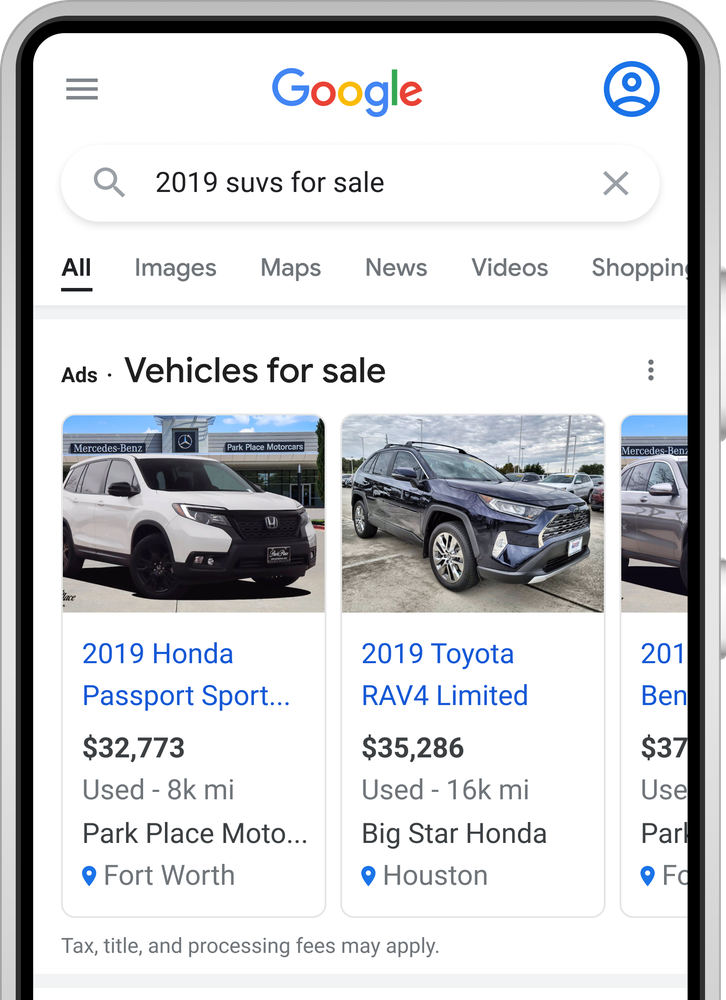
Google is introducing new vehicle ads specifically for car dealerships to reduce the gap between online car sales and in-person dealerships. 

While car sales have traditionally been something largely done in person, many dealerships have seen big shifts towards online sales over the past two years. Not only did Google’s data show that 89% of car buyers research their vehicle online, but 16% also did their entire purchase online in 2021.

What Are Google Vehicle Ads?

With the new ads, dealerships can now highlight cars for sale nearby in relevant searches. The ads include a few important details about the car, including the location, make and model, price, and dealership name. 

If tapped or clicked, the ads then take users to the dealer’s website for more information about the vehicle. From there, they can get more information to come to make a purchase in-person or to order online (if your dealership provides that service). 

How To Gain Access to Google Vehicle Ads

As a new test, vehicle ads are only available to auto dealerships in America.

The ad format is also not automatically shown within ad accounts. To gain access, you or a representative for your company must contact Google. 

Once given access, you will need to upload your inventory through Google Merchant Center and connect your vehicle inventory feed to your Google Business Profile. 

What Vehicles Are Allowed

Currently, only commercial auto dealerships are eligible to run vehicle ads. Private or individual sellers are not eligible. 

Google also has several restrictions on what vehicles are allowed. At the moment, only non-commercial passenger vehicles are eligible in vehicle ads. 

Restricted vehicles include:

  • Recreational vehicles
  • Commercial vehicles
  • Farm vehicles
  • Buses
  • 2-wheelers
  • Trains
  • Boats
  • Airplanes
  • Any outdoor utility vehicles

In early testing, Google says it saw an average increase of 25% in conversions for auto dealerships, along with more qualified leads and increased awareness of accompanying text ads.

Inspired by the popularity of TikTok, Google is working to find new ways to include short-form videos in search results. 

Google Product Manager Danielle Marshak revealed this during a recent episode of the Search Off the Record podcast with hosts Gary Illyes and Lizzi Sassman from Google’s Search Relations team. 

Why Google Is Interest In Short-Form Videos

Though the entire episode is more broadly focused on discussing how Google handles video content in search results, the conversation eventually turns to the most popular video format of the moment – short vertical videos less than 5 minutes in length. 

Beyond their popularity, the Google employees agree there is a lot of interest in short videos because they are easily digestible and can contain a lot of information in a compact package.

As Marshak says:

“And this format, it’s really cool because as I mentioned, it is very concise. You can get a lot of information in a short period of time, and you can also get a loot of different views and perspectives…

“So we think this kind of content could be useful for a lot of different types of search queries, and we’ve been experimenting with how to show it to users more often.”

Could TikTok Videos Appear In Search Results?

Since TikTok is practically synonymous with this specific type of short video, it was only a matter of time before the social video app was brought up. 

Interestingly, Gary Illyes explained that the unique way TikTok works makes its content much easier for the search engine to crawl and index compared to others like Snapchat or Instagram.

Since every TikTok video has a unique URL and can be opened directly in a web browser, Illyes says there is a chance the videos could be directly indexed and shown in search results:

“You can actually open it on the laptop and you will end up on a web page and you can actually watch it on the web page. You don’t have to have the TikTok app for watching the video.

“So I imagine that if they allow crawling – I haven’t checked – then we can probably index those videos as well.”

Other Ways Google Is Integrating Short Videos Into Search

When asked about other types of short video content that Google might include in search results pages, Marshak mostly focused on educational or informational content, such as recipes:

“So let’s say, again, you’re searching for some new ideas to make banana bread. And right now, you might see traditional recipes, you might see longer videos, but you could also see short videos, which could just give you a different style or perspective.

“And people’s preferences are different. Some people might prefer to read; some people might prefer a longer video; some people might prefer short videos.

“And so we want to offer a lot of different options to get that type of information, in the format that is most useful for you. So that’s one example.”

From what was said, it seems the ideas are still in their early stages but the episode makes it clear that Google is taking TikTok and its popular video format very seriously. You can expect to see much more of it in search results sooner, rather than later.

Listen to the full episode of the Search Off the Record podcast here.

Google has confirmed that it is “slowly” rolling out the Page Experience update for desktop search results.

Back in November, the search engine notified webmasters that it planned to extend the Page Experience update – originally limited to just mobile search results – to desktop search results by February 2022. 

While the update is rolling out on schedule, the company says the update will not be completed until closer to the end of March. 

What You Should Know About The Desktop Page Experience Update

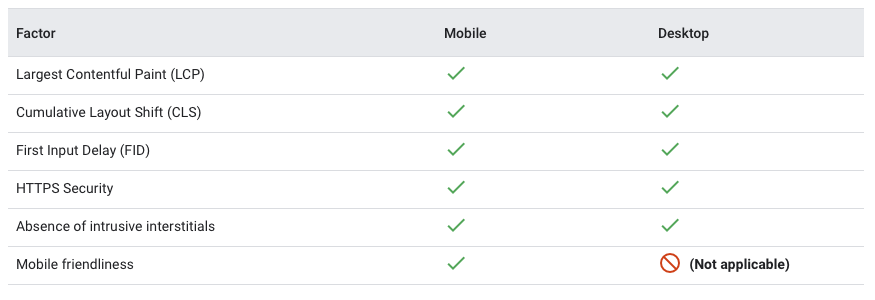
For the most part, the algorithm update looks identical to the update introduced to mobile search results last year. As such, the most important aspect of the update is the use of Core Web Vitals metrics to measure website performance.

“This means the same three Core Web Vitals metrics: LCP, FID, and CLS, and their associated thresholds will apply for desktop ranking. Other aspects of page experience signals, such as HTTPS security and absence of intrusive interstitials, will remain the same as well.”

One factor is being dropped from the desktop Page Experience update, however. For obvious reasons, this version of the update will remove the mobile-friendliness signal which was originally built into the update.

What Does This Mean For Your Site?

If you have been having good performance on mobile search results, you are probably fairly safe from the newer desktop version of the Page Experience update. However, if you’ve seen drops in search visibility or performance from mobile searches in the past year, this update is likely to compound your pain. 

To help you predict how the algorithm update will impact you, Google Search Console is launching a new report specifically dedicated to Page Experience metrics for desktop versions of sites. 

This report is available in the Page Experience tab of Google Search Console, immediately under the mobile report.

Any small-to-medium-sized business owner or operator is all too aware that it often feels like the odds are stacked against them – especially when it comes to competing with larger companies on Google. 

It’s something Google rarely addresses outright, but it seems clear that big companies have several advantages which can make it hard to compete. This is why one person decided to ask Google’s John Mueller about the situation during a recent Office Hours hangout chat with Google Search Advocate.

As Mueller acknowledges, Google is well aware that big brands often receive natural competitive advantages. But, he also had some advice for smaller brands trying to rank against massive brands – big sites face their own unique problems and limitations which can give you a chance to get the upper hand.

John Mueller’s Advice For Small Companies On Google

The original question posed to Mueller included two parts, but it was the second half that the Search Advocate decided to focus on. Specifically, he was asked:

“Do smaller organizations have a chance in competing with larger companies?”

From the outset, he says its a bit of a broader “philosophical” question, but he does his best to show how smaller companies have consistently been able to turn the tables against larger brands. For example, Mueller points to how many larger companies were so invested in using Macromedia Flash, they stuck with it long after it became clear it was not helping their SEO. Meanwhile, smaller sites often knew better and were able to use this against their competition.

“One of the things that I’ve noticed over time is that in the beginning, a lot of large companies were, essentially, incompetent with regards to the web and they made terrible websites.

And their visibility in the search results was really bad.

And it was easy for small websites to get in and kind of like say, well, here’s my small website or my small bookstore, and suddenly your content is visible to a large amount of users.

And you can have that success moment early on.

But over time, as large companies also see the value of search and of the web overall, they’ve grown their websites.

They have really competent teams, they work really hard on making a fantastic web experience.

And that kind of means for smaller companies that it’s a lot harder to gain a foothold there, especially if there is a very competitive existing market out there.

And it’s less about large companies or small companies.

It’s really more about the competitive environment in general.”

While it is true that it can seem very difficult to compete with the seemingly unlimited resources of bigger brands, history has shown time and time again that bigger brands face their own challenges. 

As Mueller concludes:

“As a small company, you should probably focus more on your strengths and the weaknesses of the competitors and try to find an angle where you can shine, where other people don’t have the ability to shine as well.

Which could be specific kinds of content, or specific audiences or anything along those lines.

Kind of like how you would do that with a normal, physical business as well.”

In the end, big brands competing are much like David facing down Goliath; if they know how to use their strengths and talents to their advantage they can overcome seemingly unbeatable challengers.

You can watch Mueller’s answer in the video below, starting around 38:14.

A new study conducted by Google and Boston Consulting Group indicates that 90% of consumers are willing to give brands their email addresses, so long as there is an incentive. 

The results come from an exploration into how consumers view modern advertising, including targeted ads, sharing personal information with advertisers, and email marketing.

As online advertising has become more pervasive and personalized to consumers, it is widely believed that shoppers have become jaded and worn down by online ads. As such, many believe shoppers are generally unwilling to engage with online advertisers. However, this study refutes this idea quite clearly.

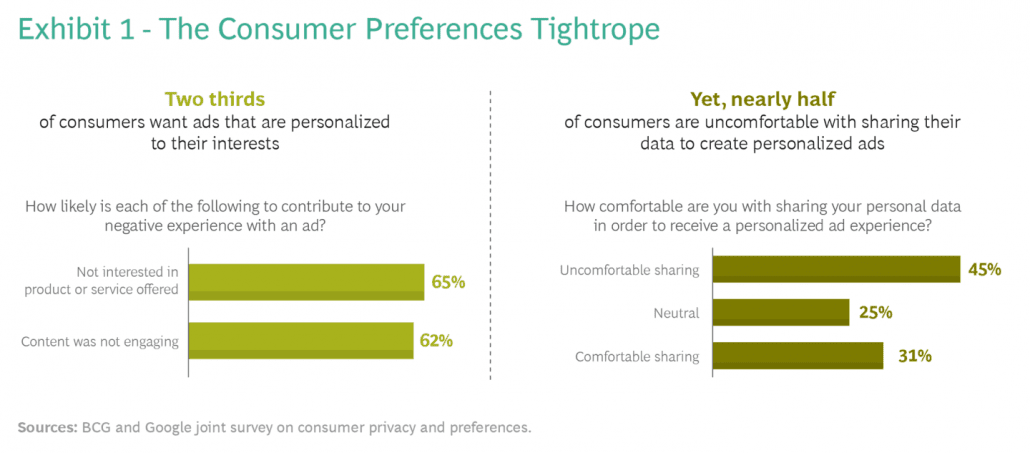
Instead, the findings show that modern consumers are quite willing to engage with ads on the condition that they are relevant to their needs and interests.

How Consumers View Targeted Ads

First and foremost, the new research makes it clear that advertisers do not dislike all advertising. They dislike irrelevant advertising, with 65% of people saying they have negative experiences with ads that are not relevant. Additionally, 74% of consumers say they only want ads that are relevant. 

These consumers are also largely aware that receiving ads that are targeted to their interests requires some amount of data sharing.

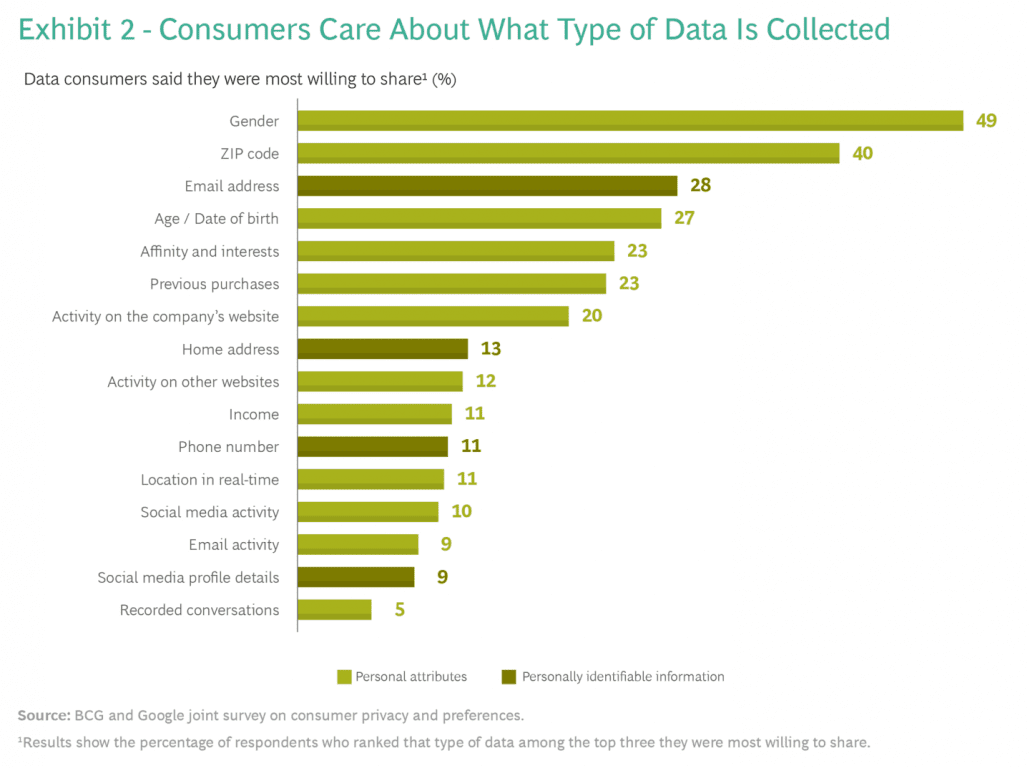
According to Google’s research, most consumers are willing to share some personal information, so long as it is not overly invasive. 

At the same time, some demographics are more willing to share specific details such as their gender, age, or online activity compared to other groups.

For example, Young Urban Professionals tend to be more willing to share their social media activity, but less willing to tell advertisers their gender. 

When consumers’ concerns are addressed, users may be even more willing to share personal details. These concerns include what specific information is being collected, how an advertiser is collecting this information, and what they intend to use it for. 

How Incentives Increase Data Sharing

Another major concern advertisers need to address is “what’s in it for me?”

While nearly 1 in 3 consumers say they are willing to give out some personal information such as their email address for absolutely nothing, more than 90% say they are willing to give their email address if given the right incentive – such as a discount or free sample. 

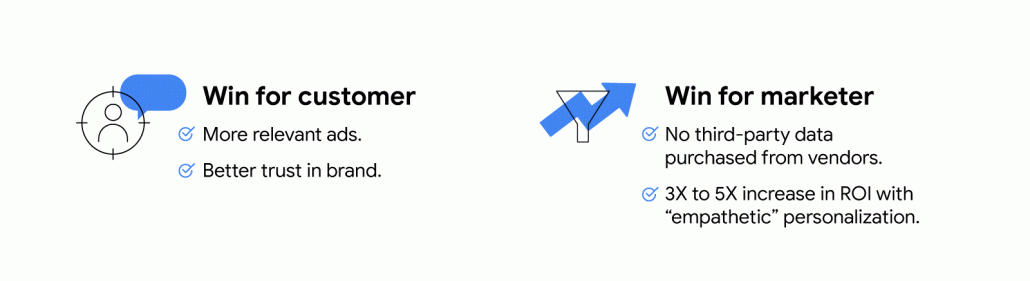
Not only does an incentive simply give a person a reason to sign up, but it also gives a brand an opportunity to prove themselves to shoppers and earn their trust. 

This is crucial for brands because at least 29% of new customers say they start from a place of mistrust with all companies from any industry. Why? Because they are concerned that brands will then sell their private information to less scrupulous marketers.

As Google’s report explains:

“And while almost 60% of customers believe that companies are selling their data, our research found that very few brands do that.

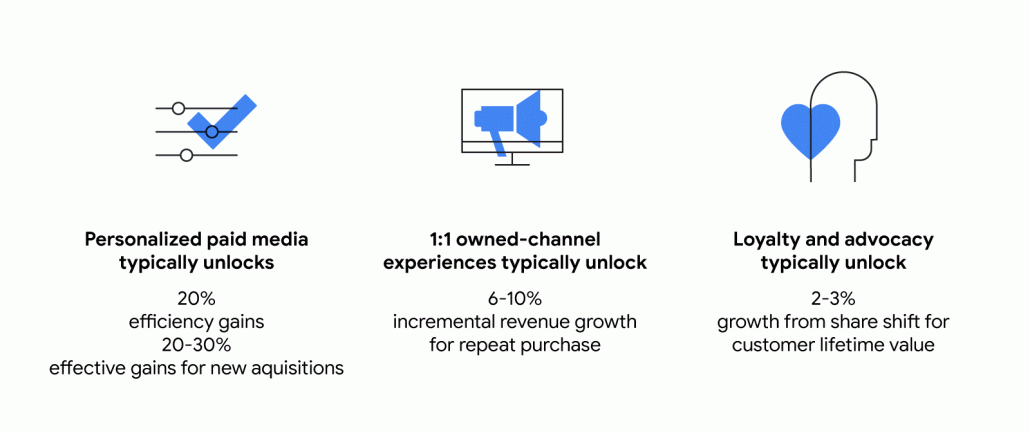
Marketers understand the value of data and the trust their customers place in them — and how customer-centric, data-driven marketing unlocks significant gains across business objectives.”

Key Takeaways

Google’s report concludes with three major recommendations based on the study’s findings:

  • Build trust by prioritizing transparency
  • Create great experiences through first-part data
  • Build a data-centric organization that respects privacy at all levels

For more in-depth information, read the full report from Google here or from Boston Consulting Group here.

Most people these days understand the general idea of how search engines work. Search engines like Google send out automated bots to scan or “crawl” all the pages on a website, before using their algorithms to sort through which sites are best for specific search queries. 

What few outside Google knew until recently, was that the search engine has begun using two different methods to crawl websites – one which specifically searches out new content and another to review content already within its search index.

Google Search Advocate John Mueller revealed this recently during one of his regular Search Central SEO office-hours chats on January 7th.

During this session, an SEO professional asked Mueller about the behavior he has observed from Googlebot crawling his website. 

Specifically, the user says Googlebot previously crawled his site daily when it was frequently sharing content. Since content publishing has slowed on this site, he has seen that Googlebot has been crawling his website less often.

As it turns out, Mueller says this is quite normal and is the result of how Google approaches crawling web pages.

How Google Crawls New vs. Old Content

While Mueller acknowledges there are several factors that can contribute to how often it crawls different pages on a website – including what type of pages they are, how new they are, and how Google understands your site.

“It’s not so much that we crawl a website, but we crawl individual pages of a website. And when it comes to crawling, we have two types of crawling roughly.

One is a discovery crawl where we try to discover new pages on your website. And the other is a refresh crawl where we update existing pages that we know about.”

These different types of crawling target different types of pages, so it is reasonable that they also occur more or less frequently depending on the type of content.

“So for the most part, for example, we would refresh crawl the homepage, I don’t know, once a day, or every couple of hours, or something like that.

And if we find new links on their home page then we’ll go off and crawl those with the discovery crawl as well. And because of that you will always see a mix of discover and refresh happening with regard to crawling. And you’ll see some baseline of crawling happening every day.

But if we recognize that individual pages change very rarely, then we realize we don’t have to crawl them all the time.”

The takeaway here is that Google adapts to your site according to your own publishing habits. Which type of crawling it is using or how frequently it is happening are not inherently good or bad indicators of your website’s health, and your focus should be (as always) on providing the smoothest online sales experience for your customers. 

Nonetheless, it is interesting to know that Google has made this adjustment to how it crawls content across the web and to speculate about how this might affect its ranking process.

To hear Mueller’s full response (including more details about why Google crawls some sites more often than others), check out the video below: