OpenAI has announced that it will begin testing ads within ChatGPT soon, creating a potential new major advertising channel for brands. 

The tests could begin as soon as in a few weeks, with clearly labeled ads appearing at the bottom of chatbot responses. Additionally, the ads are said to only appear when there is a specific sponsored product of service relevant to the chat. 

Who Will See Ads In ChatGPT?

For now, OpenAI says it will be significantly limiting who is eligible to be shown ads in ChatGPT. The ads will only be shown to U.S. users over the age of 18 using the free tier or those signed up for ChatGPT Go. ChatGPT Go is OpenAI’s recently introduced lowest-cost subscription option.

Users under the age of 18 and those subscribed to ChatGPT Pro, Business, or Enterprise plans will be excluded from the upcoming ads test. 

Ads Will Not Influence ChatGPT Responses

OpenAI heavily emphasized that any potential ads will be limited to clearly marked placements that are separate from ChatGPT responses. Any advertising partnerships or placements will not influence AI answers and user conversations will not be made available to advertisers.

Additionally, ads will not be shown during conversations about sensitive or regulated topics such as health, mental health, or politics. 

OpenAI Advertising Principles

In the announcement, OpenAI laid out 5 specific advertising principles it means to follow as it begins testing ads. 

  • Mission alignment: Our mission is to ensure AGI benefits all of humanity; our pursuit of advertising is always in support of that mission and making AI more accessible.
  • Answer independence: Ads do not influence the answers ChatGPT gives you. Answers are optimized based on what’s most helpful to you. Ads are always separate and clearly labeled.
  • Conversation privacy: We keep your conversations with ChatGPT private from advertisers, and we never sell your data to advertisers.
  • Choice and control: You control how your data is used. You can turn off personalization, and you can clear the data used for ads at any time. We’ll always offer a way to not see ads in ChatGPT, including a paid tier that’s ad-free.
  • Long-term value: We do not optimize for time spent in ChatGPT. We prioritize user trust and user experience over revenue.

Why This Is Notable

The announcement from OpenAI came as a slight surprise, given that CEO Sam Altman had previously expressed hesitation. Specifically, Altman had publicly worried that ads would strain the public’s trust in ChatGPT to deliver accurate information. 

However, as recently as November, Altman had begun suggesting that ads in ChatGPT were likely “at some point.”

As AI assistant usage becomes more widespread, this could become a valuable new ad platform for brands looking to connect with a new audience. 

We expect to learn more as testing begins, but for now you can read OpenAI’s full announcement for more details.
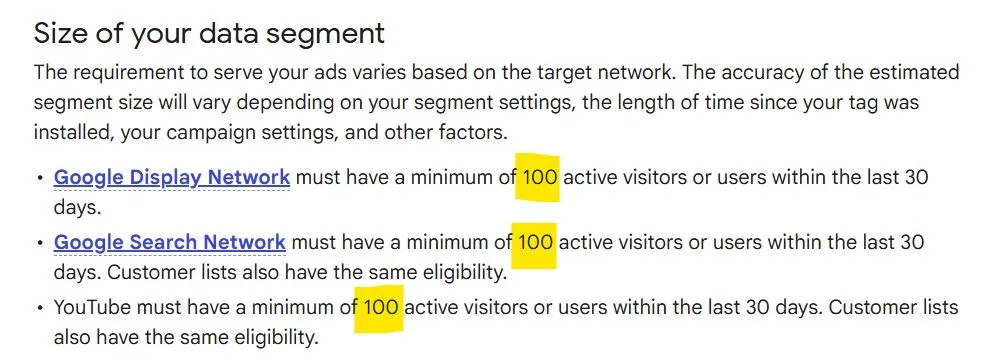
Google recently announced a major change to its ad platform that opens up some of its most powerful advertising tools for smaller businesses. The company has lowered its minimum audience size requirement to just 100 active users across all networks, including Search, Display, and YouTube. 

By decreasing the audience size from the previous minimum of 1,000 users, Google has opened the door to brands with smaller audience sizes to use remarketing and customer list targeting. 

New Minimum Limits

Now brands can use audience segments with as few as 100 users across all networks. This new limit is set across all networks and applies to both remarketing lists and customer lists, making it easier for small brands to reach more accurate audiences with their ads. 

The 100-user threshold also applies to Audience Insights, allowing brands with small audiences to better understand their performance and audience. Previously, Audience Insights could not provide reliable data for audiences with less than 1,000 people. 

Opening The Door For Smaller Advertisers

This change removes a significant barrier for smaller brands and niche advertisers. While these advertisers could use Google’s Ad platform already, they were previously locked out of many of the most effective tools and advertising methods. 

Now, smaller brands can power remarketing campaigns and personalize their ads using first-party data and in-depth insights that were not previously available to them. 

This accessibility gives businesses the ability to fine-tune their targeting, reach users who have already expressed interest, and drive better conversion rates without relying on extensive data. By delivering personalized ads to defined audience segments, brands can boost engagement and see stronger returns on their ad spend.

Limitations Due To Smaller Audiences

While Google is allowing advertisers with smaller audiences to access these tools, they caution that smaller audience sizes can still impact performance. For example, smaller audience lists may lead to less accurate insights, slower delivery, or limited reach. 

It is crucial for advertisers to closely watch their ad performance to ensure their ads are performing properly and reaching the correct audience. 

Additionally, Google notes that advertisers using smaller audience segments must take care to ensure their data collection and usage does not run afoul of today’s modern privacy regulations including GDPR and CCPA. 

For more about this change and how audience segments function, explore the Google Ads Help page on the topic here.

Google is expanding its Travel Feeds feature for Search Ads, letting hotel ads include more detailed information from their feeds in ads that appear in search results. 

As the company said in an announcement:

“To help potential travelers get the most up-to-date and relevant info, advertisers have told us they want more opportunities to use Travel Feeds in Search Ads. Starting today, all hotel advertisers can now showcase feed data, such as hotels, prices, dates, ratings and images, in this ad format.”

The ad format for hotels now lets advertisers “use the same feed data already available in Hotel Center and used by travel advertisers in hotel campaigns to enhance more ad types.”

The hotel ads automatically pull price and landing pages 

The ads are customizable as well, with multiple design options available and selections based on ad relevance, creative, and query. 

Are These For You?

The new expanded hotel ads have been seen to increase click-through rates by up to 20%, based on Google’s internal data collected during testing. 

The ads also have the potential to increase efficiency when setting up ads by automatically displaying Travel Feeds in Search Ads once you have linked your Hotel Center account to your Google Ads account. 

To be eligible, you must have a Hotel Center account with a price accuracy rating of at least “Poor”.

Though currently limited to hotel ads, Google says it plans to test the Travel Feeds feature with other types of ads including travel attractions, car rentals, and local events.

The holidays are approaching and Microsoft Advertising wants to help your brand prepare before the shopping season arrives.

Microsoft Advertising has released a new free guide called “Your Festive Season Marketing Playbook” which includes all the information you could need to prepare the most efficient and impactful ad strategies for the latest holiday trends and shopping behaviors. 

Below, we will share some highlights to help steer your ad strategies in the coming months.

Start Planning Early

The guide encourages brands to start planning their campaigns and budgets early, to avoid falling behind. Data from past years suggests that shopping for the holiday season may start as early as September, with a notable increase in both traffic and purchases between September and October throughout much of the world. 

October Clicks Matter In November and December

Another sign that holiday shopping begins earlier than expected is the discovery that approximately two-thirds of purchases in November and half of December purchases can be traced back to clicks in October. 

Now is when brands are able to plant the seeds in shoppers’ heads that turn into holiday purchases. Using remarketing, in-market audiences, and automated bidding strategies, you can develop these initial clicks into later sales.

Deal Seeking is Up

According to the guide, American consumers are spending much more time hunting for deals than in the past. Around two-thirds of shoppers are now devoting significantly increased time to looking for coupons, promotions, or other types of deals. Compared to other regions, shoppers in this area spend approximately 33% more time using search to find deals compared to the average shopper around the world. 

Desktop Drives Holiday Sales

According to the data collected from the Microsoft Advertising Network, just 28% of holiday ad clicks are made by mobile devices, which only account for 22% of total retail conversions around the holiday shopping season. 

This suggests that desktop devices are contributing to the bulk of holiday shopping activity despite the major rise in mobile shopping over the past few years. 

For more about these shopping trends, ad strategies, and holiday marketing recommendations, download the Festive Season Marketing Playbook for yourself here.

Would you like to be able to run video ads on streaming services that specifically target LinkedIn users? The social network is testing a new ad product that allows advertisers to reach LinkedIn’s 930 million users as they watch TV or movies at home. 

In a statement to Reuters, the Vice President of Marketing Solutions for LinkedIn, Penry Price, said: “In-stream video ads can change the way brands and buyers reach and engage their audiences.”

The new ad format comes following reports that the company’s ad platform is already up in sales by 8% year-on-year and is looking to further grow its advertising profits.

The new format could also be a boon for advertisers looking to increase their ROI by reaching their audiences with ads while they are most receptive. 

LinkedIn’s ad growth has been a bit of a surprise because it comes at a time when other ad platforms are being hit by falling ad budgets and an overall uncertain economy. Meanwhile, the social network’s ad platform continues to drive revenue from ad sales and subscriptions for recruiters, professionals, and B2B salespeople. 

Effective August 1st, Microsoft Advertising will stop running ads from anyone who is not a verified advertiser. 

The company announced the change this week, almost exactly a year after the Microsoft Ads Advertiser Identity Verification program was announced back in June 2022. 

At the time, the company said the verification program was part of their efforts to “enhance digital advertising safety” by reducing deceptive ads on the platform.

To ensure that any valid business can be verified in a timely manner, the process is automated and relies on government-issued personal identification or business-related documents for verification. 

Now that the majority of advertisers on the platform have been fully verified, the company is moving to stop running ads by those who have not undergone the verification process.

This will happen in a few steps:

  1. Starting July 1, new advertisers will be required to be verified before Microsoft Advertising will serve any of their ads. 
  2. Starting July 15th, brands are encouraged to contact Microsoft support if they have not been verified and have not received an email inviting them to become verified.
  3. Lastly, on August 1, Microsoft Advertising will begin only serving ads from verified advertisers.

What Information Microsoft Advertising Gives Users

Once verified, all ads from a Microsoft advertiser include information about the organization(s) behind the ad. This includes the advertiser’s name and location, information about targeting details used to show the ad, and who is paying for the ad. 

For more, read the newly updated help document from Microsoft Advertising about advertiser identity verification.

Microsoft Advertising is helping you get ready for the new year with three new predictions for upcoming trends in digital advertising. 

As we enter the final month of the year, many are already planning their marketing and ad campaigns for the start of 2023. Unsurprisingly, many of these campaigns will be focused on health and self-betterment as consumers make their New Year’s resolutions.

According to a recent study by Opeepl, approximately 60% of people reported making a New Year’s resolution in 2022 with the most popular resolution being to get healthier.

Even more interestingly, almost half (49%) of those who didn’t make a resolution reported that they still made changes to their lives to improve their wellness around the beginning of the year.

To help you take advantage of this with ads that will connect with health-minded consumers in the start of 2023, Microsoft Advertising shared three predictions for upcoming trends in Health and marketing:

‘Organic Food’ Will Spike In Interest

Microsoft believes clicks for ads related to organic food may leap up to 20% during the week of January 14 compared to the same week in December.

With that in mind, Microsoft recommends planning ahead:

“Target users searching for healthy, nutritious food options in January with In-market Audiences. Our internal forecasting data suggests that clicks will peak during the winter on January 14, so although you should ramp up your budget after the holidays end, make sure you don’t run out midway through the month.”

Target Sports Apparel From Now To Late January

The predictions indicate that searches for sports apparel are likely to surge beginning early this month and lasting through January, creating an opportune time to target customers with related shopping campaigns:

“Use Shopping campaigns to showcase your sports and fitness apparel products late November and early December during holiday shopping sales. Microsoft internal data estimates that consumers will be most heavily searching for gear between the weeks of and November 26 and December 3, but activity will remain high until January.”

‘Fitness & Nutrition’ Searches Regularly Surge In Interest

While it is true that searches for fitness and nutrition-related topics are likely to increase in the new year, Microsoft Advertising also notes that this trend is likely to pop back up throughout the year. Because of this, it may be better to take an “always-on” approach to targeting these areas:

“Using 2021 data as a comparison for what to expect activity wise over the next year, we can assume clicks for nutrition and fitness will peak in January, May, July, and October. Consider an always-on approach since Audience Ads are shown to drive users down the funnel to search tactics.”

Google is officially rolling out frequency targeting controls for video ads on YouTube according to a new blog post from the company.

With this move, advertisers can now take control and set limits for how often individuals see their ads.

In the past, the only way to do this was through connected TV campaigns in Google Display & Video 360 – more advanced advertising tools and features.

What Is Frequency Targeting For Ads?

Frequency targeting lets advertisers set a target number of times their ad will be shown to specific users.

This helps make the most of ad budgets by preventing ads from being repeatedly displayed to unreceptive audiences.

As the announcement for the feature explains:

“This will help advertisers optimize towards more precise reach and frequency, while ensuring that we continue to provide a suitable advertising experience for viewers. Target frequency allows advertisers to select a frequency goal of up to four per week and our systems will optimize towards a maximum unique reach at that desired frequency.”

Why Set a Frequency Target For Your Ads

Though there may be times when repeatedly seeing the same ad may be beneficial to motivate potential customers, there is a limit. Most studies indicate that repeatedly seeing ads is much more likely to contribute to diminishing returns and bad will with consumers.

For example, one Google-commissioned study found that TV advertisers see a decrease in ROI of 41% when the frequency of their ads was more than 6 views per week. Based on the data, more than 46% of ad impressions were above this threshold, making nearly half of ad impressions wasted.

The study says:

“Almost half of the linear TV impressions in our study were considered waste but the same study from Nielsen shows that brands can increase their average weekly frequency from one to three on YouTube with a consistent ROI.

“This is a huge opportunity for marketers to maximize their impact across the same set of people they are already reaching today.”

Final Details

Frequency targeting is now rolling out to all Google Ads users around the globe. 

Google claims that over 95% of all campaigns using frequency targeting hit their goal using the tool in testing.

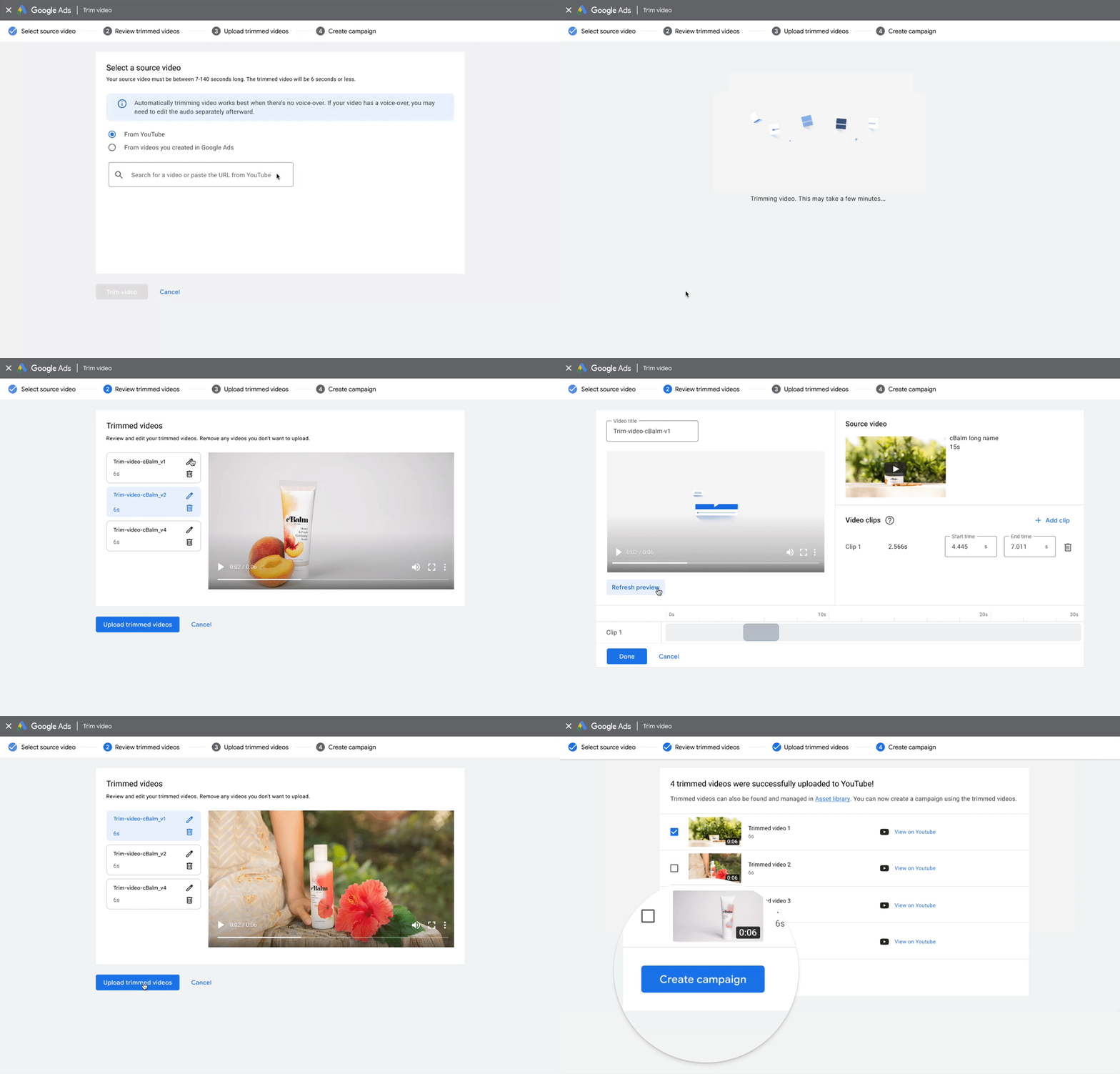
Google is officially releasing its bumper ad tool to the general public. The tool, now being called simply “trim video”, makes it easy to turn existing videos (up to 140-seconds long) into short but sweet clips that can then be used as bumper ads for video campaigns.

Though the tool has been in testing in various forms since 2019, this is the first time the general public has been given access to it for their campaigns. 

In the time the tool was in beta testing, Google says it has “helped hundreds of brands drive more reach, frequency, and efficiency by effortlessly generating 6-second bumper ads.”

The announcement of the tool describes trim video like this:

“Trim video is a video ad production tool that helps advertisers make new bumper ads from their longer video assets quickly. Trim video uses Google Machine Learning to simplify the process of bumper ad creation by identifying the most important frames in a long ad and turning them into 6-second videos. It also has simple editing features that allow advertisers to modify the final output.”

Using the tool is as simple as copying and pasting a link to one of your existing YouTube videos or your Google Ads library. From there, you’ll be given four different options you can edit further or save as a bumper ad. 

To access the trim video tool for yourself, sign into your Google Ads account and select the asset library page. Then, select the tools and settings icon and look under “Shared Library” to find “Asset Library”. Here you’ll find the trim video tool under the Video section.

For more about the trim video tool, read the full announcement or visit the Help Center article dedicated to the tool.

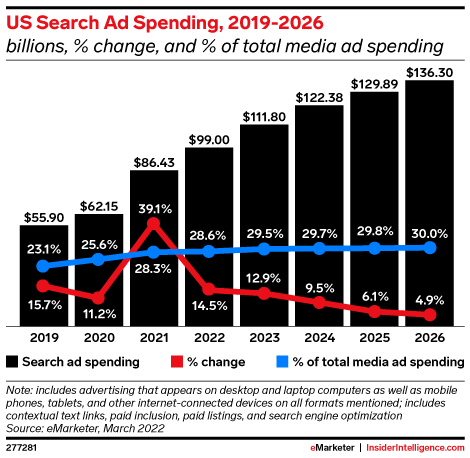
Brands across the US are increasing how much they spend on search advertising, with the overall US search ad spend predicted to reach almost $112 billion by next year. That is nearly double the amount spent in 2019, according to the new report from Insider Intelligence.

US Search Ad Spend 2019-2026 graph

This year, the data says $99 billion is being spent on search advertising. Much of this is driven by Google, which receives about 56% of the total ad spend. Google is in fact driving much of the growth in this area, outpacing all other traditional formats. 

While Microsoft remains the second-leading search ad platform, the data indicates that other platforms like Apple and Amazon may eventually overtake it. 

Data shows that Apple Search Ads will receive $5 billion dollars alone in 2022 revenue thanks to new ad and placement options which allow brands to find less competitive ad space.

Meanwhile, Amazon is gaining ground as the best platform for bottom-of-funnel customers. 

Interestingly, the report indicates that TikTok is also a growing force in search ad spending. The new data shows that up to 40% of 18- to 24-year-olds in the US already prefer to use TikTok and Instagram for their searches instead of Google. This may explain why recent studies showed that brands spent 60% more on overall advertising on the platform. 

Mobile Vs. Desktop

Unsurprisingly, mobile search advertising spend is far outpacing desktop by about two-thirds and shows no sign of slowing down. 

One indication of this is the fact that more than half of the U.S. population was reported to have used a smartphone to make an online search in 2016. By next year, that number should reach 70% by 2023. 

Privacy-Focused Platforms Lose Steam

After years of slow growth, privacy-first platforms like DuckDuckGo appear to be losing traction with US searchers. This is reflected in other recent reports, including data showing that DuckDuckGo had fallen to less than 100 million daily searches in June. 

For more findings about the current state of search advertising, download the full report from Insider Intelligence here.