Facebook gives business page owners a lot of information that can be useful for growing your brand and increasing engagement with your business page. However, that information has been limited to just those using the desktop version of the site until recently.
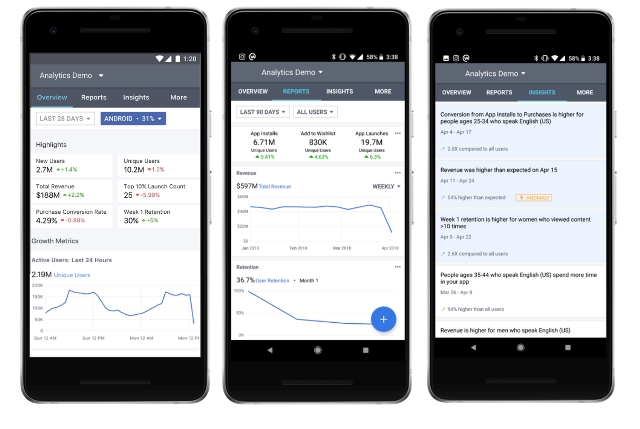
The app, now available for both iOS and Android, includes all the major metrics you could hope for to keep an eye on your business page even when you’re away from the office or a desktop computer. You can also set up alerts to notify you when notable changes occur to your performance.
With the new Facebook Analytics app, you can:
Check the metrics you care about most in a personalized overview tab.
Create dashboards with the reports you have saved on desktop.
Browse automated insights relevant to your business.
00Taylor Ballhttps://www.tulsamarketingonline.com/wp-content/uploads/2018/07/TMO-Logo.pngTaylor Ball2018-05-03 15:21:002018-05-03 15:21:00Monitor your business page on the go with the new Facebook Analytics App
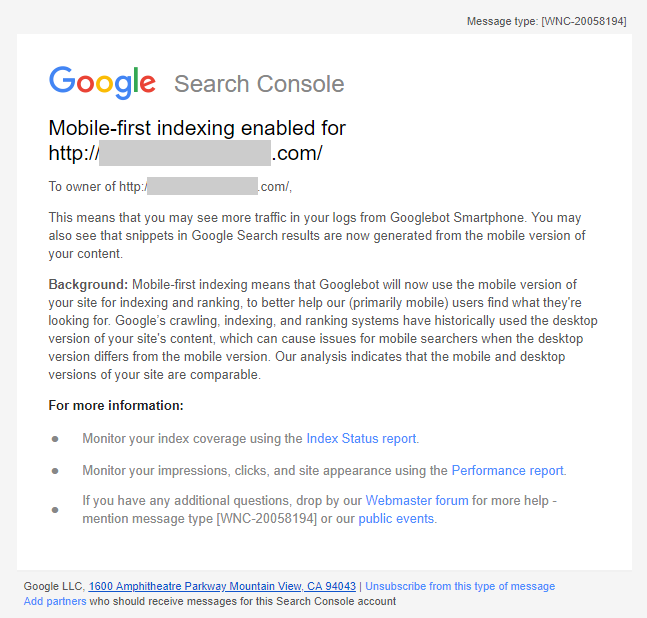
Google is sending emails to webmasters that are being migrated to the search engine’s new mobile-first index. If your site gets indexed, Google will start choosing the mobile version of your site as the default choice – meaning your site is fast enough and optimized for mobile users.
The search engine first said they would start sending notifications to websites being migrated into the mobile-first index, but the emails have only started being actually seen in the wild over the past few days.
The notifications are coming a bit late, considering Google has confirmed that it began moving websites over to the mobile-first index months ago.
This means that you may see more traffic in your logs from Googlebot Smartphone. You may also see that snippets in Google Search results are now generated from the mobile version of your content.
Background: Mobile-first indexing means that Googlebot will now use the mobile version of your site for indexing and ranking, to better help our (primarily mobile) users find what they’re looking for. Google’s crawling, indexing, and ranking systems have historically used the desktop version of your site’s content, which can cause issues for mobile searchers when the desktop version differs from the mobile version. Our analysis indicates that the mobile and desktop versions of your site are comparable.”
If you’ve spent much time trying to promote your business on Facebook, you’ve probably recognized the social platform isn’t exactly the best at transparency.
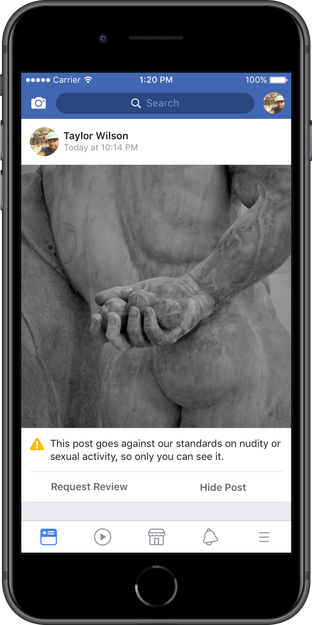
There are a lot of questions about what exactly you can and can’t post, which made it even more frustrating that there was no way to appeal the decision if Facebook decided to remove your content for violating its hidden guidelines.
That is beginning to change, however. Likely thanks to months of criticism and controversy due to Facebook’s lack of transparency and it’s reckless handling of users’ data, Facebook has been making several big changes to increase transparency and regain people’s trust.
The latest move in this direction is the release of Facebook’s entire Community Standards guidelines available to the public for the first time in the company’s history.
These guidelines have been used internally for years to moderate comments, messages, and images posted by users for inappropriate content. A portion of the Community Standards was also leaked last year by The Guardian.
The 27-page long set of guidelines covers a wide range of topics, including bullying, violent threats, self-harm, nudity, and many others.
“These are issues in the real world,” said Monika Bickert, head of global policy management at Facebook, told a room full of reporters. “The community we have using Facebook and other large social media mirrors the community we have in the real world. So we’re realistic about that. The vast majority of people who come to Facebook come for very good reasons. But we know there will always be people who will try to post abusive content or engage in abusive behavior. This is our way of saying these things are not tolerated. Report them to us, and we’ll remove them.”
The guidelines also apply to every country where Facebook is currently available. As such, the guidelines are available in more than 40 languages.
The rules also apply to Facebook’s sister services like Instagram, however, there are some tweaks across the different platforms. For example, Instagram does not require users to share their real name.
In addition to this release, Facebook is also introducing plans for an appeals process for takedowns made incorrectly. This will allow the company to address content that may be appropriate based on context surrounding the images.
If your content gets removed, Facebook will now personally notify you through your account. From there, you can choose to request a review, which will be conducted within 24 hours. If Facebook decides the takedown was enacted incorrectly, it will restore the post and notify you of the change.
00Taylor Ballhttps://www.tulsamarketingonline.com/wp-content/uploads/2018/07/TMO-Logo.pngTaylor Ball2018-04-27 14:49:382018-04-27 14:49:38Facebook finally explains what you can and can’t post
One could argue social media has always been a popularity contest based on friend-counts and likes, but Pinterest is making it even more explicit thanks to some new changes to business profiles.
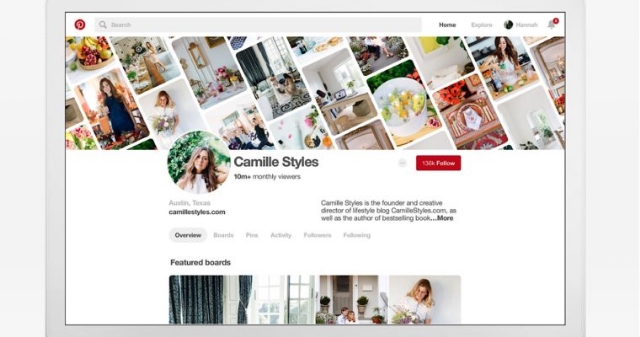
The most notable change is the addition of a monthly viewer statistic that can be seen by everyone, not just your account administrators. The feature will show the total number of people who saw your business’s pins over the past 30 days.
The addition of a view count is likely to provide a more reliable estimate of just how prominent a page is. While followers can easily be bought or acquired with bots, views are a little trickier to misrepresent.
However, many might say this gives an unfair advantage to businesses who advertise through promoted pins.
In addition to the view count, Pinterest is also introducing the ability for business profiles to include dynamic cover images that highlight specific content relevant to users. That can include individual pins or entire boards.
Pinterest says the changes will be rolling out over the next couple months, so keep your eyes out for more news about how monthly viewer statistics may affect your Pins.
00Taylor Ballhttps://www.tulsamarketingonline.com/wp-content/uploads/2018/07/TMO-Logo.pngTaylor Ball2018-04-25 12:48:352018-04-25 12:48:35Pinterest starts showing how many views your business profile gets
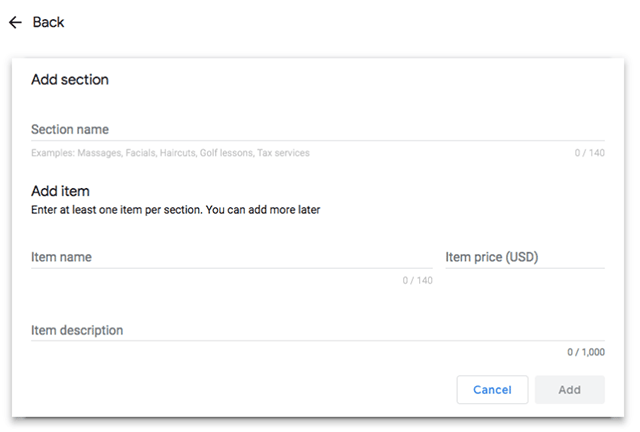
Menus aren’t just for restaurants on Google anymore. Google My Business has finally expanded their menu feature to allow businesses to create and share a service menu describing the various services you offer and their prices.
The process is very simple. You just select the “Info” tab in the Google My Business dashboard and get started adding your services. The menus can be organized by name, description, and price for each item. You can also group specific items into different sections.
Google’s Allyson Wright announced the news yesterday in the Google My Business Help forums, saying:
“Back in January we launched a new Menu editor for the food service industry. This month, we are excited to announce that we have expanded our menu editor to now include additional services.
“Businesses in health & beauty, and service businesses, such as plumbers and florists, now have the ability to add their menu of services directly to their listing through their Google My Business account. Same as the food establishment menu editor, this feature will only be available if the listing is not currently connected to a third party provider and for listings in English speaking locals. If your listing is currently displaying an incorrect menu, please see this help center link for more information on how to correct or remove the link.”
The expanded menu feature is only available to those who do not currently have their listing connected to a third-party menu provider and businesses in English speaking locations.
00Taylor Ballhttps://www.tulsamarketingonline.com/wp-content/uploads/2018/07/TMO-Logo.pngTaylor Ball2018-04-12 12:54:102018-04-12 12:54:10Google My Business lets you share service menus in your listings
Bing is changing up how ads appear in its search engine by increasing the number of ads present at the bottom of the page and removing text ads from the sidebar of search results for US users.
Specifically, Bing is increasing from 3 bottom-of-the-page ads to 4 ads and removing sidebar text ads in the United States. Product ads, on the other hand, will remain within the sidebar.
This change also means that Bing will no longer be allowing advertisers from the US to run sidebar text ads at all.
According to the announcement, Bing was motivated to remove sidebar text ads because bottom-of-the-page ads often include richer ad formats that provide more in-depth information that possible in the sidebar.
While these changes are currently limited to the United States and Bing Ads will continue offering sidebar text ads in other countries, the company says it will be considering removing the ad type in other counties in the future.
As the announcement says, “as part of the constant evolution of the Bing search engine results page (SERP) to provide more value for our users and our advertisers we are regularly evaluating performance and quality of our ads, including ad position on the SERPs.”
Based on their data, Bing says removing the sidebar text ads increases the overall clicks for advertisers, especially those running Mainline Text Ads and Product Ads.
00Taylor Ballhttps://www.tulsamarketingonline.com/wp-content/uploads/2018/07/TMO-Logo.pngTaylor Ball2018-03-28 14:44:422018-03-28 14:44:42Bing adds more ads to the bottom of search results, removes sidebar text ads
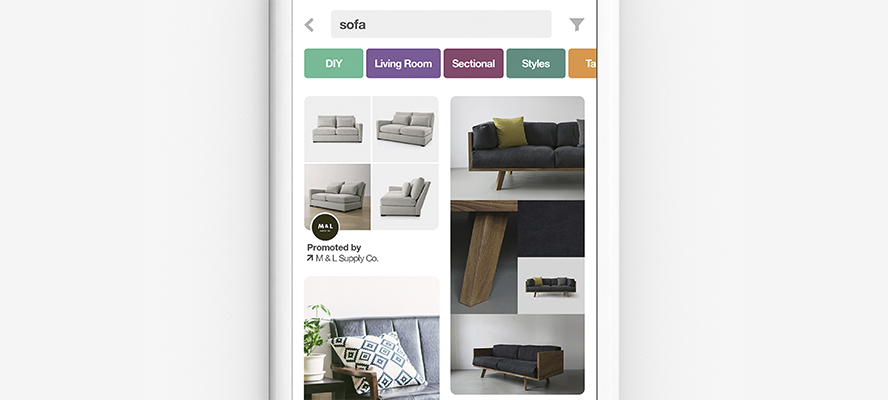
Pinterest’s Shopping Ads, which create ads directly from your existing Pins and content, have officially moved out of testing and been made available to hundreds of advertisers across the country.
Shopping Ads launched to a handful of major brands last year, including Ulta Beauty, Venus, Overstock, and Lowe’s. The ad format pulled images from product feeds to instantly generate ads.
“With Shopping Ads, businesses can seamlessly turn their product catalog into visual, actionable ads,” writes Shounak Simlai on the Pinterest Business Blog. “Since Shopping Ads pull automatically from an existing product feed, they’re especially useful for brands that want to scale their Pinterest advertising.”
This is a boon for marketers, as Pinterest says 90% of users make purchases through the platform and 70% of users saying they use the service to find new products.
To sign up to be a part of the Shopping Ads program, businesses must complete a Pinterest Propel Program sign-up form. Once you’ve done this, Pinterest says it will contact your business directly.
In addition to expanding its Shopping Ads to a wider range of businesses, Pinterest says it is already testing new ad designs intended to create “more visual shopping cues” and expanding its Shop the Look program to a number of countries, including France, Germany, and the UK.
00Taylor Ballhttps://www.tulsamarketingonline.com/wp-content/uploads/2018/07/TMO-Logo.pngTaylor Ball2018-03-21 13:52:382018-03-21 13:52:38Pinterest opens its Shopping Ads to hundreds of businesses
Twitter has shut down numerous accounts accused of artificially increasing the popularity of their posts using a method called “tweetdecking.”
Tweetdecking gets its name from the app TweetDeck, which can schedule posts ahead of time. Conspiring accounts were working together to retweet content in order to force it to go viral.
In this case, most of the accounts removed were using the technique to steal content (including memes and jokes) to make accounts more prominent. These accounts would then use their artificial popularity to promote other accounts or products for financial profit.
This practice blatantly violates Twitter’s spam policy. It is also just the latest instance of users and brands gaming the system to increase their online presence.
Since the earliest days of Google, brands and “black hat” users worked together to rig the search engine to ensure high visibility. Usually, this took the form of buying links to artificially appear authoritative to Google’s algorithm. The search engine has since worked to eradicate the practice, but similar tricks like buying “likes” or “retweets” have since sprung up on almost every other popular social platform.
Twitter’s latest bans are the most recent crackdown in a long-running game of whack-a-mole. Still, it provides a harsh reminder that brands who try to manipulate social networks or search engines in bad faith are nearly guaranteed to be eventually penalized or banned entirely.
00Taylor Ballhttps://www.tulsamarketingonline.com/wp-content/uploads/2018/07/TMO-Logo.pngTaylor Ball2018-03-13 11:59:052018-03-13 11:59:05Twitter cracks down on “tweetdecking” to artificially boost content
If you operate a website that is frequently creating or changing pages – such as an e-retail or publishing site – you’ve probably noticed it can take Google a while to update the search engine with your new content.
This has led to widespread speculation about just how frequently Google indexes pages and why it seems like some types of websites get indexed more frequently than others.
In a recent Q&A video, Google’s John Mueller took the time to answer this directly. He explains how Google’s indexing bots prioritize specific types of pages that are more “important” and limit excessive stress on servers. But, in typical Google fashion, he isn’t giving away everything.
The question posed was:
“How often does Google re-index a website? It seems like it’s much less often than it used to be. We add or remove pages from our site, and it’s weeks before those changes are reflected in Google Search.”
Mueller starts by explaining that Google takes its time to crawl the entirety of a website, noting that if it were to continuously crawl entire sites in short periods of time it would lead to unnecessary strain on the server. Because of this, Googlebot actually has a limit on the number of pages it can crawl every day.
Instead, Googlebot focuses on pages that should be crawled more frequently like home pages or high-level category pages. These pages will get crawled at least every few days, but it sounds like less-important pages (like maybe blog posts) might take considerably longer to get crawled.
You can watch Mueller’s response below or read the quoted statement underneath.
“Looking at the whole website all at once, or even within a short period of time, can cause a significant load on a website. Googlebot tries to be polite and is limited to a certain number of pages every day. This number is automatically adjusted as we better recognize the limits of a website. Looking at portions of a website means that we have to prioritize how we crawl.
So how does this work? In general, Googlebot tries to crawl important pages more frequently to make sure that most critical pages are covered. Often this will be a websites home page or maybe higher-level category pages. New content is often mentioned and linked from there, so it’s a great place for us to start. We’ll re-crawl these pages frequently, maybe every few days. maybe even much more frequently depending on the website.”
00Taylor Ballhttps://www.tulsamarketingonline.com/wp-content/uploads/2018/07/TMO-Logo.pngTaylor Ball2018-03-08 13:15:412018-03-08 13:15:41Google’s John Mueller explains how often your web pages get indexed
Facebook’s experiment with the “Explore Feed” – where organic content from brands and publishers was hidden away in a second feed – has come to an unceremonious early end.
After less than four months, the social platform has announced the Explore Feed has been discontinued after early feedback showed that “people don’t want two separate feeds.”
The concept was one of Facebook’s biggest recent changes designed to prioritize content from friends and family (and paid advertisers) over content published by liked Pages. While users initially seemed excited at the possibility of decluttering their feeds, the actual implementation went largely unnoticed – except by businesses relying on organic reach to market their brands on Facebook.
In the face of continuously declining organic reach in recent years, the second feed felt like the final nail in the coffin for brands who have so-far refused to buy into Facebook’s ad platform.
All of this came together to make users unhappy with the separate feed. Facebook says recent user surveys found that users were “less satisfied” with the posts they were seeing, and the second feed failed to make the platform feel any more personal.
Many also felt the change made it harder to find information and that Facebook failed to explain the change to users. For example, it was unclear the second feed was just a test until it had been shut down.
“We’re acting on this feedback by updating the way we evaluate where to test new products, and how we communicate about them,” writes Facebook in its announcement.
Don’t think this setback will change Facebook’s direction, though. In its announcement, the company reiterated its commitment to prioritizing “meaningful social interactions” and reducing the reach of non-paying Pages. The announcement goes as far as plainly saying “those changes mean less public content in News Feed like posts from businesses, brands, and media.”