
Tag Archive for: News

BudgetAs it comes time to prepare for business strategies going into the next year, many are wondering exactly how much they should be planning for in their SEO budget. Well, there is good news and there is bad news. The good news is SEO continues to yield great returns on your investment. The bad news is SEO is getting more and more expensive to do well. Jayson DeMers put together five reasons you should be asking for more for your SEO in 2014.

1)You Can’t Cheat With Cheap Backlinks

Not too long ago, you could just buy packages of a huge number of cheap backlinks and skate into high rankings on Google. That might be a bit of an exaggeration, but not much. However, Google has made it very clear they won’t let you play that game anymore. They’ve started penalizing those who try to use cheap shortcuts to a lot of backlinks, and they’ve gotten great at spotting when you do try to game the system.

Article spinning, excessive social bookmarks, paid links, duplicate content, and keyword stuffing have all been ruled illegal in Google’s book. You’ve got no choice but to go legit now.

2) Recovering from Google Penguin Can Be Costly (And You Need an Audit Anyway)

While many have already managed to recover from a drop in the rankings thanks to Penguin 2.0, there are plenty who haven’t been able to make a full recovery yet, and even more who are likely to be penalized in the coming year. But, recovering from Penguin takes a lot of time and effort, and time means money.

Usually, site owners need to undergo complete SEO link profile audits to identify all of the problems costing their site and begin recovery. Even if you haven’t been hit with an unnatural link warning within Google Webmaster Tools, it is still wise to perform an audit to spot any potential trouble links before Google does.

3) Good Content Marketing Isn’t Cheap

Google has begun to favor quality content pretty heavily, but this also means the bar has been raised. You used to be able to write just a few short blurbs every work and get reasonable traffic and authority in Google, but now every brand has a blog. You have to put in more work to stick out.

DeMers goes as far to suggest the standard minimum word amounts to rank well are going to go up, even as high as 2,000 words per article. He uses Google’s new in-depth article section as an indicator of this move, though Google’s own words paint a slightly different picture. “Users often turn to Google to answer a quick question, but research suggests up to 10% of users daily information needs involve learning about a broad topic.”

I don’t think article word count will necessarily go up as more blogging continues, but exploring your topic more thoroughly is usually a good idea. Google will still allow succinct content into the rankings for those who are looking for quick and ready answers, but that content can’t be weak. Even the shorter content you put out needs to offer a real and identifiable value to visitors.

4) You Need a Content Marketing Strategy

Content marketing doesn’t simply consist of publishing content. There is much more that has to be done to get that content out in front of your audience’s eyes. That’s why many have called content marketing the new SEO, even though many SEO professionals are expected to handle content creation as well.

There is some truth to the idea however. Publishing useful and interesting content builds your brand and generates brand signals that do get your content ranking in search engines. However, this just shows how important it is to have a plan put in place ahead of time for your content marketing. If you don’t plan ahead, you’ll likely fall into the low quality content pattern with less flashes of quality unique work.

If you are expected to handle SEO and content marketing at the same time, you’re going to need more resources to ensure everything is done right.

5) Outsourcing Social Media to Scale Up

Social media appears to be ingraining itself into search engine rankings at an alarmingly fast rate, and as such it requires a lot of attention. It is gaining steam both as an outreach and audience engagement strategy as well as driving traffic and boosting rankings.

The problem is, depending on the size of your SEO team, you likely don’t have the time and means to properly handle your social media on your own. Business owners don’t have the spare time to be investing heavily into social media, and an SEO professional’s time is already spoken for by a multitude of tasks. If you’re brand can afford it, outsourcing social media means your social efforts will be focused and well planned, while your other responsibilities won’t falter.
Logo design is one of the most deceptively difficult jobs in all of design. It sounds so easy, pick a font, type out the company name, and maybe underline or circle it. There are designers out there who really do think that way. But, if you actually care about delivering a quality product, its much more complicated.

There are endless brands and logos out there today, and the vast majority fall away into the noise. To create a truly successful logo in the modern day, you have to design something simple but brilliant enough to make people instantly take note. In the best logos, the viewers don’t even realize why they are so attracted to the logo.

But, how do you actually create a logo that accomplishes this? It takes some studied knowledge of design and a bit of ingenuity. Joshua Johnson from Design Shack has a few ways you can approach logo design to create something truly remarkable.

1) The Visual Double Entendre

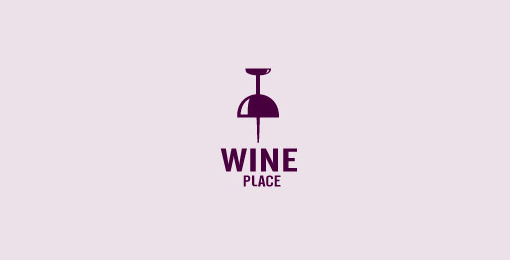
Many of my favorite logos can be interpreted in at least two ways. The visual entendre is exactly this tactic, which wraps two images into the same visual object. There are quite a few examples of this design strategy out there, but the example Johnson uses is too perfect to ignore, the WinePlace logo.WinePlace LogoThe logo is shaped like a thumbtack, seemingly marking a place or location, but if you look for more than a split second you will easily see the object also looks like an upside down wine glass. This sort of visual “trickery” encourages viewers to look a little longer and absorb the image (and brand name) more than the average glance. It is memorable for its creativity, but also because you force people to pay attention for longer.

Another added benefit of the strategy is that by nature your design must be simple to play two objects into the same image. As you’ll see, simplicity is a great rule of logo design.

2) Pay Attention to Color

One of the most basic facts of design is that color is not simply an aesthetic decision. Every color and tint carries a specific set of meanings and ideas, which often seem so embedded in our brains that our reactions are subconscious.

Many brands will have already noted this and might very well require you to stick to a very specific brand palette, but thats not always the case. On the chance that you have freedom to choose the colors of the design, you will want to pay close attention to picking the colors that will not only look good together, but also represent the nature of the brand.

On top of this, you should make sure the logo will also look clear and distinguishable if it must be printed in grayscale. Not every memo and press release will be full color, and you don’t want to lose the impact or recognizability of the logo just because someone xeroxed a company report.

3) Avoid Cliches

Trends are something that are unavoidable, but you might think twice before playing into what is hot at the moment with your logo design. Sure a popular styled logo might gain you some favor in the moment, but your logo is intended to represent your brand for years to come. You want it to be memorable enough that your logo outlives the current trends.

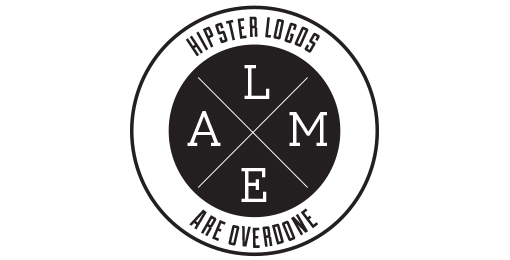
Fake Hipster Logo - Source: Design Shack

The current example is the dramatic overuse of the circular logo, generally styled vaguely like an old college patch or badge. Circles are popular in design and these types of logos are slightly retro, but just modern enough to have become a terribly common site across the web. But, it also means they are all interchangeable. I don’t remember any brand using the style because they all look the same eventually.

4) Custom Type Never Goes Out Of Style

Coca-Cola Logo

Some of the most popular logos throughout time rely on very little to be successful. Just think of Coca-Cola’s logo. All they need is their signature red color and a custom typeface so notable it has become the source of countless rip-offs and parodies.

The best part of using custom type is that it isn’t immediately able to be copied. Designers looking for a quick and easy way to jump on a potentially successful bandwagon are quick to begin using a font. But, if you have your type hand-designed, it takes a lot more effort to mimic. The irregularities that make custom type so special also make it too unique for a simple conversion to a font.

5) Keep It Simple

Apple-Nike Logos

While custom fonts are certainly a simple but effective way to make your mark, some designers don’t specialize in illustration or typography. That doesn’t mean they are out of luck. Many of the most famous logos in the modern day don’t feature any type whatsoever.

These logos take design to an even simpler stage, where all you need are simple shapes that are as iconic as they are refined. Apple began with their trademark bit apple shape, but originally it was striped with color. Gradually, they began to shift the logo to what looked like a brushed metal apple, but these days you won’t find any of those flourishes. All they need to be memorable is the silhouette of the apple, with that special bite taken out.

Conclusion

There are of course many other approaches you can take to making a memorable logo. For example, Johnson also brings up a discussion of symmetry and proportion in logo design that is better fit for a more in-depth analysis. Simply put, great logos don’t leave things to chance. But the truth is, if you want a truly memorable logo, you might start by trying to create something unlike those before.

What’s the best way to rank highly right now, according to Google? Most SEO professionals would say some one of two things. Creating a quality site will get your site ranked highly, and quality content is the most powerful way to improve the quality and value of your site.

According to Ryan Moulton, a software engineer at Google who Barry Schwartz from SEO Roundtable implies works in the search area, high quality content doesn’t necessarily work like that.

The assumption is that the “high quality” content Google favors is the most accurate and informative text available. But, Moulton says we misunderstand or forget about actual usefulness.

He was defending Google in a Hacker News thread on why Google ranks some sites highly despite the content not being entirely accurate, and in some people’s eyes low quality. He explains that some sources may be the most accurate, but they are often way too high-minded for the average searcher.

He states, “there’s a balance between popularity and quality that we try to be very careful with. Ranking isn’t entirely one or the other. It doesn’t help to give people a better page if they aren’t going to click on it anyways.”

Ryan then continues with an example:

Suppose you search for something like [pinched nerve ibuprofen]. The top two results currently are mayoclinic.com and answers.yahoo.com.

Almost anyone would agree that the mayoclinic result is higher quality. It’s written by professional physicians at a world renowned institution. However, getting the answer to your question requires reading a lot of text. You have to be comfortable with words like “Nonsteroidal anti-inflammatory drugs,” which a lot of people aren’t. Half of people aren’t literate enough to read their prescription drug labels: http://www.ncbi.nlm.nih.gov/pmc/articles/PMC1831578/

The answer on yahoo answers is provided by “auntcookie84.” I have no idea who she is, whether she’s qualified to provide this information, or whether the information is correct. However, I have no trouble whatsoever reading what she wrote, regardless of how literate I am.

Google has to balance many factors in their search results, and the simple fact is most searchers aren’t looking for comprehensive scientific explanations for most of their problems. They want the most relevant information for their problem in terms they can understand.

It should be noted Google does allow access to these academic sources in other areas of their search, but when writing for the main search page, your content needs to be accessible to your audience. Your average SEO news source can get away with using technical language to an extent, because those reading your information likely already have built a vocabulary for the topic.

However, if you are offering a service or attempting to educate to the general public about your field, you need to use terms they can easily understand without a dictionary and address their needs head-on.

There is still certainly a place for more extensive content. For instance, the Mayo Clinic and WebMD still rank higher than Yahoo Answers for most medical searches, simply because they are more reliable.

Synergy

Often, online marketers talk about search engine optimization (SEO) and social media marketing as if they are entirely separate. However, online marketing is often better perceived as a complex interconnected system which is best met with a more holistic approach. SEO and social media are especially compatible bed fellows and if you get the two working together properly you’ll see incredible improvements to both sides that couldn’t be accomplished alone.

A well joined strategy can see huge benefits in numerous areas such as outreach and promotion, content creation, brand management, and goal tracking. In the end, this all means more dollars in the bank for everyone involved. Purna Virji has some tips to help get the two running together instead of apart.

1) Use Promoted Posts to Scale Outreach and Link Building

SEO professionals spend a lot of time attempting to earn high-quality links, while the social media team normally aims to reach out and interact with their audience to build their brand. These may seem like unique tasks, but in reality they are very similar.

Well earned links often require outreach to begin with. You can’t just buy links (well, you can but Google won’t like it) so one of the best ways to earn links in the current field requires creating and sharing content. Just about every online brand has their own blogs these days, but they often expect them to pull their weight on their own. Writers post to the blog, and expect people to simply find their content. At best they share them directly to Facebook and Twitter for free and leave it at that.

Marty Weintraub from aimClear suggests taking it further and making sure your best content gets out to the public with Paid Organic Distribution. Instead of leaving the blog content to languish on its own, you can use Facebook to search out the perfect demographic that will enjoy and respond to your content. You want to look for those who are likely to share, but also seem right for your content. Then, you target them with promoted posts.

This strategy allows you to reach out to possible customers who may have not interacted with your brand before while also offering them something of value. Then, with a well-placed call to action you encourage them to share, driving more organic traffic and scaling up your link building efforts all at once. Best of all, this traffic is more likely to convert once on your site, which can help improve profits.

2) Create More Effective Content

As I previously indicated, one of the most important efforts for SEO professionals these days is creating quality content. It improves how Google perceives your site while also opening up many doors for link building and audience outreach. But what exactly is quality content?

While there are some writers who can magically intuit what their audience wants to know, most of us are secretly writing for ourselves, even if we don’t know it. Instead, using a joint brainstorming session to go over analytics and create a specific content strategy can improve the quality of your content and increase its sharability all at once.

A community manager can offer a great deal of insight into their audience to SEOs, while community managers will appreciate the opportunity to grow and expand their audience with a regular flow of great content. Virji suggests preparing for such a brainstorming session by:

  • Have the SEOs compile a list of which audiences and types of content have resulted in the best campaigns.
  • Have the community manager pull together data on what type of content receives the most shares and audience engagement.
  • Have the SEOs bring in their outreach plan for the coming three months.

This preparation allows you to understand which audiences you should be expanding to and how to better engage the highest performing demographics and cater content to them. You will better understand what gets the best responses and be able to plan ways to create more content that performs highly and less content flops. The community manager will also be able to plan audience engagement activities relevant to your content ahead of time.

3) Engage Influencers

While you can always go straight to your audience, you’ll often see great results from reaching out to those who already have a lot of influence in your field. SEOs will do well to connect with influential bloggers or website owners. Not only can they have a huge impact on your link building efforts, but one link from them can result in a high rate of qualified leads that can lead to conversions.

There are even tools for helping to identify the biggest influencers if you aren’t sure. Klout, FollowerWonk, and Traackr all create lists which will tell you who to engage.

Be careful not to just reach out with a sales pitch. You aren’t trying to gain a link, but build a real relationship between influencer and content creator. Start by sharing their content and retweeting posts, or helping out on community and audience endeavors. Create a reciprocal relationship where the influencer will be inclined to scratch your back in return.
Once you’ve built the relationship, getting them to share links to real quality content will feel natural. Those that see the links will also perceive your brand in higher terms of credibility, as you are co-signed by a trusted influencer.

Google Webmaster Tools is one of the best tools at your disposal for making sure people are able to find your site, but a surprising amount of people run websites and never open it. Matt Cutts, head of Google’s Webspam team calls not using the free Google webmaster resources one of the five most common mistakes a site owner can make, so it makes sense to share some information about the tool.

For those that don’t know, Google Webmaster Tools is free software that helps you manage the more technical aspects of your website. It is especially loved by SEO professionals because it offers various diagnostic reports on numerous areas of your page from the best possible source. You can find out why you aren’t ranking or review your link profile, but Webmaster Tools also provides a direct hotline between Google and website owners. If you have been hit with a penalty, you are notified in Webmaster Tools.

Google Webmaster Tools is often confused with Google Analytics, which is a sort of companion software to Webmaster Tools. However, Analytics is aimed at marketers and provides data more relevant for that area. Both provide extensive resources and options for optimization, but for SEO you will be much more interested in Webmaster Tools.

You will have to be logged into your Google account which you use for Gmail or Google+, which you should undoubtedly have if you are running a website. Once you’ve logged into Google, you can go to http://www.google.com/webmasters/tools and begin the process of setting up your account. Bruce Clay offers an extensive tutorial with four different options for verifying you are a site owner and setting up your account.

Once you’ve verified, you are set to explore the options and resources available. It may take some playing around to get the hang of, but you’ll be amazed at what you can accomplish within the software. There are also numerous guides available to help you understand what can be done with Webmaster Tools.

Risk Everything


For much of the history of the internet, one of the biggest guiding pressures was to fit as much content into the immediately visible area of the page while also providing an aesthetically pleasant view. The focus on “above-the-fold” design meant most sites generally have a header taking up 20-30 percent of the screen, including navigation, with content immediately available below. But, these days many designers are eschewing the old ways in favor of going big.

Many web designers are using oversized layouts with large, gorgeous images and videos, and luscious typography to immediately catch visitors’ attention. They make a statement immediately, and encourage users to begin interacting with the site. By opening the composition of your page and expanding everything, you push users to take in the sight and then start scrolling to see more, especially when combined with parallax scrolling and effects. As Carrie Cousins explains, “because the design is divided into screens that are unique, having something supersize on each is a great way to keep users interacting with the content.”

These types of websites also show that the designer or brand pushes past the standard for something more. Rather than relying on stock images, these oversized layouts are based on unique and visually exciting imagery. You get to showcase great visuals, which then showcase your own work.

The copy on your page also gets more attention on oversized layouts. There are less huge blocks of text to overstimulate the user at once, while the impressive layout draws attention to the text. Oversized layouts also allow designers to increase the size of text, demanding the attention of viewers. This is all bolstered by the use of quality typography which is allowed to standout on these types of layouts.

Cousins has a few other tips which will help designers play with the new larger possibilities of web design. While many clients may call for something more traditional, some projects allow you to expand your abilities and demand more of viewers while rewarding them with a gratifying user experience.

Google +1If you ask some marketing professionals, they may acts as if it is common knowledge that Google +1’s help raise your rankings on the search engine results. However, that “knowledge” is more an assumption based on a few correlation studies such as those done by Searchmetrics and Moz. These studies found extremely high correlation between Google +1’s and high rankings, but as you should know, correlation does not equal causation.

In fact, Google’s most prominent mouthpiece and Distinguished Engineer Matt Cutts has openly debunked the theory that more +1’s lead to higher rankings. But, that only sparked more debate. Whether or not there is a causative link between these two is much more fuzzy than many might tell you.

In an attempt to get to the bottom of this question, Stone Temple Consulting decided to conduct a real study of the effect Google +1’s have on search rankings. The difference is this study would be a real examination of causation, not correlation. The result: “Google Plus Shares did not drive any material ranking changes that we could detect.”

Eric Enge, leader of the study, did admit there were some possible limitations to the study. One of the biggest issues is the potential amount of links not showing up in the monitoring tools used in the study. In Enge’s estimate, the cumulative links found by Open Site Explorer, Majestic SEO, and Ahrefs is at best 50 percent of the total links to a site. It could even be as low as 30 percent of the links.

There was also a fair chance that general ranking movement and algorithm adjustments that are always occurring might not have been noticed in the study. In general, all studies of this sort are also very vulnerable to Google’s general complexity. There are so many factors involved which are not fully disclosed that any number of things could not have been taken into account.

Enge admits to these issues early, but he still stands by his study and the findings. He published a full review and report of the study and its methodology on Stone Temple Consulting’s website earlier this week. You can find all of the dirty details there, but the simplest conclusion is that Google shares are not driving up rankings. There will of course be many who still don’t believe this, and the debate will go on, but this tilts the scales away from what was considered conventional wisdom by many.

Internship PosterAn online marketer’s day is often very hectic. There are so many things you have to take care of for your campaigns and sites, but then you also have to manage clients. Thankfully, if you work at a larger company, you may have the benefit of keeping interns around.

Internships are a common and popular way for college students or recent graduates to get experience in their field of choice. In some cases, these internships directly lead to full-time employment, while in others it simply gives the interns the skills and experience needed to break into their field. Many places offer paid internships, which pay less than full-time employment, but it is not uncommon for interns to work for free.

One of the best areas online marketers can utilize interns in is PPC. There are many tasks for well-rounded PPC management that are not overly difficult, but simply extraordinarily time consuming. These interns are generally highly tech-savvy and come well-experienced at creating nice Excel and Word documents, which make them perfectly suited for many of the tasks, and a good intern will be ready to learn the skills they need to manage PPC work.

Melissa Mackey pinpointed six specific PPC tasks that are a perfect fit for interns. They offer specific but varying skills which will benefit the interns in their career, while also saving you some tedious work.

1) Keyword Research

PPC absolutely relies on keywords, and every PPC professional has spent more hours than they can count undertaking keyword research. It is a critical part of the process, but it can take more time than many other tasks. Interns can help cut down a long list of keyword suggestions for the PPC manager, or you can train them to do more in depth research. Of course, you probably don’t want to let them make the final call on keywords, but you will save yourself time by getting them involved.

2) Search Query Reports

Search query reports are part and parcel of PPC and keyword research. It must be done, but it is an utter time-drain that could easily be done by an intern. Your intern should be able to identify potential positive and negative keywords, while they learn some of the basics of PPC.

3) Competitor Research

When you are researching your competitors, they are usually putting effort into their campaigns. Of course, they do research into you too, but any time you are pulled away from active efforts is potentially time spent falling behind competitors. Tools can help cut down the time you put into research, but you can also have your intern pull data from competitive tools for you. They can also run AdWords auction insights reports regularly. This means you can keep an eye on the competition without having to be pulled away from your own efforts.

4) Ad Copy Test Ideas

If you’ve been running an account for a while, you should be updating ad copy tests every month. But, after a while you can begin to run out of new ideas to test. Enter your intern with their own new ideas. Interns can come up with many ideas for ad copy that you’ve never thought of, and as Mackey says, “there are very few bad ideas when it comes to ad copy.”

5) Audits

An HTML-smart intern can be a great benefit for auditing a website. You can have them place a test order or fill out a test form, as well as checking conversion tracking codes along the way. Interns might not be able to run complete PPC account audits, however they can help with those efforts too. They can find ad groups with too many keywords, or keywords with poor quality scores.

6) Reporting

Reporting is often a PPC manager’s absolute least favorite task. Reporting can take up entire days at the beginning of the month, and that is you have good automation tools. Praise the lord interns can be taught to pull reporting data and help organize it so it flows well. PPC managers will just have to add analysis and insight.

Links

Since the introduction of Google’s Penguin algorithm many have suggested that links are no longer important for SEO. I’ve even seen some misguided folks suggesting all links are outright bad. As usual the truth is more complicated than that.

It has become such a common issue that veteran SEO writer used his regular column over at Search Engine Watch to attempt to fully answer whether links are important for SEO these days. The exact question he was asked was “do you feel Google is putting less emphasis on links as part of their algorithm?”

The truth is there are a variety of types of links that have been devalued and count very little or are poisonous to your SEO. BUT, these links were almost entirely the type “that never should have been counting in the first place.”

You see, the types of links being devalued are being brought down because they are spammy. Google has gotten increasingly smarter and better at its job of helping people find what they want on the internet without running into spam or low-quality sites. The devalued links come from junk directories, link networks, paid link brokers, article databases, link wheels, etc. The list could go on and on. But, this hasn’t brought down the quality links that good SEO professionals have built.

In Ward’s opinion, quality links matter even more now. Google can tell a lot of information about links in your profile, and they are swift to penalize low quality or spammy links, but they are even more rewarding to those who have the “right” kind of links.

Any SEO professional or online marketer you hire to help raise your brand’s profile online should be able to tell the difference between good and bad links. They know what Google doesn’t like, and they stay out of trouble. However, the best online marketers know that organic search traffic and link building are only a part of a much larger system.

iOS 7 IconAs Apple announced last Tuesday, iOS 7 will be here September 18, and everyone with an iPhone or iPad will be seeing drastic aesthetic changes to their device. The redesign also inspired quite a bit of controversy and argument, but at this point there is little use fighting the new “almost flat” design requirements for apps and the Apple interface. The new iOS will be here in a few days, and designers have to either get on board or get left behind.

With a new iOS comes a complete redesign of most apps as well. Apple has already released guidelines for users to update their apps, and many have already shown drastic changes. But, many designers are still trying to figure out how to adapt their old app to the new style and interface requirements. But, there are many tools to help you along with the redesign. Alvaris Falcon compiled 10 of the best high quality tools and UI kits that will speed up the whole process. Best of all, all of the tools listed are free.

Many of these tools are designed to help you with the entire process all at once. The iPhone GUI from Teehan+Lax, for example, included everything you could need to update an app for the latest version of iOS. Others are more specialized. There is Home Screen, which offers an editable iPhone mockup, complete with home screen designs and icons. The App Icons Template similarly offers a simple template which aims to ensure your new icon looks great and fits all the requirements.

There are plenty of other options at your fingertips and it is up to you to choose the best tools for the way you design. Some will want to rely heavily on complete toolkits, while other designers are only looking for templates and inspiration for their creative jumping off point. Either way, if you choose any of the resources listed by Falcon, you’ll know you’re using a quality tool.

iPhone GUI