If you’re still unclear on how Google thinks about marketing agencies that offer negative SEO linkbuilding services or link disavowal services, the latest comments from John Mueller should help clarify the company’s stance. 

In a conversation that popped up on Twitter between Mueller and several marketing experts, Mueller clearly and definitively slammed companies offering these types of services by saying that they are “just making stuff up and cashing in from those who don’t know better.”

This is particularly notable as some have accused Google of being unclear on their handling of link disavowal using their tools

The post that started it all came from Twitter user @RyanJones who said, “I’m still shocked at how many seos regularly disavow links. Why? Unless you spammed them or have a manual action you’re probably doing more harm than good.”

In response, one user began talking about negative SEO which caught the attention of Mueller. The user mentioned that “agencies know what kind of links hurt the website because they have been doing this for a long time. It’s only hard to down for very trusted sites. Even some agencies provide a money back guarantee as well. They will provide you examples as well with proper insights.”

In response, Mueller gave what is possibly his clearest statement on this type of “service” yet:

“That’s all made up & irrelevant. These agencies (both those creating, and those disavowing) are just making stuff up, and cashing in from those who don’t know better.”

Instead of spending time and effort on any of this, Mueller instead recommended something simple:

“Don’t waste your time on it; do things that build up your site instead.”

Google is encouraging brands to ensure content is properly dated in search engines by using multiple date indicators on each page. 

The recommendation came in the wake of an issue with Google News where the wrong dates were being shown.

In the response, Google’s Search Liaison, Danny Sullivan, emphasized that while many factors may have contributed in this specific situation, the lack of proper date signals made it difficult to show correct info in the search results. 

“That page is a particular challenge since the main story lacks a visible date (it only has a time), and the page contains multiple stories which do contain full dates. Our guidance warns about this.”

To prevent situations like this from arising, Sullivan says it is important to use several signals to clarify the date content is published:

“Understand that ideally, the meta data alone would seem to some to be enough, and we’ll keep working to improve. But there are good reasons why we like multiple date signals present.”

Why Does This Matter?

It may not seem like a big deal for the wrong date to occasionally get shown with content in the search results. However, these can undermine your authority, lead to confusion, and create a poor user experience. All of these can lead to decreased page performance and even demotions in Google’s search results.

On the other hand, situations like this also highlight the need for Google to deliver more consistent ways to signal a page’s publishing date. 

For now, the best recommendation Google has is to use a scattershot approach for the best chance of having your page correctly dated:

“Google doesn’t depend on a single date factor because all factors can be prone to issues. That’s why our systems look at several factors to determine our best estimate of when a page was published or significantly updated.”

If your site gets hit with an algorithmic penalty from Google, you’ll likely be eager to fix the issue and improve your rankings again. However, Google’s top experts say it can take quite some time to recover if they believe your site is spammy.

In a recent Google SEO Office Hours session, representatives were asked how long it can take to recover from an algorithm penalty related to content quality problems. 

While many details about the question remain unclear – such as how significant the penalty is – the search engine’s spokespeople encouraged site owners to be proactive. Otherwise, it may be months before they regain ground in the search results.

Specifically, the question posed in the video is:

“If a website gets algorithmically penalized for thin content, how much of the website’s content do you have to update before the penalty is lifted?”

There are a few ways the question could be read, so in this case, the experts kept it simple and straight to the point:

“Well, it’s generally a good idea to clean up low-quality content or spammy content that you may have created in the past.

For algorithmic actions, it can take us months to reevaluate your site again to determine that it’s no longer spammy.”

In other words, it is always better to share high-quality original content than to risk being labeled as spam. Once that happens, you’ll likely be in the doghouse for at least a few months.

To hear the answer, check out the video below beginning at 24:24.

Keeping up with all of Google’s ranking algorithms and systems can be a lot. It seems like every time you turn around, the search engine has pushed out some new ranking system that brands need to be aware of if they want to reach users on the largest search engine around. 

Making matters even more complicated, Google also occasionally retires older systems as they become obsolete or redundant over the years.

Thankfully, Google has released a comprehensive guide to its many different ranking systems so you can be sure you are optimized for the most important ranking signals without investing resources into systems that are out of use. 

Ranking Systems Vs. Ranking Updates

Along with information about each ranking system and how it influences your standings on Google Search, the guide clarifies the language between ranking updates and ranking systems.

These terms have been used somewhat interchangeably but Google is finally drawing a clear line between the two.

According to the guide, a ranking system is something that is constantly operating behind the scenes – such as RankBrain or the helpful content system.

On the other hand, a ranking update is a one-time change to the ranking systems. For example, Google regularly rolls out updates to its spam detection systems.

Active Google Ranking Systems

Here are Google’s currently active ranking systems in alphabetical order:

  • BERT: BERT (or Bidirectional Encoder Representations from Transformers) is an AI system that allows Google to understand how combinations of words may change meanings and intent
  • Crisis Information Systems: This is a system Google has in place to handle important information during times of crisis – both personal and public. For example, the system helps intervene when users search for content related to potentially dangerous personal crises, such as suicide, sexual assault, or poison ingestion.
  • Deduplication Systems: This is used to help Google avoid delivering search results with duplicate or nearly identical content.
  • Exact Match Domain System: A system is used to balance the importance of ranking brands highly for searches containing their exact business name without giving too much credit to sites with domain names that exactly match broader queries.
  • Freshness Systems: Google’s freshness systems work to show newer content more prominently for queries where it would be expected.
  • Helpful Content System: The relatively new Helpful Content System guarantees that users see original content written with their needs in mind, rather than content crafted specifically to rank well.
  • Link Analysis Systems and PageRank: These systems determine what content is about and what pages may be most helpful for specific queries based on how pages across the web are linked together.
  • Local News Systems: Google uses this to highlight information from local news sources when they will be the best resource for a query.
  • Neural Matching: This lets Google understand representations of concepts in queries and match them with the most relevant pages.
  • Original Content Systems: Google’s Original Content Systems help identify the original source of content and highlight them above those who simply cite it.
  • Removal-Based Demotion Systems: The system responsible for demoting or removing content with a high volume of content removal requests.
  • Page Experience System: The Page Experience System is designed to assess which sites will provide the best user experience.
  • Passage Ranking System: Passage ranking is an AI system used to identify specific sections of content which may be most relevant for search.
  • Product Reviews System: As part of Google’s shopping tools in search, Google uses the Product Reviews System to reward highly reviewed products and to showcase reviews that contain the most insightful or relevant information.
  • RankBrain: RankBrain is an AI system crucial to the search engine’s ability to understand how words and concepts are related and return more relevant content – even when all the exact words in a search may not be present.
  • Reliable Information Systems: These are a number of systems that ensure Google’s search results prioritize information from reliable sources.
  • Site Diversity System: The Site Diversity System prevents Google from showing more than two specific pages from the same domain in the top results for a query.
  • Spam Detection Systems: The Spam Detection Systems identify content and behaviors which violate Google’s spam policies and deal with them appropriately by demoting or delisting them.

Retired Google Ranking Systems

  • Hummingbird: Originally rolled out in 2013, Hummingbird was a broad overhaul to Google’s ranking systems. Since then, Google’s recent systems have evolved past the need for this system.
  • Mobile-Friendly Ranking System: This system rewarded sites that were optimized to render well on mobile devices. Since then, it has been absorbed into the Page Experience System.
  • Page Speed System: Initially a standalone system that highlighted sites that loaded quickly on mobile devices, this system has since been incorporated into the Page Experience System.
  • The Panda System: Panda was released in 2011 with the purpose of surfacing high-quality, original content. Since 2015, it has been part of Google’s core ranking systems.
  • The Penguin System: The “cousin” to Panda, Penguin demoted websites that used spammy linkbuilding strategies to rank abnormally well. It has been part of the core ranking systems since 2016.
  • Secure Sites System: Originally, it gave a small boost to sites that adopted HTTPS security protocols when it was less commonly used across the web. Though HTTPS sites are much more common these days, the system is still in use as part of Google’s Page Experience System.

Google is rolling out several new updates and features for Google Search aimed at making it easier for users to find the content they are looking for.

Among the announcements, the search engine revealed new ways to use augmented reality (AR) and Google Lens to shop for products and find information like how to get a dish you’ve been craving from a nearby restaurant. 

Below, we will go over the announcements one by one to break down the details and when you can start using these tools to help users find your products and services.

Introducing Multisearch For Food

Google is working to unite its search tools including Google Lens and Maps so that users can seamlessly combine types of searches into one powerful search.

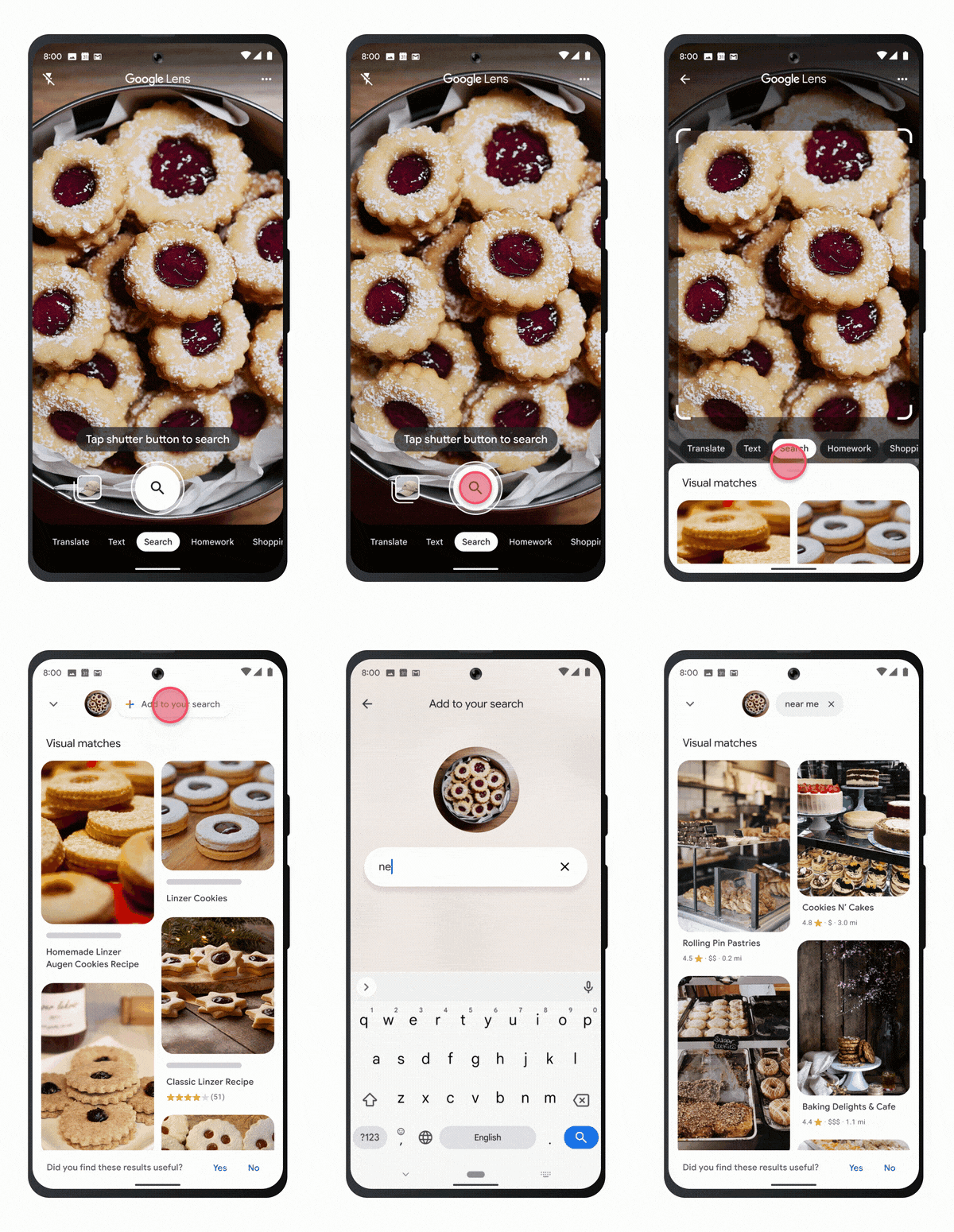
For example, using multisearch, you can now take a picture of a meal in Google Lens and add a text modifier such as “near me” to discover what restaurants serve that meal.

“This new way of searching will help me find local businesses in my community, so I can more easily support neighborhood shops during the holidays,” said Cindy Huynh, Product Manager of Google Lens.

This feature is rolling out for all English-language U.S. users today.

Search For Specific Dishes

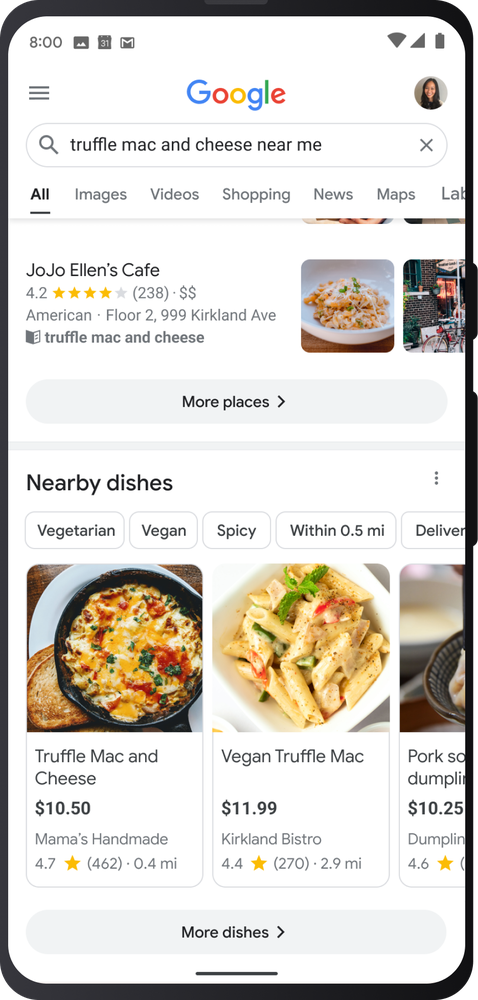
Along with the announcement above, Google revealed that users can also simply search for specific dishes by name to find information including who serves this dish, pricing, ingredients, and more

As Google’s Sophia Lin says:

“I often crave comfort food this time of year — like truffle mac and cheese — but I don’t always know where to find it. Lucky for foodies, starting today, you can now search for the exact dish you’re craving and see all the places near you that serve it.”

AR Shopping Tools for Shoes and Makeup

Seeing how new products will look once you leave the store has always been difficult for consumers, but Google is using augmented reality to visualize potential product purchases before you buy.

The first way Google is doing this is by allowing you to see potential show purchases in your living space. 

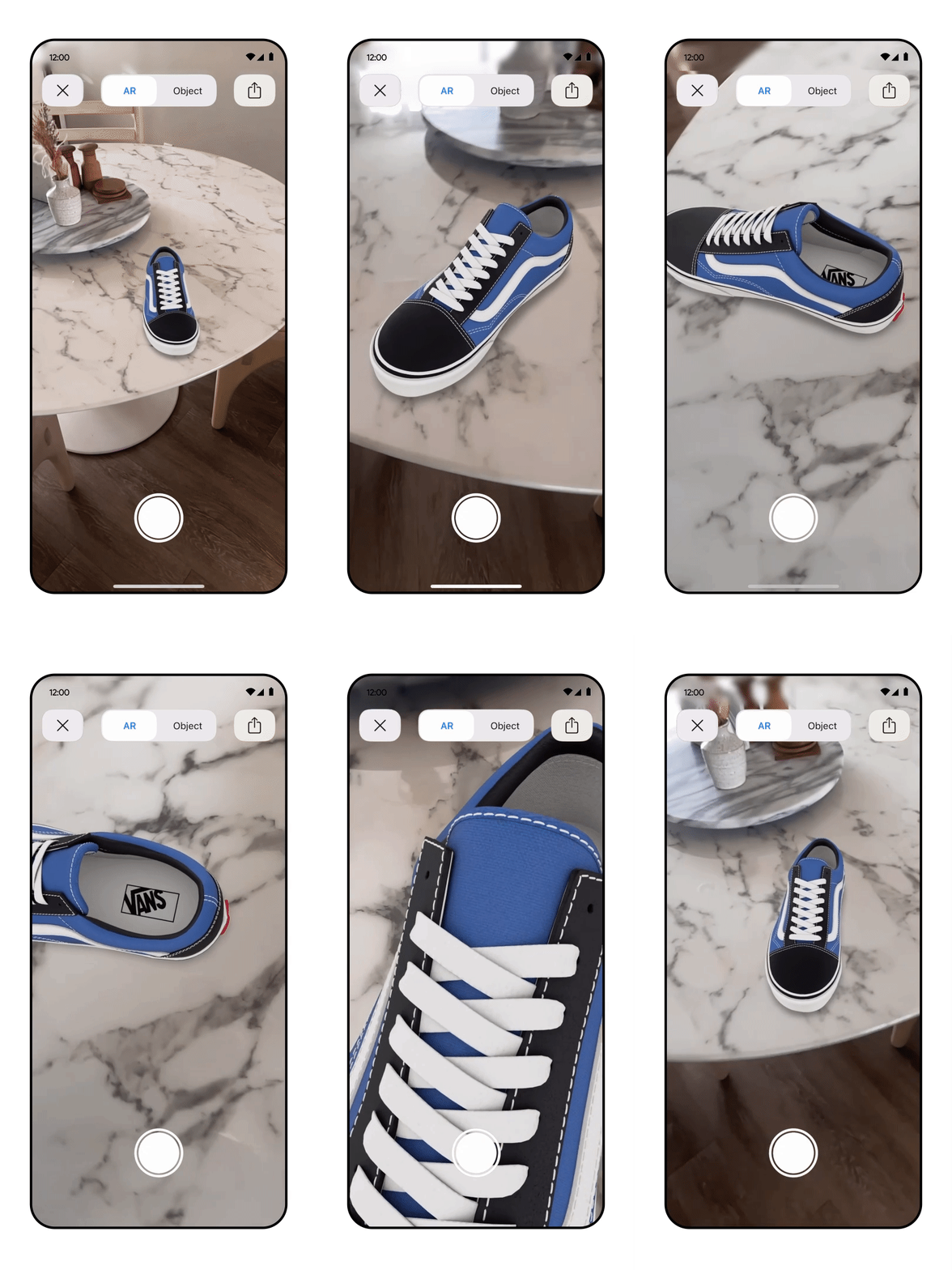
Starting today, shoppers can not only see high-quality 3D models of shoes. They can spin them around, zoom in on details, and even see the shoes as they would look in your typical surroundings.

Importantly, this is available for any brand with 3D assets of their shoes or home goods.

Additionally, Google has upgraded its AR shopping tools for makeup to include a broader range of skin tones and models with a more diverse set of features. 

The search engine has added over 150 new models with a diverse spectrum of skin tones, ages, genders, face shapes, ethnicities, and skin tones to test cosmetics on.

A new case study from SEO researcher Joy Hawkins at Sterling Sky seems to finally debunk a myth that has lingered around Google reviews – that keyword-rich reviews could help a site’s ranking in search results.

The idea does make a certain amount of sense. Reviews can help spotlight specialties or unique services that companies offer and could provide a valuable signal to determine the most relevant results for specific searches.

Based on their findings, however, Sterling Sky says having customers put] keywords into local reviews on a business listing “does not improve rankings.”

It is important to note that the test is definitely limited. 

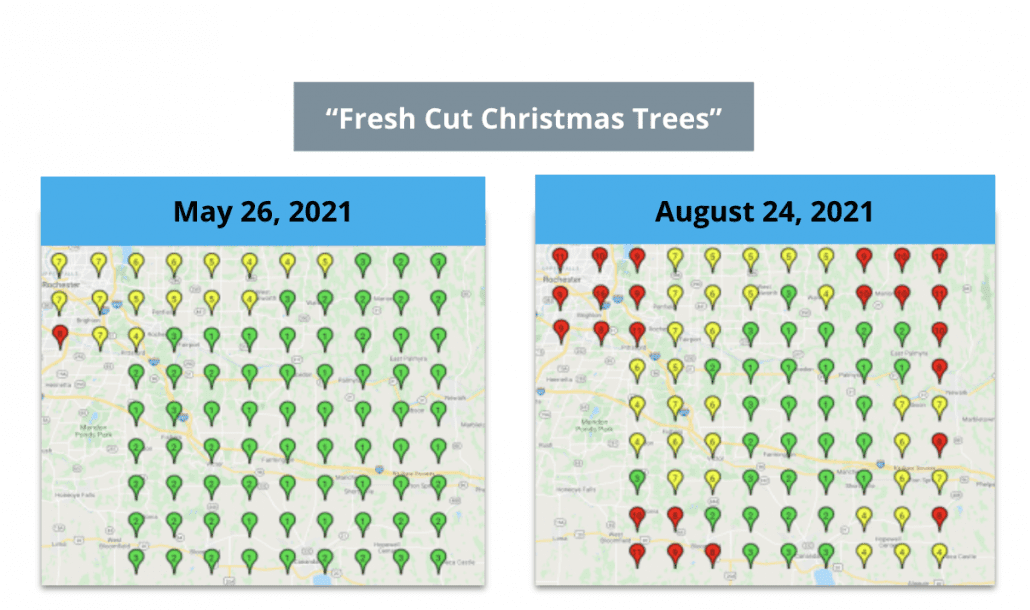
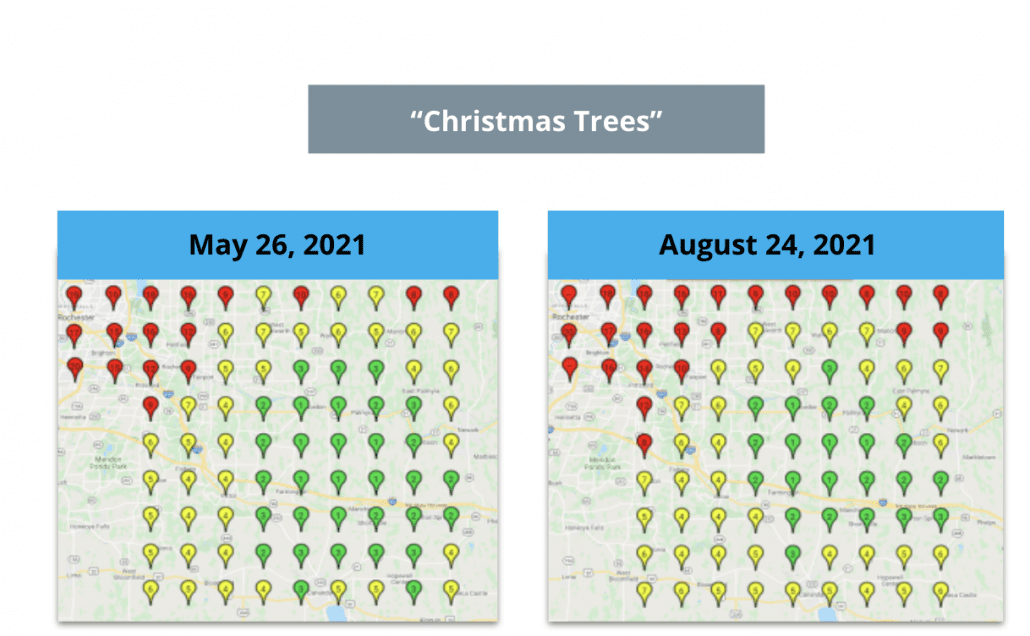
For the study, the team gradually added product ratings including the phrases “fresh cut Christmas trees” and “Christmas trees” for a small Christmas tree seller with minimal online presence, rankings, or SEO efforts.

The Results

Sterling Sky says that the new keyword-rich reviews did not improve the company’s keyword rankings, even after six months.

The graphics below illustrate that the rankings did not improve for either keyword. In the case of the first phrase, rankings actually got worse by the end of the study, while rankings for the second keyword phrase remained approximately the same.

Hawkins concludes that there is no need for brands “to include certain words in their reviews.”

“First of all, this is hard to do and you often come across as weird or odd. And secondly, and most importantly, this case study shows that it does not improve rankings!

At the end of the day, Google probably focuses more on contextual information within reviews to help rank local businesses, rather than looking for exact keyword matches. Not only is this harder to abuse, it provides a more rich and more detailed understanding of a local business listing than a single keyword.

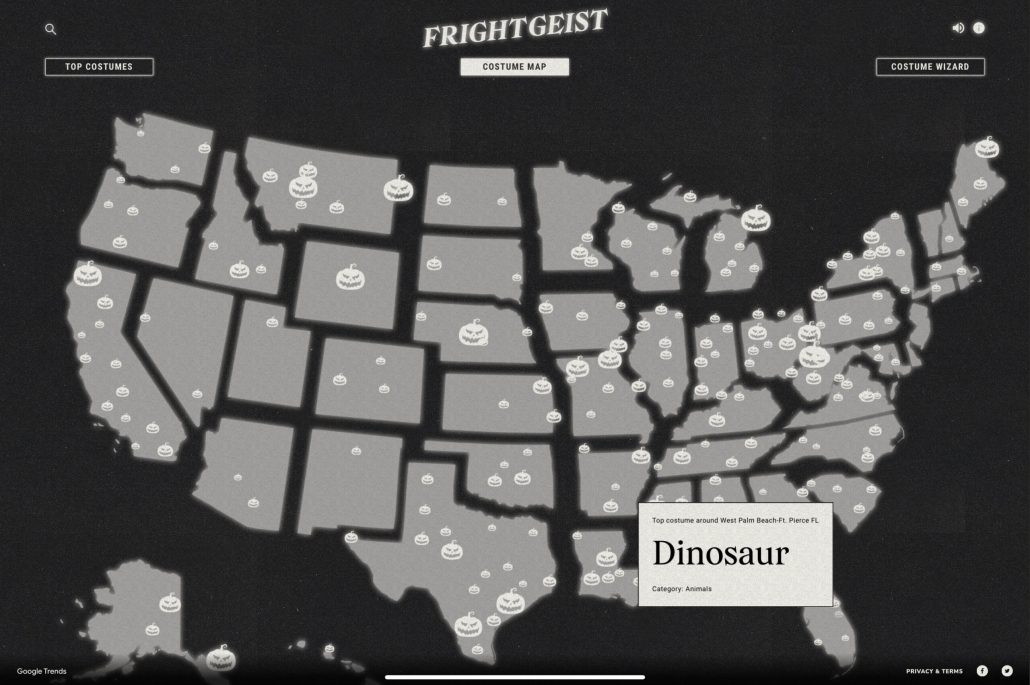
With Halloween fast approaching, Google has updated its Frightgeist website with all the latest search trends for this year’s spooky holiday.

The Halloween Frightgeist site has tracked the biggest holiday search trends annually, with a primary focus on Halloween costumes.

Notably, the tool allows you to go beyond the national search trends to find out details for a specific city or state. 

For example, it appears fairy costumes are particularly popular this year in Tulsa, as the leading costume-related search.

As Google says about the Frightgeist page:

“Every year, trillions of searches take place on Google, and Google Trends gives us an unparalleled look at what the world is searching for.”

“With Frightgeist, we went on a hunt to find the most popular Halloween costumes of 2021. Pulling from the top 500 costume searches in the United States, Frightgeist used Google Trends to tell people what costumes were trending around them and help them find a costume that was sure to turn heads.”

Below, we are going to cover the top costume search trends both nationally and in the Tulsa area, and a little bit more of what you can do with this data.

Top National Halloween Costume Ideas in 2022

  1. Witch
  2. Spider-Man
  3. Dinosaur
  4. Stranger Things
  5. Fairy
  6. Pirate
  7. Rabbit
  8. Cheerleader
  9. Cowboy
  10. Harley Quinn
  11. Clown
  12. Vampire
  13. 1980s
  14. Hocus Pocus
  15. Pumpkin
  16. Chucky
  17. Doll
  18. Angel
  19. Batman
  20. Bear

Top Halloween Costumes In Tulsa Oklahoma for 2022

  1. Fairy
  2. 1980s
  3. Spider-Man
  4. Chucky
  5. Spider

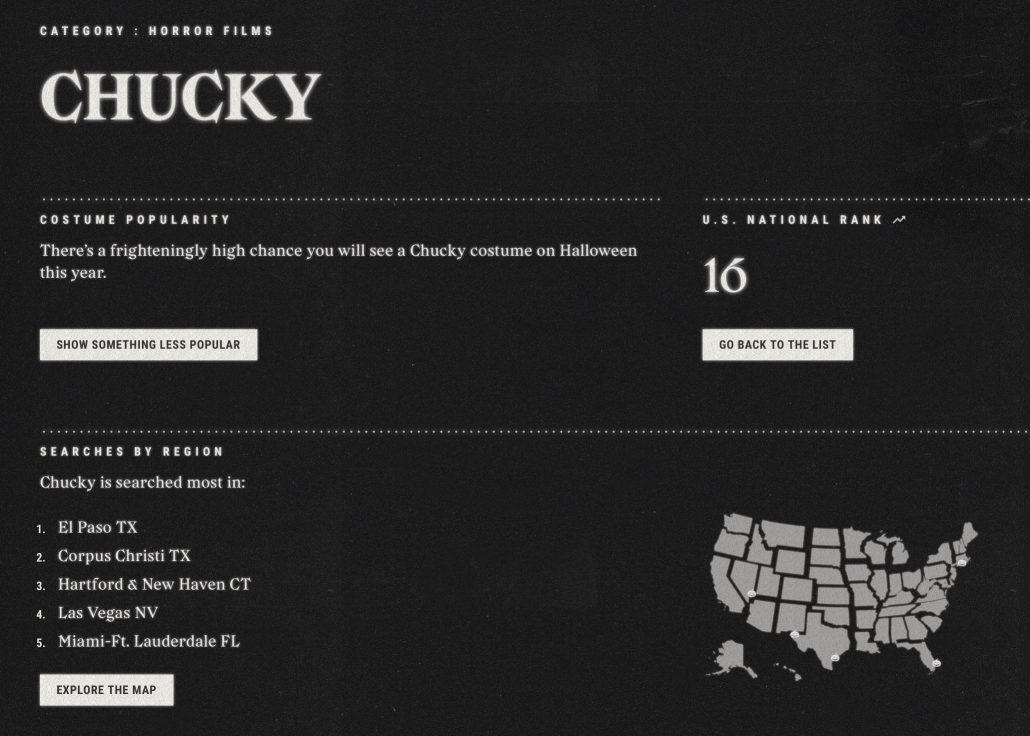
The Frightgeist site also allows you to see more details about each trending costume idea, including where it is most popular across the country, how it has performed in past years, and more.

Lastly, the site includes a costume selection wizard you can use to brainstorm what to wear this Halloween. The costume wizard lets you adjust sliders for spookiness and uniqueness and toggle between classic and modern costumes that are trending locally or nationally.

As expected, Google’s Search On conference this week brought tons of new announcements and previews of new features coming to the search engine. Though most of these features are not publicly available yet, they show that Google is intent on revamping many aspects of its search engine to make searching easier and more engaging.

Below, we are going to talk about the 5 most exciting and essential changes that both users and companies hoping to improve their online visibility should be aware of.

Google Search Shortcuts

Over the past decade, Google has steadily expanded the ways users can search for information beyond just entering a text query.

You can upload an image to find other similar images, take a pic of an equation to get help solving it, or turn on the microphone to help identify a song playing – just for a few examples.

The problem is that Google has not always done the best job of promoting these new ways to search or making them easily accessible to users.

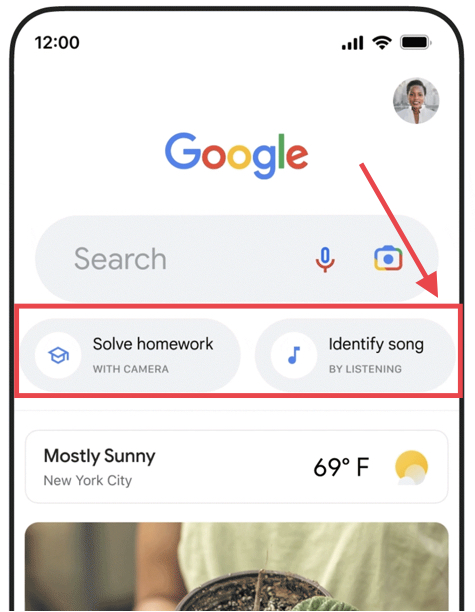
Now, that is all changing as Google is adding advanced shortcuts on the front page of the Google Search app.

You can see what this looks like in the screenshot below or, if you have an iOS device, you can see the feature for yourself by simply opening the Google app.

In-Search-Bar Results

Typically, users have to at least enter their query before they have the chance to click on a relevant result. Coming soon, however, that won’t always be the case.

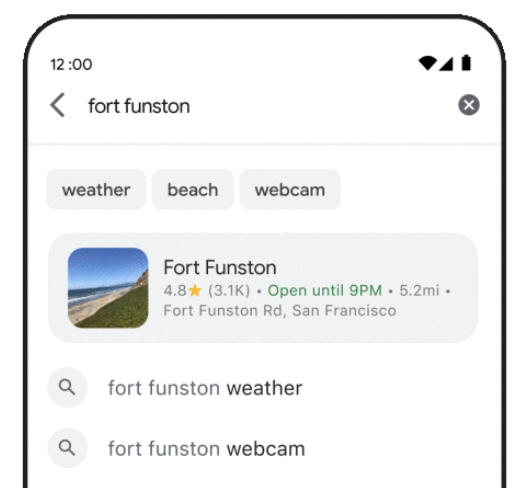
Google announced that it will soon be delivering results to users even as they are still typing in the search bar.

You can see what this might look like in the example below, where Google delivered a link to a location page directly within the search bar:

For now, it appears Google will be limiting this feature to just one result in a search bar, though we will know more when it rolls out later this year.

Enhanced Query Refinements

Along with the results like described above, Google is also adding new ways to refine your search query for the most useful results.

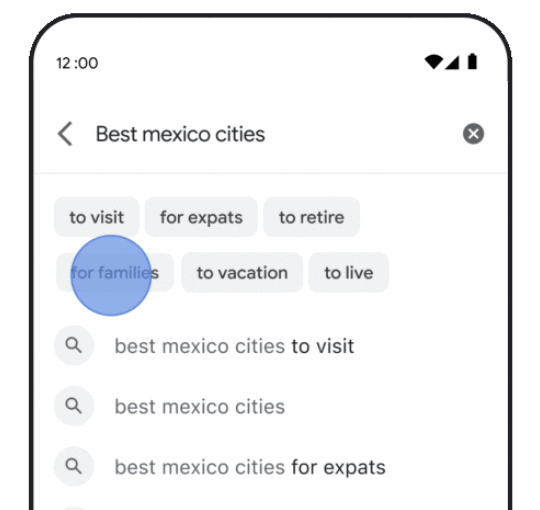
As you are typing a query into the mobile search bar, the search engine will start populating the bar with options to make your search more specific.

For example, when searching for queries like “best Mexico cities”, Google will suggest refinements like “to visit”, “to retire”, or “for families”.

More Prominent Web Stories

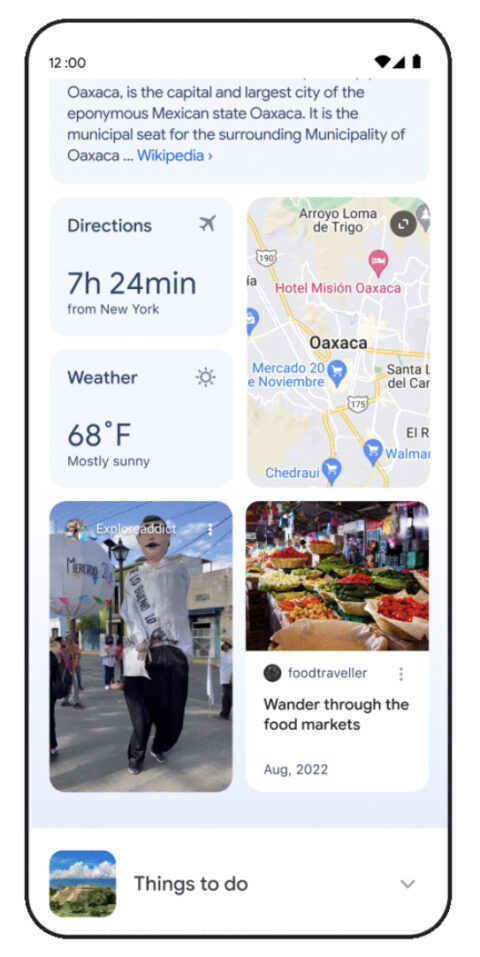
Google is making web stories a bigger part of mobile search by giving them a more prominent place in mobile search results.

As the company said in an announcement:

“So we’re also making it easier to explore a subject by highlighting the most relevant and helpful information, including content from creators on the open web. For topics like cities, you may see visual stories and short videos from people who have visited, tips on how to explore the city, things to do, how to get there and other important aspects you might want to know about as you plan your travels.”

One Page For Text, Image, & Video Search Results

Instead of making users switch between web, images, or video result tabs when searching, Google is unifying them all into one endless search result feed on mobile. 

“We’re also reimagining the way we display results to better reflect the ways people explore topics. You’ll see the most relevant content, from a variety of sources, no matter what format the information comes in — whether that’s text, images or video.”

When users would typically encounter the end of a search page, they will be given the option to either show more results or continue scrolling vertically to explore a more specific search – as seen below:

Though Google has not announced exact dates to expect these updates, the company says they will be rolling out to mobile search in the coming months.

Creators on TikTok are receiving way more space to describe their content and optimize it for the platform’s search engine. Over the weekend, many users started to notice that the limit for descriptions has increased from just 300 characters to over 2,000 characters.

The increase doesn’t just give creators more space to explain their video or page. Longer descriptions will also make it easier for TikTok to understand the content better, better include it in search results, and make more informed recommendations for users.

When you consider the impact these descriptions will have across the platform, it becomes clear that content descriptions are becoming a powerful optimization signal for those wanting to stand out on the increasingly competitive app.

How We Learned About Expanded Video Descriptions

It is unclear exactly when the feature started rolling out, but social media analyst Matt Navarra called attention to it Friday with a screenshot of a notification he received in TikTok’s app.

The full message says:

“You can now type up to 2200 characters in your posts’ descriptions: This allows you to express more details about your creations, describing what your videos show, giving you the opportunity to get closer to your audience, generating more engagement while becoming more searchable and better recommended by TikTok to viewers.”

TikTok is Becoming a Search Engine

If you haven’t spent much time on TikTok, it may come as a bit of a shock to learn that young people are increasingly using the platform as an alternative to Google’s search engine.

The phenomenon is so widespread, that Google has publicly addressed the shift, with Senior Vice President Prabhakar Raghavan stating:

“In our studies, something like almost 40% of young people, when they’re looking for a place for lunch, they don’t go to Google Maps or Search. They go to TikTok or Instagram.”

The longer descriptions signify that TikTok is also fully aware of this phenomenon and is prioritizing ways to improve its search results. For example, creators now have more flexibility to describe what happens in a video, include keywords that will help their videos be found by the right people, and provide links to a professional website or other social accounts.

Plus, longer video descriptions will even improve your TikTok content’s chance of being found on Google since the search engine has confirmed it indexes TikTok videos.

With the holidays approaching, SEO analysts BrightEdge are releasing their yearly list of important optimization trends ecommerce brands should know about.

Based on data collected by tracking over 6,000 ecommerce keywords over 10 categories over the past three years, the latest list makes one thing very clear – successful ecommerce brands are increasingly relying on content creation to drive their sales. 

Of the top five new trends covered, three highlight different ways content creators and other types of publishers are leading the ecommerce market by delivering consumers with the most valuable content at the right times.

Let’s explore the latest ecommerce trends below:

1) Brands and publishers are siphoning away retail traffic

Retailers these days have a lot of competition to contend with online. Not only are you fighting to stand out among the slew of other online retailers, but you have to outrank brands and publishers in search results. 

According to the report, retailers’ performance for top ecommerce keywords is down 70% from 2020. Meanwhile, brands are making headway into shopping results by adopting direct-to-consumer models while content publishers are attracting attention with product overviews and reviews.

2) Retailers Are Driving Ecommerce With Content

While the report does not include data impacted by the new “helpful content update”, the data does emphasize that retailers who publish quality content are more effectively able to differentiate their brand and their products from those who only offer product descriptions.

Specifically, BrightEdge says retailers should:

  • Focus on creating context for your products through content.
  • ‘Organize categories in ways that make it easier to learn about and shop multiple related products.

3) Organic Links Are Still Crucial

As Google’s ad platform and other features like localized business listings have taken over more and more space in search results, many have suggested that organic search results have lost their importance. 

However, BrightEdge’s data suggests that classic organic search results are still the most effective traffic source for retail brands. For the top ecommerce results, up to 70% of all clicks went to organic search results.

In fact, it appears Google may be aware that online shopping-related searches are best served through organic search results, as local packs, videos, and image carousels have all become less common for ecommerce searches. 

4) More Ecommerce Sites Are Adopting Schema Markup

Brands, publishers, and retailers involved in ecommerce are all increasingly adopting a few specific types of schema markup to make their pages easier for search engines to understand and index. 

Specifically, these three schema types have seen significantly increased usage around shopping results:

  • Product
  • ImageObject
  • ItemList

5) Article and Category Pages Dominate Ecommerce

Category pages have always been a major driver of clicks for ecommerce, and this remains true in 2022. For the top keywords, category pages have the highest click-through rate 70% of the time. However, BrightEdge noted that recently, articles about products have higher click-through rates than links directly to product pages.


Google’s search results are always shifting. It is important for brands to stay aware of the latest trends in their market and adapt the most effective SEO strategies if they want to stay ahead of the competition – especially leading up to the holiday season.