Tag Archive for: Google Ads

Google recently announced a major change to its ad platform that opens up some of its most powerful advertising tools for smaller businesses. The company has lowered its minimum audience size requirement to just 100 active users across all networks, including Search, Display, and YouTube. 

By decreasing the audience size from the previous minimum of 1,000 users, Google has opened the door to brands with smaller audience sizes to use remarketing and customer list targeting. 

New Minimum Limits

Now brands can use audience segments with as few as 100 users across all networks. This new limit is set across all networks and applies to both remarketing lists and customer lists, making it easier for small brands to reach more accurate audiences with their ads. 
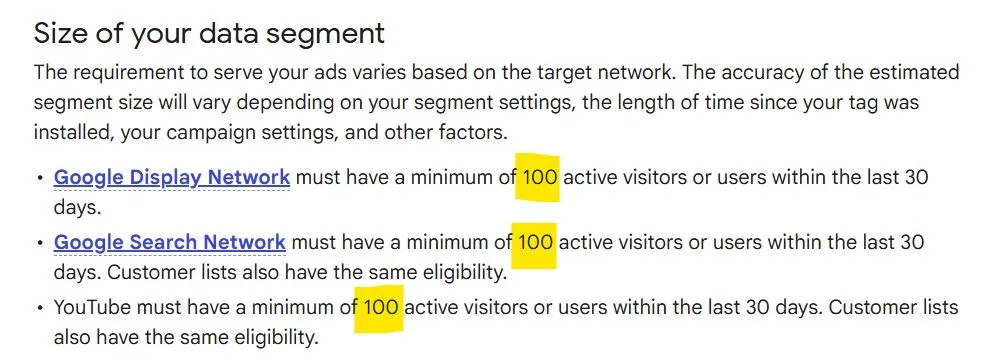
The 100-user threshold also applies to Audience Insights, allowing brands with small audiences to better understand their performance and audience. Previously, Audience Insights could not provide reliable data for audiences with less than 1,000 people. 

Opening The Door For Smaller Advertisers

This change removes a significant barrier for smaller brands and niche advertisers. While these advertisers could use Google’s Ad platform already, they were previously locked out of many of the most effective tools and advertising methods. 

Now, smaller brands can power remarketing campaigns and personalize their ads using first-party data and in-depth insights that were not previously available to them. 

This accessibility gives businesses the ability to fine-tune their targeting, reach users who have already expressed interest, and drive better conversion rates without relying on extensive data. By delivering personalized ads to defined audience segments, brands can boost engagement and see stronger returns on their ad spend.

Limitations Due To Smaller Audiences

While Google is allowing advertisers with smaller audiences to access these tools, they caution that smaller audience sizes can still impact performance. For example, smaller audience lists may lead to less accurate insights, slower delivery, or limited reach. 

It is crucial for advertisers to closely watch their ad performance to ensure their ads are performing properly and reaching the correct audience. 

Additionally, Google notes that advertisers using smaller audience segments must take care to ensure their data collection and usage does not run afoul of today’s modern privacy regulations including GDPR and CCPA. 

For more about this change and how audience segments function, explore the Google Ads Help page on the topic here.
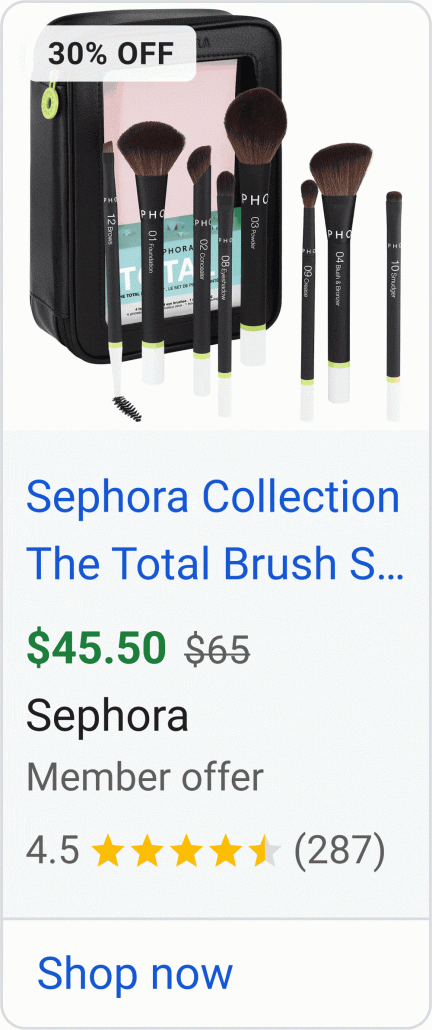
Google is giving online retailers new tools to highlight special offers and benefits to their most loyal customers. The new “loyalty offerings” available in Google Ads and Merchant Center add specialized tags to product listings that showcase special member pricing and shipping benefits.

According to Google, 61% of American adults say loyalty programs that are tailored to their preferences are the most attractive aspect of personalized shopping experiences. With these new annotations, retailers can feature their loyalty benefits to their most valuable customers, drive long-term relationships, and emphasize all of the benefits of doing business with them. 

Quick Details

  • Loyalty offerings add personalized annotations that display member-only discounts and benefits on both free and paid product listings. 
  • Retailers can optimize their ad budget with loyalty goals that prioritize ad bids with the most lifetime value.
  • In testing, Sephora US saw a 20% increase in CTRs when using loyalty annotations in personalized ads.
  • In the announcement, Google says the new loyalty offerings “help retailers retain lasting relationships and showcase their programs and Google […] driving deeper engagement with their most valuable shoppers.”
  • Loyalty offerings are available now to retailers based in the US, UK, Germany, France, and Australia. 

According to Brendon Kraham, the vice president of global search ads and commerce, Google Ads is gearing up for an AI-led “seismic shift” in how people use the internet. 

In an interview with MediaPost, Kraham recently discussed Google Ads’ plans for 2025 including how it plans to adapt to the growing integration of AI in nearly every facet of technology. 

Why AI Is The Focus In 2025

Kraham says we are in the middle of a transformation in discovering information and interacting with businesses that is even bigger than the mobile revolution. 

As he said:

“We’re in the midst of a massive shift toward AI, and frankly, it’s even bigger than the mobile revolution was. It’s about using AI to fundamentally improve how people search for information and connect with businesses.”

Google has to adapt to this on multiple fronts.

“For users, this means getting better answers to their questions, whether they’re simple or complex. From a business perspective, this AI-powered approach is going to drive a significantly better ROI for advertisers.”

How Kraham Sees 2025

When asked about his predictions for the new year, Kraham lays out three main areas that Google is focused on moving forward.

The evolution of search behavior beyond traditional keywords

“This means moving beyond simple keywords and embracing a multimodal search landscape where visuals, context, and even our surroundings play a crucial role in how we find what we need. For marketers, this means adapting to a more nuanced understanding of consumer behavior, where capturing attention and fostering genuine engagement will be paramount.”

The development of AI-powered creative tools for marketers

“This new era of search and ads means we will witness a surge in marketers embracing AI-powered tools — not to replace their creative spark, but to amplify it. Imagine personalized creative solutions that scale effortlessly, unlocking new avenues for expression and delivering measurable results.”

Integrating enhanced measurement capabilities across all digital channels

“Third, in 2025, measurement will be everything. Marketers will need to get laser-focused on their data, figuring out how to connect the dots as users move between searching, streaming, scrolling, and all those different ways of interacting online.”

Google has already been aggressively pursuing the development of AI tools in every area of its platform. Kraham indicates this is only going to accelerate further in the coming year, with new AI developments coming for Performance Max ads, Demand Gen ads, and Google Search products.

Google is expanding its Travel Feeds feature for Search Ads, letting hotel ads include more detailed information from their feeds in ads that appear in search results. 

As the company said in an announcement:

“To help potential travelers get the most up-to-date and relevant info, advertisers have told us they want more opportunities to use Travel Feeds in Search Ads. Starting today, all hotel advertisers can now showcase feed data, such as hotels, prices, dates, ratings and images, in this ad format.”

The ad format for hotels now lets advertisers “use the same feed data already available in Hotel Center and used by travel advertisers in hotel campaigns to enhance more ad types.”

The hotel ads automatically pull price and landing pages 

The ads are customizable as well, with multiple design options available and selections based on ad relevance, creative, and query. 

Are These For You?

The new expanded hotel ads have been seen to increase click-through rates by up to 20%, based on Google’s internal data collected during testing. 

The ads also have the potential to increase efficiency when setting up ads by automatically displaying Travel Feeds in Search Ads once you have linked your Hotel Center account to your Google Ads account. 

To be eligible, you must have a Hotel Center account with a price accuracy rating of at least “Poor”.

Though currently limited to hotel ads, Google says it plans to test the Travel Feeds feature with other types of ads including travel attractions, car rentals, and local events.

Starting next month, Google will begin requiring brands running Local Service Ads (LSAs) to have an accurate, verified, and related Google Business Profile to continue running their ads.

Though LSAs have technically been accessible to any advertisers on Google’s platform, the company has clearly intended them to be linked with Google Business Profiles as part of their local marketing services. This move makes the two more tightly linked, making Business Profiles the “source of truth” for LSAs. 

What Is Happening?

As noted by Ben Fisher on X, Google is alerting people running Local Service Ads about upcoming changes.

In the notice, the company says that it will begin requiring accounts running SA to have a related Google Business Profile to continue running ads. Those without a GBP or those with inaccurate information in their business profile will see their ads paused beginning on this date. 

As Fisher said in his post about the alert:

“Your Google Business Profile is now the source of truth for LSA. LSA ads will be paused if you do not have a GBP attached to an LSA.”

Changes To Local Service Ads Reviews

Also mentioned in the alert is the fact that Google LSAs containing reviews will exclusively show reviews left on Google Business Profiles, making GBP the sole place you can manage reviews seen in local ads. 

Google Ads is introducing a new system it calls  “confidential matching” which provides a new way to protect your first-party data and the confidentiality of your clients while still integrating your data into its measurement tools and audience matching systems. 

In the announcement, Google says confidential matching will use “special software and hardware known as Trusted Execution Environments (TEEs), [which will] unlock new ways for businesses to use their first-party data to reach customers and measure the impact of their digital ads campaigns.”

This means that Google will be unable to see any of your uploaded email addresses, phone numbers, or other customer data unless that information is already in Google Ads’ systems. 

The company says this “gives added data security and transparency, by isolating your business information during processing so that no one – including Google – can access the data being processed.”

Rather than just being an option for advertisers, Google is making confidential matching the default for any time data is uploaded to be used for Customer Match, and Ginny Marvin from Google says it will be coming to enhanced conversions and other Google Ads features in the future:

Now when you connect your first party data to Google Ads for Customer Match, and soon for enhanced conversions, it will automatically be processed using confidential matching – no additional work is required on your end.

Confidential matching is powered by a technology called confidential computing, which uses special software, and hardware called a trusted execution environment or TEE (you may recall we mentioned this at GML this year) to securely process data.

Confidential matching can ensure your data remains encrypted and unseen by anyone, including Google.

Advertisers also have the option to encrypt their data themselves and receive proof that their data is processed as intended.

Confidential matching is now available to all customers globally.

Google is giving advertisers the ability to opt out of showing ads across its Search Partner Network (SPN) following a concerning report that suggests ads may be being shown on controversial websites – even if you’ve placed those websites on a blocklist. 

The Claims

A report from Adalytics was recently published asserting that an unnamed Fortune 500 company had been upset and “surprised” after it learned that its ads were being served across several non-Google websites. 

Specifically, the report says that the company’s ads were being shown on Breitbart.com – a controversial right-wing news site that has been accused of racial bias, misleading articles, and incendiary perspectives. This is particularly problematic, as the company had added the domain to its exclusion list years before. 

As Adalytics stated:

“This raises the possibility that ads were served on websites and publishers despite the brand’s deliberate efforts to achieve brand safety and exercise control over their own media investments.”

In response, Google widely denied the claims in Adalytics’ report and suggested they ads shown were intentionally triggered. Still, the company announced it will allow brands to entirely opt-out of showing ads across the SPN if they desire. 

The company said:

“Though we take enormous issue with Adalytics’ methodology and conclusions, we always look to improve our products to meet our partners’ needs.”

Why It Matters

Having your ads shown alongside inappropriate or hateful content can be damaging to a brand’s reputation and develop negative associations for those who see it. Additionally, those who frequent problematic websites are unlikely to be your target market, so your ad budget is likely being wasted when this happens. 

Similar issues at X (formerly Twitter) have recently led to several large advertisers to publicly announce they were pulling ads from the social network following a report indicating X was displaying these ads alongside hate speech, racist, and white nationalist content. 

By giving advertisers the opportunity to opt-out, Google is ensuring that brands still can feel comfortable their ads aren’t being shown alongside objectionable content while the information from Adalytics’ report is further investigated. 

For more, read the full report here.

Google is launching an exciting new ad format called Demand Gen Campaigns which uses the latest AI tools to create highly targeted video and image ads for YouTube, as well as Google’s other platforms. 

The new ad product is designed to motivate advertisers to invest more outside of social media platforms like Facebook and Instagram – Google Ads’ biggest competitors. 

What Are Demand Gen Campaigns?

Demand Gen Campaigns are video ads up to 15 seconds long, primarily intended to run as pre- or mid-roll YouTube placements. However, the company says the ads will show in other places as well, including as image carousels on mobile and bumper ads.. 

Most importantly, Demand Gen includes a suite of creative tools to help deliver messages and ads that are tailored for your audience. 

The ad product also generates “lookalike” audiences filled with potential new customers who match your existing customers. 

As with most Google Ad formats, advertisers can manage a wide range of ad delivery and budget options, allowing you to deliver more clicks, traffic, and conversions. 

Demand Gen Helps Target Shifting Audiences

stats about Demand Gen Campaignss

Google says that Demand Gen Campaigns are intended to help businesses reach consumers during a time when shopping habits are quickly changing.

The company cites recent surveys that show viewers typically split their time on social media between traditional platforms like Facebook and Instagram with others like YouTube. 

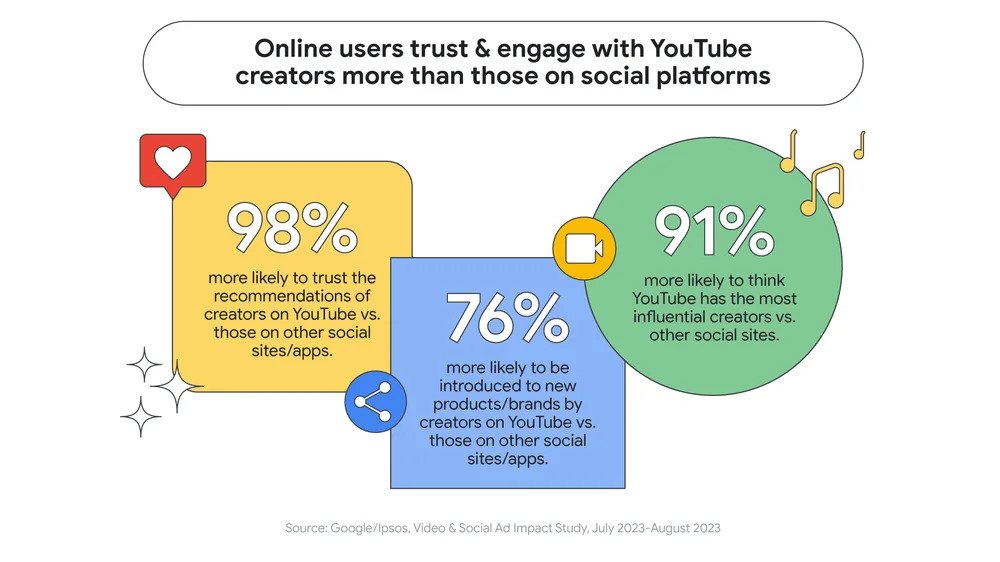
Additionally, more than 90% of people said they had watched content from a specific creator or artist across multiple platforms and formats in the past year. 

These ads are designed to help pull users onto YouTube, which Google believes offers a more genuine connection with creators. 

The ads are intended to do this by using visually engaging ads that are highly tailored for specific audiences across the entire Google ecosystem.

Demand Gen Campaigns Will Replace Discovery Ads

Demand Gen ad campaigns started rolling out to advertisers worldwide earlier this week, and will be replacing Google’s current ad option for its Discovery feed. Discovery campaigns will be phased out sometime in early 2024.

X (previously known as Twitter) is partnering with Google Ads in an attempt to make up for the declining ad revenue seen by the company since its takeover by Elon Musk. 

In the near future, X will be included as part of the Google Display Network, making it possible for many of the ads run by Google Ads to appear on the social network.

Why Is X Partnering With Google?

Since the purchase of Twitter by Elon Musk last year, the company has seen an estimated 59% drop in ad revenue from the US. While numbers are not available globally, most analysts agree that this has dramatically hurt the social network’s profits 

Much of this reduction in ad revenue was sparked by Musk’s decisions to reduce moderation on the platform and to unban controversial accounts. Since then, advertisers have seen their ads appearing alongside increasingly objectionable content including hate speech, slurs, and nazi imagery. As you might expect, this has led many advertisers to completely stop advertising on the platform.

Can You Opt Out?

For brands concerned about potentially having ads shown alongside hateful or controversial media, it is important to know that you can choose to not have your ads shown on X or any other website. As a Google spokesperson told Ad Age:

“This is an opportunity for our advertisers to reach a broader audience, but as always they can choose what sites and apps their ads run on. Any publisher who participates in this type of partnership must abide by our publisher policies.”

Google is giving advertisers more control over where their ads appear in Search with two new features that have only been available to a small number of advertisers previously.

The company announced it will be bringing brand exclusions for Performance Max campaigns and broad match brand restrictions for all advertisers on Search. 

In the announcement, the company said that both pilot tests were “successful” and that bringing these tools to more advertisers would improve campaign performance. They also promise that using brand exclusions and restrictions will help improve reach by guaranteeing your ads are not appearing along controversial, irrelevant, or problematic search content.

Notably, these are one of the many new features on the platform which are being assisted with AI.

Google gave Search Engine Land two statements, one for each new ad feature:

“[Advertisers can] expand the reach of your brand campaigns with new brand restrictions for broad match. Broad match gives you the most relevant reach and conversions within your performance goals.”

“In the past, it may have been difficult to use broad match in campaigns with specific brand needs. That’s why we’re rolling out brand restrictions. This new feature will help you get the additional reach of broad match, while ensuring it is only matching to relevant brand traffic that you’ve specified.”