
A recent analysis by Datos and SparkToro highlights major changes in how people are searching, largely driven by the widespread implementation of AI across Google’s search systems. 

A new study of data from millions of real users found a significant drop in how often people in the United States are making searches on Google compared to just a year previous. 

Despite Google’s user numbers remaining stable, data indicates that individual users are performing fewer searches – a trend that has significant implications for traffic to organic results, Google ads, and discoverability on search. 

What The Study Says

According to Datos and SparkToro’s report, the average number of desktop Google searches per person has dropped by nearly 20% year-over-year for U.S. users. Notably, this phenomenon is largely limited to American users, while Europe only saw a decline of about 2-3%. 

Despite this shift, the report says that the amount of traditional searches has remained largely stable over the past year, accounting for approximately 10% of all U.S. desktop activity. 

AI Overviews Credited With Reducing Searches Per User

Based on their analysis, Datos largely credits AI with changing how people are searching. 

The primary reason behind the change is that users are increasingly getting the information they need with fewer queries. It is believed this is because AI-powered results and instant answers reduce the need for follow-up searches. 

While repeat or follow-up searches have seen significant drops, searches that don’t typically result in a click to a website remain high, indicating people are still relying on Google to find information. They are just getting the information more quickly, and largely without clicking through to websites. 

While AI is largely credited with the shifts away from repeated searches or follow-up queries, the study emphasizes that users are largely avoiding dedicated AI search tools. Dedicated AI search tools currently account for less than 1% of total desktop activity in the U.S., and the study notes that Google’s “AI Mode” accounts for a tiny percentage of overall usage. 

Other Notable Findings

The report largely focuses on the shift in searches per user, but it mentions a few other notable changes in search behavior. 

Most significantly, Datos found that users are turning to longer, more complex queries to find the information they need. Specifically, users are more frequently using longer search phrases, typically between six to nine words, when searching. This means keywords are getting longer and shows that businesses should adapt the keywords they focus on accordingly. 

The report also shows that when people do click through to a website from Google’s search results, they are increasingly going to one of a handful of websites. Instead of varying search results, the majority of clicks are going to YouTube, Reddit, Amazon, and Facebook. 

The Takeaway

The sharp decline in searches per user in the U.S. reflects a new phase in search behavior. Increasingly, AI-powered instant answers are changing how users engage with search engines, often eliminating the need for multiple searches or clicks on external sites. For businesses, this means it is more crucial than ever to diversify the channels you are marketing on, rather than relying strictly on search to drive organic traffic.

For more, read the full report from Datos here.
OpenAI has announced that it will begin testing ads within ChatGPT soon, creating a potential new major advertising channel for brands. 

The tests could begin as soon as in a few weeks, with clearly labeled ads appearing at the bottom of chatbot responses. Additionally, the ads are said to only appear when there is a specific sponsored product of service relevant to the chat. 

Who Will See Ads In ChatGPT?

For now, OpenAI says it will be significantly limiting who is eligible to be shown ads in ChatGPT. The ads will only be shown to U.S. users over the age of 18 using the free tier or those signed up for ChatGPT Go. ChatGPT Go is OpenAI’s recently introduced lowest-cost subscription option.

Users under the age of 18 and those subscribed to ChatGPT Pro, Business, or Enterprise plans will be excluded from the upcoming ads test. 

Ads Will Not Influence ChatGPT Responses

OpenAI heavily emphasized that any potential ads will be limited to clearly marked placements that are separate from ChatGPT responses. Any advertising partnerships or placements will not influence AI answers and user conversations will not be made available to advertisers.

Additionally, ads will not be shown during conversations about sensitive or regulated topics such as health, mental health, or politics. 

OpenAI Advertising Principles

In the announcement, OpenAI laid out 5 specific advertising principles it means to follow as it begins testing ads. 

  • Mission alignment: Our mission is to ensure AGI benefits all of humanity; our pursuit of advertising is always in support of that mission and making AI more accessible.
  • Answer independence: Ads do not influence the answers ChatGPT gives you. Answers are optimized based on what’s most helpful to you. Ads are always separate and clearly labeled.
  • Conversation privacy: We keep your conversations with ChatGPT private from advertisers, and we never sell your data to advertisers.
  • Choice and control: You control how your data is used. You can turn off personalization, and you can clear the data used for ads at any time. We’ll always offer a way to not see ads in ChatGPT, including a paid tier that’s ad-free.
  • Long-term value: We do not optimize for time spent in ChatGPT. We prioritize user trust and user experience over revenue.

Why This Is Notable

The announcement from OpenAI came as a slight surprise, given that CEO Sam Altman had previously expressed hesitation. Specifically, Altman had publicly worried that ads would strain the public’s trust in ChatGPT to deliver accurate information. 

However, as recently as November, Altman had begun suggesting that ads in ChatGPT were likely “at some point.”

As AI assistant usage becomes more widespread, this could become a valuable new ad platform for brands looking to connect with a new audience. 

We expect to learn more as testing begins, but for now you can read OpenAI’s full announcement for more details.

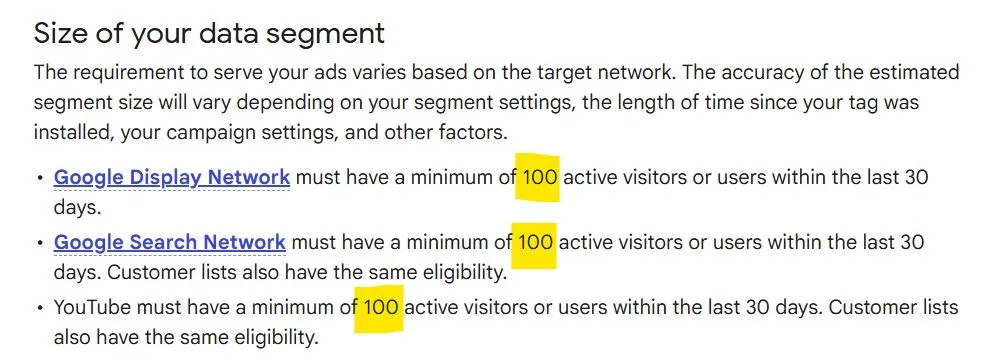
Google recently announced a major change to its ad platform that opens up some of its most powerful advertising tools for smaller businesses. The company has lowered its minimum audience size requirement to just 100 active users across all networks, including Search, Display, and YouTube. 

By decreasing the audience size from the previous minimum of 1,000 users, Google has opened the door to brands with smaller audience sizes to use remarketing and customer list targeting. 

New Minimum Limits

Now brands can use audience segments with as few as 100 users across all networks. This new limit is set across all networks and applies to both remarketing lists and customer lists, making it easier for small brands to reach more accurate audiences with their ads. 

The 100-user threshold also applies to Audience Insights, allowing brands with small audiences to better understand their performance and audience. Previously, Audience Insights could not provide reliable data for audiences with less than 1,000 people. 

Opening The Door For Smaller Advertisers

This change removes a significant barrier for smaller brands and niche advertisers. While these advertisers could use Google’s Ad platform already, they were previously locked out of many of the most effective tools and advertising methods. 

Now, smaller brands can power remarketing campaigns and personalize their ads using first-party data and in-depth insights that were not previously available to them. 

This accessibility gives businesses the ability to fine-tune their targeting, reach users who have already expressed interest, and drive better conversion rates without relying on extensive data. By delivering personalized ads to defined audience segments, brands can boost engagement and see stronger returns on their ad spend.

Limitations Due To Smaller Audiences

While Google is allowing advertisers with smaller audiences to access these tools, they caution that smaller audience sizes can still impact performance. For example, smaller audience lists may lead to less accurate insights, slower delivery, or limited reach. 

It is crucial for advertisers to closely watch their ad performance to ensure their ads are performing properly and reaching the correct audience. 

Additionally, Google notes that advertisers using smaller audience segments must take care to ensure their data collection and usage does not run afoul of today’s modern privacy regulations including GDPR and CCPA. 

For more about this change and how audience segments function, explore the Google Ads Help page on the topic here.